Self Storage For Forces Families Flexible Terms For Postings And Deployments

Posting order in, dates set by someone else — how do you store around that?

A posting order lands and the timeline shifts immediately. The quarter needs to be cleared, furniture needs somewhere to go, and the dates were set by the chain of command, not by you. If the serving member is already on exercise or getting ready to ship out, the whole thing falls to whoever is left holding the keys.

This is not an unusual situation. It is the ordinary shape of a forces family move. What makes it harder than a civilian house move is that the usual storage question, when do I need it and for how long, often does not have a clean answer. You might know the move-in date but not the move-out. You might know the rough tour length but not whether it runs long or cuts short.

This page explains how Wigwam’s terms work in that kind of uncertainty. What the deposit does and when it comes back. What happens to days you have paid for if the posting ends early. Where our nearest units are to the Warminster in Wiltshire garrison area, and what to expect from a quiet, unmanned market-town site you can use on your own schedule.

Why self storage and a posting go together

The practical fit is simple: a posting produces a gap between homes, and self storage fills it. But the version that actually works for a forces family is one where the terms are as flexible as the posting is unpredictable.

The quarter has to be cleared, whatever else is happening

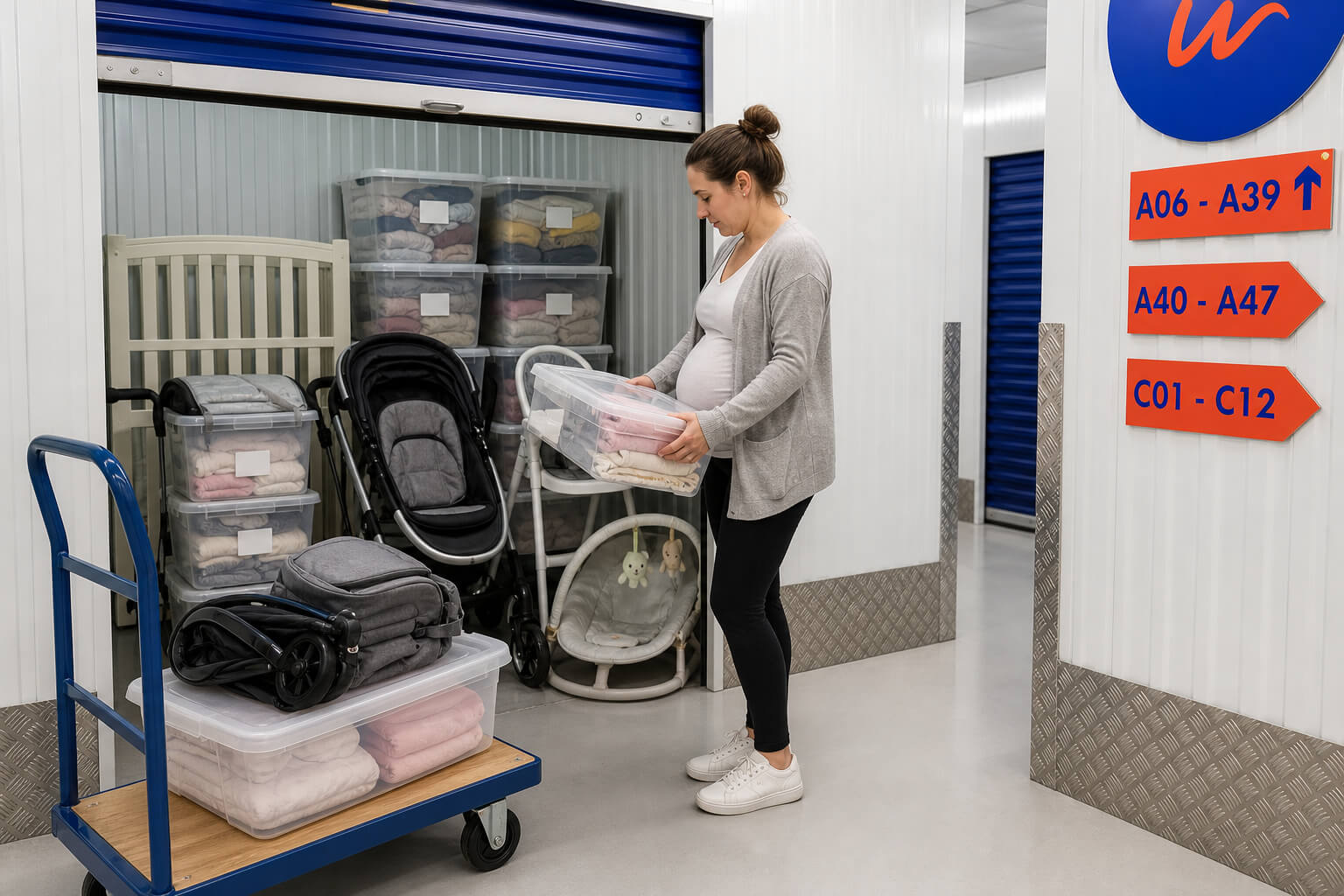
When a posting order comes through, the married quarter typically has to be cleared by a fixed date. That date is not negotiable and it often arrives faster than expected. You need somewhere for the furniture, the boxes, the things that do not travel with you to the next location, and you need it to be ready quickly.

Self storage sits well here because it starts when you need it to start. There is no lead time tied to a removal company’s schedule or a new tenancy. You take a unit, you start moving things in, and the belongings wait for you. Clean, dry, individually alarmed. Nothing ties the start date to anything except the day you begin.

For the partner managing the clear while the serving member is already elsewhere, this matters more than it sounds. One fewer variable in a week that has too many.

Unaccompanied tours, deployments, and the gap in between

An unaccompanied tour might run six weeks or eighteen months. A deployment might be extended at short notice. The gap between one posting and the next permanent address can be a few weeks or the best part of a year.

Wigwam’s terms do not ask you to guess how long you will need the unit. You start when you need to start, and you leave when you are ready to leave, with two weeks’ notice. Whether the storage runs for two months or two years, the mechanics are the same. You pay for what you use. Nothing more is tied up than needs to be.

The partner managing the move without backup

This one comes up more often than providers acknowledge. The serving member is gone, or going, or already on the ground somewhere else. The partner is managing the clear, the removals firm, the handover, the new school, and the storage, all at the same time.

Our market-town sites are quiet and local. Smart entry means you do not need anyone to open the site for you. You arrive, you get in, and you work at your own pace. Between 6am and 10pm, every day of the week, it is yours to use without assistance. If you are fitting access around a school run or a working day, you have the hours to do it.

The terms that matter when dates are not yours to control

Wigwam’s contract bends to military dates rather than the other way around. The deposit comes back, unused days are refunded, and the minimum stay and notice period are both two weeks. Here is exactly what each of those means.

The deposit comes back – here is exactly how

You pay a refundable deposit when you take the unit. That deposit is not a fee and it is not lost if dates change. When you are ready to leave, you give two weeks’ notice, you clear the unit, and the account is settled. Once that is done, the deposit is returned to you. Nothing is held back unless there is something outstanding on the account.

For a forces family managing a move on someone else’s timeline, knowing the deposit comes back is not a small thing. It is the difference between committing to storage feeling financially exposed and committing knowing there is no penalty for leaving when the posting says to leave. Full terms are at wigwamstorage.co.uk/terms-conditions/.

Unused days refunded if you leave early

If your return date moves forward – the tour ends early, the next posting comes through ahead of schedule, the circumstances change – you do not pay for days you have not used. If you have paid to the end of a month and you clear the unit halfway through, the unused days are refunded.

This is the single term that matters most to forces families. Every provider says “flexible.” Wigwam’s version of flexible means you actually only pay for what you use. If the posting runs short, the storage cost runs short with it.

Two weeks minimum, two weeks notice – and nothing longer

The minimum stay is two weeks. The notice period is two weeks. That is the full extent of the commitment. There is no rolling six-month contract, no annual tie-in, no penalty for ending the storage sooner than planned.

In practice this means you do not need a confirmed end date to start. You take the unit when you need it, and you leave it when you are ready, with two weeks’ warning. If dates firm up later, the plan firms up with them. If dates shift again, the two-week notice is all you owe.

Ready to see what a unit would cost for your posting? Get a quote at quote.wigwamstorage.co.uk. No commitment, no long form.

What to put in store before you go

A Wigwam unit holds household goods well. Furniture, boxes, appliances, books, personal effects. The honest standard is clean, dry and secure. Here is what that means for what goes in, and what does not.

Furniture, boxes and the things you cannot take on a posting

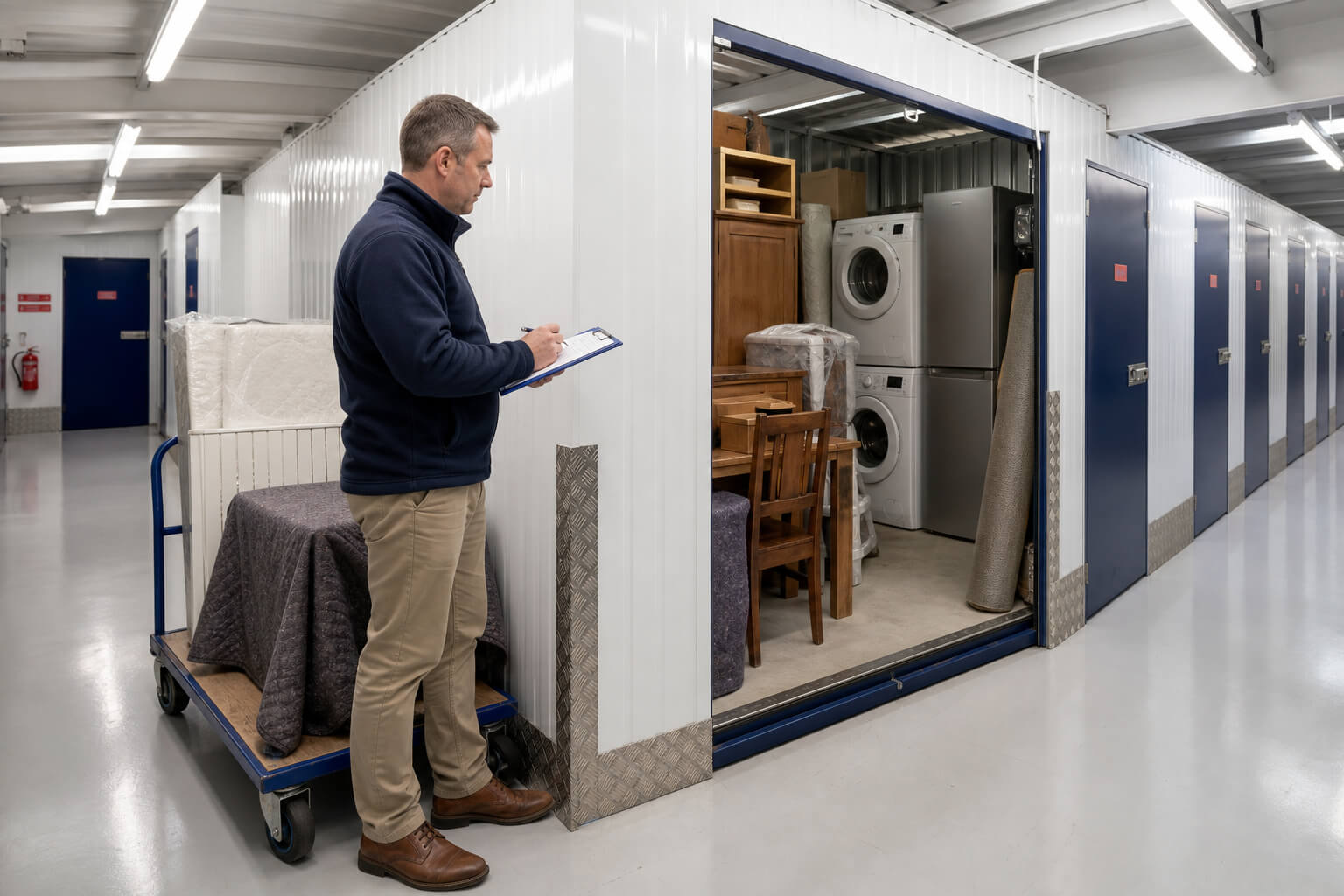
The things that typically fill a forces family unit: sofas, beds, wardrobes, dining tables, kitchen equipment, the childrens’ toys and books, the things accumulated across a family home that have no business travelling on a posting. Clothes in wardrobe boxes, books in small boxes, fragile items well-packed.

What you need to know is that we do not offer climate control. We do not manage temperature or humidity. What we offer is clean, dry and secure, which is what furniture and packed boxes need for the months they are with us. If you have items that require controlled conditions, you will need a specialist facility for those. For the standard household contents of a forces family home, a Wigwam unit is the practical and honest choice.

What we do not store (vehicles, caravans, boats)

We store household goods. We do not store vehicles, caravans, motorhomes, motorbikes or boats. If a vehicle is part of what you need to sort before a posting, you will need a specialist vehicle or leisure storage provider for that. We will not be the right fit, and we would rather tell you plainly than have you arrive and find out.

Deliveries and removals – what to know about an unmanned site

Our sites are unmanned. That is by design: it keeps costs down and it means smart entry gives you direct access without needing anyone to be there. But it does mean one thing to plan for when a removals firm is involved.

If a removals company or courier is delivering goods to your unit, someone from your own side needs to be present to receive them. We do not sign for deliveries and we do not manage goods arriving on your behalf. If you are using a removals firm, coordinate with them so that you or someone you arrange is there when the van arrives. It is a simple thing to plan for, and worth confirming before the move day.

How much space you will need

Unit sizing depends on what you are clearing and how much of it you are putting in store rather than taking with you.

From a studio flat to a full family home – a rough guide

A rough starting point: a studio or one-bedroom flat typically fits into one of our smaller units. A two- or three-bedroom house needs something in the mid-range. A larger family home with a full set of furniture, appliances and packed belongings will need a bigger unit still.

These are rough guides. The variables that matter most are how much furniture you are putting in whole versus flat-packed, how densely you can stack boxes, and whether there is anything large and awkward that takes up more floor space than its weight would suggest. If you are unsure, err on the side of slightly more space rather than less. You will find it easier to fit and retrieve things in a unit that is not crammed.

Our storage sizes guide (reference it by name in the quote flow) gives more detail on what fits where.

Where to check current prices

We do not list prices on this page because they vary by location and unit size. The current pricing page is at wigwamstorage.co.uk/how-much-is-self-storage-in-the-uk and gives a clear picture of what to budget before you get a quote.

Keeping your belongings secure while you are away

The security question matters more for a forces family than for most. You are not popping in every few weeks to check. The goods may be in store for months with no one from your side anywhere near. The setup needs to hold without needing you to monitor it.

Individually alarmed units, clean, dry and secure

Every unit at Wigwam has its own alarm. This is not site-level security alone – it is unit-level. If someone opens a unit that is not theirs, it triggers. Your unit is not part of a communal space that relies on a perimeter being unbroken. Its alarm is specific to it.

The units are clean and dry. We maintain that standard because it is what furniture and belongings need. No damp, no debris, no evidence of previous use left behind. What goes in should come out in the same condition.

We do not offer climate control. There is no temperature management, no humidity regulation. What we offer is the honest baseline: secure, clean, dry, and individually alarmed. For most household goods, that is what matters.

Smart entry, 6am to 10pm, every day – on your schedule

Access is by smart entry, seven days a week, between 6am and 10pm. It is not 24-hour. That is a plain fact worth knowing before you book.

The access hours are broad enough to fit around most schedules. If a partner is running the move around work and a school run, there is plenty of time before and after. If a removal van is arriving at 7am, access is open. If a late-evening retrieval is needed, there is time for that too.

“Smart entry” is the right term for how the access works. You do not need to call ahead, you do not need anyone on site to let you in, and you do not need to fit your visit around staffed hours. You arrive, you access your unit, and you leave.

Cover for your goods while the unit is closed for months

Contents protection is mandatory at Wigwam. You cannot store with us without it. That is a condition of storage, not a recommendation. Here is how it works.

The RSA Self Storage Customers’ Goods policy, or prove your own

There are two routes. You can take the RSA Self Storage Customers’ Goods policy, which is available through Wigwam and is specific to goods held in a storage unit. Or you can demonstrate that an existing policy of your own extends to cover goods in a storage facility. If you go the second route, you will need to confirm it in writing.

Whichever route you take, you need to declare the full replacement value of everything in the unit. Under-insurance is not a grey area: if you declare half the value and make a claim, you recover half the loss, no more. Declare what it would actually cost to replace the contents, not what you paid for them originally or what you think they are worth now.

Full details of the cover options are at wigwamstorage.co.uk/contents-protection/.

Declaring the right value – why it matters

For a forces family with a full household in store for a long tour, the total replacement value can be more than it first appears. Add up the furniture, appliances, clothing, personal items, and anything else in the unit, room by room if that helps, and declare the total at replacement cost.

If you have questions about what your cover includes, what a claim process looks like, or whether your existing policy extends to a storage unit, speak to the insurer directly or to an independent broker. Wigwam can signpost but cannot advise on insurance. If your policy covers goods in England and Wales, be aware that cover terms and rules in Scotland and Northern Ireland can differ. Check with your insurer for the position that applies to your specific policy and location.

Our market-town locations, including Warminster in Wiltshire

Wigwam Self Storage operates across our UK market-town locations. These are quiet, local sites in towns rather than industrial edge-of-city facilities, which matters for a partner managing access alone without a long drive.

Warminster in Wiltshire – near the garrison, in the town

Wigwam Self Storage Warminster is well-placed for families connected to the garrison at Warminster. It is a market-town site, local and accessible, not a large out-of-town facility. If you are clearing a quarter in the area or need somewhere within reach of the garrison for the duration of a posting, it is the nearest Wigwam location to that part of Wiltshire.

A specific page for Warminster is being confirmed – in the meantime, the full locations hub lists all current sites and lets you check what is nearest to you. (Verify the Warminster-specific slug before publishing – do not invent it.)

Bath, Lincoln, and our wider network of market towns

Forces families based further afield will find sites across our UK market-town network. Wigwam Self Storage Bath serves the Bath and wider Somerset area. Wigwam Self Storage Lincoln covers Lincolnshire, a county with a long military presence. For the full list and to find the nearest site to your posting area, the locations hub is the right starting point.

Getting a quote for your posting

Getting a quote is straightforward and does not lock you into anything.

What to have ready when you ask for a quote

Two things help: a rough sense of how much you are putting in store – a flat’s worth, a house’s worth, or a specific set of items – and a start date, even if the end date is uncertain. That is enough to get a realistic quote. You do not need exact measurements and you do not need a confirmed departure date before you make contact.

Start at quote.wigwamstorage.co.uk.

If your dates are not fixed yet

The two-week minimum means you do not need a confirmed posting end date before you take a unit. You can start when you need to, and when the return date firms up, the notice period is two weeks from whenever that is. The plan can stay loose until the posting lets it firm up.

If the order is likely but not yet official, it still makes sense to ask for a quote. Knowing what a unit would cost and what sizes are available in your nearest location means you are ready to move the moment you need to.

When the order lands, we are here. Get a quote at quote.wigwamstorage.co.uk.

Frequently Asked Questions

Can the serving member’s partner or a family member manage the unit if the serving member is deployed?

Yes, and for most forces families that is exactly how it works, because the move is often run by whoever is left holding the keys while the serving member is already elsewhere. The account is held by a named renter, and that does not have to be the person who is away. The partner managing the clear can hold the account, take the unit, move things in, access it, and close it when the time comes, all without the serving member being present.

A couple of points are worth settling at the start so there are no snags later. Decide who holds the account and who needs access, and raise it with the support team at quote stage; the formal position on access arrangements is in the terms and conditions. Because the sites are unmanned and entry is by smart entry, the person managing the unit uses their own authorised access and does not need anyone to let them in, which is the whole point for a partner fitting a move around a school run and a job. If the serving member is the named holder but is deployed when the unit needs closing, sort the access arrangement before they go, rather than trying to fix it from overseas. The practical reality is that one fewer dependency on the absent person is one fewer thing to go wrong in a week with too many moving parts. Set it up so the person actually on the ground can do everything the unit requires, and the deployment stops being an obstacle to managing the storage at all.

What if the posting is cancelled or changed after I have already taken a unit?

You are not stuck with it, because nothing about the unit is tied to the posting going ahead. If the order is cancelled, brought forward, or changed entirely, the storage flexes the same way it does for everything else: you give two weeks notice whenever you need to, clear the unit, settle the account, and the refundable deposit comes back. There is no fixed term you are locked into and no penalty for the plan changing under you, which it does often enough in service life.

The detail that matters most here is the refund of unused days. If you have paid to the end of a period and the situation changes so you clear the unit partway through, you are refunded for the days you did not use. So a cancelled posting does not leave you paying for storage you no longer need; you only ever pay for the time your things were actually with us. Equally, if the posting is merely delayed rather than cancelled, you can simply keep the unit running until the new dates firm up, since there is no upper limit on how long you stay. The two-week minimum is the only floor, and it does not compound with the two-week notice; they are separate things, the shortest stay and the warning you give to leave. This is the part that takes the financial worry out of committing before dates are confirmed. You can take a unit on a likely posting that has not yet been made official, knowing that if it falls through, closing the unit costs you nothing beyond the time you actually used it. The contract bends to the order, not the other way round.

Does Wigwam offer a forces or military discount, and how does that compare to the flexible terms?

We do not run a published forces discount, and we would rather be straight about that than imply otherwise. What we offer instead is the set of flexible terms described throughout this page, and for a service family those terms are usually worth more in practice than a headline percentage off. The reason is simple: the cost that hurts a forces move is not the rate, it is paying for storage you cannot use because the dates moved.

Consider what the terms actually do. Unused days are refunded if a tour ends early or a posting comes through ahead of schedule, so a shortened stay costs less, not the same. There is no long tie-in, no rolling annual contract, and no penalty for leaving sooner than planned, so a changed posting does not cost you a cancellation charge. The refundable deposit comes back in full when you give notice and clear the unit. And the two-week minimum means you can start the moment the quarter has to be cleared, without committing to a fixed period you cannot predict. A flat discount applied to a contract that punishes early exit or ties you in for a year would often leave you worse off than fair terms that simply charge you for the time you use and refund the rest. If your circumstances mean a particular rate question is worth asking, ask at quote stage and you will get a straight answer. But the honest position is that the flexibility is the benefit built for service life, and it is available to everyone without needing to prove eligibility.

How does storage interact with the official MOD removals and disturbance allowance process?

This is a question for your unit’s admin staff or the relevant MOD removals process, not for us, and it is important to keep the two things separate. Wigwam provides the unit and a clear invoice for what you pay; we cannot advise on entitlements, what the MOD will or will not fund, or how disturbance allowance and official removals arrangements apply to your move. Those rules sit with the service, change over time, and depend on the type of move and your individual circumstances, so the only reliable source is the official process and the people who administer it for you.

What we can do is make the paperwork side easy for whatever that process requires. You will get a proper invoice for the rental, and the terms, the deposit arrangement and the notice period are all set out plainly in the terms and conditions, so if the official process needs documentation or a clear statement of costs, it is straightforward to provide. The sensible order of operations is to check what is funded or claimable through the official channel before you commit, so you take the unit knowing where it sits against any entitlement. If the official removals contractor is delivering goods to the unit, remember the site is unmanned, so you or someone you arrange must be present to receive them; we cannot sign for a contractor’s delivery on your behalf. Beyond supplying the space and the paperwork, the entitlement questions genuinely belong with your admin staff. Ask them first, take the unit second, and the two fit together without surprises.

Can I store firearms, ammunition or regulated military kit in a unit?

No. A self storage unit is not a lawful or suitable place for firearms, ammunition, or regulated military equipment, and you should not store any of it with us. Firearms and ammunition are governed by strict legal requirements about secure storage, certification and who may hold them, and a self storage unit does not meet those requirements; the proper arrangements run through licensed channels and the relevant authorities, not a storage provider. Regulated or issued military kit is subject to its own service rules about how and where it is held, and those rules, not a storage contract, govern it.

More broadly, units are for ordinary household goods only. Alongside firearms and ammunition, that rules out other hazardous or prohibited items, and it is always better to ask before you book than to arrive with something that cannot go in. The honest list of what a Wigwam unit is for is furniture, boxes, appliances, books, clothing and the everyday contents of a family home, stored clean, dry and secure. It does not extend to weapons, ammunition, anything explosive or hazardous, or controlled equipment that the law or the service requires to be held in a specific way. If part of what you need to sort before a posting involves regulated kit or firearms, that is a conversation for your unit’s armoury or the appropriate licensing authority, who can direct you to the lawful storage route. We would rather tell you plainly that we are not the right place for it than have you assume otherwise. For everything else a forces family home contains, the unit is exactly the practical, secure answer it is meant to be.

Self Storage Refunds For Unused Days How Our Billing Actually Works

Leave early — do you get money back for the days you didn’t use?

Most people come to us having already braced themselves for bad news. They have been reading about self storage refunds online and the answers they found were written for the American market, where “all rental transactions are final” is standard. Here in the UK, that is not how we do things. At Wigwam, if you leave before your paid period is up, you get your money back for the days you did not use.

There is one condition worth knowing from the start: there is a two-week minimum stay. If you only need storage for a handful of days, we will be honest with you about that up front. But if you have booked for a month and your move completes three weeks in, the days you did not use come back to you. That is just fair billing.

The deposit is also refundable. You give us 14 days’ notice, you empty your unit and remove your padlock, and the deposit comes back once your account is settled. No mystery, no arguing about it afterwards. Let me walk you through the whole thing, start to finish.

The short answer: yes, Wigwam refunds unused days

At Wigwam, we refund unused days as a matter of standard policy. This is not a special exception or a favour we extend in certain circumstances. If you have paid ahead and you leave before that period runs out, the unused days come back to you.

What “refund for unused days” actually means

You pay for storage by the day. If you have paid for a month and you are done after three weeks, we calculate the days you actually used and refund the remainder. The only condition on this is the two-week minimum stay: you need to have been with us for at least a fortnight before the unused-days refund applies. Give us 14 days’ notice, clear the unit, and the money follows.

We will state the two-week minimum term plainly every time the unused-days offer is mentioned, because we think it is the honest thing to do. You should be able to plan around it before you book.

How this compares to the US “no refunds” norm

If you have been reading American self storage sites, you will have seen a lot of “all transactions are final” and “no partial refunds.” That is how most US month-billing operators work, and unfortunately those answers are what most UK searchers find first. Wigwam operates under UK terms, not US billing norms, and this page is written for people who are renting in market towns across England.

How our day-based billing works

Your billing at Wigwam is calculated by the day, not by an arbitrary monthly block. That means what you pay reflects how long you actually store, and it is why returning unused days makes sense as a starting point rather than as an exception.

Paying ahead and what your payment covers

When you book, you pay ahead for a period of storage. That payment covers every day of that period. There is no ambiguity about what you are buying. You are buying days of secure, individually alarmed storage in a clean, dry unit. The moment those days are no longer being used because you have moved your things out, you have a right to the money for the days that remain.

For current pricing, see how much self storage costs in the UK. We do not quote prices on this page because your exact rate depends on your unit size and location, and we would rather you see it accurately than estimate.

Why we do not bill you for storage you are not using

It would not be fair to charge you for an empty unit. That is the short version of our billing philosophy. There are no cancellation fees at Wigwam. If you give proper notice, clear the unit, and settle your account, the unused days are refunded. We are not looking for reasons to hold on to your money.

See our pricing and your unit options at how much self storage costs in the UK, then get a quote at quote.wigwamstorage.co.uk. Your price and our terms, in the same place.

Your 14-day notice period, plainly

The refund is triggered by notice. You need to tell us 14 days before you intend to vacate. That is the one step between you and the money coming back, and it is entirely within your control.

How to give notice (a quick note to the team)

Giving notice is straightforward: a message to the support team is all it takes. You do not need to come into a branch or fill out a form. Get in touch, tell us the date you are planning to move out, and that starts the 14-day notice clock. If you have questions about timing, the team, including Selina, are there to help. We keep this simple because the move itself is complicated enough.

What happens to the days inside the notice window

If you have already prepaid beyond your planned move-out date, those extra days are refunded after you vacate and the account is settled. The 14-day notice period is not a separate billing window that costs you money; it is the administrative requirement that lets us process the end of your contract cleanly. You will not be charged twice for the same period. For the precise mechanics, the full terms and conditions are always the binding reference.

Your refundable deposit and when it comes back

The deposit is refundable. It is returned once you have served your 14 days’ notice, vacated the unit, and your account is settled with nothing outstanding. Those are the three conditions, and they are all straightforward.

What the deposit is for and how much it is

The deposit is held while you are a customer with us. It exists as a security against any amounts that might fall due at the end of your contract. It is not a booking fee or an admin charge. You get it back. The amount varies and we do not quote it on this page; you will find the current figure on the pricing page or in the full terms and conditions.

The timeline from move-out to deposit return

Once you have given notice, cleared the unit, removed your padlock and confirmed you are done, we process the deposit return against any final amounts owed. The timeline from that point is set out in the terms. The important thing to know is that once those three steps are done, the refund is processed. You do not need to chase it or argue for it. If you have contents protection through us, make sure you have confirmed with the team that this is also being cancelled, so nothing is left running after your move-out date. See the contents protection page for how that works.

The two-week minimum term, explained

We have a two-week minimum stay. We say it early and plainly because we think it is the honest thing to do. The refund of unused days is a genuine offer, and the minimum term is the one condition attached to it.

Why there is a minimum term and what it covers

The two-week minimum is our floor. It covers the administrative and operational cost of setting up and closing a storage contract. Below two weeks, the economics do not work for either side. Above two weeks, the offer is straightforward: you pay for what you use, and what you do not use comes back.

What the two-week minimum means in practice for a short-notice move

If you only need storage for a week, we will tell you that the minimum stay is a fortnight and you will be billed for at least that period. That is not a trick; it is just a realistic constraint. Most people using storage around a house move need longer than two weeks anyway, but if your timeline is very tight, it is worth knowing the floor before you book. A short conversation with the team will make this clear before you commit.

What we need from you before we process the refund

The refund is within your control. You do the steps, we process the money. There are no gatekeepers and no hoops to jump through beyond the practical ones.

Empty the unit and remove your padlock

Our sites are unmanned. You access your own unit using smart entry, and you move your things out at a time that suits you. When you are done, the unit needs to be empty: nothing left behind, and your padlock removed. We cannot process the end of your contract while the unit is still occupied or locked. This is one of the practical realities of how our sites work: you are in control of the space, and moving out is your action to take.

If you are using a removal company to help, someone from your side needs to be present on the day to manage access. Our sites are not staffed, so there is no one from Wigwam who can oversee a removal team or take responsibility for the process.

Tell us you are out (the notice and final confirmation)

Once the unit is empty and the padlock is off, tell the team you are done. This is the final step. A message confirming you have cleared out lets us close the contract, calculate the unused days, and initiate the refund. If you have contents protection in place with us, confirm its cancellation at the same time. See the contents protection page for details on that.

Access on move-out day: 6am to 10pm by smart entry

Move-out timing is in your hands. Our smart entry system operates from 6am to 10pm, seven days a week. You do not need to book a slot, wait for a member of staff to unlock the site, or work around anyone else’s schedule.

How smart entry works on the day you move out

Smart entry lets you access your unit during opening hours without anyone from Wigwam needing to be present. You arrive, access the site, and get on with the move. If you need to make several trips, you can come and go between 6am and 10pm. The access window is generous enough to accommodate most removal company schedules without having to push to be first pick-up or last drop-off of the day.

Access is not 24 hours. We want to be clear on this: 6am to 10pm is the window, and it applies every day of the week. Plan your removal company around those hours and you will have no issues.

If you are using a removal company or van hire

Smart entry means you can coordinate a removal team without needing us involved on the day. Arrive at the site, access your unit, and your team can help you clear it. The one requirement is that someone from your side is present throughout. Our sites are unmanned, so Wigwam cannot supervise or assist with the removal. Most removal companies are familiar with self storage sites and will not find this unusual.

Billing you can trust, wherever you are storing

The terms described on this page are not specific to one site. They apply across our UK market-town locations. Whether you are storing at Wigwam Self Storage Bath or Wigwam Self Storage Lincoln, the billing mechanics are the same: unused days refunded, deposit returned on notice, no cancellation fees, two-week minimum.

The same terms across our UK market-town locations

This is a company-wide policy, not something that varies by site or by manager. We think that consistency matters. If you move from one town to another and need storage at a different Wigwam location, the terms work the same way. You are not starting from scratch or negotiating something different. The same offer, the same honesty, in every market town we operate in.

Where to find the full terms (the binding version)

This article is the plain-English version. It is written to be readable and direct, but it is not a legal document. The binding version of our terms is the full terms and conditions on our website. If you have a legal question, for example relating to storage during probate, a disputed estate, or a dispute of any kind, the right step is to consult your solicitor. We can describe our own terms, but we cannot give legal advice.

Ready to store? Get a quote at quote.wigwamstorage.co.uk. Your price and our terms, in plain sight from the start.

Frequently Asked Questions

How does the refund actually reach me, and how long does it take?

The refund is processed back once the unit is empty, the padlock is off, you have told the team you are done, and the account is settled. The mechanics of how the money returns and the exact timeframe are set out in the terms and conditions, which is the binding reference on this. We do not put a specific number of days in this article because the precise timing sits in the terms, and we would rather point you to the document that governs it than quote a figure that might not match your situation.

What is worth understanding is the sequence, because the timeline only starts once the steps are complete. Giving notice begins the 14-day clock. Clearing the unit and removing your padlock is your part, and it has to be finished before anything can be calculated. Telling the team you are out is the trigger that lets us close the contract, work out the unused days, set them against anything still owed, and start the refund. If you leave any of those steps half-done, a box still in the corner, a padlock still on, no confirmation message, the contract stays open and the clock on your refund has not really started. The cleanest way to get your money back quickly is to do all three steps in one go: empty it, unlock it, tell us. If you want to know the exact processing window for your circumstances, the support team can talk you through it, or the terms and conditions page sets out the mechanics in full.

Are the deposit and the unused-days refund two separate things, or one payment?

They are two separate things, and it helps to hold them apart in your head because they answer different questions. The unused days are a refund of rent you paid ahead for time you did not use. The deposit is a separate sum, held throughout your stay as security against anything that might be owed at the end, and returned once you have vacated and settled up. One is about the time you paid for; the other is about security on the account. They are processed around the same exit but they are not the same money.

In practice, both come back to you on a correct exit, which is why people often blur them together. When you give 14 days’ notice, clear the unit, and settle the account, the unused days are calculated and refunded, and the deposit is returned, less anything genuinely outstanding. The reason it is worth keeping them distinct is budgeting. The deposit is not a cost; it is your money held temporarily, so plan it into your cash flow as something that comes back, not something you have spent. The unused-days refund only exists if you happened to pay ahead beyond the date you actually left, so it may or may not apply depending on how your billing fell. The amounts and the conditions for both sit on the pricing page and in the terms and conditions. If your final statement is not clear on which figure is which, ask the team to break it down for you.

Can I pause my storage instead of closing it and reopening later?

The model is built around a live rental rather than a freeze button, so there is not a “pause” in the sense of suspending the account while the unit sits reserved at no charge. While you have the unit, you are renting it, and the rent runs. If you genuinely no longer need the space for a stretch, the honest options are either to keep paying to hold the unit, or to close the contract properly, give your 14-day notice, clear it, get your deposit and any unused days back, and book again when you need it.

Which makes sense depends on the length of the gap and the hassle of moving your things twice. For a short gap, keeping the unit on is usually simpler and avoids two moves, and you only ever pay for the days you use because unused days are refundable if you then leave early. For a long gap, closing the contract and reopening later can save money, but you have to weigh that against the cost and effort of emptying the unit and filling it again, and against the fact that the same unit at the same size is not guaranteed to be free when you return. There is also the two-week minimum to factor in: a fresh booking starts that minimum again. If you are wrestling with a gap of uncertain length, the practical step is to talk it through with the team, who can look at your dates and the rate and tell you honestly which way works out better. They handle the storage and billing side, so that is squarely their remit.

What happens to my refund if I owe for contents cover or have an outstanding balance?

Anything genuinely owed on the account is settled before the refund is returned, which is why we describe the deposit as coming back “less anything outstanding”. A refund is not a separate pot that ignores the rest of your account; it is the closing balance once everything is reconciled. So if there is rent due, or a contents-cover charge still running, that is accounted for first, and what comes back to you is the net figure. In the ordinary case, where the account is up to date, there is nothing to deduct and you simply get the unused days and the deposit returned in full.

Contents cover is the one people most often forget about at the exit. If you took Wigwam’s RSA policy, that cover runs alongside your storage and needs to be stopped when you move out, otherwise it can keep ticking after the unit is empty. The fix is simple: when you confirm you are out, confirm the contents cover should be cancelled at the same time, so nothing is left running past your move-out date. If you do not, you could find a small charge has continued and is then netted off your refund. The same logic applies to any other balance. The cleanest exit is to make sure rent is current, the cover is cancelled, and the account shows nothing outstanding before you expect the money back. If your closing statement shows a deduction you do not understand, ask the team to itemise it. They can explain what was set against the refund, though for anything touching the contents policy itself the detail sits on the contents protection page.

If I move from one Wigwam site to another, does my notice and refund carry over?

Each unit is its own contract, so moving between sites is handled as closing one and opening another rather than transferring a single agreement across towns. The terms are identical at every Wigwam location, which is the reassuring part, but the paperwork does not simply slide from one site to the next. To leave the first unit cleanly you give your 14-day notice, clear it, remove your padlock, settle up, and your deposit and any unused days come back as normal. At the new site, you take out a fresh rental, pay a deposit, and the two-week minimum starts again from your new start date.

The reason this matters is timing and double-paying. If you need continuous storage across the move, you will likely overlap for a short period, holding both units while you shift your goods, and you pay for the time you use at each. Because unused days are refundable, you are not penalised for that overlap beyond the actual days you hold both. The practical advice is to plan the dates so the overlap is as short as the move realistically allows, and to remember that the deposit at the first site is returned to you separately rather than rolled into the new one. The terms working the same way everywhere means you are not learning new rules, but you are starting a clean contract, not migrating an old one. If you want the timing worked out so you are not paying twice for longer than necessary, the team can line up the notice on the old unit against the start date on the new one. That co-ordination is exactly the kind of storage and booking question they are there to help with.

Why Theres No Big Yellow Near Shipston On Stour

The familiar names all pointed everywhere but Shipston — why?

You searched. The names you recognised were not there. Coventry, Oxford, Birmingham – the results pointed everywhere except here.

It is a strange feeling, looking for something ordinary and finding a gap. Self storage is not exactly a rare commodity in the UK. There are hundreds of sites scattered across every big city. Yet if you live in or around Shipston-on-Stour and you need somewhere to put things, the familiar names are conspicuously absent.

There is a reason for that. Not a complicated reason, and not a bad one. Just arithmetic.

Where the big names actually are

The nearest Big Yellow, Safestore, Access and Shurgard sites are all located well outside Shipston. Understanding where they are makes the gap on the map a lot less puzzling.

Safestore and Access: Coventry, around 25 miles north

Both Safestore and Access Self Storage operate in Coventry, which sits around 25 miles north of Shipston-on-Stour – roughly 45 minutes by road. Both are well-run operations with good reviews, offering the kind of large-scale, purpose-built facilities you would expect from national brands. If you can get to Coventry regularly, they are genuine options worth looking at.

Big Yellow: Oxford, Cheltenham and Birmingham, all more than 30 miles away

Big Yellow has no site in the area. The nearest stores are in Oxford to the east, Cheltenham to the south-west, and Birmingham to the north – each more than 30 miles from CV36. Depending on traffic, that can mean an hour or more of driving to drop something off or pick it up.

Shurgard: far side of Birmingham, 40-plus miles

Shurgard’s closest UK sites are in Oldbury and Wolverhampton, on the far side of Birmingham. For anyone based in Shipston, that is a 40-plus-mile journey that would have to be a dedicated trip. It would not be a quick errand.

The catchment arithmetic – why the sums don’t add up for a national chain

A national chain building in Shipston-on-Stour would not make financial sense. That is not a criticism of the town – it is simply how the industry is structured.

What a national chain needs to open a site

According to the Self Storage Association UK, around 85% of household storage customers come from within three miles of their unit. Most people will not drive more than 15 to 20 minutes to access their belongings regularly. That radius constraint means a national operator needs a large, dense urban population to fill a purpose-built site. The general threshold sits somewhere around 100,000 people within a viable catchment. Anything smaller and the numbers do not stack up against the cost of building a brand-new storage facility from the ground up.

Shipston’s population and catchment reality

The 2021 Census recorded Shipston-on-Stour’s population at around 5,800 people. Add the surrounding villages and smaller settlements in the CV36 catchment and the figure grows, but it does not grow to anything close to 100,000. The chains are not absent because no one spotted Shipston on the map. They are absent because the spreadsheet told them not to go there.

What this means for everyone in CV36

Without a different kind of model – one that can open viably in smaller towns – modern indoor self storage simply does not reach places like Shipston. The gap on the map is structural. You could have the same gap in Chipping Norton, Moreton-in-Marsh, or Stow-on-the-Wold for exactly the same reason. The chains go where the numbers take them, and the numbers point to cities.

What the market currently offers in and around Shipston

Given the constraints above, what actually exists for someone who needs storage in or near the town?

In town: Tilemans Park container storage

Tilemans Park, also in Shipston (CV36 4PR), offers container-based storage. It is a real option and worth knowing about. Shipping containers can suit bulk outdoor storage, building materials, or situations where weatherproofing matters more than climate or tidiness. It is a different product from indoor self storage – the access experience, the security features and the unit presentation are distinct – but for some uses it fits well.

Nearest towns: Stratford-upon-Avon and Warwick

There are self-storage operators around Stratford-upon-Avon, roughly nine miles from Shipston, and around Warwick, roughly 14 miles away. Some customers will find those towns convenient, particularly if they travel through them regularly for work or shopping. Worth checking if proximity to Shipston itself is not your first concern.

The gap that remains

None of the above gives you individually alarmed, indoor self storage in Shipston itself. A container yard is not the same product. Stratford and Warwick add miles. The Coventry chains are significantly further. Until recently, if you needed clean, dry, secure indoor storage close to home, you were out of luck.

Why Wigwam built here on purpose

The reason Wigwam Self Storage exists in Shipston is that the model is different – not just in ambition but in structure.

The converted-building model in plain English

Wigwam does not build from scratch. It takes existing buildings – commercial premises, old warehouses, redundant commercial space – and converts them into fitted, alarmed, individually secured storage units. The capital cost of converting an existing structure is considerably lower than constructing a purpose-built facility. That lower cost base means the numbers work at a smaller scale. A catchment of several thousand households, rather than 100,000, is enough.

Why this is something the big chains cannot easily replicate

The national brands have invested billions in purpose-built infrastructure optimised for high-volume urban locations. Their model is efficient at scale and works well for the markets it was designed for. Reorienting it toward small-town sites would require a fundamentally different capital structure and operational logic. Wigwam’s model was built around market towns from the start. That is not a workaround; it is the design.

The choice to stay market-town, not grow into cities

Wigwam now operates across a number of UK market-town locations. Not city centres – market towns. The point is proximity: being close enough to Shipston residents that a visit to your storage unit is a ten-minute errand, not a half-day commitment. That closeness is the product, at least as much as the unit itself.

If you are in or near Shipston and want to see what’s available, the Shipston team are at Wigwam Self Storage Shipston-on-Stour – or get an instant quote at quote.wigwamstorage.co.uk.

What being in town actually buys you

The practical difference is not difficult to describe. You stop driving to Coventry and start treating your storage unit the way you would treat a room in your house – somewhere you can nip in and out of as needed.

Location and access

Wigwam Self Storage Shipston-on-Stour is at Blackwell Business Park, CV36 4PE. Access runs from 6am to 10pm, seven days a week, using smart entry. There is no 24-hour access, but 6am to 10pm covers virtually any practical need – an early-morning trip before a long day, or collecting something after work in the evening.

The site is unmanned for customer access; you use smart entry to get in and out. If you need to speak to someone, the office team is available Monday to Friday, 9am to 6pm, and Saturday, 9am to 2pm.

One point worth noting if you are planning to receive deliveries: the site is unstaffed, so for any incoming courier or delivery, someone from your business or household will need to be present to accept it. Wigwam does not sign for or receive goods on customers’ behalf.

Units: what’s available

Units run from 10 to 300 square feet, covering eleven-plus sizes. Each unit is individually alarmed. The site has 24/7 CCTV. Drive-up containers of around 160 square feet are also available if you need to bring a vehicle alongside your unit. The honest description of the storage environment is clean, dry and secure – there is no climate control, no temperature or humidity management. For most household and business storage needs, that is exactly what is required.

Terms: how they actually work

The minimum stay is two weeks. If you leave early, unused days are refunded. Billing runs in four-weekly cycles. A refundable deposit is taken on move-in (two weeks’ deposit, plus four weeks upfront); it is returned after you give 14 days’ notice, vacate your unit, and settle any balance owing.

Contents protection is mandatory. You can take Wigwam’s own policy or provide proof of cover through your own insurer. In either case, declare the full replacement value of what you are storing – under-insurance is settled in proportion, so it matters. You can find the full details at wigwamstorage.co.uk/contents-protection.

Full terms are at wigwamstorage.co.uk/terms-conditions. For pricing, the guide is at wigwamstorage.co.uk/how-much-is-self-storage-in-the-uk – no prices are quoted on this page because the right unit for you depends on size and duration, and a quote is the cleaner way to get an accurate figure.

When the drive to Coventry actually makes sense

Not every situation suits a market-town operator. That is worth saying plainly.

If you need a very large unit or specialist handling

Wigwam Shipston’s upper limit is 300 square feet. If you are a business needing warehouse-grade space, or if you need a unit substantially larger than that, the purpose-built chains in Coventry or further afield may be the right call. They have the infrastructure and the scale for it.

If you are already in Coventry or commuting through it regularly

The nearest unit is the one on the route you already make. If your work or family takes you to Coventry several times a week, storing there is not an inconvenience – it is simply logical. No shame in that.

What to weigh before you decide

Three questions worth asking of any storage site, wherever it is:

How far will you actually travel when you need to get in and out – not just on move-in day, but every time you need something? What are the access hours, and do they fit your working pattern? And what are the genuine contract terms: minimum stay, notice period, deposit?

Those three questions will narrow the field faster than any feature comparison.

The honest numbers: distances at a glance

Here is the picture in summary form.

OperatorLocationApprox. distance from ShipstonApprox. drive
SafestoreCoventryAround 25 milesAround 45 min
Access Self StorageCoventryAround 25 milesAround 45 min
Big YellowOxford / Cheltenham / Birmingham30-plus miles50 min or more
ShurgardOldbury / Wolverhampton40-plus miles60 min or more
WigwamShipston-on-Stour (Blackwell Business Park, CV36 4PE)In townUnder 10 min for most CV36 residents

Drive times are estimates and will vary with traffic and route.

What the table tells you about market structure

The table is not a ranking. It is a picture of where each model is viable. Coventry works for the national chains because of the population density. Shipston works for Wigwam because of a different cost structure. Both facts are true at the same time.

The single question worth asking before you book anywhere

How far will you actually drive, not once but every time you need to get in? Day one is easy. It is week three, on a wet Tuesday evening when you need that one document or piece of equipment, that the distance matters.

Shipston storage: the short version

For anyone who scrolled to the bottom for a quick answer.

Why the chains are absent

A national self-storage brand typically needs a local population of around 100,000 people to make a purpose-built site commercially viable. Shipston-on-Stour has around 5,800. The chains are not absent because they overlooked the town – they are absent because their model does not reach towns this size. That is arithmetic, not a verdict on Shipston.

What Wigwam Shipston-on-Stour offers

Indoor units from 10 to 300 square feet, individually alarmed, with 24/7 CCTV and smart entry from 6am to 10pm, seven days a week. Clean, dry and secure. A two-week minimum, unused days refunded, a refundable deposit, 14 days’ notice to leave. Office team reachable in hours. The only indoor self storage in Shipston itself. Full details at Wigwam Self Storage Shipston-on-Stour.

Next step

If you are ready to see sizes and get a price, the Wigwam Self Storage Shipston-on-Stour location page is the place to start.

Get an instant quote for your unit at quote.wigwamstorage.co.uk, or call the Shipston team on 01608 532162. Office hours: Monday to Friday, 9am to 6pm; Saturday, 9am to 2pm.

Frequently Asked Questions

Should I choose an indoor unit or a drive-up container at Shipston?

Choose the indoor unit for household goods, furniture, files and stock, and consider the drive-up container only when loading something large straight off a vehicle is the priority. Both are clean, dry and secure, so this is about how you load and what you store rather than a quality gap. The drive-up containers at Shipston are around 160 square feet and let you pull up alongside, which suits bulky items or kit you move in and out often.

A few pointers to weigh:

  • Indoor units run from 10 to 300 square feet, so there is more choice of size, including small lockers
  • Indoor suits boxes, furniture, archives and most business stock
  • A drive-up container suits heavy or awkward loads you would rather not carry far
  • Both are individually alarmed and sit on a site with 24/7 CCTV

Neither offers climate control, because none of our storage does; the standard is clean, dry and secure across the board. So if your goods need temperature or humidity management, neither option is the right call, and a specialist facility would serve you better. For everything else that a home or small business stores, both work well. The Shipston team can talk you through which fits your load when you call on 01608 532162, and you can see sizes and prices at quote.wigwamstorage.co.uk.

What does 24/7 CCTV actually do if the site is unmanned?

The CCTV records continuously and provides a security and evidence layer even though no one is sitting on site watching it live around the clock. People sometimes assume unmanned means unwatched, and that is not the case. The cameras run 24/7, your unit has its own individual alarm, and access is controlled by smart entry between 6am and 10pm, so the site has several layers working together rather than relying on a person at a desk.

What unmanned does mean is that there is no member of staff on site to let you in, hold a spare key, or receive anything on your behalf. The security comes from the systems, not from a presence at the gate. The individual alarm on your unit is the part that matters most day to day: it is contained to your space, so your security is not pooled with the whole building.

This also shapes the courier rule. Because no one is on site to sign for goods, if a delivery or removal firm is dropping something at your unit, someone from your own household or business has to be there with smart entry access to receive it. The cameras and alarms protect the site; they do not stand in for you being present for a delivery. If you have a security question, the office team is reachable Monday to Friday 9am to 6pm and Saturday 9am to 2pm on 01608 532162.

What do I do if I outgrow my 300-square-foot unit partway through?

Shipston’s largest indoor unit is 300 square feet, so if your needs grow beyond that, the practical route is either a second unit or a move to a larger purpose-built facility. The honest position is that 300 square feet is the ceiling at this site. For most household and small-business needs it is ample, but a business scaling into warehouse-grade volume will eventually need more than a single market-town unit can hold.

If the overflow is modest, taking a second unit alongside your first can be the simplest answer, subject to availability. You manage both with the same smart entry, and the two-week minimum and 14-day notice apply to each booking. If the growth is substantial and ongoing, the larger chains in Coventry or further afield have the infrastructure and scale for warehouse-grade space, and there is no shame in that being the better fit at that point.

What the team can help with is sizing and availability: they will tell you honestly whether a second unit makes sense or whether you have grown past what the site can sensibly serve. What they will not do is plan your business growth or forecasts for you, because that sits outside storage. Bring them the volume of goods and the timeline, and they will work out the storage side. Call 01608 532162 or check options at quote.wigwamstorage.co.uk.

How much do I actually pay at move-in, given the deposit and upfront charge?

At move-in you pay a refundable deposit of two weeks plus four weeks upfront, so budget for that initial outlay rather than just the first week. The deposit is held against the agreement and comes back to you on a clean exit: once you have given 14 days’ notice, vacated the unit, and settled any balance owing, it is returned. It is genuinely refundable, not a fee dressed up as a deposit.

Billing then runs in four-weekly cycles. The two-week minimum stay is the floor, and if you leave early, unused days are refunded, so you are not paying for time you did not use. The two-week minimum and the 14-day notice are separate things and do not stack into a longer wait; the minimum simply applies at the start of the booking.

We do not quote prices on this page, because the right figure depends on the unit size and how long you need it, and a quote is the cleaner way to get an accurate number. The pricing guide at wigwamstorage.co.uk/how-much-is-self-storage-in-the-uk explains how the variables work. For your exact move-in figure, including the deposit and the upfront amount, get a quote at quote.wigwamstorage.co.uk or call the team on 01608 532162.

What can the Shipston office team help with, and what is outside their remit?

The office team handles the storage side: sizing, availability, access, pricing, invoicing and booking. They are reachable Monday to Friday 9am to 6pm and Saturday 9am to 2pm on 01608 532162, and they know the Shipston site and the local picture. If you are unsure what size you need, want to check what is free, have a billing query, or need help with access, they are the right people to call.

What sits outside their remit is anything beyond storage itself. They are not insurance, legal or financial advisers. They can point you to the contents-protection page and the terms and conditions, but for advice on whether your own policy covers stored goods, you speak to your insurer or broker; for legal questions about how storage interacts with a lease or probate, you speak to a solicitor. They also will not plan or discuss your business forecasts or growth scenarios, because that is your business to run, not theirs to advise on.

The other thing to remember is that the site is unmanned for access. The office team being reachable by phone is not the same as someone being on site to let you in, hold a key, or take a delivery. Access is by your own smart entry between 6am and 10pm, and any courier delivery needs someone from your side present to receive it. For storage questions, call 01608 532162; for a quote, go to quote.wigwamstorage.co.uk.

Self Storage For Sentimental Things Not The Loft Not The Skip

Not the loft, not the skip — so where do the keepsakes actually go?

There is a particular kind of box that nobody can open and nobody can throw away. It sits at the back of the loft, or on the landing, or pushed under a spare bed. Inside are things that belong to someone you loved, or to a version of yourself you are not ready to let go of. You know they are there. You do not know what to do with them.

Most people end up doing one of two things. They push the box further back into the loft and try not to think about it. Or they feel the pressure build until one afternoon they carry it out to the skip, and regret it for years. Neither of those is the right answer, and somewhere underneath the guilt and the indecision, you probably already know that.

There is a third option. It is not dramatic. It is just a small, clean, dry, secure place that is yours to control, close to where you live, sized to what you actually have. This piece is about how that works, what protects sentimental things and what does not, and how to decide what you are keeping before you decide where it goes.

The loft is just a slower skip

The loft feels safe because things go up there and stay up there. Out of the way, out of the decision. But a loft in a UK house is not a controlled environment. It is cold in winter, warmer in summer, and it breathes moisture up from the roof. Most loft spaces are not insulated against that movement. Things do not disappear up there. They degrade, slowly and invisibly, until one day you open the box and find that the photographs have stuck together, the paper has gone brown and spotted at the edges, and the fabric smells of something you cannot fix.

Why a cold, damp loft quietly ruins photographs, paper and wood

The damage is not from temperature. That is the common assumption, and it is the reason every storage advertisement reaches for “climate control” as its proof word. But in the context of a UK loft, the real enemy is damp, and specifically the condensation that forms when temperature changes cause moisture to move through uninsulated spaces.

Photographs suffer what archivists call foxing: the red-brown spots that appear on paper that has been exposed to humid conditions over time. The emulsion on older photographic prints can separate from the base layer when it absorbs moisture and then dries out repeatedly. Documents develop the same speckled browning. Paper warps and buckles. Wooden objects and furniture swell when they take on moisture and crack when they give it back. Textiles develop mildew that is very difficult to remove without damaging the fabric.

None of that requires a flood. It just requires a cold loft, a few winters, and the moisture that is already in the air of a British house. Clean, dry and secure storage interrupts that process honestly, without overpromising. That is the test that matters.

Why the skip feels final, and why you do not have to reach for it

There is a strand of advice that has spread through decluttering communities that says: if you want to keep a sentimental object but are not sure why, take a photograph of it and then let it go. The idea is that you keep the memory without the physical weight. It is not wrong, exactly. But it does not understand grief, and it does not understand the particular weight of objects that connect you to people you have lost.

The keeper is not being irrational. She is being responsible. These objects are not clutter in the ordinary sense. They are the physical evidence of people, relationships, and moments that deserve to be treated with some care. The pressure to “just sort it out” often comes from people who do not understand what is being asked of her when she is told to make that decision quickly, or on someone else’s terms.

You do not have to choose between the loft and the skip. You can choose to keep the things that matter, properly, in a place that looks after them. The question is how to do that without filling an entire room you do not have.

You can keep the things that matter, the defined-space way

Keeping sentimental things well is not the same as keeping everything you have ever accumulated. The difference is intention. A defined space, decided in advance, gives you permission to keep without guilt, because you have chosen what goes in it rather than just avoiding the decision. That is the keeper doing the job well, not hoarding.

One memory trunk and a set number of archive boxes, not a room

The image worth holding onto is the trunk. One physical container for the things that are truly irreplaceable: the letters, the small heirlooms, the photographs of people who are gone. Beside it, a defined set of archive boxes, three or four at most to start with, for the wider category of things you are not ready to part with but that do not all need to live in the trunk. Together, that is a very small storage unit. It is not a wing. It is not a room. It is a deliberate, contained home for what matters.

This is where the idea of right-sizing begins to be practical rather than abstract. A 10 or 16 square foot unit is enough for a memory trunk and several archive boxes. A 25 square foot unit suits those boxes plus a few pieces of furniture you are holding from a family home. The point is that the physical container defines the category. You are not storing everything. You are storing the things that made it into the trunk and the boxes.

The 90/90 question, used gently, not as a rule to throw things away

You may have come across the 90/90 rule: have you used this item in the last 90 days, and will you use it in the next 90 days? If the answer to both is no, the rule says let it go. It is a useful question for a coat or a kitchen gadget. For a box of letters from your grandmother or the tea set from a marriage that no longer exists, it is the wrong tool, and applying it too strictly can lead you somewhere you will regret.

Will Stowe’s version is gentler: would it change something if this were gone? Would losing it be a loss you could not later undo? If the answer is yes, it belongs in the trunk. The 90/90 question can still help you decide what goes into the archive boxes rather than the trunk, and what you are perhaps ready to let go of. But it is a prompt, not a verdict. You do not have to follow it to the letter to feel like you are doing this right.

How to store sentimental things so they survive

Getting the items into a clean, dry, secure unit is most of the work. The packing matters too, and the principles are simple. The aim is to limit the movement of moisture and prevent physical damage from compression, contact and poor materials.

Packing photos and documents

Photographs should be stored upright, not flat, in rigid boxes that will not flex under the weight of whatever is stacked on top. Do not put them in plastic bags: sealed plastic can trap condensation from the items themselves, particularly if they were not fully acclimatised before packing. Archival interleaving paper or acid-free tissue between prints prevents the emulsion from sticking to the surface above or below. Acid-free boxes and folders slow the natural deterioration of photographic paper and documents over time. Label each box clearly on the outside so you can find what you want without having to move everything to get to it.

Clothing and textiles

Clean the items before they go into storage. Any moisture, body oils or food residue left in a fabric will cause damage over time, and can encourage mildew if conditions change. Items need to be fully dry before they are packed. Use acid-free tissue to wrap individual pieces, and store in breathable boxes or cotton covers rather than sealed plastic containers. Vacuum-seal bags compress fabrics under pressure and can cause creasing that becomes permanent. They can also trap any residual moisture or off-gas from the bag material itself. Breathable is better.

Metals, silverware and small heirlooms

Silver tarnishes when it is exposed to sulphur compounds in the air. Anti-tarnish cloth wrapping or anti-tarnish strips placed in the storage box slow that process significantly. Wrap each piece individually so that surfaces are not in contact with each other. Note that silver can react with rubberised shelf liners, so if you are using shelves in your unit, lay a neutral cloth or acid-free tissue down first. Keep small valuables in a clearly labelled, sealed box where you can find them without disturbing everything else.

Furniture and wood

Breathable dust covers protect wooden surfaces from dust and from contact damage without trapping moisture against the wood. Plastic sheeting does trap moisture, which is the opposite of what you want. If the piece can be disassembled, do that before moving it into the unit: it protects joints under load and makes the most of a compact space. Elevate furniture off a concrete floor on boards or pallets, because concrete can transfer ground moisture upward. Clean the piece thoroughly and make sure it is dry before it goes in.

What actually damages keepsakes in storage, and what does not

Here is the honest version of an answer that most storage guides avoid giving, because most storage operators want to sell you climate control.

Damp is the enemy, not temperature: clean, dry and secure is the real test

Climate control in self-storage means maintaining a unit within a narrow temperature and humidity band year-round. It is expensive, it is energy-intensive, and for the vast majority of household keepsakes stored in a UK self-storage unit, it is more than the problem requires. The specific risk that ruins photographs, paper, wooden pieces and textiles in UK storage is damp: condensation from temperature change, moisture from packed-while-damp items, and humidity that has nowhere to go.

A clean, dry and secure unit, with individually alarmed access and a building that is properly maintained, addresses that risk directly. Wigwam does not offer climate control, and this is where that honesty matters: we are not a luxury product, and you do not need a luxury product for a memory trunk and four archive boxes. What you need is genuinely dry, genuinely clean, and genuinely secure. That is what we offer.

The practical things that make the biggest difference are within your control: bring items in dry, use breathable rather than sealed packing, place silica gel sachets in boxes to absorb residual moisture, and do not overpack so tightly that air cannot move. Damp arrives with the items more often than it arrives from the unit itself.

What does not belong in a unit at all

Honest limits are part of the service, so here they are. Perishable food does not belong in a self-storage unit. Hazardous or flammable materials do not belong in one. Living things cannot be stored. Wigwam sites are unmanned and not set up for animals of any kind. Vehicles, caravans and boats are not something Wigwam offers storage for. If you are clearing a family home and have items in those categories, those need separate arrangements.

This is not a long list, and it is not meant to be alarming. Most keepsakes, heirlooms, household textiles, furniture, documents and photographs are fine. The boundary is simply around the categories that create safety or legal risks in a shared, unmanned facility.

When you are ready to see what size unit suits what you have and get a quote, start here: quote.wigwamstorage.co.uk

How much space you actually need

One of the things that holds people back from getting a unit is the assumption that it will cost more than it is worth, or that they will end up with a room they cannot fill and cannot justify paying for. The short answer is: for a memory trunk and a set of archive boxes, you probably need less space than you think, and the cost per month is likely to be considerably less than the guilt of leaving things in the wrong place for another year.

A few boxes versus a roomful: right-sizing so cost does not spiral

A 10 square foot unit fits a memory trunk and several archive boxes with room to access them comfortably. A 16 square foot unit gives you a bit more room around the trunk, or accommodates a couple of smaller pieces of furniture alongside the boxes. A 25 square foot unit is appropriate when you are also holding furniture from a family home: a chest of drawers, a bedside table, chairs wrapped and stacked. These are illustrative sizes; current dimensions and pricing are on the Wigwam pricing and size guide, which is worth checking before you book.

The right-sized unit is the one that fits what you actually have, with room to get in and find things, rather than the largest available on the assumption that you will fill it eventually. The defined-space approach means you already know roughly how much space the trunk and the boxes will need. That clarity makes the booking straightforward.

A two-week minimum stay and a refund of unused days if plans change

The minimum stay at Wigwam is two weeks. If you need to leave early after that, unused days are refunded. There is a refundable deposit, which is returned after a 14-day notice period once you have vacated and the account is settled, less anything owed. The full terms are at wigwamstorage.co.uk/terms-conditions.

For someone who is unsure how long they will need the space, that flexibility matters. If you are clearing a parent’s house and holding things while the family makes decisions, you are not locked in to a year-long commitment. If circumstances change and you need the items back sooner than expected, the financial exposure is limited. That is worth knowing before you decide whether this makes sense for your situation.

Keeping them safe and keeping them close

Security in self-storage is not just about the site perimeter. The meaningful question is whether your specific unit, with your specific things in it, is properly protected. Wigwam’s answer to that is individual alarm on each unit rather than shared site-level security alone.

Individually alarmed units, smart entry, access 6am to 10pm

Each unit at Wigwam has its own alarm. If your unit is accessed without your smart entry, the alarm is specific to your unit, not a general building alert. Access is via smart entry from 6am to 10pm, seven days a week. That is not 24-hour access, and if late-night access is a firm requirement for your situation, that is worth knowing before you book rather than after.

Wigwam sites are unmanned. You access your own goods directly. If you are arranging for items to be delivered to your unit, note that someone from your own party needs to be present to receive them. Wigwam does not sign for or receive deliveries on your behalf.

Visiting your things: storage does not mean out of your life

The keeper motif is important here. One of the fears that runs underneath the question of storage is that it becomes a form of abandonment: you put the things away and then you never see them again, and in five years you feel worse rather than better because they are in a box somewhere you have not visited.

That is not what storage has to mean. Six in the morning to ten at night, seven days a week, means you can go on a Saturday morning to find your grandmother’s tea set for a birthday. You can go in November to retrieve the box of Christmas things before the school holidays. You can add a new box of letters when a parent passes, and take the time to sit with the older ones if you need to. The unit is not a warehouse where things disappear. It is a place you chose, close to where you live, that you can visit whenever suits you. The keeper is still keeping.

Cover for the irreplaceable

Before we get to locations, there is one more thing to address, because it is the question that tends to arrive late in the decision and then feel urgent.

Why you insure stored goods, and where to read the policy yourself

Contents cover is a requirement for storage at Wigwam. You can take Wigwam’s RSA “Self Storage Customers’ Goods” policy, or you can provide evidence that your own policy covers goods in self-storage. This is not optional, and it is worth taking seriously for sentimental items precisely because they are irreplaceable.

The key facts about the Wigwam policy are these, stated plainly so you can read them against your own situation: it is a New-for-Old replacement policy; there is a £50 excess; you must declare the full replacement value of your goods, and any claim is settled in proportion to the value declared (so under-declaring the value reduces your payout accordingly); theft is only covered if there is evidence of forced entry to your unit; and atmospheric or climatic damage is excluded. Those terms may affect your decision about which cover to take, and they are set out in full at wigwamstorage.co.uk/contents-protection.

For items of significant monetary or sentimental value, read the policy carefully. If you are unsure whether the cover is right for your specific situation, speak to your own insurance adviser. This is information, not advice, and the policy document is the right place to start.

Where to keep them, close to home

The practical final question is where. A unit that is an hour’s drive away is not the same as one that is part of your town.

Market-town locations and how to get a quote

Wigwam is in UK market towns. That is the deliberate choice: not the industrial estate on the edge of a city, but the town you live in or near, where you can stop in on the way back from the farmers’ market or on a Sunday morning when you want to spend half an hour going through the boxes. Wigwam Self Storage Bath and Wigwam Self Storage Lincoln are two of those locations. For the full list, our UK market-town locations has every site with directions.

The quote is straightforward. It asks you for your postcode and a rough sense of what you have. It does not commit you to anything. It just gives you a number to work from so you can decide whether this makes sense. When you are ready: quote.wigwamstorage.co.uk.

Frequently Asked Questions

Some of my things already show damp damage or a musty smell. Should I still store them?

Yes, but deal with the damage and the moisture first, because storing a damp or musty item alongside dry ones risks spreading the problem rather than containing it. A clean, dry, secure unit interrupts further deterioration, which is exactly what you want for something that has already suffered in a cold loft. But the unit cannot reverse damage that has happened, and a piece that is still carrying moisture or active mould needs attention before it goes in, not after.

The honest approach depends on the item. Anything visibly mouldy or genuinely wet should not be packed straight into a box, because sealed in, the moisture has nowhere to go and the mildew keeps working. Let things dry out fully and air properly first. For textiles, that often means a gentle clean and complete drying before wrapping in breathable cotton or acid-free tissue. For paper and photographs, the damage from foxing or sticking is frequently beyond a home fix, and forcing apart stuck prints can destroy them.

For anything of real monetary or sentimental value that is already showing damage, the right call is to speak to a conservator before you do anything irreversible, rather than guessing. A specialist can advise on whether a piece can be stabilised and how to handle it. Once items are clean, fully dry and properly packed, breathable wrapping, silica gel sachets in the boxes, nothing sealed in plastic, a dry, individually alarmed unit gives them a far better future than the loft that damaged them in the first place. The packing section above sets out the method.

How will I know the unit is staying dry, and how often should I check on my things?

You manage this mostly through good packing and the occasional visit, rather than relying on any monitoring system, because a Wigwam unit is a clean, dry and secure space, not a climate-controlled one with humidity readouts. The building is maintained to stay dry, and that, combined with sensible packing, is what protects keepsakes from the damp that ruins them in a loft. What you bring to it is preparation and the habit of looking in now and then.

A few practical signals are worth knowing on a visit. A musty smell, any sign of condensation on surfaces, or boxes that feel damp to the touch are the things to notice. In practice, the moisture that causes trouble usually arrives with the items rather than from the unit itself, which is why bringing things in dry, using breathable rather than sealed packing, and placing silica gel sachets inside boxes matters so much. Refreshing or replacing those sachets is a good reason to drop in.

As for how often, there is no rule, and it depends on what you are storing and how settled your mind is. Some people visit every few weeks, partly to check and partly because the things still matter to them; others look in a couple of times a year. Smart entry from 6am to 10pm, seven days a week, means you can go whenever suits without booking ahead. For genuinely precious or fragile items, a check every few months to refresh silica gel and reassure yourself is sensible. The unit is not a place where things vanish; it is a place you chose, close to home, that you can keep an eye on.

Can I add new boxes to the trunk and the archive over time, or is the unit fixed once I set it up?

You can keep adding, and most people do, because life keeps producing things that belong in the trunk. A unit is not sealed once you set it up; it is your space to come and go from within the 6am to 10pm window, seven days a week, by smart entry. You can bring a new box of letters when a parent passes, add the order of service from a funeral, or fold in the small inherited things that arrive as an estate is settled, whenever you are ready.

The thing to plan for is space. The defined-space approach in this piece, one memory trunk and a set number of archive boxes, works best when you allow a little room to grow rather than packing the smallest possible unit solid on day one. If you expect to add over the years, it is worth choosing a size with some give in it, so a new box does not mean a unit move. A 16 square foot unit, for instance, gives more room around the trunk than the smallest locker, and a step up again accommodates a few pieces of furniture alongside.

If you do outgrow the space, changing to a larger unit is straightforward: you take the new size and clear the old one, with the two-week minimum and the refundable deposit applying per unit. There is no penalty for resizing as your needs change. The practical tip is to keep the archive ordered as you add to it, label every new box on the outside, and put the things you visit most near the door, so the unit stays a place you can find things in rather than a pile that grows past the point of usefulness.

What actually makes something belong in the memory trunk rather than the archive boxes or the let-go pile?

The trunk is for the irreplaceable: the things whose loss could never be undone. That is the test worth holding onto, and it is gentler and more useful than the 90/90 rule, which was written for coats and kitchen gadgets, not for a box of letters. The question to ask of each item is the one in this piece: would it change something if this were gone, and would losing it be a loss you could not later recover? If the answer is yes, it goes in the trunk.

The archive boxes are for the wider category: things you are not ready to part with, that have meaning but are not singular and irreplaceable. Duplicate photographs, the bulk of a collection, things connected to a memory but not the only evidence of it. The 90/90 question works gently here, as a prompt rather than a verdict, to help you decide what stays in the archive and what you might, in time, feel able to let go.

The let-go pile is for what you are keeping out of habit or guilt rather than meaning, and there is no rush to fill it. The whole point of a defined space is that you do not have to decide everything at once. Things can sit in the archive while you make up your mind, and a unit held on a flexible stay, two-week minimum, no maximum, unused days refunded if you leave early, means there is no deadline forcing the choice. Many people find the trunk fills quickly with the obvious irreplaceable things, the archive takes the maybes, and the let-go pile grows slowly and honestly over later visits, once the pressure is off.

Is there an option smaller than your smallest unit if I only have a single box or two?

The smallest unit is a small locker, and it is already modest, roughly the interior of a garden shed, but it is sized to hold a good deal more than one or two boxes. There is not a sub-locker tier below it, so if you genuinely have only a box or two, the honest position is that the smallest locker will have room to spare, and you are paying for a little space you will not fill. For most people that is still a sensible trade, because the alternative is leaving irreplaceable things in a damaging loft.

There is a practical upside to the spare room, though. A small locker that is not packed solid is easier to access, you can reach the box you want without unstacking everything, and it leaves room to add to over time, which sentimental collections tend to do. A single box today is rarely a single box in five years. So the locker that feels slightly large now often turns out to be the right size as letters, photographs and the occasional inherited keepsake accumulate.

If the cost of even a small locker feels out of proportion to one box, it is worth thinking about whether you can sensibly combine. Many people in this position are holding a memory trunk plus a few archive boxes rather than truly just one, once they gather everything scattered around the house. Pulling it all together often justifies the locker comfortably. For current sizes and what they cost, the pricing and size guide is the place to look, and a no-obligation quote at quote.wigwamstorage.co.uk gives you the figure for your nearest market-town location.

Moving To Reading How To Use Self Storage For A Smooth Landing

Landing in Reading before the new place is quite ready for you?

Most people get the big things right when they move. They book the removal van. They notify the utilities. They change the address. What catches them out is the gap, the few weeks where you have left the old place but the new one is not quite ready yet.

It is not a failure of planning. It is just how moves work, especially when a chain is involved. Completion dates shift. Lettings overrun. You find yourself in a short-term rental in Reading while you wait for the right house to come through. The boxes are real. The furniture is real. And they need somewhere to go.

That is what a storage unit is actually for. Not a warehouse at the edge of town. Not a last resort. A hinge, the quiet thing that holds the two halves of your move together while you get settled.

In a hurry? Here is what you need:

Why moving to Reading often needs a middle step

A move to Reading is rarely one clean event. It is almost always two: the move out, and the move in. Self storage is what makes that double move manageable rather than chaotic, and understanding how it fits your particular situation is the first thing worth sorting.

The gap between leaving and arriving

The most common trigger for storage is simple: your moving date and your completion date do not coincide. You need to hand back the keys to your old property before the new one is legally yours. Or the landlord at your short-term place wants you out in three weeks and the chain has another month to run.

In those few weeks, everything you own has to go somewhere. For most people, it goes into a unit. The goods are safe, the removal van is paid off, and you can breathe while the paperwork catches up with real life.

It is not a niche situation. It is one of the most common patterns we see: people moving into Reading from further afield who need a clean bridge between the two chapters.

When the chain slips or the new place is not ready

Even careful moves slip. A buyer’s mortgage offer takes longer than expected. A solicitor flags something that needs resolving. The sellers of your new house have their own complications upstream.

When that happens, storage removes the crisis element. Your goods are already in a unit. You are not paying for double removal costs. You are not sleeping on a friend’s floor surrounded by boxes. You give the chain a little more time, and you get on with setting yourself up in Reading in the meantime.

Moving to an unfamiliar town is a different kind of stress

Reading is a city people relocate to for work, for family, for the rail links west and into London. If you are coming from somewhere else in the UK, you are doing all of the practical work of a move without a local network to lean on. No neighbour to ask about the right removal firm. No family member to mind a van for an afternoon.

A trusted local operator, one who is straight about how their units work and honest about their terms, is actually worth something in that context. It is one less thing to figure out from scratch.

Three ways storage smooths a Reading move

The practical payoff is simple: a unit takes the time pressure off. Whether you are bridging a gap between completions, making the old property more saleable, or just arriving in Reading with room to think, here is how it works in practice.

Bridge the gap between completion dates

The mechanics are straightforward. Your goods leave the old property on day one, go into the unit, and follow you to Reading when the new home is ready. You are not rushing the completion, not paying for a second round of removals because the first attempt did not line up, and not living out of suitcases at a relative’s house.

The unit absorbs the mismatch. That is the job it does. And if the dates align more neatly than expected, you are not penalised: unused days are refunded.

Declutter the old place for viewings, and the new place for calm

If you are selling and buying simultaneously, a unit lets you stage the old property without drowning in it. Move out the furniture you are not ready to live with, the extra bedroom pieces, the loft boxes, the things that make rooms look small in photographs. The house shows better. The sale moves faster.

At the other end, you arrive in Reading without every box in every room on day one. You unpack when you are ready, not because you have no choice. The difference between starting a new chapter in control and starting it buried is usually about fifty cubic feet of storage space.

Keep furniture clean, dry and secure while you settle

Good furniture does not need a climate-controlled unit. It needs to be clean, dry and secure. Our units are individually alarmed, the buildings are secure, and the goods inside are stored at ambient temperature in dry conditions.

If you are in a short-term rental in Reading while you find the right permanent home, there is often no room for a sofa or a dining table. The unit holds it safely until you are ready. When you find the right place, you go and get it.

What size unit will you actually need

Most people overestimate. Furniture is bulky, but when it is stacked sensibly, a well-packed unit holds more than it looks like it should. A rough guide gives you a starting point.

A rough guide from a few boxes to a family home

A small unit of around 25 square feet suits a studio or a single room: a few boxes, a bike, a chest of drawers. A 50 square foot unit covers the contents of a one-bedroom flat comfortably. A two-bedroom home typically fits in 75 to 100 square feet once furniture is stacked well.

Larger family moves, three or four bedrooms, often need 150 square feet or more, but that depends on what you are keeping out for daily use versus what goes into the unit for the duration.

These are rough numbers. The Reading location page has a more detailed size guide. For current unit prices in Reading, see wigwamstorage.co.uk/how-much-is-self-storage-in-the-uk. No prices in this article: they vary by unit size and availability.

What to do if you are not sure

Get in touch with the Reading team before you book. They have helped plenty of people size up a move similar to yours, and they will give you a straight answer rather than defaulting to the biggest unit on offer. If you genuinely cannot tell what you will need, start slightly smaller: unused space costs money, and if you need more room, we can look at options.

The flexibility is part of the offer. This is not a long-term warehouse contract. It is a bridging tool, and the team treats it that way.

How long will you need it

The honest answer is: probably less time than you fear. Most bridging moves are a matter of weeks, and the terms are designed around that.

The two-week minimum and what it means for a bridging move

Two weeks is the floor. For most people bridging a completion gap, that is enough or close to it. If your move completes in ten days and you move out of the unit then, unused days from your billing period are refunded. You pay for what you actually used, not what you booked in advance.

The two-week minimum is short enough to match a narrow gap between properties, without forcing you into a month’s commitment when you only need a fortnight.

When the move runs long

If the chain slips again, or the new place is not ready when you expected, you simply stay in the unit. You are already in. There is no new contract to negotiate, no emergency arrangement to make.

When you are ready to leave, give 14 days’ notice. Once you have vacated the unit and the account is settled, the deposit comes back. That is how it works. No fine print, no ambiguity: 14-day notice, vacated, account cleared, deposit returned.

The deposit is required at the start. It is also refundable at the end. That is worth saying plainly because a lot of national operators are vague on exactly this point.

Getting in and out of your unit in Reading

Access is one of the questions people get wrong when they are planning a move. The expectation of round-the-clock access is common because some national operators market 24-hour entry. We do not offer that, and we think it is worth being upfront about it.

Smart entry, 6am to 10pm, seven days a week

Our Reading site uses smart entry. That gives you access from 6am to 10pm, every day of the week. Not 24 hours. We say that clearly, because the honest version of access matters more than the headline version.

In practice, 6am to 10pm covers nearly every realistic need. An early collection before work? Yes. A late run after the removal van finishes? Yes. An early moving day before the traffic builds? Yes. The window is wide enough for most moves. What it does not cover is a 2am retrieval, and if that is a firm requirement, we are better off telling you now.

Individually alarmed units and what clean, dry and secure means in practice

Each unit has its own alarm. The site is secure. Clean, dry and secure is the right description of what you are getting: not temperature-managed, not humidity-controlled, just a solid, alarmed, dry space that keeps your goods in the same condition you left them.

That is what furniture, boxes, clothing, kitchen equipment and the general contents of a home actually need during a move. The words matter. We do not oversell it because there is no need to.

Deliveries and couriers: what to know before you arrange one

Our sites are unmanned. That means there is no staff member on site to sign for deliveries or receive goods on your behalf.

If you are expecting a courier or delivery at the unit while your move is in progress, someone from your own household needs to be present to receive it. Wigwam cannot accept, sign for, or manage incoming deliveries. This is worth knowing before you give a storage address to an online retailer or a furniture supplier. Plan the delivery for when you can be there.

Ready to reserve a unit? Get a quote at quote.wigwamstorage.co.uk or visit the Wigwam Self Storage locations page for unit sizes and availability in Reading.

What it costs to commit, and how the terms actually work

Here is what you are committing to, stated plainly. A deposit, a two-week minimum, a 14-day notice to leave, and a contents protection requirement. None of these are hidden. All of them are in the terms.

The refundable deposit and the 14-day notice, explained plainly

You pay a deposit when you open the account. It is a standard part of the contract. What matters is what happens to it at the end: give 14 days’ notice, vacate the unit, settle any outstanding balance, and the deposit is returned.

There are no penalties for leaving on time. There is no situation where the deposit disappears into an admin fee. It comes back. That reassurance is worth writing out because national operators tend to either bury the deposit conditions in the small print or make the notice period hard to find. You can read the full terms at wigwamstorage.co.uk/terms-conditions/.

Unused days refunded and the two-week minimum, in plain English

If your move completes earlier than expected and you clear the unit before your billing period is up, unused days are refunded. You will not be charged for days you no longer need.

The two-week minimum means you need to commit to at least a fortnight at the start. For a bridging move, that is usually the right amount of time anyway. It is short enough to suit a narrow completion gap and long enough to give you a real cushion if things shift.

Contents protection: the requirement you should not overlook

Storing your goods does not automatically mean they are insured. You are required to have contents protection in place for the duration of your stay: either through Wigwam’s policy with RSA (Self Storage Customers’ Goods cover) or by proving your own existing cover is valid for goods in self storage.

The Wigwam policy is New-for-Old replacement with a £50 excess. When you declare the value of your goods, declare the full replacement value. If you understate it and a claim arises, the settlement is proportional, not full. This is not insurance advice. For the details, see wigwamstorage.co.uk/contents-protection/ and speak to your insurer or the Wigwam team about which route suits you.

What you can store, and what does not belong in a unit

The sorting question is simpler than most people expect. Almost everything in a household goes in. A small number of things do not.

The household goods that belong in a unit during a move

Furniture, boxed possessions, clothing, kitchen equipment, soft furnishings, books, bedding, appliances, ornaments, tools. The everyday contents of a home. If it lives in a room in your house, it almost certainly belongs in a unit during a move.

Goods are stored at ambient temperature in dry, clean conditions. That suits standard household furniture, including wood and upholstered pieces, without any issue.

What Wigwam units are not designed for

Vehicles do not go in. No cars, no vans, no motorbikes, no caravans, no motorhomes, no boats. If your move involves a vehicle that needs storing, you will need a specialist vehicle storage facility for that piece.

There is no temperature-controlled or climate-controlled storage available at our sites. For most household goods, that is not a limitation. For wine collections, archive materials that need humidity management, or other sensitive goods, it is worth knowing in advance.

A note on hazardous and regulated items

Standard self storage prohibitions apply: nothing flammable or combustible, no perishables, no living things, no hazardous materials. The full list of prohibited items is in the terms at wigwamstorage.co.uk/terms-conditions/. Worth a read before you pack, not after.

Your calm landing in Reading starts here

The unit is the least interesting part of a move. That is exactly how it should be. When the storage piece is sorted, you can concentrate on the rest of getting settled: finding the good coffee, working out the parking, getting the new address registered everywhere. The boxes are safe and you know where they are. That is the whole point.

How to size your unit and get started

Three steps. Estimate what you have (the size guide on the Reading location page helps, or call the team and talk through it). Get a quote at quote.wigwamstorage.co.uk. Confirm a start date that fits your moving timeline.

There is no commitment to lock in before you are ready. The quote is the starting point, not the contract.

The Reading team and what they know

The team at Wigwam’s Reading site has helped movers through all the variations: the chain that slipped twice, the flat that was not ready on the day, the rental that ended before the completion came through. They are not a call centre reading from a script. They know what a Reading move looks like and they can size a unit around your specific situation.

If you are arriving in an unfamiliar town with a lot to organise, having one person in Reading who already understands the storage side of your move is worth something. That is the offer.

Ready for your calm landing? Get a quote at quote.wigwamstorage.co.uk, or explore our UK market-town locations at wigwamstorage.co.uk/self-storage-locations/.

Frequently Asked Questions

I’m commuting into London from Reading. Do the 6am to 10pm hours actually work around a commute?

For most commuters the 6am to 10pm window works well, because it brackets the normal working day at both ends. If you catch an early train to Paddington, you can reach the unit before you leave, and if you are back in the evening, the site stays open until 10pm, which covers a late return on a delayed service. The honest caveat is the one this article makes plainly: it is not 24-hour access, so a genuine middle-of-the-night need is not catered for.

In practice, the kind of access a relocating commuter needs is rarely at 2am. It is more often a Saturday load-in, an early collection before catching the train, or an evening visit to fetch something for the weekend. All of that sits comfortably inside 6am to 10pm, seven days a week. The point of stating the hours clearly is so you can plan around them rather than discover a limit at the worst moment.

If your schedule is genuinely unusual, the sensible move is to think through when you will actually need the unit during your settling-in weeks and check that against the window before you book. For the overwhelming majority of Reading commuters bridging a move, the hours are wide enough that access never becomes the problem. The site is self-access and unmanned, so within those hours you simply let yourself in by smart entry whenever it suits, with no slot to book and nobody to wait for.

Can I have new furniture delivered to the unit before I move into my Reading home?

No, the unit cannot receive deliveries on your behalf, because the sites are unmanned and Wigwam does not sign for or accept goods. This catches people out, so it is worth being clear before you give a storage address to a retailer or furniture supplier. There is no staff member on site to take in a delivery, so if a courier turns up to an unmanned site with nobody there, the delivery will not be received.

What you can do is be present yourself, or have someone from your side present, to accept the delivery and put it straight into the unit during access hours. So if you have bought furniture ahead of moving into your Reading home and want it held in the unit until the place is ready, the workable version is to arrange the delivery for a time you can personally be at the site between 6am and 10pm, meet the courier, and store it then. The delivery is received by you, not by Wigwam.

This is not an arbitrary restriction; it is the same principle that keeps your unit secure, that only you and people you authorise can access or receive goods. Plan any delivery around when you can attend, rather than treating the unit as a depot that accepts parcels. If you are coordinating several deliveries during a move, it is worth grouping them into windows when you know you can be there. That small bit of planning turns the unmanned model from an inconvenience into the reason your goods stay under your control.

Is self storage a sensible option for a short-term rental in Reading while I house-hunt?

Yes, a unit pairs particularly well with a short-term Reading rental, because the rental rarely has room for everything and the storage flexibility matches the open-ended nature of house-hunting. As this article describes, plenty of people relocate to Reading into a temporary let while they wait for the right permanent home, and a short-term rental simply does not have space for a sofa, a dining table and the contents of a previous home. The unit holds what will not fit until you have your own place.

The terms suit an uncertain timeline. The two-week minimum is short enough to start without a big commitment, and because the arrangement rolls on, you are not penalised if house-hunting takes longer than expected. You simply stay in the unit. When you do find your permanent home and are ready to leave, you give 14 days notice, vacate, and the refundable deposit comes back along with any unused days. There is no need to predict your house-hunting timeline in advance and over-commit to cover it.

A practical tip for this situation: when you first load the unit, put anything you might want during the rental period, seasonal clothing, a specific item, near the front, since access runs 6am to 10pm seven days a week and you may dip in more than once over a long search. Keep a rough note of what is in there. For someone bridging an indefinite gap between a previous home and a future Reading one, a flexible unit is often the calmest way to avoid renting somewhere larger and pricier than you need just to hold furniture.

What’s the difference between using storage and just leaving everything with the removal company between dates?

The main differences are control, access and cost, and for anything beyond a day or two of gap, a unit usually wins on all three. Some removal firms will hold your goods between dates in their own storage or on the van, which can suit a very short overlap. But once the gap stretches to weeks, which is the common Reading pattern when a chain slips, the picture changes.

A few points to weigh:

  • Access. With a unit, you can reach your goods yourself, 6am to 10pm, seven days a week, by smart entry. Goods held by a removal firm are usually not accessible to you on demand, so if you need one box, you may be stuck.
  • Cost. Extended storage with a removals firm, or a second round of removals because the dates did not line up, can add up quickly. A unit lets you pay for the bridging period directly, with unused days refunded if you finish early.
  • Control. The unit is yours, with your own access and your own contents cover. Your goods are not sitting on someone else’s schedule.

The honest version is that a removal firm holding goods overnight or for a couple of days is fine and often simplest. For a genuine multi-week gap between leaving and arriving in Reading, a unit gives you a fixed, accessible, separately insured space you control, rather than your entire household waiting on a third party’s availability. The two even work together: the firm delivers into your unit, and you take it from there.

Does my contents cover for the unit also protect my things while they’re in transit to or from Reading?

Not necessarily, and this is an important gap to check, because the storage contents cover is for goods while they are in the unit, not while they are being moved. The RSA Self Storage Customers’ Goods policy, or your own cover if you prove it extends to self-storage, protects what is sitting in your unit. Transit, the period when your belongings are on a van travelling to or from Reading, is a different risk and is usually covered, if at all, by your removal company’s goods-in-transit insurance.

So there can be a window, during loading, the journey, and unloading, where the storage policy may not apply. The practical step is to ask your removal firm directly what their goods-in-transit cover includes, what it is worth, and what excesses or exclusions apply. Do not assume the storage cover and the transit cover overlap, because they are designed for different moments in the move.

A note on the unit cover itself, so the boundaries are clear: it is New-for-Old with a £50 excess, theft claims require evidence of forced entry, and atmospheric or climatic damage is excluded. Declare the full replacement value, because under-declaring means a claim is settled proportionally. The full policy detail is at wigwamstorage.co.uk/contents-protection/. This is signposting, not insurance advice: for any question about whether your transit and storage risks are both properly covered, speak to your insurer, your broker, or your removal company, who can confirm exactly where one cover ends and the next begins.

Storing Building Materials In Secure Self Storage Between Jobs

Next job’s ten days off and the van’s still full of materials?

You finish the first fix and the back of the van is still half full. Boards for the next phase, a box of tiles, the fixtures you ordered early because they were on discount. None of it can go on the client’s drive, the garage at home is already rammed, and you are not starting the next job for another ten days. So the materials sit in the van, and every morning you move them to get to what you actually need.

Most tradespeople have been there. The gap between jobs is not a planning failure; it is just the reality of running several things at once. The question is not whether to store materials off site. The question is how to do it properly without spending money you do not need to spend or tying yourself to a contract you cannot get out of.

This is the plain version of how self storage works for exactly this situation. What fits, what does not, how to keep timber and boards in good order, what the minimum stay means in practice, and what happens at the end when the job is done and you want your deposit back.

Why materials between jobs need a better address than the van

The van, the garage and the client’s driveway each cause the same problem in a different way. The job-site answer to where to put excess materials is usually none of the above. A self storage unit is not a complicated solution; it is the obvious one when the alternatives are all worse.

The van, the garage and the client’s driveway are not storage

A van is a work vehicle, not a materials rack. When the back is taken up with boards and tile boxes you cannot fit what you need for the current job without spending twenty minutes rearranging at the start of every day. Timber that lives in a van all week is subject to whatever the weather does: condensation in the morning, heat in the afternoon, boards picking up a twist you will only notice when you try to use them.

The garage at home is usually either full already or full of things that belong to the household rather than the trade. Mixing domestic and work kit creates friction with everyone in the house and makes it harder to keep tabs on what you actually have.

Leaving materials at a client’s address is the option that feels convenient right up to the moment it stops being convenient. Clients agree to it and then change their minds when their drive becomes awkward. A relation or neighbour has a key and “just moved the boards.” Nobody is liable for anything.

A unit you control, close to home

A self storage unit gives you a lockable, alarmed space that is yours alone for as long as you need it. You have sole access. You decide how it is organised. You know exactly where everything is and you can be confident it is still there when you come back. For a sole trader, that kind of certainty is worth real money, especially when the contents represent the margin on the next job.

Wigwam’s units are in UK market towns, which means they tend to be close to where tradespeople actually live and work rather than on an industrial estate twenty minutes down the motorway. That matters when you are loading at ten past six before a job starts.

What building materials fit a standard self storage unit

Timber, tiles, fixtures and tools all fit and all store well in a standard unit. For dry goods between jobs that is the complete list; a self storage unit is the right answer for everything that goes into a building without being flammable or reactive. The practical question is what to put where and how to stack it, which is covered below.

Timber, sheet boards and mouldings

Lengths of timber, sheet boards (OSB, plywood, MDF, hardboard), mouldings, skirting, architrave and door linings all store straightforwardly in a self storage unit. The key requirement is that they go into a dry space and are supported so they do not take on a bow while they wait. A unit that is clean and dry gives you that.

On longer lengths you will want to stack flat on something that keeps the timber off the concrete floor. Scaffolding boards or spare timber offcuts work fine as a base. Even spacing along the length prevents sag. More on that in the conditioning section below.

Planed timber is more sensitive than structural softwood, and hardwoods are generally more stable than softwood in the short term, but the same principle applies to all of it: off the floor, supported evenly, stacked flat and covered loosely so air can still move around the stack. A standard Wigwam unit is clean and dry, which is what dry goods between jobs actually require.

Tiles, flooring and fixtures staged for the next phase

Ceramic and porcelain tiles travel well in storage as long as the boxes are kept flat and the stack is not so tall that the weight becomes a problem. Most tile boxes are designed for stacking to a reasonable height; the risk is from moisture getting into cardboard, not from the tiles themselves.

Engineered flooring boards are slightly more sensitive than tiles and should be kept in their packaging to stabilise. Solid wood flooring boards need the same treatment as timber above.

Fixtures and fittings (kitchen units, bathroom furniture, pre-hung doors, radiators, cabinet carcasses) are all straightforward to store. A unit that stays clean and dry protects them adequately. If packaging is intact, leave it on. If not, loosely wrap or cover the faces to protect them from dust and minor knocks.

Staging materials for the next phase is one of the genuinely sensible uses of a self storage unit. You order when availability and price are right, you put the materials somewhere they are safe, and you collect them when the job is ready. It takes that particular anxiety completely off the list.

Tools, fixings and hardware

Power tools, hand tools, fixings and hardware are among the most common things tradespeople store between jobs. A locked, individually alarmed unit is a significantly better home for them than a van overnight or a garage that the family also uses.

Heavier kit (table saws, routers, compressors, nail guns, heavy drills) takes up floor space in a unit but leaves the worktop of your van free for smaller daily items. For a carpenter or joiner, a unit that holds the specialist kit between jobs means the van only carries what is needed for the current one.

Contents cover is worth reviewing for high-value tools. See the section on insurance below.

What you cannot store (and why the rules are not negotiable)

The list of prohibited items is short and the reasons behind it are clear. You cannot store anything flammable, any fuel, gas or bottled gas, paint thinners or solvent-based liquids, or anything that can ignite, release fumes, or react with other materials. If a substance needs ventilation to be safe, it cannot go in a self storage unit.

Flammables, fuels, gas and paint thinners

In practice this means: no petrol, diesel, LPG, propane or butane cylinders, no paint thinners, white spirit, acetone or other solvents, no aerosol paints or spray cans containing flammables, no oil-soaked rags, no adhesives with flammable carriers.

Common trade materials that many people assume are fine but are not: brush cleaner, cellulose thinners, contact adhesives in tins, fuel cans even when empty. If the safety data sheet lists flammable or highly flammable, it does not go in.

Cement, plaster and bonding are a separate question. They are not flammable, but they absorb moisture from the air and can go off in the bag if conditions are not right. Whether a bag of material survives in storage depends on how airtight the packaging is and how long it is in there. The honest answer is that bagged dry-mix goods are a risk, and you are better off buying fresh when you need them rather than hoping a half bag will come out usable three weeks later.

Why the rules exist on an unmanned site

Wigwam’s sites are unmanned. There is no on-site staff member monitoring the units during access hours, which is one of the things that keeps costs down and access straightforward. The consequence is that fire or chemical risk from one unit has implications for every other unit in the block. The prohibition list is not a formality; it is the condition that makes a self storage site work safely when nobody is watching.

For detailed guidance on safe storage of hazardous materials in a trade context, HSE.gov.uk carries authoritative UK guidance on materials storage and waste management. Wigwam is the storage expert, not the safety authority; the HSE is the right place for the regulatory picture.

Keeping materials in good condition while they are in the unit

Your boards come out the same way they went in, if you give them a bit of thought when you stack them. A clean, dry, individually alarmed unit does its part; how you stack and organise the unit does the rest. Neither is complicated.

Off the floor, with air moving around the stack

The concrete floor of a self storage unit does not transmit moisture in the way a garage floor does, but it is still good practice to keep timber and sheet goods off it. A couple of scaffold boards or spare lengths of timber across the width of the unit give you a platform that keeps everything a few inches clear of the ground and allows a small amount of air circulation underneath.

Do not seal a stack of timber in a plastic sheet. Plastic traps any humidity that enters with the timber and holds it against the boards. A breathable cover (old dust sheets, a canvas tarp) will keep dust off without creating a moisture problem.

Stacking timber and boards so they stay true

Longer lengths of timber warp if they are supported at the ends but not in the middle. Space your supports evenly underneath the stack, ideally at about 400 to 600 millimetre intervals for anything over two metres. Sheet goods (OSB, plywood, MDF) are better stored flat than standing on edge; an unsupported eight-foot sheet standing vertically on one corner will develop a bow given a few weeks.

If you are storing a mix of lengths, start with the heaviest and longest at the bottom and work up to lighter, shorter pieces. This keeps the stack stable and means you are not shifting heavy material to get to what you need at the bottom.

Planed timber and hardwoods are worth stacking with small pieces of timber (stickers, if you have them, or offcuts) between layers to maintain air gaps and even support across the width. This is standard workshop practice and it applies in storage too.

You load and stack the unit yourself, so do it safely

Nobody else loads your unit. You have sole access, which means you organise it exactly as the job needs, but it also means the safety of the stack is your responsibility. Do not build anything higher than you can comfortably reach and handle alone. Do not lean sheet goods against the wall in a way that could topple if you brush the base. Heavy materials at the bottom, lighter items on top, clear aisle to the back of the unit so you are not reaching over a wall of boxes.

For formal guidance on manual handling and materials stacking at height, HSE.gov.uk sets out the current UK requirements. These apply to you as a self-employed tradesperson in the same way they would in any work environment.

Clean, dry and secure is what dry building materials actually need

Dry goods between jobs need a dry, secure home. That is the honest answer, and it is a simpler requirement than the online climate-control advice suggests. A Wigwam unit is clean, dry and secure. That is what we actually deliver, and for the vast majority of building materials a sole trader stores between jobs, that is what actually works.

What “clean, dry and secure” means in practice

Each unit is individually alarmed. Clean and dry means no damp, no condensation, no moisture transfer from a leaking roof or a flooded floor. The unit is a sealed, alarmed space, not a marquee or a garden shed.

There is no temperature or humidity regulation. Climate-controlled storage is a different product, aimed at long-term archival storage of things like antique furniture, documents, wine or instruments that cannot tolerate any seasonal variation at all. It exists, it has a place, and it is not what building materials between jobs require. Timber that has been properly dried and is stored for two to six weeks between jobs does not need temperature control; it needs to stay dry and be properly supported. Clean, dry and secure gives it both.

Worth noting: the Wigwam contents-protection policy (and most storage contents policies) excludes atmospheric and climatic damage. This is standard across the industry and it is honest. What it means in practice is that protection against ingress damage (a unit that floods or a fire in an adjoining unit) is what the policy covers; slow moisture damage from improperly sealed or pre-damp materials is not. The unit provides the right environment; the customer provides well-conditioned, properly packaged goods.

If dry goods between jobs is what you need, we can match you to your nearest market-town location. Get a no-obligation quote at quote.wigwamstorage.co.uk.

Short stays between jobs and what the minimum means in practice

The minimum stay at Wigwam is two weeks. That is the shortest contract, and it suits most between-job gaps well. If you finish a job sooner than expected and empty the unit before the two weeks are up, any unused days beyond your minimum are refunded.

Two-week minimum, unused days refunded

Most trade gaps between phases run from one to four weeks. The two-week minimum means you are not being pushed into a monthly arrangement when you only need a fortnight, and the day-rate refund for early departure means the cost scales down to what you actually used, not what you originally booked.

To end your stay you serve a 14-day notice, which is set out in the terms and conditions. The deposit is refundable and is returned once you have vacated and the account is settled. This is not a rolling annual contract; it is a short-term, low-commitment arrangement that is designed for exactly the between-jobs situation.

Smart entry 6am to 10pm, seven days

Access is by smart entry, seven days a week, 6am to 10pm. In practice that means you can get into the unit before the first job of the day starts and drop materials off after the last job ends. For a tradesperson working a 7am start, the unit is available when you need it.

Access is not 24-hour. If you need something at 11pm, you plan ahead. But for everyday trade use, 6am to 10pm covers the working day and then some.

Can a supplier or courier drop materials directly at the unit?

They can deliver to the site, but someone from your own business must be present to receive the delivery. The sites are unmanned, which means there is no one from Wigwam to sign for goods, accept deliveries on your behalf, or take responsibility for materials left in a common area. If you have a supplier dropping materials, you or a member of your team needs to be there to meet them and take the goods directly into the unit. Plan the delivery slot around when you can be present.

Choosing the right unit size for a part-load of materials

The right unit size is the one that holds what you need to put in it without paying for empty space. For a part-load of building materials the practical way to think about it is by job type rather than square footage: what are you actually storing, and how much of it?

A small unit (around 25 square feet, roughly the size of a large wardrobe) will hold a few boxes of tiles, a set of tools, a run of mouldings and a couple of door linings. It is the right size for a part-load from a bathroom fit-out or a small joinery job.

A mid-size unit (around 50 square feet, closer to a single garage bay) will hold the materials from a kitchen fit-out, a set of pre-hung internal doors, a stack of sheet goods and associated hardware. For most between-jobs trade use, this is the most practical size.

A larger unit (75 square feet or above) starts to suit projects where you are staging materials from multiple phases or have bulky items alongside sheet goods and tools.

These are illustrative; unit sizes vary by location and what is available. The pricing page sets out the sizes available and what they cost, and when you get a quote you will be matched to what is free near you.

Deposit, costs and what you get back when the job is done

The deposit is refundable. That is worth saying plainly at the start because it is the question that makes most people hesitate before booking. You pay a deposit to start the rental, and you get it back when you leave, give the required 14-day notice, and the account is settled. Unused days beyond the two-week minimum are also refunded.

Refundable deposit, 14-day notice, unused days refunded

The process at the end of a stay is straightforward. You serve your 14-day notice (the terms and conditions set this out in full), you clear the unit, and once the account is settled the deposit comes back to you. There are no hidden admin fees on the way out. If a job finishes faster than expected and you clear the unit early, the unused days count back against what you owe.

This structure suits the between-jobs situation specifically because the commitment is short and the exit is clean. You are not locked in for six months hoping the work keeps coming.

What the costs look like and where to find pricing

Prices are not published on this page because they vary by location and unit size. The pricing page has the current figures, and a quote from quote.wigwamstorage.co.uk will give you the specific cost for your nearest location and the size you need.

As a general shape: the cost of a small unit for two to four weeks is, for most trades, less than the cost of one spoiled sheet of plywood or a set of replacement tiles. Whether that makes it worth it is a practical calculation you can make once you have the actual numbers.

Contents cover for your tools and materials

Contents cover is required. You can take Wigwam’s own RSA “Self Storage Customers’ Goods” policy or provide evidence that you have equivalent cover in place. Either way, you must declare the full replacement value of what is in the unit; if you under-declare and have to make a claim, the settlement is calculated in proportion to what was declared. For tools, the replacement cost is usually higher than people expect, so it is worth taking the time to total it up properly.

The policy covers theft that involves forced entry. Atmospheric and climatic damage is excluded (as noted above). For the detail, including what the policy covers and what it does not, the contents protection page has the full picture.

Jurisdiction note: Contents cover, insurance obligations and the applicable policy terms are governed by English law. If you operate primarily in Scotland or Northern Ireland, terms may differ. Confirm the detail with your insurer or a qualified adviser rather than relying on what is on this page.

Where to find your nearest Wigwam location

Wigwam operates across UK market towns, which means a unit is usually closer to a tradesperson’s regular patch than a national operator on an out-of-town retail park. Wigwam Self Storage Lincoln in Lincolnshire and Wigwam Self Storage Bath in Somerset are two of the named locations, and the full list is on the locations page.

If you are based near one of our other market-town locations, find it on the locations page and the quote tool will confirm what is available at that site.

Get a quote

If you have dry goods that need somewhere clean, dry and secure while the next job gets ready, a short-stay unit is a practical answer. The minimum is two weeks, the deposit comes back at the end, and unused days are refunded if you finish early.

Find your nearest location at wigwamstorage.co.uk/self-storage-locations and get a no-obligation quote at quote.wigwamstorage.co.uk.

Frequently Asked Questions

Can I work in the unit, cutting or assembling materials?

No. A storage unit is for storage, not for working in. You can load, stack, sort and collect your materials and tools, and organise the space however the job needs, but the unit is not a workshop. You cannot run power tools, cut timber, assemble units, mix anything, or use it as a working bay. The reason is partly the unmanned model and partly safety: dust, offcuts, running machinery and the fire risk that comes with cutting and powering tools are not compatible with a block of sealed units where nobody is on site to respond.

It is worth being clear because tradespeople sometimes assume a unit can double as a temporary workshop between jobs. It cannot. What it does brilliantly is hold your part-load of materials and your specialist kit safely between phases, so the van only carries what the current job needs and the materials for the next one are staged and ready. Think of it as a secure store you load from, not a place you build in. For the full list of what is and is not permitted, the terms and conditions set it out. If you need a working space, that is a different kind of premises altogether.

What happens if a job overruns and I need the unit longer than I booked?

That is not a problem, because there is no fixed end date you are locked into. After the two-week minimum, the stay is open. You keep the unit for as long as the work needs and give 14 days’ notice when you are ready to clear it. If a phase slips by a fortnight, you simply keep paying for the time you use; there is nothing to renegotiate and no penalty for the gap running longer than planned. Trade timelines move, and the terms are built to move with them.

The flip side is just as useful for the opposite case. If a job finishes faster than expected and you empty the unit early, the unused days beyond the two-week minimum are refunded, so the cost scales down to what you actually used. Between those two ends, an overrun and an early finish, you are covered either way. To end the stay you serve the 14-day notice set out in the terms and conditions, clear the unit, and once the account is settled the deposit comes back. No rolling annual contract, no being tied in while you hope the work keeps coming.

How secure are my tools overnight, and what does the insurance actually cover for theft?

Each unit is individually alarmed, not sharing a single site-wide alarm, so if anyone attempts to access your unit specifically, the alarm responds to that unit. The sites are clean, dry and secure, and you hold the only smart entry credentials for your unit. For high-value tools, that is a far better overnight home than a van, which is a known target, or a garage the family also uses. Nobody else accesses your unit, and we do not hold spare keys or open units on anyone’s request.

On the insurance side, be precise about what the cover does. Contents protection is mandatory, either Wigwam’s RSA “Self Storage Customers’ Goods” policy or evidence of your own equivalent cover. The policy covers theft that involves forced entry, so the security of the unit and the evidence of a break-in both matter to a claim. You must declare the full replacement value of your tools, and for tools that figure is usually higher than people expect, so total it up properly. Under-declare, and any claim is settled in proportion to the shortfall. Atmospheric and climatic damage is excluded. We are signposting, not advising. The detail is on the contents protection page, and whether the cover suits your kit is a question for your insurer.

Can two trades share one unit to split the cost?

The account and the smart entry credentials sit with one person, so a unit cannot be jointly held with two independent parties each having their own separate access. Whoever holds the account is the one in control of the space, the payments and the contents cover, and they are the only one who can get into the unit. The sites are unmanned, so there is no way for a second tradesperson to be let in independently on request.

That does not mean two trades cannot come to a private arrangement between themselves, where one holds the account and the other contributes, but that is an arrangement between you, not something we administer or split on the invoice. Think it through before you commit, because the named account holder carries the responsibility, and the contents cover needs to reflect the full value of everything in the unit, whoever it belongs to. If both of you are storing significant kit, declare the lot. For most sole traders, a small or mid-size unit in their own name is the cleaner answer. Our support team can talk you through sizing, availability, access and pricing, but the cost-sharing side is for you to settle between yourselves.

I’ve got half-used bags of cement and plaster. Can those go in?

Cement, plaster and bonding are not on the prohibited list the way flammables are, so strictly they can go in, but the honest answer is that storing part-used bags is usually a false economy. These materials absorb moisture from the air and can go off in the bag, and whether a bag survives depends on how airtight the packaging is and how long it sits. A half bag left for three weeks often comes out part-set and useless. You are generally better off buying fresh when the next phase starts than gambling on a part-bag keeping.

If you do store them, seal the bags as airtight as you can, keep them off the concrete floor, and use them as soon as the job restarts rather than leaving them to linger. What absolutely cannot go in is anything flammable, any fuel, gas or bottled gas, solvents, thinners, or anything that can ignite or give off fumes, because the sites are unmanned and a chemical or fire risk in one unit affects every unit in the block. Worth noting too: the contents policy excludes atmospheric and climatic damage, so slow moisture spoiling of a poorly sealed bag is not something a claim would cover. For the regulatory picture on storing trade materials safely, HSE.gov.uk is the authority. We are the storage expert, not the safety regulator.

Storing Baby Gear In Self Storage Between Children

Done with the cot for now, but not for good?

The first year fills a house fast. The cot takes the corner of the spare room. The pram blocks the hallway. Clothes in six different sizes sit in bags waiting for a child who has already grown through them. You are not done with any of it. You are just between.

A second baby is somewhere in the plan, or at least somewhere in the hope, and selling everything now would mean buying it all again later. That is money you do not have, and most of it is perfectly good. What you need is somewhere to put it safely while life catches up. Not the loft. Not the garage. Somewhere it will come back to you clean and ready.

Here is how to do this properly.

Why keep baby gear at all between children

Keeping it is the sensible choice. A good travel system costs several hundred pounds new, and a decent cot and mattress is not far behind. Clothes in every size bracket, blankets, the bouncer, the rocker, the high chair – if you bought it once and it is still good, buying it again in two years is simply waste.

The cost case, and being honest about what you will actually reuse

The honest question is not whether to keep things, but which things to keep. Before anything goes into boxes, go through it once. Anything damaged, mouldy or recalled does not belong in a unit for two years – it belongs in the bin or the charity bag now. The same goes for things you genuinely disliked and will not use again. But the rest – the big-ticket gear that still works, the clothes that have no stains and no real wear – all of that is worth keeping if another child is within a realistic horizon.

A single round of honest sorting before you pack saves a lot of opening boxes later.

The keepsake clothes, which are a different category

The tiny newborn outfits that nobody will ever wear again but that you cannot release – they are allowed to be there too. They are not waste. They are the first year, folded up small. Honour them, bag them separately, label them clearly, and set them aside. They are not taking up much space, and they do not need a reason.

Why a self storage unit beats the loft, the spare room or the garage

A unit in your own town is the right choice because it keeps the gear out of your home without putting it somewhere you cannot easily access or trust. The loft is often damp, awkward to get into without a ladder, and already full. The spare room is probably the next bedroom, which means you will need it back at exactly the wrong moment. The garage has cold swings, pest risk and rarely locks properly. A well-maintained unit in a market town is none of those things.

Reclaiming the room without losing the gear

The cot alone takes a corner. The folded pram blocks the hallway. A travel system in a small house makes a two-bedroom feel smaller than it is. Moving that gear into a unit gives you the room back now, which matters when you are trying to function day to day. The gear does not go away. It just moves ten minutes down the road.

A unit you control, ten minutes from home in your town

Access at our UK market-town locations runs 6am to 10pm, seven days a week, via smart entry. That means you can pop in on a Saturday morning, drop off the next size bracket, or pick up the snowsuit when the weather turns, without coordinating with anyone. It is your unit, on your timeline.

Wigwam Self Storage Bath and Wigwam Self Storage Lincoln are examples of what that looks like in practice, but you will find the same approach across all our UK market-town locations. Families store baby gear between children at these sites every week. The gear is accessible when you need it and out of the way when you do not.

Sites are unmanned, which is an advantage here. You do not need to wait for staff. You have smart entry, and your unit is yours. (If you expect deliveries to the unit at any point, someone from your side will need to be present to receive them; we do not sign for or receive on customers’ behalf.)

Security the loft or garage cannot match

Each unit at Wigwam is individually alarmed, not shared in a corridor. The site itself is clean and secure. That matters for baby gear that you are not planning to check on for a year or two. You are not just hoping it is fine. You have the real reassurance of a unit that is locked, alarmed and looked after.

What baby gear actually needs (clean, dry and secure, not a climate vault)

Here is the honest answer to the question every AI search result gets wrong: baby gear does not need climate-controlled, temperature-regulated, humidity-monitored storage. It needs somewhere clean, dry and secure. That is what our units are, and for cots, prams, clothes, bouncers and high chairs stored for one to three years in a well-maintained unit, that is genuinely sufficient.

Every competitor page and AI overview you have seen recommends climate-controlled storage as the default. We do not offer it, and we are not going to pretend you need it. You do not. What ruins baby gear between children is damp, not a degree or two of seasonal temperature change.

Why clean and dry does the job for hard goods

Cots, travel systems, high chairs, bouncers, rockers – all of them are built to live in homes, which are not climate-controlled in the technical sense either. What they cannot survive is sustained damp, direct UV, or being stored wet. Our units are dry, clean and enclosed. That is the environment they need. Wipe down hard surfaces before they go in, and they will come out the same way they arrived.

Keeping fabrics fresh so nothing smells musty next time

The musty smell that sometimes meets you when you open a storage box comes from one thing: moisture. Either the item went in slightly damp, or it was stored in something airtight that trapped residual moisture. The fix is straightforward. Wash everything. Dry it completely, which means properly aired, not just out of the dryer. Then store it in a breathable lidded container, not a black bag, and not vacuum-sealed unless you are entirely certain it is bone dry.

A word on vacuum-seal bags

A lot of storage advice recommends vacuum bags for clothes. They do compress well, and they do keep dust out. But they are unforgiving of any moisture you missed. One garment that was not quite dry, fully sealed inside a vacuum bag for eighteen months, will emerge smelling of mildew. Our line is simple: wash, dry fully, store breathable. If you use vacuum bags, fine – but be sure everything is completely dry before you seal them.

How to prep each type of baby gear for storage

The goal is straightforward. Open the unit in one to three years and find everything exactly as it went in. That means a few minutes of preparation before each category goes into the boxes.

Cots, changing tables and travel systems

Disassemble anything that breaks down into flat parts. Bag all screws, bolts and fittings together – a small zip-lock bag for each piece of furniture works well – and tape the bag to the main frame before you wrap it. This is the step that future-you will be grateful for at 34 weeks, hunting for a specific bolt. Wipe down all surfaces. Store cot sides flat or lean upright, depending on your unit space.

For travel systems, remove the car seat and store it separately. Deflate pram tyres slightly for long-term storage. Fold the chassis to its smallest footprint and stand it upright or lay it flat.

Prams, bouncers and high chairs

Wipe everything down thoroughly, paying attention to crevices where food residue or moisture collects. High chairs in particular gather grime in the joints. Take it apart where you can, clean it properly, and let it dry before it goes in.

Remove batteries from everything before storage. Battery acid is a slow leak that damages fabric, plastic and metal over months. It is the most common avoidable damage we see in unit returns. A bouncer, a rocker, a light-up toy left with its batteries in for two years is a bouncer with corroded contacts and stained upholstery. Remove them.

Clothes, blankets and soft toys

Wash everything first. Dry it completely. Then sort by size and season before it goes into boxes. The label system you set up now is the one you will thank yourself for later.

Rigid lidded boxes or tubs are better than cardboard for anything that will sit for more than a few months. Cardboard can soften over time, especially in a unit that is opened and closed across seasons. Lidded plastic tubs with a clear front panel are ideal: you can see what is inside without opening, and they stack cleanly. Label every box on all four sides and the top.

This section can carry a quieter beat. You are filing away the first year, sorted by size, ready to hand to the next one. The 0-3m winter box at the back. The 6-12m summer box in front of it. Everything folded, clean and waiting. There is something orderly and optimistic about that.

How to pack and label so the next baby is easy, not a treasure hunt

The point of packing well now is a simple one: being able to walk into the unit at 36 weeks and find the right newborn bundle in under two minutes. Pack with the retrieval in mind, not just the drop-off.

Boxes, tubs and what not to do

Rigid lidded tubs are the first choice for textiles and anything that might get compressed. Cardboard is acceptable for hard goods (wrapped, labelled) in a dry unit. Black bin bags are not acceptable for anything. They are impossible to identify without opening, they collapse, they trap moisture and they do not stack. Do not use them.

Clear or light-coloured tubs with clip lids stack securely and stay identifiable. They also protect against dust if the unit door is opened regularly.

Label by size and season, and keep an inventory

Label each box on four sides and the top. Include the size range and season: “0-3m winter,” “3-6m summer,” “6-12m mixed,” and so on. This is the labelling system for someone who has just had a baby and is trying to find the right vest in the right size at the right time of year.

A simple inventory takes five minutes. A phone note or a piece of paper inside the lid works. Box 1: 0-3m winter. Box 2: 0-3m summer. Box 3: 3-6m winter. That list, checked off against what you have, makes the retrieval trip calm rather than chaotic. Do not make it a project. Make it a quick note.

How to lay the unit out

Heavy and rarely needed items go at the back: cot frame, high chair, the travel system chassis. First-year tubs (newborn to 6m) go near the front on the right-hand side. The pram, if you will be retrieving it early in the next pregnancy, goes last in and first out. Leave a walkable aisle down the middle. You will use it.

Choosing your Wigwam unit

The size question is a practical one and we will not guess for you, because it depends on how much you are storing and whether you are adding to it over time. What we can say is that one baby’s worth of gear – a travel system, a cot, boxes of clothes in all size brackets, a bouncer and assorted equipment – is a well-defined and manageable volume. A small unit covers it for most families. Our pricing page shows current unit sizes and rates, with no obligation.

What size you need for a baby’s worth of gear

Start by listing what you are actually storing. Cot, travel system, pram, high chair, bouncer, rocker, and then the boxes of clothes – count the boxes. Most families find a locker to small unit range covers it comfortably, with room to add a few more boxes as you sort through the house. If you are storing for two children’s worth of gear, or holding furniture alongside it, think bigger. The pricing page will give you a clear map of what is available in your town.

Access, smart entry and your flexible terms

Smart entry is available from 6am to 10pm, seven days a week. The minimum stay is two weeks. If your timeline changes and you want to leave earlier, unused days are refunded. When you do leave – properly vacated, account settled, 14-day notice given – your deposit comes back to you.

Those terms suit an open-ended “until the next one arrives” timeline very well. You are not committing to a fixed end date. You are holding space until it is needed, and leaving when you are done. Our terms and conditions have the full detail.

Ready to see what a unit looks like? Get a quote at quote.wigwamstorage.co.uk or find your nearest site at our UK market-town locations page.

What it costs and how flexible it is

We do not quote prices on this page, because prices vary by location and unit size and we want you to see current rates rather than numbers that may be out of date. The pricing page has all of that, clearly laid out.

What we will say is this: the cost of a small unit for a year is a fraction of what you would spend replacing a travel system, a cot and a wardrobe of baby clothes. Framed that way, it is not an expense so much as insurance against a very expensive rerun. You pay for the months you use, get a refund for any unused days, and leave when the next child arrives and the gear moves home again.

A quick word on contents protection

Contents protection is required at Wigwam. You can take our RSA Self Storage Customers’ Goods policy, or you can provide evidence of your own cover.

If you take our policy, or any other, declare the full replacement value of everything in the unit. Under-insurance matters here: if you declare half the value and need to claim, any settlement is calculated proportionally. The baby gear you are storing may be worth more than you think once you count the travel system, the cot, the clothes and the equipment together.

Our contents protection page has the detail on the policy options available. For any questions about your own insurance cover, speak to your insurer directly.

Ready to store between babies

You sorted it. You prepped it. You packed it by size and season, labelled every box, and stood the pram where you can reach it. The unit is ten minutes from home, clean, dry, secure and individually alarmed. It is yours, on your schedule, six in the morning to ten at night.

When the next one arrives – whether that is in eight months or three years – it will all be there exactly as you left it. The newborn vests in the front box. The cot frame at the back. The travel system ready to go.

That is what you were keeping it for.

Get a quote at quote.wigwamstorage.co.uk. Or find your nearest location at our UK market-town locations page.

Frequently Asked Questions

Is it safe to store a car seat for two or three years and reuse it?

The unit will keep a car seat clean, dry and secure, but whether it is safe to reuse after a long gap is a separate question, and one to check against the manufacturer’s own guidance rather than ours. We are a storage company, not a child safety authority, so we will not tell you a seat is good to go. What we can tell you is what storage does and does not change. A seat stored dry, off the floor, out of direct sunlight and away from any source of damp will not deteriorate the way one left in a hot car or a damp loft would.

The things to take up with the maker or a retailer are the seat’s expiry date, whether it has been in any collision, and whether the model is still compliant with current standards by the time you come to reuse it. Many seats carry a usable life printed on the shell. If yours is approaching that, a long store may take it past the point of safe reuse regardless of how well it was kept. Store it well, but check the safety position before you trust it with the next child. For the seat itself, the manufacturer’s instructions are the authority.

Quick storage checklist for a car seat

  • Clean the cover and harness, dry it fully before it goes in.
  • Store the seat upright, off the concrete floor, away from the door.
  • Keep it out of direct light to protect the fabric and plastic.
  • Note the expiry date now so future-you does not have to hunt for it.

What about a cot mattress? I’m worried about damp and mould.

A cot mattress can be stored, and the worry about damp is the right one to focus on, because moisture is what ruins a mattress in storage, not a degree or two of seasonal temperature change. The unit is clean and dry, which is the environment a mattress needs. The risk comes from what you put in, not from the unit itself. A mattress that goes in even slightly damp, or one sealed in airtight plastic that traps residual moisture, is the one that comes out smelling musty.

The fix is straightforward. Make sure the mattress is completely dry before it goes in, which means properly aired, not just surface-dry. Store it flat where you can, or stood on its long edge against a wall rather than folded, so it holds its shape. If you wrap it, use a breathable cover, not a sealed plastic bag. Keep it off the concrete floor on a pallet, a board or another item, so air can move underneath. That said, with anything a baby sleeps on, many parents take a fresh view on whether to reuse a mattress at all after a long gap, on hygiene grounds. That is a personal call and one worth a look at current safer-sleep guidance, which is outside what we can advise on. Stored properly, the mattress will keep. Whether to reuse it is your decision.

Can I lend the gear to a friend or sibling while it’s in storage?

The gear is yours, so what you do with it is entirely your call, but the practical mechanics run through your account. Only the account holder holds the smart entry credentials, and only they can access the unit. The sites are unmanned, so there is no one here to let a friend in, hand items over, or release anything on your behalf. If you want to lend the travel system to a sibling for a few months, the simplest route is to meet them at the unit yourself within the 6am to 10pm window and hand it over in person.

What you cannot do is arrange for someone else to collect from the unit while you are not there, because we do not supervise handovers or give access to anyone who is not on the account. The same applies if a courier or man-and-van is moving items in or out: someone from your side has to be present to receive or release them. None of this is a problem in practice, it just means lending gear is a thing you do in person on a visit, not something the site handles for you. Pop in, hand it over, lock up. The unit stays yours throughout.

What if the gap between children turns out to be longer than I planned?

That is completely fine, and the terms are built for an open-ended timeline. After the two-week minimum, the stay is open with no maximum. There is no fixed end date you have to commit to, which suits an “until the next one arrives” situation precisely, because that date is rarely something you can pin down in advance. Whether the gap turns out to be eighteen months or four years, you simply keep the unit for as long as it is useful and give 14 days’ notice when you are ready to leave.

A couple of practical notes for a longer store. Check on the unit once or twice over a long period if you can, partly for peace of mind and partly to swap batteries out of anything you forgot, top up the inventory note, or pull a box you suddenly need. Review your declared value for contents cover too, because what you store can change over a long gap. And keep your contact and payment details current with us so the account does not lapse. Beyond that, a clean, dry, secure and individually alarmed unit holds hard goods and properly packed textiles well over a span of years. Longer than planned is not a problem here. It is what the flexible terms are for.

How do I retrieve just one box at 36 weeks without unpacking the whole unit?

You plan for the retrieval when you pack, not when you need it. The trick is to load the unit with the late-pregnancy visit in mind, so the newborn boxes are the easiest things to reach. Put the heavy, rarely needed items at the back, the cot frame, the high chair, the travel system chassis, and stand the first-year tubs near the front where you can lift them without moving anything else. Leave a walkable aisle down the middle so you are not climbing over furniture at 36 weeks.

Label every box on four sides and the top with the size and season, so you can read it from any angle in poor light, and keep a short inventory, a phone note or a sheet inside a lid, listing what is in each box. Then a retrieval trip is a two-minute job: open the unit, walk to the front, find “0-3m winter,” lift it out, lock up. Access is by smart entry, 6am to 10pm, seven days, so you go when it suits, with no appointment and no one to coordinate with. The sites are unmanned, so it is genuinely on your schedule. A little discipline at the packing stage turns the retrieval from a treasure hunt into a quick stop on the way home.

Why We Dont Lock You In The Case For Fair Self Storage Terms

Been caught out by someone else’s small print before?

Most people who go looking for storage terms have already been caught out by something else. A tenancy that ran long. A gym that kept billing after the cancellation. A phone contract with a clause they missed. By the time they type “self storage notice period” into a search engine, they are not curious. They are wary.

That is a reasonable place to be. And it is the reason this article exists. These are Wigwam’s actual terms, explained in plain English, from the customer’s side.
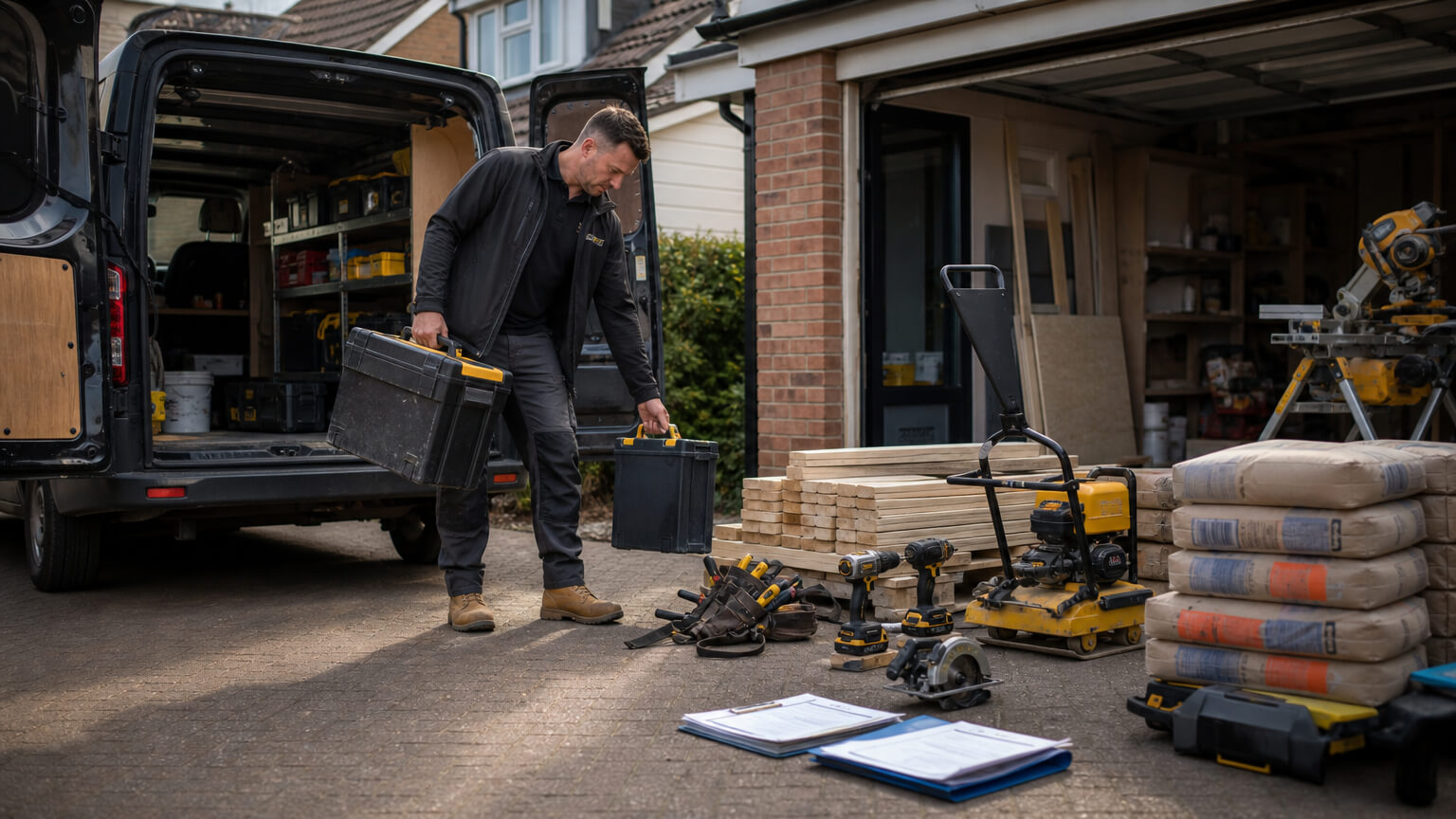

There is nothing in here designed to catch you out. There never was.

The four things people worry about before they book storage

Before you sign anything, four questions usually come up. Here are Wigwam’s answers to all four.

Am I locked into a long contract?

No. There is a two-week minimum stay, and after that the agreement rolls on for as long as you need it. There is no fixed long term, no annual commitment, and no penalty for leaving once you have given proper notice. If your house move completes quickly or your clearance takes less time than you planned, you are not paying for weeks you never used.

Will I lose money if I leave before the end of a billing period?

No. Unused days are refunded. This is worth pausing on, because it is not universal in the industry. Some providers bill in advance and keep the remainder if you leave early. At Wigwam, if you have paid ahead and you vacate before the period is up, you get the unused days back. The financial risk of a move that goes faster than expected sits with us, not with you.

Is there a hidden minimum stay?

Two weeks. That is the whole minimum. It is stated plainly before you commit, not tucked into a footnote. After those two weeks, you stay for as long or as short as you need. The refund of unused days applies from the first period onward. There is no further lock-in.

Can someone else get into my unit?

Your unit has its own individual alarm, and access is yours to manage. Wigwam’s sites are unmanned, which means nobody is roaming the corridors with a master key. You come in during access hours, you go to your unit, and you leave. Some providers’ terms include language about the right to enter a unit or break a lock. Wigwam’s terms are built around the opposite principle: your goods are in a secure, individually alarmed space that you control.

How the deposit works, and how it comes back to you

There is a deposit. Here is exactly what happens to it.

What the deposit covers

The deposit is refundable. It is there to cover the agreement, not to create a trap. Once you have given your 14-day notice, vacated the unit and settled the account, the deposit is returned. Nothing in those three steps is hidden or unreasonable: give notice, empty and clean the unit, make sure there is nothing outstanding on the account.

You can read the precise wording in Wigwam’s full terms and conditions. That page is the authoritative version. What we are doing here is explaining the shape of it in ordinary language.

Leaving cleanly and getting your deposit back

When the time comes to leave, the process is straightforward:

  • Give 14 days’ notice
  • Remove everything from the unit
  • Take your padlock off
  • Make sure your account is settled, with nothing outstanding

Do those four things in the right order and the deposit comes back to you. That is what a fair exit looks like.

Ready to see a clear quote with the terms in writing?
Start at quote.wigwamstorage.co.uk

The 14-day notice period, explained plainly

We ask for 14 days’ notice. Here is what that means in practice.

How to give notice

Notice is a formal step, not a phone call. The full process is set out in the agreement, and the terms page is the right place to read exactly how it works. We are not going to paraphrase a legal mechanism here in a way that could mislead. Read the agreement. If something is unclear, ask us directly.

What we can tell you plainly: 14 days is the figure. It applies to everyone, on every unit, at every one of our UK market-town locations. No exceptions based on unit size, no extended notice for longer-stay customers.

What happens to your billing when you give notice

Once notice is given, the clock runs. If you have paid ahead and you vacate before the 14 days are up, the unused portion comes back to you. If you want to understand the billing cycle in detail before you commit, the pricing page covers how costs work. No prices appear on this page. The quote tool will give you the real figure for your unit, your location and your dates.

The two-week minimum stay

Every storage booking at Wigwam starts with a two-week minimum. That is the whole minimum.

Two weeks is in line with what serious operators across the industry charge as a floor. It is not designed to trap you. It is long enough to make the logistics work on both sides, and short enough to be genuinely flexible for a house move or a clearance that takes less time than you expected.

After that first two weeks, the agreement rolls on and you stay for as long as you need. There is no secondary lock-in, no escalating commitment, no penalty for going. If you are storing for a long renovation project and you end up needing the unit for six months, it rolls with you. If the move completes in three weeks, you give notice and leave. The refund of unused days means you are never paying for time you are not using.

This is what flexible actually means. Not a sales word. A practical fact.

How our terms compare, in plain English

It helps to know what is normal in UK self storage, so you can see where Wigwam sits.

What “rolling” and “flexible” mean in practice

The AI Overview on this query cites Big Yellow and Safestore as requiring 14 days’ written notice, and Access Self Storage as asking for seven to 14 days on standard units. Wigwam’s 14-day notice puts us in line with the better operators. The notice period itself is not the differentiator.

What is different is what happens around it. Some providers bill on a rolling monthly cycle and keep the remainder if you leave early. Some list the right to enter your unit as a standard term. Wigwam does not run billing that way, and Wigwam does not build entry rights into the customer-facing position. The terms are designed around your exit being clean, predictable and fair.

The phrase “flexible contract” appears on most providers’ websites. At Wigwam, the flexibility is measurable: you get unused days back, your deposit returns on a proper exit, and a two-week minimum is all that stands between you and leaving when you need to.

What cooling off and changing your mind look like

If you book and then your move collapses or your plans change, the minimum two-week stay applies. The honest thing to say is that there is a floor, and that floor is two weeks. The refund of unused days softens that: if you vacate inside the minimum period and have paid ahead, you get the remaining days back. The full terms at wigwamstorage.co.uk/terms-conditions/ cover the precise mechanism. Do not rely on this page for contractual decisions. Read the agreement.

What is actually in a Wigwam storage agreement

A Wigwam agreement covers the practical things. Here is what is in it and what is not.

What is in it:

  • A two-week minimum stay, stated plainly before you sign
  • A 14-day notice period to end the agreement
  • A refundable deposit, returned after proper notice, vacating and account settlement
  • A refund of unused days if you leave mid-period
  • Access hours of 6am to 10pm by smart entry, seven days a week
  • An individual alarm on your unit
  • Household goods only (and business goods); the agreement does not cover vehicle or leisure storage

What is not in it:

  • A long fixed term
  • A rolling annual commitment
  • Hidden escalators or penalty clauses for leaving

The full terms and conditions are the authoritative document. Read them. They are not long and they are not written to confuse.

A note on legal questions. If you have a question about how a storage agreement interacts with your lease, your probate process, a business liability, or any other legal matter, Wigwam is not the right place to ask. A solicitor is. This applies particularly if you are storing in Scotland or Northern Ireland, where some contract and property rules differ from England and Wales. The Wigwam agreement is written under English law, and this article does not address other jurisdictions.

Access, hours and what to expect on site

Before you start storing, here is what access to your unit looks like day to day.

Smart entry, 6am to 10pm, seven days

Access is by smart entry, from 6am to 10pm, seven days a week. You do not need to call ahead or arrange a time. You arrive during those hours, use the smart entry system, and go straight to your unit. Sunday morning before most people are awake, that works. A late run after work on a Friday, that works too.

The hours are fixed at 6am to 10pm. This is not 24-hour access, and we would rather you knew that up front than found out when it mattered.

Unmanned sites and deliveries

Wigwam’s sites are unmanned. There is no on-site team waiting for you when you arrive. You access your own goods. The system works because everything is secure and individually alarmed, and you are in charge of your own unit.

One thing to know before your removal firm or a courier turns up: Wigwam does not sign for deliveries and does not receive goods on your behalf. If a courier or removal team is dropping something off at your unit, someone from your side needs to be there to accept it. This is not a limitation we apologise for. It is the honest shape of how the site works, and knowing it now means there are no surprises on moving day.

Honest about what we do not offer

Wigwam’s storage is for household goods and business goods. The honest claim for every unit is clean, dry and secure.

There is no climate control at Wigwam sites. If you need temperature or humidity management for specialist items, a different facility would serve you better, and we would rather tell you that now.

There is no vehicle, caravan, motorhome or boat storage. Our units are for goods, not leisure or transport equipment. If you are looking for vehicle storage, Wigwam is not the right fit.

We say this because honesty about what you do not offer is itself a trust signal. A firm that is clear about its limits is easier to trust on the things it does promise.

Find a location and get a clear quote

If the terms make sense to you and you are ready to see what a unit costs, here is where to go next.

Wigwam operates across our UK market-town locations. Two examples: Wigwam Self Storage Bath covers the Somerset area, and Wigwam Self Storage Lincoln covers Lincolnshire. For the full list, the locations hub is the right starting point.

A note on contents cover. Storage at Wigwam requires contents cover. You can take Wigwam’s own policy or prove your own policy covers goods in a third-party storage facility. Either way, declare the full replacement value of what you are storing. Under-insurance is settled in proportion, which means if you declare half the value, a claim pays out at half the rate. The contents protection page has the detail. We signpost it here, but this article does not give insurance advice. For any questions about whether your existing policy covers storage goods, speak to your insurer.

When you are ready, get a clear quote with the terms in writing at quote.wigwamstorage.co.uk.

Frequently Asked Questions

What happens if I fall behind on a payment?

The first thing to know is that falling behind does not mean someone walks into your unit. The practical answer is that you should talk to the support team early, because the situation is far easier to sort before a balance builds up than after. The terms set out what happens with arrears, and the full terms and conditions are the authoritative document on the precise consequences, so read them rather than relying on a paraphrase here.

In plain terms, the account needs to be settled for a clean exit: the deposit is returned only once you have given notice, vacated, and cleared any outstanding balance. So if money is owed, that is what the deposit and the exit process are measured against. A missed payment is a balance to resolve, not an instant loss of your goods, and the sensible move is to contact the team and agree how to bring the account back in order.

What the support team can help with is the storage account itself: invoicing, what is owed, and how to settle it. What they cannot do is give you financial advice or restructure your wider finances, because that sits outside storage. If you are in genuine difficulty, free debt advice services exist and are the right place for that. For your account specifically, contact the team, and read the terms for the exact wording on arrears.

Can Wigwam ever enter my unit or dispose of my goods?

Day to day, no. The sites are unmanned, nobody roams with a master key, and your unit has its own individual alarm that is yours to control. The customer-facing position is built around the opposite of an open entry right: your goods sit in a secure, individually alarmed space that you manage through smart entry. That is the normal state of things and it is the principle the whole agreement is written around.

There are limited circumstances any storage agreement has to address, such as an emergency, a legal requirement, or a long-unpaid abandoned unit, and those are governed by the precise wording of the contract rather than by anything we would summarise loosely here. This is exactly the kind of clause where you should read the full terms and conditions rather than trust a plain-English gloss, because the detail matters. We are not going to paraphrase a legal mechanism in a way that could mislead.

If you have a question about how those provisions interact with your own situation, a probate, a business liability, or a dispute, that is a question for a solicitor, not for us. This applies particularly in Scotland and Northern Ireland, where some contract and property rules differ from England and Wales, and the Wigwam agreement is written under English law. For the everyday reality, though, the answer is simple: your unit is yours, it is alarmed, and no one is entering it in the normal course of things.

Do I have a cooling-off period if I change my mind after booking?

The honest answer is that the contractual floor is the two-week minimum stay, and the refund of unused days is what softens a change of mind, rather than a separate cooling-off window we set out on this page. If you book and your plans then collapse, the minimum two weeks applies, but if you vacate inside that period having paid ahead, you get the remaining days back. So the financial sting of a cancelled move is limited, even though the minimum is real.

Whether any statutory cancellation right applies to your booking depends on how and where you signed up, and that is a matter of consumer law rather than something we would rule on here. We are not legal advisers, and we will not tell you what your statutory rights are, because getting that wrong would not serve you. The full terms and conditions are the authoritative document, and for a definitive view on any cancellation right, a solicitor or a consumer-advice service is the right place to ask.

What we can say plainly is the shape of it: a two-week minimum, a 14-day notice period, unused days refunded, and a deposit returned on a proper exit. Those four together mean changing your mind is rarely as costly as people fear. Do not rely on this page for a contractual decision; read the agreement, and if something is unclear, ask us directly before you commit.

Can I extend my stay after I have already given notice?

Yes, in practice this is usually straightforward, but you need to tell the support team rather than simply staying put, because once notice is given the clock is running toward your exit. People often give notice expecting a move to complete, then find the timeline slips. The sensible step is to contact the team as soon as you know, so the account can be kept open rather than closed out at the end of the notice period.

The terms are built to be flexible in both directions. There is no long lock-in, so extending is not a matter of signing a fresh long contract; the agreement simply rolls on as it did before, for as long as you need it. The two-week minimum has already been met by that stage, so there is no fresh floor to clear. Practically, withdrawing or pausing a notice is an account change, and the team handles account changes during office hours.

What you should not do is assume an extension happens automatically. Notice is a formal step set out in the agreement, and so is keeping the unit beyond it, so confirm it with the team rather than leaving it to chance. The exact mechanism is in the terms and conditions. If your situation is uncertain and you are not sure whether to give notice at all yet, it is often easier to hold off and give it once your dates are firm, given the notice is only 14 days.

Will I lose part of my deposit if the unit needs cleaning or has minor marks?

The deposit is refundable in full on a proper exit, and a proper exit means the three clear steps: give 14 days’ notice, remove everything and take your padlock off, and settle the account so nothing is outstanding. Do those, and the deposit comes back. It is there to cover the agreement, not to be whittled down over ordinary wear, and nothing in those steps is hidden or unreasonable.

Where a deduction could arise is if there is a genuine cost left behind, for example goods or rubbish not removed, or damage beyond normal use, because then there is an outstanding amount the deposit is measured against. The way to avoid any question is to leave the unit as you would want to find it: emptied, padlock off, swept out, with nothing left for someone else to deal with. That is what a clean exit looks like, and it is the same care most people would take anyway.

The precise wording on the deposit and on the condition the unit should be left in is in the full terms and conditions, which is the authoritative version; this is the plain-English shape of it. If you are ever unsure what counts as a clean exit for your unit, ask the support team before your last visit. They handle the account and the exit process directly, so a quick check beforehand removes any doubt about the deposit coming back.

What You Can And Cant Store In Self Storage The Uk Prohibited Items List

Worried something in your boxes will get you turned away at the unit?

Most people come to us with the same worry. They have a van to fill, a moving date approaching, and a nagging feeling there might be something in there that will cause a problem. It is a reasonable worry. The last thing you need, after weeks of packing, is to be turned away at the unit.

So let me say this plainly: the list of things you actually cannot store is short. If you are moving house and your boxes contain the usual mix of furniture, clothes, kitchen gear and loft things, almost all of it will be fine. The rules exist because a small number of items genuinely threaten the safety and condition of the unit, for you and for the people storing next to you. Once you see why those items are on the list, the list stops looking like a trap and starts making sense.

What follows is the plain version. The short list of what is banned, the items that quietly catch people out on moving day, and the much longer list of what stores well. If you finish reading and you are still not sure about one specific thing, ask before you load.

The short list of what you cannot store

The list has four categories. If your things do not fall into any of them, they are almost certainly fine. The Self Storage Association UK frames these four buckets, and you will see variations on the same list at every reputable operator in the country, because the reasoning behind each category is the same.

No living things

No pets. No animals of any kind. No plants, however small or easy to care for. This is a hard rule with no exceptions. A storage unit is not a suitable environment for a living creature, and no conscientious operator will make an exception here.

Plants left in a unit will die and decay. That creates moisture, then mould, then a problem that spreads to your other belongings and potentially to your neighbours’ goods. The rule protects your things as much as anything else.

Nothing that can leak, ignite or give off fumes

Petrol, diesel, LPG, paint, solvents, pesticides, herbicides, fireworks, gas cylinders, aerosols under pressure. All banned, no discussion required. One spill or slow leak in an enclosed unit can contaminate an entire corridor. One ignition source near stored fuel is an emergency. The clean, dry and secure environment that keeps your grandmother’s armchair in good condition for six months depends on keeping every unit free from anything combustible or corrosive.

The practical application of this rule trips people up, and I will come back to it in the next section.

No food, perishables or waste

Opened or unsealed food, anything that will decay, household waste, compost. The reason is straightforward: scent attracts pests, and pests do not respect the walls between units. A bag of dog food you forgot to clear out of a kitchen box can bring in mice that work through your belongings and your neighbour’s before anyone notices.

A note on sealed tins: they are not formally banned, but pests can track the scent of food even through intact packaging. If you are clearing the kitchen before a move, the better option is to use what you have, donate what you cannot, or run it to a food bank. Do not put groceries in a storage unit.

Nothing illegal, stolen or counterfeit

This one needs no elaboration. Prohibited substances, illegal weapons, counterfeit goods, stolen items. None of it belongs in storage, and none of it will be accepted.

The items that quietly trip people up

These are not on the obvious banned list, but in our experience running sites across the country, they are the ones that cause real difficulty on moving day. Most are easy to deal with if you know about them in advance.

The damp trap: dry everything before it goes in

The rule here is simple and the consequences of ignoring it are slow and nasty. Anything that goes into a unit damp will stay damp, and then become mouldier.

Think about the garden chest that has been sitting in the garage all winter. The set of garden chairs stored under a tarpaulin. The boxes you carried to the van in the rain and stacked straight in. The chest of drawers from the outbuilding that never quite dried out after last autumn. None of these items are banned outright. The problem is what they do inside an enclosed unit.

Our units are clean, dry and secure. That promise holds because every customer puts dry goods in. Moisture from one damp item creates condensation that spreads to wooden furniture, soft furnishings and cardboard boxes stored nearby. It does not stay in your unit. It finds a way to your neighbour’s things as well.

The solution is not complicated. Dry everything properly before it goes in. Leave garden furniture in the sun for a day. Air out a chest of drawers. Let anything that got wet in the move dry off before it goes into storage. It is worth the extra time.

Do not be tempted to assume a damp item will dry out once inside. There is no climate control in a self-storage unit. The protection comes from what you put in, not from what we regulate inside. Bring dry things, and they stay dry.

Batteries and fuel: the modern catch-out

This is the one that has become significantly more common in recent years. The petrol mower with a little fuel still in the tank and carburettor. The e-bike in the garden shed. The e-scooter bought during lockdown and barely used since. The lithium battery pack that is bolted into the frame and will not come out.

Petrol-powered equipment must be run completely dry before storage. That means the tank emptied and the carburettor run clear. A small residue of petrol is still petrol. This rule applies to lawnmowers, generators, chainsaws, pressure washers, anything with a combustion engine. Run it dry, then bring it in.

Lithium batteries present a different issue. A lithium battery that can be removed from the item should be removed and kept elsewhere. A lithium battery that is permanently fixed and cannot be removed makes the item itself a fire risk. If the battery cannot come out, the item cannot come in. This applies to e-bikes and e-scooters with non-removable battery packs.

The same logic applies to propane tanks, camping gas canisters and anything pressurised. Run the equipment dry, detach what can be detached, and if in doubt, ask before you load.

High-value items: cash, deeds, fine jewellery and where they really belong

A unit at one of our sites is individually alarmed, clean, dry and secure, and it is space only you can access. It is not a managed vault, and it is not a records archive. That honest distinction matters for certain categories of items.

Cash belongs in a bank. Title deeds and wills belong with your solicitor. Fine jewellery and items of serious monetary or sentimental value are better housed in a bank safety deposit box.

For items that do go into storage but carry real value, contents protection matters. Cover is mandatory at Wigwam: you can take our RSA Self Storage Customers’ Goods policy, or you can demonstrate equivalent cover of your own. Either way, declare the full replacement value. Under-insurance is settled proportionally, not in your favour. New-for-Old replacement means a genuine claim pays out at today’s replacement cost, not the original purchase price. Theft cover requires evidence of forced entry.

More detail on the policy, and what you need to declare, is on our contents protection page. We signpost it because it matters; we do not advise you on it because that is your insurer’s job.

Jurisdiction note: for legal documents such as title deeds, wills, or Powers of Attorney, storage requirements and access rights can differ under Scottish law and Northern Irish law compared to England and Wales. If you are storing legal documents and are based outside England and Wales, consult your solicitor. The guidance on this page reflects the position in England and Wales.

Why we do not store vehicles, caravans or tyres

Our units are for goods, not for vehicles. We do not store cars, caravans, motorhomes, boats, trailers, tyres or leisure transport. No exceptions, and this is not a conversation worth having in advance to see if we will make one.

If you are looking for vehicle or caravan storage, you need a different kind of operator. We are a market-town goods-storage business, and our units are sized and designed for that.

What you can store with confidence

The ban list is genuinely short. Here is the much longer, more reassuring half of the picture.

Household furniture and belongings between homes

Furniture, boxed household belongings, white goods that are clean and fully defrosted, bicycles (standard, pedal-powered), seasonal items, garden tools that are fuel-free, clothing and textiles, sporting equipment, musical instruments, books, pictures, mirrors and anything else from a home that does not fall into one of the four banned categories.

Smart entry runs from 6am to 10pm, seven days a week. If you pack the unit in a hurry and realise two weeks later you cannot find the box of things you needed, you can pop back on a Sunday morning to retrieve it. You are not locked to office hours.

Business stock, equipment and trade goods

Boxed stock, retail displays, non-petrol tools and equipment, office furniture and equipment, sample sets, seasonal overflow for an e-commerce business. A storage unit makes a practical short-term or long-term stockroom for a growing business.

One thing worth being clear about here: our sites are unmanned. Smart entry means you come and go without needing a member of staff present. If a courier is delivering to your unit, someone from your own business must be there to receive them. Wigwam does not sign for parcels, accept deliveries or hold items on your behalf. If a delivery arrives when no one from your business is there, it cannot come in. Plan your deliveries accordingly.

A future article will cover the business-storage and e-commerce angle in more detail. For now, if you are a sole trader with non-petrol tools and trade equipment, the unit works well.

Documents and records you need kept safe

Boxed paper records, archive files, business ledgers, family documents accumulated over decades. A self-storage unit is secure space that only you can access. It is not a managed records service: we do not catalogue, retrieve or manage the files inside. Access is yours; the organisation inside is yours.

For documents with legal status, title deeds, wills and court orders, see the guidance above in the high-value section and consult your solicitor if you are unsure about what applies in your jurisdiction.

How size and how long affect what you bring

Knowing roughly what you plan to store makes choosing the right unit straightforward. Our pricing and unit-sizing guide walks through the options and helps you match the volume of what you have to the unit that suits it. There are no prices on this page; the guide covers that.

Two points worth knowing before you book. The minimum stay is two weeks, and if you leave before your time is up, unused days are refunded. That makes short awkward-period storage workable, the fortnight between keys where you have nowhere to put things, the month between a sale completing and a purchase going through.

Smart-entry access runs from 6am to 10pm, every day of the week. You are not relying on office hours or a site manager being available. If you want to add something to the unit on a Saturday evening or retrieve something early on a weekday morning, you can.

What to do if you are unsure about one item

If you have read through the sections above and you are still not sure whether one specific thing is allowed, ask before you load the van.

That is a genuine offer, not a formality. Tell us what the item is, and we will give you a straight answer. Not a policy document. Not a referral to the terms. An actual answer about your actual item, from a person at your local site.

Ready to check your items and get a price?
Head to quote.wigwamstorage.co.uk and add your question in the quote request. We will come back to you with a plain answer and a unit option that works. No commitment required to ask.

You can find your nearest site on our locations page. Our UK market-town locations include Wigwam Self Storage Bath in Somerset and Wigwam Self Storage Lincoln in Lincolnshire, among others across the country.

Keeping your goods covered: contents protection

A unit with an individual alarm is secure space. Contents protection adds the financial layer on top.

Cover is mandatory when you store with us. You can take the RSA Self Storage Customers’ Goods policy that we offer, or you can show us you have equivalent cover of your own in place. What matters is that the cover exists and that you have declared the full replacement value of what you are storing. Under-insurance is not corrected in your favour at claim time: if you declare half the value, you recover half of any loss.

The RSA policy runs on a New-for-Old basis and requires evidence of forced entry for a theft claim. Climatic damage is excluded.

For the detail of what the policy covers and what you need to do before you move in, visit our contents protection page. This is a signpost, not advice. Your insurer is the right person to advise you on whether your existing home or business policy extends to goods in storage and what its limits are.

Jurisdiction note: insurance requirements and cover rules for goods stored in self storage can differ between England and Wales, Scotland, and Northern Ireland. If you are storing in Scotland or Northern Ireland, or if you have a claim query, confirm the position with your insurer and, where legal documents are involved, with your solicitor.

The rules, the terms and where to read them

The four categories above align to standard UK self-storage practice as the Self Storage Association UK recognises it. Wigwam’s full terms and conditions set out the complete picture: your rights, our rights, and the specific prohibited-items list that applies to every one of our sites.

You can read them at wigwamstorage.co.uk/terms-conditions/.

On deposit: when you book, a deposit is taken. It is refundable. Once you have given your 14 days’ notice, vacated the unit, and settled the account, the deposit is returned to you, less anything owed. That is the full picture.

There is no fine print designed to catch you out. If you read the terms and you have a question about what something means, ask. That is what we are here for.

Ready to check your list against a real site?

You have seen what is allowed and what is not. If your things pass the test, the next step is finding the right unit and getting a price.

Get a quote and, if you have a question about a specific item, add it in: quote.wigwamstorage.co.uk. We will give you a plain answer and a unit option that suits what you have.

Find your nearest location at wigwamstorage.co.uk/self-storage-locations/. For unit sizes and what they cost, the guide is at wigwamstorage.co.uk/how-much-is-self-storage-in-the-uk.

Frequently Asked Questions

Can I store paint, weedkiller or a half-full gas bottle if I seal it really well?

No, and sealing it tighter does not make it allowed. Anything that can leak, ignite or give off fumes is banned regardless of how well you think you have contained it, because the risk is not really about your packaging. It is about what happens in a sealed unit over weeks and months, and what one container failing would do to a whole corridor of other people’s belongings.

The category is broad on purpose: paint and solvents, weedkiller and pesticides, petrol and diesel, LPG and camping gas, aerosols under pressure, fireworks. A seal that holds today can fail in heat or with age, and a slow leak in an enclosed space contaminates the air and the goods around it. A gas bottle, even one you believe is empty, can retain enough residual pressure to be a genuine hazard. None of this is us being awkward; it is the same rule you will find at every reputable operator, and it is the reason a clean, dry, secure unit stays that way.

So the practical answer is to deal with these items before the move rather than trying to store them. Use up the paint or take it to a household waste site that accepts it. Return or properly dispose of gas bottles through the supplier. Empty fuel from equipment. If you are genuinely unsure whether a specific product counts, describe it when you ask, and we will give you a straight yes or no before you load it rather than turn you away at the unit.

Where exactly is the line between “household goods” and “a vehicle” for things like a ride-on mower or a trailer?

The line is whether the thing is, in effect, a vehicle or leisure transport, and a couple of the awkward cases fall on the no side. We store household and business goods, not vehicles, and that exclusion covers cars, motorbikes, caravans, motorhomes, boats, trailers and tyres. A ride-on mower sits in the difficult middle, and the deciding factors are that it is engine-powered and that it carries fuel, both of which push it toward the prohibited side rather than the ordinary-goods side.

Here is the cleaner way to think about it. A push mower or a hand tool with no engine and no fuel is ordinary garden equipment and stores fine once it is clean and dry. A petrol mower has to be run completely dry of fuel before it could even be considered, because residual petrol falls under the hazardous-items rule, and a ride-on adds the question of whether it is really a small vehicle. A trailer is excluded outright as leisure or transport equipment, regardless of what you would tow it with. Tyres are out too, on their own, because of how they behave in storage.

If you are clearing a garage that contains a mix, the boxed tools, the shelving and the garden bits are welcome; the engine-driven, fuelled or wheeled-transport items are the ones to query or rule out. Rather than guess, list the borderline items when you request a quote and we will tell you which side of the line each one falls. It saves a wasted trip with something in the van that was never going to be allowed in.

Who is responsible if something I stored damages a neighbouring unit, like a leak or pest problem?

The responsibility sits with the person who stored the item that caused it, which is exactly why the rules on damp, food and hazardous goods exist. The units share an environment to a degree, so a problem that starts in one unit, mould from a damp chest, mice drawn to a forgotten bag of food, a leak from something that should never have been stored, does not always stay politely within its own walls. The rules are there to stop that happening, and following them is how you protect both your own goods and everyone else’s.

This is the practical reason behind advice that can otherwise sound fussy. Drying everything before it goes in is not about the unit being damp; it is about one wet item creating condensation that can travel. Keeping food out is not pedantry; it is because scent attracts pests that do not respect the boundary between units. The hazardous-items ban protects the whole corridor from one container failing. When everyone puts in dry, clean, permitted goods, the shared environment stays clean, dry and secure for all of it.

Contents protection is the financial backstop, and it is mandatory for that reason. Your own cover, whether the RSA policy we offer or your own proven cover, protects your goods. It is not a substitute for following the rules, though. The honest summary is: store what is permitted, in the condition the rules require, and you are very unlikely to be the cause of a neighbour’s problem or the victim of one. If you ever spot something amiss, a smell, a damp patch, signs of pests, tell us, so it can be dealt with before it spreads.

Can I store opened food or drink for a short stay, like a week or two?

No, and the short stay does not really change the answer. Opened or unsealed food, anything perishable, and household waste are out regardless of how long they will be in the unit, because the issue is scent and decay, and both can start working within days, not months. A week is plenty of time for a forgotten box of kitchen goods to attract attention you do not want.

The reasoning is the pest one. Mice and insects track the scent of food, and they do not distinguish between a fortnight and a year; they simply follow the smell to its source. Once they are in, they work through your belongings and can move to a neighbour’s before anyone notices. That is why this rule is firm even for a short overlap between homes. Sealed tins are not formally banned, but I would still keep them out, because pests can detect food even through intact packaging, and a few tins are not worth the risk to a whole unit of furniture.

If you are clearing a kitchen ahead of a move, the better routes are to use up what you can, donate unopened, in-date items to a food bank, and dispose of the rest properly before moving day. Pack the kettle, the mugs and the empty, clean kitchen equipment, all of which store perfectly well, and leave the actual food behind. If you are unsure about a specific item, a sealed bottle of oil, say, ask before you load and we will give you a plain answer.

If an item I want to store is borderline, who actually decides, and how fast can I get an answer?

You ask the support team and they give you a straight answer, usually quickly, before you ever load the van. The decision rests on the rules, the four banned categories plus the no-vehicles exclusion, applied to your specific item, and the team are there precisely to apply them to real cases rather than leave you guessing from a list. It is a genuine offer, not a formality: tell them what the item is and you get an actual answer about that actual item.

The fastest way to get that answer is to fold the question into your quote request. Head to the quote tool, describe the borderline item in plain terms, and the team comes back with a yes or no and, where it is a yes-with-conditions, what those conditions are. For example, a petrol tool can come in once it is run completely dry; a battery item is fine if the battery is removable and removed, but not if the pack is fixed in. You get the reasoning, not just the verdict, so you know how to prepare the item.

One boundary worth setting: the team decide on storage questions, not on anything outside their lane. They will tell you whether your item can be stored and how to prepare it. They will not advise you on insurance choices, legal documents or how to run a business; those get signposted to the right professional. For the question that matters here, “can I store this thing”, they are exactly the right people, and asking first is always cheaper than turning up with something that was never going to be allowed in.