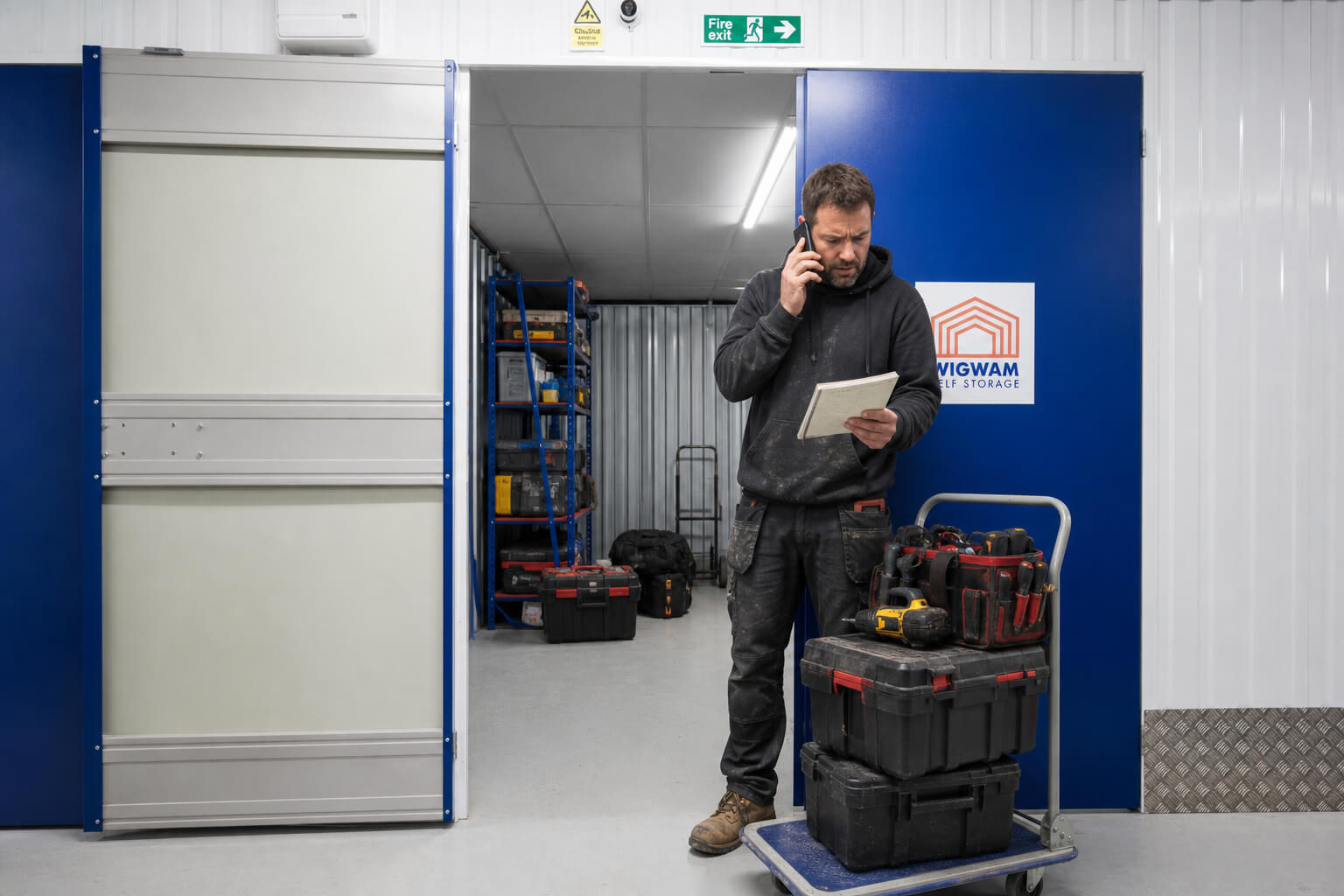
Storing Building Materials In Secure Self Storage Between Jobs

Next job’s ten days off and the van’s still full of materials?

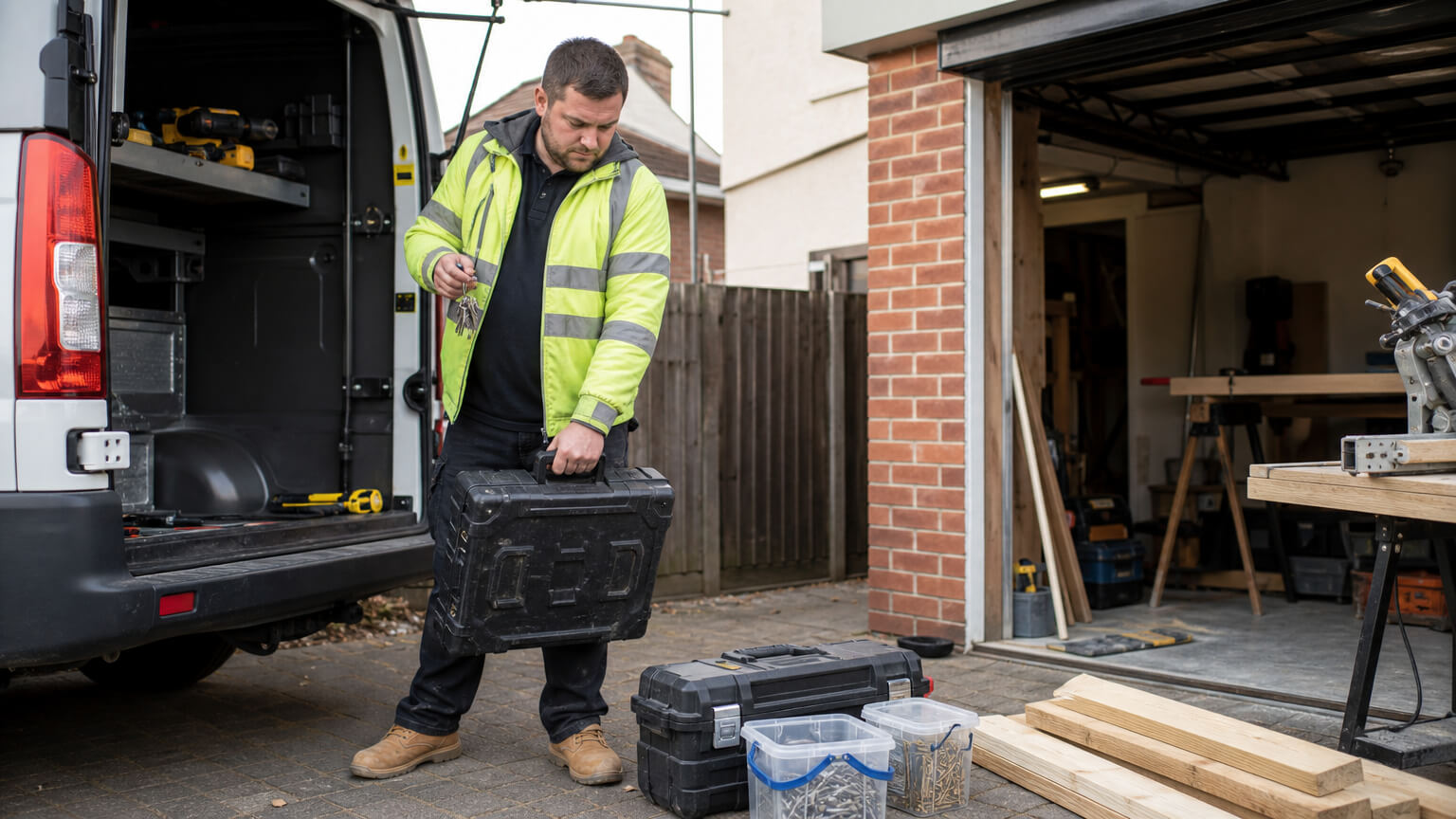
You finish the first fix and the back of the van is still half full. Boards for the next phase, a box of tiles, the fixtures you ordered early because they were on discount. None of it can go on the client’s drive, the garage at home is already rammed, and you are not starting the next job for another ten days. So the materials sit in the van, and every morning you move them to get to what you actually need.

Most tradespeople have been there. The gap between jobs is not a planning failure; it is just the reality of running several things at once. The question is not whether to store materials off site. The question is how to do it properly without spending money you do not need to spend or tying yourself to a contract you cannot get out of.

This is the plain version of how self storage works for exactly this situation. What fits, what does not, how to keep timber and boards in good order, what the minimum stay means in practice, and what happens at the end when the job is done and you want your deposit back.

Why materials between jobs need a better address than the van
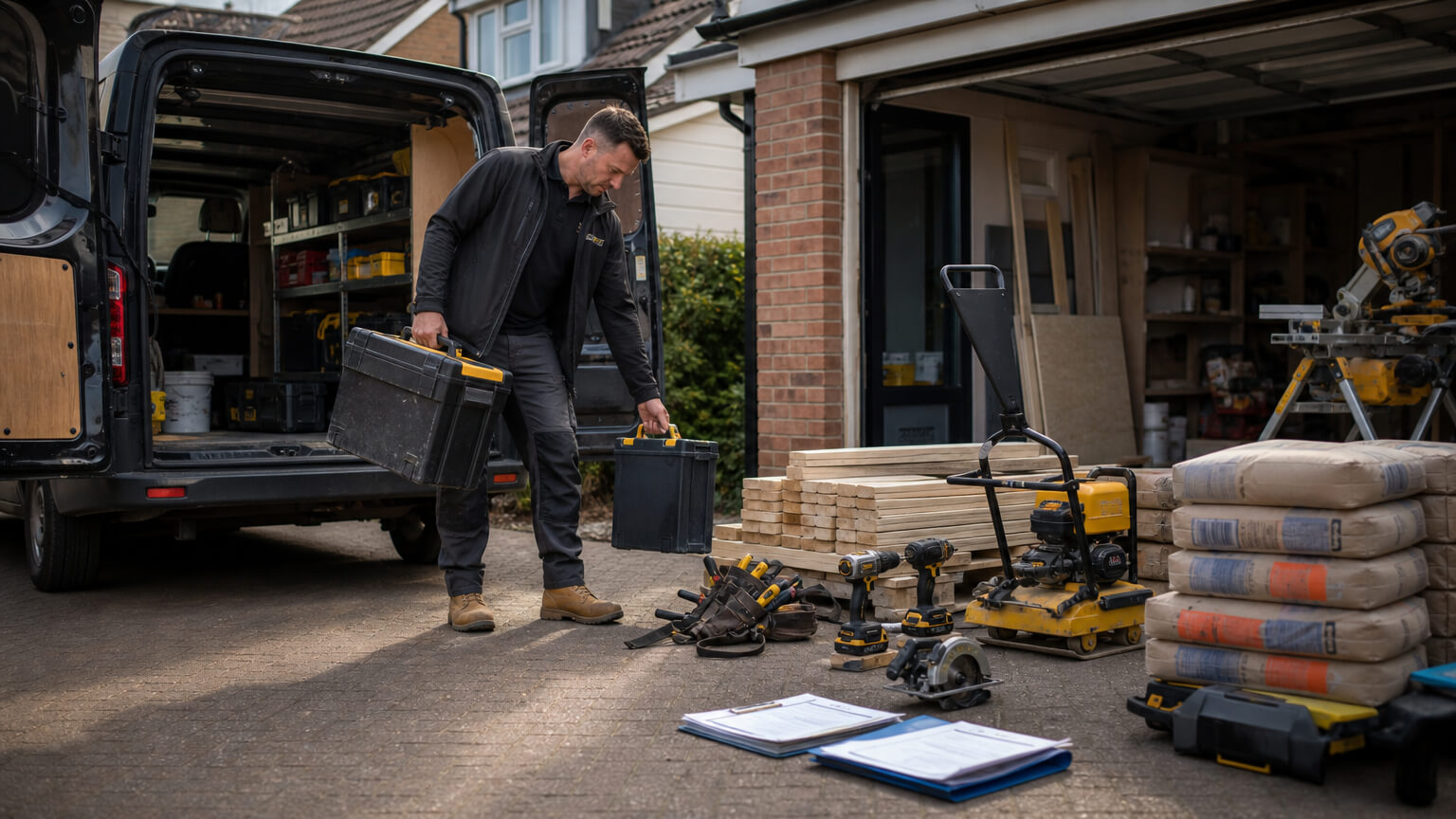
The van, the garage and the client’s driveway each cause the same problem in a different way. The job-site answer to where to put excess materials is usually none of the above. A self storage unit is not a complicated solution; it is the obvious one when the alternatives are all worse.

The van, the garage and the client’s driveway are not storage

A van is a work vehicle, not a materials rack. When the back is taken up with boards and tile boxes you cannot fit what you need for the current job without spending twenty minutes rearranging at the start of every day. Timber that lives in a van all week is subject to whatever the weather does: condensation in the morning, heat in the afternoon, boards picking up a twist you will only notice when you try to use them.

The garage at home is usually either full already or full of things that belong to the household rather than the trade. Mixing domestic and work kit creates friction with everyone in the house and makes it harder to keep tabs on what you actually have.

Leaving materials at a client’s address is the option that feels convenient right up to the moment it stops being convenient. Clients agree to it and then change their minds when their drive becomes awkward. A relation or neighbour has a key and “just moved the boards.” Nobody is liable for anything.

A unit you control, close to home

A self storage unit gives you a lockable, alarmed space that is yours alone for as long as you need it. You have sole access. You decide how it is organised. You know exactly where everything is and you can be confident it is still there when you come back. For a sole trader, that kind of certainty is worth real money, especially when the contents represent the margin on the next job.

Wigwam’s units are in UK market towns, which means they tend to be close to where tradespeople actually live and work rather than on an industrial estate twenty minutes down the motorway. That matters when you are loading at ten past six before a job starts.

What building materials fit a standard self storage unit
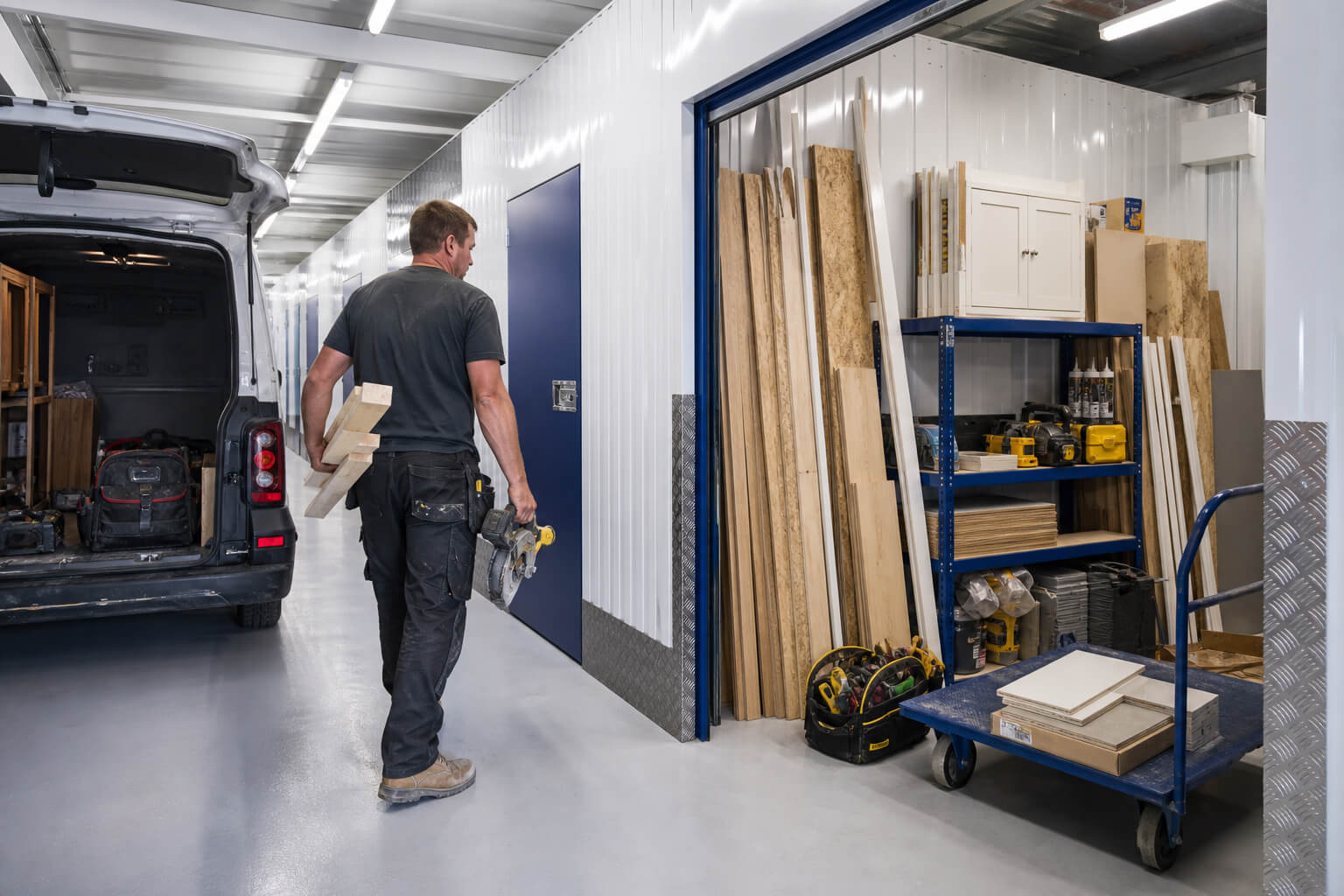
Timber, tiles, fixtures and tools all fit and all store well in a standard unit. For dry goods between jobs that is the complete list; a self storage unit is the right answer for everything that goes into a building without being flammable or reactive. The practical question is what to put where and how to stack it, which is covered below.

Timber, sheet boards and mouldings

Lengths of timber, sheet boards (OSB, plywood, MDF, hardboard), mouldings, skirting, architrave and door linings all store straightforwardly in a self storage unit. The key requirement is that they go into a dry space and are supported so they do not take on a bow while they wait. A unit that is clean and dry gives you that.

On longer lengths you will want to stack flat on something that keeps the timber off the concrete floor. Scaffolding boards or spare timber offcuts work fine as a base. Even spacing along the length prevents sag. More on that in the conditioning section below.

Planed timber is more sensitive than structural softwood, and hardwoods are generally more stable than softwood in the short term, but the same principle applies to all of it: off the floor, supported evenly, stacked flat and covered loosely so air can still move around the stack. A standard Wigwam unit is clean and dry, which is what dry goods between jobs actually require.

Tiles, flooring and fixtures staged for the next phase

Ceramic and porcelain tiles travel well in storage as long as the boxes are kept flat and the stack is not so tall that the weight becomes a problem. Most tile boxes are designed for stacking to a reasonable height; the risk is from moisture getting into cardboard, not from the tiles themselves.

Engineered flooring boards are slightly more sensitive than tiles and should be kept in their packaging to stabilise. Solid wood flooring boards need the same treatment as timber above.

Fixtures and fittings (kitchen units, bathroom furniture, pre-hung doors, radiators, cabinet carcasses) are all straightforward to store. A unit that stays clean and dry protects them adequately. If packaging is intact, leave it on. If not, loosely wrap or cover the faces to protect them from dust and minor knocks.

Staging materials for the next phase is one of the genuinely sensible uses of a self storage unit. You order when availability and price are right, you put the materials somewhere they are safe, and you collect them when the job is ready. It takes that particular anxiety completely off the list.

Tools, fixings and hardware

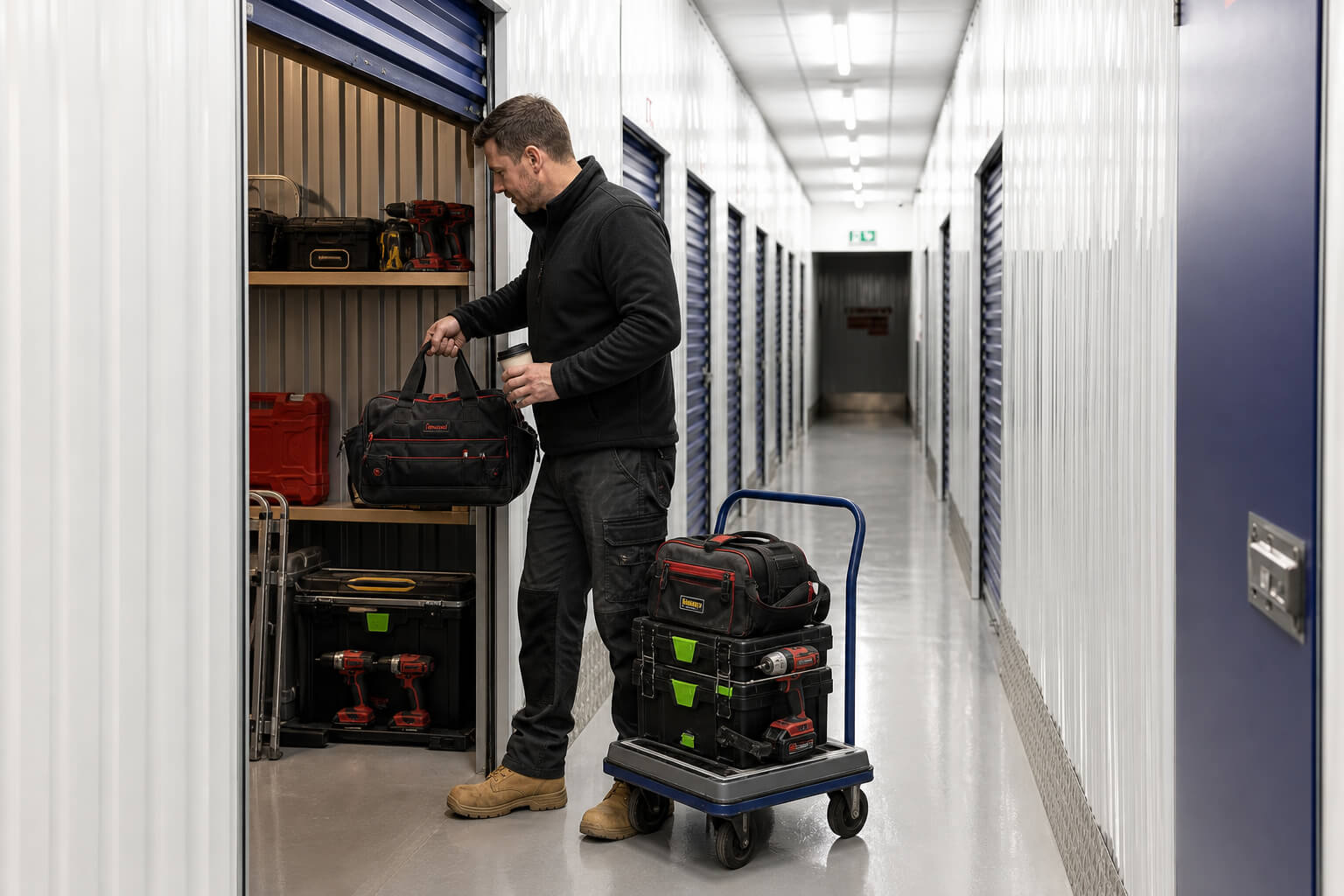
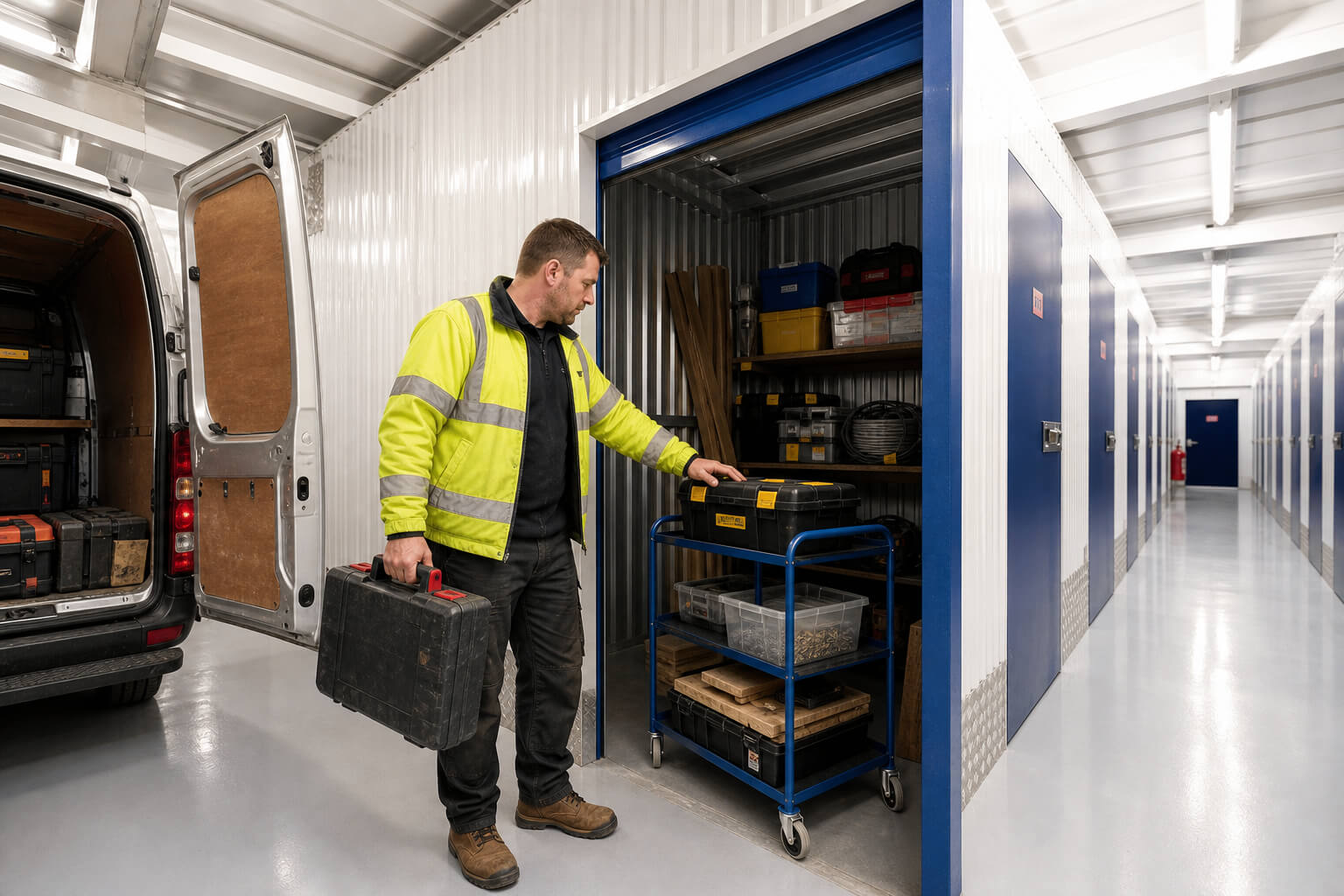
Power tools, hand tools, fixings and hardware are among the most common things tradespeople store between jobs. A locked, individually alarmed unit is a significantly better home for them than a van overnight or a garage that the family also uses.

Heavier kit (table saws, routers, compressors, nail guns, heavy drills) takes up floor space in a unit but leaves the worktop of your van free for smaller daily items. For a carpenter or joiner, a unit that holds the specialist kit between jobs means the van only carries what is needed for the current one.

Contents cover is worth reviewing for high-value tools. See the section on insurance below.

What you cannot store (and why the rules are not negotiable)
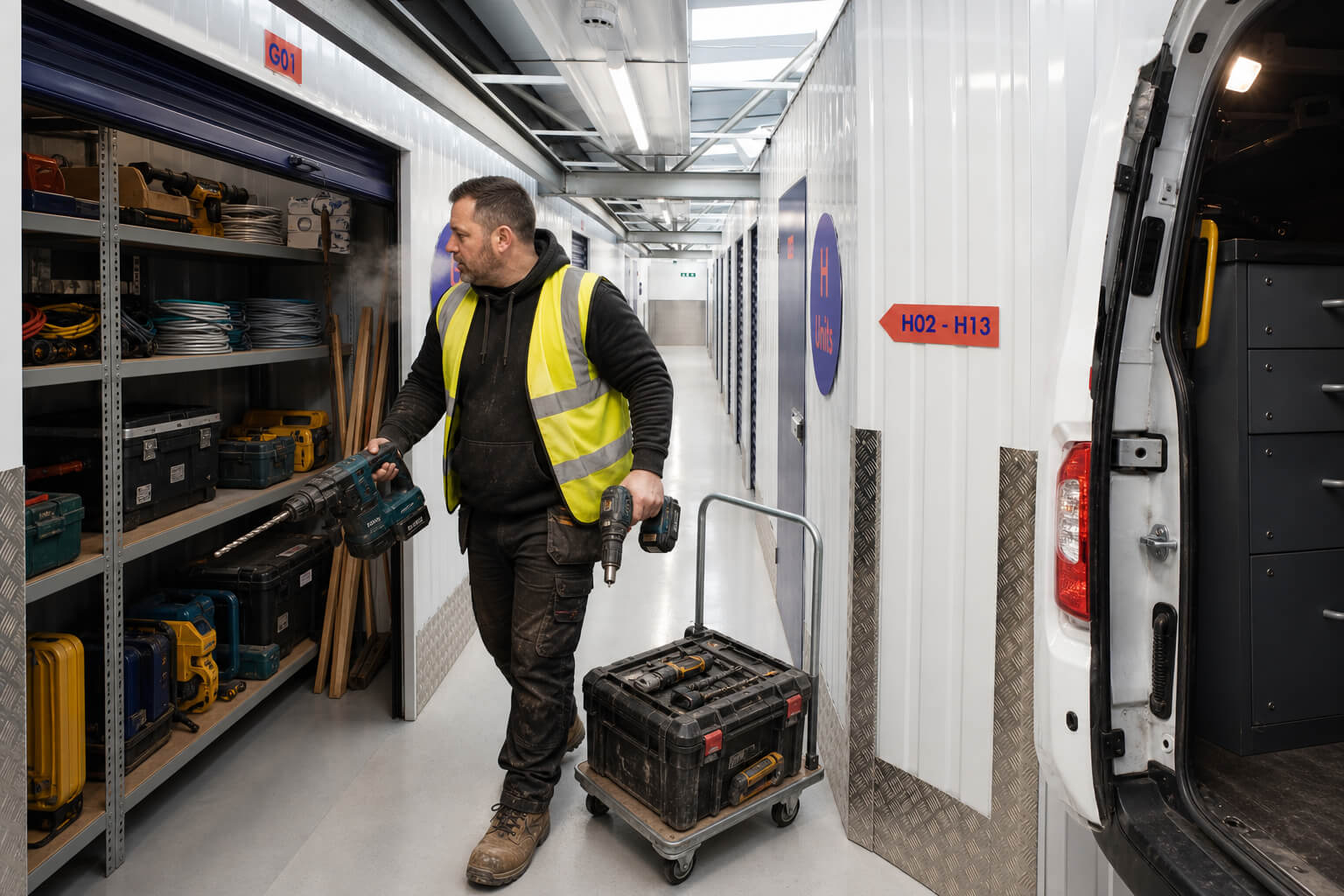
The list of prohibited items is short and the reasons behind it are clear. You cannot store anything flammable, any fuel, gas or bottled gas, paint thinners or solvent-based liquids, or anything that can ignite, release fumes, or react with other materials. If a substance needs ventilation to be safe, it cannot go in a self storage unit.

Flammables, fuels, gas and paint thinners

In practice this means: no petrol, diesel, LPG, propane or butane cylinders, no paint thinners, white spirit, acetone or other solvents, no aerosol paints or spray cans containing flammables, no oil-soaked rags, no adhesives with flammable carriers.

Common trade materials that many people assume are fine but are not: brush cleaner, cellulose thinners, contact adhesives in tins, fuel cans even when empty. If the safety data sheet lists flammable or highly flammable, it does not go in.

Cement, plaster and bonding are a separate question. They are not flammable, but they absorb moisture from the air and can go off in the bag if conditions are not right. Whether a bag of material survives in storage depends on how airtight the packaging is and how long it is in there. The honest answer is that bagged dry-mix goods are a risk, and you are better off buying fresh when you need them rather than hoping a half bag will come out usable three weeks later.

Why the rules exist on an unmanned site

Wigwam’s sites are unmanned. There is no on-site staff member monitoring the units during access hours, which is one of the things that keeps costs down and access straightforward. The consequence is that fire or chemical risk from one unit has implications for every other unit in the block. The prohibition list is not a formality; it is the condition that makes a self storage site work safely when nobody is watching.

For detailed guidance on safe storage of hazardous materials in a trade context, HSE.gov.uk carries authoritative UK guidance on materials storage and waste management. Wigwam is the storage expert, not the safety authority; the HSE is the right place for the regulatory picture.

Keeping materials in good condition while they are in the unit
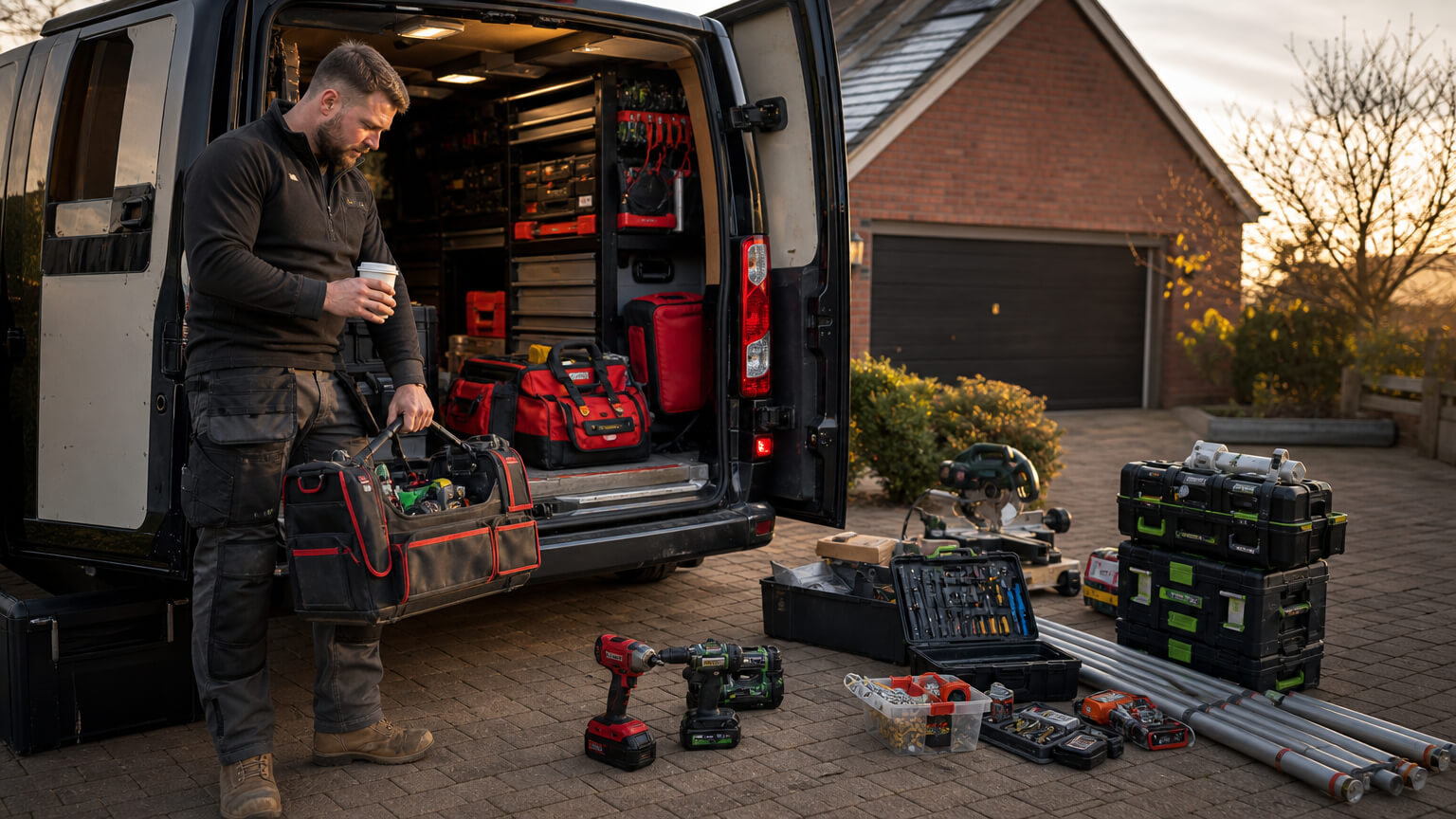
Your boards come out the same way they went in, if you give them a bit of thought when you stack them. A clean, dry, individually alarmed unit does its part; how you stack and organise the unit does the rest. Neither is complicated.

Off the floor, with air moving around the stack

The concrete floor of a self storage unit does not transmit moisture in the way a garage floor does, but it is still good practice to keep timber and sheet goods off it. A couple of scaffold boards or spare lengths of timber across the width of the unit give you a platform that keeps everything a few inches clear of the ground and allows a small amount of air circulation underneath.

Do not seal a stack of timber in a plastic sheet. Plastic traps any humidity that enters with the timber and holds it against the boards. A breathable cover (old dust sheets, a canvas tarp) will keep dust off without creating a moisture problem.

Stacking timber and boards so they stay true

Longer lengths of timber warp if they are supported at the ends but not in the middle. Space your supports evenly underneath the stack, ideally at about 400 to 600 millimetre intervals for anything over two metres. Sheet goods (OSB, plywood, MDF) are better stored flat than standing on edge; an unsupported eight-foot sheet standing vertically on one corner will develop a bow given a few weeks.

If you are storing a mix of lengths, start with the heaviest and longest at the bottom and work up to lighter, shorter pieces. This keeps the stack stable and means you are not shifting heavy material to get to what you need at the bottom.

Planed timber and hardwoods are worth stacking with small pieces of timber (stickers, if you have them, or offcuts) between layers to maintain air gaps and even support across the width. This is standard workshop practice and it applies in storage too.

You load and stack the unit yourself, so do it safely

Nobody else loads your unit. You have sole access, which means you organise it exactly as the job needs, but it also means the safety of the stack is your responsibility. Do not build anything higher than you can comfortably reach and handle alone. Do not lean sheet goods against the wall in a way that could topple if you brush the base. Heavy materials at the bottom, lighter items on top, clear aisle to the back of the unit so you are not reaching over a wall of boxes.

For formal guidance on manual handling and materials stacking at height, HSE.gov.uk sets out the current UK requirements. These apply to you as a self-employed tradesperson in the same way they would in any work environment.

Clean, dry and secure is what dry building materials actually need

Dry goods between jobs need a dry, secure home. That is the honest answer, and it is a simpler requirement than the online climate-control advice suggests. A Wigwam unit is clean, dry and secure. That is what we actually deliver, and for the vast majority of building materials a sole trader stores between jobs, that is what actually works.

What “clean, dry and secure” means in practice

Each unit is individually alarmed. Clean and dry means no damp, no condensation, no moisture transfer from a leaking roof or a flooded floor. The unit is a sealed, alarmed space, not a marquee or a garden shed.

There is no temperature or humidity regulation. Climate-controlled storage is a different product, aimed at long-term archival storage of things like antique furniture, documents, wine or instruments that cannot tolerate any seasonal variation at all. It exists, it has a place, and it is not what building materials between jobs require. Timber that has been properly dried and is stored for two to six weeks between jobs does not need temperature control; it needs to stay dry and be properly supported. Clean, dry and secure gives it both.

Worth noting: the Wigwam contents-protection policy (and most storage contents policies) excludes atmospheric and climatic damage. This is standard across the industry and it is honest. What it means in practice is that protection against ingress damage (a unit that floods or a fire in an adjoining unit) is what the policy covers; slow moisture damage from improperly sealed or pre-damp materials is not. The unit provides the right environment; the customer provides well-conditioned, properly packaged goods.

If dry goods between jobs is what you need, we can match you to your nearest market-town location. Get a no-obligation quote at quote.wigwamstorage.co.uk.

Short stays between jobs and what the minimum means in practice

The minimum stay at Wigwam is two weeks. That is the shortest contract, and it suits most between-job gaps well. If you finish a job sooner than expected and empty the unit before the two weeks are up, any unused days beyond your minimum are refunded.

Two-week minimum, unused days refunded

Most trade gaps between phases run from one to four weeks. The two-week minimum means you are not being pushed into a monthly arrangement when you only need a fortnight, and the day-rate refund for early departure means the cost scales down to what you actually used, not what you originally booked.

To end your stay you serve a 14-day notice, which is set out in the terms and conditions. The deposit is refundable and is returned once you have vacated and the account is settled. This is not a rolling annual contract; it is a short-term, low-commitment arrangement that is designed for exactly the between-jobs situation.

Smart entry 6am to 10pm, seven days

Access is by smart entry, seven days a week, 6am to 10pm. In practice that means you can get into the unit before the first job of the day starts and drop materials off after the last job ends. For a tradesperson working a 7am start, the unit is available when you need it.

Access is not 24-hour. If you need something at 11pm, you plan ahead. But for everyday trade use, 6am to 10pm covers the working day and then some.

Can a supplier or courier drop materials directly at the unit?

They can deliver to the site, but someone from your own business must be present to receive the delivery. The sites are unmanned, which means there is no one from Wigwam to sign for goods, accept deliveries on your behalf, or take responsibility for materials left in a common area. If you have a supplier dropping materials, you or a member of your team needs to be there to meet them and take the goods directly into the unit. Plan the delivery slot around when you can be present.

Choosing the right unit size for a part-load of materials
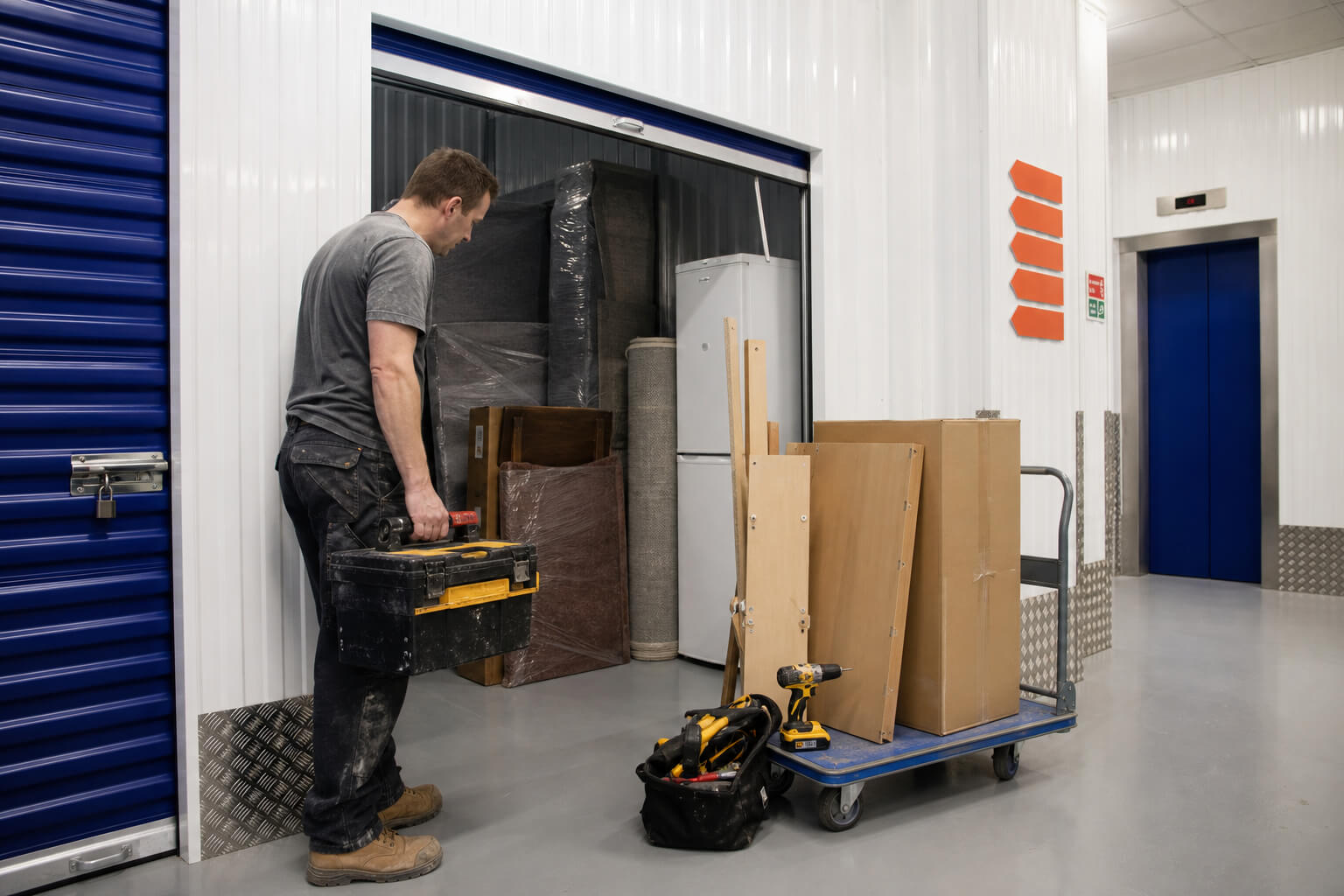
The right unit size is the one that holds what you need to put in it without paying for empty space. For a part-load of building materials the practical way to think about it is by job type rather than square footage: what are you actually storing, and how much of it?

A small unit (around 25 square feet, roughly the size of a large wardrobe) will hold a few boxes of tiles, a set of tools, a run of mouldings and a couple of door linings. It is the right size for a part-load from a bathroom fit-out or a small joinery job.

A mid-size unit (around 50 square feet, closer to a single garage bay) will hold the materials from a kitchen fit-out, a set of pre-hung internal doors, a stack of sheet goods and associated hardware. For most between-jobs trade use, this is the most practical size.

A larger unit (75 square feet or above) starts to suit projects where you are staging materials from multiple phases or have bulky items alongside sheet goods and tools.

These are illustrative; unit sizes vary by location and what is available. The pricing page sets out the sizes available and what they cost, and when you get a quote you will be matched to what is free near you.

Deposit, costs and what you get back when the job is done

The deposit is refundable. That is worth saying plainly at the start because it is the question that makes most people hesitate before booking. You pay a deposit to start the rental, and you get it back when you leave, give the required 14-day notice, and the account is settled. Unused days beyond the two-week minimum are also refunded.

Refundable deposit, 14-day notice, unused days refunded

The process at the end of a stay is straightforward. You serve your 14-day notice (the terms and conditions set this out in full), you clear the unit, and once the account is settled the deposit comes back to you. There are no hidden admin fees on the way out. If a job finishes faster than expected and you clear the unit early, the unused days count back against what you owe.

This structure suits the between-jobs situation specifically because the commitment is short and the exit is clean. You are not locked in for six months hoping the work keeps coming.

What the costs look like and where to find pricing

Prices are not published on this page because they vary by location and unit size. The pricing page has the current figures, and a quote from quote.wigwamstorage.co.uk will give you the specific cost for your nearest location and the size you need.

As a general shape: the cost of a small unit for two to four weeks is, for most trades, less than the cost of one spoiled sheet of plywood or a set of replacement tiles. Whether that makes it worth it is a practical calculation you can make once you have the actual numbers.

Contents cover for your tools and materials

Contents cover is required. You can take Wigwam’s own RSA “Self Storage Customers’ Goods” policy or provide evidence that you have equivalent cover in place. Either way, you must declare the full replacement value of what is in the unit; if you under-declare and have to make a claim, the settlement is calculated in proportion to what was declared. For tools, the replacement cost is usually higher than people expect, so it is worth taking the time to total it up properly.

The policy covers theft that involves forced entry. Atmospheric and climatic damage is excluded (as noted above). For the detail, including what the policy covers and what it does not, the contents protection page has the full picture.

Jurisdiction note: Contents cover, insurance obligations and the applicable policy terms are governed by English law. If you operate primarily in Scotland or Northern Ireland, terms may differ. Confirm the detail with your insurer or a qualified adviser rather than relying on what is on this page.

Where to find your nearest Wigwam location

Wigwam operates across UK market towns, which means a unit is usually closer to a tradesperson’s regular patch than a national operator on an out-of-town retail park. Wigwam Self Storage Lincoln in Lincolnshire and Wigwam Self Storage Bath in Somerset are two of the named locations, and the full list is on the locations page.

If you are based near one of our other market-town locations, find it on the locations page and the quote tool will confirm what is available at that site.

Get a quote

If you have dry goods that need somewhere clean, dry and secure while the next job gets ready, a short-stay unit is a practical answer. The minimum is two weeks, the deposit comes back at the end, and unused days are refunded if you finish early.

Find your nearest location at wigwamstorage.co.uk/self-storage-locations and get a no-obligation quote at quote.wigwamstorage.co.uk.

Frequently Asked Questions

Can I work in the unit, cutting or assembling materials?

No. A storage unit is for storage, not for working in. You can load, stack, sort and collect your materials and tools, and organise the space however the job needs, but the unit is not a workshop. You cannot run power tools, cut timber, assemble units, mix anything, or use it as a working bay. The reason is partly the unmanned model and partly safety: dust, offcuts, running machinery and the fire risk that comes with cutting and powering tools are not compatible with a block of sealed units where nobody is on site to respond.

It is worth being clear because tradespeople sometimes assume a unit can double as a temporary workshop between jobs. It cannot. What it does brilliantly is hold your part-load of materials and your specialist kit safely between phases, so the van only carries what the current job needs and the materials for the next one are staged and ready. Think of it as a secure store you load from, not a place you build in. For the full list of what is and is not permitted, the terms and conditions set it out. If you need a working space, that is a different kind of premises altogether.

What happens if a job overruns and I need the unit longer than I booked?

That is not a problem, because there is no fixed end date you are locked into. After the two-week minimum, the stay is open. You keep the unit for as long as the work needs and give 14 days’ notice when you are ready to clear it. If a phase slips by a fortnight, you simply keep paying for the time you use; there is nothing to renegotiate and no penalty for the gap running longer than planned. Trade timelines move, and the terms are built to move with them.

The flip side is just as useful for the opposite case. If a job finishes faster than expected and you empty the unit early, the unused days beyond the two-week minimum are refunded, so the cost scales down to what you actually used. Between those two ends, an overrun and an early finish, you are covered either way. To end the stay you serve the 14-day notice set out in the terms and conditions, clear the unit, and once the account is settled the deposit comes back. No rolling annual contract, no being tied in while you hope the work keeps coming.

How secure are my tools overnight, and what does the insurance actually cover for theft?

Each unit is individually alarmed, not sharing a single site-wide alarm, so if anyone attempts to access your unit specifically, the alarm responds to that unit. The sites are clean, dry and secure, and you hold the only smart entry credentials for your unit. For high-value tools, that is a far better overnight home than a van, which is a known target, or a garage the family also uses. Nobody else accesses your unit, and we do not hold spare keys or open units on anyone’s request.

On the insurance side, be precise about what the cover does. Contents protection is mandatory, either Wigwam’s RSA “Self Storage Customers’ Goods” policy or evidence of your own equivalent cover. The policy covers theft that involves forced entry, so the security of the unit and the evidence of a break-in both matter to a claim. You must declare the full replacement value of your tools, and for tools that figure is usually higher than people expect, so total it up properly. Under-declare, and any claim is settled in proportion to the shortfall. Atmospheric and climatic damage is excluded. We are signposting, not advising. The detail is on the contents protection page, and whether the cover suits your kit is a question for your insurer.

Can two trades share one unit to split the cost?

The account and the smart entry credentials sit with one person, so a unit cannot be jointly held with two independent parties each having their own separate access. Whoever holds the account is the one in control of the space, the payments and the contents cover, and they are the only one who can get into the unit. The sites are unmanned, so there is no way for a second tradesperson to be let in independently on request.

That does not mean two trades cannot come to a private arrangement between themselves, where one holds the account and the other contributes, but that is an arrangement between you, not something we administer or split on the invoice. Think it through before you commit, because the named account holder carries the responsibility, and the contents cover needs to reflect the full value of everything in the unit, whoever it belongs to. If both of you are storing significant kit, declare the lot. For most sole traders, a small or mid-size unit in their own name is the cleaner answer. Our support team can talk you through sizing, availability, access and pricing, but the cost-sharing side is for you to settle between yourselves.

I’ve got half-used bags of cement and plaster. Can those go in?

Cement, plaster and bonding are not on the prohibited list the way flammables are, so strictly they can go in, but the honest answer is that storing part-used bags is usually a false economy. These materials absorb moisture from the air and can go off in the bag, and whether a bag survives depends on how airtight the packaging is and how long it sits. A half bag left for three weeks often comes out part-set and useless. You are generally better off buying fresh when the next phase starts than gambling on a part-bag keeping.

If you do store them, seal the bags as airtight as you can, keep them off the concrete floor, and use them as soon as the job restarts rather than leaving them to linger. What absolutely cannot go in is anything flammable, any fuel, gas or bottled gas, solvents, thinners, or anything that can ignite or give off fumes, because the sites are unmanned and a chemical or fire risk in one unit affects every unit in the block. Worth noting too: the contents policy excludes atmospheric and climatic damage, so slow moisture spoiling of a poorly sealed bag is not something a claim would cover. For the regulatory picture on storing trade materials safely, HSE.gov.uk is the authority. We are the storage expert, not the safety regulator.
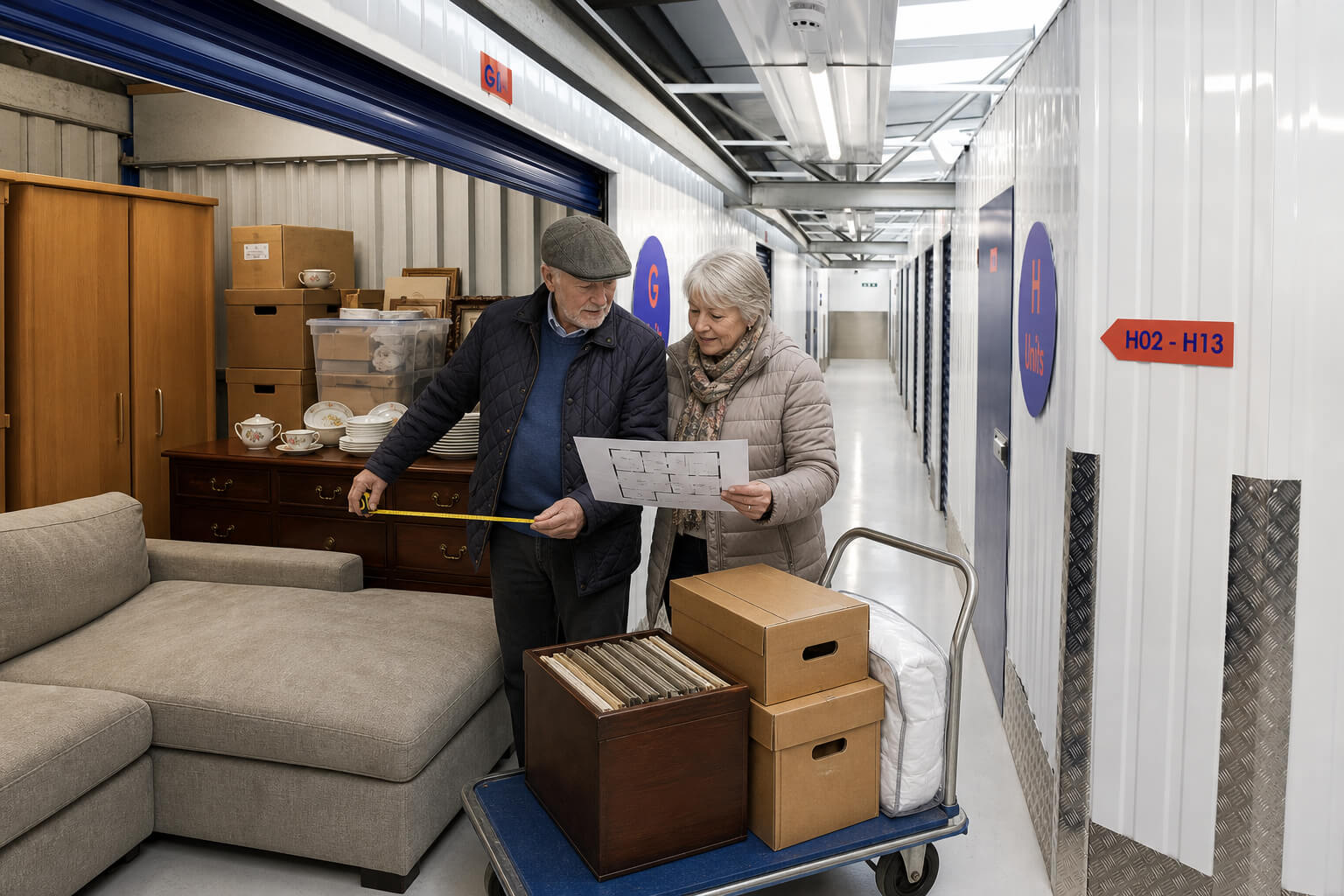

Self Storage During A Renovation The Complete Uk Guide

Builders in three weeks — where does everything but the kitchen go?

Every tradesperson will tell you the same thing. The jobs that go smoothly are the ones where the rooms are empty before anyone picks up a tool. Not roughly empty. Properly empty.

That is easier said than done when the house is full of furniture, books, crockery, a sideboard that belonged to someone’s grandmother, and forty years of accumulated life. The builders arrive in three weeks and suddenly the question is not where the kitchen is going. It is where everything else is going.

This guide is for that moment. It is a practical plan, room by room and stage by stage, for getting the house clear before the trades start and keeping it orderly while the work runs. No drama. Just a sensible way through.

Why an empty room is the job half done

Trades work faster, make fewer mistakes and charge less when there is nothing to work around. That is not a sales point; it is the practical reality of how renovation work goes. A cleared room is the condition under which a good job gets done on time and on budget.

What the trades actually need from you before they start

Most tradespeople will not say this directly, but they are hoping you have cleared the room before they arrive. Plasterers need to move freely across a whole wall. Electricians need access to the floor, the ceiling and every corner. Plumbers cannot work under a kitchen unit that is still full of crockery.

The furniture and belongings you leave in a room are not just an inconvenience. They are a risk. Something gets knocked. Something gets dusty in a way that cannot be undone. A sheet of plasterboard goes through a mirror. These things happen, and they happen because the room was not empty.

The single most effective thing you can do before your renovation starts is to clear each work zone completely, not partially.

The real cost of storing things on-site in other rooms

The instinct is to pile everything into a spare room or a garage. It works for a weekend. It does not work for a six-week kitchen renovation or a three-month extension.

Rooms pressed into storage duty become unusable. If the renovation runs long, which most do, the overflow problem compounds. The spare bedroom becomes inaccessible. The garden furniture takes up the dining room. Trades who need a staging area find nowhere to put materials. The project slows down because the house is not set up to support it.

There is also the damage risk. Furniture stacked in a hurry against other furniture, in a room with no climate management, over a wet British autumn, is furniture that comes back scratched, damp-marked and sometimes worse.

Why a skip or a yard container is the wrong tool for furniture

Skips are for rubble and waste, not for a Victorian sideboard or a set of upholstered dining chairs. A yard container in the driveway is exposed to whatever the weather brings and is not secure in any meaningful sense.

The other problem is that a skip or a container in the driveway gets in the way. Delivery lorries cannot get close. The plasterer cannot manoeuvre the van. The whole site becomes compressed and harder to work.

A self storage unit is a different tool for a different job. It is dry, alarmed, clean and accessible on your schedule, not just during delivery hours. The furniture is off-site, out of the way, and safe while the work happens.

A room-by-room pack-out plan before the builders arrive

The mistake is trying to move everything at once. A phased pack-out, timed to the build sequence, keeps the house liveable for longer and reduces chaos on the day the trades arrive. Clear the rooms the builders need first and work outward from there.

Which rooms to clear first (and which can wait)

Start with whatever the trades are hitting first. If it is a kitchen renovation, the kitchen has to be empty before day one. If it is a loft conversion, the loft needs to be clear, but the bedrooms below can often wait until the structural work has started.

Think of it in waves. Wave one: the primary work zone, completely cleared, at least a few days before the trades arrive. Wave two: the rooms that will be used as through-routes, staging areas or material storage for the trades. These need to be clear enough to be useful. Wave three: rooms not in the build sequence at all, which can remain lived-in until much later.

A whole-house strip-out is a different situation. If you are vacating the property entirely during the work, the pack-out can happen in a single organised move. But for phased projects, the phased approach is almost always better.

What to pack, store and what to leave accessible

Not everything goes. The working rule is simple: if you will not need it for the duration of the build, it goes into storage. If you will need it regularly, it stays accessible, either in a room not in the build sequence, or in a clearly labelled box you can get to easily.

For the storage unit: furniture, artwork, books, crockery, soft furnishings, electrical goods not in daily use, and anything fragile or irreplaceable. These are the things that suffer most from construction dust, vibration and an occupied building site.

Keep accessible: the things you use every day, your tools if you are doing any of the work yourself, documents and valuables, and anything you might need to get to at short notice during the build.

Label the boxes that go into storage by room, not by content. When the renovation finishes, you will be restoring rooms in sequence, and boxes labelled “kitchen” or “spare bedroom” are infinitely easier to manage than boxes labelled “miscellaneous.”

Working with the trades on sequencing (a simple checklist)

Before the first trade arrives, a short conversation about sequencing saves a lot of confusion. Ask your contractor:

  • Which rooms do you need cleared and by when?
  • Which rooms will be used for materials staging?
  • Are there any dates when access will be particularly constrained?
  • When will each room be ready to receive furniture back?

That last question is the one people forget. The end of a renovation is as chaotic as the start. Rooms are ready one at a time, over days or weeks. Knowing the sequence lets you plan the return in waves, which is almost always better than trying to move everything back at once.

What size unit do you actually need?

Unit size follows the scope of the project. A kitchen renovation is not the same storage problem as a whole-house strip-out. The honest answer is that most people underestimate how much space their furniture takes up when it is stacked properly and packed efficiently.

Single-room and kitchen renovations

A single-room renovation typically needs a small unit, often in the 25 to 50 square foot range, though this depends heavily on what is in the room. A bedroom full of flat-pack furniture packs down differently to a room with heavy Victorian pieces.

For a kitchen renovation, the consideration is not just the kitchen itself. Kitchen contents, the appliances, the crockery, the table and chairs, can fill a unit surprisingly quickly. Account for the dining area if it connects to the kitchen and will be out of use during the work.

A sizing guide is worth consulting before you book. Wigwam’s unit sizing guide (see the website) gives a practical room-by-room reference, and the pricing page at how much is self storage in the UK sets out the size options without committing you to anything.

Cross-reference with the Wigwam kitchen renovation storage guide for a more detailed breakdown of that specific project type.

Multi-room and extension projects

A two or three room renovation, or a project that involves an extension and the rooms adjacent to it, usually needs a medium unit. The complicating factor is timing. You may need to clear rooms in waves, which means the unit contents change as the project progresses.

The best approach is to size for the peak. Think about the moment in the project when the most rooms are simultaneously in use, and size the unit for that moment. Then work backwards to a smaller unit once rooms start coming back online, if the terms allow it.

The whole-house renovation guide (referenced separately on the Wigwam site) covers the logistics of a larger-scope project in more detail.

Whole-house strip-outs and longer projects

A full strip-out is a different scale of problem. If the entire house is being vacated, every piece of furniture and every belonging needs a home for the duration. For a four or five bedroom property, that is often a large unit, 100 square feet or more, and possibly multiple units if the contents are bulky or if you need segregated access to different categories of goods.

Longer projects raise a different question: not just how much space, but how long. A whole-house renovation that runs for four or five months is a long stay, and the right provider is one whose terms work for an uncertain timeline. That is the next section.

Terms that flex with the build

No renovation finishes on time. It is not pessimism; it is the nature of the work. Tradespeople encounter things inside walls that were not on the plan. Materials are delayed. A second coat needs more time than the estimate allowed. The storage arrangement should not punish you for any of that.

How the 14-day notice and refund policy works

At Wigwam, the notice period is 14 days. When you are ready to leave, you give 14 days’ notice, clear the unit, settle the account, and any unused days beyond the notice period are refunded. A deposit is taken at the start and returned once the unit is vacated and the account is settled.

This is important because it means the arrangement works in your favour when the build finishes early. You do not pay for a fixed term that extends beyond when you need it.

If the build runs long, the arrangement continues on the same rolling basis. You are not scrambling to renegotiate or worried about a contract that does not cover the extra weeks.

Full terms are at wigwamstorage.co.uk/terms-conditions.

What happens when the build overruns (how to extend)

The simple answer is: nothing dramatic has to happen. Because there is no fixed end date locked into the contract, a build that runs three weeks longer than planned just means three more weeks of storage at the same rolling rate.

The one thing worth doing is communicating early if you know the timeline is shifting significantly. If you anticipated a six-week stay and it is looking like four months, it is worth speaking to the team so everyone is planning from the same picture.

The two-week minimum stay applies at the start, so there is a floor on very short stays, but for renovation projects of any real scope, that is rarely a constraint.

Moving in stages as rooms are finished

A phased renovation often calls for a phased return. When the first rooms are finished and ready, it makes sense to move furniture back room by room rather than waiting for the entire project to complete before moving anything.

This is entirely possible with a rolling arrangement. As rooms come back online, you retrieve the relevant furniture and the unit gradually empties. When the last room is done, whatever remains comes back, and you give your 14-day notice.

It is a cleaner process than either extreme, trying to store nothing (and dealing with on-site chaos) or storing everything in one go and moving it all back in one go at the end.

Ready to get a quote? See unit sizes and indicative prices at how much is self storage in the UK, then get your quote at quote.wigwamstorage.co.uk. No commitment required.

Protecting furniture and period pieces: the honest answer

Most period furniture does not need climate-controlled storage. That is the plain truth, and because Wigwam does not offer climate control, there is no incentive to say anything other than what the evidence shows.

What clean, dry and secure actually means for your furniture

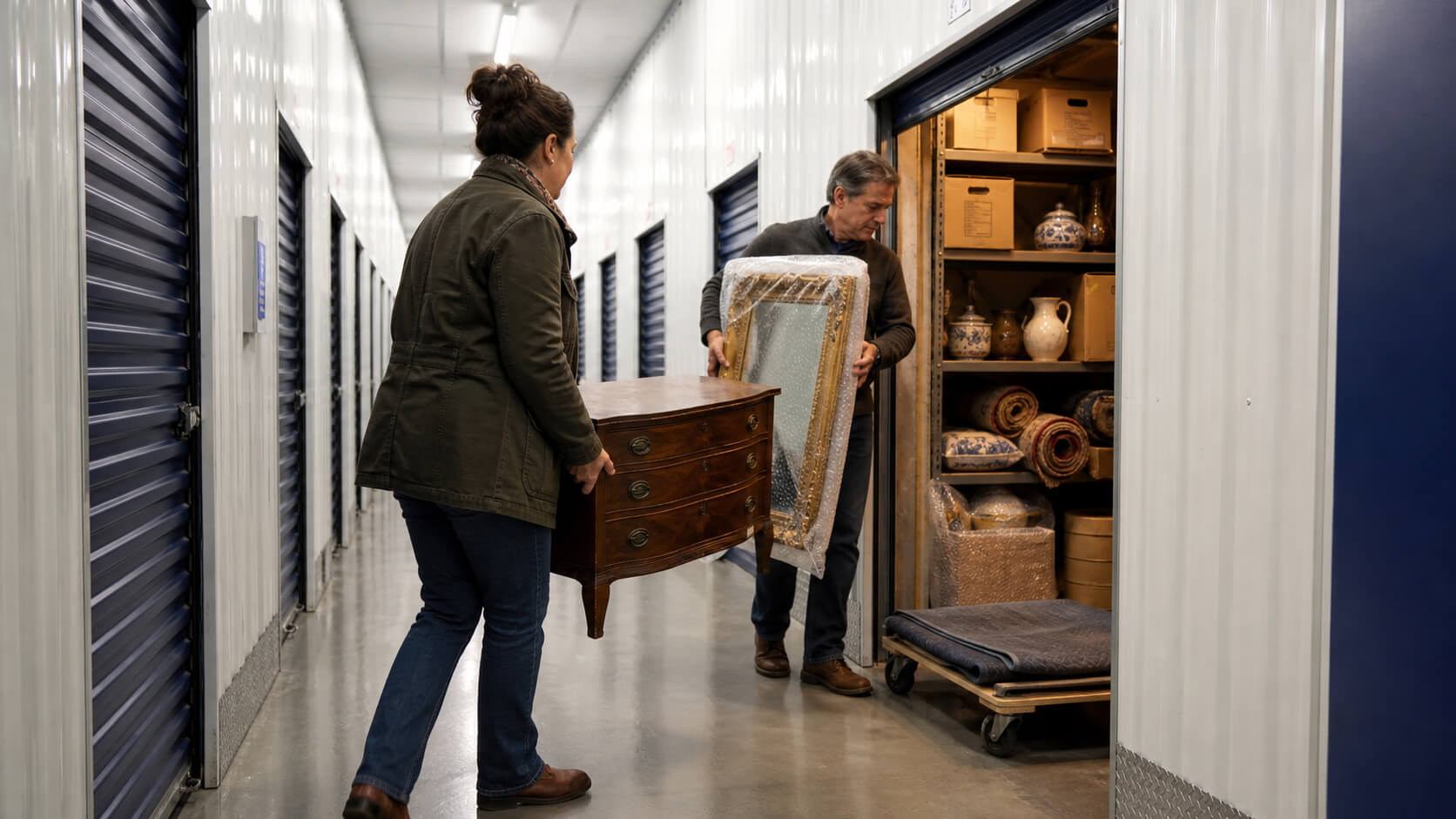
A clean, dry, individually alarmed unit is the right environment for the vast majority of domestic furniture, including antiques. Solid oak, pine, mahogany, upholstered chairs and sofas, painted pieces, ceramics, glass, books and the contents of a typical period home are all well served by a unit that keeps the damp out, the dust out and the uninvited out.

The standard that matters is stable and dry, not temperature-controlled. Most UK domestic antiques have spent their lives in houses without climate management and are none the worse for it. What damages furniture is not ambient temperature; it is moisture, dramatic humidity swings, and physical damage. A clean, dry unit addresses the first two directly and, because access is controlled, the third as well.

This is also the honest position. If a clean, dry, alarmed unit does the job, it does the job. There is no reason to suggest otherwise.

The specific cases that genuinely need a specialist facility

There is a short list of things that do genuinely need specialist conditions, and it is worth knowing what is on it.

Museum-grade oils and watercolours, particularly those with old or unstable paint layers, can be sensitive to significant humidity shifts. Musical instruments with soundboards, violins, cellos, acoustic guitars, pianos, can develop cracks if humidity drops or rises sharply over an extended period. Marquetry and fine inlay work, particularly on pieces where the veneers are already lifting or fragile, can be vulnerable to the kind of humidity fluctuation you might see in a unit over a very wet or very dry season.

This is a specific list. It is not “antiques generally.” A Victorian mahogany sideboard is not on it. A Georgian pine dresser is not on it. A set of upholstered dining chairs is not on it.

If you are genuinely uncertain whether a particular piece needs specialist handling, the right call is to speak to a conservator, not a storage provider. Wigwam will tell you plainly what our units provide and leave the specialist question to the specialists. The article “Self Storage for Antique Furniture During a Renovation” and the companion piece “Do You Really Need Climate-Controlled Storage” on the Wigwam site go into this in more detail if the question is live for you.

How to prepare period pieces before they go into the unit

A little preparation before the furniture goes in saves a lot of worry while the build runs.

Clean pieces before they go in. Dust and surface damp do more damage in storage than in a used room, because there is no airflow to carry them away. Wipe down wooden surfaces, vacuum upholstery, and make sure nothing goes in damp.

Wrap fragile surfaces but do not wrap furniture in non-breathable plastic. Bubble wrap over polished surfaces for extended periods can trap moisture and mark the finish. Furniture blankets or cotton dust sheets are better for anything that needs padding. Cardboard corners protect legs in transit.

Disassemble where you sensibly can. Beds and flat-pack pieces pack down smaller and are less likely to sustain damage in transit if they are broken down first. Keep the fixings in a clearly labelled bag taped to the relevant piece.

Stand furniture properly. Do not stack chairs upside-down on a table unless the table is sturdy enough to take the weight. Lean nothing against mirrors. Give fragile items their own space rather than packing things tightly around them.

Contents protection: what is covered and what to declare

Contents protection is mandatory at Wigwam. You can take the Wigwam policy or provide proof of your own. Either way, declaring the right value is the part that matters most.

How the contents-protection requirement works

Wigwam’s contents protection is provided through RSA’s Self Storage Customers’ Goods policy. You opt in to the Wigwam policy when you book, or you provide evidence of your own contents cover. You cannot leave the unit uninsured.

Full details of the policy, including what is covered and how to declare your value, are at wigwamstorage.co.uk/contents-protection. Read the policy document before you put anything in the unit. The policy sets out which items and events are covered, what the excess is, and what the claims process looks like.

Jurisdiction note: insurance policy terms and claims handling differ across UK jurisdictions. If you are storing goods in Scotland or Northern Ireland, verify the terms of your policy with your insurer or broker, as the applicable rules may differ from those in England and Wales.

What to declare and why under-insurance matters

Declare the full replacement value of everything going into the unit. Not the price you paid for it. Not a rough estimate. The amount it would cost to replace each item at today’s prices if it were lost or destroyed.

This matters because under-insurance is settled proportionally. If you declare half the true value of your goods and make a claim for the full loss, the settlement is reduced in proportion to the gap between what you declared and what the goods were actually worth. It is a common and painful mistake.

Period and antique pieces are the ones most likely to be undervalued. If you are storing items of significant value, it is worth having them assessed before you put them in storage, rather than estimating.

What is not covered (and how to handle the exceptions)

The policy covers the main risks, but there are exclusions that matter for renovation contexts specifically.

Theft is covered if there is evidence of forced entry. Opportunistic loss, or a situation where access was gained without force, is not covered in the same way.

Climatic damage is excluded. This means damage caused by changes in temperature or humidity. For the great majority of domestic furniture and belongings, a clean, dry unit does not produce the conditions that trigger this exclusion. But it is worth understanding that the exclusion exists.

Items that are fragile by nature, and items not properly packed, may also face restrictions. The policy document sets out the detail.

If anything in your storage inventory is particularly high-value or unusual, speak to your insurer or broker before the goods go in, rather than after something goes wrong.

Access during the project (and how deliveries work)

Access is 6am to 10pm, seven days a week, via smart entry. If you are an early starter or working to trade hours, the unit is there when you need it. No booking in advance, no queuing at a staffed desk.

Smart entry and when you can get in

Smart entry means you access the site and your unit through a keypad or fob system, without needing a member of staff present. Six in the morning is a practical time for a lot of renovation work. You can pick up a piece of equipment, retrieve a piece of furniture to take back to a finished room, or drop off a delivery before the trades arrive, all without waiting for someone to unlock anything.

Access closes at 10pm. The sites are not 24-hour. For the vast majority of renovation projects, the 6am to 10pm window covers everything you will need.

How deliveries and material drop-offs work on an unmanned site

Wigwam sites are unmanned. This is worth understanding before you plan any deliveries or material drop-offs.

If a supplier or courier is delivering something to your unit, someone from your side needs to be there to receive it. Wigwam does not sign for deliveries, does not receive goods on your behalf, and cannot accept materials or packages if no one from the customer’s business or household is present.

For renovation projects where materials are being delivered, the site access hours work in your favour for co-ordinating deliveries at a time when you or someone else can be present. What does not work is arranging a courier drop that assumes the site will receive it for you.

Tips for moving things in and out during an active renovation

Moving things in and out of storage while a renovation is live is a different kind of logistics from a single move-in and move-out. A few things make it easier.

Keep a rough inventory of what is in the unit and where. It does not need to be elaborate. A list on your phone of what is in which area of the unit, updated as things go in and come out, saves significant time when you are looking for a specific item mid-project.

Use the access hours to your advantage. Early morning runs, before the trades are on-site, let you retrieve or drop things without disrupting the working day. Late evening is useful for dropping off items that come out of a finished room before the next phase starts.

If you are retrieving furniture to restore a finished room, do it in full. Half-restoring a room and leaving the rest in storage extends the period of limbo. Aim to complete one room at a time, on the same rhythm as the build.

Finding a Wigwam unit near your renovation

If your renovation is in a UK market town, there is a good chance a Wigwam location is nearby. Wigwam operates across our UK market-town locations, with units suited to household goods and the kind of project described in this guide.

Locations across UK market towns

The full list of locations is at wigwamstorage.co.uk/self-storage-locations.

If you are in the south-west, Wigwam Self Storage Bath is well placed for renovations in and around the city, where period properties are plentiful and the need for careful, clean storage is high. For projects further north or in the east Midlands, Wigwam Self Storage Lincoln is the nearest verified location.

For any other town, use the locations hub to find the closest site. Do not assume a location exists in a town without checking; the hub is the reliable reference.

First mention tip for location naming: name locations in full on first mention, as above, and casually thereafter. “The Bath site” or “Lincoln” are fine once the full name has been used.

What to check before you book

Before you commit to a unit, a few things are worth confirming.

What size do you actually need? The sizing guide on the website gives a practical reference, and the team can advise. It is better to size slightly large than to discover mid-project that things do not fit.

How long do you expect to need it? Be honest with yourself about this. A kitchen renovation that the builder says will take four weeks often takes six. Build the buffer in at the planning stage rather than chasing the extension later.

What is in the unit that matters most? If you are storing anything of significant value, check the contents-protection requirements before you book. The deposit, the notice period and the refund terms are all in the terms and conditions.

Pricing, without commitment, is at how much is self storage in the UK. No prices are quoted on this page; the pricing page is the right reference.

How to get a quote

When you are ready, getting a quote takes a few minutes and commits you to nothing. You will need a rough sense of unit size and the likely start date.

Get your quote at quote.wigwamstorage.co.uk.

The renovation is the hard part. The storage is the easy part. We have watched hundreds of projects come and go from our market-town locations, and the ones that go well are the ones where the house was properly cleared before the trades started. When you are ready, get a quote at quote.wigwamstorage.co.uk and we will take it from there.

Frequently Asked Questions

Can I store a fridge or freezer during the renovation?

Yes, but prepare it first, because a white good put into storage wet is a white good that comes out smelling. Empty it completely, switch it off, and defrost it fully. Then wash the interior, wipe it dry, and leave the door propped slightly open while it airs for a day before it goes in. The reason is simple. A sealed fridge or freezer with any residual moisture inside becomes a closed, dark box where damp has nowhere to go, and mould and odour build quickly over a six-week renovation. Once it is genuinely dry, it stores well. Our units are clean, dry and secure, so the appliance is in a sound environment, but the inside of a sealed appliance is its own little world and only you can prepare that. Keep the door wedged open by a few centimetres for the duration if you can, using a folded towel or a purpose-made wedge, so air keeps moving through it. Disconnect and coil the cable, and tape the shelves or remove them and pack them separately so they do not rattle loose in transit. The same logic applies to washing machines and dishwashers: drain them down, run the hoses dry, and leave the door ajar. Treat the appliance like any other item for contents protection and declare its replacement value with the rest of your goods.

Can I keep my DIY tools and materials in the unit and work from there during the build?

You can store tools and materials in your unit, and the access hours make it practical to collect what you need, but the unit is for storage, not for working in. Think of it as your off-site store cupboard rather than a workshop. Access runs 6am to 10pm, seven days a week, by smart entry, so an early start before the trades arrive is easy. You can drop tools off the night before and collect them at six the next morning without waiting for anyone. A few sensible rules apply to what you store. Paints, solvents, gas canisters, fuel and other flammable or hazardous materials are not suitable for a storage unit, so those stay with you on site. Heavy power tools and timber are fine, but pack them so nothing can topple onto softer goods if you have furniture in the same unit. If you are running a tool-heavy DIY project, it can be worth keeping the tools near the door and the household goods deeper in, so your daily ins and outs do not mean unstacking the whole unit. One thing to plan for: if a supplier is delivering materials to the site, someone from your side has to be there to receive them, because our sites are unmanned and we cannot accept or sign for deliveries on your behalf.

How far in advance should I book the unit before the build starts?

Book as soon as the start date is firm, which in practice means a week or two before the trades arrive, not the morning of. The reason is partly availability and partly logistics. Unit availability varies by location and by size, and the unit you want may not be free on the exact day you decide you need it, so reserving early protects your choice. Just as importantly, a good pack-out is not a one-day job. Clearing the primary work zone properly, packing by room and labelling as you go, usually takes several evenings or a weekend, and it is far less stressful spread across a few days than crammed into the night before. Our two-week minimum stay applies from the day you move in, so there is no penalty in starting the stay a little ahead of the build to give yourself a calm pack-out window. If anything, starting early is the sensible choice, because it means the work zone is genuinely clear when the trades turn up rather than half-cleared with the last few boxes still going out as they unload their tools. Get the quote in early at quote.wigwamstorage.co.uk, confirm the size with the team, and you can set your move-in date to suit your pack-out plan rather than the builder’s clock.

Is the site secure enough to leave my belongings while my house is a building site?

Yes, and for many people that is the real reassurance, because a house mid-renovation is the least secure it will ever be. During a build, doors are off, windows are out, scaffolding offers a way up, and strangers are coming and going. Belongings left in the property through all that are exposed in a way they never normally are. Moving them to a unit takes them out of that environment entirely. Our units are individually alarmed, clean, dry and secure, and access to the site is controlled by smart entry, so only people with their own access can get in, between 6am and 10pm. That is a far more controlled setting than an open building site. Contents protection is mandatory either way, so your goods are also covered against loss or damage in the unit, whether you take our RSA Self Storage Customers’ Goods policy or provide proof of your own cover. The combination of a controlled, alarmed site and mandatory contents cover is what makes storage the safer home for anything valuable, fragile or sentimental during the works. Practical things, the items you genuinely use day to day, can stay with you. The good furniture, the artwork and the irreplaceable pieces are better off out of the dust and away from the comings and goings of an active site.

Can two households or family members share one unit during overlapping renovations?

It is possible, but treat it with care, because a shared unit means shared responsibility and that can get awkward when something goes wrong. The unit is rented in one account holder’s name, and that person holds the agreement, the access and the deposit. If you are splitting a unit with a relative or a neighbour whose project overlaps yours, everyone needs to be clear from the outset on who that account holder is, how access is shared, and who is liable for the deposit and any account matters. The bigger consideration is contents protection. Cover is declared and held by the account holder, based on the full replacement value of the goods in the unit. If two households pool their belongings, the declared value needs to reflect everything in there, and a claim would be settled through the account holder, not split neatly between two families. That is rarely worth the tangle for goods of any real value. For most people the cleaner answer is a unit each, sized to each household’s needs, which keeps access, liability and cover simple and avoids any disagreement later. If you do want to share to save space, talk it through with the team first so the sizing and the cover are set up correctly, and put your own agreement in writing between yourselves about who is responsible for what.

Tool Theft From Vans Why Self Storage Costs Less Than Your Insurance Premium

Walked out at half six to a van door that isn’t quite shut?

Most tradespeople know the feeling before they even get to the van. You walk out at half six, coffee in hand, and something about the street looks different. The side door is not quite shut. There is glass on the kerb. And then you know, before you even open it, that your morning has changed completely.

It happens to sole traders up and down the country. An electrician loses a set of Milwaukee drivers and a cable stripper. A plumber finds the van wiped clean overnight: everything from the channel bender to the crimping kit. A joiner who has spent fifteen years building up a set of Festool gear drives to site with hire tools and a sick feeling in his stomach. The tools were insured. That part is fine. What nobody tells you before it happens is everything else that comes with it.

This page does the sum that the renewal letter never shows you. Not a scare. A plain comparison, done honestly, so you can decide at the kitchen table whether a self storage unit pencils out for how you work.

If you have just had tools taken:
Your first call is your insurer to log the claim. While you are waiting, write down everything that was taken: model numbers, approximate replacement values, any serial numbers you have. Then come back here for the longer-term thinking.

If your renewal just arrived and it has gone up again:
The section for you is “The cost comparison” below. That is where the numbers live.

Not sure a unit suits how you work?
“Does a unit actually suit how you work?” is where Wigwam names the honest catch on access times. Read that first if you are the type who could get a call-out at midnight.

Why the van is the weak point

A van loaded with tools is not a mystery to anyone standing on a residential street at 11pm. The outline of a drill case, the shape of a pipe cutter through the panel, the SDS rattling when the door was not shut quite right: a working van tells you what is inside it without any help. That is the problem.

When it happens, and who it happens to

Overnight breaks happen most often when a van is parked away from its usual yard, on a residential street, without lighting. Sole traders and small firms are targeted more than large fleets because the kit is identifiable and the security is typically lighter. A single van, parked on the road, is the softest target in the street. The tools inside are worth real money: most working tradespeople carry five thousand to twenty thousand pounds of equipment as a matter of course, and that kit is what they use to earn.

Trade bodies including the Federation of Master Builders and NFU Mutual have reported on the scale of tool theft affecting UK contractors (check their current publications for recent figures before citing specific numbers). What every tradesperson who has been through it will tell you is the same thing: they saw it coming. They just had nowhere else to put the tools.

What a break-in actually costs (not just the tools)

Here is where it gets wider than most people expect. A van break-in is not one cost. It is usually four.

First there is the tool replacement: whatever the policy pays out, less any wear-and-tear adjustment, less the excess. Then there is the excess on the van’s own policy, typically somewhere between two hundred and fifty and five hundred pounds, for the damaged door or window. Then there are the hire-tool costs for the days you are waiting for replacements to arrive: even a few days of hired kit adds up quickly. And then there are the cancelled jobs, the customers who have to wait, and in some cases the subcontractor day rates you have to pass on because you cannot complete the work yourself.

Those are the costs of a single incident. The fifth cost, which does not show up in that week’s accounting, is what we cover in the next section.

The two real options, honestly compared

Here is the choice as it actually sits. Two options, both real, both worth considering depending on how you work. Neither is right for everyone.

An external unit for overnight storage

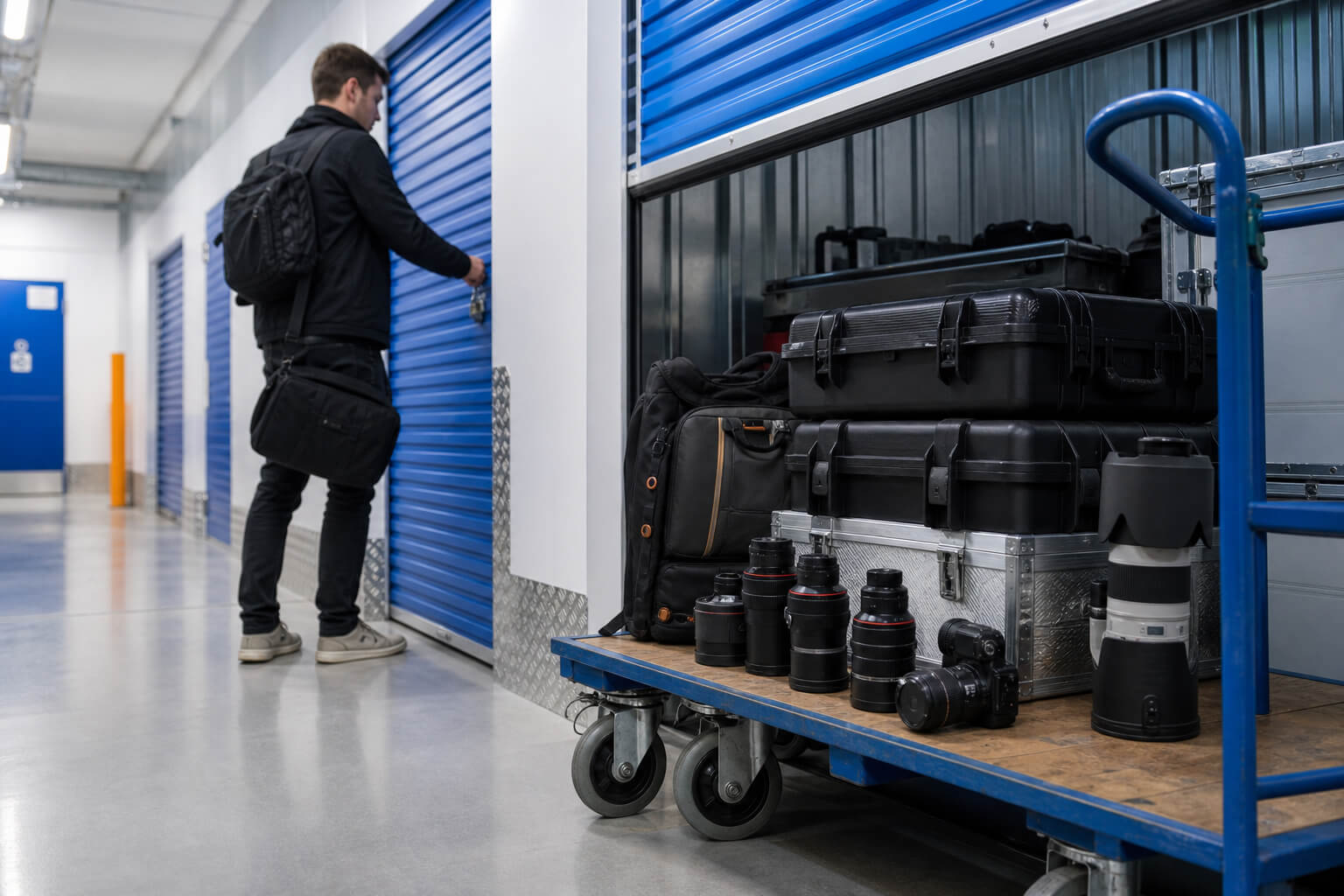
The external unit is the option that removes the target entirely. If there are no tools in the van, there is nothing to take. You drop the kit on the way home, pick it up before the first job in the morning, and drive an empty van overnight. It suits the tradesperson who starts and ends each day at the same base, whether that is home, a yard, or a site within a sensible radius of a storage location.

At a Wigwam unit you get an individually alarmed space, clean, dry and secure, with smart entry between six in the morning and ten at night, seven days a week. There are no staff on site, which means you are in and out on your own time. The footprint of a small unit is usually enough for hand tools, power tools, fixings, ladders, and site equipment without taking up more space than you need.

A bolted-in van vault, and where it falls short

The van vault, products like the Van Vault 2 or the Armorgard TuffBank, is the option for the tradesperson who needs kit with them across multiple sites during the day and cannot drop everything at a fixed base each evening. It slows a casual thief and resists an opportunistic raid. The better ones are bolted to the van floor and take time to remove.

The honest limit is this: the vault is still inside the vehicle. A determined thief with time, a decent grinder, and a quiet street can get through most of them. And if the van itself goes, everything inside it goes with it. The vault reduces the risk of a quick smash-and-grab. It does not cap the downside in the way a unit does, because the tools are still in the van.

The cost comparison: storage vs your insurance premium

The renewal letter shows you one number. What it does not show you is the four components that number is trying to cover, or what happens to it after you make a claim.

The four costs of a single break-in

Write these out on a piece of paper and the comparison becomes clearer.

One: the tools themselves. Your policy covers replacement, but check whether that is new-for-old or adjusted for age and condition, and check what the excess is before you assume the payout is what the tools are worth.

Two: the van damage excess. When the side door has been jemmied, that is a separate claim on the van’s own policy. Typical excesses run from two hundred and fifty to five hundred pounds, sometimes more on older vehicles. That comes straight out of your pocket.

Three: hire tools. If you are waiting for replacement kit, you are either hiring or not working. A week of hired gear for a busy sole trader adds up to several hundred pounds, depending on what you need.

Four: the cancelled jobs. The customers who rebook, the ones who do not. The lost day rate for a sole trader who cannot get to site is real money. Often it is money that cannot be recovered.

Soften all of these to “typically” and “often” when you do your own sums. Your actual figures depend on your policy, your excess, and your kit. But name them all, because the renewal letter only addresses one of them.

Why a claim follows you: the premium ratchet

The cost of a claim does not end when the cheque clears. A van insurance claim reduces your no-claims bonus, which moves you onto a higher premium at renewal. Make another claim in the following years, or fail to rebuild the no-claims discount before the next incident, and the premium ratchets again. Many sole traders are paying significantly more on their van policy than they were three or four years ago, and a history of tool theft claims is one reason.

The precise effect on your premium depends on your policy and your insurer. If you are wondering whether storing tools out of the van might lower what you pay, that is a question worth asking your insurer directly: they can tell you whether your policy pricing changes if the overnight tool risk is removed. Wigwam cannot advise on that; your insurer can.

A fixed monthly cap vs a rising annual risk

Here is the reframe. The van risk is variable. Some years nothing happens. One year everything happens at once, and the cost lands on you in a single week. That variability is hard to plan around.

A self storage unit is a fixed monthly line. You know what it costs. You can put it in the accounts and forget it. Whether or not the van gets hit that year is no longer the question that keeps you up. The tools are off the van.

We do not list prices on this page because unit size and location affect the figure. You can see what a unit costs in your area at our pricing guide. Most sole traders need a small unit. The comparison is worth making.

Ready to run the numbers for your town?
See what a unit costs near you at quote.wigwamstorage.co.uk.

Does a unit actually suit how you work?

A self storage unit is not the right answer for every tradesperson, and Wigwam will say that plainly because the alternative is a customer who signs up, finds it does not fit, and does not come back. The fit depends on two things: your working pattern and your hours.

One base vs multiple sites

A unit works for the tradesperson who starts and ends each day at a consistent base. You drive to the unit on the way home, unload, lock up, drive home. You come back before the first job, load what you need for the day, and go. It is a five-minute habit when the unit is nearby.

It does not work well if you are driving from a compound to five different sites and need the angle grinder at site three at two in the afternoon, because you loaded it at seven in the morning and it is not in the van. If your working day is genuinely multi-site with kit moving between locations, a vault in the van is more practical than a unit you have to return to.

For a sole trader with a regular yard start, a predictable run of jobs, and tools that go on and come off the van each day anyway, a unit near home or the yard is a simple fit.

Access is 6am to 10pm, not 24-hour

This is the catch. Say it plainly.

Access at Wigwam is by smart entry, six in the morning to ten at night, seven days a week. That covers most of the working day for trades that start at a base. If you are on site by seven, you can load at six thirty without a problem.

What it does not cover is a midnight emergency call-out where you need a tool you left in the unit. If your work regularly takes you back out after ten at night, a unit is not the right answer for overnight kit access. That is an honest thing to say, and it is worth knowing before you sign up rather than after.

If your day starts at six or seven from a home base, the access window fits without much adjustment to how you already work.

What to look for in a tool storage unit

Not all storage is the same. These are the things worth checking before you commit to any provider.

Individually alarmed units, not just perimeter CCTV

There is a difference between a site with a camera on the gate and a site where every individual unit has its own alarm. A perimeter camera records what happened after the event. A per-unit alarm triggers on the door, which means the moment someone interferes with your space, the site knows about it.

At Wigwam, units are individually alarmed. Clean, dry and secure is the standard: no climate control is implied or offered, just a proper, weathertight space that keeps tools in the condition they left in. Smart entry handles access without needing staff on site.

Low commitment matters when you are testing a new habit

The minimum stay is two weeks. If you try it and find that the habit does not fit how you work, or the location is not convenient enough, you give fourteen days’ notice and leave. Any unused days are refunded. The deposit is refundable once you have vacated and the account is settled; it is returned after the notice period has run.

That is not a long commitment for something you are testing. A lot of tradespeople who try it for a month to see whether it suits them are still there two years later, because the habit turns out to be easier than they expected and the van drives quieter in the evening.

Sites are unmanned, which means you come and go without waiting for staff. If you are expecting a delivery to the unit, someone from your own business needs to be present to receive it; Wigwam does not sign for or accept deliveries on your behalf.

What you can and cannot store

What goes in without question

Hand tools, power tools, charged and uncharged batteries (check your specific unit policy on lithium batteries, as some sites have guidance on this), ladders, fixings, site equipment, and spare materials all go in without issue. If you are also between houses or clearing a property, household goods are welcome alongside the trade kit. The unit is your space.

What stays out, and why it matters

No fuel. No gas bottles. No paint thinners, solvents, or flammable liquids. Not because Wigwam is being unnecessarily awkward, but because these materials are a fire risk that could put every other customer’s stored goods at risk, and their presence would invalidate insurance cover for the whole block.

No vehicles. The unit is for tools, not the van. Wigwam does not offer vehicle storage.

No hazardous materials.

The full terms are at wigwamstorage.co.uk/terms-conditions.

Rules on hazardous goods storage and how exclusions interact with your policy can differ in Scotland and Northern Ireland. If you are in either jurisdiction, check your policy wording and speak to your insurer or a solicitor with commercial insurance experience in your area. The guidance here applies to England and Wales.

If you still need some tools in the van overnight

Not every tradesperson can clear the van completely every evening. Sometimes the job is two hours from the yard and driving back is not realistic. Sometimes the kit is too bulky to load and unload daily. This section is for when the unit is not the whole answer.

Reduce the target value: park smart and mark your kit

Park doors-to-wall or boot-to-wall wherever you can. A solid wall or building against the loading door means the most common entry point is blocked. Lit areas are harder to work in than dark ones. If you can avoid residential streets and use a commercial car park with CCTV, do so.

Remove anything visible from the cab window. The outline of a tool bag on the back seat is an invitation. An empty-looking cab is less interesting.

Record serial numbers for every significant piece of kit. Write them down somewhere you will find them if you need to make a claim. Mark tools with postcode-coded engraving: trade bodies report that marked tools are recovered at higher rates than unmarked ones (verify the current figure with your trade association before citing it). Even if the tools never come back, marked kit is harder to sell on, which reduces the incentive for theft.

What an in-van vault actually protects against, and what it does not

A bolted-in vault, whether that is a Van Vault 2 or an Armorgard TuffBank, is a real deterrent for an opportunistic thief. A casual raider who does not have the tools or the time to deal with a welded steel box will move on. That is a genuine advantage.

What it does not protect against is a determined thief with time, the right equipment, and a quiet street. And if the van is taken, the vault goes with it. The vault caps the downside of a quick raid. It does not cap the downside of a clean-out or a vehicle theft. That is the honest distinction.

Layering the two is an option for some trades: a unit for the kit you do not need overnight, a vault for the tools you genuinely cannot move each day.

Protecting the value of what you store: contents cover

The unit is only as good as the cover behind it. This section is signposting, not advice: speak to your insurer for anything specific to your situation.

Declare the real replacement value, not what you paid five years ago

When you take out contents protection for a storage unit, declare the full current replacement value of everything inside. Not what you paid for the tools when you bought them. Not a rough estimate. The figure it would cost you to replace them today, new-for-old.

The reason is underinsurance. If the declared value is below the actual replacement cost, a claim is typically settled proportionally: you bear part of the loss yourself in the same proportion as the underinsurance. Declare accurately, so that if something does happen, the cover is real rather than partial.

Wigwam offers RSA “Self Storage Customers’ Goods” contents protection as an opt-in. The policy is New-for-Old, with an excess of fifty pounds. You can also prove your own cover if your existing commercial policy extends to stored goods at a third-party location. Details are at wigwamstorage.co.uk/contents-protection.

Do not quote premium rates from this page; they are not listed here and depend on the value you declare. Speak to Wigwam or check the contents protection page for current figures.

Theft from a storage unit: how it differs from van theft

A theft from a van almost always involves forced entry. The door is jemmied, the window is broken, the lock is defeated. That is the normal trigger for a van insurance claim.

The RSA contents protection for a storage unit works on a similar principle: theft cover applies after forcible entry to the unit. Given that units are individually alarmed and the site uses smart entry, forced entry to a Wigwam unit is harder to pull off than forced entry to a van on a residential street. The alarm triggers on the unit door. The access system logs entries. That is a meaningfully different risk profile from a van parked overnight.

For anything specific to how a claim would be assessed in your circumstances, speak to your insurer. See the full terms at wigwamstorage.co.uk/terms-conditions.

Insurance policy terms and how claims are assessed can vary across the UK. If you are based in Scotland or Northern Ireland, speak to your broker or a solicitor with commercial insurance experience in your area before relying on the England-and-Wales framing here.

Take the tools off the van

The sum is not complicated. A van break-in costs more than most people account for before it happens: the tools, the van excess, the hire kit, the lost days, and then the premium that climbs afterward. A self storage unit converts that unpredictable cluster of costs into a single flat monthly figure you can see and plan around.

It works for trades that start and end each day at a base. Access is six in the morning to ten at night, which covers the working day for most. The minimum stay is two weeks, and unused days are refunded if you leave early. The deposit is refundable once you have given fourteen days’ notice, vacated, and settled the account. There is no long-term commitment to worry about while you are testing whether the habit fits.

If you are ready to see what a unit costs in your town, a quote takes two minutes.

Get a quote at quote.wigwamstorage.co.uk.

Find your nearest location at wigwamstorage.co.uk/self-storage-locations. If you are in Lincolnshire, Wigwam Self Storage Lincoln is one of our market-town locations. In Somerset, Wigwam Self Storage Bath covers the area. For other towns, the locations hub will show you what is closest.

Frequently Asked Questions

Will moving my tools out of the van overnight actually lower my insurance premium, or just my risk?

The honest answer is that it lowers your risk for certain, and it may lower your premium, but only your insurer can confirm the second part, so ask them directly. Removing the tools from the van overnight removes the single most common loss event for a tradesperson, the overnight break-in on a residential street, and that genuinely changes your exposure. Whether it changes what you pay depends entirely on how your particular policy is rated. Some insurers price the overnight tool risk separately and will adjust if you can demonstrate the kit is stored elsewhere; others bundle it and may not move the number much. The way to find out is a specific question to your insurer or broker: “If my tools are not in the van overnight and are kept in a secured, alarmed storage unit, does that change my premium or my cover terms?” Be ready to describe the storage, individually alarmed unit, smart entry access, forced-entry-based theft cover, because that detail is what they will assess. We cannot advise on your premium; that sits with your insurer, and pretending otherwise would be giving insurance advice we are not qualified to give. What we can say plainly is that the unpredictable cluster of costs from a break-in, the tools, the van excess, the hire kit, the lost days, and the premium climb that follows, becomes a single flat monthly figure when the tools are off the van. Even if the premium itself does not fall, the risk you are carrying does, and that is worth a conversation with your insurer before your next renewal.

Can I store lithium-ion tool batteries in the unit, and how should I look after them?

You can store ordinary cordless tool batteries, but check your specific unit’s policy on lithium batteries first, because some sites give particular guidance and the rules around quantity and condition matter. The general principle is that the everyday batteries for drills, drivers and saws are fine in normal numbers, what is excluded across the board is bulk fuel, gas bottles, solvents and flammable liquids, which are a fire risk to the whole block. Lithium batteries sit in a sensible-precautions category rather than a banned one, so treat them with a bit of care:

  • Store them charged to roughly half rather than fully flat or fully full, which is kinder to the cells over a long idle period.
  • Keep them dry; the units are clean and dry, but pack batteries in a box rather than leaving them loose on the floor.
  • Do not store visibly damaged, swollen, or fire-damaged batteries, which are a genuine hazard.
  • Keep terminals from shorting against metal by leaving them on the tool, in their case, or with terminal caps on.

There is no climate control, meaning no managed temperature, but a dry, secure unit is well within what tool batteries tolerate over the kind of overnight-and-weekend cycle most trades use. If you are storing a large quantity, or anything beyond ordinary tool packs, raise it with the team so you are clear on that site’s guidance. When in doubt, ask before you store rather than assume, and check the terms and conditions, which set out what is and is not permitted.

If my tools are stolen from the unit, how does a claim differ from a claim on a van break-in?

The mechanics are similar, theft cover hinges on forced entry, but the risk profile of a unit is meaningfully better than a van on the street, which changes the picture. On a van, theft almost always means forced entry: a jemmied door, a broken window, a defeated lock, and that is the normal trigger for a van insurance claim. The RSA “Self Storage Customers’ Goods” contents protection works on the same principle: theft cover applies where there is evidence of forcible entry to the unit. The difference is how much harder forced entry is to achieve at a unit. Each unit is individually alarmed, so the alarm triggers on your specific door rather than just a perimeter camera recording after the fact, and the smart entry system logs access. That is a different proposition from a van parked overnight on an unlit residential road, which is the softest target on the street. For a claim, the practical steps are the same discipline you would apply to any loss: report it, document what was taken with model and serial numbers, and provide evidence of the forced entry. The single most important thing you control in advance is the declared value, declare the full current replacement cost of your kit, because under-insurance is settled proportionally and you carry the shortfall yourself. The policy settles New-for-Old with a fifty-pound excess. For exactly how a claim would be assessed in your circumstances, speak to your insurer; we provide the secure space and signpost the cover, we do not assess claims or give insurance advice.

Does my existing commercial or tools-in-transit policy cover the kit while it sits in a storage unit?

Do not assume it does, because many tools-in-transit and van policies cover the kit while it is on you, in the van, or on site, and stop at the door of a third-party storage unit. This is exactly why contents cover at the unit is a condition of storing rather than an optional extra. You have two routes. First, take Wigwam’s RSA “Self Storage Customers’ Goods” policy, which is built for goods in a unit and settles New-for-Old with a fifty-pound excess. Second, prove your own cover, but only if your existing commercial policy genuinely extends to goods stored at a third-party location, which is the specific wording to check. A lot of tradespeople discover at claim stage that their tools-in-transit cover lapsed the moment the kit went into storage, leaving a gap nobody intended. So the practical move before you book is a direct question to your insurer or broker: “Does my current policy cover my tools while they are stored overnight in a third-party self storage unit, and if so, up to what value and on what terms?” If the answer is yes, you can present proof of that cover. If it is no or unclear, the unit’s own contents protection closes the gap. Whichever you choose, declare the full replacement value, because claims settle in proportion to what you declare and under-insurance leaves you carrying part of the loss. We give information and signpost only; whether your own policy is adequate is a question for your insurer, not for us, and a phone call now is far cheaper than a shortfall later.

What if my van gets a midnight call-out and the tool I need is locked in the unit?

That is the honest catch, and it is worth facing squarely before you commit: access runs 6am to 10pm, seven days, by smart entry, and it is not 24-hour. If your work regularly takes you back out after ten at night for emergency call-outs, a unit is not the right place for the kit you might need at 2am, because you genuinely cannot get into the unit in those hours and there is no member of staff to let you in, the sites are unmanned. For most trades that start and end the day at a base, this is not a problem: you load before the first job and unload on the way home, all comfortably inside the window. The pattern that does not fit is the emergency electrician or plumber on call through the night who could need a specific tool at any hour. There are two sensible responses. One, split your kit: store the bulk of your gear in the unit, where it is off the van and out of harm’s way, and keep the small set of genuine call-out essentials in a bolted-in van vault for out-of-hours work. That caps the overnight theft risk on the bulk while keeping the emergency kit reachable. Two, if almost all your work is unpredictable night call-outs, accept that a unit with stated hours may not suit overnight kit access at all, and a vault is the more practical primary answer. Either way, knowing the window is 6am to 10pm before you book means you build the right habit rather than discovering the limit at the worst possible moment.

Can I store household goods alongside my tools if I am also moving house or clearing a property?

Yes, the unit is your space and there is no rule that it has to hold only trade kit, household goods are welcome alongside the tools. This suits the common situation where a sole trader is both running a business and between homes, or clearing a parent’s property, and would rather not pay for two separate units. Furniture, boxes, kitchen equipment, the ordinary contents of a home all sit happily next to hand tools, power tools, fixings and site equipment. A few practical points keep it sensible. Pack so that heavy tool cases are not stacked on top of boxes holding breakables, and keep anything you need regular access to, daily tools, for instance, near the front so you are not shifting the household side every morning. The exclusions are the same whatever the mix: no fuel, gas bottles, solvents or flammable liquids, because they endanger the whole block and would invalidate cover; no vehicles of any kind, the unit is for tools and goods, not the van; and no hazardous materials. The units are clean, dry and secure, individually alarmed, which suits both furniture and tools, there is no climate control, but the ordinary contents of a home and a working kit do not need it. One thing to get right on the cover side: declare the full replacement value of everything in the unit, tools and household goods together, not just one or the other, because the contents protection settles proportionally against what you declared. If the mix changes significantly during your stay, update the declared value to match.

Self Storage Vs A Lock Up Garage Cost And Security Compared

A lock-up’s half the price — but is it safe enough for the good stuff?

There is usually a moment, somewhere between booking the plasterers and realising the house will be uninhabitable for three months, when someone spots a lock-up advertised on the council notice board or a local Facebook group. It is half the price of a self storage unit. It is round the corner. The maths look obvious.

Then you think about your grandmother’s dresser. The sash windows you had restored last summer. The stack of original tongue-and-groove you pulled from the back bedroom and cannot replace if something happens to it. And the question shifts from “which is cheaper?” to “which will give these things back to me in the same condition I left them in?”

That is the question this page tries to answer honestly. A lock-up is the right call sometimes. A self storage unit is the right call other times. The deciding factor is rarely the weekly rate.

The Quick Answer

Here it is, plainly: a lock-up garage can genuinely be the cheaper option and, for the right job, the sensible one. A self storage unit costs more per week, but it gives you something a padlocked garage on a council estate usually cannot: an individually alarmed unit, a clean and dry environment, and written terms that protect your deposit and your goods. The honest answer depends on what you are storing and how much you can afford to lose if it goes wrong.

When a lock-up genuinely wins

If cost is the primary driver and the goods are robust, a lock-up is worth serious consideration. Garden equipment, bikes, tools in hard cases, non-perishable trade materials where damp is not going to cause lasting damage: a basic lock-up handles all of that without fuss. And if you need to store a car, a motorbike, a caravan or a boat, a lock-up or a specialist vehicle storage site is where you should look, because that is a job we do not do at Wigwam. For Tradesman Tom weighing whether to upgrade from a council garage for his tools, the honest answer is: it depends on how exposed those tools are and how much is at stake if they are stolen or damp gets into the cases.

When a self storage unit is the better call

Period fittings, upholstered furniture, archived paperwork, mattresses, clothing, salvaged woodwork: anything that cannot afford three months in a damp brick box is in different territory. When the goods are irreplaceable, or when you need reliable access outside daylight hours, or when you want written terms that tell you exactly what happens to your deposit and what you get back if you leave early, a self storage unit changes the comparison. The weekly rate is higher, but the rate is only part of the total cost picture.

Cost Compared

The two options are not as far apart as the advertised headline prices suggest, once you factor in what each arrangement actually includes.

What a UK lock-up typically costs

Council lock-ups in the UK tend to run from around £15 to £40 per week for a single garage, depending on location, though figures quoted in trade press vary and council pricing changes regularly. Private lock-up arrangements cover a wide range from informal landlord deals to commercial lock-up parks, and the prices move accordingly. The catch, beyond the price, is supply: council waiting lists for lock-ups in towns where demand is high can run to months, which means you may need to pay for alternative storage while you wait anyway. Private arrangements are easier to find but rarely come with anything written down.

How self storage pricing works and where to check

Self storage is priced weekly, with the rate set by unit size. The smaller the unit, the lower the rate; the bigger the town centre, typically the higher the price. There is no one universal rate, and comparing sticker prices between providers is tricky without checking like-for-like sizes. For a clear picture of how self storage pricing works, our pricing page sets out what affects the weekly cost and how to work out the right size for your job.

What the weekly rate does not tell you on its own is the full terms picture. At Wigwam, you pay a refundable deposit when you move in, give 14 days’ notice when you are ready to leave, and once you have vacated and the account is settled, the deposit is returned less anything owed. If you leave before your expected end date, unused days are refunded. The minimum stay is two weeks. That is what the written terms look like. Compare that to a council tenancy or a private arrangement with no paperwork, and the two options are not really like-for-like on cost at all.

The costs a cheap lock-up does not show upfront

A padlocked garage on a shared site, with no individual alarm and no CCTV, carries a theft exposure that does not appear in the weekly rate. If a determined thief cuts a padlock, there is no unit-level alert, no record of who entered, and often no guarantee of recovery. For furniture, period fittings or anything with significant replacement value, that gap matters.

Damp is the second hidden cost. Many older council garages and private brick lock-ups are not sealed or maintained to a standard that protects upholstered furniture or wooden fittings over a period of months. The weekly saving looks different once you are factoring in the cost of replacing a warped door or a mildewed sofa.

And if there is no written agreement with a refund clause, there is no guaranteed route to get your deposit back if the relationship with the landlord sours, or any entitlement to a pro-rata refund if you leave early. That is a cost too, even if it does not appear on a weekly invoice.

Ready to see what a Wigwam unit would cost for your job?
Get a no-obligation quote at quote.wigwamstorage.co.uk

Security Compared

The security comparison is where the two options diverge most clearly, and it is worth being specific about what that means in practice.

A padlock on a shared site versus an individually alarmed unit

Most lock-ups offer a padlock on a metal door. That is the security provision. Some sites have perimeter fencing; some have CCTV at the entrance; very few have any alarm system that is specific to individual units. If someone forces the door on your lock-up, the alert, if there is one at all, is a general site alarm that does not identify your unit from anyone else’s.

Wigwam’s units are individually alarmed. A breach of your specific unit triggers an alert. That is a meaningful difference for anyone storing goods with significant monetary or sentimental value, and it is not something a basic padlocked garage can replicate without a significant additional cost.

Clean, dry and secure: what that actually means

The framing most self storage providers reach for is climate control, with references to controlled temperature and humidity management. That is not what we are claiming at Wigwam, and it is worth being clear about why. Our sites are clean, dry and secure. That means a maintained, weather-tight environment where the floor is not damp concrete, the walls are not weeping brick, and the unit is not open to the elements. It does not mean a thermostat.

For most household goods, that distinction matters less than the general storage industry suggests. Upholstered furniture, wooden period fittings, archived documents and clothing do not need a temperature-controlled laboratory. They need a clean, dry and secure space where damp cannot get at them over three or six months. The damp problem in older brick lock-ups is real and it is the condition risk that most people do not think about when they are comparing weekly prices. A clean, dry unit that does not let water in is the honest answer to that risk, without overstating what we offer.

If your goods genuinely require controlled temperature or humidity, such as fine art, wine or specialist electronics, a climate-controlled facility is the right route and they do exist in the market. That is not a gap we fill.

Access and Convenience

Access is the third variable in the comparison, and it is one where the two options behave quite differently.

Wigwam access hours and smart entry

Access to a Wigwam unit is 6am to 10pm, seven days a week, by smart entry. We are honest that this is not 24-hour access: if you need to be loading a van at 2am, a self storage unit is not currently the right option for that. But 6am to 10pm covers most practical renovation and moving scenarios comfortably. An early contractor start at 7am is within hours. An evening run after work to collect something you need the next day is within hours. Smart entry means you do not need to arrange key collection from a keyholder or coordinate with a site manager. You use the access system and go.

Our sites are unmanned. You access your own unit and your own goods. If you are expecting a delivery, someone from your side needs to be present to receive it; Wigwam does not sign for goods on your behalf and cannot receive deliveries in your absence.

What that means for a renovation or a phased move

A manual-key lock-up gives you access when you have the key, which in practice often means when the landlord is available, or when the site is open, or when you can arrange a handover. For a renovation that runs on a building site’s schedule, that rigidity creates friction. You need to move a piece of furniture on a Sunday morning before the plasterers arrive: a manual key arrangement may or may not accommodate that. Smart entry at 6am on a Sunday morning does.

For those working in or around specific locations, we have a number of UK market-town sites within reasonable reach. Wigwam Self Storage Bath and Wigwam Self Storage Lincoln are two verified examples. For the full list, see our UK market-town locations; there is a reasonable chance a Wigwam site is a sensible drive from where the renovation is.

What Goes Where: Matching the Option to Your Goods

The simplest way to approach this is by item type, rather than by provider first.

Things a lock-up handles well

Robust garden tools, power tools in hard carry cases, garden equipment, bikes with reasonable locks, non-perishable trade materials like off-cut timber or fixings in sealed containers: these tolerate a lock-up environment without much risk, as long as the site is not actively waterlogged. If the goods are replaceable, the risk is proportionate to the replacement cost. For Tradesman Tom with a set of professional tools, the right question is the insurance position and what the actual theft exposure is on the site in question, not just the weekly rate.

Vehicles, caravans and boats belong in a lock-up or specialist vehicle storage facility. Wigwam does not store any of these, and that is worth knowing before you commit to a unit.

Things that belong in a self storage unit

Upholstered furniture, wooden period fittings, sash windows, original doors, fireplaces, mattresses, archived documents and files, clothing, bedding and anything that will be damaged by damp or affected by prolonged cold and wet: these belong in a clean, dry and secure unit.

Contents protection is mandatory at Wigwam. You either take out Wigwam’s own contents cover or you evidence that your existing insurance extends to goods held at a self storage site. You declare the full replacement value of what you are storing; if the declared value is lower than the actual value, any claim is settled proportionally. The details of Wigwam’s policy, including what is covered and what is excluded, are set out at Wigwam’s contents protection policy. We signpost you there rather than summarise the terms here, because insurance is something to read in full rather than in a paragraph.

A Note on Vehicles and Climate Control

Two questions come up regularly in this comparison and both deserve a direct answer, even though neither answer favours Wigwam.

Wigwam does not store cars, motorbikes, caravans or boats. If vehicle storage is what you need, a lock-up or a specialist vehicle storage provider is the right route. We say that plainly, because the honest answer is more useful to you than a vague deflection.

Wigwam does not offer climate control. We do not manage temperature or humidity in our units. The correct description of what we offer is clean, dry and secure: a weather-tight, maintained environment that does not let damp in. For the majority of household goods, that is the protection that actually matters. For goods that genuinely need controlled temperature or humidity, a specialist climate-controlled facility is worth seeking out. Several operate in the UK; we are not going to name competitors, but they are not difficult to find.

These two honest admissions are, in our experience, more useful to a comparison searcher than a list of features. They also mean that when we say a Wigwam unit is the right call for your period fittings, you can trust that we have given you the full picture.

How to Decide

The decision comes down to three variables: what you are storing, how much you can afford to lose, and how much the written terms matter to you.

If what you are storing is robust, damp is not a realistic risk, theft exposure is proportionate to the replacement value, and cost is the primary driver: a lock-up is worth a serious look. Check the site condition, ask about security, confirm there is at least a basic written agreement, and price it properly including any deposit.

If you have household goods, irreplaceable period pieces, upholstered furniture, archived documents or anything where condition matters over months rather than weeks, the individually alarmed unit, the clean and dry site, and the transparent written terms change the calculation. The weekly rate is higher, but the rate is only part of what you are buying.

The written terms matter more than most people expect before they need them. A refundable deposit returned after 14-days’ notice on vacating, a refund of unused days if you leave early, a minimum of two weeks: those terms are in writing and they are clear. A council garage tenancy or an informal private arrangement rarely offers equivalent protection. If you want to read the detail before you decide, see Wigwam’s full terms.

The moment that tells you whether the decision was right is not the day you carry things in. It is the day your things come out. A lock-up that looked fine in September can look very different in January once the damp has had three months to work its way into a walnut chest of drawers that belonged to someone’s grandfather. The saving on weekly rent is real. So is the loss.

If you are ready to see what a unit would cost for your specific job, a no-obligation quote is the quickest way to get a number.

Get a quote at quote.wigwamstorage.co.uk

What to Read Next

If you want to compare costs in detail before making a decision, the how self storage pricing works page sets out how weekly rates are structured and what affects the price. For the location nearest to you, our UK market-town locations lists all current sites. If you are unsure what size unit you need for your job, our unit size guide covers how to estimate the right size; reference that page in the navigation rather than guessing from this one.

Frequently Asked Questions

Will my home insurance cover goods in a lock-up garage the same way it would in a storage unit?

Probably not, and this is the gap most people miss when a cheap lock-up looks tempting. Standard home contents policies cover your belongings at the insured address, your house. The moment goods leave that address for a lock-up or any off-site space, many policies stop covering them, or cover them only under a limited “away from home” extension that may not stretch to long-term storage in a garage you rent. The result is that the lock-up’s headline saving can come with no cover at all on what is inside it, which for furniture or period fittings is a serious exposure.

The honest position is the same for both options: do not assume, check the wording. If you are leaning towards a lock-up, ring your home insurer and ask plainly whether your contents are covered while stored in a garage you rent away from your property, and under what conditions. Get the answer in writing if you can. With a Wigwam unit the requirement is built in rather than left to chance: contents cover is mandatory, so you either take our RSA “Self Storage Customers’ Goods” policy or evidence your own cover before anything goes in. That is not us being awkward; it means there is no scenario where your goods sit uninsured. A lock-up does not impose that discipline, so the responsibility falls entirely on you to arrange and confirm cover. We can point you to the contents protection page for what our policy covers, but for your own home policy and how it treats a lock-up, your insurer or broker is the right person to ask, not us.

What happens to my belongings in a lock-up if the landlord wants the garage back or the arrangement ends?

This is the risk that does not show on the weekly rate, and it is worth thinking through before the saving wins you over. A private lock-up arrangement is often informal, sometimes with nothing written down, which means the certainty of your tenure rests on the landlord’s goodwill. If they decide to sell the property, reclaim the garage, or simply end the arrangement, you can find yourself needing to move a unit’s worth of belongings at short notice, possibly mid-renovation when you have nowhere else to put them. A council lock-up is more formal, but its own terms govern notice and there may be a waiting list pressure behind you. The point is that the exit is not always in your hands.

Compare that to written storage terms. At Wigwam the arrangement is set out plainly: a refundable deposit, a two-week minimum, and when you choose to leave you give 14 days’ notice, vacate, settle the account, and the deposit comes back less anything owed. The decision to end it is yours, on a known notice period, with a known process. You are not at the mercy of a landlord changing their mind. That predictability is part of what you are paying the higher weekly rate for. If certainty of tenure matters for your job, say a renovation of uncertain length where being told to clear out at two weeks’ notice would be a real problem, that is a strong mark in favour of written terms over an informal garage. For robust goods on a short, low-stakes basis where you could move them easily if you had to, the informality matters less.

Can I run a lock-up and a storage unit at the same time to split my belongings by type?

Yes, and for some jobs it is genuinely the smartest way to keep costs sensible without compromising on the things that matter. The logic follows the article’s central point: match the option to the goods. Robust, damp-tolerant items, garden tools, off-cut timber, fixings in sealed containers, kit in hard cases, can sit happily in a cheaper lock-up. The vulnerable items, upholstered furniture, period fittings, archived paperwork, anything damp or theft would ruin, go in a clean, dry, individually alarmed storage unit. Splitting them means you are not paying storage-unit rates to keep a lawnmower dry, and you are not risking a walnut chest in a damp brick garage.

A few practical points if you go this route. Size the storage unit only for the vulnerable goods, because that is where the per-week cost is higher, and let the bulky robust stuff take the cheap space. Keep your contents cover straight: a Wigwam unit requires cover on what is inside it, and you will need to satisfy yourself separately about insurance on the lock-up contents, which your home insurer may or may not extend to. And remember the vehicle line, since people splitting storage often have a project car or a trailer in mind: Wigwam does not store vehicles, caravans or boats of any kind, so anything on wheels belongs in the lock-up or a specialist vehicle facility, never the unit. Done thoughtfully, the split gets you the security where it counts and the saving where it is safe. Done carelessly, you end up paying for two arrangements and managing two sets of keys for no real gain, so it is worth a quick sum first.

Is a lock-up or a storage unit easier to access in winter, when damp and cold are at their worst?

A storage unit, on both counts, and winter is precisely when the difference between the two shows up. The damp point is the one the article keeps returning to: older brick lock-ups are often unsealed and unheated, so through a cold, wet winter, condensation and ground damp work into anything absorbent over weeks. A Wigwam unit is clean, dry and secure, a maintained, weather-tight space where the floor is not damp concrete and the walls are not weeping brick. That is not climate control, and we do not claim it is, but it does mean your goods are not sitting through the worst of the weather in the conditions that warp doors and mildew sofas.

Access is the second half. A manual-key lock-up gives you access when you can get the key and when you can physically reach it, which in winter can mean an icy shared yard, a frozen padlock, and reliance on a landlord being around. A Wigwam unit runs on smart entry from 6am to 10pm, seven days a week, so a dark winter evening run after work, within those hours, is no different from a summer one: you use the access system and go, no waiting for a keyholder. The honest caveat is the access window itself, it is 6am to 10pm, not overnight, so a 2am winter visit is not possible at either option in practice and certainly not at a unit. But for the realistic comparison, the unit holds up better against cold and damp and is more reliable to get into when the weather is against you. That is exactly the season when a slightly higher weekly rate earns its keep.

How do I price a lock-up and a storage unit on a like-for-like basis so the comparison is fair?

Put both on a total-cost-of-the-whole-job footing rather than comparing two weekly headline numbers, because the weekly rate alone hides most of what actually separates them. The honest way to do it is to add up everything each option costs you over the full length you need it, and to put a realistic figure on the risks the cheap option carries. A like-for-like comparison includes the things that do not appear on a lock-up’s advert.

A fair comparison adds up, for each option:

FactorLock-up garageWigwam unit
Weekly or periodic rent over the full jobOften lowerHigher
DepositMay be non-refundable or undocumentedRefundable, returned on a correct exit
Refund if you leave earlyRarely offeredUnused days refunded
Contents coverUsually arrange and pay separately, if your insurer will even extendMandatory, included in the arrangement either via our policy or your own proof
Damp risk to goodsReal in older brick lock-ups, cost of replacementClean, dry and secure, far lower
Theft exposurePadlock only, no unit alarmIndividually alarmed unit
Certainty of tenureDepends on landlord or council termsWritten terms, your notice

Once you total those, the gap between the two narrows sharply, and sometimes reverses, because the lock-up’s lower rent is offset by uninsured exposure, possible damp replacement costs, and a deposit you might not get back. The test the article keeps coming back to is the right one: not “who is cheapest this week” but “who charges me what they quoted, what do I pay when I leave, and what is it costing me if something goes wrong”. For a current Wigwam figure to put in the table, the pricing page sets out how rates work by size, and a no-obligation quote gives you a real number for your specific job. Price the whole thing, including the risks, and the comparison becomes honest.

Secure Tool Storage Protecting A Tradespersons Kit

First thing you do each morning is check the van’s still full?

It is quarter to six in the morning and you are already thinking about it. Not the job. Not the drive. Whether the van is still in one piece.

Most tradespeople know the feeling. You have parked on a street you do not know, in a town you are only in for the week, with a full kit in the back. A good drill, a decent set of chisels, cable runs you have had for years. You wake up and the first thing you do is look out of the window. Most mornings it is fine. And then, one morning, it is not.

This piece will not oversell anything. What it will do is give you a straight answer on whether a self-storage unit is a sensible place for your kit, what security you can actually expect, what access looks like at 6am, and what the terms cost you. If it is not the right answer for your situation, we will say so.

Why the van is the weak point

The van is the default tool store for most sole traders. It is convenient, it is mobile, and it is already there. The problem is that convenience cuts both ways. Every thief in the country knows where the tools are, because the van is on the road every day and parked on a street every night.

What van tools cover usually will not pay out

Van insurance does not always cover the tools inside it, and when it does, the conditions can be more restrictive than most tradespeople realise until they need to make a claim.

Common exclusions include tools left in an unattended vehicle, tools that were visible through the windows, and situations where there is no evidence of forced entry. The gap between what a tradesperson assumes is covered and what an insurer will actually pay is often where the real cost of van theft lands.

This is not insurance advice, and policy terms vary. If you are in England or Wales, your policy wording is the definitive guide. Readers in Scotland and Northern Ireland should be aware that insurance law and policy interpretation can differ in those jurisdictions, and consulting your own broker or insurer is always the right step.

What matters for this piece is this: tools stored in a dedicated self-storage unit are covered under a separate goods-in-storage policy rather than your van insurance. If you want to know more about how that works for Wigwam customers, the contents protection page explains the detail.

The overnight problem most trades know too well

Van break-ins happen across the country every week. You do not need a statistic to know it. Most tradespeople either know it from their own experience or from a colleague who has stood in an empty car park at half seven in the morning wondering how they are going to replace three grand of kit before the next job.

The cash-flow hit is the immediate problem. But there is a quieter cost underneath it: the cancelled day, the customer you have to call, the job you cannot deliver on. The tools are not just equipment. They are the reason you can show up and keep your word. When they are gone, you are not just out of pocket. You are out of work until you fix it.

We are not naming the dread to alarm you. We are naming it because it is real, and because there is a practical answer.

Storage unit versus lock-up garage versus site container

There are three realistic alternatives to leaving tools in a van overnight, and each one suits a different situation. A self-storage unit is not automatically the right answer for every tradesperson, and this section will give you an honest comparison.

Security, cost and access compared honestly

A self-storage unit offers individually alarmed units, smart entry on set hours, and a clean, dry and secure environment that is off the road and not visible from a street. A lock-up garage offers a locked door and not much else: no individual alarms, variable condition, and in most areas they are scarce and keenly priced when they do come up. A site container is secure enough on an active site but is tied to one location and goes back when the contract ends.

The costs differ too. Pricing for Wigwam units varies by unit size and location and we do not list rates on this page, but our experience is that tradespeople are often surprised that a self-storage unit costs less than they expected, and more than a lock-up if you can find one. For an honest comparison, look at what the lock-up actually gives you in security before you assume it is the cheaper option.

Where a fixed unit fits, and where it does not

A fixed storage unit works well when your base of operations is within fifteen to twenty minutes of a Wigwam site, when you are running the same territory regularly, or when your kit splits naturally between everyday carry in the van and a project cache you top up or rotate between jobs. It also works well for a second set of tools: the ones you do not need every day but cannot afford to lose.

Where it suits less well is if you are moving between sites in different towns every day and need the complete kit with you at every stop. In that situation, adding a storage leg to an already long day may not make sense. Be honest with yourself about how you actually work. If the unit would be a daily round trip that adds an hour you do not have, it may not be the right fit. If it would be a two-minute detour on your way to the job, it probably is.

How secure is a Wigwam unit

Each Wigwam unit has its own individual alarm, not just a site-wide perimeter system. You access your own unit directly. Nobody else can open it, and nobody shares a corridor with uncontrolled access to your door.

Individually alarmed units and smart entry

The security case for a Wigwam unit rests on a simple point: the alarm is on your unit, not on the front gate. If someone attempts to get into your space, the alarm on that unit triggers. The site is not a shared open shed with a padlock on the entrance. It is a structure of individually secured units where your door is your door.

Smart entry means you access your unit independently. No member of staff needs to let you in or out. You arrive, you go to your unit, and you leave. For a tradesperson, that matters because the rhythm of trade life does not always fit nine-to-five staffed hours. Smart entry runs from 6am to 10pm, seven days a week. That is early enough for the first job of the day and late enough for a site that has run over.

The condition of every unit is clean, dry and secure. That is the verified claim, and it is the one we stand behind.

Ready to see what a unit near you costs? Get a quote at quote.wigwamstorage.co.uk

An honest note on what Wigwam does not offer

Wigwam units are not climate controlled. There is no temperature regulation and no humidity management. The condition is clean, dry and secure, and that is the accurate description.

For most hand tools and power tools, a clean, dry unit is sufficient. The practical steps to manage rust and moisture without a climate-controlled environment are covered in the packing section below.

Atmospheric and climatic damage is excluded from the goods insurance policy, so you should factor that into how you store sensitive equipment. The contents protection page and the terms and conditions set out the exclusions clearly.

This is not an apology. It is information you need before you decide.

Getting to your kit before the job

Early starts are not an edge case in the trades. They are Tuesday. The access question is one of the first things tradespeople ask, and the answer is straightforward.

Smart entry from 6am to 10pm, every day

Access runs from 6am to 10pm, seven days. That covers a very early site start and it covers an end-of-day materials run that overruns. We never claim 24-hour access because that is not what we offer. Some competitors do. We are not one of them.

At 6am, you arrive at the site, access your unit using smart entry, load what you need, and you are on the road. No waiting for staff to arrive. No phoning ahead. The unit is yours for those hours, every day of the week.

Smart entry is the term we use. We do not describe it as app-based.

Why the sites are unmanned, and what that means for deliveries

Wigwam sites operate without on-site staff. That is a deliberate part of the model, and it keeps costs lower than managed facilities. It also means something you should know clearly before you commit: Wigwam does not sign for couriers, does not take in deliveries on your behalf, and cannot hold goods for you.

If you need materials delivered to your unit, someone from your own business must be present to receive them. That might be you, a colleague, or a labourer on your payroll. What it cannot be is the Wigwam site team, because there is none on site.

For some tradespeople, that settles the unit into a tool store rather than a materials hub. For others, it is workable because they can plan a delivery around their own schedule. Know which one you are before you sign up.

What size unit do tradespeople usually need

The right size depends on the kit and how you use the unit. A sole-trader electrician with a van pack of hand tools, a couple of power tools and cable runs needs considerably less space than a carpenter carrying bench equipment and sheet materials.

From a small locker for hand tools to a larger unit for plant and materials

A compact unit suits a tradesperson whose everyday kit is mostly hand tools and a power tool set. They might use it to keep a second kit, seasonal equipment, or the tools they do not need on every job but cannot afford to lose if the van is broken into.

A mid-sized unit suits the tradesperson who wants to split the kit: daily carry stays in the van, project cache lives in the unit and is rotated between jobs. A larger unit works for a small trade team needing shared access to plant, materials or bulkier equipment.

Rather than quoting specific dimensions here, we would point you to Wigwam’s unit size guide for a practical breakdown, because the right size depends on what you are storing and how you will access it. Ask at your nearest location and the team can talk you through the options. The size guide is the right place to start.

What it costs and how the terms work

The costs vary by unit size and location, and we do not quote prices on this page. What we can do is tell you exactly how the terms work so there are no surprises.

Refundable deposit, two-week minimum, 14-day notice and refund of unused days

The terms are these. A refundable deposit is required when you start. There is a two-week minimum stay. When you are ready to leave, you give 14 days’ notice. Once you have vacated and your account is settled, the deposit is returned, less anything owed. Any unused days after you vacate are refunded.

Those four points are the commercial structure. There is no catch in them, but they are the honest terms and you should know them before you sign.

For current pricing, the pricing reference page is the right place to look. For the full terms, terms and conditions has the detail.

Packing and protecting your tools in storage

A clean, dry unit is the right environment for most tools. A few simple steps will keep the kit in good order between visits, without relying on temperature or humidity control.

Beating rust and damp

Metal tools benefit from a light wipe-down before they go into storage. A thin film of machine oil on drill bits, blades, and chucks costs almost nothing and significantly slows any surface oxidation. Silica gel packets in your toolboxes absorb any residual moisture in the air around the tools and are cheap to replace when they are saturated.

Keep tools off the concrete floor. A pallet, a shelf, or even a sheet of plywood gives clearance from any condensation that might form on a cold surface. If you have abrasives, sandpaper, or other moisture-sensitive consumables, a sealed plastic tote is the easiest way to protect them.

Organising for a fast grab-and-go

A 6am start is not the time to hunt for a specific bit. Organise the unit once, consistently, and you will not have to think about it again. Shelving with labelled boxes or cases means you can load what you need without turning the unit over. Keep the most-used kit at the front, seasonal or specialist tools at the back.

A consistent layout also means a colleague or labourer can access the unit and find what they need without a guided tour. If you share the unit across a small team, a simple sketch of where things live, kept in the unit itself, saves more time than it costs.

Insuring your tools in storage

This section signposts rather than advises. Insurance decisions depend on your own policy, your kit, and your circumstances, and a broker is the right person to help you weigh them.

The contents-protection option and declaring full replacement value

When you store with Wigwam, contents cover is mandatory. You can take Wigwam’s own RSA Self Storage Customers’ Goods policy, or you can provide proof that your own existing contents cover is equivalent. What you cannot do is store without cover in place.

The RSA policy operates on a New-for-Old basis with a GBP 50 excess. Theft is covered after evidence of forced entry. Atmospheric and climatic damage is excluded. The single most important step you can take is declaring the full replacement value of your kit. Under-insurance is settled proportionally: if you declare half the value, a claim is settled at half the cost of replacement.

For tradespeople with expensive kit, that maths matters. A GBP 5,000 SDS drill, impact driver, levels and cable set is not unusual. Declare what it would actually cost to replace, not what you paid for it four years ago.

We are not advising you on which policy is right for your situation. That is a conversation for your own broker or insurer. Readers in Scotland and Northern Ireland should also be aware that insurance law and policy interpretation may differ from England and Wales, and local advice applies.

Full detail is on the contents protection page.

Find tool storage near you

Wigwam sites are in UK market towns, positioned for trades and businesses that operate across a local patch rather than from a city centre industrial estate.

Our UK market-town locations

Wigwam Self Storage Lincoln in Lincolnshire and Wigwam Self Storage Bath in Somerset are two of our named locations. Bath and Lincoln are good examples of the kind of market town we are built around: enough local trades activity to make a unit genuinely useful, close enough to the residential and commercial patches where tradespeople work to make a morning detour worth it.

For the full list of our UK market-town locations, the locations hub is the right place. Select the town nearest to your base of operations and you will find opening information and the option to get a quote.

If you are not sure which location makes most sense for how you work, or whether a unit would suit the split between van carry and project cache, get in touch through the quote form and one of the team can talk it through with you.

Ready to find a unit near you? Get a quote at quote.wigwamstorage.co.uk

Frequently Asked Questions

Can I store fuel, gas bottles or a petrol generator in the unit?

No. Fuel, gas canisters and anything flammable or under pressure do not belong in a storage unit, and that is a firm line, not a guideline. Plenty of a tradesperson’s kit stores perfectly well: hand tools, power tools, cable, fixings, dry materials and the like. But the volatile end of the van load is different. Petrol and diesel, jerry cans, propane and butane bottles for heaters or blowtorches, gas-powered nail guns’ fuel cells, aerosols and solvent-based products are all things to keep out.

The reason is straightforward safety, for your kit and for everyone else’s in the building. A petrol generator can be stored only once it is completely drained of fuel and the carburettor is run dry, and even then the fuel itself has to be kept elsewhere. The simplest approach is to treat the unit as the home for the tools and the dry materials, and to keep fuel, gas and chemicals in whatever arrangement you already use for those on a working site. If you are not sure whether a specific item counts, the test is whether it is a stable solid tool or material, or a volatile liquid, gas or pressurised product. The first is fine; the second is not. It is also worth knowing that climatic and atmospheric damage is excluded from the goods policy, so the unit is the place for the durable kit, not for anything that needs special handling. Keep the hazardous items out and the clean, dry, secure unit does its job for everything else.

Can my apprentice or labourer collect tools from the unit without me?

Yes, if they are set up as an authorised person on the account, which is exactly how a small trade team is meant to use a unit. The body of this article touches on sharing a unit across a small team; the mechanism behind that is that access runs on the account holder’s authorised contacts, using smart entry from 6am to 10pm, seven days a week. So an apprentice can swing by at 6am, grab the SDS drill and the consumables for the day, and get to site without you having to be there to open up.

A few sensible cautions come with that. The people who can access the unit are the ones you have authorised, not anyone they happen to bring along, and certainly not couriers or unaccompanied deliveries; if materials are being dropped at the unit, someone from your side has to be present to receive them, because the site is unmanned and no one here signs for goods. It is also worth being clear among the team about who is responsible for locking up and for the kit, because as far as the account goes there is one account holder carrying that responsibility. The practical tip from the body of this piece stands: keep a consistent layout and a simple sketch of where things live in the unit itself, so a labourer can find what they need without ringing you. Set up your authorised people when you open the account, brief them on the access rules, and the unit works as a shared tool base for the whole crew.

How does the unit alarm actually respond if someone tries to break in?

Each unit has its own individual alarm rather than a single system covering the whole building, so an attempt on your door triggers the alarm on that specific unit. That is the core of the security case made earlier in this article: the alarm is on your unit, not just on the front gate, so your space is monitored as its own zone. Combined with smart-entry access control, that means the site is not a shared open shed where anyone past the entrance has a clear run at every door.

What you should not do is treat the alarm as a guarantee that nothing can ever happen, because no security setup is absolute, and that is precisely why contents cover is mandatory. The two work together: the individual alarm and access control are the first line that deters and detects, and the insurance covers the residual risk that security does not eliminate. On that point, the goods policy covers theft where there is evidence of forced entry, which is the usual standard for storage cover, so a clean break-in to your unit is the kind of loss the policy is designed for, unlike tools quietly lifted from an unlocked van with no sign of force. If you ever did need to claim, you would follow the process set out by the insurer, and the alarm and access records form part of the picture. For the exact terms of what triggers a payout and what is excluded, the contents protection page and the terms and conditions are the documents that govern it, and your own broker is the right person for advice on a claim.

Can I charge tool batteries or run power inside the unit?

Treat a storage unit as a place to keep tools, not as a workshop or a charging station, and do not leave batteries on charge unattended in there. The unit is space you rent to store your kit securely; it is not set up as a place of work, and running equipment or leaving chargers going inside it is not what it is for. Lithium tool batteries on charge are a recognised fire risk anywhere, and an unattended charge in a storage unit is exactly the kind of thing to avoid for the safety of your kit and everyone else’s.

The sensible routine is to charge your batteries overnight at home or at your base, where you can keep an eye on them, and to use the unit purely as the secure home for the tools between jobs. Pull the kit you need within the 6am to 10pm access window, take it to site, and bring it back. If you are storing spare batteries, store them charged sensibly and stable, not on a charger left running. This also keeps you on the right side of how the unit is meant to be used: the body of this article makes the point that the unit is a tool store rather than a materials hub or a place to operate from, and the same logic applies to charging and powering equipment. Keep the working activity at your base and let the unit be what it does best, which is a clean, dry, secure place to keep the kit safe off the road and out of the van overnight.

Does the contents cover still apply if my tools are in and out of the unit every day?

The cover applies to the goods while they are in the unit, so the moment tools are out with you on a job, they are not covered by the storage policy, and that gap is the thing to plan around. A goods-in-storage policy does what its name says: it protects the kit that is stored, not the kit that is in the van or on site that day. So a tradesperson who keeps a project cache in the unit and rotates tools in and out has cover on whatever is sitting in the unit at any moment, but the tools travelling and working that day need to be covered some other way, typically your own tools-in-transit or van cover.

This is worth thinking through honestly when you decide how to use the unit. If the value of the kit is mostly in a second set or a project cache that lives in the unit, the storage cover is doing real work for you. If most of the value is in the everyday tools that are out with you all day, the storage policy only protects them at night when they are back in the unit. The body of this article explains why van cover often disappoints, with exclusions around unattended vehicles, no forced entry and tools visible through windows, so the two policies together, storage cover for what is in the unit and appropriate transit or van cover for what is out, are how you close the gap. We signpost the storage policy and explain how it works; we do not advise on the right mix for your situation. That is a conversation for your own broker, who can look at how your kit actually moves and tell you where the cover needs to sit.

Is It Legal To Run A Business From A Self Storage Unit

Where’s the line between a stockroom and a shop you’re not allowed to run?

Yes, it is legal to run certain business activities from a self storage unit in the UK. The law does not prohibit you from using a unit as a stockroom, a fulfilment base or an archive for your business records. What it does not allow is operating the unit as a shop, an office, a workshop or any kind of customer-facing premises.

That distinction matters, and it is the thing most guides quietly gloss over. People asking this question are usually not trying to bend any rules. They are trying to do things properly, and they want someone to tell them plainly where the line sits. We have this conversation at the counter most weeks across our market-town sites, and the answer is always the same: it depends on what you are doing in there.

This article maps those limits honestly, and it maps them against Wigwam’s own terms, not just the general legal principle. That includes access hours, how couriers and deliveries work at our unmanned sites, and what business stock insurance actually covers. No vague reassurance. Just the plain answer.

The Short Answer: Yes, With Clear Limits

The legal principle in the UK is straightforward. A self storage unit can be used for storage, stock-holding, fulfilment and archiving. It cannot be used as a trading premises, a retail unit, an office where clients visit or a workshop where manufacturing takes place. Storing and fulfilling is the right side of the line. Operating and trading from it is not.

Wigwam’s own terms sit well inside that line. Our units are for storing goods and accessing them during business hours. You can pick, pack, organise inventory and access records. You cannot use the unit as a registered business address, invite customers on site or have employees working alongside you in the unit.

The rest of this article takes each of those points in turn. If any of them change the shape of what you were planning, it is better to know now than after you have signed a contract.

Storing and Fulfilling Is Allowed. Trading From the Unit Is Not.

The distinction the law draws is between the unit as a stockroom and the unit as a premises. A stockroom holds goods and enables you to fulfil orders. A premises is where you receive customers, conduct transactions or employ people to carry out work.

Most online sellers, tradespeople and small professional practices fall comfortably on the storage side. You hold your goods, you access them during business hours, you prepare and dispatch orders. None of that makes the unit a trading premises.

Where it crosses the line is when the unit starts to function as a place of business rather than a place of storage. Staff working there, clients visiting, retail display, signage or manufacturing activity are all the wrong side of that distinction. Some of those things are prohibited by Wigwam’s own terms. Some are matters of planning or employment law that reach beyond what any storage contract covers.

How Wigwam’s Own Rules Sit Inside Those Limits

Our terms are built around what a storage unit should be: secure, accessible and used for storing your goods. That means business stock, inventory, archived records, tools and materials are all legitimate uses.

What our terms do not support is the unit functioning as a workspace or business premises. We return to the specifics in later sections, but the headline limits are: access hours of 6am to 10pm rather than round the clock, sites that are unmanned and therefore cannot receive courier deliveries without someone from your business present, and an address that cannot be used as your registered office with Companies House. Those limits are worth knowing before you enquire, because we would rather tell you now than after you have moved in.

What You Can Do: The Legal, Everyday Uses

The uses that work well are more varied than most people expect. The following are the categories we see most often across our UK market-town sites, and they all sit firmly within the legal and contractual limits.

Storing Stock, Surplus Inventory and Raw Materials

Holding product stock is the most common business use we see. An online seller who has outgrown the spare bedroom, a florist keeping seasonal supplies, a small manufacturer who needs somewhere to hold raw materials between orders: they all use units for clean, dry and secure stock-holding.

Our units are individually alarmed and kept to a consistent clean, dry and secure standard. That is the right environment for most product stock. It is not climate-controlled in the sense of regulated temperature or humidity, so if your goods are sensitive to temperature extremes, that is worth checking before you commit. For the vast majority of retail, trade and professional stock, clean, dry and secure is exactly what is needed.

Pick, Pack and Prepare Orders for Dispatch

Solo fulfilment work within access hours is permitted. That means you can visit your unit, pick the items you need, pack orders and prepare them for dispatch. That is exactly how e-commerce sellers use a unit most effectively: as a pick-and-pack base without the cost of a commercial warehouse.

Access is from 6am to 10pm, seven days a week, by smart entry. For most fulfilment patterns, that is a full working day and then some. It does not cover overnight packing sessions or very early morning dispatch runs before 6am, so if your business runs to that kind of schedule, factor it in.

This covers solo work. If you are planning to bring a member of staff to work alongside you in the unit, that moves into different territory. We cover it in the next section.

Keep Tools and Trade Equipment Safe Between Jobs

For tradespeople and contractors, a storage unit is a practical halfway house between sites. Tools, materials, specialist equipment and seasonal gear all benefit from somewhere secure, clean and dry rather than a van, a rented lock-up of variable quality or a crowded garage.

Smart entry from 6am to 10pm suits a tradesperson’s working day well. You can collect what you need before an early start and return equipment at the end of an evening job. The individual alarm on each unit adds a straightforward layer of security for tools that represent a significant working investment.

Archive Paper Records, Files and Business Archives

Professional practices and offices often have a records management problem rather than a space problem. Filing cabinets fill up; compliance records have to be kept for seven years; client files accumulate. A secure, alarmed storage unit is a practical answer.

The clean, dry and secure standard matters here. Documents do not need climate control, but they need to be protected from damp and deterioration. Our units meet that standard. Compliance Claire, the office manager archiving HR files or financial records, can be confident that the physical condition of the storage will not create a problem of its own.

Ready to see what a unit costs for your business? Get a quote at quote.wigwamstorage.co.uk. For pricing detail, see our storage pricing page.

What You Cannot Do: Where Storage Ends and Trading Begins

This is the section most guides rush through. We do not. Knowing what is off limits is as important as knowing what is allowed, and we would rather name the constraints plainly than have someone discover them at the wrong moment.

No Customer-Facing Use: No Shop Front, No Client Meetings at the Unit

A storage unit is not a commercial premises and cannot be used as one. That means no retail display, no signage at the unit entrance, and no inviting customers or clients to visit.

This is not just a Wigwam rule. It reflects the planning and use-class status of storage facilities, which are not licensed for retail or public-facing commercial activity. If your business model involves customers coming to you, a storage unit is not the right space for that part of the operation.

No Staff Working Alongside You, No Workshop, No Manufacturing

Solo admin, solo picking and packing, and solo stock organisation are all within the permitted use. Bringing employed staff to work in the unit alongside you is not. Employment law, health and safety obligations and the planning use of storage facilities all point in the same direction.

The same applies to light manufacturing, workshop activity, or anything that produces noise, fumes or waste. Even if the activity seems minor, if it involves tools producing output rather than tools being stored, it has moved from storage use into workshop use. That is a meaningful distinction in planning terms, and it is one Wigwam’s terms reflect.

No Registered Office Address for Companies House

A self storage address cannot be used as your registered office with Companies House (in England and Wales). Your registered office must be an address where legal documents can be properly served and where someone is available to receive them. A storage unit, unmanned and inaccessible outside business hours, does not meet that requirement.

If you need a registered office address separate from your home, virtual office services offer that as a standalone product. Wigwam does not provide that service. For specific advice on registered office requirements, Companies House publishes guidance, and a solicitor can advise on the options.

No Hazardous Goods, No Living in the Unit

Standard storage-unit exclusions apply: no flammable or hazardous materials, no perishable goods, and absolutely no living in the unit. These exclusions are written into Wigwam’s terms and conditions and exist for safety reasons that apply across all operators.

If you are storing chemicals, cleaning products, fuels or any materials that could be classified as hazardous, speak with us before you move anything in. The default answer is no, and we would rather be clear about that upfront.

Access Hours and What a Working Day Actually Looks Like

Access at Wigwam is from 6am to 10pm, seven days a week, by smart entry. It is not 24-hour access.

That is worth stating plainly, because the AI tools and some competitor guides assume 24/7 availability as a standard feature of self storage. It is not a standard feature at Wigwam, and presenting it as one would be doing you a disservice.

Smart Entry, 6am to 10pm, Seven Days: Not 24-Hour

For the vast majority of business users, 6am to 10pm covers the full working day and adds real flexibility at either end. An early morning tradesperson can be at the unit before their first job. An online seller can do an evening packing run. Seven-day access means weekends work too, which matters for seasonal sellers in particular.

What 6am to 10pm does not cover is overnight operation or access in the very early hours before 6am. If your fulfilment model requires packing runs at 3am or 4am, or if your business needs access outside those hours as part of normal operations, this is the honest answer before you commit. We would rather you know that now.

Smart entry is the access method across our sites. You will not need to manage keys or call ahead. Access within hours is straightforward.

Deliveries and Couriers at an Unmanned Site

Wigwam’s sites are unmanned. That is central to how the model works and central to keeping costs down for our customers. But it has a direct implication for deliveries that is worth addressing explicitly, because it is not something every operator makes clear.

Someone From Your Business Must Be There: Wigwam Cannot Receive on Your Behalf

If a courier or delivery vehicle is bringing stock to your unit, someone from your business needs to be present on site to accept it. Wigwam staff will not be there to sign for packages, secure incoming deliveries or manage a handover on your behalf.

This is not an unusual limitation for storage facilities, but it is one that some fulfilment models depend on working around. If your supplier dispatches stock direct to your storage unit and expects it to be received and signed for without you being present, that will not work at a Wigwam site. Plan your deliveries around windows when you or a colleague from your business can be on site.

For many online sellers, this simply means scheduling supplier deliveries to coincide with visits they were planning anyway. For others, it is a genuine constraint on how their fulfilment chain works. Either way, it is better to work out the logistics before you move in than after.

The Grey Areas People Get Wrong: Rates, Address and Planning

Three topics come up repeatedly in enquiries, and each one has a nuance that generic guides tend to flatten. We take each one in turn.

Jurisdiction note: Business rates, Companies House registration, and planning permission are England-and-Wales matters. The rules differ in Scotland and Northern Ireland. If you are based or trading outside England and Wales, check with your local authority and a solicitor qualified in your jurisdiction before drawing conclusions from what follows.

Business Rates and Your Local Authority

The question of whether you will face a business-rates liability for your storage unit is one we are asked often, and the honest answer is that it depends on factors outside our knowledge and outside our control.

In general, a self storage operator holds the rateable value of the facility as a whole. Individual occupiers within a storage facility do not typically attract a separate business-rates assessment in the way a commercial tenant of dedicated office or retail space would. However, the position can depend on how the unit is used, how local authority valuers interpret occupancy, and whether the activity within the unit moves from storage into something the valuer treats differently.

We cannot give a definitive answer here, and we would be doing you a disservice if we tried. Speak to your local authority’s business-rates team and, if needed, a business-rates adviser. They can give you an assessment based on your specific circumstances and location.

Registered Address and Companies House

We covered this above in the “cannot do” section, but it is the single most searched grey area in this topic, so it is worth repeating plainly.

A Wigwam storage address cannot be used as your company’s registered office with Companies House. That is true regardless of how your unit is set up or how long you rent it. If you need a proper registered office address, virtual office services offer that as a standalone product. Companies House publishes guidance on what constitutes a valid registered office, and a solicitor can walk you through the options.

Insuring Your Business Stock in Storage

Contents cover is not optional at Wigwam. Every occupier must either take our contents protection policy or provide proof of their own adequate cover. For business users, the stakes of getting this wrong are higher than for household customers, so it is worth understanding what the policy covers and what it does not.

The RSA Policy, Full Replacement Value and What Is Not Covered

Wigwam offers a “Self Storage Customers’ Goods” policy administered through RSA. Business stock qualifies for cover under that policy. The basis of settlement is New-for-Old, with a GBP 50 excess per claim.

The single most important thing to understand is the requirement to declare the full replacement value of your goods. Under-insurance is settled proportionately. If you declare half the value and make a claim for the full amount, the settlement reflects that discrepancy. For business stock that fluctuates in volume and value, you need to think carefully about the figure you declare and revisit it as your stock levels change.

Two exclusions matter particularly for business users. Theft is covered only where there is evidence of forcible entry. A unit that was unlocked or improperly secured will not meet that condition. Atmospheric and climatic damage is excluded, which is relevant if your goods are sensitive to temperature or humidity fluctuations.

If you have existing business insurance that covers goods in third-party storage, you may be able to use that policy instead. You will need to provide proof of cover that meets Wigwam’s requirements. Check with your insurer that the policy extends to goods held at an off-site storage facility, and confirm the coverage level.

For the full policy terms, see our contents protection page. We signpost; we do not advise. For specific insurance questions, speak to your insurer or a qualified insurance broker.

Business Storage at Our UK Market-Town Locations

The business customers we see most often are online sellers managing stock from home who have reached the point where the spare room no longer works, tradespeople who need a secure, accessible base for tools and materials, and professional practices with an archive problem rather than a space problem. All three have found that a market-town storage unit is a practical answer, provided the limits above fit their working model.

Online Sellers, Tradespeople and Professional Practices

Wigwam Self Storage Bath, in the centre of Bath, is used by a range of online sellers and small businesses for whom the city’s property costs make any kind of commercial unit expensive. Wigwam Self Storage Lincoln serves a strong base of tradespeople and contractors who find the smart-entry hours work well alongside an early start.

Selina and the wider team across our sites are used to the questions business customers bring. We are not a large logistics provider. We are a local, unmanned facility with real team members behind it, and the questions about legality, insurance and access are the ones that come up most often.

For the full list of our UK market-town locations, see the locations page.

Costs and How to Get a Quote

We do not list prices on this page because the right unit size and the right cost depends on what you are storing, how much of it, and which location works for you. Our storage pricing page sets out how costs are structured.

On terms: there is a two-week minimum stay. If you leave before the end of your contracted period, unused days are refunded. There is a refundable deposit, which is returned after a 14-day notice period, once you have vacated and your account is settled, less anything owed. All of the detail is in our terms and conditions.

Get a quote for business self storage at quote.wigwamstorage.co.uk. To find the location nearest to you, see our UK market-town locations.

Frequently Asked Questions

Can I put the storage unit address on my invoices, website or as a delivery address?

This is a question for your accountant and a solicitor rather than for me, because it touches tax and trading rules I am not the right person to advise on. What I can tell you is the practical position at Wigwam, which usually answers the underlying worry. The unit is a place to store and fulfil, not a trading or correspondence address. It cannot be used as your registered office with Companies House, because that has to be somewhere legal documents can be served and someone is available to receive them, and an unmanned unit accessible only 6am to 10pm is not that.

On using it as a delivery address, the constraint is operational. The sites are unmanned, so there is no one to sign for or accept couriered deliveries on your behalf. If stock is sent to the unit, someone from your business has to be present to receive it. So listing the unit as a general delivery address, expecting parcels to be taken in while you are not there, will not work. You can have stock delivered, but only into a window when you or a colleague are on site.

Whether the address can appear on invoices or a website is a separate matter that depends on your tax registration, VAT position and how you trade, and those are exactly the questions to take to your accountant. Our support team handles storage: sizing, availability, access, pricing and booking. They are glad to confirm what the unit can and cannot be used for, but they will not advise on your tax or company structure.

Does Wigwam’s contents cover protect against business interruption or lost profit if stock is damaged?

The honest answer is that contents protection covers the goods, not the consequences, and the specifics are set out in the policy rather than something I should characterise for you. The Wigwam option is the RSA Self Storage Customers’ Goods policy, settled New-for-Old with a fifty pound excess per claim. It is built around the replacement value of the physical stock you store, which is why declaring the full replacement value matters: under-insurance is settled in proportion, so declaring half the value recovers roughly half a claim.

What a goods policy of this kind typically does not reach is the knock-on commercial loss: the orders you could not fulfil, the profit forgone, the cost of sourcing replacement stock at short notice. Those are business-interruption questions, and they sit with a commercial insurer, not with a storage-goods policy. If your business genuinely cannot absorb a period without its stock, that is a conversation to have with your own broker about wider cover, separate from the contents protection that Wigwam requires.

You have two routes for the contents requirement itself: take the RSA policy, or prove your own insurance covers goods held in third-party storage to the level Wigwam requires. Either way, contents cover is mandatory before you store. We signpost rather than advise; the contents protection page sets out the policy terms, and for anything about business interruption or wider commercial cover, your insurer or broker is the right authority. Read the terms before you rely on them.

Can I share a unit with another business or sublet part of it?

This is one to confirm in your terms and conditions and with the support team before you assume anything, because the account and the access are tied to the named account holder. Smart entry credentials belong to that account holder, not to whoever happens to be using the unit on a given day, so the model is built around one responsible party rather than a shared arrangement that quietly becomes a sublet.

The practical reasons are straightforward. The contents cover is declared and held against the account holder’s goods, so mixing in a second business’s stock muddies who is insured for what and at what declared value. Liability for the unit, access and the account all rest with one party. Informal arrangements where a friend’s business “just keeps a bit of stock in the corner” tend to cause problems precisely when something goes wrong and the question of whose goods and whose cover comes up.

If two businesses genuinely want storage, the clean answer is usually two accounts, or one clearly responsible account holder who treats the whole unit and its contents as theirs. Before you make any arrangement that looks like sharing or subletting, check the terms and have a word with the team. They handle the storage side and can tell you what is and is not permitted under your agreement. They will not advise on a partnership or commercial arrangement between the businesses themselves; that is for your own solicitor.

What if I need to retrieve archived records quickly for an audit or inspection?

You can get to your records any day between 6am and 10pm using smart entry, with no need to book a slot or wait for anyone, because the sites run on smart entry and are unmanned. For most audit and inspection situations, that access window is ample: you go to the unit, pull the files you need, and take them to wherever the inspection is happening. There is no reception to negotiate and no appointment to make.

The thing that makes a short-notice retrieval painless is how you store the archive in the first place. Label boxes clearly on the side, keep an index of what is in which box, and keep the records you are most likely to be asked for, recent years, compliance files, within easy reach near the front rather than buried at the back. A unit you can walk into and a sensible filing order turn an audit request from a panic into a half-hour errand.

Two limits are worth noting. Access closes at 10pm and opens at 6am, so a genuine out-of-hours demand has to wait until the window opens, though that is rarely an issue in practice. And the storage standard is clean, dry and secure, which suits paper records well; there is no climate control, but documents do not need it, they need to be kept dry and free of damp, which the units are. Keep the archive ordered and the retrieval looks after itself.

Are there data-protection or confidentiality issues with storing client records in a unit?

The data-protection obligations stay with you as the controller of that information, and how you meet them is a matter for your own compliance advice rather than something a storage provider decides for you. What storage gives you is a physically secure place to keep the records: each unit is individually alarmed, the site is secure, and only the account holder accesses the unit via smart entry within the 6am to 10pm window. That physical security is part of meeting your obligation to keep personal data safe, but it is only part.

Practically, treat a storage unit like any other place you hold confidential files. Keep records boxed and ordered so you know exactly what is held and where, so that a subject-access request or a retention review can be answered. Apply your normal retention schedule rather than letting files accumulate indefinitely, and dispose of what you no longer need to keep, securely, when its retention period ends. The unit is for keeping records you are obliged to retain, not a place to forget about data you should have destroyed.

Wigwam’s role is to provide a clean, dry, secure, alarmed unit and controlled access to it. We do not access your records, and there is no on-site staff handling your boxes, because the sites are unmanned. The compliance side, lawful basis, retention periods, how you respond to requests, is yours, and for anything specific the right people are your data-protection adviser or a solicitor. Our support team can speak to the storage and the security; they cannot advise on data protection.