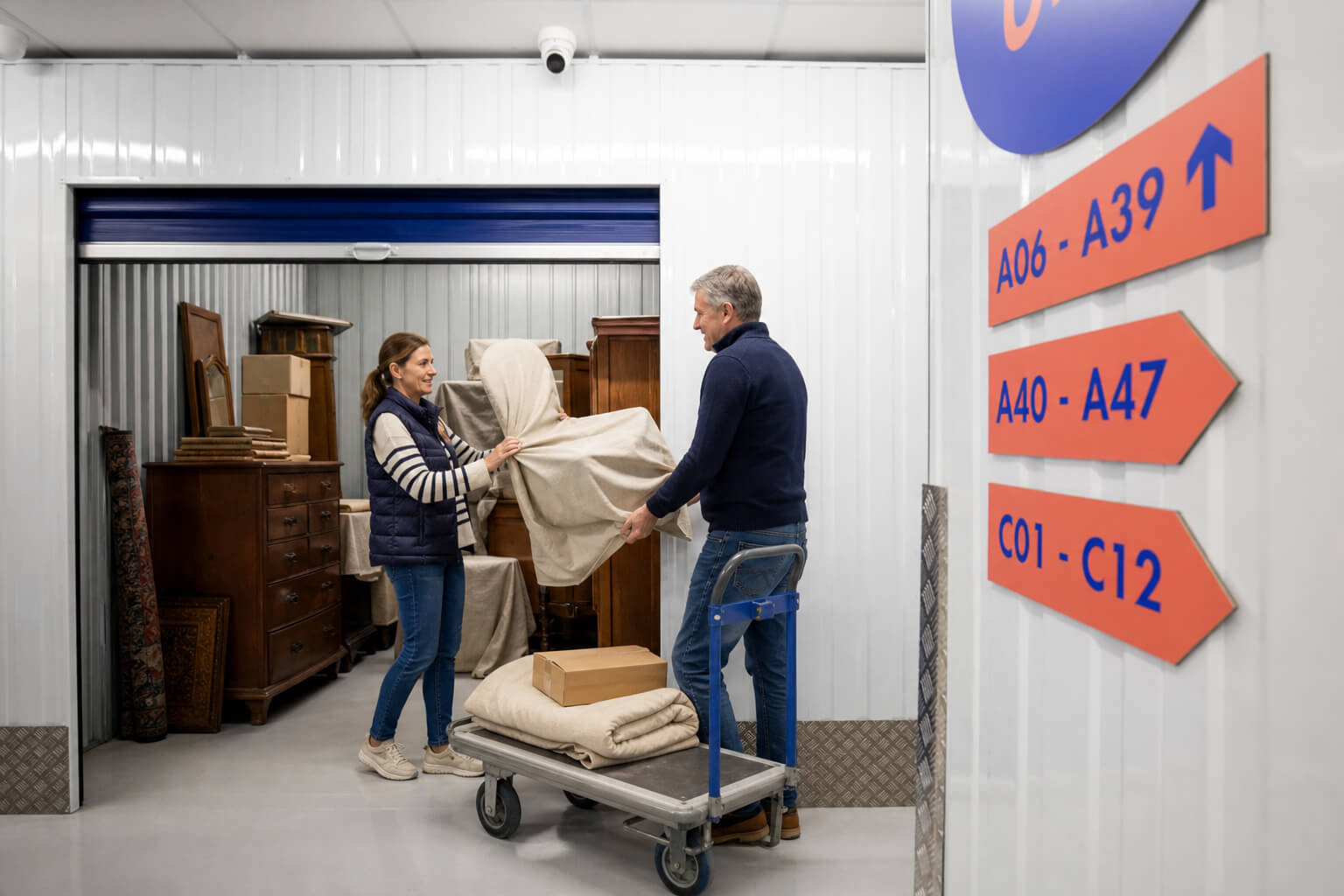
Self Storage For Office Furniture And It During A Refurbishment

Twenty desks and a comms rack to shift before the refit — to where?

Every office refurbishment starts the same way. Someone pins a contractor start date to the calendar, and then someone else works backwards and realises the floor has to be completely clear before that date arrives. Twenty desks. A stack of monitors. Three filing cabinets. A comms rack. Somewhere to put all of it for six weeks, without leaving town, without spending a fortune, and without signing something you cannot get out of cleanly.

Most people in that position have not arranged commercial storage before. They search around, get quoted minimum three-month contracts by the national operators, and wonder whether it is actually cheaper just to sheet everything up in a corner and hope the plasterers work carefully. It is a reasonable question. But the answer, once you have thought it through, is almost always no.

A unit near the office, one your own team controls, loaded and retrieved on your schedule, is the cleaner solution. And if the fit-out finishes a week early, you should not be paying for storage you are no longer using.

Why Move the Office Out Before the Contractors Arrive
The honest reason is simple: a cleared floor lets the work happen properly, faster, and without risk to your kit.

Dust, Paint and Trade Traffic Damage Furniture and Electronics

Refurbishment work generates more airborne material than most people expect. Sanding, cutting, painting and plastering all produce fine dust that settles everywhere, including into ventilation slots on monitors, keyboards and network switches. A desk that looks clean the day the trades leave can have a quarter-inch of fine particulate worked into every surface.

Paint splashes are the other risk. Floor coverings can be protected. A board table that takes a drip of emulsion is a different problem. Electronics that get wet from ceiling work above them can fail entirely, and the damage is not always covered by standard office insurance because it happened during works the business chose to undertake.

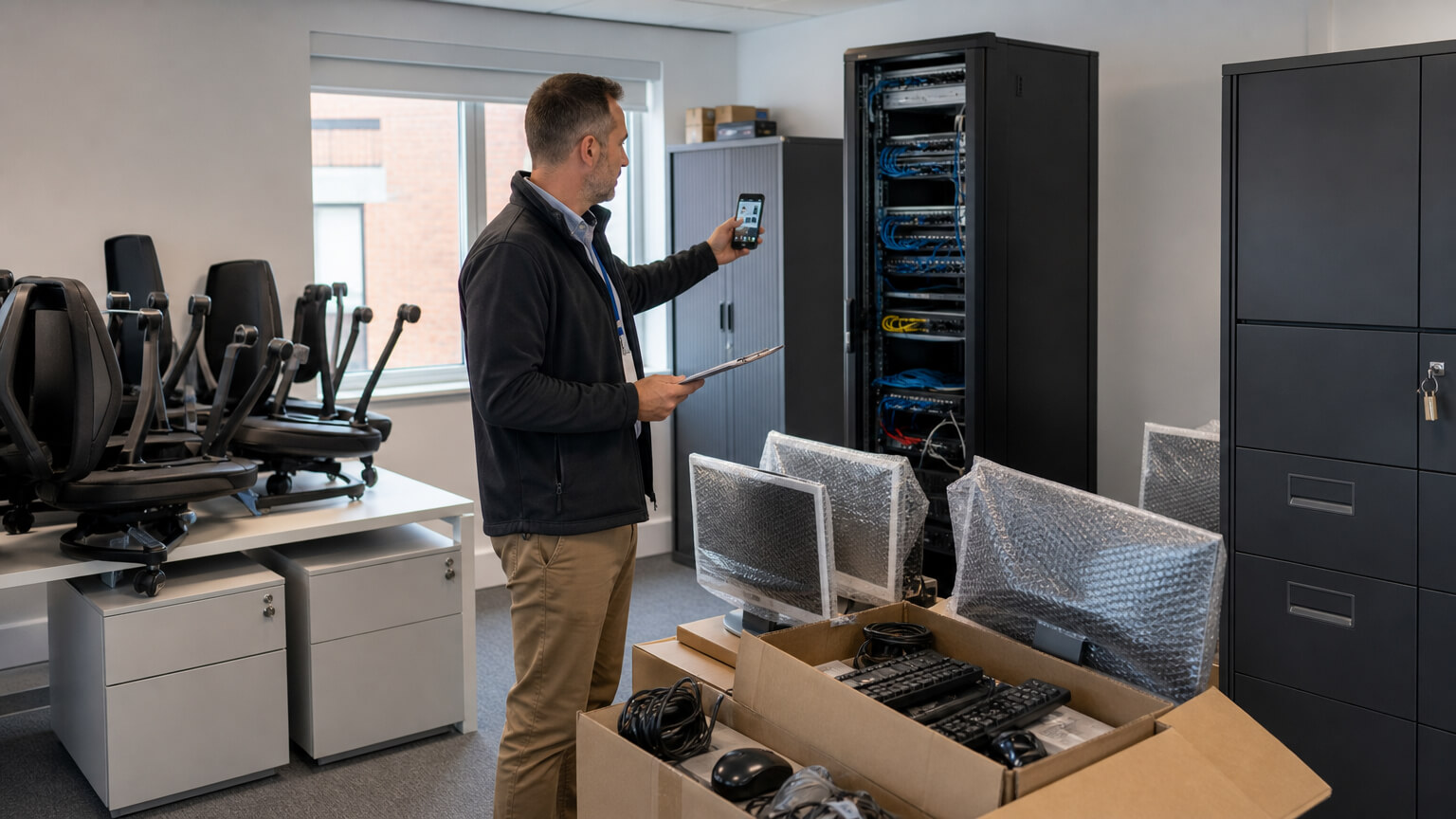
The honest advice here is practical: if you are storing IT equipment, wrap monitors in their original packaging where you still have it, or in bubble wrap, and bag keyboards and peripherals before they go into the unit. A clean, dry, secure unit protects against ambient dust and incidental moisture. It does not offer temperature or humidity control, and we do not claim otherwise. What it does offer is a sealed, individually alarmed space that no trade operative can walk through by accident.

A Cleared Floor Lets Contractors Finish Faster (and Keeps Them on Budget)

A contractor working around furniture is a contractor adding days to the programme. Trades cannot lay flooring under desks that are still in place. They cannot paint walls behind filing cabinets that have not moved. Every workaround costs time, and time in a refurbishment costs money at day rates.

Frank, the person running the logistical side of a fit-out, is also the person who gets called when the programme slips. A cleared floor on the agreed start date is the single most effective thing he can do to keep the contractors on schedule and the final invoice close to the original quote. Storage is not a cost here. It is insurance against a programme overrun that would cost considerably more.

Why a Sealed Unit Beats Sheeting It Up in a Corner

Sheeting furniture up on site keeps it in the building. That sounds like the simpler option until you work through what it means in practice. The trades are now working around a large sheeted mass in the corner. The corner itself cannot be refurbished. The sheets are not airtight and dust will get in regardless. And if anything goes wrong with the materials stored underneath, it is in the middle of an active building site with limited access and no separation from the work.

A self-storage unit removes the furniture from the risk entirely. Your team loaded it, your team has the access code, and the unit is individually alarmed. Nothing goes in or out without someone from your business being there. That level of control is simply not available from a sheeted corner, and it does not require a full-service removals contract either.

What to Store and How to Pack It for a Refurbishment

Most offices move more than they expect and pack it better than they think they will. The practical answer is: move everything that is in the direct path of the works, pack fragile and electronic items carefully, and label everything systematically before it leaves the building.

Desks, Chairs and Partitions

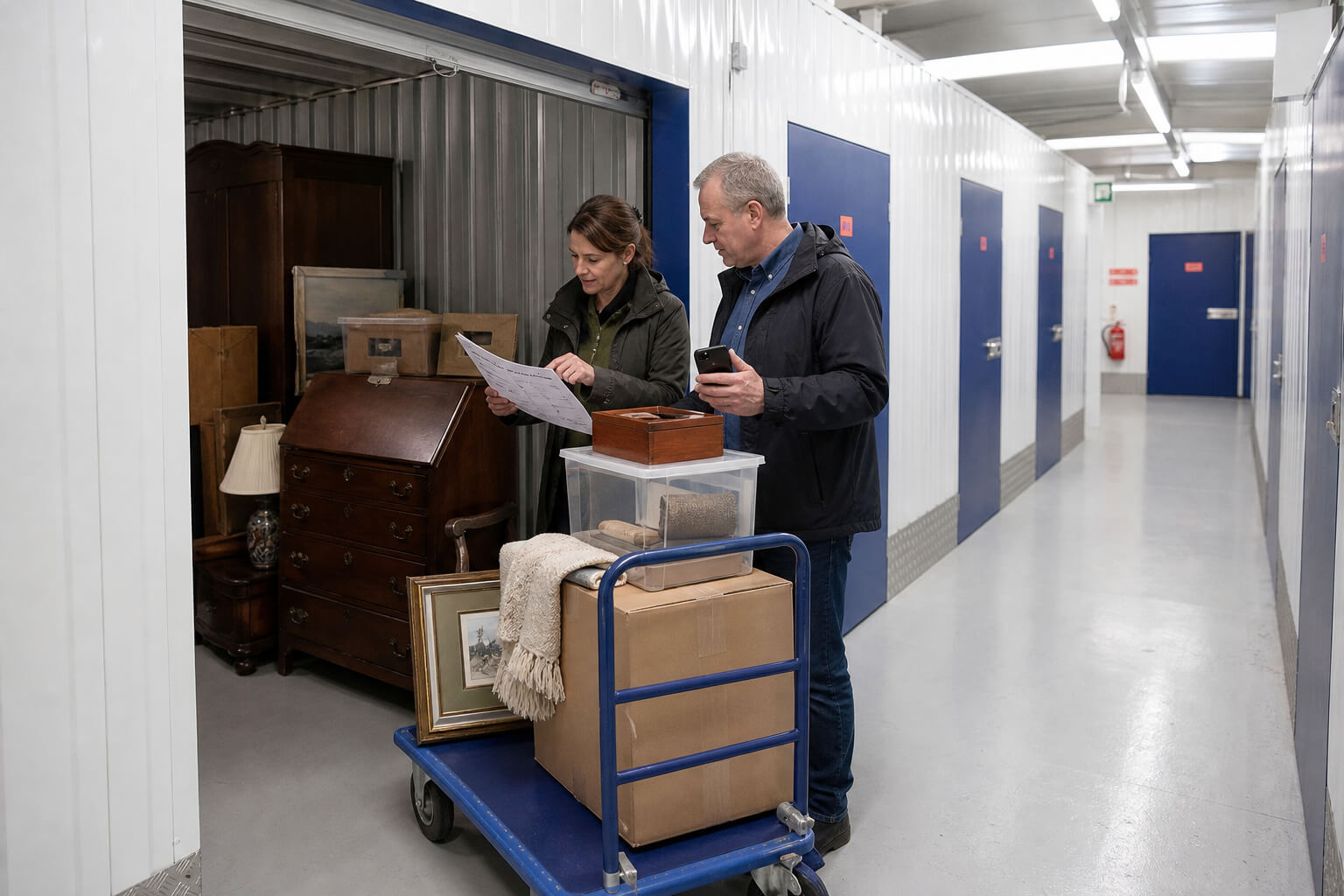
Flat-pack desks that disassemble are straightforward. Frame-and-panel partitioning stacks efficiently in a mid-range unit. The items that take up the most space are usually solid desks that cannot be broken down, pedestal units, and operator chairs stacked three high. A ten-desk office with associated chairs and a couple of storage pedestals typically needs less space than people expect, but the quote tool will give you a more accurate figure than any rule of thumb.

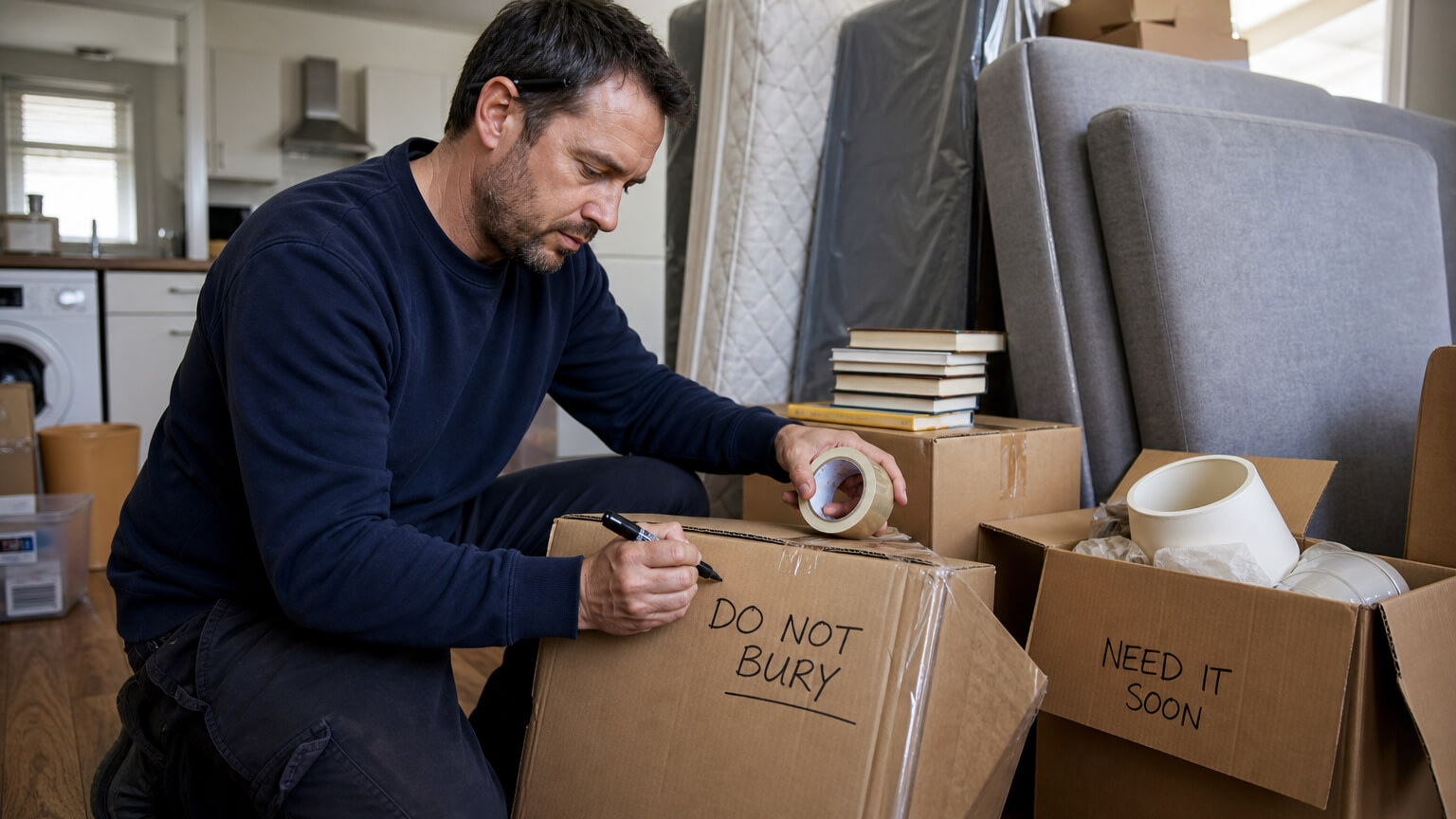
Stand furniture upright where possible. Chairs stack seat-down to reduce height. Wrap chair bases and desk edges with moving blankets or offcuts of cardboard to prevent surface contact damage. Label everything with the room or zone it came from, so the move-back-in happens in one organised pass rather than a sorting exercise.

IT Kit, Monitors and the Comms Rack

IT kit needs the most attention before it goes into storage. Monitors should be wrapped individually in bubble wrap and stood upright, not flat. If you have the original packaging, use it. Desktop towers and small form-factor machines should be bagged against dust before being packed into boxes. Keyboards, mice and cables should be coiled and bagged by workstation so re-connection is straightforward.

The comms rack is usually the last thing out and the first thing back in. Before it goes into the unit, photograph the back-of-rack cabling layout. Patch cables that are removed without documentation take time to reconnect that the programme does not have. Some businesses prefer to move the rack with cabling partially intact and reconnect only the trunk cables at the storage end. Either approach works; the photograph is the safeguard.

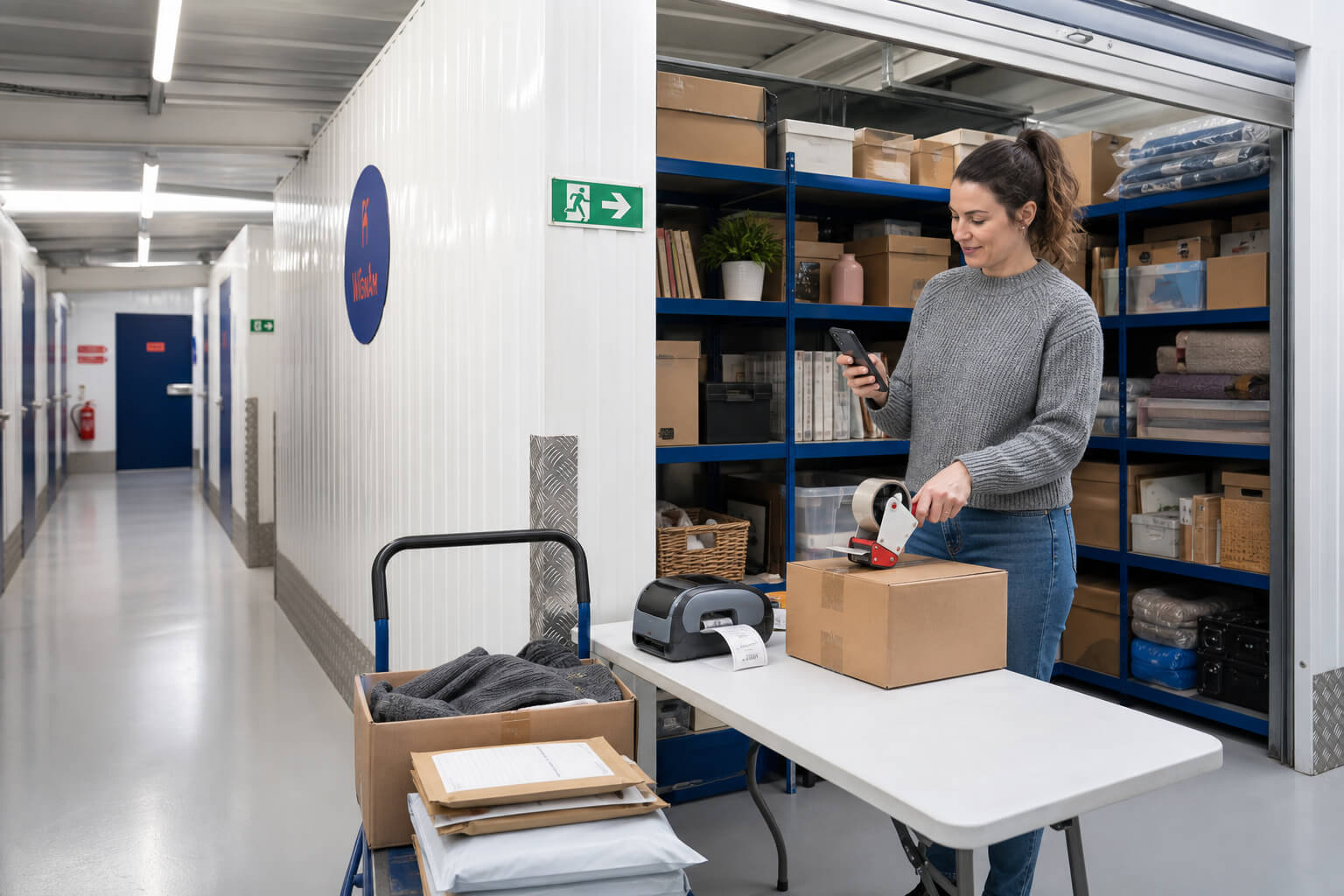
Keep a written inventory of everything that goes into the unit. Serial numbers for high-value items. This feeds directly into the contents protection requirement covered in the safety section below.

Filing Cabinets and Paper Records

Filing cabinets go into storage as they are, locked. If the cabinets are unlocked, box the files or transfer them to archive boxes before loading, so nothing falls or spills during transit. Label each cabinet or box with the contents at department level, not document level.

If your records are held for regulatory or legal purposes, which will be the case for most businesses, check your obligations before deciding what to store and for how long. HMRC document retention requirements, Companies House filing obligations, and professional regulatory requirements all set minimum periods for different record types. These rules apply in England and Wales; Scotland and Northern Ireland have differences in some areas. Your accountant or solicitor is the right person to advise on retention obligations. This article signposts the storage option; it does not give records-management advice.

What Size Storage Unit Do You Need for an Office Refurbishment
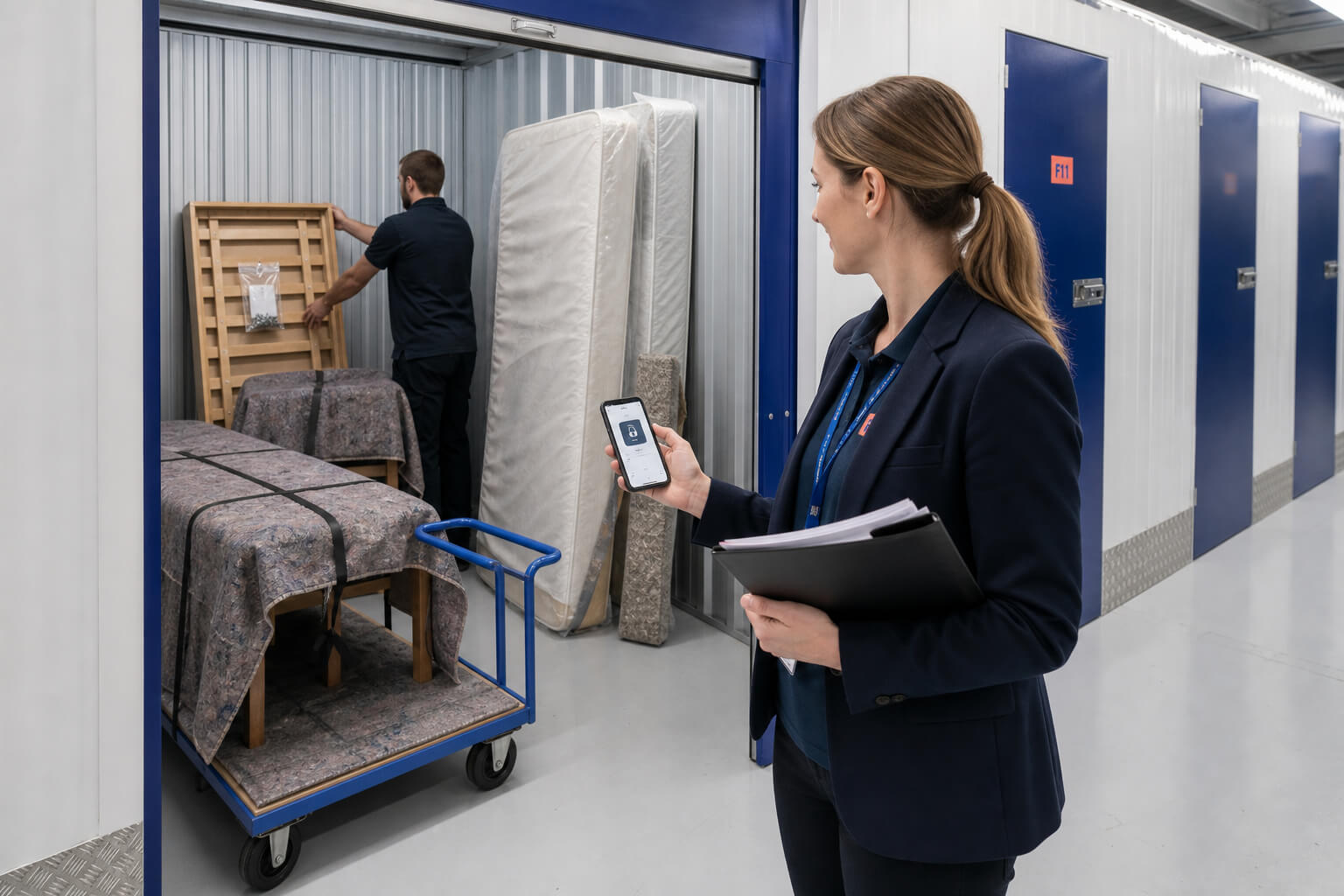
The size depends less on headcount than on what you are actually moving. Furniture density, the number of filing cabinets and whether the comms rack stays racked or comes apart all affect the unit requirement more than the number of desks.

Rough Sizing by Team Count and Furniture Volume

A small office of eight to ten people with standard desks, operator chairs, a few pedestals and two or three filing cabinets typically fits comfortably in a mid-range unit. A larger open-plan floor of fifteen to twenty-five desks with full pedestal sets, meeting tables, collaborative furniture and a server rack will need a larger space, and the exact requirement depends on how the furniture is loaded.

The cleanest way to size the unit accurately is to use the quote tool at quote.wigwamstorage.co.uk and describe what you are moving. We can advise on the right unit before you commit. That conversation also lets you flag any phased requirements, which matters if the refurbishment is happening in sections.

Swapping Contents in Stages as the Works Progress

Phased fit-outs are more common than people expect. The works might run floor by floor, or wing by wing, or in contractor sequences where one trade hands over before the next arrives. In that case, Frank may be clearing half the office into storage, then swapping contents as each phase completes.

A single flexible unit handles this well. Smart entry from 6am to 10pm, seven days a week, means your team can make a retrieval on a Tuesday afternoon when the first wing hands back, without needing to book access in advance or wait for a staffed office to open. The unit is yours to use as the programme dictates.

Ready to size your unit? If the contractor start date is in sight, getting a quote now means the unit is ready when you need it. Get a quote at quote.wigwamstorage.co.uk

How Long Can You Store For, and What If the Schedule Slips

The terms here are simpler than most national operators will tell you. The short answer is that you are not locked into a long contract, and if the job finishes early, you do not pay for the days you are not using.

The Two-Week Minimum Stay and What Happens If the Works Overrun

The minimum stay is two weeks. Beyond that, storage continues on a rolling basis. If the refurbishment takes longer than planned, which most do, you simply carry on. There is no penalty for overrunning the original estimate. You give 14 days’ notice when you are ready to vacate, clear the unit, settle the account, and the deposit comes back.

For a finance manager reviewing the projected cost, this structure is straightforward to budget. The terms are on the terms and conditions page if you need to put them in front of a finance director before signing.

When the Fit-Out Finishes Early: the Unused-Days Refund

This is the point that most business storage arrangements get wrong. A fixed three-month minimum contract on a refurbishment that completes in six weeks costs the business six weeks of unnecessary storage. That is a meaningful sum for a mid-sized office, and it is money the project manager has no good answer for when the finance team queries it.

At Wigwam, unused days are refunded. If you move back in and vacate the unit after week four of a planned six-week contract, you give your 14-day notice, clear the unit and return the key, and the days you did not use come back to you once the account is settled. The deposit returns at the same point. There are no exit fees and no penalty for finishing on time.

That is the difference between a storage contract designed around flexibility and one designed around the operator’s revenue. For Frank, it is the number that lets him tell the finance director the storage cost exactly what it should have.

What It Costs and How the Deposit and Notice Work

Three numbers matter before you can present a storage budget to your finance team: the deposit, the notice period, and the unit rate.

The Refundable Deposit and 14-Day Notice, in Plain Terms

A deposit is required when you take a unit. It is refundable. Once you are ready to leave, you give 14 days’ notice, clear the unit and settle any outstanding balance, and the deposit is returned. That is the full sequence. There are no hidden retention clauses, no administrative fees taken from the deposit, and no ambiguity about when it comes back.

The deposit is not a fee. It is held against the account and returned in full when the account closes cleanly. This is worth stating clearly because some national operators are vague on this point in ways that matter to a finance team signing off on a commercial contract. The terms and conditions set out the full detail.

Where to Check Current Pricing

Unit rates vary by size and location. We do not list prices on this page because they can move with demand and availability. The right place to check current rates is the how much self storage costs page, which covers sizing and pricing across our locations. For an accurate figure on the specific unit size you need, the quote tool at quote.wigwamstorage.co.uk gives you a current, location-specific number.

Keeping Your IT and Records Safe While the Works Are On

The worry most office managers carry into this decision is whether the IT will come back in the same condition it left. A board table is replaceable, at a cost. A server that fails because it sat in plaster dust for six weeks, or a monitor that was stored incorrectly, is both a cost and a delay. That concern is reasonable, and it is worth addressing directly.

Individually Alarmed, Clean, Dry and Secure Units

Every unit at Wigwam is individually alarmed. The alarm is unit-level, not perimeter-level, which means that access to the building does not create access to your storage. Your unit opens with your code, and any movement inside it triggers the alarm independently of everything around it.

The units are clean and dry. We do not offer climate control, and we do not pretend otherwise. What you get is a dry, weatherproofed, individually secured space that keeps your furniture and IT away from building-site conditions. Combined with proper packing (bubble wrap for screens, bags for keyboards, original packaging where you have it), that is a genuine level of protection for the duration of a standard office refurbishment.

Contents Protection for Business Goods

Contents cover is a requirement, not an option. You can take the policy Wigwam offers, underwritten by RSA (“Self Storage Customers’ Goods”), or you can demonstrate that your existing business insurance extends to goods held in self storage. Either is acceptable. What is not acceptable is leaving high-value IT and furniture in a unit uninsured.

When you declare your goods, declare the full replacement value. If you under-insure and a claim arises, the settlement is proportional to the declared amount against the actual replacement cost. For a rack of IT equipment, that gap can be significant. The contents protection page has the full detail on the policy. This article points you there; it does not give insurance advice. Policy terms, coverage scope and excess should be confirmed directly with the provider. Insurance regulation is broadly UK-wide, but policy terms should be read carefully and queries directed to your insurer.

Access, Deliveries and Who Needs to Be Present

Smart entry runs from 6am to 10pm, seven days a week. There is no staffed reception and no need to book an access slot. You turn up within those hours, enter your code, and your unit is available.

The sites are unmanned. That is worth understanding clearly before the refurbishment starts, because it affects how you plan deliveries and contractor collections. If a courier or contractor needs to bring something to or collect something from your unit, someone from your own business must be there to receive or hand over the goods. Wigwam does not sign for deliveries and cannot receive goods on your behalf. If that is part of the plan for the fit-out, build the team schedule around it from the start.

Finding a Wigwam Near Your Office

The reason most office managers end up storing with national operators is geography: they search and the nearest option listed is twenty miles out on a city ring road. Wigwam sits in UK market towns, which means the unit is near the office, not a long drive away.

Our UK Market-Town Locations

Our locations are in market towns across the UK. That matters for an office refurbishment because the loading and retrieval schedule ties directly to the working day. If a team member needs to pick up a monitor for a remote worker on a Wednesday afternoon, a nearby unit means it happens. A unit twenty miles away on a dual carriageway is a half-day logistics exercise.

Wigwam Self Storage Bath and Wigwam Self Storage Lincoln are two examples. The full list of our UK market-town locations is on the self storage locations page. The quote tool will also match you to the nearest branch when you enter your postcode.

If you want to know which location is closest to your office before you start the quoting process, Selina and the team at your nearest branch can help you think through the unit size and access logistics. First names and contact details are on the individual location pages.

Getting a Quote for Your Nearest Branch

The quickest way to confirm availability and size is the quote form at quote.wigwamstorage.co.uk. Put in your postcode, a rough description of what you are moving, and the start date the contractors need the floor clear by. You will get a location-specific unit recommendation and current rate.

After the Refurbishment: Keeping a Unit for Archive and Overflow

Most people who use storage during an office refurbishment come back into the building and move everything back exactly as it was. But some of them, once they have lived through a fit-out, notice something useful: the new office layout does not actually need all of what they brought back.

The four filing cabinets that went into storage because they had to may only need to return as two. The rest can stay in the unit, on a rolling basis, as an off-site archive. The training materials and branded event kit that went in may work better staying out, accessible from 6am to 10pm rather than buried in a cupboard that now does not exist in the new floor plan.

This is the moment Branch-Overflow Ben appears. He is the office manager who took the unit for the refurbishment and kept it on afterwards, because it turned out to solve a second problem he had always had. Archive space. Seasonal overflow. Equipment that the business needs a few times a year but not every day.

There is no new contract to negotiate. The terms that served the refurbishment serve the ongoing overflow arrangement on exactly the same basis. The unit continues, the access continues, and the 14-day notice period applies whenever the arrangement is no longer needed. For a business already familiar with the unit and the access routine, that continuation is essentially frictionless.

A dedicated business storage article on the Wigwam site covers the ongoing business storage use case in more detail, if the archive and overflow question becomes the main question after the fit-out completes.

Your office floor is about to belong to the builders for a while. Let us hold everything safely until it is yours again. Get a quote at quote.wigwamstorage.co.uk

Frequently Asked Questions

Who is liable if a contractor or removals crew damages our kit while moving it in or out of the unit?

The relationship that governs damage during a move sits between you and whoever is doing the moving, not between you and the storage site. Wigwam staff do not handle, load or move your goods; the unit is unmanned and you, or the contractor and removals crew you engage, do the loading and retrieval. So damage caused in transit or in handling is a matter for the terms you have with that firm, and it is worth checking their liability and insurance before they touch anything valuable.

This is one of the strongest reasons to document the kit before it goes in. Keep a written inventory with serial numbers for high-value items, and photograph monitors, the comms rack cabling and any furniture with existing marks before the move. If something turns up damaged, you can show its condition going in. For IT especially, that record is also what underpins a contents-protection claim and what an external insurer or the moving firm will ask to see.

Once the goods are inside the unit, the picture changes: there they are protected by the individually alarmed, clean, dry and secure space and, crucially, by the contents cover that is mandatory at Wigwam. But the handling itself, the lifting, the carrying, the loading of the van, is the moving party’s responsibility. Choose a firm that carries goods-in-transit cover, get their liability position in writing, and keep your inventory and photographs. For how the storage cover works once the goods are in the unit, the contents protection page sets out the detail.

We are decommissioning servers before storage. Is data on stored drives our responsibility?

Yes, entirely. The security of the data held on any device you store is your responsibility, not the storage operator’s, and it should be handled as part of your decommissioning before the kit ever reaches the unit. Wigwam provides a secure physical space, individually alarmed and accessed only by your business, but it does not access, manage, image or wipe your equipment, and physical security of a unit is a different thing from data security on a drive inside it.

The practical approach most IT teams take during a fit-out is to treat the storage window as part of the chain of custody. If servers or workstations are simply being held and reinstalled afterwards, keep them powered down, bagged against dust and logged on your inventory with serial numbers, so you can account for every device in and out. If any drives are genuinely being retired rather than reused, the decommissioning, secure wiping or destruction is a job to complete before storage under your own data-handling process.

There are obligations here that sit well outside what a storage page or a storage support team can advise on. Data protection duties, including how personal data on stored devices is handled, are governed by law and by your own policies, and your data protection officer, IT lead or a specialist is the right source of guidance. Wigwam’s support team handles storage matters only, sizing, access, pricing, booking, and cannot advise on data security or compliance. Build the data-handling step into the decommissioning plan, and use the unit for what it is: a secure place to hold the hardware.

How does the contents cover handle high-value IT, where the replacement cost is much higher than the furniture?

It handles it well, but only if you declare honestly, because the policy settles against the full replacement value you declare, and under-insurance is settled in proportion. For an office move, the trap is that the furniture is bulky and visible while the IT is compact and easy to undervalue. A single comms rack, a stack of workstations and a set of monitors can be worth far more than the desks and chairs around them, and if your declaration is anchored to the volume of furniture rather than the value of the kit, you will be under-declared on the thing that matters most.

Work it the other way: total the replacement cost of the IT first, at what it would cost to buy equivalent equipment new, then add the furniture, and declare the full figure. This is where the inventory with serial numbers earns its place, because it gives you an itemised basis for the declaration and the evidence to support a claim. Contents cover is mandatory regardless: you either take the Wigwam policy underwritten by RSA or demonstrate that your own business insurance extends to goods in self storage.

A few terms to read before you rely on the cover. The policy is New-for-Old, theft claims require evidence of forced entry to the unit, and atmospheric or climatic damage is excluded, which is one reason the packing guidance for screens and hardware matters. The full policy detail is on the contents protection page. This article signposts the cover; it does not give insurance advice. For a high-value IT estate, confirm the scope, the excess and the declared-value basis directly with the provider or your own insurer before the kit goes in.

Our fit-out runs floor by floor. Can we move things in and out in stages from one unit?

Yes, a single unit works well for a phased fit-out, because smart-entry access runs from 6am to 10pm, seven days a week, with no need to book a slot or wait for a staffed office to open. As each floor or wing hands back, your team can retrieve what belongs there on the day it is ready, then return it as the next phase clears. The unit is yours to use as the programme dictates, and you are not paying a separate charge each time you open the door.

The thing that makes staged retrieval painless is how you load on the way in. Pack and label by floor, zone or phase, and put the contents of the area that comes back first nearest the door, with a clear path to it. A phased programme that loads everything in one undifferentiated mass turns every retrieval into an excavation; one that loads in reverse order of the works turns it into a five-minute pickup. Keep the inventory ordered the same way so a team member sent to collect a specific item knows roughly where it sits.

Plan the access around the unmanned-site rule, too. Because there is no reception and no one to receive goods, any contractor collecting from or delivering to the unit during a phase needs someone from your business present with access. For a fit-out running in sequence, the simplest setup is to have one or two named team members hold the access for the whole programme and coordinate the staged moves. If you flag the phasing when you get a quote at quote.wigwamstorage.co.uk, the team can help you pick a size that gives you room to work in and out rather than one packed solid.

Will the same unit work as ongoing archive and overflow once the office reopens, and does anything change in the terms?

It will, and nothing in the terms changes when the use shifts from refurbishment to archive. Plenty of businesses that take a unit for a fit-out keep it on afterwards, because the move-back-in reveals that the new layout does not need everything that came out. The surplus filing cabinets, the seasonal or event kit, the equipment used a few times a year, all of it can stay in the unit on exactly the same basis rather than being crammed back into a floor plan that no longer has room for it.

There is no new contract to negotiate and no renegotiated rate for changing what you use the unit for. The arrangement that served the refurbishment simply continues: the same rolling monthly terms after the two-week minimum, the same 6am to 10pm smart entry, the same 14-day notice whenever the overflow is no longer needed, and the same refundable deposit returned when you eventually vacate and settle the account. The only practical change is yours, not ours: you reorganise the unit for long-term holding rather than short-term swap-in, swap-out.

A couple of things are worth carrying over. Keep the contents cover current, declaring the full replacement value of whatever stays in the unit long term, since the mix of goods may change once the bulky furniture goes back. And keep your inventory updated so the archive does not drift into a forgotten pile of boxes. Wigwam’s site also covers the ongoing business storage use case in more detail if the archive question becomes the main one after the fit-out. For the rolling terms and notice arrangements, the terms and conditions page has the full detail.


Emergency Self Storage After A Flood Or Fire What To Do First

House just flooded or caught fire — what do you do in the first hour?

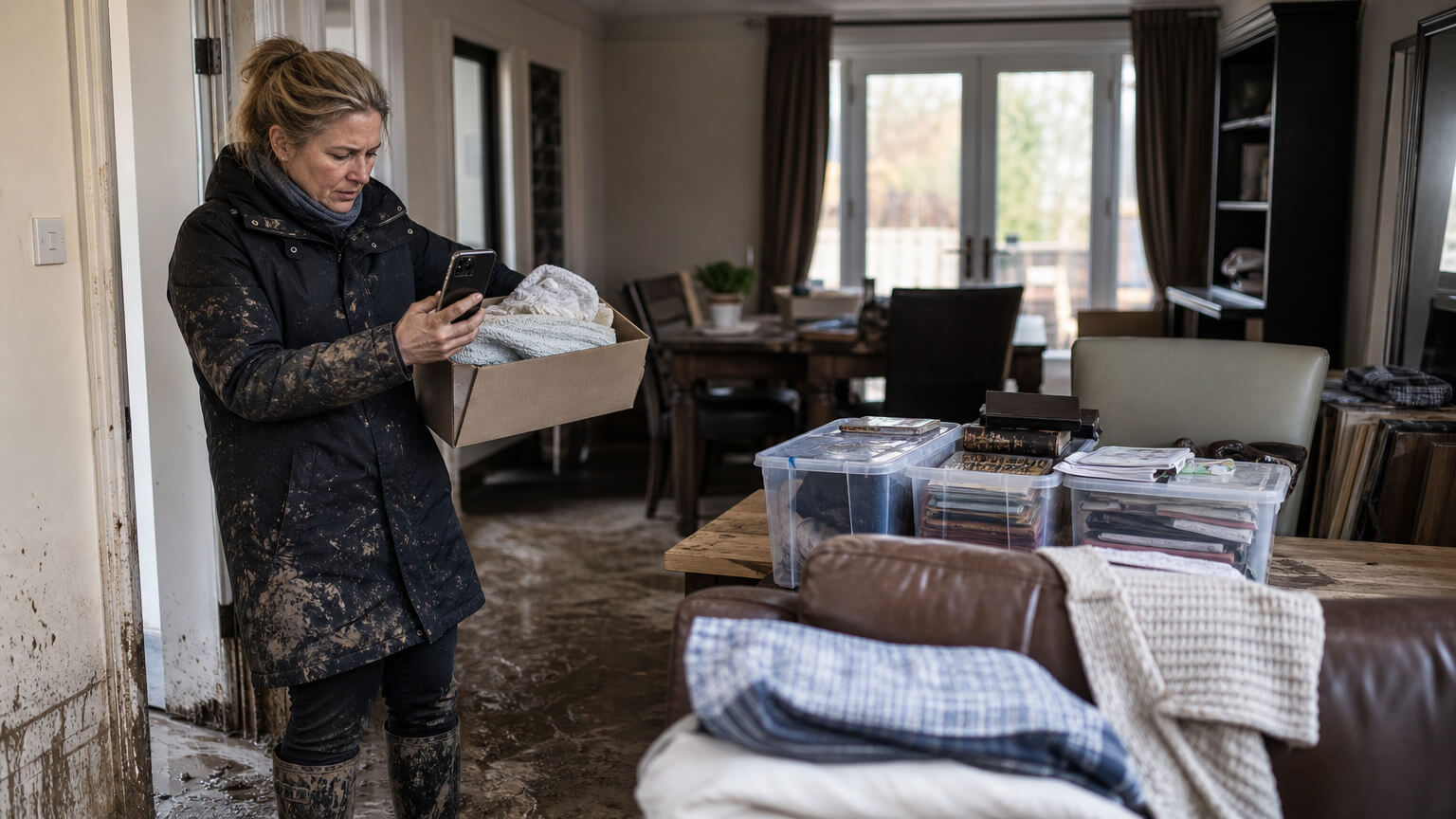
If your home has just flooded or caught fire, the first few hours feel like chaos. The house is damaged, half your belongings are at risk, and everyone seems to be asking you questions you do not yet have answers to. Take a breath. There is an order to this, and following it calmly protects two things at once: your belongings, and your insurance claim.

The first job is always safety. The second is getting the things you can save somewhere clean and dry, before a quieter set of problems begins. Damp spreads, mould takes hold, and smoke works its way into everything that was spared. This page is that sequence, step by step, written by people who have helped local movers and householders through exactly this.

If you are standing in a damaged home right now, start here:

  1. Do not re-enter until the property has been declared safe (gas, electrics, structure).
  2. Call your insurer before you move anything.
  3. Photograph and list every room and item before it leaves the house.
  4. Move only dry, clean, uncontaminated items into storage.
  5. Get a quote for a local unit today at quote.wigwamstorage.co.uk.

The first 24 to 48 hours: what to do before you move anything

Before a single box leaves the house, three things need to happen in order: make sure the property is safe, tell your insurer, and document the damage. Get those right and everything afterwards is simpler. Rush them and you risk your safety and your claim.

Make the property safe before you go back in

Do not re-enter a flooded or fire-damaged home until the right people have said it is safe. Floodwater can hide structural damage and contaminate everything it touches, and it can make electrics lethal. Fire weakens structures and leaves air that is not safe to breathe. Let the fire service, your insurer, or a qualified professional give the all-clear first. The official flood recovery advice on GOV.UK and the support pages at the National Flood Forum set out the safety steps in detail, and they are worth reading before you act.

Call your insurer before you move anything

Ring your insurer as soon as you safely can, and before you start moving belongings out. They may need to assess the damage, or send a loss adjuster, and moving things before the damage is recorded can complicate your claim. Ask them what they need from you and whether they cover the cost of storing or moving your contents while the home is repaired. We will come back to that question later. For now, the rule is simple: speak to them first.

Photograph, list, then move

Before anything leaves the house, photograph it. Every room, every damaged item, every wall. Then make a simple written or phone list of what you are taking out and what is staying. It feels like a chore in the middle of a crisis, but this record is what supports your claim, and it is far easier to do now than to reconstruct later. Photograph first, list second, move third.

What you can save, and what you should not put into storage

The clear line is this: only dry, clean, undamaged belongings should go into a storage unit. Anything wet, contaminated, or smoke-soaked needs dealing with first, because it will spoil in store and can damage everything around it.

Dry and intact: what is safe to store

Furniture that stayed dry, clothing that has been washed and properly dried, books and documents in sealed boxes, and electronics that a professional has checked and confirmed are dry, can all go into a clean, dry unit. These are the things you want out of a damp or smoke-tainted house quickly, so they are not sitting in harm’s way while the building is dried and repaired.

Wet, contaminated, or mould-touched: what must not go in

Nothing wet or contaminated goes into a storage unit. Damp items grow mould in a closed space and pass it to clean belongings stored nearby. Anything touched by floodwater carrying sewage or chemicals is a health risk and should be assessed, cleaned, or disposed of, not boxed up. This is also why most contents-protection policies exclude mould and damp damage. Storing wet goods does not pause the damage, it spreads it.

Items that need a professional look first

Some things sit in between. Electronics, upholstered furniture, and anything with soft padding that has been exposed to water or smoke should be assessed by a restoration specialist before you decide to keep and store them. We are storekeepers, not restorers, so we will not pretend to judge whether your sofa can be saved. Your insurer or the National Flood Forum can point you to firms that do exactly that.

Why the first couple of days matter

Here is the part people often do not calculate: the damage does not stop when the water drains or the fire is out. In a damp, still space, mould can begin to take hold within a day or two, and smoke odour bonds into fabrics and soft furnishings over the days that follow. Getting your dry, salvageable belongings out of that environment quickly is not a convenience, it is salvage.

How damp and mould spread once the doors are shut

Mould spores are present in almost any indoor air. Moisture is what wakes them up. In a closed, unheated room full of damp belongings, growth can appear quickly and then spread from item to item. That is the real reason to move dry goods into a clean, dry unit promptly, and the real reason never to put a damp item in alongside them.

Smoke and odour after a fire

Fire leaves a similar hidden clock. Smoke odour works its way into textiles, curtains, and upholstery over days, and items stored together can pass that smell between them. Where possible, have smoke-affected soft furnishings assessed and treated before they go into storage, and keep anything still carrying odour separate from clean goods.

Getting dry goods into a clean, dry unit

This is where a storage unit earns its place. A clean, dry, individually alarmed unit takes the time pressure off the belongings themselves, so you can focus on the house. Our quote form is open from 6am, and smart entry runs from 6am to 10pm, seven days a week, so you or your removal team can bring things in at a time that works around the people drying and repairing your home.

How emergency self storage works, and how quickly you can start

People often assume storage takes days to arrange. It does not. You can get a quote online in minutes and have a unit ready at short notice, without waiting on office hours.

From quote to unit

Get a quote at quote.wigwamstorage.co.uk and we can have a unit ready quickly. Our sites are unmanned and you access your own goods with smart entry, so you are not waiting for a staffed handover that only happens nine to five. It is built to be fast and to fit around a difficult week.

What size unit you are likely to need

A flood or fire rarely means storing a whole house, because some of it cannot be saved and some stays put. As a rough guide, the salvageable contents of a two to four bedroom home fit a mid-sized unit, but the honest answer depends on how much survived. We will size it with you rather than have you guess. There are no prices on this page, but our guide to how much self storage costs in the UK explains how it works.

Access and deliveries while repairs run

You reach your unit with smart entry, 6am to 10pm. Our sites are unmanned, so if a removal firm or restoration team is bringing things in, someone from your side needs to be there to receive them. We do not sign for or take in deliveries on your behalf. Knowing that in advance lets you plan the day around the people doing the work.

Storing while the claim and the repairs run: flexible by design

The hardest thing about storage after a flood or fire is that you rarely know how long you will need it. Repairs can take months, and dates slip. So the terms matter as much as the unit. Ours are built to flex around an unknown end date rather than punish you for it.

Why a flexible end date matters

Flood and fire repairs commonly run from a few months to the best part of a year, and timelines move. A contract that charges you for a fixed block, or penalises an early exit, is the wrong fit for this. With us you give 14 days’ notice when you know your repairs are finishing, and if you leave early, the unused days are refunded. You are not betting on a date you cannot control.

The two-week minimum and the deposit

There is a two-week minimum stay, which suits a short decant and never forces a long commitment. There is also a deposit, and it is refundable: you give 14 days’ notice, and once you have moved out and the account is settled, the deposit comes back to you, less anything owed. The full detail is on our terms and conditions page.

Planning your move back

When the repairs are done, give your 14 days’ notice, plan your removal team in advance, and check your belongings as you load them out. A calm exit is the mirror of a calm decant, and by then the worst is behind you.

Need a unit now? Get a quote at quote.wigwamstorage.co.uk, or find your nearest site on our storage locations page. We can have a unit ready at short notice.

Contents protection: what is covered and what to declare

Your belongings should be covered the whole time they are with us, and cover is not optional. The facts here are simple, but the detail belongs to your policy, so we will set out the shape of it and point you to the right page rather than give you advice.

Wigwam’s contents protection

Cover is required while your goods are in store. You can take our own contents-protection policy or prove you have your own cover in place. Declare the full replacement value of what you are storing, because if you under-declare, any settlement is reduced in proportion. The detail is on our contents protection page.

Exclusions worth knowing

Standard contents-protection policies typically exclude mould and damp damage, and theft cover usually depends on forced entry. That is the practical reason, again, that only clean, dry items go into the unit. Check the policy wording for exactly what applies, because we cannot give insurance advice.

How storage costs may fit your home insurance claim

Some home insurance policies include cover for alternative accommodation or for contents while they are moved or stored, which may help with the cost of storage during a claim. Whether yours does is a question only your insurer can answer, so ask them directly. We can give you a clear invoice and documentation to support your claim, but we cannot promise that any cost will be recovered.

In England and Wales, the general position on home insurance claims, alternative accommodation, and recovering storage costs is broadly as described here. Scotland and Northern Ireland differ in detail, so for any legal question about your claim, speak to a solicitor qualified where you live, and confirm cover with your own insurer.

How a local team helps when everything feels uncertain

When your home is damaged and you are displaced, the last thing you need is a call centre and a postcode search. A local storage team is a person in a place you know, who has seen this before and will not make it harder.

Why local matters in an emergency

A unit near you is easier to reach when you are running between the house, the insurer, and wherever you are staying. And a local team can talk you through size and timing like a neighbour, not a script. In a week where little feels in your control, that steadiness is worth a great deal.

Our market-town locations

We run our sites in UK market towns. You can see them all on our storage locations page, and find the one nearest your home. If you are near Wigwam Self Storage Bath at /locations/bath-self-storage/ or Wigwam Self Storage Lincoln at /locations/lincoln-self-storage/, those are good places to start. Every unit is individually alarmed and kept clean, dry and secure.

A checklist for decanting your home after a flood or fire

Here is the whole sequence on one page, so you can work through it without scrolling back.

Before the removal team arrives

Photograph every room and item in place. Separate the dry, clean belongings from anything wet or contaminated. List the dry items for your claim. Confirm your removal team’s timing against smart-entry hours of 6am to 10pm, and remember someone from your side must be present for any delivery.

During the move

Label and list your boxes. Keep documents in sealed or waterproof boxes. Keep electronics separate and flagged as checked. Put nothing wet or contaminated in the unit. Keep a duplicate of your inventory.

Once it is in storage

Keep the invoice and your storage paperwork for the claim. Check the unit from time to time on smart entry if repairs run long. And when you are ready to move back, give 14 days’ notice; your deposit is returned once you have vacated and settled the account, with any unused days refunded. The full terms are on our terms and conditions page.

Ready to get things somewhere safe? Get a quote today at quote.wigwamstorage.co.uk. If you would rather talk through the size you need or your nearest location first, you will find us on our storage locations page.

Frequently Asked Questions

How dry does something need to be before it is safe to put into the unit?

It needs to be genuinely dry all the way through, not just dry to the touch, because surface-dry items can still hold enough moisture inside to grow mould once they are sealed in a closed space. This is the single most important judgement after a flood, and it is worth being strict about. A wooden chair can feel dry on the outside while the joints and the underside are still damp. A washed and tumble-dried coat can carry moisture in the seams and the lining. Sealing either of those into a box and into a unit gives mould exactly the still, enclosed conditions it needs, and it can then spread to clean items stored nearby. When in doubt, leave it out and let it dry longer.

The practical test is patience plus airflow. Let salvaged items dry fully in a well-ventilated space, with air moving around them, for longer than feels necessary, and check the parts you cannot see, undersides, joints, linings, the inside of drawers. Textiles should be washed and completely dried before they go anywhere near the unit. Anything with soft padding or upholstery that has been wet is much harder to dry through and is better assessed by a restoration specialist before you decide to keep and store it. Hard, smooth items that have only been splashed and wiped down are the easiest to clear. The reason to be so careful is reinforced by the insurance position: the contents-protection policy, like most, excludes mould and damp damage, so if you store something not properly dried and it spoils, that loss falls on you. Take the extra day to dry things thoroughly. It protects both the item and everything stored beside it.

Can I store things while I am still deciding what to claim for and what to throw away?

Yes, and a unit is a useful place to hold the salvageable, dry items while those decisions get made, provided you keep your insurer in the loop first. The order still matters: speak to your insurer before you move anything, photograph and list everything in place, and only then move the dry, clean items out. But once that documentation is done, you do not have to have made every keep-or-discard decision before you store. The clean, dry belongings can go into the unit and wait there, out of the damaged, damp or smoke-tainted house, while you work through the slower questions with the loss adjuster about what is being claimed, repaired or replaced.

What the unit must not become is a holding pen for things you have not decided about that are wet or contaminated. The dividing line does not move: anything damp, sewage-touched, chemically contaminated or smoke-soaked stays out until it has been cleaned, dried or assessed, because storing it spreads the damage rather than pausing it. So the decisions you can defer are the ones about dry, intact items, keep this, replace that, where does this go long term, not about whether to box up something that is still wet. Keep your inventory and photographs safe throughout, because they support the claim and they help you track what is where. The flexible terms mean there is no pressure to rush: the minimum stay is two weeks and the unit continues for as long as the claim and repairs take, with 14 days’ notice and a refund of unused days when you are done. That breathing room is exactly what lets you make sound decisions rather than panicked ones in the first chaotic week.

I have been displaced far from home. Can I use a unit near where I am staying instead of near the damaged house?

Yes, you can choose whichever location is most convenient for you, and if you are staying with family or in temporary accommodation some distance from the damaged home, a unit near where you are now may make more sense. Sites operate across UK market towns, and the right one is simply the one that is easiest for you to reach during a difficult period, whether that is close to the house, close to where you are sleeping, or close to whoever is helping you. You can find the nearest site on the storage locations page and pick accordingly.

There is a practical balance to weigh. A unit near the damaged house is handy while you are still salvaging and ferrying dry items out of the property. A unit near your temporary accommodation is handy for the weeks or months afterwards, when you want to get to your belongings without a long journey on top of everything else. If most of the salvage is already done and you are settling somewhere for the duration of the repairs, nearer to you is often the better choice. Either way, access is by smart entry from 6am to 10pm, seven days a week, so you are not tied to office hours wherever the unit is. One thing to plan for at whichever site you choose: the sites are unmanned, so if a removal firm or restoration team is bringing items in, someone from your side has to be present to receive them, because there is no staff on site to take in goods on your behalf. Beyond that, the choice of location is entirely about what reduces the running-around for you in a week when little else is in your control.

I am overwhelmed and people are offering to help. Can a neighbour or relative move and access things for me?

Yes, others can help with the physical work and can be given access to the unit, which is often a real relief when you are dealing with the house, the insurer and somewhere to stay all at once. After a flood or fire there is usually no shortage of willing hands, and there is nothing to stop a relative, friend or neighbour doing the lifting, the ferrying and the packing. The account stays in your name, so you remain in control of the arrangement, but you can arrange access for the people helping you so they can get to the unit by smart entry, between 6am and 10pm, seven days a week, without needing you there for every trip.

A few things keep it sensible. Because the sites are unmanned, if a removal firm, restoration team or courier is bringing goods to the unit, one of your helpers, or you, has to be physically present to receive them; there is no one on site to sign for or take in deliveries on your behalf. So coordinate the help around someone being there for any delivery. It is also worth keeping your inventory shared with whoever is helping, so the dry, clean items are the only ones going in and nothing wet or contaminated gets boxed up by mistake in the rush, since that would spread damage to clean goods. And keep the documentation, the photographs and the list, with you or backed up, because that is what supports your insurance claim regardless of who did the carrying. Accepting help is the right thing to do in this situation; the unit is set up so that the people around you can genuinely take some of the load, while you keep oversight of what matters.

When the house is repaired, how do I get everything back, and what should I check?

When repairs finish you reverse the process calmly: plan your removal help in advance, give 14 days’ notice, and check your belongings as you load them out. There is no rush imposed from our side. Once you know roughly when the home will be ready, give the 14 days’ notice so the unit closes cleanly, and book whatever help or removal firm you need for the move back. If the repairs run long, you simply keep the unit on the same terms until you are ready; the flexible end date works in both directions, and you are never penalised for the timeline slipping.

As you load out, take the chance to check the condition of everything, partly for peace of mind and partly because it is the natural moment to confirm nothing has been affected during the stay. Lift lids on boxes, look over furniture, and make sure the items you dried and stored have come through well. Keep your storage invoice and paperwork even after you have moved back, because if any storage cost is being put towards your insurance claim, your insurer will want the documentation. Whether the cost is recoverable is a question only your insurer can answer, so confirm that with them directly; we can provide a clear invoice and records, but we cannot promise recovery. Once the unit is empty and the account is settled, the refundable deposit comes back to you, less anything owed, along with any unused days. One last practical point that mirrors the move in: because the site is unmanned, you or your helper need to be present whenever a removal firm is collecting from the unit, as there is no staff on site to release goods on your behalf. A calm, planned exit is the right ending to what began as an emergency, and by that stage the hardest part is well behind you.

Self Storage During A Buildings Insurance Claim A Householders Guide

The ground floor has to be cleared before the walls can dry — but to where?

The loss adjuster has been. The schedule of works is sitting on the kitchen table. The builders are coming Thursday, and the instruction is clear: the ground floor has to be cleared before they can start drying the walls. Standing in the hallway looking at a room’s worth of furniture, the paperwork question matters far less than the physical one. Where does it all go?

That is the question this guide answers. Not the theory of home insurance, not the small print in general terms. Just a calm, plain walkthrough of what typically happens when a property has to be emptied for repair, what your insurer may cover, what the real limits are, and how a local self storage unit fits into the picture without adding another complication to an already complicated week.

If you are mid-claim and need to act now

  • Speak to your loss adjuster or insurer before you book storage. Get written approval and confirm what your policy covers.
  • Check your time cap. Many policies limit off-site storage cover to 30 to 60 days. Ask explicitly.
  • Check your value cap. Stored contents cover is often limited to around 10 percent of your total contents sum insured.
  • When you are ready to book, start a quote at quote.wigwamstorage.co.uk.

When the house has to come out for repairs

The practical reality comes first: after a covered loss, the goods often have to leave the property before the builders can start. Understanding the typical order helps you stay one step ahead of the schedule.

The order of events after a covered loss

After a flood, fire, storm or escape of water, the insurer typically appoints a loss adjuster to assess the damage and issue a schedule of works. That schedule will usually define which areas of the property need to be cleared, and for how long. Drying out walls after water ingress can take weeks. Structural work may follow. The builders cannot safely work around furniture, and some remediation processes actively require the space to be clear. The loss adjuster or insurer’s project manager will advise on timing, but it is worth asking them explicitly: how long do you estimate the property will need to be vacated, and does the storage cost fall within the claim?

What goods typically need to move, and what can stay

A partial decant, one flooded room cleared while the rest of the house remains liveable, is simpler than it sounds. The affected room comes out. Everything else stays put. A full house decant, where the whole property has to be emptied, is a bigger job and a bigger unit. What your builders actually need clear will depend on the scope of the works, so ask them directly before you commit to a unit size. It saves paying for more space than you need, or making two trips because the first unit was too small.

When self storage is the right answer, and when it is not

A purpose-built, individually alarmed storage unit is not the only option, but it tends to be the one insurers are most comfortable approving. Informal arrangements, a friend’s garage, a spare room at a family member’s house, may not count as commercial storage for the purposes of your contents cover. Some insurers will specify that goods must be held in a licensed commercial facility for the stored-contents extension to apply. A monitored, alarmed unit with a proper rental agreement also gives you documentary evidence for the claim. That matters when you are submitting invoices and receipts to the loss adjuster later.

Will my insurer pay for the storage?

The honest answer is: often yes, partly, subject to the cause of the damage and your specific policy, but not automatically and not without conditions. The conditions are the bit worth understanding before you book.

Where storage sits in your policy

Most buildings and contents policies that include Alternative Accommodation cover will extend to off-site storage of household contents when the property has to be vacated following a covered event. Some policies handle it under the Alternative Accommodation clause directly. Others treat it under a Personal Possessions or contents extension. The mechanism varies by insurer and policy. What matters is that it only applies to a covered event: flood, fire, storm damage, escape of water. It does not apply to goods placed in storage for other reasons. Your policy wording will specify the clause and the limits. If you are not sure which clause covers you, your loss adjuster should be able to tell you.

This guide reflects general practice in England and Wales. Insurance policy terms and the claims process may differ in Scotland and Northern Ireland. Check with your own insurer, and for disputes contact the Financial Ombudsman Service.

Speak to your loss adjuster or insurer before you book

This step matters more than any other in the sequence. Prior approval from your insurer or loss adjuster is almost always a condition of the storage cost being covered. Booking first and asking later risks being told the cost is not reimbursable. Get the approval in writing before you sign a storage agreement. Ask specifically: does the policy cover the full cost of a commercial storage unit, or is there a cap per week or per month? Is there a list of approved storage providers, or can you choose your own? Wigwam’s terms are plain and shareable: refundable deposit, 14-day notice period, pricing referenced at how much is self storage in the UK, and a formal rental agreement available to pass to your loss adjuster.

Ready to book a unit? Start a quote at quote.wigwamstorage.co.uk. The quote is free, there is no obligation, and the team can advise on size and your nearest location.

The caps that catch people out: time and value limits

Two limits sit inside most home insurance policies on this, and neither one is prominently labelled. They are worth knowing before you book, not after.

Time caps on off-site storage cover

Most policies that cover off-site storage during a repair will impose a time cap, often 30 to 60 days, sometimes less. If the repair overruns, which it frequently does, you may find the insurer stops covering the storage cost before the builders have finished. Ask your insurer or loss adjuster for the exact figure, and then compare it against the schedule of works. If the schedule says 10 weeks and the policy covers 8 weeks of storage, you are planning to self-fund the gap. Better to know that now. Wigwam operates a two-week minimum stay. If the repair finishes earlier than expected, unused days are refunded. That flexibility matters in a claim where the timeline shifts.

Value caps on stored contents

Alongside the time cap, many policies impose a value cap on contents held off-site. It is often expressed as a percentage of your total contents sum insured, and figures around 10 percent are not unusual. If your total contents sum is £40,000, that cap may limit the policy’s coverage of stored goods to £4,000. If the contents of your home are worth significantly more than that, you may need additional protection. Wigwam’s contents protection policy sits alongside your buildings claim, not instead of it, and is designed to fill that gap. Check your own policy schedule before assuming the full value of your household goods is covered in storage.

What storage costs if you are paying yourself

If the insurer does not cover storage, or only covers it partially, it helps to know what you are looking at. Wigwam does not quote prices on this page because the cost depends on unit size and the length of stay. A full guide to what self storage costs in the UK is on the Wigwam site. The two main variables are how much space you need and how long you need it. The two-week minimum applies, and unused days are refunded if you leave before your planned end date.

Choosing the right unit size for a house decant

A rule of thumb, and it is only a rule of thumb: a 25 to 35 sq ft unit will take the contents of one or two rooms. A 50 to 75 sq ft unit works for a larger partial decant or a modest full house. A full house clearance with furniture typically needs 75 to 150 sq ft, depending on how much furniture you have and how carefully it is packed. If in doubt, the team at Wigwam can help you work through the estimate before you commit.

Matching unit size to the scope of the repair

The most important input is the schedule of works. If the builders are drying out one flooded room, a smaller unit may well be enough. If the whole ground floor is coming out, or the property needs to be fully vacated, factor in beds, sofas, white goods and everything from the kitchen and reception rooms. Packing efficiently, using boxes rather than loose items where possible, stretches the space further and protects the goods better. Fragile or sentimental items should go in early, clearly labelled, and be accessible if you need to retrieve something mid-repair.

Planning access during the repair

You may need to get in and out of the unit during the works, to retrieve a document, a piece of equipment, or something a family member needs. Access at Wigwam runs 6am to 10pm, seven days a week, by smart entry. That is a long enough window to work around most builder schedules. Wigwam sites are unmanned. That means Ian himself, or someone from his side, needs to be present if a removals company is dropping off goods. Wigwam does not receive goods on your behalf, sign for deliveries, or accept items from a third party without you there. Plan the move-in day accordingly, and brief your removal firm.

Keeping your goods covered once they are in the unit

Getting your belongings into a dry, individually alarmed unit is step one. Making sure they are insured while they are there is step two, and it is a separate question from the buildings claim itself.

Your contents cover in storage, and the Wigwam RSA policy

Contents protection is mandatory at Wigwam. Either take Wigwam’s RSA Self Storage Customers’ Goods policy, or provide evidence that your own policy extends to goods in commercial storage. The RSA policy operates on a New-for-Old basis with a £50 excess. You declare the full replacement value of your stored goods; if you understate the value and need to claim, the settlement is proportional to the shortfall. Theft is covered, but only where there is evidence of forcible entry. Atmospheric and climatic damage is excluded from the policy.

That last exclusion deserves a plain note. If your home has just flooded and you are moving goods into a storage unit, the exclusion applies to the unit, not to the event that brought the goods there. Your goods are going into a clean, dry, secure unit. The RSA policy covers them against loss or damage in that unit. It does not retroactively cover flood damage that occurred at the property. The buildings claim handles that. The two sit alongside each other and cover different things. Your insurer or loss adjuster can advise on how they interact. For full details of the Wigwam policy, see the contents protection page.

Clean, dry and secure: what that means in practice

Wigwam’s units are individually alarmed, clean, dry and secure. That is the real claim, and it is the one that matters most to someone moving goods out of a flooded or fire-damaged property. The units are maintained to stay dry. They are not marketed as climate-controlled, temperature-controlled or humidity-controlled, because Wigwam does not make those claims. What they are is solidly built, consistently maintained, and monitored. For household goods coming out of a damaged property, dry and alarmed is what counts.

How Wigwam works, in plain terms

The terms are not complicated, and they are not hidden. Here is what you actually sign up for.

Deposit, notice and refund of unused days

There is a refundable deposit. After your stay, when you give 14 days’ notice to vacate and leave with your account settled, the deposit is returned. The notice period and the unit vacated are both required before the deposit comes back. There is a two-week minimum stay. If the repair finishes earlier than planned and you want to leave before your contracted end date, unused days are refunded. That matters in a claim context because repair timelines often shift. Full terms are at wigwamstorage.co.uk/terms-conditions.

Smart entry, access hours and what unmanned means for deliveries

Access is 6am to 10pm, seven days a week, by smart entry. The sites are unmanned. There is no on-site manager to meet you, but access is straightforward once you are set up. If you are arranging a removals company to bring your goods in, you or someone from your household needs to be there. The removals crew cannot simply drop off the goods and leave; a responsible person from your side has to be present. Wigwam does not hold keys on your behalf or sign for goods.

Finding your nearest market-town location

Wigwam operates across our UK market-town locations. Wigwam Self Storage Lincoln in Lincolnshire and Wigwam Self Storage Bath in Somerset are two examples. For the full list, including locations closer to other parts of the country, the locations hub is the place to start. When you are clearing a household at short notice, a local unit makes a practical difference.

What to do this week: a simple checklist before you book

If the loss adjuster has been and the builders are coming, here is the order of steps.

The pre-booking steps

  1. Confirm with your loss adjuster or insurer that storage costs are covered. Get written confirmation. Ask for the time cap, the value cap, and whether they require you to use a specific provider or just a commercial facility.

  2. Check your own contents cover. Does your policy extend to goods held in commercial off-site storage? To what value? Is there a time limit separate from the Alternative Accommodation clause?

  3. Work out how much needs to move and roughly how long for. A partial decant of one room is a small unit. A full house clearance is a larger one. Match the unit size to the scope of the works, not to an optimistic estimate.

  4. Book the unit before the builders arrive. Reserve at quote.wigwamstorage.co.uk. Starting a quote is free and takes a few minutes.

  5. Arrange contents protection for the unit. Take Wigwam’s RSA policy or provide evidence of your own cover. Declare the full replacement value of what you are storing. Details at wigwamstorage.co.uk/contents-protection.

  6. Keep all receipts. Storage rental agreements, removal invoices, any related costs. Your insurer may reimburse them, but they will need the paperwork. Wigwam can issue a formal rental agreement for the claim file.

A note on jurisdiction: This guide reflects general practice in England and Wales. Insurance policy law and the claims process may differ in Scotland and Northern Ireland. Always check with your own insurer and solicitor, and for disputes, contact the Financial Ombudsman Service (verify current contact details at financial-ombudsman.org.uk before publishing).

Who to call if you have a claim dispute

If your insurer refuses to cover the storage costs and you believe they should, the Financial Ombudsman Service is the free, independent escalation route for UK consumers. Wigwam cannot adjudicate claims, advise on policy interpretation or represent you in a dispute with your insurer. What the team here can do is provide documentation of your storage agreement and costs if your insurer requests it. The Financial Ombudsman Service can be found at financial-ombudsman.org.uk (verify current URL before publishing).

Ready to book? Start with a quote

The one thing left to do is reserve the unit before the builders arrive. Everything else in this guide is preparation. The booking is the decision that sorts it.

How to get a quote and what to expect

Start at quote.wigwamstorage.co.uk. The quote is the starting point. Once you have it, the team can advise on the right unit size and confirm your nearest location. Wigwam’s terms apply from day one: refundable deposit, 14-day notice to vacate, refund of unused days if you leave early, two-week minimum. No surprises mid-claim. Pricing is referenced at wigwamstorage.co.uk/how-much-is-self-storage-in-the-uk. Full terms are at wigwamstorage.co.uk/terms-conditions.

Keeping the paperwork your insurer will need

Once the unit is booked, keep the rental agreement somewhere accessible. The same goes for removal invoices and any other costs connected to the decant. When the repair completes and you move back in, your insurer or loss adjuster will want the receipts to settle that part of the claim. Wigwam can issue documentation at any point during your stay. It is the last administrative step before the house is yours again.

When you are ready to book, start at quote.wigwamstorage.co.uk.

Frequently Asked Questions

Should I photograph my belongings before they go into storage during a claim?

Yes, and do it before anything moves. A dated photographic record of each item as it leaves the property is one of the most useful things you can create during a claim, and almost nobody thinks to do it until later. Take a clear shot of every significant piece of furniture, every box once it is packed, and anything fragile or high in value. Note any pre-existing marks or damage so there is no confusion later about what happened where. This serves two separate purposes. First, it supports the buildings claim itself, because the loss adjuster may want evidence of the condition and contents of the affected rooms. Second, it protects you under the contents protection policy on the unit. If you ever needed to claim for loss or damage that happened in the unit, a before-and-after record makes the position plain. Keep the photographs somewhere backed up, not just on a single phone that could be lost in the upheaval of a move. A simple folder in your cloud storage, with the date in the file name, is enough. Pair the photographs with an itemised list and the replacement values you have declared on your contents cover, and you have a complete record that works for both the buildings claim and the storage policy. It costs nothing and takes an hour. In a process that can run for months, that hour is well spent.

What happens to the storage cost if my insurance claim is rejected?

If the claim is rejected, the storage cost falls to you, which is exactly why the written-approval step matters so much before you book. An insurer can decline to cover storage for reasons that have nothing to do with the storage itself: the cause of damage may fall outside the policy, a condition may not have been met, or the claim may be disputed entirely. None of that changes your agreement with us. Your unit is yours on the same plain terms whether the insurer pays or not: a refundable deposit, a two-week minimum stay, and a refund of unused days if you give your notice and leave early. So if a claim is rejected partway through, you are not locked into a long contract. You can give 14 days’ notice, clear the unit, and recover your deposit and any unused days once the account is settled. If you want to keep the unit and self-fund it, the rolling arrangement simply continues at the same rate. What we cannot do is advise you on the rejection or argue the claim on your behalf. The team here handles storage matters only: sizing, access, pricing and invoicing. For a disputed decision, the Financial Ombudsman Service is the free, independent route for UK consumers, and we can supply your rental agreement and cost documentation for that file if you need it.

Can I rent a unit before the loss adjuster has confirmed cover?

You can, but think carefully about the order. There is nothing stopping you booking a unit today, and sometimes the builders’ schedule forces your hand before the paperwork has caught up. The risk is purely about who pays. If you book and move in before your insurer or loss adjuster has confirmed in writing that the storage cost is covered, you may find later that it is not reimbursable, or that you have chosen a provider or arrangement that falls outside what the policy allows. Some policies require a licensed commercial facility, some cap the cost, and a few specify approved providers. So the safe sequence is to get the written approval first. Where that is genuinely not possible because of timing, our terms work in your favour: the two-week minimum is short, the deposit is refundable, and unused days are refunded if you leave early. That means booking ahead of confirmation carries limited downside on our side, even if the worst happens and the insurer later declines the cost. If you are in that position, keep every document from day one: the rental agreement, the move-in date, removal invoices. The moment cover is confirmed, you want the paperwork ready to submit rather than reconstructed weeks later.

What if the repair finishes earlier than my insurer’s approved storage period?

Then you stop paying for storage you are not using, and that is straightforward here. Insurers often approve a block of storage time, say eight weeks, but a repair can wrap up sooner than the schedule of works suggested. With us, you are not tied to that approved block. We operate a two-week minimum stay, and beyond that the arrangement is rolling. When the house is ready and you want your belongings back, you give 14 days’ notice, clear the unit, settle the account, and any unused days you have already paid for are refunded. So if your insurer approved and paid for eight weeks but the repair finished at week five, you are not stuck holding an empty unit to the end of the approved period. One point worth raising with your loss adjuster: ask how the refund of unused days interacts with what the insurer has reimbursed. If the insurer paid the storage cost directly and you then receive a refund of unused days, the insurer may expect that refund to be passed back or accounted for. That is a question for them, not for us, because we settle the refund to whoever paid the invoice on the account. Keeping the loss adjuster informed of your actual move-out date keeps that side of the claim clean.

Can I store goods from a room while still living in the rest of the house?

Yes, and that partial arrangement is one of the most common reasons people come to us during a claim. A flood or an escape of water often affects one or two rooms while the rest of the house stays liveable. There is no requirement to empty the whole property. You clear only the affected rooms, move those contents into a unit sized for them, and carry on living upstairs or in the unaffected part of the house while the builders work. A 25 to 35 square foot unit will usually take the contents of one or two rooms, so a partial decant tends to mean a smaller, cheaper unit than a full house clearance. Access is 6am to 10pm, seven days a week, by smart entry, so you can retrieve something from the unit if you realise mid-repair that you need it. A couple of practical notes. Pack and label by room, because when that room is finished you will want to restore it in one go rather than hunting through everything. And keep anything you might need during the works near the front of the unit. If the scope later grows and more rooms have to come out, you can move up to a larger unit. Speak to the team about availability before you assume the bigger size is free.

Self Storage For Market Traders Stock And Stall Between Pitches

Where does the stall live between pitches, if not your hallway?

There is a particular kind of tiredness that comes after a long market day. You have been on your feet since before the pitch opened, sold well, packed down in fading light, and now you are home with a gazebo propped against the hall wall and three boxes of unsold stock on the landing because the spare room is already full. The van is still half-loaded. You will deal with it in the morning.

Most market traders know that feeling. It is not the trading that wears you out. It is the logistics between the pitches: the stock that has nowhere to live that is not your home, your vehicle, or a damp garage you share with everything else.

A clean unit in your own market town, open from 6am, changes that. You load before the pitch opens, you drop off after pack-down, and between markets the stock waits somewhere dry, locked, and out of the way. Your hallway is a hallway again.

Out of the Spare Room and Out of the Van

Most traders do not set out to turn the house into a warehouse. It creeps. A few boxes in the spare room become a room you cannot use. The gazebo moves from the garage to the hall to the car because the garage is full. The van stays half-loaded because unpacking means finding somewhere to put things, and there is nowhere to put things.

Why Traders Outgrow Home Storage

Home storage works for a while. Then it stops working, and the moment it stops working is usually the moment the trade is going well. The spare room that held one season’s stock will not hold two. The garage that coped in spring leaks by October. Cardboard in a damp space goes soft and then it goes wrong, and fabric banners and display stands take longer to dry out than they took to ruin.

There is also the business side of it. Running a trade out of a house means the business and the home are always entangled. The early starts disturb the household. The stock takes over corners that were meant for other things. At some point the arrangement stops feeling manageable and starts feeling like the trade is outgrowing itself.

That is not failure. It is a sign the round is growing. The answer is somewhere for the business side of the operation to live that is not the home.

What Belongs in a Unit and What the Hallway Is Not For

The inventory that moves to a unit is the part of the trade that does not need to come inside. Stock in boxes. A folded gazebo and its weights. Folding tables and trestle legs. Banner stands, display rails, price-card holders. Seasonal ranges that are not in rotation right now. Packaging and bags. The things that make up a stall but have no business in a living space.

What stays home is what you actually need at home. Samples, records, the things you use daily. The unit holds the operation. The home holds the family. That line, once drawn, is a relief.

A Unit That Fits the Rhythm of Your Week

The access window at Wigwam is 6am to 10pm, seven days a week, by smart entry. That covers the trader’s real day: the early load before the pitch, the drop-off after pack-down.

Loading by 6am, Packed Down by 10pm: How the Smart Entry Window Works

This is not 24-hour access. Wigwam is open from 6am to 10pm, and that is the honest number. Some competitors advertise round-the-clock entry. Most market pitches open between 7am and 9am, and pack-down on a regular market day is usually done by early evening. The access window is built around what traders actually need, and for the vast majority of the working week it covers the round without a gap.

The 6am opening means you can be at the unit, loaded, and on your way to the pitch before most people are awake. The 10pm close means an evening pack-down from a late summer fair is not a problem. You do not need a 3am access that you will never use. You need a unit that is ready when market day starts and still open when it ends.

The Quiet Days: What the Unit Does Between Markets

Between pitches, the unit holds everything. On a Wednesday when the next pitch is Saturday, the stock is in the unit, the gazebo is in the unit, the tables are in the unit. You do not think about them. They are dry, they are locked, and they will be there on Saturday morning when you arrive at 6am to load.

This is the part that does not get talked about enough. The value of a storage unit is not just the access on market days. It is the absence of the problem on the days in between. The stock is not on your mind because it is off the floor, off the van, and in a place that does not require you to manage it.

Sites Are Unmanned: Deliveries and the Honest Boundary

Wigwam sites are unstaffed. If you are expecting a stock delivery directly to your unit, someone from your own business needs to be there to receive it. Wigwam does not sign for deliveries, accept goods on your behalf, or hold anything that arrives when the site is empty. That boundary is worth knowing before you arrange a supplier drop.

This is not a complication; it is clarity. Your stock is your responsibility, your unit is your space, and everything that goes in or comes out is under your control. Many traders find that straightforward. You manage your stock; the unit gives you somewhere to keep it.

What Size Unit for Stock, a Gazebo and Tables

The right size depends on what you carry and how the business changes through the year. A general sizing frame will get you to the right area, and the pricing page carries current unit options with dimensions.

A Single Stall’s Worth: Smaller Units for Focused Stock

For a trader running one regular pitch, a small unit tends to cover one stall’s full inventory. Think about the space of a large garden shed. A folded pop-up gazebo lays flat or stands upright in a corner. Folding tables stack. Banner stands and display rails lean or hang. Boxes of stock sit on shelving or on pallets.

That configuration is what a smaller unit holds. If you are running a tight product range from one regular pitch, it is usually enough. The pricing page shows current unit sizes and rates. No prices are quoted here; what you pay depends on your location and the size you need.

Multiple Pitches, Pop-up Runs and Seasonal Volume

Traders who cover several markets a week, buy in bulk ahead of the season, or carry separate ranges for different events need more room. Seasonal stock that sits through the quiet months but needs to be ready for Christmas or summer takes up a unit for longer than it takes up the road.

The two-week minimum and the ability to size up or down as the trade changes mean you can match the unit to the season rather than to your worst-case footprint. Peak months, you hold more; quiet months, you hold less. The unit scales with the round. The pricing page covers what is available at your nearest site.

Flexible Terms for Seasonal and Event Trading

Two weeks is the minimum stay. For a seasonal or event trader, that changes the shape of the decision.

Two-Week Minimum and Unused Days Refunded

You do not sign a six-month lease. The minimum is two weeks. If the season ends early, a festival is cancelled, or the round changes direction, you give notice and leave. Any days you have already paid for but will not use are refunded. You pay for what you use and nothing beyond it.

That is the term that fits how event trading actually works. A trader who needs a unit for a summer fair season from June to September does not need to hold it through October and February to get the rate. Leave when the season ends, and you are only charged for the days you used.

Refundable Deposit and 14-Day Notice When You Scale or Leave

There is a deposit when you move in. It is refundable. When you are ready to leave, give 14 days’ notice, vacate the unit, and settle the account. Once that is done, the deposit comes back to you, less anything owed. There are no surprises and no small print designed to hold the money.

The full terms are at wigwamstorage.co.uk/terms-conditions/ and are worth a read before you commit, particularly if you are managing the unit as a business expense.

Ready to check rates for your market town? Get a quote at quote.wigwamstorage.co.uk

Clean, Dry and Secure: With Cover for Your Stock

Each unit is individually alarmed, clean and dry. Those are the three things that matter to a trader with perishable display kit, cardboard packaging and fabric banners. The honest claim is that the unit is clean, dry and secure. No more, no less.

Individually Alarmed Units and What Clean, Dry and Secure Means

Clean means the unit is not shared with garden equipment, motor oil, or the detritus of a building site. Dry means the unit is not the damp end of a rented garage where cardboard softens and fabric takes on the smell. Individually alarmed means your unit has its own alarm and your access is your own, not shared with a corridor of strangers.

Wigwam does not offer climate control or temperature management. The honest claim is clean, dry and secure, and that is what the unit delivers. For the majority of market trader stock, the items that travel to pitches week after week, that is what you need.

Insuring Your Stock: What Wigwam Requires and Where to Find Out More

Contents cover is a requirement, not an option. You either take Wigwam’s own contents-protection policy or you demonstrate that you hold your own equivalent cover. Wigwam’s policy is the RSA “Self Storage Customers’ Goods” policy. If you opt in, or prove your own, you declare the full replacement value of everything in the unit. If you declare less than the full value and you make a claim, any settlement is reduced in proportion to the shortfall.

That is a signpost, not advice. For the detail, start at wigwamstorage.co.uk/contents-protection/. If you are holding substantial stock with a high replacement value, discuss the cover with your insurer before you move in.

Insurance contracts and business-use obligations sit within UK law, but rules and interpretation can differ in Scotland and Northern Ireland on specific points. If you are operating outside England and Wales, check with your own insurer and, where relevant, your solicitor.

What It Costs to Store Between Pitches

The cost depends on where you are and what size unit you need. There is no single rate for every market town, and unit sizes vary by location.

How Pricing Works for a Trader’s Unit

Current unit sizes and rates are on the pricing reference page. No prices are quoted here because they change and they vary. What you can expect is a cost that reflects the unit size, the location, and how long you hold it.

The two-week minimum and the unused-days refund mean you are not paying for space you are not using. That matters for seasonal traders. A trader who holds a unit from April to September and then vacates pays for twenty-odd weeks, not a full year. The pricing page will give you the numbers. The terms page and the quote tool will give you the rest.

Find a Unit in Your Market Town

Proximity matters for a market trader. A unit ten miles from the pitch adds twenty miles to every market day. Wigwam is built around market towns, which means the sites tend to sit where traders actually work.

Wigwam’s UK Market-Town Locations

Our sites are in UK market towns across England. Wigwam Self Storage Bath covers one of the South West’s busiest trading towns. Wigwam Self Storage Lincoln serves a historic market city with an active trading calendar. For the full list of all our UK market-town locations, the locations hub is the place to start.

If you do not see your town listed immediately, it is worth checking the hub. The network covers more towns than the ones that appear by name in search results. Bath and Lincoln are two verified examples; the hub will show you what is nearest to where you pitch.

The Local Team: Who to Ask If You Are Unsure

Each location has a local support team and real people who know the site. Selina and her colleagues handle the questions that a quote tool cannot fully answer: what the unit looks like, how access works in practice, how other traders in the town have set up their kit.

The quote tool at quote.wigwamstorage.co.uk gives you sizes and rates for your chosen location. From there, the team picks it up. They are not a call centre. They know the sites and the towns, and they will give you a straight answer.

Running Your Market Trade From a Unit: What Works and What Does Not

The unit is for storage and for your personal access to your own goods. That is the extent of the service, and it is worth being clear about it.

What the Unit Is For: And Where to Draw the Line

Your unit is not a business address, a trade counter, or a managed fulfilment operation. Wigwam does not process orders, handle stock on your behalf, or manage deliveries while you are away. The unit holds your goods. You access them. You control everything that goes in and comes out.

Using the unit as a registered business address is not part of the service. If you need a business address, that is a separate arrangement elsewhere. The unit is yours to use for storage and access. That boundary, stated plainly, is actually a reassurance: what is in the unit is your operation, not a shared facility.

What Traders Tell Us Works

The practical habits that make a unit work for a market trader are simple, and Will Stowe has watched enough 6am loads to know the ones that matter.

Label stock by product line or by pitch, not just by date. When you are loading at 6am before a Wednesday market, you do not want to be opening every box to find the right range. A clear label means you grab what you need and go.

Roll the gazebo and store it upright or flat in a corner that you do not need to move past. A gazebo leaning across the middle of the unit adds five minutes to every load.

Keep a short grab list pinned inside the unit door: the specific items you need for each type of pitch. A regular Wednesday market may need a different set of display kit from a Saturday artisan fair. The list takes ten seconds to check and saves the trip home for the thing you forgot.

The unit works best as a base that is ready before you need it. That means putting things back in the same place every time, not just stacking them where they fit after a long pack-down. Ten minutes of order after the last market of the week is worth an hour on the next market morning.

If you want to see what a unit looks like for your town and your trade, a quote takes two minutes. Check sizes and availability at quote.wigwamstorage.co.uk.

Frequently Asked Questions

Can I store food, drink or edible stock in the unit between markets?

Packaged, shelf-stable goods that do not need refrigeration are generally fine; anything perishable is not. The unit is clean, dry and secure, which suits sealed dry goods like packaged confectionery, preserves, bottled drinks, dry baking lines and similar non-perishable retail stock. What the unit does not have is climate control or any temperature or humidity management, so it is not a place for anything that needs chilling, freezing or a controlled environment.

That rules out perishables entirely. Fresh produce, anything requiring refrigeration, and anything that would spoil at room temperature do not belong in a storage unit and are not what the space is for. If your trade is food-led and depends on chilled stock, a storage unit holds your dry lines, your packaging and your stall kit, but the cold stock needs a proper refrigerated arrangement elsewhere.

There is a sense-check beyond spoilage too. Climatic and atmospheric damage is excluded from the contents-protection policy, so even for dry goods, anything genuinely sensitive to humidity is at your own risk. For the bread-and-butter of most market food traders, the sealed packaging, the labels, the bags, the boxed shelf-stable lines, a dry, secure unit is the right home. The honest line is the one the unit promises: clean, dry and secure, not climate-controlled. If you are unsure whether a particular line is suited to it, keep perishables out and store only what is stable at ambient temperature.

What do I do if I need something from the unit outside the 6am to 10pm window?

You plan around the window, because there is no access before 6am or after 10pm, and that is the honest boundary rather than a 24-hour service dressed up. For the overwhelming majority of market mornings this is not a constraint: most pitches open between 7am and 9am, so a 6am load gives you time to get there. The cases that catch traders out are the unusually early starts, a wholesale market, a long drive to a distant fair, or a festival with a pre-dawn set-up.

The fix is to load the night before. The 10pm close means you can do an evening pack and prep the night ahead: pull everything you need for the morning, load the van or stage it by the unit door, and lock up. Then the early departure does not depend on the unit being open at 4am, because the kit is already with you. Traders who run very early pitches build this into their week as a matter of course, and it removes the only real friction the access window creates.

It is worth being honest with yourself about this before you book, not after. If your trade genuinely depends on regular access before 6am that cannot be solved by loading the night before, the window is a real limitation and you should know it going in. For nearly everyone else, the combination of a 6am open, a 10pm close and the ability to prep the evening before covers the round comfortably. The seven-day access means there is no day of the week the unit is shut to you, only the overnight hours.

Can a friend or family member load the unit for me if I am ill or away?

Yes, provided they have your access, because the site is unmanned and entry runs on smart credentials rather than a key collected from a desk. If you are ill on a market morning or away for a stretch, someone you trust can let themselves in to load or unload on your behalf within the 6am to 10pm window. For a sole trader, that bit of cover can be the difference between missing a pitch and keeping the round going.

Two things to keep clear. First, anyone you give access to is acting for you, and the stock in the unit remains your responsibility and yours to manage; the unit is your space and your account. Second, the unmanned-site rule means there is nobody from Wigwam on site to help, supervise or hand anything over. Your helper is doing exactly what you would do: opening your unit, taking what is needed, locking up again.

The same rule applies to deliveries, which is worth flagging if your stand-in is also meeting a supplier. Wigwam does not sign for or receive deliveries, so if a courier is dropping stock to the unit, your friend or family member has to be physically there to take it. Brief them on where things live in the unit before the day, ideally with the grab list pinned inside the door that this trade runs on, so they are not opening every box at 6am trying to work out what you need. A few minutes of handover saves a stressful market morning.

How should I insure stock whose value changes a lot through the season?

Declare to your peak, review it as the season turns, and never let the declared value fall below what is actually in the unit, because under-insurance is settled in proportion to the shortfall. Contents cover is mandatory: you either take Wigwam’s RSA “Self Storage Customers’ Goods” policy or prove your own equivalent cover. Either way, the declared replacement value is the number that matters when you claim, and a seasonal trader’s number moves.

The trap is declaring for a quiet month and then building stock for Christmas without updating it. If you have declared, say, the value of a thin January unit and then pack it to the ceiling with seasonal lines in November, a claim is settled against the lower figure you declared, not the higher value actually sitting there. So the practical discipline is to set the declaration against your peak holding, the most stock the unit will ever contain, rather than its average. If your trade has a genuine high season, insure for the high season.

A few honest notes on the cover itself: theft claims require evidence of forced entry, climatic and atmospheric damage is excluded, and the policy carries the usual terms set out in full at the contents-protection page. If you carry high-value stock, read that properly before you rely on it. If you already hold a business policy, check whether it extends to goods in off-site storage; not all do, and you will need to prove it to Wigwam rather than assume it. This is a signpost, not advice. For a stock holding of any real value, talk it through with your own insurer before you move in.

What happens if I stop trading partway through a season, can I get money back?

Yes. If you clear the unit before the end of a period you have already paid for, the unused days are refunded, so you are not left paying for empty space because a season ended early or a pitch did not work out. That is the point of the structure for an event and seasonal trader: the commitment is short and the money follows actual use rather than a fixed term.

The sequence when you stop is straightforward. You give 14 days’ notice, vacate the unit, and settle the account. Once that is done, the refundable deposit comes back to you, less anything outstanding, and any prepaid days you did not use are refunded. There is no long lease to break and no exit penalty for leaving when your trading stops. A trader who took a unit for a summer fair season can leave at the end of it without having committed to the autumn and winter.

One point of reassurance on the terms, because traders sometimes assume the minimum stay and the notice period stack up. They do not. The two-week minimum is simply the shortest you can take a unit for. The 14-day notice is what you give when you decide to go. They are separate, not added together, so stopping mid-season does not trap you in an extra fortnight beyond the notice. If you think you might pause and come back next year, that is fine too: you leave cleanly now and take a fresh unit when the next season starts. The full terms, including deposit return and the unused-days refund, are at wigwamstorage.co.uk/terms-conditions/.

Self Storage Near Me How To Choose A Local Unit You Can Trust

The map shows you what’s nearby — but which one can you trust?

You have probably typed those words into your phone while standing in a half-packed kitchen, or sitting in a car outside an estate agent, trying to work out where everything is going to go. The map comes back with a list of names, some familiar brands, some you have never heard of, and a set of distances. It answers the “near me” part quickly enough. It does not even try to answer the “can I trust them” part.

That second question is the one that keeps people up. Not the distance. Who holds your deposit, and do you actually get it back? What does the contract say about leaving? Are the access hours a real operational fact, or a marketing line somebody put on the website? Is there a person behind the door, or just a call-centre number?

This guide is about those questions. We have tried to answer them honestly, and we have tried to answer them the way a neighbour who runs a local storage site would: plainly, without the hype, and including the parts that are not always flattering.

What “near me” actually means when you are in the middle of a move

Being close to your unit is not a luxury during a move. It is the difference between one trip and four.

The practical case for close: why proximity matters more than you think

When you are moving house, every extra mile adds up. A unit across town sounds manageable until the third time you realise you have forgotten the box that has the one thing you need. A unit in your own market town, somewhere you pass on the way to work or the school run, means access is a fifteen-minute errand rather than an expedition.

That matters especially in the first week, when the volume of trips is highest. It matters again at the end, when you are winding down and collecting the last few things. Proximity does not solve every problem, but it removes one of the less visible stresses: the weight of knowing the storage site is too far away to make casual access worthwhile.

The two halves of the search: nearby and trustworthy

Google’s map is good at the first half. It will show you every storage site within five miles, with a star rating and a distance in minutes. What it cannot do is tell you whether the operator behind that pin will treat you fairly when the time comes to leave. Whether the “from £X per week” number is the number that actually appears on your invoice. Whether someone will pick up the phone if something is wrong.

That is the half this article is for. Once you know how to check it, the search gets much simpler.

The four questions that tell you whether a local operator will treat you fairly

Before you request a quote from any storage company, ask these four questions. The answers separate the operators worth trusting from the ones worth avoiding. These are not opinions about CCTV or cleanliness; they are contractual questions, the kind with written answers you can read before you sign anything.

Is the deposit real, and do you actually get it back?

A deposit is a fair and normal part of any storage agreement. The question is not whether one exists; it is whether the operator is clear about the conditions for its return. Vague language around deposits is a warning sign. Specific language is reassurance.

At Wigwam, the deposit is refundable. It is returned after you have given 14 days notice, vacated your unit, and your account is settled, with anything owed deducted. That is the whole answer. No unusual conditions, no administrative charges disguised as deductions. The full terms are on our terms and conditions page if you want to read them before deciding.

Can you leave without penalty when your circumstances change?

A move does not always go to plan. Completion dates slip. Chains fall through. A new house that was supposed to be ready in two weeks takes five. A good storage operator acknowledges that reality; a rigid one adds to it.

The minimum stay at Wigwam is two weeks. After that, give 14 days notice, vacate, and settle your account. Any days you have paid for beyond the date you leave are refunded. There is no lock-in beyond that minimum, and no penalty for circumstances changing. Again, the terms and conditions set it out in full.

Are the access hours a real operational fact, or a marketing claim?

“24-hour storage” appears on a lot of websites. Before you rely on it, check the actual hours in writing, in the terms or the FAQ, not just the homepage headline. Some operators use “24-hour” to mean the site is monitored around the clock; others mean you can genuinely arrive at 3am. The difference matters if your move has an unusual schedule.

Wigwam’s sites are open by smart entry from 6am to 10pm, seven days a week. That is a real, published window. It covers the overwhelming majority of move logistics, including early-morning van collections and late-evening runs. It does not cover overnight access. If your situation genuinely requires access after 10pm or before 6am, that is important to know before you commit, and we would rather tell you now than have you discover it later.

Is there a named local team behind the door, or just a national number?

This question matters most to people who are new to an area and cannot yet assess a business by local reputation. A national aggregator can put a pin on any map; that does not mean anyone who knows the site answers the phone. The distinction between “we sell access to units we have never visited” and “this is our site, and our team is responsible for it” is not always clear from a website.

Wigwam’s sites are unmanned. That is a feature, not a gap: it means you hold the only access to your unit, and nobody else enters. But there is a real local team responsible for each site. You are not dealing with a clearinghouse; you are dealing with the operator. That is a different arrangement, and in our experience it produces different behaviour when things need sorting.

If those four answers satisfy you and there is a Wigwam site in your market town, the next step is straightforward: get an honest quote at quote.wigwamstorage.co.uk. No commitment at that stage. Just a quote.

Security: what you can actually verify before you commit

“Secure” appears on every storage company’s website. Here is what to actually check.

Individual alarms, clean, dry and secure: what Wigwam’s sites deliver

Every unit at Wigwam is individually alarmed. The sites are clean, dry and secure. That is the honest description, and it is the right condition for the large majority of household goods.

There is no temperature or humidity control. We do not offer climate-controlled storage, and we do not imply it. If you are storing wine, delicate artwork, or medical equipment that requires a controlled environment, you will need to check specifically for that feature; it is not something Wigwam provides. For standard household goods, business stock, and archived documents, clean, dry and secure is what you need, and it is what we deliver.

What “unmanned” actually means for you

An unmanned site means you hold the only key to your unit. Nobody from Wigwam enters it. That is a security feature. It also has a practical implication worth knowing before you book: if you are expecting a delivery to your unit, someone from your side needs to be there to receive it. Wigwam’s team does not sign for couriers or accept deliveries on your behalf. If you are using your unit as a delivery address for business stock, plan accordingly.

What you can and cannot store: setting honest expectations

A few things are worth knowing before you book, so your move goes smoothly and nothing comes back.

Household goods, business stock, documents: what fits the model

Wigwam’s units are designed for household goods, business stock, and archived documents. Standard items fit without complication: furniture, packed boxes, seasonal equipment, business inventory, file boxes and archive material. The quote process will ask what you are storing and roughly how much; if you have anything unusual, that is the right point to raise it.

What Wigwam does not store: the honest list

Wigwam does not offer vehicle storage of any kind. No cars, no vans, no motorbikes, no caravans, no motorhomes, no boats. If vehicle or leisure storage is what you need, you will need a different operator; this is not a service we provide, and there is no point in either of us wasting time on a conversation that ends in a no.

If you have searched “caravan storage near me” or “car storage near me” and landed here, the honest answer is: look elsewhere for that. For household and business goods, read on.

Contents protection: the one requirement to understand before you move in

Contents protection is mandatory at Wigwam. You have two options: take our RSA “Self Storage Customers’ Goods” policy, or provide evidence of your own equivalent cover.

Whichever you choose, the critical step is declaring the full replacement value of what you are storing. If you declare less than the true replacement value and need to make a claim, the settlement will be proportional to the gap between what you declared and the actual value. This matters, particularly for moves involving furniture and electronics where replacement costs are easy to underestimate.

The policy is New-for-Old cover. Theft is covered only where there is evidence of forced entry. Climatic damage is excluded. The full detail is on the contents protection page; read it before you move in, not after.

If you are using self storage as part of a probate process, a divorce settlement, or a business records-retention arrangement, the legal and tax implications of how you hold and insure those goods can differ between England and Wales, Scotland, and Northern Ireland. This article does not cover those questions. Talk to your solicitor or insurer about your specific situation.

How much space do you actually need: a plain guide

Sizing a storage unit is the part most people get wrong, and it is usually because they are trying to estimate from memory rather than from a list.

The honest way to estimate unit size

Work from rooms and categories, not from a general impression. What furniture is going in? How many packed boxes? Is it a whole house, or the contents of one room? A one-bedroom flat with standard furniture and boxes from the kitchen and hallway fills a small unit. A three-bedroom house in full, especially with garden equipment and larger pieces, needs considerably more. The rule of thumb is to overestimate slightly rather than underestimate; a unit that is a little too big is an inconvenience, a unit that is too small requires rebooking mid-move.

The quote process at quote.wigwamstorage.co.uk asks exactly these questions. The team will guide you to the right size based on what you tell them; you do not need to arrive knowing the precise square footage. If you want to look at pricing by size before you start, the how-much pricing reference page sets out the options.

Short stay and long stay: how duration affects your choice

The minimum stay is two weeks. There is no maximum. If your timeline is uncertain, that is fine; the terms are written to accommodate it. Give your 14-day notice when you are ready to leave, vacate, settle the account, and any unused days are refunded. You are not committing to a month or a quarter when you book; you are committing to a minimum of two weeks and then deciding as circumstances develop.

Cost: what to look for, and what to look past

Price is the right thing to care about. The headline number is not always the right thing to look at.

How storage pricing actually works, and where fees hide

Storage is usually priced per week or per four-week period, by unit size. The number to press any operator on: is the quoted rate the actual rate, or are there administration fees, lock fees, mandatory insurance charges billed separately, or a first-month promotional rate that resets to a higher figure?

Wigwam does not quote one number and charge another. For current pricing by unit size, the how-much pricing reference page gives you the full picture. We do not quote specific figures in this article because they can change; go to the source.

The deposit is not a cost: it is a security

Plan the deposit into your budget, but keep it separate from the running cost in your thinking. It is not a charge; it comes back. The two things to confirm with any operator are: is the deposit genuinely refundable, and what are the return conditions? At Wigwam: yes, it is refundable. The conditions are 14 days notice, vacated unit, settled account. Nothing else. The terms and conditions page has the detail.

When cheaper is not better value

A low headline rate that hides fees, or an operator who is vague about what happens when you want to leave, costs more in practice than a slightly higher rate with straightforward terms. The question that matters is not “who is cheapest” but “who charges me what they quoted, and what do I pay when I leave?”

There are cheaper alternatives to purpose-built storage: a room in a friend or family member’s home, a lock-up garage, a removals company’s storage service. These can cost less, and they are worth considering if cost is the primary driver. The trade-offs are security level, insurance coverage, and access convenience. A purpose-built unit is not always the cheapest option; it is usually the most consistent one.

How to find a Wigwam unit near you

If Wigwam has a site in your market town, finding it and getting a quote takes minutes.

Our UK market-town locations

Wigwam operates across our UK market-town locations, all running on the same model: smart entry, individually alarmed units, clean and dry sites, and a local team responsible for each one.

Two sites where you can go directly: Wigwam Self Storage Bath in Somerset, and Wigwam Self Storage Lincoln in Lincolnshire. For all other locations, the self storage locations hub lists every site with its address and contact detail. If your market town is in the list, your nearest site is there. If it is not in the list, we do not yet have a site near you, and we would rather tell you that clearly than point you at something three counties away.

Getting an honest quote: what happens when you ask

The quote process at quote.wigwamstorage.co.uk asks the same questions the AI Mode search would ask: where you are, what you are storing, roughly how much space you think you need, roughly how long you will need it. The answers generate a quote. No commitment at that point. The quote is the start of a conversation, not a contract. If you have questions about size, terms, or the contents protection requirement, that is the right moment to ask them.

The questions people ask us most

A few more things come up regularly. Here are the straight answers.

Can I access my unit at any hour, including overnight?

Smart entry from 6am to 10pm, seven days a week. Not overnight. If your move schedule requires access before 6am or after 10pm, that is important to know before you book rather than after. The 6am to 10pm window covers the large majority of move logistics. If your situation is unusual, ask the question before committing.

Can I sleep or live in a self storage unit?

No. Units are not habitable. There is no ventilation suitable for occupation, no utilities, and access is restricted to the 6am to 10pm window. The terms also prohibit residential use. This applies to every operator, not just Wigwam; self storage units are not a housing option.

Is there a cheaper alternative to a storage unit?

Yes, and it is worth thinking through before you book. A room in a friend or family member’s home costs nothing if it is available. A lock-up garage can be significantly cheaper per square foot. A removals company’s containerised storage service is sometimes competitive for long-term arrangements.

The trade-offs are real: the security specification, the insurance coverage, and the convenience of access all differ from a purpose-built unit. If cost is the main driver and you have a reliable alternative, it is worth exploring. If you need the security, the clean and dry conditions, the individual alarm, and the assurance that your contents cover is in place, a purpose-built unit is usually the straightforward answer.

If those four questions have been answered to your satisfaction and there is a Wigwam site in your market town, the next step is to get a quote. You can do that at quote.wigwamstorage.co.uk. No pressure, no commitment. Just the information you need to decide.

Frequently Asked Questions

What if the nearest Wigwam is twenty minutes away rather than down the road?

Then weigh it against what you are actually storing and how often you will need to get to it. “Near me” is not a single number, and a site twenty minutes away can still be the right call. The honest test is trip frequency. If you are storing things you will dip into weekly during a move, a closer site genuinely saves you time and fuel. If you are storing the contents of a spare room you do not expect to touch for three months, twenty minutes once a fortnight is no hardship, and the right operator at twenty minutes beats a poor one round the corner.

What we would not do is talk you into a Wigwam site that is plainly too far when something closer would serve you better. Our locations hub lists every site with its address, so you can judge the real drive for yourself rather than trusting a map pin. If your market town is on that list, your nearest site is there. If it is not, we do not yet cover your area, and we would rather say so than point you somewhere three counties off. The other thing worth checking is the route, not just the distance. A site ten miles away on a clear A-road can be a quicker, calmer trip with a loaded van than one five miles away through town-centre traffic and a multi-storey. Distance on a map and distance in practice are not always the same thing, especially on moving day.

How do I check a local operator is genuinely local and not a national booking site with a local pin?

Look for the things a reseller cannot fake: a real street address, a named site you can drive to, and consistency between what the website says and what the terms say. A national aggregator can drop a pin on any town and take your booking, but it has never visited the building, does not employ the people responsible for it, and routes your problems to a call centre. The tell is usually vagueness. If you cannot find the actual address of the unit you are renting, or the access hours on the homepage do not match the small print, be cautious.

A few practical checks settle it quickly. Search the exact site address and see whether it returns one consistent operator or a scatter of brand names all claiming the same plot. Read the terms and conditions and check they name the operator and set out plain answers on deposit, notice and access. Ring the number and notice whether you reach someone who knows the site or a script. At Wigwam, each site has a published address, our sites carry the same plain terms across every location, and there is a real local team responsible for each one, including people like Selina who handle customer queries directly. We are the operator, not a clearinghouse selling access to units we have never seen. That distinction tends to show itself most when something needs sorting, which is exactly when a local operator earns the trust the map could not measure.

Does choosing a closer unit ever mean compromising on security or terms?

It should not, and if it does, proximity is the wrong thing to optimise for. The mistake is treating distance as the deciding factor and accepting weaker terms or thinner security to get it. A unit five minutes away with no individual alarm, vague deposit conditions, and “24-hour” access that turns out to mean something else, is a worse choice than a slightly farther site with written terms you can rely on. Closeness is a convenience. It is not a substitute for the four questions that actually protect you: the deposit, the exit terms, the real access hours, and whether there is an accountable team behind the door.

The good news is you rarely have to trade one for the other. The right approach is to filter on terms and security first, then pick the closest option that clears the bar. At Wigwam, every site runs the same model wherever it is: individually alarmed units, clean, dry and secure premises, smart entry from 6am to 10pm seven days a week, a refundable deposit, a two-week minimum, and unused days refunded if you leave early. The terms do not get worse because a site is more convenient for you, and they do not get better at a less convenient one. That consistency is the point. You should be choosing on distance only after every site in the running has already passed the same standard, not lowering the standard to get something nearer.

Can I reserve a unit at a specific local site before I have moved to the area?

Yes, and it is sensible to do if your dates are firm, because the unit you want at the size you need is not guaranteed to be sitting empty on the day you turn up. Availability moves around, especially at smaller market-town sites where there are only so many units of each size. If you are relocating and know you will need, say, a 50 square foot unit in a particular town from a particular date, getting a quote and securing it in advance means you are not scrambling for whatever is left when you arrive.

The quote tool at quote.wigwamstorage.co.uk lets you choose the location, the size and the start date, so you can line all of that up before you move. Your rental, and your access by smart entry, begins on the start date you set, not the day you happen to walk in, so there is no need to be physically in the area to get it in place. Two things are worth doing as part of that. First, get the size right at the quoting stage rather than guessing, because rebooking a bigger unit mid-move is more hassle than sizing up slightly from the start. Second, remember the two-week minimum stay applies from your start date, so set that date close to when you genuinely need access rather than weeks early. If you are unsure about size or timing for a town you do not know yet, the team can talk it through. They handle storage matters, sizing, availability, access and booking, so that is exactly the kind of question they are there for.

If I have already started storing somewhere else, is it worth moving to a closer or more trustworthy unit?

Sometimes, but do the sum before you move twice. Moving units has a real cost in time, effort and often a van, and that cost can wipe out the benefit of a closer or cheaper site if you are near the end of your storage need anyway. The question to ask is how long you expect to keep storing. If you have months left and your current arrangement is genuinely poor, far away, vague on terms, or you have lost confidence in the operator, then moving to somewhere closer and clearer can pay for itself in reduced trips and reduced worry. If you are weeks from clearing out, it rarely does.

The other factor is what is going wrong at your current site. If it is just distance, weigh the saved trips against the move. If it is something that affects your goods or your money, damp creeping in, security you no longer trust, or deposit and exit terms you cannot pin down, that is a stronger reason to move, because those risks compound the longer you stay. Before committing, check your current operator’s exit terms: what notice you owe, whether you get unused days back, and what conditions return your deposit. At Wigwam those are plain, a 14-day notice, a refundable deposit returned once you have vacated and settled, and unused days refunded, but your current provider’s terms may differ, and an early exit elsewhere can carry a cost that changes the maths. Price the whole move, both ends, before you decide it is worth it.

How To Pack A Storage Unit For A House Move

Will you be able to find the toaster six weeks after you pack the unit?

The move-out day is usually fine. You have the van, you have the people, and the adrenalin carries you through. It is the moment six weeks later, when the chain has slipped and you need the toaster, that tells you whether you packed well or just packed fast. That is when you find out if the unit is something you can walk back into, or something you dread opening.

Running self-storage sites across UK market towns, we have watched a lot of moves. Most people are brilliant at getting things out of the house. The loading plan for what comes next, not so much. This guide is the method we wish every mover used before they started.

It is straightforward enough. Heavy things to the back, lighter things in the middle, the things you will need soonest near the door, and a clear path down the middle so you can actually reach them. Everything else follows from that.

Plan the unit before you load it

Think of the unit as a room before you start shifting boxes. The layout you choose on day one decides how usable the unit is every time you come back, especially if the move runs longer than planned.

The three-zone map: back, middle, front

The simplest way to picture a storage unit is three zones. The back zone is for heavy, bulky items you are unlikely to need for months: white goods, large furniture, boxes of books. The middle zone is for furniture pieces and sealed boxes that you know you will not want during the move period. The front zone is for anything you might need soon: the kettle, the school uniforms, the important documents folder. Each zone has a job. Once you know what goes where, loading becomes a series of decisions rather than a panic.

Why you always leave a walkway down the middle

Leave sixty to eighty centimetres of clear passage down the centre of the unit. Not because it is tidy, but because it is the difference between a unit you can use and one that defeats you on a cold Tuesday morning when you need one thing from the back. That walkway is not wasted space, and it is not wasted money. If your completion date slips and three weeks becomes eight, the walkway is what keeps you sane. It is proof you packed with the future in mind, not just the move-out day.

Labelling as a system, not an afterthought

Write on the side of the box, not the top. When boxes are stacked, you will never see the top label. Write the zone (front, middle, back) and the room the contents came from: “FRONT / Kitchen.” Pack one box with everything you are most likely to need in the first two to three weeks, tape it closed with a distinctive colour of tape, and write “DO NOT BURY” on every visible face. This box goes in last so it sits right behind the door.

How big a unit, banded by home size

Getting the size right first time saves money and stress. Here is a plain guide, though the honest caveat is that contents vary, and these are starting points rather than guarantees.

One-bed flat to two-bed flat

A one-bedroom flat typically fits into a unit between 25 and 50 square feet. That is enough for the main furniture pieces, a modest number of boxes, and the soft goods. Two bedrooms often pushes you toward the 50 to 75 square foot range, depending on how much furniture you are keeping and whether there are bicycles, a chest freezer, or a sofa bed in the mix. If you are storing a loft that you never quite cleared, allow more.

Three-bed to four-bed house: when to size up

A three-bedroom house generally needs 75 to 100 square feet; a four-bedroom may need 100 to 150 square feet or more. The thing that catches people out is furniture. A three-piece suite, a dining table and six chairs, and a wardrobe take up more floor space than the equivalent volume in boxes. If your move is going to run longer than four weeks, it is worth sizing up by one band. A slightly larger unit that you can walk around is more useful than a tighter unit packed to the ceiling.

Where to check costs

No prices appear on this page because storage costs vary by location, unit size and availability. You can see what a unit costs on the Wigwam pricing page, which covers all our UK market-town locations.

Ready to book the right size? Get a quote for your move at quote.wigwamstorage.co.uk.

The loading order that protects everything (back to front)

Load from the back wall forward. Everything that goes in early should be something you can live without for the duration of the move. Everything that goes in last should be the first thing you reach for.

Heavy and bulky items to the back, against the walls

White goods, large bookcases, heavy boxes of tools and books go to the back wall. Stand flat-packed furniture against the walls rather than leaving it flat on the floor. Tall items like wardrobes go upright; never lay them on their side unless the manufacturer specifically allows it. Chest freezers and washing machines should be stored upright; a washing machine on its side can damage the drum. Stack heavier boxes on the bottom, lighter boxes on top, and keep stacks stable at no more than five boxes high unless the bottom boxes are specifically rated for it. Gaps between stacks catch belongings and waste space; aim for neat rows.

Fragile and “need it soon” boxes near the door

Fragile items go on top of stable stacks and near the front where you can reach them without climbing. Label every fragile box on at least two sides. The “DO NOT BURY” box is the last thing that goes in, positioned right at the door. Coming back to the unit a month after moving day and finding the kettle immediately is a small thing, but after a stressful few weeks, it matters.

Furniture as structure, not just contents

Sofas can be stood on one end to save floor space; check that the frame can bear this before you do it. Drawers can stay in chests of drawers and be packed with soft items: folded clothing, bedding, towels. This saves box space and keeps the drawers from rattling loose. Mattresses go against the wall, standing upright, not flat on the floor. A mattress stored flat and used as a shelf underneath other furniture will take on weight damage.

Boxes or plastic totes for a UK move into storage

Both work. The choice comes down to how long you are storing, what you are storing, and how much you want to spend on containers.

When totes earn their keep

Plastic totes stack perfectly, close securely, and are waterproof to a point. For a longer stay, or for soft furnishings, clothing, and bedding where moisture is a concern, totes are worth the outlay. They also re-use well, which matters if you are moving across two or three house moves in close succession. The consistent height and footprint makes stacking easier and stacks more stable.

When good double-walled boxes are fine

Double-walled boxes, well taped and filled to the top before sealing, are entirely adequate for a shorter stay or for items that are already in protective packaging. The key words are double-walled and filled. A half-filled box compresses under weight; the box above it sinks, the stack becomes unstable, and things break. Seal every box before it goes in. Uniform box size helps stacking; mixing small, medium and large boxes leads to unstable piles. Avoid single-walled or grocery store boxes for anything fragile or heavy.

Packing the hardest rooms

Some rooms are harder to pack than others, and the hardest one is almost always left too late.

The kitchen: the room everyone leaves too late

Kitchens have the widest variety of shapes and the highest concentration of fragile items. Pack in layers: a layer of bubble wrap or paper, then the item, then more wrapping, then the next item. Nothing should rattle. Appliances go in their original boxes if you have kept them; if not, wrap them well, pack them upright where the instructions say to, and label the box with the orientation. The kettle is the last thing packed in the kitchen and the first thing to go into the “DO NOT BURY” box. Label every kitchen box “FRAGILE / THIS WAY UP” on the side.

The loft: the room that grows

Loft items are consistently larger and less uniform than people expect. Old vinyl records, picture frames, flat-pack furniture in original boxes, unused decorations: all of these are fragile in ways that are not obvious. Put them into labelled totes where possible. Garden tools, stepladders, and irregularly shaped items go to the back zone even if they are not particularly heavy, because their shape makes them awkward to build around. Clear the loft early; people who leave it to the day before the move end up putting loft items in front of everything else, which means they block the walkway.

Wardrobes, bedding and soft items as gap-fillers

Clothing bags and vacuum-pack bags for bedding keep volume down and keep dust out. Soft items are the best gap-fillers in the unit: they go around rigid furniture and into the spaces between boxes where nothing else fits. The important rule is that nothing damp goes in. Bedding and clothing must be completely dry before sealing. Moisture sealed into a unit, even a clean and dry one, leads to mildew. Seal before storing.

Heavy, awkward and fragile items, and what Wigwam does not store

Knowing what fits and what we cannot take is the honest starting point. We will tell you both, plainly.

Sofas, mattresses, white goods and artwork

All of these are straightforward in a Wigwam unit of the right size. Sofas upright to save floor space. Mattresses standing against the wall. White goods upright; drain the water from washing machines and dishwashers before moving day. Artwork padded, upright, near the front of the unit where it is easier to handle. Mirrors the same.

Pianos are a different matter. A standard upright piano will fit in a larger unit, but a grand piano is unlikely to fit in the kind of unit available in most of our UK market-town locations. If you have a piano or any other large or unusual item, contact us before you book so we can give you an honest answer about the space available.

What Wigwam does not store

Wigwam stores household goods. We do not store vehicles, cars, caravans, motorhomes or boats. We do not store garden machinery or leisure equipment that has fuel remaining in it. We do not offer climate control: the honest claim is clean, dry and secure, and that is what the units deliver. If the item you are considering falls outside household goods, please ask before booking.

Keeping everything clean, dry and secure

Wigwam units are individually alarmed, clean, dry and secure. There is no climate control and no humidity management, which is why what you do before loading matters.

Dry-packing, sealed boxes, and nothing damp going in

Every item going into the unit should be dry when it goes in. This is especially important for soft furnishings, bedding, and clothing. Seal boxes properly; tape the seams, not just the top flap. If you are storing soft items for more than a few weeks, cedar blocks or sachets inside the sealed bags or totes help with freshness without introducing moisture. Do not use chemical sprays inside sealed storage. No food, no perishables, no liquids that can leak. Even sealed tins of paint can leak under temperature variation.

Individually alarmed and what security means in practice

Each Wigwam unit is individually alarmed. Smart entry is available from 6am to 10pm, seven days a week, and only the account holder can access their unit within those hours. Our sites are unmanned. Wigwam does not sign for couriers or accept deliveries. If a delivery is being made to a storage unit, someone from the customer’s own side must be present to receive it; this is a straightforward rule, and it means your goods stay in your control. For the full terms, see our terms and conditions.

Contents cover is a requirement, not an option. You can take Wigwam’s contents-protection policy or demonstrate that your own insurance covers goods in self-storage. Either way, declare the full replacement value of what you are storing. Under-insurance means any claim is settled in proportion, not in full. We signpost and cannot advise, but the contents-protection page covers the options clearly.

Timing your pack and your stay

Moves slip. That is not a warning, it is a fact. Completion dates move, chains wobble, and the booking you made for three weeks sometimes needs to become six. The honest thing is to plan for that from the start.

When to start packing for storage

Four to six weeks before moving day is a sensible point to begin clearing the non-daily-use items into the unit. Anything you have not touched in a year can go in early. Books, seasonal clothing, spare bedding, loft items, garage contents: none of these need to wait for moving week. The earlier these go in, the more calmly you can load the rest when the pressure is highest.

The minimum stay at Wigwam is two weeks. If your situation resolves faster than expected and you want to leave early, unused days are refunded. There is a refundable deposit, which is returned after the 14-day notice period once the unit is vacated and the account is settled. The flexibility is genuine: you pay for the time you use. See our terms for the detail.

Access hours and what smart entry means in practice

Smart entry is available from 6am to 10pm, seven days a week. That is wide enough for a before-work visit on a Tuesday morning or an after-work run on a Friday evening. You do not need to call ahead or wait for someone to let you in. The unit is your space, and you access it on your schedule within those hours.

Booking the right unit for your move

If you have read this far, you have the method. You know the zone plan, you know the loading order, you know what fits and what we cannot take, and you know the terms are flexible enough to absorb a slipping chain.

Wigwam Self Storage Bath in Somerset and Wigwam Self Storage Lincoln in Lincolnshire are two of our UK market-town locations, and you can find the full list at our self-storage locations hub. If you are in a market town and want to know whether there is a Wigwam nearby, the hub is the place to start.

The next step is simple. Get a quote, pick the size that matches your home, and book the dates. If something changes, we work with you.

Get a quote for your move at quote.wigwamstorage.co.uk.

Frequently Asked Questions

How high can I safely stack things in the unit?

Stack to a height you can reach and undo safely, and stop well short of the point where a top box is a hassle to lift down. As a working rule, keep box stacks to no more than five high unless the bottom boxes are rated for heavier loads, and never build a stack you cannot dismantle without standing on something unstable. The aim is a unit you can use on a cold morning, not a wall of cardboard you are nervous to touch.

There are two reasons to hold back from filling every inch of height. The first is stability. A tall stack of mixed box sizes leans, and a lean becomes a collapse the moment you pull one box out. The second is retrieval. The whole point of packing well is being able to walk back in weeks later and get to what you need; a stack you have to disassemble from the top down defeats that.

Put the weight low and the light, soft items high. Use uniform box sizes so the faces line up and the stack carries load evenly. Keep heavier furniture and white goods on the floor, not perched. If you genuinely have more than the floor footprint can hold at a sensible height, that is usually a sign the unit is a size too small, and it is worth checking the sizing guidance again before you cram it.

Can I keep adding to the unit over the weeks rather than moving everything in at once?

Yes, and a lot of movers do exactly this. There is nothing that requires you to fill the unit in a single day. Smart entry runs 6am to 10pm, seven days a week, so you can bring loads in as you clear the house, do an evening run after work, or add the last few boxes the weekend after the main move. The unit is yours for the period you have booked, and you come and go within those hours as you please.

This staggered approach is often the calmer way to pack. The non-daily items, the loft, the seasonal clothes, the books, can go in early when there is no pressure. That leaves moving day itself for the furniture and the things you used right up to the end. It also means you load the unit with more thought, because you are not racing a removal crew on the clock.

The practical tip is to keep your zone plan in mind from the first load, not the last. If you know the back zone is for things you will not touch for months, fill it first while the unit is empty and easy to walk into. Save the front zone and the do-not-bury box for the final run. Adding over several visits works well as long as you keep that structure rather than just stacking each load wherever there is space that day.

Will my soft furnishings be safe from damp, mould or pests over a few months?

In a clean, dry and secure unit, yes, provided you pack them dry and sealed. The single biggest risk to bedding, clothing and upholstery in storage is moisture that you seal in yourself. A duvet that felt only slightly damp when you bagged it can develop a musty smell or mildew over weeks, even in a dry unit, because the moisture has nowhere to go. So the rule is simple: everything goes in bone dry.

Wigwam units are clean, dry and secure, but they are not climate controlled, and that is the honest position. There is no temperature or humidity management. What protects your soft goods is the combination of a dry unit and good preparation on your side. Vacuum-pack bags keep volume and dust down. Cedar blocks or moisture-absorbing sachets inside sealed totes help with freshness. Avoid cardboard for long-stay soft items where a sealed tote does the job better.

On pests, the defence is housekeeping rather than chemistry. Do not store food, crumbs or anything perishable, because that is what draws insects and rodents in the first place. Seal soft items in totes or bags rather than open boxes. Do not use chemical sprays inside sealed containers, as they can mark fabric. Pack clean, pack dry, pack sealed, keep food out entirely, and a few months of storage will leave your textiles in the condition they went in.

If a stack topples and something breaks, does the contents protection cover it?

This is exactly the kind of question to put to the policy and your insurer rather than to me, because cover depends on the specific terms and the cause. What I can tell you plainly is how the cover is set up. Contents protection is mandatory at Wigwam: you either take the Wigwam policy, which is the RSA Self Storage Customers’ Goods policy, or you prove your own insurance covers goods in self storage. Whichever you choose, you declare the full replacement value of what you store.

The reason the declared value matters so much is under-insurance. Cover is settled in proportion, so if you declare half what your goods are worth and make a claim, you recover roughly half. For a unit packed with the contents of a house, it is worth taking the declared figure seriously rather than guessing low to trim the cost. That single decision affects what any claim is actually worth to you.

What is and is not covered for a particular event, including accidental damage from a stack shifting, is set out in the policy terms, and your circumstances may differ from the next person’s. We signpost rather than advise. The contents protection page on the website sets out the policy, and for anything specific to your situation your insurer or broker is the right person to confirm it with. Pack stable stacks in the first place and the question rarely arises, but get the cover right regardless.

What if I need something from the unit at short notice mid-move?

You can go and get it whenever you like within the access window, with no need to book a slot or call ahead. Smart entry runs 6am to 10pm, seven days a week, and the site is unmanned, so there is no reception to wait for and no appointment to make. If the chain has stalled and you suddenly need the box with the documents, or the kettle, you drive over and let yourself in.

This is precisely why the packing method in this article puts a do-not-bury box right behind the door and keeps a clear walkway down the middle. The retrieval you cannot predict is the one the layout has to allow for. If you have packed front-zone items where you can reach them and left a central aisle, a short-notice trip takes minutes rather than turning into an excavation.

The one limit to keep in mind is the hours. Access closes at 10pm and opens at 6am, so a genuine middle-of-the-night need will have to wait until morning. For practically every real move, though, a 6am to 10pm window covers the before-work dash and the after-work run with room to spare. Plan your packing so the things you are most likely to need stay near the front, and a mid-move retrieval is a quick errand, not a problem.

Self Storage During Divorce Or Separation

Two lives’ worth of belongings in a space that only ever fit one?

Some situations do not announce themselves gently. One week you have a shared home; the next, someone is sleeping at a friend’s place and two people’s belongings are occupying a space that only ever made sense for one life. It is not a practical problem you are ready for. It arrives in the middle of everything else.

Storage will not fix what is broken. What it can do is give you a door that only you hold the key to while you work out the rest.

Already decided and just need the details?

When a home no longer fits two lives

Self storage at this point is not a luxury. It is a practical tool that buys time without forcing a permanent decision before you are ready to make one. There is no drama in it. One person needs somewhere for their things, and a unit near them does that job honestly and without fuss.

The three moments storage actually solves

The first is moving out. Someone is leaving the shared home and needs their belongings to go somewhere that is theirs, accessible, and not at a family member’s house creating complications of a different kind.

The second is preparing a property for sale. A house goes on the market better when it is clear. Furniture you are not sure about, boxes you cannot sort yet, things that belong to a life in transition: all of that can sit in a unit while the property sells, without either of you having to make a decision about it in the middle of negotiations.

The third is buying time while the division of belongings is being worked out. Not every separation moves quickly. Sometimes you need things to be somewhere safe and neutral for weeks or a few months while solicitors do their work. A unit you alone hold the key to is exactly that: somewhere fair, somewhere known, somewhere neither party can dispute.

A neutral space, not a hiding place

Renting a storage unit is a straightforward act. The unit is yours, in your name, on a known address. Whatever you put in it is documented. You are not concealing anything by using storage; you are putting things somewhere safe and accessible while life reorganises itself. If there are items that might be disputed, the right section to read next is below. For your own personal belongings, your own clothes, your own tools, things that are clearly yours: a unit is simply where they go.

Whose agreement do you need before you move anything

The honest answer is that it depends on what you are moving. Personal effects that belong to you are generally straightforward. Shared property, joint purchases, or anything already mentioned in a court order is a different matter entirely, and not one Wigwam is the right place to resolve.

A note on jurisdiction. The information below relates to England and Wales. Family law, asset division, and the rules around dissipation of assets work differently in Scotland and Northern Ireland. If you are in Scotland or Northern Ireland, please speak to a solicitor qualified in your jurisdiction before moving any shared or disputed property.

Personal effects vs shared property

Your own clothes, your tools, your personal gifts, your books, your equipment for a hobby you have always had: these are generally not what anyone means by shared or marital assets, and moving them into a unit you have rented is not a legal act anyone should have cause to contest. That said, only your solicitor can tell you with certainty where the line falls in your specific situation. If there is any doubt about a particular item, leave it, make a note, and ask before you move it.

Shared furniture, items bought jointly, things that form part of any court order or financial consent order: these are not yours to move unilaterally into storage, even if they are physically in your house. Moving shared assets without agreement, particularly without disclosure, creates a problem rather than solving one.

Why hiding assets in storage is a serious mistake

Moving shared belongings into a storage unit without your ex-partner’s knowledge or agreement can constitute dissipation of assets or contempt of court under the law of England and Wales. This is not a minor procedural issue. Family courts take a dim view of it, and the practical consequences can make your situation significantly worse than it was. We say this not to frighten you but because no one else on the internet seems to say it plainly, and you deserve a straight answer.

If you are in any doubt about whether moving a specific item is appropriate, your solicitor needs to know about it first.

What we can do while you check

Getting legal advice takes time you might not feel you have. Wigwam can help with that specific problem. We run a two-week minimum stay, which means you can reserve a unit, start moving your own personal effects in, and get advice on the items you are not sure about before you move anything that could complicate things. There is no pressure to commit to months. If your situation resolves quickly, you leave with unused days refunded.

Make a list and keep the record

Before you move a single box, write down what is going in. A straightforward inventory, done in an afternoon, is the most useful thing you can do to protect yourself in a separation. It costs nothing, takes modest effort, and removes the single most common flashpoint in disputes over belongings: the argument about what was in the unit, in what condition, when it arrived.

A simple inventory before you load the van

The process is not complicated. Go through what you are planning to move and list each item, starting with the larger pieces of furniture and working down. Note the item, a brief description, and its condition. For each item, take two photographs from different angles before it goes in a box or a van. Note the date on each photograph, which your phone will do automatically if location and date metadata is enabled. If you know something came from your own household before the relationship, note that too.

Keep a copy of the list somewhere separate from the unit itself: a folder on your phone, a document shared with your solicitor, an email to yourself. It does not need to be formal. It needs to exist.

Photographs, dates, and condition

Timestamped photographs are worth more than a handwritten note if a dispute arises later. Photograph the front and back of anything that has a serial number. Note any pre-existing damage clearly: a mark on the back of a wardrobe, a crack in a picture frame. This is not about distrust. It is about having a clean, unambiguous record that both parties can rely on if they need to, and that means neither of you has to rely on memory alone.

Sharing the record with your solicitor

If you have a solicitor handling the separation, send them the inventory before you move anything. This single step, which takes one email and five minutes, protects you from the suggestion that items were moved covertly or that you failed to disclose what was being stored. Most solicitors will see it as evidence that you are handling this carefully and in good faith. That is the impression you want to create.

What people store, and the size you need

Most people in this situation are storing the contents of one or two rooms: a bedroom’s worth of furniture, personal clothes and belongings, boxes of books, kitchenware, and a small number of things that are sentimental or sensitive. That is a familiar and manageable kind of storage, and a unit around 25 to 50 square feet handles it comfortably for most people.

Furniture, boxes, and the everyday move

Beds, wardrobes, chests of drawers, sofas, dining chairs, flat-pack shelving: these are exactly what our units are built for. Wigwam units are clean, dry and secure, which is the honest and accurate description of what they are. That is what most household goods need. There is no climate control and we do not claim otherwise, but for furniture, clothing, books, kitchenware and the ordinary contents of a home, clean, dry and secure is exactly right.

For a one-bedroom household move, a unit of around 25 square feet is typically enough. For a two-bedroom household or a living room’s worth of furniture in addition, something in the 50 square foot range is usually more comfortable. Every situation is different, and the right size depends on what you have, how it is packed, and whether things are going in long-term or just for a few weeks.

Documents, valuables, and sentimental items

Passports, financial records, personal correspondence, photographs, jewellery, artwork: these are the things that need to be somewhere you alone can reach, and somewhere you know is secure. Units at Wigwam are individually alarmed. The smart-entry system means only you hold the access credential for your unit.

Contents protection is mandatory for all stored goods. You can take Wigwam’s own RSA Self Storage Customers’ Goods policy, or you can show us that your own contents insurance covers items in storage. Whichever you choose, declare the full replacement value of what you are storing. Under-insurance is settled proportionally, which means if you declare half the value, a claim pays out at half the rate. For anything of particular value, talk to your insurer rather than to us. More detail is on our contents protection page.

Choosing the right unit size

The clearest guide to unit sizes and what things actually cost is on our pricing page. It sets out sizes in plain terms, so you are not trying to picture square footage in the abstract. We do not put prices on this page because they vary by location and availability, and a quote takes two minutes.

See unit sizes and get a quote at quote.wigwamstorage.co.uk. No commitment required.

How long you can keep a unit, and what it costs

One of the heaviest anxieties at this point is financial. Legal fees are already running. The idea of a storage commitment that rolls on indefinitely, on top of everything else, is the kind of thing that keeps people from taking the step that would actually help them. The honest answer is: it does not have to work that way.

The two-week minimum and what it means in practice

Wigwam has a two-week minimum stay. That is the shortest time you can rent a unit. Beyond that, you are not locked into months. You stay for as long as you need to, and when you are done, you give notice and you go. If your situation moves faster than expected, unused days are refunded. Nobody here is hoping you forget you have a unit and keep paying for it.

The deposit and how you get it back

There is a refundable deposit when you start. It is held against the account and returned to you after your 14-day notice period, once you have vacated and the account is settled, less anything owed. That is the straightforward version of it. The full terms are on our terms and conditions page if you want to read them before committing, which we think is a reasonable thing to do.

Contents protection

As noted above, contents cover is mandatory. Take our RSA policy or prove your own. Declare what things are actually worth. There is no price to give you here, and this is not the place for insurance advice, but our contents protection page lays out how it works clearly.

Finding a Wigwam unit near you

Wigwam is a market-town brand. The locations we have chosen are not on retail parks on the edge of cities; they are in or near the towns where people live and work, which means they are actually reachable around a school run, a work shift, or a solicitor’s appointment.

Market-town locations and smart-entry access

We have units across our UK market-town locations, including towns like Bath, Cheltenham, Reading, Lincoln, Warminster, Leatherhead, and Marlow, among others. Wigwam Self Storage Bath and Wigwam Self Storage Lincoln are two examples of the kind of location we run: accessible, practical, and in places where people are actually living through the things we are describing on this page.

To find a location near you, the locations page is the right place to start.

Access is by smart entry from 6am to 10pm, seven days a week. That is not 24-hour, and we do not claim it is, but it covers most of what people need: an early morning before work, an evening after a long day, a Saturday run when the children are at their other parent’s. The sites are unmanned. You use your smart-entry access to reach your unit directly. There is no member of staff on site to let you in or assist with moving.

A local team when you need one

The sites are unstaffed, but Wigwam is not faceless. Our local teams are reachable, and they have helped a good many people through exactly this kind of transition: house sales, moves, life reorganising itself around a difficult event. They will not ask questions you do not want to answer. They will help you find the right unit and make sure you know how the access and terms work. People come to us at difficult points in their lives and they are not made to feel that.

Access around work, school runs, and solicitor appointments

6am to 10pm, every day, with smart entry, is the practical reality. For someone managing children’s school times, a full-time job, and regular meetings with a solicitor, that window is usually enough to get things done without having to take time off or ask for help. Your access is your own. Nobody else shares your smart-entry credential for your unit.

A secure, private space that is only yours

A Wigwam unit is individually alarmed. The smart-entry key is yours and yours alone. Nobody else can open your unit, including Wigwam staff outside the terms of the contract you have signed. For someone who needs to know that things are safe, that nothing can be moved without their knowledge, and that the record they have made of what is in the unit is the record that stands: this is what that looks like in practice.

Individually alarmed and secure

Each unit has its own alarm. Your smart-entry access is specific to your unit. If someone attempts to access it who should not, the alarm responds. This is not a warehouse with shared CCTV and a hope for the best. It is a door that belongs to you until you tell us you are done with it.

Clean, dry and secure

Household goods, furniture, clothing, boxes, personal papers, sentimental items: all of these are fine in a clean, dry and secure environment, which is what Wigwam units are. We do not offer climate control and we do not need to claim it. For the ordinary contents of a home, a clean and dry unit is the right thing. If you have something highly specialist, like a musical instrument or archival materials needing a controlled environment, speak to a specialist storage provider for that specific item. For everything else, we are the straightforward choice.

Terms that fit the situation

Two-week minimum stay. Fourteen days’ notice to end the rental. Unused days refunded if you leave early. Refundable deposit returned once you have vacated and the account is settled. No penalty for leaving after notice. The terms and conditions are plain and worth reading.

Ready when you are

When you are ready, whether that is today or once you have had the conversation with your solicitor, there is a unit near you. It will be there for two weeks or two months or however long the situation takes. And when you are done, you give notice and you leave, with any unused days returned and your deposit back.

How to get a quote

Go to quote.wigwamstorage.co.uk. Tell us roughly where you are and what you need to store. It takes two minutes. No commitment at that stage: a quote is just information.

What happens next

You choose a unit at a location near you, agree the start date, and you can move in from 6am the day you start. Your smart-entry access is set up before you arrive. The deposit is taken at the start and comes back on 14-day notice once you have cleared the unit and the account is settled. That is the whole process. No surprises.

If you are not sure yet, have a look at what is near you and see the pricing page for sizes. We will be here when you need us.

Frequently Asked Questions

Can my ex-partner find out I have rented a storage unit or get access to it?

Your unit is rented in your name, and your smart-entry access is yours alone. Nobody else holds the credential for your unit, and the support team will not hand access to a third party simply because they ask. That said, it is important to be clear about the difference between privacy and concealment. Renting a unit is a private arrangement, and we treat it as one. But if you are going through a financial settlement, the law in England and Wales generally requires full and frank disclosure of your assets, and that can include things you are storing. So a unit is private in the everyday sense, your ex cannot wander in or be let in, but it is not a place to hide assets from the court or from disclosure. Those are different things, and the distinction matters a great deal. For your own personal belongings, your clothes, your books, your own tools, the unit is simply where they live for now, and there is nothing to disclose beyond the ordinary. For anything shared or disputed, your solicitor needs to know what you are moving and where, because the obligation to disclose sits with you, not with us. The practical point is this: use the unit openly with your legal team, keep your inventory, and you have privacy without any of the risk that secrecy would create. We handle storage matters only and cannot advise on what you must disclose. Your solicitor is the right person for that.

Should we each get our own unit, or can we share one during the separation?

Get your own units. In almost every separation, two separate units, one in each person’s name, is far cleaner than sharing a single space, and it avoids the very disputes storage is meant to defuse. A unit rented in one name, holding both people’s belongings, recreates the exact problem you are trying to leave behind: shared access, shared liability, and arguments about who put what where and in what condition. The whole value of storage at this point is that each person has a door only they hold the key to, with a documented inventory of what is inside. A shared unit erases that. There is also the practical matter of contents protection, which is declared and held by the account holder. If one person’s name is on the unit but both sets of goods are inside, a claim runs through that one account holder, which gets tangled fast when two households are involved. So the sensible route is a unit each, sized to what each of you is storing. A one-bedroom’s worth of belongings usually fits a unit around 25 square feet, so a separate unit each need not be expensive. If cost is the worry, speak to the team about the smallest size that genuinely fits your goods rather than compromising on a shared space that creates more problems than it solves.

Can I store my children’s belongings, and how does that work if they move between two homes?

Yes, you can store children’s belongings alongside your own, and for a lot of separating parents it is a practical help during the upheaval. Toys, clothes that are between sizes, bunk beds or furniture that does not fit the new place yet, school and hobby kit that is out of season: all of it stores fine in a clean, dry, secure unit. A couple of things are worth thinking through. First, keep anything the children need regularly out of storage and with you, because storage is for the things you do not need day to day, not the things in active use. With access from 6am to 10pm, seven days a week by smart entry, you can pick something up before a weekend or a handover without much disruption, but a unit run is still a journey, so do not store the everyday essentials. Second, if any of the furniture or larger items might be considered shared or disputed property rather than clearly the children’s or yours, the usual rule applies: check with your solicitor before moving it. Children’s personal effects are rarely contentious, but a bed or a wardrobe bought jointly could be. When in doubt, note it, leave it, and ask. For the things that are plainly the children’s and plainly fine to store, a unit gives you a calm, organised place to keep them while the two homes settle into their new shape.

Who pays for the storage if our finances are still joint or frozen?

The account is set up and paid by the person who rents the unit, and that is worth thinking about carefully when finances are entangled or a settlement is in progress. We take payment from the account holder. We are not part of any financial arrangement between you and your ex-partner, and we cannot split a bill between two people or take instructions about who should fund it. So in practice, whoever opens the unit is the person we look to for payment. If money is tight because legal costs are mounting or accounts are restricted, the way our terms are built actually helps. There is a two-week minimum stay rather than a long fixed contract, the deposit is refundable, and if your situation resolves sooner than expected, unused days are refunded when you give your 14-day notice and clear the unit. That means you are never committing to months of cost you cannot see the end of. Choosing the smallest unit that genuinely fits your belongings keeps the outlay down too. One thing we would gently flag: how a storage cost is treated within a financial settlement, whether it counts as a shared expense or a personal one, is a question for your solicitor, not for us. We can provide your rental agreement and invoices if your legal team needs them for the file.

What happens to the unit if we reconcile or the situation resolves quickly?

You simply give notice and leave, and you are not penalised for things working out. Separations do not always run the way they look at the start. Some resolve in weeks, some reconcile, some move faster than anyone expected once a house sells or an agreement is reached. The terms here are built for exactly that uncertainty. There is a two-week minimum stay, so the only floor is a fortnight. Beyond that, when you are ready to clear the unit, you give 14 days’ notice, move your belongings out, and settle the account. Any days you have paid for beyond that point are refunded, so you do not lose money because the situation improved sooner than you feared. The refundable deposit comes back once you have vacated and the account is settled, less anything owed. There is no penalty for ending early after notice, and nobody here is hoping you forget you have a unit. If you have stored shared or disputed items and the situation resolves, it is still worth a final word with your solicitor before everything moves back, so the record of what came out, and when, stays clean. But mechanically, ending the rental is straightforward: notice, clear the unit, deposit and unused days returned. The arrangement was always meant to buy you time, not tie you down.

Pick Pack And Post From A Self Storage Unit A Small Sellers Setup

Orders climbing steadily but nowhere left to pack them?

There is a moment most online sellers recognise. The orders are coming in steadily, which is the good news. The bad news is that there are parcels on the kitchen table, bubble wrap wedged behind the sofa, and no clear floor to pack on. The spare room that started as a temporary stockroom now belongs entirely to the business, and you are beginning to wonder whether this is actually sustainable.

A self storage unit is the practical answer a lot of small sellers land on at that point. And it is a good one. But before you commit, you deserve a straight account of what a unit can genuinely do for a pick, pack and post operation, and just as importantly, the two things it cannot. That honesty is what makes the setup work.

This guide is written for one-person or very small online selling businesses: Etsy shops, eBay stores, Vinted and Depop sellers, Shopify and TikTok Shop operations. If that is you, read on.

Yes, you can run your online shop from a unit, and here is what that actually means

Running your e-commerce operation from a self storage unit is genuinely workable for a small online seller. The unit becomes your dedicated stockroom and packing space. You arrive, pull the orders for the day, pack them at a folding table, label them up, lock the unit, and head to the post office. That is the whole operation, and it works well.

What a typical working day looks like

You access the unit via smart entry from 6am, seven days a week. Most small sellers find a morning visit fits naturally: in early, pack the overnight orders, post by 9am or 10am, and the rest of the day is yours. The unit gives your operation a home that is not your kitchen. Stock is in one place. Packing happens in one place. You are not tripping over boxes in the hallway.

There is no manned reception, no queue, no one to check in with. You use your own access, you lock your own unit, and you control your own schedule within the access window. For a one-person operation, that simplicity is exactly right.

The kinds of stock that work well in a clean, dry and secure unit

Clothing, homewares, books, craft supplies, small electrical items, prints, ceramics, dry goods of most kinds: these all store well in a Wigwam unit. The conditions are clean, dry and secure. Fragile or high-value items are fine to store, but the insurance declaration matters more in those cases. See the insurance section below, and the contents protection page for what the cover includes.

No vehicle or leisure storage. If your business involves caravans, boats, motorbikes or similar, a Wigwam unit is not the right place. Stock only.

The business types this does not suit, said plainly

A self storage unit is not a registered business address, not a shopfront, and not a space where you can have customers visit. It is not a full-time office. You can pack and organise stock there. You cannot run a workshop open to the public or conduct regular client meetings from the unit. If you have questions about what constitutes a trading address for your specific business structure, take a look at Wigwam’s existing guide on running a business from a storage unit, and speak to your own adviser if you need clarity.

The honest rules: store and pack, not a trading address

A self storage unit is entirely legal for running a pick, pack and post operation. There are some clear lines worth knowing upfront, and they are not complicated.

Jurisdiction note: the guidance below reflects the position in England and Wales. Rules on business registration addresses and what constitutes a trading address differ in Scotland and Northern Ireland. If you are based in either nation, Companies House guidance and your own solicitor are the right places to check.

Packing on site is fine; desk-working and customer visits are not

Pick, pack and post is exactly what a self storage unit is designed to accommodate. You can be on site daily, organising stock and preparing orders. What you cannot do is use the unit as a full-time office for desk-based work, or as a shopfront where customers come to browse or collect. The distinction is practical rather than bureaucratic: a unit is a storage and packing space, not a place of business in the trading sense.

It is not your registered business address or a shopfront

Wigwam units cannot be used as your registered address with Companies House. If you are a sole trader, you register your home address or use a separate registered address service. If you are a limited company and need a registered office address, that is a question for your accountant or solicitor, not for Wigwam. We can give you excellent, clean, secure stock storage; we cannot give you a business address.

What you do control: your unit, your access, your schedule

Within those clear lines, you have considerable freedom. You hold the access to your unit. You decide when you visit, within the 6am to 10pm window. You choose how the space is organised. You lock it yourself when you leave. No one else has access to your unit. For a small seller who has been running operations from a shared house or a garage, that level of control and separation is a real relief.

What a Wigwam unit is, and is not, said plainly

Several pages online will suggest looking for a “climate-controlled workspace unit” for e-commerce stock. That is not what Wigwam offers, and it is worth being direct about why that distinction matters.

Clean, dry and secure: what that means for your stock

The honest description of a Wigwam unit is clean, dry and secure. That covers the vast majority of what small online sellers stock. Clothing, books, homewares, gifts, craft materials, board games, art prints, small appliances: all of these store well in those conditions. You do not need climate control for most dry goods. The temperature and humidity in a well-maintained, dry self storage unit will not harm your stock.

Where it is worth thinking more carefully is with genuinely fragile or moisture-sensitive specialist items. If your stock is particularly sensitive to temperature swings or humidity variation, talk to the contents protection team before you move stock in, and consider your insurance declaration carefully.

What a Wigwam unit is not: it is not climate-controlled, it is not temperature-regulated, and it is not a refrigerated or humidity-managed facility. We say this not as an apology, but because being straight with you about it is more useful than a vague “premium conditions” claim.

Power, light and conditions: what to bring and what to expect

The practical kit for a small seller’s packing visit is simple: a folding table, packing tape and a tape gun, your packaging materials, a label printer if you use one, and a decent light if you prefer extra brightness for checking orders. Bringing what you need means you are self-sufficient for the visit, which suits the unmanned setup well.

If you have specific questions about lighting or power provision at your nearest Wigwam location, ask the team before you move in. We would rather you ask the question up front than discover something unexpected on your first morning visit.

Why the honest limits are a feature, not a drawback

The large self storage chains rarely tell you what a unit cannot do. They let you read the “yes” list and figure out the edges later. We have found that small sellers, especially those running on tight margins, do not need cheerleading. They need to know exactly what they are committing to. When we tell you the site is unmanned, the access is 6am to 10pm, and the conditions are clean and dry rather than climate-controlled, we are giving you the information that lets you make a clear decision. If the setup fits, it fits well. If it does not, we would rather you knew before you moved stock in.

Access hours: 6am to 10pm by smart entry, and why that suits a small seller

Access is available 6am to 10pm, seven days a week, via smart entry. Not 24 hours. Some sellers see that and wonder whether it is enough. In practice, for a one-person pick, pack and post operation, it is more than sufficient.

What 6am to 10pm covers for a one-person operation

Six in the morning is well before most post offices and courier depots open for drop-offs. Getting into the unit at 6am or 7am, packing the overnight orders, and posting by 9am gives you a clean morning routine with time to spare. If you prefer evenings, 10pm covers a late packing session after a full day elsewhere. The window suits a sensible working day. The question is not whether you need 3am access; it is whether the hours fit a real, sane routine, and they do.

Smart entry means you use a code or fob to access the site. You do not need to speak to anyone or wait for a member of staff. You access your unit directly and you leave when you are done.

Planning your visit around courier collection times

Because the sites are unmanned, your packing visit and any courier activity need to be coordinated by you. The practical answer is simple: plan your visit to close before your courier collection or post office drop-off. Pack, seal, label, then head straight to the post office or handover point. Most small sellers find this a natural rhythm within a couple of weeks.

Deliveries and couriers: the present-in-person rule

This is the section most worth reading carefully if you are comparing Wigwam to larger providers. Some chains offer a goods-in service: they receive supplier deliveries on your behalf. Wigwam does not, and the reason is straightforward: our sites are unmanned.

Why our sites are unmanned and what that means for inbound parcels

There is no member of Wigwam staff on site to sign for parcels, receive deliveries, or store incoming stock until you arrive. If a supplier or wholesaler is sending stock to your unit address, someone from your own business needs to be on site to receive it. Wigwam cannot sign for deliveries, cannot store incoming goods on your behalf, and cannot guarantee that a courier driver will find anyone at the site to accept a parcel.

The AI-generated summaries you might have read online sometimes attribute goods-in services to self storage providers generally. That information does not apply here. We say that plainly because a courier turning up to a locked, unstaffed site on a busy fulfilment day is not a situation you want to discover by accident.

A simple inbound-stock routine that works around it

The practical answer is coordination rather than compromise. Schedule your supplier deliveries to coincide with your regular unit visits. If you restock every two weeks, book the delivery for a morning you are already planning to be on site. For a one-person operation with a small number of suppliers, that is easy enough to manage.

Some sellers batch their inbound deliveries to one or two specific days a week: the delivery arrives, they receive it on site, they shelve it, and they continue with the morning’s orders. It adds a small scheduling step, but it is not a barrier. It is a routine.

What this looks like for a courier dropping off stock

The sequence is simple. You book the delivery window with your supplier. You are on site during that window. The driver arrives, you receive the goods, you bring them into your unit. You lock up. Done. There is no complexity once you have built the habit of aligning delivery windows with your site visits. Most sellers who use Wigwam units for their stock find the unmanned setup gives them more control, not less. No one else is handling your goods or making decisions about where to put them.

Picking the right size for your stock, and changing it as you grow

Choosing the right unit size is easier than most people expect. The key is to think in terms of your actual stock footprint plus working space, not an abstract square footage number.

How to estimate what you actually need (start smaller than you think)

Measure your current inventory. How much floor space does it take up when stacked reasonably? Add a rough allowance for a small folding table and clear access around your shelving. That gives you a working estimate of the unit size you need. Most small sellers start with a modest unit and find it more than adequate. If you overshoot the size, you are paying for space you are not using. If you undershoot, you can move up.

The pricing page has a size guide that can help you match your estimate to a real unit size. Take a look before you book.

The flexible terms: two-week minimum, 14-day notice, unused days refunded

The terms at Wigwam are designed for businesses that want flexibility, not a long lease. The minimum stay is two weeks. There is a refundable deposit, which is returned after you give 14 days’ notice, vacate the unit, and settle any outstanding balance on the account. The notice period is 14 days. If you leave before the end of a paid period, unused days are refunded.

Those terms mean you are not locked in for months if your stock volume drops after a slow season, or if you need to move to a larger unit as the business grows. You give notice, you vacate, the deposit comes back. See the terms and conditions for the full detail.

No prices appear on this page: unit costs vary by location and size, and the pricing page will give you an accurate picture for your nearest location.

Growing into more space as your operation expands

If you start small and your sales grow, you are not stuck. The flexible notice terms mean you can move to a larger unit without penalty beyond the standard notice period. Some sellers who started with a single modest unit are now in a larger space at the same site. The terms make that progression low-risk. You are not committing to a warehouse lease you cannot unwind if a quiet quarter hits.

Ready to see what a unit near you would cost? Get a quote at quote.wigwamstorage.co.uk.

Insuring your stock the right way

Contents cover is mandatory for every Wigwam unit. This is not optional, and it is worth understanding what that means for your business stock before you move in.

Jurisdiction note: the guidance below applies in England and Wales. Insurance requirements and policy terms may differ in Scotland and Northern Ireland. If you are based in either nation, or if your stock situation is complex, speak to your broker or solicitor for advice specific to your circumstances.

Why contents cover is required: what you need to know before you move stock in

Every customer must either take out Wigwam’s RSA Self Storage Customers’ Goods policy or provide evidence of equivalent cover from their own insurer. There is no middle option. The requirement protects your stock and ensures that if something goes wrong, there is a clear route to a claim.

If you have an existing business policy that covers goods in storage, check the wording carefully and be ready to provide evidence of that cover. If you are not sure, Wigwam’s policy is available and straightforward to arrange. The contents protection page has the detail. For complex business stock situations, speak to your broker rather than assuming your general business insurance extends to a self storage unit.

Declaring full replacement value: why getting this right matters

When you take out cover, you declare the replacement value of everything in your unit. Under-insurance is settled in proportion. If your stock is worth £10,000 and you declare £5,000, and the whole lot is lost, you receive £5,000. You cover half the loss yourself. That proportional settlement is standard across most storage insurance policies, and it is the most common mistake sellers make when they are in a hurry to move stock in.

Take a few minutes to count the replacement value of what you are storing, not the price you paid for it, and not the resale value. Replacement value means what it would cost you to replace the stock at today’s cost. If you are unsure how to calculate that figure for your business, your insurer or broker can advise.

What Wigwam’s RSA cover includes: a plain summary

The RSA Self Storage Customers’ Goods policy covers stock on a New-for-Old basis. Theft from the unit is covered provided there is evidence of forced entry. The policy has a £50 excess. Climatic damage and flooding are excluded. The contents protection page sets out the full terms. If anything in the policy wording is unclear, talk to the insurer directly rather than assuming. Insurance advice is not something Wigwam can give; the policy document and your broker are the right places for specific questions.

Your local Wigwam: market towns near you

Wigwam operates across our UK market-town locations, all of them in towns rather than on ring roads or industrial estates. That distinction matters for a small seller: you want your stock close to home, close to the post office, and close to where your day already takes you.

How to find the nearest location to you

The Wigwam locations page lists all current sites. Two verified examples with direct links: Wigwam Self Storage Bath and Wigwam Self Storage Lincoln. For all other towns, the locations hub will take you to the right page. Do not rely on guessed web addresses for individual towns; use the hub to get to the right place.

Why market-town storage works for a local e-commerce seller

A unit near the town centre means the post office is a short drive, sometimes a short walk. Supplier drop-offs at the unit are not a detour to a distant logistics park. You can slot a morning pick, pack and post run into a day that still includes school pick-up, a client call, or whatever else your schedule holds. That proximity is worth something. The large sheds on the edge of a retail park are not unreasonable for bulk pallet storage. For a one-person daily packing routine, a unit in your own town is simply more convenient.

A typical morning at a Wigwam unit: a small seller’s routine

You arrive at 7am. Smart entry opens the site. Your unit is individually alarmed; it has been locked since your last visit, and no one else has been in it. You pull up today’s order list on your phone. You pick from the shelves, pack at the folding table, seal and label. An hour later, or maybe two on a busy day, you have a bag of parcels ready to go. You lock the unit, load the car, and head to the post office for a 9am drop. The orders are dispatched before most people have finished their first coffee.

That routine works 7 days a week, from 6am. It is quiet. It is yours. Nothing about it requires a manned team, a loading bay, or a climate-controlled workspace. It just requires a clean, dry, secure unit in a sensible location, and a habit.

See what a unit near you would cost. Get a quote at quote.wigwamstorage.co.uk.

Frequently Asked Questions

Where do I process returns if the unit is full of outbound stock?

Plan a returns corner from day one, because returns are the part most small sellers forget until a parcel lands back on them. A self storage unit handles returns perfectly well, but only if you leave room for them. The practical rule is not to pack the unit to the ceiling with sellable stock. Keep a clear shelf or a marked box for incoming returns, so when one arrives you have somewhere to triage it rather than balancing it on a pile. Your returns workflow inside the unit is simple: open the parcel, check the item against the order, and route it. Sellable stock goes back to its shelf. Damaged or unsellable items go in a separate, clearly marked box for write-off or disposal. Items needing a closer look get set aside for a dedicated session rather than blocking your morning pack run. The reason this matters for a one-person operation is timing. Returns do not arrive on your schedule, they arrive on the customer’s, and they cluster after busy selling periods. If you have no space reserved, a wave of returns turns your packing area into chaos at exactly the wrong moment. The fix costs nothing: reserve a slice of the unit, perhaps fifteen to twenty percent of your space, for returns and the inevitable overflow. Because the site is unmanned, returns come back to you directly through the normal post, not to a reception, so build a quick triage into one of your regular visits rather than letting them stack up.

Will running my shop from a storage unit make me liable for business rates?

This is genuinely a question for your local council and your accountant, not for me, but here is the honest shape of it so you know what to ask. Business rates on commercial property are a matter between the occupier, the Valuation Office Agency, and the local authority, and how they apply to a self storage unit used by a small seller is not something a storage provider can rule on for your specific situation. What I can say plainly is that a Wigwam unit is a storage and packing space, not a registered trading address, not a shopfront, and not a place customers visit. That distinction is exactly the sort of thing that feeds into how any rates question is assessed, which is why it is worth getting clear advice rather than guessing. The sensible move is to speak to your accountant about your business structure and, if there is any doubt, to ask the local council directly how they treat a storage unit used for stock and fulfilment. Many small sellers operate from a unit as a straightforward stock and packing space, but your circumstances, turnover, and how you use the space all feed into the answer, and only a qualified adviser who knows your business can give you a reliable one. Wigwam gives you a clean, secure unit and clear terms; we cannot and do not advise on rates, tax, or your trading status. Rules also differ across Scotland and Northern Ireland, so if you are based outside England and Wales, take advice local to your nation.

Can I use the unit address on my postage labels and returns slips?

Be careful here, and treat it as a question with two different answers. For outbound postage, the sender address on a label is a practical matter and many sellers use a unit as the dispatch point, but the unit is not a manned address and nobody is there to receive anything sent to it unless you are present. That is the heart of the issue. If you print the unit address on a returns slip, you are inviting customers to post items back to a site that has no reception and no staff to take them in. Royal Mail and couriers deliver returns the same way they deliver any inbound parcel, and the present-in-person rule applies: someone from your business must be on site to receive a delivery, because Wigwam does not sign for or hold parcels on your behalf. A returns parcel turning up at an unstaffed site when you are not there is exactly the situation you want to avoid. Many small sellers handle this by using a returns service or a separate returns address they can reliably staff, while using the unit purely as their own dispatch and storage base. Whatever you decide, do not treat the unit as a registered business address with Companies House, because it cannot be used that way. The cleaner setup is to keep your trading and registered address arrangements separate from the unit, and to coordinate any inbound post around your own visits. If you are unsure how to structure that for your business, speak to your accountant rather than guessing.

Can I store food, cosmetics or other perishable stock in the unit?

For most dry, shelf-stable stock the answer is straightforward yes, but perishables and anything with a temperature or shelf-life sensitivity need a careful look, because the unit is clean, dry and secure rather than climate-controlled. There is no temperature regulation, no refrigeration, and no humidity management, so anything that genuinely needs cool, stable, or controlled conditions is not suited to a standard unit. Sealed, ambient-stable goods are usually fine: tea, coffee beans, dry packaged food with a long shelf life, sealed cosmetics and toiletries that are not heat-sensitive. Where you need to think harder is anything that melts, spoils, expires quickly, or degrades in warmth, such as chocolate, fresh or chilled food, or cosmetics with active ingredients sensitive to temperature. For those, a dry storage unit on its own is not the right environment. There is also a hard line worth knowing: hazardous, flammable, and certain regulated goods cannot be stored, which can catch out sellers of aerosols, some nail and beauty products, or anything classed as dangerous goods. If your stock sits anywhere near that boundary, check with the team before you move it in, and check the manufacturer’s and any regulatory storage requirements for the product itself. Honesty here saves you a ruined batch. The unit protects dry goods very well; it is not a substitute for cold storage or a controlled environment, and we would rather tell you that up front than have you discover it with spoiled stock in July.

Is there power in the unit for a label printer or to charge equipment?

Do not assume there is power in the unit itself, and plan your visit around being self-sufficient. Power and lighting provision varies, and a unit is fundamentally a storage space, not a kitted-out workshop with a socket waiting for your label printer. The practical answer most small sellers settle on is to run a battery setup for the packing visit: a thermal label printer that runs off its own battery or prints from a charged device, a phone or tablet for pulling the order list, and your own light if you want extra brightness for checking orders. Charge everything at home, bring it charged, and you are independent for the morning, which suits the unmanned, self-service model perfectly. That is genuinely how most one-person operations run, and it works smoothly once it becomes a habit. If your operation depends on mains power at the unit, for a desktop printer, a heat sealer, or anything that has to be plugged in, do not guess: ask the team about power provision at your specific location before you commit, because it differs site to site. They would far rather answer that question up front than have you arrive on your first morning with a printer and nowhere to plug it in. The same goes for lighting if you are a stickler for checking colour or condition on items. A quick call before you book tells you exactly what to expect and what to bring, and means your first packing run goes smoothly instead of teaching you a lesson.

Same Week Self Storage Sorting Your Move In 48 Hours

Chain collapsed on Tuesday and you need space by Friday?

Nobody plans for a chain to collapse on a Tuesday. You get the call from your solicitor, your exchange date has shifted, and suddenly the keys you were expecting on Friday are happening this week, but the new place is not ready for another three weeks. You are left standing in a half-packed house trying to work out where everything is going to go.

It is a horrible feeling. But it is also a solvable problem, and it is more common than most people realise. You need somewhere safe for your belongings, this week, not next month. The next few minutes will answer exactly what that looks like.

This page is the honest walkthrough. No countdown timers. No small print buried at the bottom. Just the real sequence of what same-week storage at a Wigwam site actually involves, so you arrive knowing what to bring and what to expect.

If you are on your phone and need the short version:

  • Get your quote today: quote.wigwamstorage.co.uk
  • Bring two forms of ID and two proofs of your address.
  • Access from 6am to 10pm, 7 days a week, by smart entry.

The rest of this page explains how each step works.

When your completion date moves, you need a plan for your belongings

A unit you can move into this week gives you the breathing room to let the chain sort itself out. Your solicitor can extend the timeline. Your removals firm can adjust. You cannot do any of that calmly if you do not know where your furniture is going.

The gap between moving out and moving in

There is almost always a gap. Sometimes it is planned, a bridging week between selling one place and getting into the next. More often it arrives unannounced, when a chain above yours collapses or a completion is brought forward before the new property is ready. Either way, the gap is the same thing: your belongings need somewhere to be, and your home is no longer available to hold them.

Self storage is the standard solution for this, and it works well precisely because you stay in control. Your goods go in, they stay yours, and you retrieve them when the next place is ready. It is not a removal firm holding your things in a depot somewhere. It is a unit with your own key and your own access code, and nothing moves without you.

Why a unit you control beats waiting on a chain

A collapsed chain is already out of your hands. What you can control is where your belongings go while you wait. Two weeks is the minimum rental period at Wigwam, which suits most house-move gaps well. If the situation resolves faster than you expected and you leave before the two weeks are up, unused days are refunded. You are not locked into a long commitment just because you needed somewhere fast.

That flexibility matters enormously when you are dealing with a timeline that keeps shifting. You can commit to storage this week without committing to three months of it.

How quickly can you actually move in?

At Wigwam, same-week move-in is realistic once the paperwork is signed. The process is short, the requirements are known in advance, and there is no drawn-out onboarding. Here is what that looks like in practice.

The real sequence: quote, confirm, sign, load

Four steps stand between you and a unit. Get your quote online, confirm which unit size works for your move, complete the rental agreement with your identification documents, and you are in via smart entry from that point onward. There is no waiting for a site manager to arrive, no appointment to attend at a head office, and no conditions you will discover only after you have signed.

Getting your quote tonight means you can be organised before the week starts. Most people in a rush skip the quote and regret it because they end up with a unit that is too small. Take the ten minutes to go through the quote tool and you will know exactly what you are booking before you confirm it.

The agreement is what makes access possible, and completing it requires the one piece of work you need to do in advance: bringing the right identification.

What to bring: two proofs of ID and address

Two forms of identification and two proofs of your current address. That is the whole paperwork requirement. A passport or driving licence works for ID. A recent utility bill, bank statement, or official letter works for address proof. Both should be current, both should be in your name, and between them they cover what the rental agreement requires.

This is the only hurdle, and it is a simple one. Once your documents have been verified and the agreement is signed, your access to the unit is active. You are not waiting on a call or an email to confirm you can start. The smart entry system works from that point.

If you are coordinating with a removals firm and need to start loading early in the morning, knowing your access is live before they arrive matters. Sort the paperwork the day before and the loading day can run without interruption.

Finding the right Wigwam site for your move

Wigwam has self storage across our UK market-town locations. Finding one near your move is the starting point, and the locations hub at wigwamstorage.co.uk/self-storage-locations is the place to look.

Our market-town network

We operate across market towns and smaller cities rather than industrial estate edges of large urban centres. That means the sites are close to where people actually live, shop, and move. Two verified examples to illustrate the network: Wigwam Self Storage Bath, Somerset serves the Bath area and surrounding villages, and Wigwam Self Storage Lincoln, Lincolnshire covers central Lincolnshire. For every other town, the locations hub will show you what is closest to you.

The market-town model is deliberate. If you are in the middle of a house move, the last thing you want is a long drive to an out-of-town facility every time you need access to your things. Being close to the town centre means you can call in before work, after a school run, or on the way to the solicitor.

Access hours and how smart entry works

Our sites are open from 6am to 10pm, seven days a week, by smart entry. You will often see “24-hour access” listed as a feature by larger national operators, and we want to be straightforward about the fact that we do not offer that. Six in the morning to ten at night covers the vast majority of what a house mover actually needs, and we would rather tell you the truth than imply something we do not provide.

Smart entry means keypad access to the site and your own padlock on your unit. There are no staff on site. You are not waiting for someone to unlock a gate or let you into a building. You arrive, enter your code, and your unit is yours. It is a straightforward, reliable system, and it means you are genuinely in control of who accesses your belongings and when.

Picking a unit size quickly for a house move

The fastest way to choose a unit is to think in rooms, not square metres. Square metres are an abstract measure that most people cannot visualise in the context of a sofa, a wardrobe, and twelve boxes of books. Rooms are something you can count while standing in your house.

Sizing for part of a house or a whole household

One or two rooms of furniture and boxes, a small bedroom unit is usually enough. Three or four rooms, you are looking at something mid-range. A full house clear-out with large furniture, white goods, and everything that comes with a family move needs a larger unit. The quote tool on our site will guide you through the sizing based on what you describe, and that is the quickest way to get a confirmed size rather than guessing.

What does not work at Wigwam sites is vehicle or leisure storage. These are household moves. Furniture, boxes, appliances, clothing, flat-pack storage, and the contents of a family home are what the units are designed for.

If you are in any doubt about size, go one step up rather than one step down. Squeezing belongings into a unit that is too small is stressful on loading day, and a slightly larger unit usually costs less than the time lost repacking.

For a general sense of what sizing looks like across different unit types, our sizing guide covers the detail. You can find it referenced in the quote tool or by searching the Wigwam site.

Clean, dry and secure: what the unit gives your belongings

Every unit is individually alarmed, and every site is clean, dry and secure. Those three words are the accurate description of what Wigwam offers. We do not market climate-controlled or temperature-managed storage, because these units are not temperature or humidity regulated beyond what a well-maintained, dry, ventilated building provides. If you have belongings that require specific humidity control, that is a different product and a different conversation with a specialist operator.

For household furniture, clothing, kitchenware, books, boxed goods, and the general contents of a family home, a clean, dry and individually alarmed unit is what most moves need. The individual alarm means that if anyone other than you attempts to access your unit, the site is alerted.

Minimum stays, deposits, and how you leave

The conditions are straightforward. Here they are in plain language so there are no surprises at the end.

The two-week minimum and refund of unused days

The minimum rental period at Wigwam is two weeks. This applies regardless of how short your actual storage need turns out to be. A house move that resolves in ten days still starts with a two-week minimum.

Where Wigwam differs from some operators is that if you leave before your paid period ends, unused days are refunded. This matters for a time-pressured mover because you cannot always know when the chain will resolve. You might need three weeks. You might need eight. You might get your keys sooner than anyone expected. The two-week minimum protects the site from one-night bookings, but the refund policy protects you from being billed for time you did not use.

The refundable deposit and 14-day notice period

There is a deposit. It is refundable. We say this plainly because some older information about Wigwam implied otherwise, and we want the terms to be clear before you commit.

When you take a unit, you pay a deposit alongside your first payment. When you are ready to leave, you give 14 days notice. Once the 14 days have passed, you have vacated the unit, and your account is settled with nothing outstanding, the deposit is returned to you. The full sequence matters: notice first, then vacate, then settlement, then refund. None of those steps is complicated, but they happen in that order.

The full terms are available at wigwamstorage.co.uk/terms-conditions and we encourage you to read them before you sign.

A note on jurisdiction: Wigwam’s contract terms operate under English law. If you are storing in Scotland or Northern Ireland, some aspects of contract and tenancy law differ from England and Wales. If you have any questions about how this applies to your situation, speak with your solicitor before committing.

How to give notice and what happens next

Giving notice is a practical step, not a difficult one. Contact Wigwam with your intended vacate date, confirm the 14-day notice period is covered, ensure your account is clear, and vacate the unit by the agreed date. Once that is done, the deposit return is processed.

The exit sequence is designed to be clean. If you know your completion date is coming up in a few weeks, you can give notice in advance and plan the vacating date around it. You do not have to wait until the last minute. The 14 days starts from when notice is given, not from when you actually clear the unit.

Ready to sort it? Get your quote at quote.wigwamstorage.co.uk and confirm your unit today.

Getting your belongings in (and what Wigwam does not do)

Wigwam sites are unmanned, which means you are in full control of your unit and everything in it. This is worth understanding before your loading day, so there are no surprises on arrival.

You bring and access your own belongings

There are no staff on site. When you arrive, you enter your smart entry code, go to your unit, and load or unload your belongings. You and anyone you bring with you are the only people who access your unit during opening hours. Nobody else handles your things.

This is the right model for a house move because it gives you complete autonomy over how your goods are organised and when you arrive. You are not booking a slot or waiting for someone to let you in. Your access code works between 6am and 10pm, seven days, and you use it as often as you need.

Removals and couriers: what you need to know

If you are using a removals firm to bring your belongings directly to the storage site, someone from your side must be present when they arrive. Wigwam cannot sign for deliveries, receive goods on your behalf, or let removals companies into the site without you there. The site is unmanned; there is no reception and no staff to meet a van.

This applies equally to courier deliveries. If anything is being sent directly to the storage address rather than your new home, you need to be there to receive it. A courier arriving at an unmanned site with no one present cannot leave a package securely, and Wigwam’s team is not available to accept it.

The practical solution is simple: coordinate your removals firm’s arrival time so you are already on site when they pull in. Most removals companies are familiar with self storage sites and used to this arrangement. Just confirm it with them in advance so there is no miscommunication on the day.

Protecting your belongings while they are in storage

Contents cover is a requirement, not an optional extra, and there are two straightforward ways to meet it.

Wigwam’s contents-protection policy

Wigwam offers an RSA “Self Storage Customers’ Goods” policy on an opt-in basis. This is a specialist policy designed for self storage, which matters because standard home insurance often treats goods in storage differently to goods in your home. The full details of what the policy covers, how to arrange it, and what it costs are on the contents protection page of the Wigwam site.

One principle that applies regardless of which policy you use: declare the full replacement value of what you are storing. Under-insurance in self storage works proportionally, which means if you declare half the value of your goods and make a claim for the full amount, you will typically only recover half of what you claimed. The number you declare should reflect what it would actually cost to replace everything in the unit, not a rough guess.

Using your own policy: what to check

If you have existing home contents insurance, it may extend to goods in self storage. Many policies include this, some do not, and the terms and sub-limits vary considerably. Before relying on your own policy, contact your insurer directly and confirm that goods in a self storage unit are covered, at what limit, and whether a house move affects the policy status.

This last point matters more than most people expect. During a house move, you are between two addresses and sometimes between two policies. Your existing home contents cover may lapse or change status at the point of exchange or completion. Check this with your insurer before your move-out date, not after.

Jurisdiction note: insurance settlement terms, under-insurance rules, and consumer contract rights differ between England and Wales, Scotland, and Northern Ireland. If you are unsure how any of this applies in your jurisdiction, speak with your insurer or a solicitor before making decisions about cover levels.

What it costs and how to lock in your unit today

Storage costs depend on your unit size and how long you need it. The quickest way to know your number is to get a quote.

Where to find current pricing

We do not publish fixed prices on this page because unit availability and costs vary by location and size, and a price that is accurate today may not be accurate by the time you read this. The Wigwam pricing page gives you the current picture across the network, and the quote tool builds a figure based on your specific unit, location, and dates.

What affects the cost is straightforward: size of unit, location, and how long you need it. A smaller unit in a quieter market town will cost less than a large unit in a higher-demand location. Duration affects the overall spend but not the weekly rate. Starting with a quote is always faster than trying to work backwards from a price list.

Get your unit secured today

The steps are simple and the decision is worth making today rather than tomorrow. By the time a house move is in motion, waiting another 24 hours to sort storage can mean your preferred unit is no longer available.

Get your quote at quote.wigwamstorage.co.uk. Confirm which unit size works for your move. Gather your two forms of ID and two proofs of address. Sign the agreement and you are in from 6am the same week.

That is the whole sequence. No desk to wait at, no member of staff to chase, no hidden requirements that surface on the day. You arrive knowing what to expect because we have told you everything in advance.

You sorted it.

Get your quote today at quote.wigwamstorage.co.uk

Find your nearest Wigwam site at wigwamstorage.co.uk/self-storage-locations. Bring two proofs of ID and address. Access from 6am to 10pm, 7 days, by smart entry.

Frequently Asked Questions

Can I move in over a weekend or a bank holiday?

Yes. Once the agreement is signed and your access is live, you get in by smart entry from 6am to 10pm, seven days a week, and that includes weekends and bank holidays. There is no office that has to be open and no member of staff who has to be on site to let you in, because the sites are unmanned. That is precisely why a same-week move works: you are not waiting on staffed opening hours that might not line up with the day your chain forces on you.

The thing to sort in advance is the paperwork, because completing the rental agreement and verifying your identification is the step that switches your access on. Aim to get the quote done and the agreement completed before the weekend you need to load, so your smart entry is already working when the removals van pulls up on Saturday morning. If your move-in day lands on a bank holiday Monday, the same applies: get yourself set up the working day before. After that, the 6am to 10pm window covers an early start and a late finish across any day of the week. It is worth saying plainly that this is not 24-hour access. If you anticipate needing to load in the middle of the night, that is not something we offer, and it is better to know that before you plan the day.

What if I cannot get two proofs of address together in time?

Talk to the team before you assume it is a problem, because there is usually a workable answer, but do not leave it to the morning of the move. The standard requirement is two forms of identification and two proofs of your current address, both current and both in your name. The complication during a house move is obvious: you may be mid-move between two addresses, recently changed your name, or simply not have two recent bills to hand because everything is now paperless or boxed up. This is common and the team has seen it before.

The practical fix is to start gathering what you can early. A passport or driving licence covers identification. For address, recent utility bills, bank statements, council tax letters or official government correspondence all tend to be acceptable, and many can be downloaded as a recent statement or letter if you no longer keep paper. If your situation is genuinely awkward, for example you have just sold and have no current address that matches your documents, raise it when you get your quote rather than turning up and hoping. Identity and address checks are a fixed part of completing the agreement and they cannot simply be waived, but knowing the gap in advance gives everyone time to find an acceptable alternative document. The one thing that derails a same-week move is arriving to sign with nothing that proves where you live. Sort the documents the day before and the loading day runs clean.

Do I need to view the unit before I commit, or can I book it sight unseen?

You can book without a viewing, and in a same-week situation most people do, because the whole point is speed. The quote tool sizes the unit from what you describe, the agreement is completed remotely, and your smart entry is live from the point the paperwork clears. You do not need to attend an appointment at a head office or wait for someone to show you round, which is what makes a 48-hour turnaround realistic in the first place.

That said, booking sight unseen works best when you have sized it honestly. The body of this page covers sizing by rooms rather than square metres, and the single most useful habit is to go one size up if you are between two, because squeezing a too-small unit on loading day is the most common regret. If you would feel more comfortable seeing the space first, the sites are accessible by smart entry once you are set up, and you can always get the quote, confirm a size, and then satisfy yourself on arrival before the bulk of the load goes in. If on the day the unit looks tighter than you expected, raise it straight away rather than cramming, because adjusting the size is far easier at the start than after everything is stacked. The sites are unmanned, so there is no one on site to give a guided tour, but the quote tool and the size guide together get most movers to the right unit without a prior visit.

Can I store belongings on behalf of a relative who cannot deal with it themselves?

Yes, but the account and the identity checks sit with whoever is actually holding the unit, so think about whose name it goes in. A same-week move sometimes happens for someone who cannot manage it themselves: an elderly parent going into care at short notice, a relative in hospital, or a family member abroad. In those situations the practical answer is usually that you take the unit in your own name, complete the agreement with your own two forms of ID and two proofs of address, and store their belongings within it. You become the account holder and the authorised person for access.

The reason it works this way is that the agreement and the access credentials have to attach to a real, identifiable person who is responsible for the unit. If you are acting under a power of attorney or as an executor, mention that when you set up the account so the team understands the arrangement, and keep your own paperwork in order in case it is ever relevant. Contents cover is still mandatory, so you will either take the RSA contents policy through Wigwam or show that an existing policy covers the goods in storage, and you should declare the full replacement value of what is going in. We signpost the cover and the process; we do not give legal advice on attorney or probate matters, so for anything about your authority to act, your solicitor is the right person to confirm it. On the storage side, taking the unit yourself and storing a relative’s goods within it is straightforward.

What happens if my completion gets pushed back again and I need the unit for longer than I thought?

Nothing changes and you simply stay. Above the two-week minimum there is no fixed end date forced on you, so if the chain slips a second time and the gap stretches from three weeks to three months, the unit rolls on for as long as you need it. You are never locked into committing to an end date you cannot predict, which is the whole reason self storage suits a moving timeline that keeps shifting under you.

When completion finally lands and you are ready to leave, you give 14 days notice, vacate the unit, and once the account is settled the deposit is returned along with any unused days beyond the notice period. So a longer stay does not cost you a penalty, and a shorter one does not cost you for time you did not use. The two-week minimum is the floor and the 14-day notice is the exit; they do not stack into a four-week commitment, they are simply the start and the end of a flexible middle that can be as long as your move requires. If you can see the delay coming, you do not have to wait until the last minute to give notice: you can give it as soon as you know your real completion date, and time the vacating around it. The practical message for a stressful, slipping move is that the storage is the one part of the timeline working in your favour rather than against you.