Managing A Uk Self Storage Unit From Overseas

Can you really run a UK storage unit from the other side of the world?

You have a storage unit back home in the UK. You are about to get on a plane, or you already have. Somewhere between the packing and the paperwork, a quiet anxiety set in: what happens to all of it while you are away?

The honest answer is: less than you think. Most of it can be sorted in an afternoon before you fly. The rest runs itself. The piece you are reading now will walk you through it, plainly and in the right order.

One thing worth saying before we start. The gap between what most guides promise and how storage actually works at an unmanned site is bigger than you might expect. This guide is about the real version. It is calmer, and ultimately more useful.

What Actually Needs Managing While You Are Away

Fewer things than most people fear, and all of them can be handled before you get on the plane. The four areas that need your attention are payment, access, insurance, and inventory. That is the whole list.

The Four Things That Need Attention: Payment, Access, Insurance, Inventory

Payment runs on direct debit once it is set up. You do not need to log in from abroad each month.

Access means having one trusted person in the UK who is authorised on your account and can visit the site during opening hours. They are your hands on the ground.

Insurance is mandatory. You either take the policy that comes with your unit or you provide evidence of your own cover. This is not optional, and we will come back to it.

Inventory is the one people forget, and it is the one that costs you time. Number your boxes before you seal them. Photograph what goes in. Store that list somewhere you can reach from abroad. You should never need to fly home to find something.

Why Unmanned Sites Change the Equation

This is the part other guides skip. Wigwam sites are unmanned. There is no site manager on duty. No one from Wigwam will enter your unit, handle your belongings, or sign for a delivery on your behalf.

That is not a gap in the service. It is how your security works. You are the only person who controls access to your unit, because access requires your smart entry credentials or those of someone you have authorised. No one else can get in. When you are three time zones away, that matters.

The practical consequence is this: for anything that needs a physical presence at the site, your trusted person needs to be there. Wigwam will not receive couriers. If goods need to be dropped off or collected, someone from your side must be present. Plan for that before you go.

Setting It Up Before You Leave
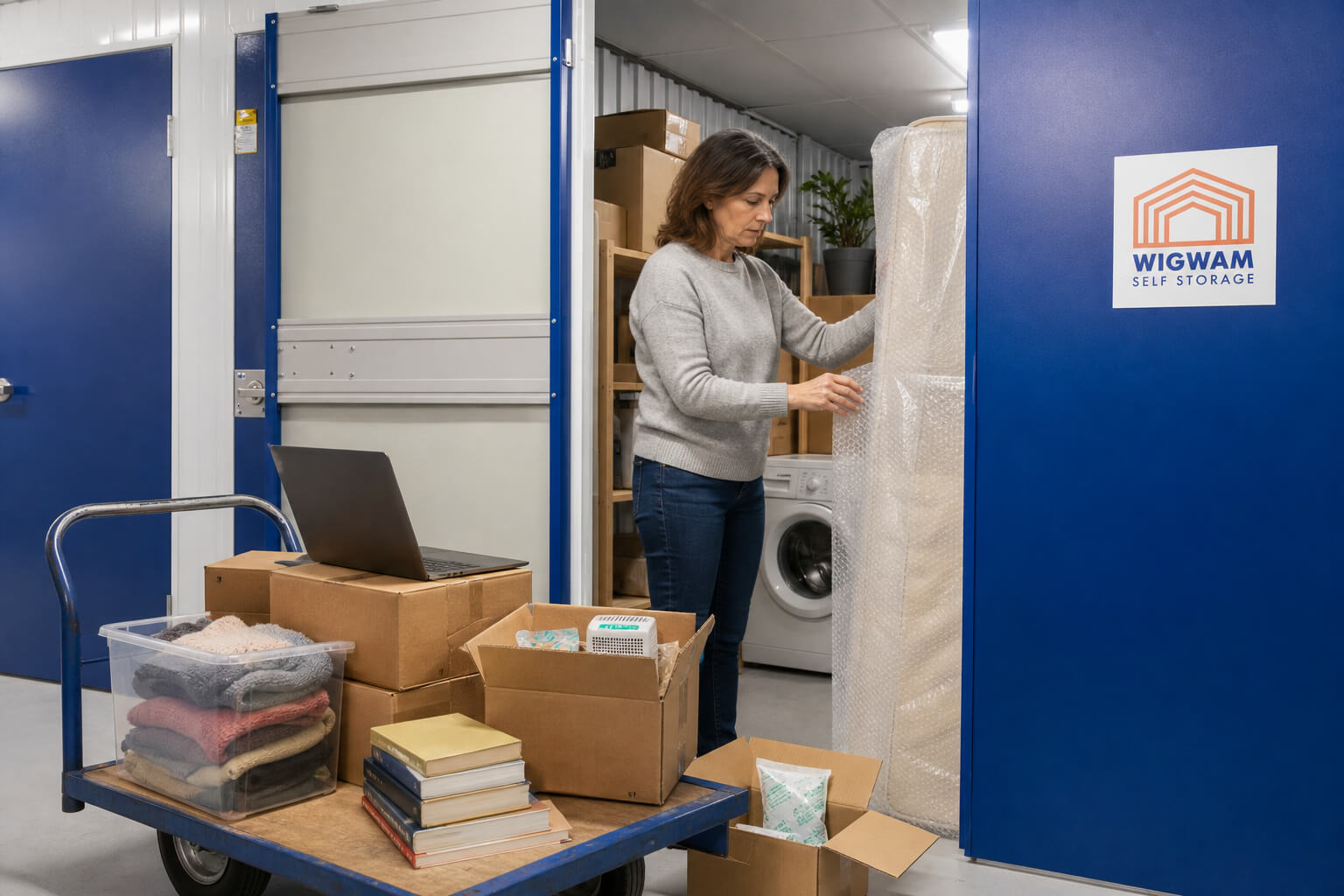
The smart move is a single afternoon of prep before your flight. Get these three things right, and you will not need to think about the unit again until you come home.

Build a Digital Inventory Before You Pack the Van

Take a photograph of every box’s contents before you seal it. Write a number on the outside of each box. Keep a spreadsheet that matches the number to the contents. Share that spreadsheet with yourself on cloud storage and email a copy to your trusted person.

It sounds laborious until you are in Singapore at eleven at night and someone asks you whether the spare house keys are in box seven or box fourteen. At that point, it is the most useful thing you ever did.

Do not rely on memory. Do not rely on one copy. Store the list in two places.

Choose the Right Unit Size So You Are Not Paying for Air

Right-sizing before you go saves you the low-level cost anxiety of paying for space you are not using from thousands of miles away. There is a two-week minimum stay at Wigwam, so the commitment is real from the start.

No prices are listed here because they vary by location and unit size. You can see current pricing at how much is self storage in the UK. Get the size right at the start, and the monthly cost becomes a known quantity you have already budgeted.

Pick a Location Near Someone You Trust

The location decision is not about where you live. It is about where your trusted person lives. Once you are abroad, the only person who can visit the unit is them. Choose a location that is convenient for them, not for you.

Wigwam Self Storage Bath serves Bath Somerset and the surrounding area. Wigwam Self Storage Lincoln serves Lincoln Lincolnshire and the east Midlands. You can see all our UK market-town locations at wigwamstorage.co.uk/self-storage-locations.

If you are choosing for a trusted person in another part of the country, start with the locations page and pick the site nearest to them.

Signing Up and Verifying Identity From Abroad

You do not need to be in the UK to start your account. The sign-up process is online, and many customers set up their unit from abroad or finalise the last details after they have already left.

What the Sign-Up Process Looks Like Remotely

The process is online, which means you can complete it from wherever you are. Access to your unit works through smart entry at the site, available from 6am to 10pm, seven days a week. That is the access window your trusted person will be working within, so it is worth making sure they know it.

Smart entry is reliable and straightforward. It is not app-controlled access from abroad. You cannot open your unit remotely from another country. Your trusted person attends the site during opening hours and uses smart entry to get in. That is the model.

The Deposit and Notice Period: What the Contract Actually Says

The deposit is refundable. When you are ready to end your contract, give 14 days notice, vacate the unit, and settle any outstanding balance. The deposit returns once the account is clear.

If you leave earlier than planned, unused days are refunded. There is a two-week minimum stay, so the earliest you can leave is two weeks from the start date.

If your plans change while you are abroad and you need to stay away longer, the contract continues on the same rolling basis. There is no complex re-sign or renegotiation needed for an extended stay.

The full terms are at wigwamstorage.co.uk/terms-conditions. Read them before you fly. They are written plainly and they will answer most of what you are worrying about.

Paying From Overseas

Paying a UK direct debit from abroad is straightforward once it is set up. The key word is “once.” Get this done before your departure date, not after.

Setting Up Automatic Payment Before Your Departure

A UK direct debit from a UK bank account runs automatically each month. You do not need to log in, transfer funds manually, or remember a date. It goes out on its own.

If you are paying from an overseas card or an account that does not support UK direct debit, confirm this with Wigwam at the point of booking. The solution will depend on your specific situation, and it is worth having that conversation before you leave rather than discovering a problem from a different time zone.

The instruction here is simple: set the payment going before you fly. Do not leave it as a task for when you land.

What Happens If a Payment Fails While You Are Away

If a payment fails, Wigwam will contact you. The contract terms set out what follows. The key thing to know is that the situation is manageable if you respond promptly, and much harder to manage if you do not.

The full terms are at wigwamstorage.co.uk/terms-conditions. Make sure Wigwam has a working email address for you that you will actually monitor while you are abroad. That one detail prevents most payment problems from becoming real ones.

What It Costs: Where to Look

No prices are listed on this page because they depend on location, unit size, and current availability. You can check current pricing at how much is self storage in the UK.

Set it up before you fly. Get your quote and confirm your unit at quote.wigwamstorage.co.uk.

Access While You Are Away: The Honest Version

Smart entry does not mean a remote swipe from abroad. That is the misconception most guides leave uncorrected. Smart entry means your trusted person uses it at the site, during opening hours, to access the unit on your behalf.

Smart Entry and 6am to 10pm Access: What This Means in Practice

Access at Wigwam sites runs from 6am to 10pm, seven days a week. That is the window. It is not 24 hours. Your trusted person should plan their visits within those hours.

Smart entry is how the site operates. It is not an app on your phone that lets you open the unit from abroad. You, as the account holder, control who is authorised. That is the extent of your remote control: deciding who has access. The physical act of opening the unit requires someone at the site.

Nominating a Trusted Person: And What They Can and Cannot Do

Nominating a trusted person is the single most important preparation step. Everything else depends on it.

Your trusted person can attend the site, use smart entry to access the unit, and retrieve or add items during opening hours. They are, in practical terms, the physical extension of your account while you are abroad.

There are two things they cannot do through Wigwam. They cannot receive deliveries on your behalf, because sites are unmanned and Wigwam does not sign for couriers. And they cannot authorise access to other people without your account-holder involvement. For any delivery or drop-off at the site, your trusted person must be physically present. For business goods, someone from your own business must be there.

These are not limitations on the service. They are how the control stays with you. No one can walk your goods out of a Wigwam unit without going through someone you authorised.

The key in the right hand is a more durable form of remote control than any app. Choose the person carefully. Tell them what the unit contains and what they might need. Give them the opening hours. Make sure they have your contact details for anything that needs a decision.

Individual Unit Alarms and What Security Looks Like When You Are Not There

Each Wigwam unit is individually alarmed. Sites are clean, dry and secure. No temperature or humidity control is offered or implied; the correct description of the environment is exactly that: clean, dry and secure.

For the person who cannot physically check on their belongings, an individually alarmed unit means that any unauthorised interference with your unit triggers a response at the site level. Your goods are not simply sitting in a room. They are in a specifically secured space under your name.

Insuring Your Belongings While You Are Overseas

Contents protection at Wigwam is not optional. You either take the RSA Self Storage Customers’ Goods policy or you provide evidence that your own cover is in place. The unit will not be active without one or the other.

A note on jurisdiction: The RSA policy and the contract terms are written for England and Wales. Rules around insurance and contract law differ in Scotland and Northern Ireland. If you are based in Scotland or Northern Ireland, or if your legal situation involves those jurisdictions, speak to your solicitor or insurer before relying on any general guidance here. This page does not give insurance or legal advice.

Opt In or Prove Your Own Cover: The Basic Rule

The choice is yours. Take the Wigwam RSA policy at the point of booking, or arrive with evidence that your existing home contents cover, specialist storage policy, or business insurance covers the goods while they are in storage. Either works. Neither is automatic.

Full details of the RSA policy are at wigwamstorage.co.uk/contents-protection. Read that page before you decide which route to take.

Declaring the Right Value: The Underinsurance Rule

Whichever policy you use, declare the full replacement value of what you are storing. Not the market value. Not what you paid. The cost to replace each item new, at today’s prices.

If you declare less than the full replacement value and you need to make a claim, the settlement is proportional to the shortfall. If you store goods worth ten thousand pounds and declare five thousand, a claim may be settled at half its potential value.

The excess is £50 per claim. The policy is New-for-Old. Premium rates are not quoted here; see wigwamstorage.co.uk/contents-protection for the current terms. Declaring the right value at the start costs nothing extra in effort and costs you nothing if you never claim. Underinsuring costs you something real if you do.

If Your Plans Change: Staying Away Longer or Coming Home Early

Life abroad does not always follow the schedule you made before you left. A deployment extends. A contract rolls over. A family situation keeps you in the country longer than you planned. Wigwam’s contract is built for exactly that reality.

Extending Your Stay: How the Contract Works

After the two-week minimum, the contract continues on a flexible rolling basis. There is no complex re-sign required if you decide to stay abroad for an extra three months. The direct debit keeps running. Your unit stays in your name. The contract terms at wigwamstorage.co.uk/terms-conditions set out the current position.

The anxiety that keeps overseas customers awake at 2am is usually the fear that a plan change will lock them out of a fair exit. At Wigwam, the exit is always the same: give 14 days notice, vacate, settle the account, receive the deposit back. That does not change based on how long you have been away.

Coming Home Early: Unused Days Refunded

If you get back ahead of schedule and you are done with the unit sooner than planned, give 14 days notice from the point you have decided to leave. Vacate the unit, make sure the account is settled, and unused days are refunded. The deposit returns once the account is clear.

Your unit in the UK has been waiting. The anchor held. Coming back is not a negotiation. It is an afternoon’s practical work.

Before You Arrive Home: A Brief Checklist

When you know your return date, do these in order:

  • Give Wigwam your 14-day notice. Check the exact notice requirements in the current terms at wigwamstorage.co.uk/terms-conditions.
  • Arrange transport or ask your trusted person to help with the empty-out.
  • Check the unit is completely clear before your last visit.
  • Confirm your bank details for the deposit return.

That is the close-out. It is not complicated.

Choosing Wigwam for Remote Management: What Makes the Difference

This section does not tell you that Wigwam is best. It gives you the criteria that actually matter when you will not be nearby, and it tells you honestly how Wigwam meets them. You can apply the same criteria to any provider you are comparing.

What to Look For in a UK Self Storage Provider When You Will Not Be Local

Clear contract terms. You need to know the deposit amount, the notice period, the refund policy, and what happens if you miss a payment. If a provider’s terms are vague on any of these, that is a problem you will discover at the worst possible moment.

Reliable access during stated hours. Smart entry systems and opening hours need to be clearly stated and consistently delivered. Know the access window before you nominate your trusted person, so they know what they are working with.

Individually alarmed units. Not a site alarm. A unit-level alarm. If the site is unmanned, unit-level alarming is what stands between your goods and unauthorised interference.

Mandatory contents protection. A provider that allows you to store without cover is a provider that will leave you exposed if something goes wrong. Mandatory cover, opt-in or prove-your-own, is a sign that the operator has thought seriously about what happens when things go wrong.

The ability to nominate a trusted person. This is non-negotiable for overseas customers. If a provider cannot properly authorise a named individual on your account, you do not have workable remote access.

Our UK Market-Town Locations and How to Pick the Right One

When you are living abroad, the location you choose is for your trusted person’s convenience. Pick the Wigwam site nearest to them.

Wigwam Self Storage Bath is in Bath Somerset. Wigwam Self Storage Lincoln is in Lincoln Lincolnshire. For everywhere else, the full list of our UK market-town locations is at wigwamstorage.co.uk/self-storage-locations.

Our locations are in market towns, not on industrial estates at the edge of a ring road. That means your trusted person can get there without a half-day journey.

Get a Quote Before You Fly

The practical sequence is this. Get a quote and confirm your unit at quote.wigwamstorage.co.uk. Nominate your trusted person on the account. Set the direct debit running before your departure date. Build your inventory list. Check the access hours with your trusted person.

Then you can get on the plane.

Ready to set it up? Get your quote at quote.wigwamstorage.co.uk and have your unit confirmed before you leave.

Frequently Asked Questions

What happens if my nominated trusted person moves away or becomes unavailable while I’m abroad?

Update your authorised contacts as soon as you know, because the whole remote arrangement rests on having at least one capable person on the ground. Life moves on for your trusted person too. They might relocate, fall ill, or simply become harder to reach. The good news is that the account holder, you, controls who is authorised, and that is the one piece of remote control you genuinely have from anywhere in the world.

So if your nominated person becomes unavailable, the fix is to authorise someone else on the account. You can usually do this by contacting the team, since managing authorised contacts is normal storage administration. The practical lesson most overseas customers learn the hard way is to name a second trusted person from the start, a backup, so you are never relying on a single point of failure thousands of miles away.

A few sensible habits. Keep the contact details we hold for you current, including an email you actually monitor abroad. Make sure any newly authorised person knows the access window is 6am to 10pm, seven days a week, by smart entry, and that the sites are unmanned, so they let themselves in. And brief them on what the unit contains and where things are, using the inventory list this article recommends. What we cannot do is appoint someone for you or make decisions about your goods in the absence of an authorised contact. The control stays with you, which is exactly why keeping your contact list up to date matters.

Can I have items sold, donated, or thrown away from the unit while I’m overseas?

Yes, but only through a person you have authorised, because nobody from Wigwam will enter your unit or handle your goods. The sites are unmanned by design, and that is what keeps your belongings secure: access requires your smart entry credentials or those of someone you have named. So if you decide from abroad that you want to clear some items, sell a piece of furniture, or donate the lot to charity, the physical work has to be done by your authorised trusted person attending the site during opening hours.

The realistic way to manage this remotely is to lean on your inventory. Because you photographed and numbered everything before you packed, you can point your trusted person at exactly which boxes or items to deal with without needing to be there. They attend during the 6am to 10pm window, retrieve what you have identified, and handle the sale, donation or disposal at their end.

A couple of honest limits. Wigwam cannot receive a charity collection or a buyer’s courier on your behalf, because there is no staff on site to hand goods over or sign for anything. Your authorised person needs to be present for any handover at the unit. And we cannot value goods, arrange sales, or advise on what to keep. That is all your decision, executed by your nominated person. Treat the unit as a secure room only you and your authorised contacts can open, and plan any clear-out around someone physically being there.

How do I make decisions about the unit across a big time difference without things stalling?

Decide as much as possible before you fly, and put your trusted person in a position to act without waiting on you. The reason time-zone friction causes problems is usually that something needs an account-holder decision at the wrong hour. The way around it is to pre-empt the common decisions so most situations never need a midnight email from another continent.

Practical steps that remove the lag:

  • Set payment to run automatically by UK direct debit so monthly billing never needs a decision.
  • Build and share a clear inventory, so your trusted person can find anything without asking you which box it is in.
  • Brief your trusted person in person before you leave on what they are authorised to handle alone and what genuinely needs to wait for you.
  • Make sure we hold an email address you check on a predictable rhythm, so anything that does need you, a failed payment, a query, reaches you and gets a prompt reply.

The honest framing is that most of your contact with the unit over a long posting will be none at all. It sits there and looks after itself. The decisions that do arise are usually small, and a well-briefed trusted person can handle the bulk of them. For anything that truly needs you, a working email and a quick response prevents a minor item from becoming a stalled one. The team handles storage matters, sizing, access, billing, but they cannot make decisions about your goods for you, so the briefing you give your trusted person before departure is what keeps things moving.

I’m storing business stock or equipment while working abroad. Does anything change?

The storage works the same way, but two things deserve extra attention: the courier rule and your insurance. Wigwam stores household goods and business goods alike, so equipment, stock, files and tools are fine in a unit. What does not change is that the sites are unmanned, so any delivery or collection of business goods needs someone from your own business physically present to receive or release it. We do not sign for or accept couriered stock on your behalf. If a supplier is dropping off, or a courier is collecting, your authorised person from your own side has to be there during the 6am to 10pm window.

On insurance, declare the full replacement value of the business goods, exactly as you would for household items. If the goods are stock or equipment your business depends on, check whether your business insurance already covers items held in self-storage, and if not, take the RSA Self Storage Customers’ Goods cover. Under-declaring means proportional settlement, which is a real exposure for higher-value business goods.

One clear boundary worth stating: the team can help you with the storage side, the unit size, access, billing, authorised contacts. They will not, and cannot, get involved in your business planning, forecasts or how your operation should run while you are away. That is your domain. Their job is to keep the goods clean, dry, secure and accessible to the people you authorise. Keep the courier rule and the declared value front of mind and business storage from overseas works exactly as smoothly as household storage.

Is the unit’s contents protection valid if I’m out of the country when something happens?

Yes, cover does not lapse because you are abroad, but a claim is far easier if you have prepared properly before you left. Contents protection at the unit is mandatory and stays in force for as long as the policy is maintained and the rental is active, regardless of where you are in the world. Your physical location does not affect whether the goods are covered. What matters is that the cover is in place, the value is correctly declared, and you can evidence a claim if one ever arises.

This is exactly why the inventory advice in this article is not just tidiness, it is your claim file. Photographs of each box’s contents, a numbered list, and a record of declared value mean that if something happens while you are three time zones away, you can substantiate what was in the unit without needing to fly home and rummage. Keep that record somewhere you can reach from abroad, and share it with your trusted person.

A few specifics to know. The RSA policy is New-for-Old with a £50 excess. Theft claims require evidence of forced entry, which is part of why individually alarmed units matter. Atmospheric and climatic damage is excluded, so pack to protect against damp rather than relying on cover for it. If you ever need to claim, your authorised UK contact can attend the site on your behalf, but the claim itself runs through the policy. The full terms are at wigwamstorage.co.uk/contents-protection/. We can set up cover and keep the unit secure. We cannot give you insurance advice, so for any question about whether a specific loss is covered, speak to the insurer.

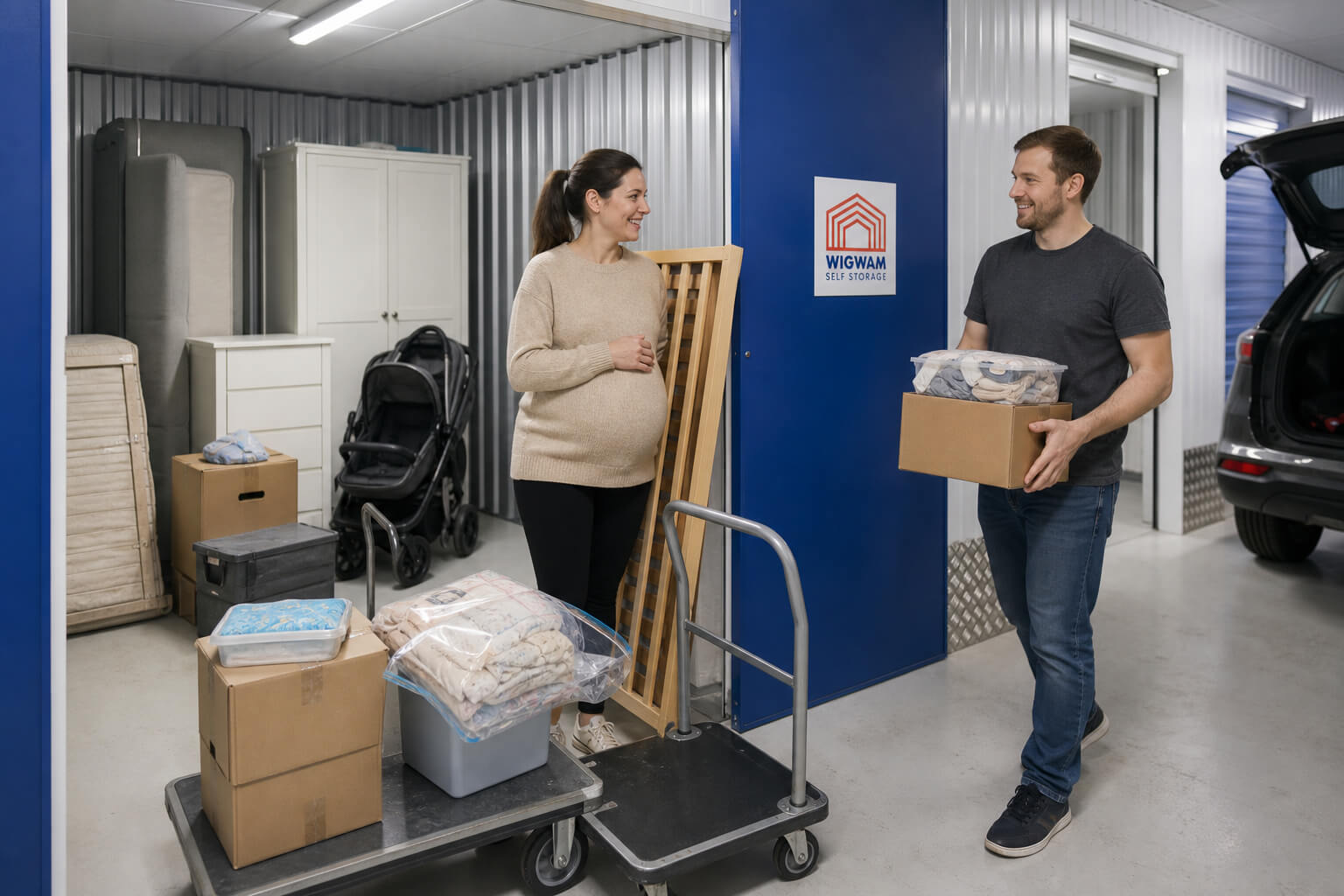
Short Term Self Storage When Youre Between Homes After A Breakup

Between homes after a breakup and not sure yet where you’re going?

When a relationship ends, most people are not planning. They are reacting. A partner is moving out this weekend. Or you need your own things out of a shared place before it gets harder. You do not always know where you are going yet, and that is fine. You just need somewhere safe to put your belongings while you work it out.
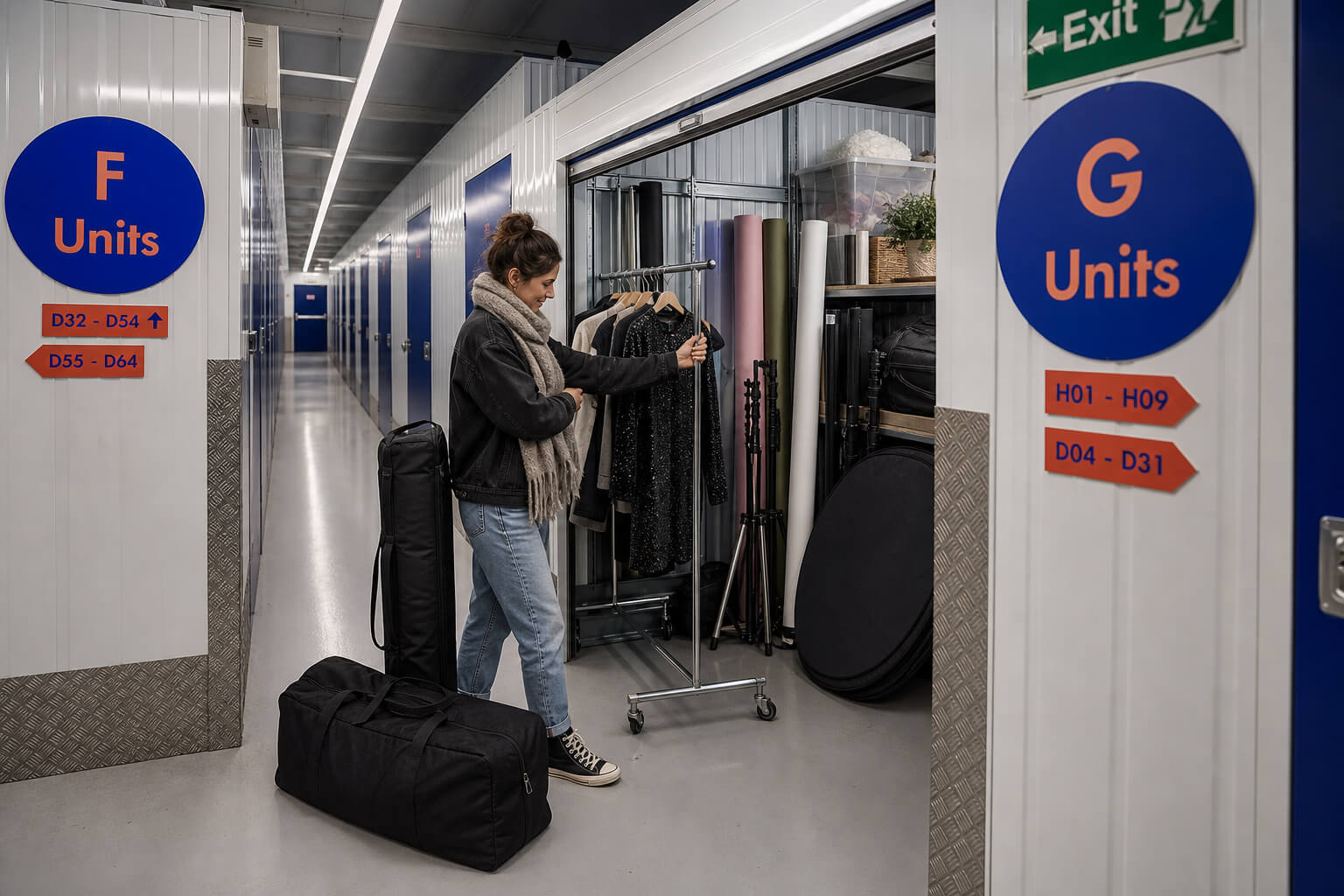
That is exactly what short-term storage is for. Not a permanent answer. A bridge.
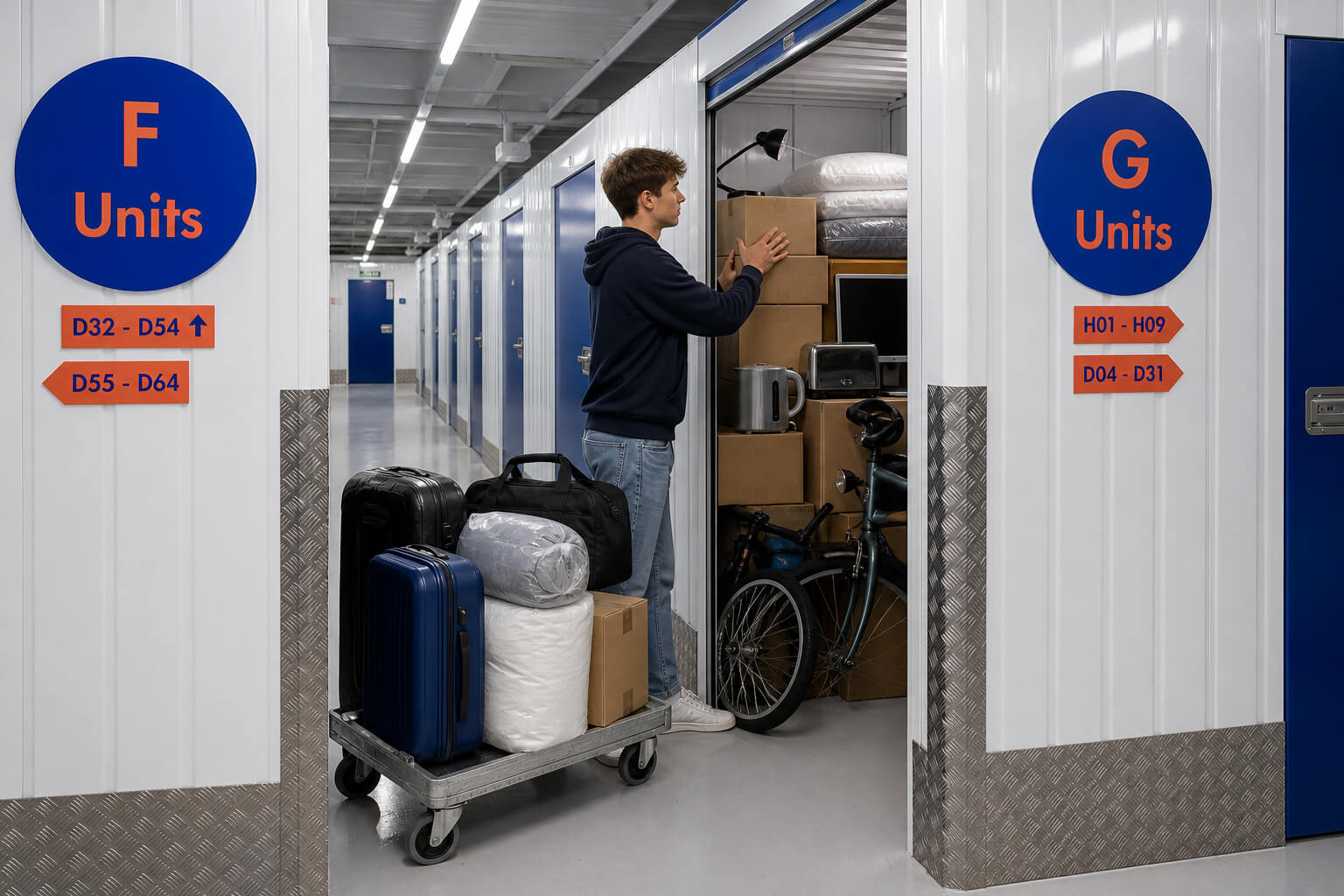

What follows is a plain account of how this works: the commitment involved, what it costs to start, what happens when you leave, and what you can and cannot store. No soft language. No traps.

The short version if you need it right now

  • Minimum stay: two weeks
  • Notice to leave: 14 days (deposit returned after you vacate and the account is settled)
  • Access: smart entry, 6am to 10pm, seven days a week
  • Get a quote now: quote.wigwamstorage.co.uk

When a relationship ends, your things need somewhere to go

This is not a dramatic statement. It is just true. When a shared home stops being shared, the practical question comes quickly: where do the things go while you sort out the next chapter?

Storage is not a permanent solution and it is not supposed to be. It is a way of buying yourself time without making a rushed decision about what to keep, what to let go of, and where it all ends up.

Buying yourself time, not making it permanent

When you put things into storage mid-separation, you are not committing to anything beyond a short stay. You are taking the physical pressure off the situation so you can think more clearly. The belongings are safe. They are yours. You can access them when you need to. And when your life settles into a new shape, you move them on.

People sometimes feel they should have a plan before they do anything. They do not. Getting things into a secure unit this week is the plan. Everything else can follow.

A neutral place that is just yours

One thing that matters when you are going through a separation is privacy. Your unit is your own. No one else accesses it. The sites are unmanned, which means no staff are handling your goods or observing your comings and goings. It is not a shared space. It is yours, for as long as you need it.

The units are individually alarmed, clean, dry and secure. Your belongings are looked after, and only you can get to them.

How short is short-term? The two-week minimum

The shortest stay at Wigwam is two weeks. That is the full extent of the minimum commitment. You do not need a long lease, a rolling six-month agreement, or any kind of long-term contract. Two weeks to start.

Stay as long, or as little, as you need

After those first two weeks, the stay is open-ended. There is no maximum. We have seen people move in for two weeks and move out in ten days once they found somewhere to land. We have seen people stay for six months. Both are completely fine.

The only commitments are the ones that are honest to state: a two-week minimum at the start, and 14 days’ notice when you are ready to go. That is it. You are never paying for months you do not need.

What the two-week minimum actually means in practice

In week one you bring your things in, get settled, and start making decisions at your own pace. In week two you know whether you need more time or whether things are resolving. If you are ready to go by the end of that fortnight, you give 14 days’ notice and you leave.

The full detail is in the terms and conditions. The headline, though, is simple: you are never trapped for longer than two weeks if things move faster than expected.

Leaving when you’re ready: 14-day notice and your deposit back

When you are ready to go, give 14 days’ notice. That is the process. No complex paperwork. No negotiation. You tell us you are leaving, you vacate the unit, the account is settled, and the deposit is returned to you.

The deposit comes back to you

There is a refundable deposit when you start. It is not a large figure and it is not lost money. Once you have given your 14 days’ notice, vacated the unit, and the account is settled, the deposit comes back. That is the mechanism, stated plainly.

We know that when you are mid-separation, the fear of being caught out by fine print is real. The deposit return is one of the things we want to be completely clear about. You are not leaving money behind.

We refund the days you don’t use

If your situation resolves faster than you expected and you leave before the end of a paid period, you are refunded for the unused days. You pay only for the time you actually use.

This is not something many storage providers state clearly. We think it matters, especially when the end date of a stay is genuinely uncertain. You should never be paying for days you have vacated.

Ready to get a quote?
You can do it in two minutes at quote.wigwamstorage.co.uk. No commitment until you sign up.

What size unit do you need?

A studio flat’s worth of belongings will usually fit in a 25 to 50 square foot unit. A full two-bedroom flat’s contents typically needs something in the 75 to 100 square foot range. These are starting points, not rules.

A few boxes, a room’s worth, or a whole flat

If you are moving out quickly and taking only your own things, you may need less space than you think. A few boxes, clothes, a piece or two of furniture, and personal documents can fit in a small unit. One room’s worth of furniture and boxes fits in a medium unit. A whole flat’s contents needs something larger.

The right size depends on what you are moving and how neatly it is packed. If you are not sure, it is worth starting with a rough estimate of what you are bringing and then checking the pricing and unit size guide before you book.

Getting the size right so you don’t overpay

The single most practical thing you can do to keep costs down is to right-size the unit. An oversized unit costs more every week for no benefit. If you are unsure, the how much does storage cost page walks through the unit sizes and what they hold.

We do not quote prices on this page because they vary by location and unit size. The pricing page has the detail. What we can say is that starting with a smaller unit and upgrading is possible if your circumstances change and you end up needing more space.

What you can and cannot store here

Household furniture, clothes, bedding, books, kitchenware, personal effects, documents, electronics and sentimental items are all straightforward. If it came out of a home, it almost certainly fits into one of our units.

Household goods and personal belongings: all fine

The full run of things you’d move out of a flat or house is exactly what the units are designed for. Boxes of clothes, a sofa, a bed frame, kitchen equipment, paperwork, personal effects. All of it is fine.

If you have delicate or sentimental items you are concerned about, the units are clean, dry and secure. That is what we can say. We do not offer climate-controlled storage and we do not make that claim.

What we cannot take: the short list

No vehicles. No cars, caravans, motorhomes, boats or motorbikes. No hazardous materials. No perishables. No living things of any kind.

If you are losing access to a shared vehicle during a separation and are wondering whether a storage unit is a solution, the answer is no, for practical reasons: our units are not designed or licensed for vehicle storage. The same applies to any kind of vehicle, regardless of size.

There are no exceptions to the hazardous materials rule, and the prohibited items list in the terms and conditions covers the full detail.

Getting your things in: smart entry and self-access

You access your unit yourself, by smart entry, between 6am and 10pm, seven days a week. There is no staff member to check in with, no sign-in desk, no appointment needed. You arrive, you use the smart entry system, and you go to your unit.

Smart entry: 6am to 10pm, seven days

The smart entry system is available every day of the week from 6am to 10pm. That is the access window, stated clearly. It is not 24-hour access, and we will not pretend otherwise. Most people find the 6am to 10pm window gives them everything they need, including early morning access before the working day starts.

The system is straightforward to use. When you book, you will get the access details you need.

If you’re using a removal company

If a removal company or delivery service is bringing your things to the unit, someone from your side must be present. The sites are unmanned. Wigwam does not sign for deliveries, receive goods on your behalf, or supervise unloading. This applies whether the delivery is from a removal company or a courier.

Coordinate with your remover in advance so they know you need to be there when they arrive. It is a simple thing to plan for, and avoiding a wasted trip is worth a quick conversation beforehand.

Keeping your things safe while you’re between homes

Your unit is individually alarmed, clean, dry and secure. Only you have access. No one else can enter your unit, and the alarm is specific to your unit, not shared across the building.

Individually alarmed units, clean, dry and secure

The individual alarm means that if anyone attempts to access your unit without authorisation, it triggers independently of any other unit. Your things are not grouped in with someone else’s security.

Clean and dry is exactly what it says. Your belongings will come out in the same condition they went in. We do not claim to regulate temperature or humidity, and we do not offer climate-controlled storage. The environment is clean, dry and secure, and for the vast majority of household and personal belongings, that is what matters.

Protecting your belongings: contents cover

Contents protection is required. You can take Wigwam’s RSA-backed Self Storage Customers’ Goods policy, or you can prove you have your own adequate cover. Either works.

If you take the Wigwam policy, you will need to declare the full replacement value of what you are storing. If you under-insure, any claim will be settled proportionally. Theft claims require evidence of forcible entry. Climatic or atmospheric damage is excluded under the policy.

The full detail is at wigwamstorage.co.uk/contents-protection. We are signposting, not advising.

One point worth noting if you are going through a divorce or separation: questions about who legally owns the items being stored are not for us to answer. If there is any dispute about ownership of goods, speak to your solicitor before putting items into storage. This page covers England and Wales. Divorce and property law differs in Scotland and Northern Ireland, and readers in those jurisdictions should take local legal advice.

Find a unit in your market town

We have locations across UK market towns. The right one is usually the closest to where you are currently based, or halfway between your old home and your new one if you already have a rough idea where you are heading.

Towns we cover

Wigwam Self Storage Bath in Somerset and Wigwam Self Storage Lincoln in Lincolnshire are two of our market-town locations. For a full list of our UK market-town locations, the locations hub is the right place to start.

Each location page shows you the address, access details, and how to get a quote for that specific site.

Not sure which location is right for you?

If you are in transition and not yet settled in a fixed place, the practical choice is usually the location closest to where you are staying right now. If you have a rough sense of where you will land, somewhere between your current base and your next home can also work well.

The locations hub lists all our sites. If you are not sure which one suits, get in touch and we will point you in the right direction.

Ready to get a quote? It takes two minutes at quote.wigwamstorage.co.uk.

Frequently Asked Questions

Can I open an account and move in on the same day?

In most cases, yes, but it depends on availability at your chosen site and on getting the account set up first. The booking and the smart entry credentials have to be in place before you can access a unit, so the practical step is to get a quote at quote.wigwamstorage.co.uk as early in the day as you can, rather than turning up at the gate and hoping. Once the account is live and contents cover is sorted, you have the access details and you can go straight to the unit within the 6am to 10pm window.

When a relationship ends, the timing is often forced on you. A partner is moving things out this weekend, or you have a narrow window to clear your share of a shared home. The honest position is that we cannot promise a unit will always be free at the exact size and town you want at no notice. What we can say is that the faster the account is started, the faster you have a space to move into. If you know the move is coming, even a day or two of warning makes the whole thing calmer. Get the quote in, settle the cover, and the unit is ready when you are.

Whose name does the unit go in if the furniture belongs to both of us?

The account goes in the name of the person who books it, and that person holds the smart entry credentials. Only they can access the unit. This is worth thinking about carefully when you are mid-separation, because the account holder is the one in control of the space and the one responsible for the payments and the contents cover.

If the goods inside genuinely belong to both of you, the storage account does not settle who owns what. We do not arbitrate that, and we cannot. Questions about ownership of shared property during a separation are for your solicitor, not for us. What we would say plainly: only store items you are clear are yours to store, or items both sides have agreed should sit in neutral storage while things are sorted. If there is any doubt about who owns a piece, get legal advice before it goes in a van. A short written note of what was agreed, dated and kept by both sides, is sensible. We are signposting here, not advising: divorce and property law differs across England and Wales, Scotland and Northern Ireland, and your solicitor is the right person to guide you.

What happens to my deposit and notice if I find a new place faster than expected?

You give 14 days’ notice, vacate the unit, and once the account is settled the deposit comes back to you. If you leave before the end of a period you have already paid for, the unused days are refunded too, so you are not paying for time you did not use.

The point worth understanding is that the two-week minimum and the 14-day notice do not stack on top of each other into a month. The minimum stay is simply the shortest booking. The notice is how you end the rental cleanly. If you found somewhere to land in week three and you are ready to go, you tell us, the 14 days run, you clear the unit, and that is the end of it. For someone between homes, that matters: separations rarely run to a fixed timetable, and you should never feel trapped paying for an empty unit because your circumstances changed quickly. The whole arrangement is built to flex with a situation that, by its nature, is hard to plan.

Can my ex-partner get access to the unit, or ask you to let them in?

No. Only the account holder holds the smart entry credentials, and only they can access the unit. We do not hand access to anyone else, we do not hold spare keys, and we will not let a third party in on request, whoever they say they are. The sites are unmanned, so there is no front desk where someone could talk their way in. The locked unit is yours and yours alone.

For someone going through a separation, that privacy is often the quiet reason storage helps in the first place. Your belongings are in a neutral space that is not the family home and not a relative’s spare room, both of which can become flashpoints. Nobody is observing your comings and goings, because there are no staff on site. If there is any genuine legal dispute about the goods themselves, that is a matter for solicitors and, if it comes to it, the courts, not something we can or should resolve at the unit door. But the day-to-day reality is simple: the access is tied to your account, and it stays that way.

I can’t get into the old home to collect my things. Can Wigwam help with the move itself?

No, and it is better to be straight about that. We provide the unit, the secure space and the access. We are not a removals firm and we do not collect goods on your behalf. The sites are unmanned, so there is no one here to drive a van, supervise a load, or sign for anything. If you are using a removals company or a man-and-van service to bring your things in, someone from your side has to be present at the unit to receive them, because we cannot accept deliveries for you.

The point about not being able to get into the old home is a separate problem, and an important one. If access to a shared property is contested, that is a legal question for your solicitor, not a storage question. Do not force the issue or remove items you are not clear you are entitled to take. Once you do have your things and a way to move them, the unit is ready to receive them within the 6am to 10pm window. Coordinate the removals slot so you are there when the van arrives, and you avoid a wasted trip. A quick call with your remover beforehand sorts that out.

Last Minute Self Storage When The Builder Starts Monday

Builder starts Monday and the room’s still full — too late to sort it?

The kitchen fitters need a clear run from Monday. The dining room is still full. And somewhere between signing off the builder’s quote and now, nobody sorted the furniture.

If that is where you are this week, take a breath. It is not too late. This is exactly the situation local self storage is built for, and you can have it sorted in a matter of days.

Here is everything you need to know, in the order you need it.

[TRIAGE BLOCK – mobile-first, visible above fold on small screens]

Quick answers if you are short on time

  • Can I start this week? Yes. Find your nearest location and get a quote at quote.wigwamstorage.co.uk
  • What is the minimum stay? Two weeks. If you leave early, unused days are refunded.
  • Is there a deposit? Yes, refundable. It is returned after a 14-day notice once you have vacated and your account is settled.
  • What are the access hours? Smart entry, 6am to 10pm, seven days a week.
  • What size do I need? See the sizing section below, or put your details into the quote tool and it will guide you.

When the work is booked and the room needs clearing now

If the builder is booked and the room is not clear yet, you have not left it too late. Most Wigwam customers in your position have a unit sorted within the week, and the booking process is straightforward enough that you can have it agreed and confirmed in a single day.

The anxiety is understandable. You have a fixed start date, a contractor expecting an empty space, and a house full of furniture that has nowhere obvious to go. What you need is not a complex logistics plan; you need a calm, workable solution close enough to be practical. That is what a local unit does.

Why trades need an empty room, not just a tidy one

Tradespeople do not need your furniture moved to the corners. They need it gone. A plasterer working on a Victorian chimney breast needs unobstructed access to all four walls. Painters need floor-to-ceiling coverage. Flooring fitters need every stick of furniture out so they can work edge to edge and not carry the risk of scratching your pieces while they manoeuvre boards.

Beyond access, there is the question of protection. Construction dust travels further than you expect. It settles into fabric, coats timber, and finds its way through wardrobe doors. Paint overspray has a way of landing on exactly the piece you thought was safely covered. For period furniture, a dining table your grandmother bought in 1962 or a set of hall chairs with their original horsehair, the right answer is not a dust sheet in the corner. It is a clean, dry, individually alarmed unit with the door shut.

The most common avoidable mistake: clearing too late

The thing that catches most renovators out is not a failure to plan; it is leaving the clearance to the morning of. The van is booked for Sunday evening. The kitchen appointments start Monday at eight. Everything takes twice as long as expected, and the builder is already at the door when the last box goes in.

Book the unit a few days ahead of when you think you need it. Move things in on the Friday or Saturday. Arrive Monday morning knowing the room is clear, the furniture is safe, and one item on the list is already done. Storage should not be a scramble. If you book it this week, it will not be.

Where your things go while the work happens

The options for a renovation clear-out are broadly four: a self-storage unit, a portable container in the street, a borrowed garage, or a room elsewhere in the house. Each suits a different situation, and for a period-property clear-out, they are not equally good.

Indoor unit vs container in the street – which suits a period-property clear-out

A portable container dropped on your driveway or the road outside is a workable solution for some things. It is convenient for bulky building materials, rubble sacks, or garden equipment you need nearby. It is less ideal for the furniture that matters.

A metal container in the street is exposed to condensation and temperature swings. It offers no individual alarm. You are relying on the container’s lock and not much else.

An indoor unit at a Wigwam site is a different proposition. The units are clean, dry and secure. Each one is individually alarmed. Your grandmother’s sideboard is behind a locked unit door, within a secure building, with its own alarm. That is the honest answer to “what about dust and damage,” and it does not require any claim about climate control we cannot make. Clean, dry and individually alarmed is what we offer. For most period furniture and household goods, that is enough.

What to do with the things you cannot move

Very large pieces are a real consideration. A floor-to-ceiling bookcase may need to come down in sections. A grand piano is not going in a transit van for a six-week stay. For genuinely immovable pieces, you have two options: disassemble them where you can (most Victorian sideboards come apart at the back panels and legs), or stage them within the house in a room that is not being worked on, properly sheeted and away from the dust.

What Wigwam units are for is household goods: furniture, white goods, boxed personal effects, garden tools, stored clothes. We do not take vehicles, caravans, or leisure craft. If the project van needs somewhere to sit while the drive is ripped up, that is a conversation for a different type of storage.

How to protect what stays behind

Everything that cannot go into storage needs to be treated as if it might get dusty, knocked, or splashed. That means proper dust sheets (not bedding), sealed doorways with plastic sheeting taped at the frame, and anything fragile moved to the highest surface available and wrapped. Mirrors and picture glass should come off the walls entirely and go either into storage or flat-wrapped somewhere out of the work zone.

The contrast is worth naming. Everything in the unit has a locked door between it and the dust. Everything left in the house needs you to be its protection plan. The more you can move out, the less work the sheeting and taping has to do.

What size unit you need – one room or a whole house

A single furnished room typically fits in a 25 to 50 sq ft unit. A full four-bedroom house clear-out needs 150 sq ft or more. Here is a rough guide, though the quote tool at quote.wigwamstorage.co.uk will give you a more accurate steer once you list what you are moving.

Sizing for a single room

A bedroom or study, cleared of bed, wardrobe, chest of drawers, and the usual accumulation of shelving and boxes, generally fits into a 25 to 35 sq ft unit if it is packed well. A living room with a three-piece suite, coffee table, bookshelves, and television typically needs 50 sq ft, sometimes more if the shelving is deep or there is a desk. The trick is to disassemble what you can. A wardrobe in three sections takes half the space of a wardrobe standing upright.

For a rough check before you call, see the pricing and size guide on the website. It walks you through the common unit sizes and what they hold, without locking you into a price before you are ready.

Sizing for a kitchen clear-out

Kitchens generate more bulk than most people expect. You have the appliances (fridge-freezer, washing machine, dishwasher), the wall and base units if they are being replaced, loose items from the drawers and worktops, and often a collection of things that have lived in the kitchen cupboards for a decade without anyone noticing. A kitchen clear-out frequently fills a 50 to 75 sq ft unit.

White goods and packaged goods store well in a clean, dry unit. The units are not temperature controlled, but a fridge in a dry, secure unit for four to six weeks is not at risk. Pack it empty, leave the door slightly open, and it will be fine.

Sizing for a full clear-out during a whole-house project

A whole-house renovation is a different scale of operation. The practical approach is to stage it: start with the room being worked on first, then rotate as each space is handed back. If you need to store a substantial portion of a house simultaneously, expect to need 100 to 150 sq ft for a three-bedroom house, more for a four-bedroom with loft contents. Again, the quote tool takes the guesswork out of it, and there is no cost for getting a quote.

Packing and protecting furniture before the trades arrive

Disassemble what you can, label every piece by the destination room, and move things out the day before the builder arrives, not the morning of. That one change reduces the stress of a renovation start day more than almost anything else.

What to disassemble, what to leave whole, and how to label it

Flat-pack furniture is straightforward: break it down to its boards and bag the fixings together with a label. Period joinery is a different matter. A solid-wood dresser from the 1920s often comes apart at the back panel and the feet. Do not force joinery that has set over decades; instead, wrap it in moving blankets and move it whole on a sack truck.

Mirrors and picture glass need to be wrapped individually in cardboard or bubble wrap, marked as fragile, and stood upright in the unit, never laid flat with weight on top. Label everything by the room it came from, not just by what it is. “Kitchen” on a box is useful. “Kitchen – right-hand cupboard above the sink” is more useful when you come back for one specific thing mid-renovation.

Packing blankets and stretch wrap are worth buying rather than borrowing. They go back into the unit with the furniture and protect it throughout the stay.

What not to store – and the contents-protection check

Wigwam units are for household goods. Prohibited items include anything flammable or hazardous, perishables, living things, and any vehicle including motorbikes. If you are clearing a loft, check the boxes before they go in: aerosol tins, old paint cans, and fuel canisters need to be disposed of before the move, not stored.

Contents protection is mandatory at Wigwam. You can take the Wigwam policy (RSA-backed, New-for-Old), or you can prove your own cover is in place. Either way, you will need to declare the full replacement value of what you are storing, not the purchase price or a conservative estimate. Under-insurance is settled in proportion to the shortfall. For antiques, period pieces, and anything that would be expensive or irreplaceable to replace, take the time to value it properly before you book.

Worth knowing: the policy covers theft after forcible entry to the unit, and excludes damage from atmospheric conditions. Read the detail at wigwamstorage.co.uk/contents-protection/ before you make a decision. We will point you there; the advice is yours to take.

The move-in logistics – van hire, timing, and using your smart entry access

Your unit is ready from the start date on your booking. Smart entry means you can arrive from 6am, seven days, and go straight to your unit. No need to call ahead, wait for a member of the team, or arrange a handover.

If you are hiring a van, book it for the day before the builder starts and move things in the evening or the following morning. This gives you a clear site by the time the trades arrive without a panicked same-day scramble.

One important note on deliveries: Wigwam sites are unmanned. We cannot sign for courier deliveries or builder drop-offs on your behalf. If a courier is sending something to your unit address, or a contractor is dropping materials, someone from your household needs to be there in person to receive it. Plan deliveries around your own access windows, not around a staffed reception that does not exist.

Short stays – the two-week minimum and what happens to unused days

The minimum stay is two weeks. If you leave before your billing period ends, the unused days are refunded. That is the straightforward version. Here is what it means in practice for a renovation stay.

How the two-week minimum and refund of unused days works

Renovation timelines slip in both directions. Trades finish a week early and hand back the keys on a Friday. Or a delivery runs late, the tiles have not arrived, and the kitchen fit pushes back by ten days. The Wigwam terms are built to flex around both.

If the project finishes sooner than expected, you clear the unit, give notice, and any unused days on your billing cycle are refunded. You are not paying for storage you are not using. If the project runs over, you simply continue. There is no penalty for a longer stay and no need to renegotiate. Just keep using the unit until the room is ready, then clear it when you are done.

The two-week minimum is the starting point. For most renovation projects, the actual stay is four to eight weeks. The pricing page at wigwamstorage.co.uk/how-much-is-self-storage-in-the-uk gives you a cost framework without binding you to anything.

The deposit, the 14-day notice, and what comes back to you

There is a deposit to take the unit. It is refundable. Once you are ready to vacate, you give 14 days notice, clear your belongings out, and once the account is settled, the deposit is returned. Nothing complicated, nothing that disappears into administration.

The 14-day notice is a separate step from clearing the unit. Give notice, then use those final days to make your last collection trips, then vacate. The deposit returns after you have left and the account is confirmed clear. Full terms at wigwamstorage.co.uk/terms-conditions/.

Ready to get a quote this week? Start at quote.wigwamstorage.co.uk. Free, fast, and no commitment until you are ready.

What you can and cannot store with us

We store household goods. Not vehicles, not leisure equipment, not business stock arriving on pallets. Here is the full picture, because knowing the limits in advance is more useful than finding out later.

Household goods, furniture, and the contents of your renovation

For a home renovation clear-out, Wigwam units cover virtually everything you will be moving: furniture, soft furnishings, white goods, boxed kitchen contents, tools, garden equipment, clothing in boxes or on rails, books, and personal effects. If it came out of a house and it is not hazardous, it almost certainly qualifies.

White goods store well in a clean, dry unit for the duration of a typical renovation stay. Pack them empty, defrost the fridge-freezer before it goes in, and they will come out the other side in the same condition they went in.

What we do not take – vehicles and the climate-control question

We do not store vehicles of any kind. No cars, no motorbikes, no caravans, no boats. If the renovation means the garage is out of commission and you need somewhere for the car, that is a specialist service. What we offer is for household goods only.

We also do not offer climate-controlled storage. The AI Mode summaries and some competitor pages recommend “climate-controlled units for electronics and artwork.” Our honest answer is this: the units are clean, dry and secure, individually alarmed, inside a secure building. That combination protects furniture, electronics, and stored goods from dust, humidity and opportunistic damage throughout a typical UK renovation window. What it does not do is maintain a set temperature or humidity band. If you are storing a museum-quality oil painting or a humidity-sensitive instrument, that is a different conversation for a specialist storage provider. For Victorian sideboards, kitchen white goods, boxed personal effects and solid-wood furniture, our units do the job.

Contents protection – what it means for period pieces

This is worth reading carefully if you are storing anything you could not easily replace. The Wigwam contents-protection policy is underwritten by RSA and operates on a New-for-Old basis. You can take it directly or prove your own equivalent cover is in place.

Declare the full replacement value. Not the price you paid in 1995, and not a cautious underestimate to keep the premium manageable. If you under-insure and make a claim, the settlement is reduced in proportion to the shortfall. A sideboard valued at £1,000 for insurance purposes that would actually cost £3,000 to replace is insured for one-third of its value in the event of a total loss.

The policy covers theft following forcible entry to the unit. Atmospheric damage is excluded. For the specific terms, exclusions, and what you need to provide to prove your own cover, see wigwamstorage.co.uk/contents-protection/. We point; the decision is yours.

Getting in and out – smart entry, 6am to 10pm, and handling deliveries

You can access your unit any day between 6am and 10pm using smart entry. No need to call ahead, arrange a time, or wait for a member of the team to let you in.

How smart entry works and when you can use it

Smart entry means you use your access credentials to open the site gate and your unit directly. If you need to grab a specific tool the builder mentioned he will need tomorrow morning, you can be there at 6am and back before the work starts. If a final load comes in after an evening trip to the house, you can drop it in at 9pm. The hours cover the working day and either side of it, which for a renovation project is usually enough.

What smart entry does not mean is 24-hour access. The site operates from 6am to 10pm and not outside those hours. Plan your collection and drop-off trips accordingly.

The sites are self-service. You access your own unit; you manage your own belongings. Team members at specific locations, such as Selina and the team at our market-town sites, are available for customer enquiries through the normal channels, but the site itself is accessed independently.

Deliveries, couriers and builder drop-offs

This is the one area where a clear understanding prevents real frustration.

Wigwam sites are unmanned. If a courier is delivering to your unit, or your builder wants to drop materials or equipment at the site, someone from your household must be there in person to meet them. Wigwam will not sign for deliveries, take packages on your behalf, or receive goods from contractors. There is nobody on site to do so.

If you are planning to use the unit as a staging point for renovation materials, coordinate the delivery timing so that you or someone you have authorised can be there to receive it. It is a simple arrangement once you know to plan for it.

Accessing your unit safely during the renovation period

Each unit is individually alarmed. The site is secure. The combination gives you the confidence to know that what you have put in is protected when you are not there.

A useful habit for a renovation stay is to plan your retrieval trips rather than make them on impulse. Make a running list of what you are likely to need during the renovation and retrieve in batches: tools on the Friday, specific boxes mid-week, and so on. It keeps the number of trips manageable and reduces the chance of needing to make an unplanned journey outside your usual schedule.

Find your nearest Wigwam and get a quote this week

Wigwam Self Storage has locations across UK market towns. If your renovation is in or near one of them, you can have a unit agreed and ready before the builder arrives, often within the same week you enquire.

Our market-town locations – and how to find the nearest one

Two locations with confirmed pages are Wigwam Self Storage Bath in Somerset and Wigwam Self Storage Lincoln in Lincolnshire. For the full list of our UK market-town locations, including Cheltenham, Tewkesbury, Marlow, Reading and others, see the locations hub and find the one nearest your renovation.

The pattern is consistent across the network: clean, dry and secure units, individually alarmed, smart entry 6am to 10pm, same short-stay terms wherever you book. The nearest Wigwam is the right Wigwam.

What the quote covers and what happens next

Getting a quote is free and takes a few minutes. Have ready: the address or town of the renovation, a rough list of what you are moving (one room, a kitchen, a whole house), and the likely move-in date. The quote tool at quote.wigwamstorage.co.uk walks you through the rest.

For cost context before you get to the quote stage, the pricing page sets out what units cost by size and stay duration. No prices are listed on this page, because the right number depends on your location, your unit size, and your dates. The quote gives you a real figure, not a range.

Once the quote is agreed and the paperwork is done, the unit is yours from the start date. Smart entry credentials are set up before you arrive. You turn up, you go in, you start filling the unit.

The builder starts Monday. Get the quote sorted today at quote.wigwamstorage.co.uk.

The things you move out of the room are not going far. They are in a clean, dry, alarmed unit a short drive away, waiting for the work to finish. When the plasterer hands back the keys and the paint dries, everything comes back to where it belongs. The renovation is not about clearing your home. It is about keeping what matters safe long enough for the house to catch up with it.

Frequently Asked Questions

How quickly can a unit actually be ready if I only sort it the weekend before?

In most cases, fast enough. The booking itself takes minutes through the quote tool, and once the paperwork is agreed and the smart entry is set up, the unit is yours from the start date. Plenty of customers in your position have a unit confirmed and ready to load within the same week they enquire, and a Friday booking for a weekend move is a common pattern rather than a tall order. The sites run on smart entry, so there is no reception to coincide with and no key handover to arrange in person.

Two things speed it along. First, get a quote with your details ready: the town of the renovation, a rough list of what you are moving, and your likely move-in day. That lets us confirm the right size and location quickly. Second, sort the contents cover at the same time, because cover has to be in place before goods go in, and it is the step people forget in a rush. Take the Wigwam RSA policy or have proof of your own ready.

The one thing not to leave to the actual day is the setup. Get the booking and the smart entry credentials sorted before the weekend, so everything is live when you arrive with the van. Then you simply turn up within the 6am to 10pm window and start loading. The access does not depend on the calendar, a Saturday or Sunday move-in is the same as any weekday, but the booking admin is best done in advance rather than in the car park.

What if I genuinely cannot clear the whole room before Monday?

Clear what you can, and prioritise by what the trades actually need gone and what is most at risk. Tradespeople need an empty room, not a tidy one, so the first things out are whatever blocks their access to the walls and floor they are working on. After that, the priority is anything you would hate to see damaged: period furniture, anything with a polished or upholstered surface, mirrors and picture glass. Those go to the unit even if some lower-value bulk has to stay behind under sheeting for a day or two.

If a full clear is not possible by the start date, talk to the builder about a phased start. Many jobs begin in one part of a room or one room of a larger project, which buys you a day or two to move the rest. A staged clear is far better than a panicked one: smart entry runs 6am to 10pm, seven days, so you can add loads in the evenings after the first day’s work and over the following days as you free things up. The unit does not have to be filled in one go.

What must not stay is anything fragile or valuable left in the active work zone. The contrast holds: everything in the unit has a locked, alarmed door between it and the dust, while everything left behind depends on your sheeting and taping to survive. So if you are short on time, get the irreplaceable things out first and let the robust, easily cleaned items wait. You can always bring them across on a later trip once the first rush is over.

Can the builder hold access or a key so they can move things for me?

No, and it is worth being clear about why before you make any arrangement. Access is by smart entry tied to the account holder, and the sites are unmanned, so there is no spare key to hand over and no member of staff to let a third party in. Wigwam does not hold keys, does not open units, and does not sign for or receive deliveries. The unit is yours, and access to it stays with you.

If you want a builder, a removals crew or anyone else to bring goods to the unit or move things in, the rule is simple: someone from your side must be there in person to let them in and oversee it. You cannot leave a contractor to load the unit unsupervised, and you cannot arrange for materials to be dropped at the site while nobody from your household is present. There is no reception to take them in. Plan any delivery or move-in around a window when you, or someone you trust from your household, can be on site.

This is not a Wigwam quirk; it is how almost all self storage works, and it is what keeps your goods in your control rather than anyone else’s. State it plainly to your builder so they do not assume otherwise and turn up expecting a staffed site. If the builder needs to retrieve a specific item mid-renovation, the practical answer is to arrange to meet them at the unit, or fetch it yourself and take it to the house.

What happens if the renovation over-runs and I need the unit longer than planned?

You simply keep it, with no penalty and nothing to renegotiate. The two-week minimum is the starting commitment, not a fixed term, and after that the unit continues for as long as the job needs. Renovations over-run more often than they finish early, so the terms are built to absorb that: you carry on using the unit, the billing continues at the same rate, and there is no awkward conversation about extending. For most renovation stays the real duration ends up being four to eight weeks rather than the two-week floor.

There is no need to predict the end date when you book. When the work finally finishes and the room is ready to receive its contents again, that is when you act: give 14 days notice, clear the unit, and once the account is settled your refundable deposit comes back. If you happen to finish earlier than your current paid period, the unused days are refunded, so an over-run that then resolves quickly does not cost you a part-period you did not use.

The practical upshot is that you should book around the start date, which you know, and not worry about pinning the end, which you do not. Smart entry from 6am to 10pm, seven days a week, means you can keep using the unit on your own schedule throughout, however long the build drags on. When the house finally catches up, the exit is clean: notice, vacate, settle, deposit back.

What if I get to the unit and realise I have underestimated the size?

It happens more than people admit, because a room of furniture takes up more space than it looks, and it is usually fixable. If you find on the day that the unit is too tight, speak to the support team about moving to a larger size at the same location, subject to availability. They handle sizing and availability, so they can tell you what the next size up holds and whether one is free. In a busy season availability is not guaranteed, which is the argument for booking a size up if you are genuinely unsure.

You can also often win back space with better packing before you conclude the unit is too small. Disassemble what comes apart: a wardrobe in sections takes half the floor space of one standing whole, table legs come off, bed frames break down to flat boards stood against the wall. Stand sofas and mattresses on their sides. Use the full height with stable, uniform stacks rather than spreading everything across the floor. A surprising amount of an apparent overflow disappears once the unit is packed properly rather than piled.

The general guidance, a single room in roughly 25 to 50 sq ft, a kitchen clear-out in 50 to 75, a whole three-bedroom house in 100 to 150, is a starting point, not a promise, because contents vary. If you are between two sizes and the move is last-minute, the safer call is the larger one: you can consolidate later, but you cannot conjure floor space that is not there when the van is already loaded. The quote tool gives a steer once you list what you are moving, so the fewer surprises on the day the better.

Stock Storage For Online Sellers Managing Inventory You Access Yourself

Does the house still belong to you, or has the business taken it over?

It starts as a minor inconvenience. A few boxes stacked in the corner of a bedroom. Then the landing. Then the garage. Then the car. Then one morning you are stepping over a pile of poly mailers at half past six, hunting for the parcel that needs to go out before the school run, and you realise the house no longer belongs to you. It belongs to the business.

The answer does not have to be a warehouse contract or a fulfilment company you have never visited. For a lot of UK online sellers, the right move is a self-storage unit a short drive from home. One where you hold the access code, you know exactly what is on each shelf, and you can be in and out before breakfast.

That is the model this page explains. Honestly, including the parts that other pages leave out.

Is a self-storage unit right for your online shop?

For most online sellers whose stock has grown beyond what the house can hold, yes, with one condition: you need to understand what “self-access” actually means before you sign. It is not a managed warehouse. Nobody picks for you, nobody signs for your deliveries, and nobody tidies the shelves between visits. That is the point. You are the one in control.

When the spare room, garage and hallway have run out

There is a moment every growing online seller hits. The business is doing well. The problem is that success looks like a hallway blocked with returns, a spare room that a guest cannot sleep in, and a car that smells faintly of packing tape. The home-as-warehouse arrangement that worked at twenty orders a month stops working at a hundred.

A self-access unit does not solve every problem. What it does is put a clear line between your home and your business. The stock goes in the unit. The house becomes the house again. Most sellers who make this move say they should have done it six months sooner. The decision feels bigger than it is, especially the first time you look at the monthly cost. But once you are picking orders from a unit you have properly organised, the alternative – the stepover, the search, the apology to your partner – quickly feels harder than paying a monthly fee.

A unit you control vs a hands-off 3PL

The honest comparison is this. A third-party logistics company picks, packs and ships for you. You never see the stock. You do not handle the orders. That is the right model for some sellers, particularly those with high volumes and no time to spare. But you lose visibility. You lose the ability to check a product before it ships. You lose the hands-on quality control that matters when you are the one who chose every item, graded every piece of clothing, described every listing.

A self-access unit is the opposite. You do the work. In return, you make every decision. You are still the one running every order, which for most sellers at this stage is not a compromise. It is the whole point.

What “inventory you access yourself” actually means

The phrase in the title is not marketing shorthand. It is a precise description of how this model works. You have the smart-entry credential. You open the unit. You find the stock. You pack the order. You lock up. At no point does anyone else do any of those things on your behalf.

You hold the smart-entry key and pick your own orders

Access is by smart entry, seven days a week, from 6am to 10pm. That is the real window. It is not 24-hour. It is not “24/7.” Several national competitors advertise that; we do not, because ours is 6am to 10pm and we would rather tell you plainly.

For the vast majority of online sellers, that window is more than enough. You can be at the unit at 6.30am, pull everything you need for that morning’s dispatch, and be back home before the children are up. You can restock on a Tuesday evening after the Vinted notifications come in. You can do a big Saturday morning sort before the market. The hours fit around a real seller’s day because most of the work happens at the edges of the working day, not at 3am.

No fulfilment middleman touching your stock

Every order goes through your hands. That means every order leaves the unit in the condition you intend it to leave. No pick errors from a warehouse system you did not set up. No mystery dents on a returned item. No batch-delayed dispatch because a fulfilment centre is processing a backlog.

The trade-off is honest: you do the work. Every trip to the unit, every box sealed, every label printed is yours. For the seller who takes pride in that, it is not a burden. It is the model.

Access hours and smart entry: the honest version

Access is 6am to 10pm, seven days a week, by smart entry. Not 24-hour. Here is why that distinction matters and why, for most online sellers, it probably does not.

6am to 10pm, seven days, by smart entry

Smart entry means no key to lose and no staff member to let you in. You arrive, you enter, you access your unit. The system works every day of the week, including bank holidays.

The 6am to 10pm window covers every practical dispatch and restock scenario for a seller running same-day or next-day fulfilment. The one scenario it does not cover is a late-night emergency restocking run at midnight. If your operation genuinely requires 24-hour access, that is worth knowing before you book, not after.

Competitors who advertise “24/7” may genuinely offer it. We are not in that comparison. We offer clean, dry, secure units with smart entry from 6am to 10pm, seven days, and we say so at the start.

Planning your pick-and-pack schedule around a 6am to 10pm window

The sellers who use self-storage well tend to build a routine around it rather than treating it as a drop-in whenever. A quick morning pick before 8am covers the orders that need to go out same-day. An evening run on Tuesday and Thursday handles restocking and labelling. A longer Saturday morning session deals with anything bulky or time-consuming.

That rhythm works well for a market-stall seller packing before a Sunday show, for an eBay reseller clearing a week’s worth of listings, and for an Etsy seller batching the packaging for a product launch. The window is not a constraint for most sellers. It is a timetable you can build a business around.

Deliveries, returns and the unmanned-site rule: read this before you commit

Our sites are unmanned. That means we do not sign for your couriers, we do not take in stock deliveries on your behalf, and we do not handle your customer returns. If a courier arrives at the unit, someone from your own business needs to be there to receive it. That is not a detail buried in the terms. It is the first thing we tell you.

Why our sites are unmanned and what that means for your stock

No staff member on-site means no staff member ever handles your goods. Nobody moves a box, opens a unit, or accepts a parcel on your behalf. The upside of the unmanned model is total control: from the moment your stock enters the unit to the moment it leaves, the only hands on it are yours.

The practical constraint is the other side of that same coin. When a supplier delivers a pallet, or when a courier comes to collect a customer return, someone from your business needs to be physically present at the site to receive it. You cannot book the unit and then arrange for your supplier to drop off while you are somewhere else. The key-in-your-pocket model means you are always the one holding the key.

For sellers who do not receive frequent inbound deliveries, this is rarely a problem. For those who take regular supplier drops, it is a logistical step that needs planning.

How online sellers handle inbound stock and customer returns in practice

The sellers who make this work tend to do one of a few things. They schedule deliveries for times they are already planning a unit visit, so the trip serves two purposes. They batch returns handling on a fixed day each week, so they are not making special trips. Where they have a business partner, a team member or a trusted colleague who can cover, they arrange someone to be present for large inbound deliveries.

What nobody should do is assume the site will handle it for them. We will not, and any operator who suggests otherwise is either misinformed or being imprecise about what “unmanned” means. The honest position is this: your stock, your responsibility, your control.

Ready to see what a unit costs near you?
Get a quote at quote.wigwamstorage.co.uk.
No obligation. Just a clear price for the size and town that suits your business.

Choosing the right size unit for your stock

The right size depends on two things: how much stock you hold at peak, not at a quiet month, and whether you need room to work in the unit as well as store in it. Most sellers start smaller than they think they need and move up once they see how the space fills.

From a few shelves of small parcels to pallet-scale bulk inventory

A small online seller running Vinted or eBay part-time might need nothing more than a couple of bays of shelving, enough room to stand at a folding table, and a corner for outbound parcels. A more established seller taking pallet deliveries from a supplier needs more floor space, a clear path in from the door, and room to open boxes and repack without creating a bottleneck.

The size you need is on the pricing and size guide. We do not publish prices on this page because the right size for your stock at a particular location is a conversation, not a fixed table. The guide gives you the framework; the quote gives you the number.

Room to pack as well as store

The unit works as a packing space as well as a storage space. Sellers use it to label, seal, sort and stage outbound orders. That is entirely within how the unit is designed to be used.

What it is not is a permanent manned workspace or a retail counter you open to the public. The unit is for storage and for the work of picking, packing and despatching your own goods. For the full list of what is and is not permitted, the terms and conditions are the place to look before you commit.

Storing by product type

The type of stock you sell changes how you set the unit up, not whether a unit works for you. Here is a plain-language guide to the three categories that come up most often.

Clothing and soft goods: rails, bags and breathable boxes

Clothing stores well in a clean, dry unit. The practical setup is straightforward: a freestanding rail for anything that needs to hang, breathable garment bags for better stock, and clearly labelled lidded boxes for folded items by size or SKU. A unit on a solid floor with good ventilation and no damp is what you need for soft goods, and that is what you get.

One thing to be clear about: there is no climate control. No temperature regulation, no humidity management. The unit is clean and dry and secure. For clothing that is not temperature-sensitive, that is sufficient. For specialist fabrics or items with specific storage requirements, pack accordingly and check your own product guidance.

Boxed goods, small electronics and moisture-sensitive items

Units are clean, dry and individually alarmed. For boxed goods and standard retail stock, that is more than adequate. Electronics and anything moisture-sensitive need sensible packing: sealed boxes where possible, silica gel packets where appropriate, and placement off the floor rather than directly on it.

There is no climate control at any Wigwam site. If your product requires a temperature or humidity-controlled environment, this is not the right storage for it. If it needs clean, dry and secure, this is exactly the right storage. That is an important distinction to make before you book.

Larger or bulkier items and mixed-inventory sellers

Larger items need a clear path from the door and enough floor space to manoeuvre without knocking over shelving. The practical solution is a zone layout: an inbound zone near the door for new stock as it arrives, a main shelving zone for live inventory, and an outbound staging area where packed orders wait before you take them to the post office or courier depot.

Mixed-inventory sellers, those running multiple product lines or selling across platforms simultaneously, often find that sizing up by one unit size removes the daily frustration of a bottlenecked packing corner. A little room to breathe is worth more than the marginal saving on a smaller unit when you are in the space every other morning.

Running a tidy pick and pack from your unit

A well-organised unit is not complicated. It is a shelf for each product line, a clear path from the door to the packing corner, and a labelling system you can read at 7am without the lights fully on.

Shelving, a simple location code and keeping the fast-movers near the door

Freestanding shelving makes a significant difference to usable space because it takes inventory vertical rather than spreading it across the floor. The location system does not need to be sophisticated. A shelf letter and a box number is enough for most small sellers. Shelf A, Box 3 is a faster find than a spreadsheet search when you are trying to pick six items before 7am.

Fast-movers, the SKUs that go out daily, belong nearest the door. Overstock and seasonal items go at the back. New deliveries go in the inbound zone and only move to the shelving zone once they have been counted and labelled. That simple discipline means the unit stays usable rather than becoming the tidy version of the hallway problem you left at home.

A packing corner and a clear route to the door

A folding table, a roll of tape, a label printer if you use one, and a clear sight line from the shelves to the door. That is the packing corner. Keep inbound stock separate from outbound stock. Empty flattened boxes out of the unit regularly, because collapsed cardboard on the floor is the most reliable way to make a small space feel smaller than it is.

The unit should work like a micro-warehouse with a logical flow through it: in, process, out. Not as a general dumping ground that happens to be outside the house. The sellers who get the most from a unit are the ones who spend ten minutes at the start setting it up properly and five minutes at the end of each visit maintaining that order.

What it costs, and the honest answer to “is there a cheaper alternative?”

The honest answer is: it depends on what you mean by cheaper. A spare room costs nothing in rent. A 3PL may or may not cost less than a unit, depending on your order volume and the provider. A self-access unit sits in the middle: a predictable monthly cost you control, with no long-term contract locking you in.

Unit vs spare room vs 3PL, honestly

The spare room is free, in the sense that you already pay the mortgage or rent. But it comes with a ceiling on your stock volume, a practical limit on how professionally you can run orders from a residential space, and the ongoing friction of your home and your business sharing the same square footage. At some point the cost of that friction, to your home life and to your ability to scale, outweighs the absence of a storage fee.

A 3PL handles the physical work for you. For high-volume sellers who cannot be at a unit themselves, that makes sense. For a seller who wants to stay hands-on, who wants to see every product before it ships and handle every return personally, handing the stock to a third party is a loss of the thing that makes the business theirs.

A self-access unit is the in-between. You pay a monthly cost. You do the work. You keep complete control. That combination is not for everyone, but for the hands-on seller whose stock has outgrown the house, it is the option that preserves the model without requiring a warehouse lease.

Refundable deposit, two-week minimum stay and refund of unused days

There is a refundable deposit. Not “no deposit.” A deposit that is returned to you after a 14-day notice period, once you have vacated the unit and your account is settled with nothing outstanding. The notice period and the deposit are both there in the terms and conditions.

The minimum stay is two weeks. If you leave before the end of a paid period, unused days are refunded. That is the honest contrast with a warehouse lease or a 3PL contract: you are not locked in for a year. You give notice, you clear the unit, you get the unused days back and the deposit returned once everything is settled.

For exact costs and size options, the UK pricing guide is the right place to look. Prices vary by location and unit size, which is why we do not list them here.

Security and peace of mind for your stock

Each unit is individually alarmed, clean, dry and secure. That is the real claim, stated plainly. For a seller whose stock is also her business asset and her income, those four words matter more than any marketing phrase.

Individually alarmed units, clean, dry and secure

Individual alarms mean the unit is monitored at unit level, not just at site level. If something happens to your unit specifically, the alarm responds to that unit specifically. Clean and dry means no damp, no mould risk, no pest concern for a unit that meets the standard. Secure means the site and the unit are both protected.

There is no CCTV claim to make on this page beyond what the live site confirms. There is no climate control to add to the list. The honest security offer is individually alarmed, clean, dry and secure, and for stock that does not require specialist environmental conditions, that is a solid baseline.

Insuring your stock

Contents cover is mandatory when you store with Wigwam. You can take out our RSA “Self Storage Customers’ Goods” policy, or you can prove that your own commercial contents insurance covers goods held off-premises in a self-storage unit. What you cannot do is store without cover in place.

A jurisdiction note: the information below describes the policy available at Wigwam sites in England and Wales. If you are storing at a location in Scotland or Northern Ireland, regulatory and legal differences may apply. This page is a signpost only. Speak to your own insurance adviser for guidance specific to your situation and your business.

The RSA policy, what to declare and the under-insurance rule

The RSA “Self Storage Customers’ Goods” policy is opt-in. New-for-Old replacement. A GBP 50 excess. The detail that matters most is this: declare the full replacement value of everything you store. If you declare less than the full value and you need to make a claim, the settlement is proportional to the shortfall. Under-insure by a third, and a claim is settled at two-thirds.

Theft claims require evidence of forced entry. Climatic damage is excluded, which is consistent with the fact that there is no climate control in the units.

For anything specific to your policy or your situation as a business owner, your own adviser is the right person to speak to. The full details of the contents protection available through Wigwam are on the contents protection page.

Find stock storage in your market town

We are based in market towns across the UK, not city-centre depots. For most of the sellers who use our units, the site is a short drive from home, which is what makes the self-access model practical. You are not committing to a forty-minute each-way journey every time you need to pick an order. The unit is nearby, and nearby matters when you are going in before breakfast.

Our UK market-town locations

We have units in locations including Wigwam Self Storage Bath and Wigwam Self Storage Lincoln, as well as market towns across the rest of the UK. The full list of our locations is on the locations page. Find the town nearest you, check the unit sizes available, and get a quote from there.

We do not name a hard location count here because it changes as we grow. What stays the same is the model: market-town sites, short drives from home, smart entry from 6am to 10pm, and units that are yours from the moment you access them to the moment you hand them back.

Get a quote for your unit at quote.wigwamstorage.co.uk.
No obligation. Just a clear price for the size and town that suits your stock.

Frequently Asked Questions

Can I use the unit’s address as my business or returns address?

This is a question to raise with our support team for your specific site, because the answer depends on the location and on what you mean by “use the address.” A storage unit is a stockroom, not a registered trading premises or a staffed receiving address. The sites are unmanned, so nobody here can take in a returned parcel, sign for a courier, or hold post for you. Listing the unit as your customer returns address, where buyers post items back to the site, does not work, because there is no one to receive those parcels and we do not accept goods on your behalf.

What sellers do in practice is keep their own home or registered business address as the contact and returns address, then batch the physical handling at the unit on a fixed visit. If you have a question about company registration, VAT, or how HMRC treats a storage address, that is one for your accountant. Our support team can talk you through sizing, availability, access, pricing, invoicing and booking, but they are not the right people to advise on tax or how you structure the business. For anything beyond storage logistics, speak to a professional adviser.

Can a member of my staff or a business partner access the unit instead of me?

Access is tied to the account and the smart entry credentials issued for it. If you run the business with a partner or have a trusted team member who needs to pick and pack while you are elsewhere, the practical step is to talk to our support team at your site about how access is set up on your account, rather than passing your own credentials around informally. The key point under the unmanned model is that whoever opens the unit is someone you have authorised, because there are no staff on site to check anyone in.

This matters most for inbound deliveries. If a supplier is dropping a pallet while you are away, someone from your own business has to be physically present to receive it, because we will not take it in for you. Many sellers solve this by having a partner or colleague cover those slots. Build it into the rota the same way you would a dispatch shift. The honest position is that the goods are your responsibility from the moment they arrive to the moment they ship, so the access arrangement needs to reflect who is actually doing the work.

What if my stock value grows past what I declared for insurance?

Update your declared value as your stock grows, rather than leaving it at the figure you set when the unit held half as much. Contents cover is mandatory, and if you take Wigwam’s RSA “Self Storage Customers’ Goods” policy you declare the full replacement value of everything in the unit. The detail that catches sellers out is the under-insurance rule: if you declare less than the true value and you make a claim, the settlement is reduced in proportion to the shortfall. Declare half of what is actually there, and a claim pays at half.

For a growing online shop, stock value is a moving target. A unit that held a few thousand pounds of inventory in spring can hold several times that by the Christmas peak. The sensible habit is to review the declared figure whenever your holding changes meaningfully, not just at renewal. We are signposting here, not advising. The full detail on the policy, the GBP 50 excess, the New-for-Old basis and what is excluded, is on the contents protection page. For whether the cover suits your particular business, speak to your own broker.

Can buyers or couriers collect orders directly from the unit?

A courier can come to the site, but someone from your own business has to be there to hand the parcel over, because the sites are unmanned and we do not release goods, sign for collections, or supervise handovers on your behalf. So a courier collecting outbound orders works only if you have planned to be present for that slot. Buyers turning up to collect in person is not how the unit is designed to be used: it is a stockroom in a storage facility, not a shop or a click-and-collect counter, and you cannot run retail sales or a public collection point from it.

The way sellers make collections work is to batch them around a visit they are already making. If a courier collects at a set time on a fixed day, you are there for that window anyway, picking and packing. For returns coming back in, the same rule applies in reverse: you have to be present to receive them, so most sellers handle returns on one scheduled day a week rather than expecting the site to take them in. Plan the collection and return runs around your own presence, and the model works cleanly.

Does storing stock here count as a 24-hour fulfilment operation? What about late-night dispatch?

No. Access is 6am to 10pm, seven days a week, by smart entry. It is not 24-hour, and we will not pretend otherwise even though some national operators advertise round-the-clock access. For the overwhelming majority of online sellers, the 6am to 10pm window covers every realistic dispatch and restock scenario, including an early pick before the working day and an evening restock run. The one thing it does not cover is a genuine midnight emergency, and if your operation truly depends on overnight access, it is better to know that before you book than after.

The honest way to think about it is that storage with smart entry is not the same as a manned fulfilment centre running shifts around the clock. Nobody picks for you, nobody ships overnight, and the unit is locked outside the access hours. What you get in return is total control of your own stock at a predictable monthly cost, with no fulfilment middleman touching your goods. For a hands-on seller building a routine, that trade is usually the whole point, not a limitation. Build your dispatch rhythm around the window and it rarely feels like a constraint.

Downsizing Into A Bungalow A Room By Room Self Storage Plan

Moving somewhere with no loft — where does forty years of it go?

Most family homes keep their secrets in the loft. Forty years of things end up there because the loft is patient. It holds the Christmas decorations, the boxes of school reports, the dining chairs nobody sits on any more. It does not judge. It just waits.

A bungalow has no loft. That single fact changes everything about how you move.

If you are heading from a three-bedroom or four-bedroom house into a single-storey home, you are not just moving. You are renegotiating what you own and where it lives, in the space of a few very charged weeks. This guide is a room-by-room plan for getting through that renegotiation sensibly, without being forced into decisions you are not ready to make.

The one thing a bungalow takes away

A bungalow solves a great many problems. Stairs, for one. The need to carry shopping to a first floor. The draught that lives halfway up a staircase. But it takes something away in the same breath: the overflow space that every larger home quietly provides. No loft. Often no attic. Sometimes a garage that is smaller than the one you are leaving, or no garage at all.

That means when you start moving, there is no holding area. Everything in your family home has to make a decision at the door.

Why the loft problem hits bungalow movers hardest

Most downsizing advice online treats the loft as an afterthought. A heading, a paragraph, a note to sort through the boxes before moving day. In practice, the loft is often where a family’s history has settled over decades. Photos. Tax returns from 1998. A rocking horse that someone once loved. The camping equipment from that summer in Brittany that everyone still talks about.

Those things did not end up in the loft by accident. They ended up there because they were not ready to be decided about yet. The loft was doing a job: it was buying time.

A well-run storage unit does the same job. The difference is that a storage unit is on the ground floor, it is individually alarmed, and it gives you a key. You are not hiding things away. You are putting them somewhere clean and dry while the new floor plan shows you what it needs. That is the whole idea, and it is a sensible one.

Less floor space, different room shapes

Beyond the loft, bungalows simply have different proportions. The Victorian corner sofa that dominated your old living room may not turn into the new hall. The freestanding wardrobe that seemed modest in a high-ceilinged bedroom may overwhelm a lower-ceilinged bungalow room entirely. The mahogany sideboard with the double doors, the one everyone calls a family heirloom, may be a metre too wide for the wall it was going to go on.

A tape measure is the first tool you need. Not a storage unit, not a removal van. A tape measure, the floor plan of the bungalow, and an honest afternoon.

Why the usual downsizing advice does not quite fit

Much of what appears online when you search for downsizing advice is American, or Canadian, or general enough to apply to anyone moving anywhere. A bungalow-specific plan needs to be different. The rooms are different. The scale is different. The structural fact of no loft is different. The room-by-room plan below starts from those differences and works outward from there.

Measure first, then decide

Before anything goes into boxes, before you book the removal firm, before you even think about storage: go to the new bungalow with a tape measure and the current dimensions of your largest furniture. This is the single most useful thing you can do in the early weeks. It turns the whole process from guessing to knowing.

Get the new room dimensions before moving day

Walk every room of the new bungalow with a notepad. Measure ceiling height as well as floor area, because furniture that looks fine on a plan can feel oppressive under a lower ceiling. Note which walls are solid and which have radiators, windows or doors that limit where furniture can sit. Then go home and hold those dimensions against your largest pieces.

Many removal firms offer a pre-move survey at no extra charge, and it is worth taking them up on it. They see hundreds of moves a year and can tell you quickly whether the oak dining table will pass through the hall, or whether you will be storing the chairs.

Furniture that rarely makes the cut in a bungalow

In my experience helping people store through a move, the same pieces come up again and again. Freestanding wardrobes, because fitted wardrobes are the norm in bungalows and freestanding ones take up a lot of floor space. Large corner sofas, because the rooms that were designed for them were bigger. Double-door sideboards and oak dressers, because the walls are shorter and narrower. Spare-room beds, because the spare room itself is often gone.

None of that means these things should go to the tip. It means they need somewhere to wait while you get settled. Storing them rather than making a panicked decision keeps the options open and the regrets low.

The temporary holding rule

A storage unit does not have to be a long-term commitment. At Wigwam, the minimum stay is two weeks. After that, you give 14 days’ notice, vacate the unit, and once the account is settled and the unit is empty, the refundable deposit is returned and any unused days are refunded. That is the honest version of the terms, and it matters.

It means you can take a unit for the moving period, use it while you settle in, and leave when you are ready. The decision about what to keep, what to offer to the children, and what to let go does not have to be made in the middle of completion week. The unit holds the space open while you breathe.

A room-by-room plan

This is the section that earns the title. Not a general list of tips, but an actual walk through the rooms of a family home with a bungalow move in mind.

The lounge

The lounge is usually where the most contested decisions live. The sofa. The armchairs. The Welsh dresser or display cabinet that has always anchored the room. The bookshelves.

A useful way to approach it: keep what fits the new floor plan and what you cannot imagine the new home without. Store what is not ready to be decided about and what might find a role once you have lived in the new space for a month. Let go of true duplicates, pieces already in poor condition, and anything you only keep out of obligation.

The second armchair often falls into the store pile. So does the large occasional furniture that filled corners in a bigger room. The display cabinet with the family china is worth storing in a clean, dry unit for a few months before you decide whether there is a wall for it. There usually is, once the room has settled.

The bedrooms

The emotional weight of the bedrooms tends to catch people off guard. Your own bedroom is manageable; you know what you need. But the spare bedroom, the one that used to be a child’s room, and the one that has accumulated everything without a home, those are harder.

A bungalow often has two bedrooms, sometimes three. If you are moving from four, one bedroom simply disappears. All the furniture in it, and all the things that were stored there because there was room, now have nowhere obvious to go.

Storing the guest bed is a practical solution that often gets missed. It means the bungalow does not need a permanent guest bedroom to receive visitors; the guest bed lives in the unit until someone is coming, and then the conversation about where it goes can happen at a calmer moment. A small storage unit can act as a spare room for furniture in a way that a skip cannot.

The kitchen

A kitchen produces duplicates. Two sets of everything, accumulated across decades of changing tastes, wedding presents, and hand-me-downs from parents. Most bungalow kitchens are modestly sized, and the new one is unlikely to have room for the casserole dishes from the seventies and the newer ones both.

The good china is worth particular thought. A clean, dry, individually alarmed unit is a sensible home for a tea service that only comes out twice a year. It is not a perfect solution, but it is much better than a damp garage, a daughter’s attic, or a decision made under pressure. The units are clean, dry and secure. That is the honest claim, and for fragile ceramics during a transition period, it is enough.

Work through the kitchen methodically: keep what gets used at least twice a month, store things with genuine sentimental value or future use, and let the duplicates go to a local charity shop.

The garage and shed

This is where people get into difficulty, because garages accumulate differently from houses. Tools, garden machinery, bikes, golf clubs, sports equipment, decades of fixtures and fittings from projects long finished. A bungalow garage, if there is one, may be smaller than the one you are leaving.

One important point before you plan anything: Wigwam units are for household goods only. There is no vehicle storage, no space for caravans, motorhomes, boats or leisure vehicles. Tools, garden equipment, bikes and sports kit are all fine. Anything motorised and road-registered is not.

The other thing to know is that Wigwam sites are unmanned. You access your own unit, your own way, during access hours. If you are arranging for a removal firm or courier to deliver goods to the unit, someone from your side needs to be there in person to receive them. Wigwam does not sign for or receive deliveries.

Plan the garage contents into two lists: what goes straight to the bungalow garage, and what goes into storage while you work out what you actually need now. A lot of tools from a large house become redundant in a bungalow. But you will not know which ones until you have been in the new place for a few weeks.

The loft itself

This is the room that does not exist in the bungalow, and it is the one that most needs a plan.

Open almost any family loft and you will find the same things: boxes that were moved from the previous house and never reopened, seasonal decorations, family photographs, children’s toys kept for grandchildren, documents going back further than anyone can explain, and a number of items that nobody can identify but everyone is reluctant to throw away.

None of that is rubbish. It is a family archive, and it has lived in the loft because the loft was the right place for it: out of the way, safe, not requiring a decision. Moving into a bungalow means the loft goes away. The archive needs a new home.

A storage unit is the honest answer to this. It is literally what a storage unit is for: things that are not ready to be decided about yet, held somewhere clean and dry and accessible, waiting for when the time is right. Label everything clearly. Stack logically. Leave room to walk in and find what you need. The unit becomes the new loft, except it has a proper door, a light, and an alarm.

Know roughly how much you are clearing? Get a size and price guide at how much is self storage in the UK. When you are ready to get a quote, go to quote.wigwamstorage.co.uk.

Sentimental and valuable items: do not decide these in a fortnight

The hardest calls in a house move are not about furniture. They are about the things that carry meaning: the rocking chair that nobody sits in but everyone remembers, the boxes of letters, the collection of items that belonged to someone who is no longer here.

These things deserve more time than a completion fortnight allows. That is not sentiment for its own sake. It is practical advice.

Why a few months of storage is better than a permanent decision under pressure

A storage unit rented for three or four months costs less than the regret of clearing something you cannot replace. This is not a sales line. It is what people tell us after the move, when they have settled in and the bungalow floor plan has had time to tell the truth.

Some items that seemed impossible to accommodate turn out to fit somewhere once the furniture settles. Some items you thought you might keep turn out to feel wrong in the new space, and parting with them becomes easy once you can see that. Either way, the unit gives you the time to let the answer arrive rather than forcing it.

Storing sentimental items properly, in a clean and dry unit, is not the same as avoiding a decision. It is patience made practical. The decision can still be made, and it will be better made in three months than in three weeks.

Protecting what you store (contents cover)

Contents cover is not optional at Wigwam. You either take Wigwam’s RSA Self Storage Customers’ Goods policy or you bring evidence of your own policy that covers goods in storage. Either way, cover needs to be in place from day one.

Whichever route you take, declare the full replacement value of what you are storing. Under-insurance is settled in proportion, which means if you insure for half the value and lose the lot, you will be paid for half the lot. Declare honestly and fully.

The current policy carries a GBP 50 excess. Theft is covered, but only following forcible entry. Climatic damage, including atmospheric moisture and water ingress, is excluded.

Full details of Wigwam’s policy are at wigwamstorage.co.uk/contents-protection. Read it before you start moving. For independent advice on whether the policy suits your particular situation, speak to an independent insurance broker.

A note on jurisdiction: Insurance is a regulated product. The information above describes Wigwam’s current offering and is relevant to customers in England and Wales. Policy terms, exclusions and regulatory requirements may differ in Scotland and Northern Ireland. If you are storing in those parts of the UK, check the full policy wording carefully and seek independent advice if you are uncertain.

What clean, dry and secure actually means (and what it does not)

The units are individually alarmed, clean, dry and secure. That is the real claim and it is the right one for most household goods in a transition move.

What it does not mean is climate-controlled storage. There is no temperature regulation. There is no humidity management. If you are thinking about storing temperature-sensitive items such as wine collections, specialist photographic materials or certain medical equipment, that is a different conversation and Wigwam’s units are not the right place for those things.

For furniture, ceramics, clothing, books, bedding, seasonal decorations, family keepsakes and the typical contents of a family home: clean, dry and secure is a reasonable and honest standard, and it is what you will get.

What size unit do I need

The right size depends on how much you are clearing, not just how many rooms you have. Two people who move from the same size house can need very different amounts of space, depending on how much they are storing versus letting go.

That said, bedroom count is a useful starting point.

A rough guide by number of bedrooms

As an approximate guide:

  • Clearing one bedroom’s worth of goods: a small unit, roughly the size of a single garage or a large walk-in cupboard, typically suits.
  • Clearing two to three bedrooms plus a loft: you are likely looking at a medium unit, roughly the size of a single garage, possibly larger.
  • Clearing a full four-bedroom house including loft and garage: a large unit or two smaller ones, depending on what you are keeping.

These are starting-point figures only. Bulky items such as sofas, dining tables and wardrobes take up more space than the number of pieces suggests, because of their shape. Boxes, on the other hand, stack efficiently.

Use the online size and cost guidance

The most reliable way to choose a unit size is to use Wigwam’s own size and cost page. It walks you through what different units hold and what they typically cost, without requiring any commitment. No prices are published in this article because they vary by location and change over time; the guide at wigwamstorage.co.uk/how-much-is-self-storage-in-the-uk will give you the current picture.

How long will you need it

The honest answer is that you will not know until you are in the bungalow. And that is fine.

The two-week minimum and what it means in practice

The minimum stay at Wigwam is two weeks. That exists to keep the process manageable for both sides. In practice, most people using storage for a house move stay for longer than that.

After the minimum stay, you give 14 days’ notice. Once you have vacated the unit and settled the account, the refundable deposit is returned and any unused days are refunded. That is the complete, accurate version of the terms. There is no long lock-in. Full details are at wigwamstorage.co.uk/terms-conditions.

The flexibility matters because a downsizing move does not have a fixed end date. You might need the unit for six weeks or for six months. Both are normal.

A realistic downsizing timeline

In most transitions, the practical work of unpacking and deciding takes one to three months. Getting the bungalow set up, working out which furniture fits where, figuring out which pieces the children actually want to collect and which will be going to the charity shop: that takes time.

Some people keep a unit for longer, sometimes a year, while they work through sentimental items at a pace that suits them. There is nothing wrong with that. The unit is there for as long as it is useful, and you can leave when you are ready. Some people discover the unit is no longer needed sooner than expected, once the new floor plan has settled and certain things have clearly found their home. Either way, the terms give you the room to find out.

Storage as a buffer when the chain is staggered or delayed

Completions do not always align. In a downsizing move, this is particularly common: you may be ready to move but your buyer’s chain is running two weeks behind, or your bungalow vendor needs a later completion date that your buyer cannot accommodate. The result is a gap, and furniture that has nowhere to go during that gap.

When completion dates do not align

A storage unit solves this cleanly. If you need to vacate the family home before you can move into the bungalow, the unit holds everything while the legal process catches up. You are not camping in an empty house, and you are not paying a removal firm to store your belongings in their warehouse at short notice.

Access to the unit is yours throughout, by smart entry, every day of the week. If you are arranging for a removal firm to bring goods directly to the unit, remember that someone from your side needs to be present. The sites are unmanned and Wigwam does not receive deliveries on customers’ behalf.

Access during the transition

Smart entry means you can come and go between 6am and 10pm, seven days a week. For a staged unpacking, where you visit the unit several times over several weeks to retrieve pieces as the bungalow is ready for them, that window is more than enough. Early starts are fine. Weekend visits are fine. You are in charge of when you come and when you leave.

Choosing a Wigwam yard near your new bungalow

Where your unit sits matters more than most people expect when they are first choosing one.

Why location matters more than price when downsizing

A storage unit that is 45 minutes from the new bungalow is much harder to use than one that is 10 minutes away. When you are making multiple visits to retrieve furniture, drop off boxes or collect seasonal items, that journey time compounds. Proximity is a practical advantage that outlasts the initial saving from a cheaper, more distant yard.

Choose a unit that you could visit on a Tuesday afternoon on the way back from the shops, not one that requires a dedicated trip.

Our UK market-town locations

Wigwam operates across our UK market-town locations. For customers moving into a bungalow in the south west, Wigwam Self Storage Bath in Somerset is a useful starting point. For customers in the east Midlands and Lincolnshire, Wigwam Self Storage Lincoln is similarly placed.

For all other locations, the full list is at wigwamstorage.co.uk/self-storage-locations. Do not guess at a location from the name of a town; use the locations page to find the yard nearest to where you are moving.

Do not let the unit become a permanent second home for things you are avoiding

A storage unit is a tool for transition, not a place to defer decisions indefinitely. The best use of a unit is purposeful: you know roughly what is in it, roughly why it is there, and roughly when the decision about it will be made.

Label everything, leave an aisle, write an inventory

Three practical steps that make a storage unit genuinely useful rather than quietly overwhelming.

Label every box on the side facing the door, not the top. When boxes are stacked, the top label disappears. A side label stays visible. Write what is in the box, not just the room it came from. “Lounge” tells you nothing when you are looking for the reading lamp. “Lounge: table lamp, spare cables, photo frames” tells you everything.

Leave a central aisle in the unit. Even a narrow one. The temptation is to fill every inch, but a unit you cannot walk into is a unit you will not use well. Stack your heaviest and least-needed boxes at the back and your most likely candidates for retrieval near the front.

Keep a one-page inventory at home, not in the unit. A simple list of what is there, roughly where it sits, and what it is waiting for. This does not need to be elaborate. It needs to exist.

The six-month review

Set a diary reminder for six months after your move-in date. By then, the bungalow will have settled. The furniture will be in its places. The rooms will have told you what they need and what they do not. Some things in the unit will have clearly become available for the charity shop or for the children to collect. Others will have earned their place and will be coming back into the home.

That review is when the unit does its final work. Not by holding things indefinitely, but by giving the new floor plan time to tell the truth before the hard decisions are made. Six months is usually enough. Some people need a little longer and that is fine. But the review date is worth setting, because without it the unit can drift from a tool into a habit, and that is a more expensive outcome than anyone intended.

If you are ready to see what size and cost looks like for your move, start at wigwamstorage.co.uk/how-much-is-self-storage-in-the-uk. When you are ready to take the next step, get a quote at quote.wigwamstorage.co.uk.

Frequently Asked Questions

What happens to my belongings if the bungalow purchase falls through after I have already cleared the family home?

The unit holds everything safely for as long as it takes you to find another property, with no fixed end date pressing on you, which is precisely why a flexible storage arrangement is worth having during a chain. Purchases collapse for all sorts of reasons, a survey problem, a buyer pulling out further down the chain, a seller changing their mind, and when it happens after you have committed to moving out, your belongings need somewhere to live in the meantime. That is the job the unit does. There is no assumption that you will be in and out within a set window. If the bungalow falls through and you have to start house-hunting again, the unit simply continues on the same terms while you do.

This is one of the strongest reasons not to rush the decision to clear and store rather than gamble on perfectly aligned completions. The minimum stay is two weeks, and beyond that you stay for as long as you need, whether that turns out to be a month or the better part of a year. When you finally complete on a new place, you give 14 days’ notice, move your things in, and the refundable deposit and any unused days come back to you. Access throughout is yours by smart entry, 6am to 10pm, seven days a week, so you can get to anything you need while you wait, paperwork, seasonal clothing, a particular item, without disruption. The one practical reminder is that the sites are unmanned, so when a removal firm eventually brings your goods to the new bungalow, or if anything is delivered to the unit in the meantime, someone from your side must be present, because there is no staff on site to receive goods for you. A failed purchase is stressful enough; knowing your belongings are secure and the storage will not penalise the delay removes at least one worry from it.

Should I store the guest bed and visitor furniture long term, or is that not what storage is for?

Storing a guest bed is a perfectly sensible long-term use of a unit, and for many bungalow downsizers it is one of the smartest decisions they make. A bungalow with two bedrooms instead of four often has no room to keep a permanent guest bed standing idle, yet you still want to be able to put up family when they visit. The unit lets you have it both ways: the guest bed, and perhaps a folding table and spare chairs, live in the unit until someone is coming to stay, then come out for the visit and go back afterwards. You keep the capacity to host without surrendering a whole room of your smaller home to furniture that is used a few weekends a year.

This is a slightly different use from the transitional “decide later” storage that most of the article describes, and that is fine; a unit can serve both purposes at once. The thing to weigh is simply whether the ongoing cost of the unit is worth it to you against the alternative of buying a sofa bed or a folding guest bed that tucks away in the bungalow itself. For some people the storage route wins, particularly if they are also keeping other furniture in the unit and the guest bed is just part of the load. For others, once the rest of the unit empties out, it makes more sense to bring in a space-saving bed at home and close the unit. Because the terms are flexible, you are not committed either way: you can keep the unit as long as it earns its place and give 14 days’ notice when it no longer does, recovering your deposit and unused days. Pack the bed properly, dismantled and wrapped, label it clearly, and keep it near the front of the unit so the periodic retrieval for visitors is quick and easy.

Can I store garden furniture, the mower and outdoor things over winter, given the bungalow garage is smaller?

Most garden furniture, tools and equipment store well over winter, with two clear exceptions to keep in mind. A bungalow garage is often smaller than the one you have left, or there may be no garage at all, so a unit is a practical home for the outdoor things you do not need through the colder months: garden furniture, parasols, cushions, hand tools, and the mower. Getting them under cover protects them from a winter of weather and frees up the limited space in the new garage for what you actually use day to day. The unit is clean and dry, which suits this far better than a damp shed or an exposed corner of the drive.

The two exceptions matter. First, anything with fuel in it cannot go into storage: a petrol mower or strimmer must be drained of fuel and oil before it is stored, because fuel is a flammable hazard that is not permitted in a unit. A battery or electric mower, emptied and clean, is fine. Second, the unit is for goods, not vehicles, so while a mower counts as equipment, anything road-going or motorised in the vehicle sense, a quad, a sit-on mower large enough to be classed as a vehicle, and certainly any caravan, motorhome or trailer, is not something the unit can take. For ordinary garden kit, the practical preparation is simple: clean off soil and grass so you are not storing damp organic matter, let everything dry fully, wrap or cover what you want to keep pristine, and stand items so they are stable. Cushions and soft furnishings do best in a sealed box. Come spring, you retrieve it all by smart entry whenever suits, and if by then you have decided some of it has no place in the smaller garden, that is an easy thing to pass on or let go.

How easy is it to get to the unit if my mobility is limited, and is access all on one level?

Access is at ground level and on your own schedule, which suits anyone for whom stairs or rigid timings are a difficulty. Part of the reason people move to a bungalow is to live on a single level, and the unit fits that thinking: you reach it by smart entry and the access is designed to be straightforward, without the need to negotiate flights of stairs to get to your belongings. Because the sites are unmanned and run on smart entry from 6am to 10pm, seven days a week, there is no queue, no waiting for a member of staff, and no pressure to come at a busy time. You can choose a quiet morning or a calm afternoon when you have help to hand and energy to spare.

A few practical things make it easier still. When you load the unit, leave a clear central aisle so you can walk in and reach what you need rather than climbing over a wall of boxes, and keep the lighter, more frequently needed items near the front. A folding trolley or sack truck is well worth having for moving boxes between the car and the unit, sparing you the lifting. And because you can authorise family to access the unit as well, an adult child or grandchild can come along for the heavier visits or call in on your behalf when you would rather not make the trip yourself. For the big move itself, a local removal firm handles the furniture, so you are never expected to shift heavy pieces alone. If you have a specific concern about reaching a particular unit, it is worth raising when you book so you can be matched to a unit that suits, rather than discovering an awkward layout later. The whole point of the arrangement is that you use it at your own pace, with whatever help you choose, on a single level.

If I decide to keep a large piece after all, how do I get it into the smaller bungalow doorways?

Measure the doorways and access route before you commit to bringing a large piece back, because the commonest disappointment in a bungalow move is discovering a beloved item simply will not fit through the door. The unit actually helps here, because it gives you the time to check properly rather than finding out on moving day. While the piece waits in storage, take the dimensions of the bungalow’s doorways, hallways, any tight turns, and the wall the furniture is meant to sit against, and hold them against the measurements of the piece itself. Remember to allow for the diagonal: a wardrobe or sofa often goes through at an angle, so the critical figure is sometimes the diagonal of the doorway, not its straight width.

If the measurements are tight, there are usually options before you give up on the piece. Many items come apart more than people realise: wardrobe doors and feet, bed frames, table legs, the backs and arms of some sofas. Dismantling for the move and reassembling inside is often the difference between a piece that fits and one that does not, and the unit is a good place to do that disassembly in advance, calmly, rather than in the doorway with a removal crew waiting. A professional removal firm sees this constantly and can advise quickly whether a piece will go in, and how; many will tell you during a pre-move survey. Where a treasured item genuinely cannot be made to fit, the unit again gives you room to decide gently rather than under pressure, whether to offer it to family, sell it, or let it go. The honest sequence is: measure first, try dismantling, take professional advice if it is close, and only then make the keep-or-part decision. Doing that while the piece sits safely in a clean, dry unit is far less fraught than discovering the problem with the van already on the drive.

Off Season Self Storage For Wedding And Event Suppliers

Season’s over — has your house quietly become a prop store?

There is a particular kind of quiet that settles the morning after the last autumn wedding. The van is finally empty. The marquee is rolled and bagged, the arch frames are untangled, the dressed props are back in their crates, and the linen is piled in the hallway waiting to be dealt with. The season is done. You should feel relieved, and you do, mostly. But you are also standing in a house that has quietly become a storage facility.

That hallway problem is not new to anyone running a wedding or events supply business. The spare bedroom has been a prop store since March. The garage is stacked to the roof joists. The back of the van is not a warehouse, however much it functions as one between April and October. And the kit needs somewhere sensible to live for the next few months, somewhere that is not the living room floor or a warehouse lease that costs the same in February as it does in August.

That is the brief this page is written to answer.

Why Event and Wedding Suppliers Store Between Bookings

The seasonal rhythm of wedding and events kit

The events calendar has two gears. From late spring through to October, the diary fills and the van barely comes home. From November through to March, everything stops, the bookings thin out, and you are left with the full inventory of a busy season sitting in every corner of your home or workshop. Marquees, staging, dressed props, linen, crockery, flight cases, mobile bar equipment, AV rigs, photography backdrops, catering gear: bulky by nature, awkward to stack, and not going anywhere for three to four months. A spare bedroom and a garage were never designed to absorb that kind of load, and the back of a van parked on a residential street is not a serious answer.

A self storage unit does a simple job: it gives the off-season kit a proper home that is not your house, not a rented yard, and not your business partner’s garage. The gear goes in clean and organised after the last autumn booking. It stays put, alarmed and secure, until the diary opens again in spring. Then it comes back out in time for the first load-out.

Cheaper and more flexible than a commercial lease

The alternative most suppliers consider is a commercial unit or small warehouse. The problem with that is the calendar: a commercial lease runs year-round at the same rate whether the space is full in August or empty in January. You are paying for dead months.

Self storage works differently. A two-week minimum stay means you are not locked in for the whole year. If a late-season booking pulls kit out sooner than expected, you can give notice and leave. If the spring calendar fills faster than you anticipated, you can scale the space. The deposit is refundable: once you have given the 14-day notice, vacated the unit, and settled the account, it comes back to you. If you have paid ahead and leave before the end of your paid period, unused days are refunded.

That is the shape of a flexible product built around a seasonal business, not the fixed overhead of a commercial lease running through a dead winter. See current storage pricing at wigwamstorage.co.uk/how-much-is-self-storage-in-the-uk.

What Wedding and Event Suppliers Actually Store

Marquees, arch frames, staging and dressed props

Most of the kit that defines the events trade is large, heavy, and awkward to store anywhere that is not purpose-built. Marquee poles, canopy sections and weighted bases take up serious floor space. Arch frames and ceremony backdrops rarely fold flat enough to stack neatly. Dressed props, whether that is wooden pallets rigged with lanterns, vintage furniture, or festoon frames, cannot simply be bundled into a corner.

A self storage unit is designed for exactly this kind of load. Drive in with the van, open the unit, and stack items from floor to ceiling in the order you will need them. The only calculation is volume, which we come to in the next section.

Linen, crockery, glassware and dry bar stock

Caterers and prop-hire businesses carry a different kind of cargo: delicate, perishable in the wrong conditions, and expensive to replace. Linen needs to stay clean and dry between events. Crockery and glassware need a stable, dry environment where nothing rolls or gets knocked. Dry bar stock, by which I mean glassware, dispensers, bar carts and the hardware of a mobile bar setup, needs the same.

Wigwam units are individually alarmed, clean, dry and secure. That is the claim I can make honestly. The space is not humid, it is not damp, and it is not shared with other people’s goods. That is what linen and glassware need through a winter.

AV, lighting and photography kit: the honest note on conditions

This is the question I want to address plainly, because the AI-generated answers you will find online lead with climate control for AV and photography equipment, and I do not want to pretend we offer something we do not.

Wigwam units are clean, dry and secure. There is no active climate control, no temperature regulation, and no humidity management. If you are storing speakers, projectors, lighting rigs, or camera equipment through the winter, the practical guidance is to store kit properly packed and cased, in cases designed to protect against moisture and physical damage, rather than relying on the storage environment alone. A dry, secure unit is not the same as a climate-controlled archive room. Be clear with yourself about what your equipment needs, and if specialist environmental conditions are genuinely required for a particular item, check with the manufacturer before committing to any storage option.

For most events kit, a clean, dry and alarmed space is sufficient. But it is your call to make, not ours to make for you.

Sizing for Marquees, Staging and Flight Cases

How to estimate the space you need

The right way to approach sizing is to start from your inventory. Make a list of everything that goes into the unit at the end of the season: marquee sections, arch frames, staging panels, dressed props, linen bags, crockery crates, flight cases. Then estimate the volume each takes up when stacked carefully.

As a rough guide, a set of items that fills two transit vans will typically fit into a 75 to 100 square foot unit, depending on how efficiently you can stack. A single van’s worth of neatly palletised kit can often fit into a 50 square foot unit. But the honest answer is that every kit list is different, and the right unit size depends on how your specific gear stacks and whether you intend to keep any floor space clear for loading.

The most reliable next step is to use the quote tool. Describe what you are storing, and the team can help you work out the right unit size for your situation. Get a quote at quote.wigwamstorage.co.uk.

Scaling up for summer load-in, down for the off-season

One of the practical advantages of a self storage arrangement over a commercial lease is the ability to change the unit size as the calendar shifts. If your kit inventory grows over summer because you have taken on more bookings, you can move to a larger unit. If the off-season strips the inventory right back, you can downsize.

The two-week minimum stay and the refundable deposit make this genuinely workable in practice. You are not signing a 12-month commitment. Give 14 days’ notice, settle the account, and the deposit comes back. If you have paid ahead, unused days are refunded. The terms are at wigwamstorage.co.uk/terms-conditions/.

Ready to check availability for your kit? Tell us what you need to store and we will find the right unit size. Get a quote at quote.wigwamstorage.co.uk.

Access, Loading and Your Morning Out

Smart entry from 6am to 10pm: planning the early load-out

Access to Wigwam units is by smart entry, seven days a week, from 6am to 10pm. That is not 24-hour access, and I am not going to pretend it is. What I will say is that 6am is early enough for a real morning load-out before a Saturday wedding, which is the access question that matters most to events suppliers.

The online advice suggesting you need round-the-clock warehouse access for events work is, in my experience, solving a problem that most suppliers do not actually have. The issue is not 3am access. The issue is being able to get in early, load out quickly, and be on the road before the rest of the world is awake. Smart entry from 6am handles that.

The practical key is organisation. A unit that is stacked in load-out order, where the flight cases for tomorrow’s event are at the front and the off-season marquee is at the back, takes twenty minutes to load from. A unit where everything was pushed in at the end of October in whatever order it came off the van takes an hour. The access hours are not the limiting factor. The packing is.

Loading at the unit and getting kit van-side

Wigwam sites are unmanned. That is worth being plain about, because it matters for how you plan a load-out.

When you arrive at the site, you use smart entry to access the facility. You open your unit. You load your van. Nobody from Wigwam is there to help carry things or hold the van doors open. That is the model. It is the same self-service model that keeps the costs down and the access flexible, but it does mean the loading operation is yours to organise.

For most events suppliers, that is not a problem. You are used to loading and unloading without a crew. The practical detail is: drive as close to your unit as the site layout allows, work systematically from the front of the unit backward, and leave yourself enough time to restack anything you have moved to get to the items you need. Load-out is faster when the unit is organised for it.

What You Can and Cannot Do in the Unit

Storage, not an unmanned workshop or trade counter

A self storage unit is exactly what it says: a space to store things. It is not a powered workspace, a trade counter, or a place to run live business operations from.

This matters for events suppliers who may be tempted to use the unit as a base for kit maintenance, equipment testing, or order fulfilment. There is no electricity available for operating equipment in the unit. The unit is for goods you are storing between uses, not for ongoing business activity.

The separate question of whether it is legal to run a business from a storage unit is one I am not in a position to answer for you. That is a legal and regulatory question, and the right person to ask is your solicitor. Rules in England and Wales may differ from those in Scotland and Northern Ireland, so if you are based outside England and Wales, that caveat applies directly to your situation.

Couriers and deliveries: why someone from your business must attend

Sites are unmanned, which means Wigwam does not sign for or receive deliveries. If a courier is dropping off or collecting kit at your unit, someone from your own business needs to be there in person. The sites operate on self-service access, and there is no staff member available to handle third-party logistics.

For events suppliers managing kit that moves between venues, suppliers and the storage unit, this is worth planning around. If you are expecting a courier delivery while you are at a venue, arrange for someone from your team to be at the unit to receive it. A courier cannot be left to access the facility independently.

Keeping Your Kit Secure and Insured

Individually alarmed, clean, dry and secure

Every unit at Wigwam is individually alarmed. The facility is clean, dry and secure. These are the security facts I can state honestly.

For events suppliers, individually alarmed means that your unit has its own alarm independent of the building alarm. If someone interferes with your unit specifically, that triggers. It is not a shared alarm covering the whole facility. Your kit is protected at the unit level.

Clean and dry means the space is free from damp, vermin and the kind of environmental wear that comes from a poorly maintained outbuilding or garage. That matters for linen, crockery and any kit that deteriorates in a wet or dirty environment. It is not a climate-controlled environment, as I mentioned in the AV section above, but it is a maintained and properly kept space.

Contents protection for your goods: signpost, not advice

Contents cover is mandatory for all Wigwam customers. When you store with us, you either take Wigwam’s RSA Self Storage Customers’ Goods policy or provide proof of equivalent cover of your own.

If you take the Wigwam policy, you need to declare the full replacement value of the goods you are storing. Under-insurance is settled proportionally, meaning if you declare half the value of your kit, a claim is settled at half the value of the loss. Declare the replacement value accurately.

For business kit, which may include professional audio and lighting equipment, photography gear, or catering hardware, it is worth checking whether your existing business insurance covers goods in off-site storage, and whether the cover limits are adequate for the full value of what you are storing. That is a question for your insurer or broker, not for us.

Full details of the contents protection options are at wigwamstorage.co.uk/contents-protection/.

What It Costs and the Off-Season Maths

How pricing works

Self storage pricing is based on two variables: the size of the unit you take and the duration you store for. Larger units cost more. Longer durations often unlock better rates. Neither of those facts is surprising.

What the pricing page will tell you is what specific unit sizes cost at your nearest location and what the current rates look like. I am not going to quote figures here, because storage rates vary by location and change over time, and I would rather you see an accurate figure than one that is six months out of date by the time you read this. Current pricing is at wigwamstorage.co.uk/how-much-is-self-storage-in-the-uk.

For a rough cross-check, the comparison to make is not with a domestic storage facility but with the cost of a commercial unit or small warehouse, pro-rated across the months you actually need it. The flexibility of a two-week minimum and an unused-days refund changes the maths considerably when the lease alternative runs year-round.

Refundable deposit, two-week minimum and unused-days refund

These are the three facts that make off-season storage practical for a seasonal business, so it is worth being precise about each one.

The minimum stay is two weeks. You cannot book a unit for a long weekend or a single event; the product is designed for medium-term storage, not event-day logistics.

The deposit is refundable. When you are ready to leave, you give 14 days’ notice, vacate the unit and settle any outstanding balance. The deposit is then returned to you. It is not a fee; it is a deposit, and it comes back.

If you have paid ahead for a period and leave before the end of it, unused days are refunded. That means you are not penalised for ending the arrangement earlier than expected if the diary opens up sooner than you thought.

These terms are set out in full at wigwamstorage.co.uk/terms-conditions/.

Storage in Your Market Town

Locations near you

Wigwam operates across our UK market-town locations, with sites in the kinds of towns where events businesses are based. If you are in the south-west or the East Midlands, Wigwam Self Storage Bath and Wigwam Self Storage Lincoln are among the named sites with their own location pages.

For the full list of sites including those in Cheltenham, Marlow, Tewkesbury and elsewhere, the locations hub is the right place to start: wigwamstorage.co.uk/self-storage-locations/. The team at each site is reachable for questions about availability and unit sizes, even though the sites themselves are unmanned for day-to-day access.

Getting a quote for your off-season kit

The off-season is the right time to sort this. The diary is quiet, the kit is back from the last booking, and you have a clear picture of what needs to go into storage and for how long. That is exactly the information needed to find the right unit.

Tell us what you are storing, roughly what volume it takes up, and which location suits you. We will find the unit that fits.

Ready to sort the off-season? Tell us what you need to store and we will find the right unit. Get a quote at quote.wigwamstorage.co.uk.

Frequently Asked Questions

Should I clean and dry the kit before it goes into storage for winter?

Yes, and it is the single most useful thing you can do for kit that sits still for three or four months. A clean, dry, secure unit protects against damp getting in, but it cannot reverse moisture you put in yourself. Marquee canvas packed away wet will sour and spot. Linen stored grubby will set stains and can attract trouble. Glassware and crockery boxed dirty draws problems you do not want sitting in a sealed crate until spring. So the off-season pack-down is the moment to do it properly. A short checklist that earns its keep:

  • Marquees and covers: dry fully before bagging, even if it means a day rigged in a barn or a dry yard first.
  • Linen: laundered and bone dry, then stored in breathable bags rather than sealed plastic.
  • Glassware and crockery: washed, dried, and crated with the lids on.
  • Timber props and furniture: wiped down and dry, with no surface moisture trapped under wraps.

The unit gives you a maintained, weathertight room with no damp coming through the walls or floor, which is exactly what kit needs to come out in spring the way it went in. What it is not is a drying room or a climate-controlled space that will pull moisture out of something you stored damp. Get it dry first, store it second. That order is the whole trick, and it costs you nothing but an afternoon at the end of the season.

Can I share a unit with another supplier to split the off-season cost?

You can put whatever you like in your own unit, including kit that belongs to a business partner, but it is worth thinking carefully before you formally split a unit between two separate businesses. The practical issue is access and accountability. The unit is rented in one name and under one account, with access controlled through smart entry by the account holder. If two unrelated businesses share a single unit, you are sharing a single point of access, a single account, and a single contents protection declaration, which gets awkward fast if one of you wants to pull kit at 6am for a Saturday job and the other needs the same morning. The cleaner answer for two genuinely separate businesses is usually a unit each, sized smaller, at the same site. You both get the off-season rate, you both control your own access, and your insurance declarations stay clean and separate. Where sharing does make sense is a single business with two partners, or a supplier storing alongside a trusted associate they already work with closely. Even then, be precise about whose goods are whose for the contents protection declaration, because cover follows the declared value and a muddled declaration causes problems at claim time. If in doubt, ask the team about taking adjacent units. The few pounds of difference is usually worth the clean separation when both businesses depend on the kit coming out on time.

What if a Saturday wedding needs the kit on the road before 6am?

This is the honest edge case, and the answer is to load the night before. Access runs 6am to 10pm, seven days a week, by smart entry, and there is no access before six in the morning. For the large majority of events work that is not a problem, because 6am is early enough for a real morning load-out before a daytime wedding. But if you genuinely need the van packed and rolling at 4am for a long drive to a remote venue, the unit is not going to open for you at that hour, and I am not going to pretend otherwise. The workaround is simple and most experienced suppliers do it anyway: load the van during the evening access window the day before, up to 10pm, and have it ready on the drive overnight. That turns a panic-stricken pre-dawn dash into a calm evening job. The one thing to weigh is that a fully loaded van left out overnight carries its own risk, so park it secure and check your vehicle and goods-in-transit cover for kit left in the vehicle outside the unit. The contents protection on the unit covers goods in the unit, not goods sitting in your van on your drive. If your work regularly involves genuine pre-dawn departures, plan your storage routine around an evening load rather than an early collection, and the 6am to 10pm window stops being a constraint.

Will my kit get damp or mouldy sitting in a unit all winter?

Not if it goes in dry and the unit is doing its job, which a Wigwam unit does. The space is clean, dry and secure: a maintained, weathertight room, not a leaky container or a damp garage where condensation runs down the walls. That is a real and meaningful standard for kit that has to survive a British winter untouched. What it is not is climate-controlled, so there is no active dehumidifier or temperature regulation running in the background. For events kit, that distinction rarely matters, because the enemy is standing damp and poor ventilation, not the ambient humidity of a well kept building. The things that actually cause winter mould are moisture you sealed in yourself and air that cannot move. So the defence is in how you pack. Store everything dry, as covered above. Avoid sealing damp-prone items like canvas and linen in airtight plastic, which traps any residual moisture against the fabric. Leave a little space for air to move rather than cramming the unit solid to the ceiling. Lift soft goods off the floor on a pallet or shelving if you can. Do that, and kit comes out in spring as it went in. If you are storing something genuinely sensitive to humidity, electronics for instance, case it properly with desiccant rather than relying on the room, and check the manufacturer’s storage guidance. The room keeps the weather out; good packing keeps the moisture out.

How often can I get into the unit to swap kit during a busy season?

As often as you like, within the access hours, at no extra charge per visit. There is no limit on how many times you come and go, no booking system, and no per-visit fee. Access is 6am to 10pm, seven days a week, by smart entry, and that applies every day the unit is yours. For a working events supplier mid-season, that genuinely matters, because the storage unit stops being a winter cupboard and becomes a working base you dip into between bookings. The realistic rhythm for a busy supplier is something like: collect Friday morning for the weekend’s jobs, return and restack Sunday or Monday, top up consumables midweek. All of that fits comfortably inside the hours with room to spare. The thing that makes frequent access painless is not the hours, it is the packing. A unit organised in load-out order, with the next job’s kit at the front and the off-season stock at the back, takes minutes to work from. A unit packed in whatever order the van emptied in October takes an hour every visit. So if you know you will be in and out all season, set the unit up for it on day one. Because the sites are unmanned, every visit is yours to run on your own schedule, with nobody to check in with and no gate to wait at. That self-service model is exactly what suits a supplier who needs the kit on their timetable, not the storage company’s.

Secure Self Storage For Florists Stylists And Hire Companies

Has the garage finally stopped being enough for all the kit?

There is a specific moment every florist, stylist and hire firm recognises. The arch came back from Saturday’s wedding and there is nowhere to put it. The rails are in the hallway again. The box of plinths is behind the car and someone is going to trip over it before the week is out. The garage was always a temporary answer, and it stopped being enough around the same time the bookings started coming in properly.

You have built a real business. The kit reflects that: arches, rails, lighting stands, backdrops, vintage chairs, ribbon stock, props that took years to collect. None of it is cheap to replace, and all of it needs to be clean, findable and ready to load by six on a Friday morning. What it needs is a proper home between jobs.

This is a plain account of what self storage does for kit-based trade businesses, what it does not do, and how Wigwam works in practice. No brochure language. Just the honest version.

When the garage stops being enough

The moment this becomes a storage problem rather than a clutter problem is when the kit starts costing you time. You spend twenty minutes the night before a job finding the velvet arch you know is in the garage somewhere. The rails are tangled. The lighting stand has been leaned against the wall at an angle that means the bag no longer zips properly. The kit is fine; the system is not.

A unit gives you back the system. Everything has a place it goes back to after the job. You load the van on the day from an organised space, not from three different rooms.

Florists: vases, arches, plinths, dry stock and ribbon

For a florist, the dry side of the business has nowhere good to live. Arches and plinths are bulky and awkward indoors. Vases stack but take up floor space. Ribbon, wire and oasis stock needs somewhere clean and dry, away from damp, away from the kitchen and away from the dog.

A self-storage unit handles all of that well. The units at Wigwam are clean, dry and secure. They suit dry floristry stock, props and decorative kit exactly. What they do not do is cold storage. If you need a cool room for fresh blooms, that is a different facility entirely. For everything that lives around the flowers rather than in the bucket, a storage unit is the right answer.

The unit is also where the business stops looking like a hobby. When the arches have a home and the stock is organised, you arrive at the venue looking like the professional operation you already are.

Stylists and photographers: rails, props, lighting and backdrops

A rail of sample clothing takes up a surprising amount of floor space. Two rails take up the spare room. Add lighting stands, a backdrop roll, prop boxes and a reflector bag and you have the contents of a small studio living in a domestic space that was never designed for it.

The unit becomes the studio the lease never justified. Rails can be hung properly. Equipment bags stand upright. Props are grouped by shoot type rather than wherever they fitted when you came home at midnight after a job. The next morning, the kit is ready.

A stylist told us once that the unit changed the morning. Not the job itself, just the morning before it. Everything was where it should be. That is the whole point.

Event and party hire: chairs, decor, seasonal stock

Event and party hire businesses live by the season. June and July are relentless. January is quiet. A long commercial lease does not bend with that rhythm. A storage unit does.

Chairs, trestle tables, backdrops, centrepieces, fairy-light canopies, seasonal props that earn their price in one quarter and sit idle the rest of the year: a unit lets you hold the inventory you need for the busy season without paying commercial premises rates all year round. You can upsize when you need the room and give notice when you do not. That flexibility is the thing the national brands rarely explain clearly. We will come back to the terms later in this article.

What the unit is for, and what it is not

Self storage suits a kit-based trade business well. But it is not a workshop, not a shopfront, and not a cold room. Knowing the honest shape of it before you commit saves everyone time.

Store and access, your own goods, on your schedule

You hold the padlock on your unit. Nobody else opens it. You access your goods between 6am and 10pm, seven days a week, via smart entry. You organise the space the way your working rhythm demands. That might mean rails on the left, boxes on the right, the arch nearest the door so it loads first. You decide.

What the unit is not is a place to trade from. You cannot open the unit as a shopfront, run a workshop from it, or have clients visit. The site is unmanned. It is a secure base for your equipment, not a commercial premises.

For most florists, stylists and hire firms, that distinction does not matter at all. You collect your kit, load the van, do the job, come back and put everything away. The unit never needs to be anything other than a well-organised home for the gear.

What does not suit a storage unit

The units are clean, dry and secure. They do not offer cold storage or any form of temperature or humidity control. If any part of your stock requires a specific temperature range, the unit is not the right solution for that stock. Fresh blooms, anything perishable, or anything that needs refrigeration belongs in a different facility.

Everything else from the dry side of a floristry business, a stylist’s kit, a hire inventory of props and furniture, fits well.

The sites are also unmanned. That means you cannot have a courier deliver to the unit in your absence. If you need to receive or dispatch stock through the unit, someone from your own business must be there. Wigwam does not sign for deliveries or hold goods on your behalf. Plan your collections and dispatches accordingly. For a trade business running kit in and out on a schedule you control, this is straightforward to work around.

Access and how it works day to day

The access window is 6am to 10pm, seven days a week. Smart entry handles the gate. You do not need to book a slot, call ahead or work around staffed hours.

Smart entry, 6am to 10pm, seven days

If you need to load the van before a venue call, the unit is available from six in the morning. If you are coming back late after a wedding or event, you have until ten at night to unload. That window fits the working rhythm of most event and trade businesses without any adjustment.

The access is not 24-hour. We say so plainly, because some providers imply more than they deliver. For the businesses this article is written for, the 6am to 10pm window handles the job. The arch goes in, the arch comes out, the arch goes back in, on the schedule you actually keep.

Deliveries and collections: someone from your business must be present

The sites are unmanned. That is how the costs stay sensible and the access stays clean. It also means that for any courier collection or drop-off at the unit, you or someone from your business needs to be there to handle the handover. Wigwam does not receive deliveries, sign for parcels or manage goods on your behalf.

For most kit-based businesses this is not a complication. You are already there when the kit moves, because you are the one loading the van. But if you are planning to build in unmanned collections, factor in the need for a member of your team to be present for any handover.

Choosing your unit size

A rough guide gets you to the right ballpark before you talk to us. The exact recommendation depends on how your kit is shaped, how densely you can pack and whether you need floor space to move around.

A florist holding arches, plinths, a few rails of soft goods and a run of vase stock typically starts around 25 to 50 square feet. If the props collection is substantial, a 50 square foot unit or larger gives you room to work without unpacking everything to get to the bottom.

A stylist or photographer with multiple rails, background rolls, several bags of lighting and a box run of props is usually comfortable from 50 square feet upward. A lighting stand needs height as well as floor space; the units at Wigwam accommodate that.

An event and party hire business holding chairs, trestle tables, backdrops and a seasonal prop inventory is usually looking at 75 square feet or more, depending on how much runs out on the same weekend. If the inventory grows with the season, flexible terms mean you can change the size without being locked in.

These are starting points, not decisions. The quote tool at quote.wigwamstorage.co.uk will give you a tailored recommendation based on what you actually have.

Security and condition

The units are clean, dry and individually alarmed. That is the complete account of what you get in terms of condition and security, and it is the right account.

Clean and dry matters more than it sounds when the kit is valuable. A rack of sample jewellery, a set of vintage chairs, a backdrop that cost several hundred pounds to commission: these do not respond well to damp, dust or disorder. The units are maintained. What goes in in good condition comes out in good condition.

Individually alarmed means each unit has its own alarm, not a site-wide system that treats the whole building as one zone. Your unit is your unit.

There is no climate control, no dehumidifier and no temperature regulation. The “clean, dry and secure” description is precise. For dry floristry stock, fabric and textile props, lighting equipment, resin and paper goods, wooden furniture and general trade inventory, these conditions are exactly what is needed. For anything that requires a controlled environment, a Wigwam unit is not the right fit.

Terms that suit a seasonal business

The reason self storage works for a seasonal trade business is that the terms are designed to flex, not lock.

Two-week minimum and refundable deposit

The minimum stay is two weeks. There is a refundable deposit when you start. The deposit comes back to you after your 14-day notice period, once you have vacated the unit and the account is settled, less anything owed. It is a deposit in the straightforward sense: money held while you are a customer, returned when you leave.

That structure is worth understanding clearly before you start, because it is different from a commercial lease where a longer notice period and a non-refundable element are common. The deposit here is a protection, not a penalty.

14-day notice and refund of unused days

When you are ready to leave, you give 14 days’ notice. If your business is seasonal, that matters: you are not paying through January for space you filled in June. If you leave before the end of a paid period, the unused days come back to you.

A florist who takes a unit in March for the spring wedding season and gives notice in late July is not locked in through December. That kind of flexibility is the whole point for a business where the income does not arrive at a uniform monthly rate.

Full terms are at wigwamstorage.co.uk/terms-conditions.

Ready to find the right unit? Get a quote tailored to your kit at quote.wigwamstorage.co.uk. For a guide to what self storage costs across our UK market-town locations, see our pricing reference page.

Insuring your equipment

Contents cover is required. That is not a soft recommendation; it is a condition of storing with Wigwam. You can take out the RSA “Self Storage Customers’ Goods” policy through Wigwam, or you can provide evidence of your own contents insurance that covers goods in storage.

Either way, declare the full replacement value. If you insure for less than the kit is worth and something happens, the settlement is proportional to what you declared. A hire company with ten thousand pounds of prop inventory insured for four thousand pounds recovers four thousand pounds in proportion, not the full amount. Declare accurately.

For the details of the RSA policy and to understand what coverage applies, see the contents protection page. This article is a signpost, not advice. For questions about how your specific equipment or business is covered, speak to your insurer or a qualified broker.

A note on jurisdiction: the self-storage insurance framework described here applies under the law of England and Wales. If you are based in Scotland or Northern Ireland, the rules around insurance claims, business records retention and tenant rights in storage may differ. Take guidance from your own solicitor or insurer for jurisdiction-specific questions.

Our market-town locations

Wigwam serves UK market towns rather than city-centre commercial zones. The locations are close to where trade businesses actually operate: not a long drive on a wedding morning, not a diversion that adds an hour to the day.

Wigwam Self Storage Bath in Somerset and Wigwam Self Storage Lincoln in Lincolnshire are two of our locations. For the full list of our UK market-town locations, the locations page has everything.

If you are unsure which location suits your working route best, the quote tool will ask. The unit that saves you the most time is the one that sits between your home, your suppliers and your venues without adding a detour. For most customers, one of our locations lands in that zone.

Find your nearest location and get a quote at quote.wigwamstorage.co.uk.

Frequently Asked Questions

What do I do if kit comes back wet from an outdoor event?

Dry it before it goes back in the unit, because the unit keeps things clean and dry but it is not a drying room. After a rainy marquee wedding or a muddy festival, the worst thing you can do is stack a damp backdrop, wet linen or a soaked arch base straight into storage and close the door. Trapped moisture against fabric and timber is how you get mould, musty smells and ruined props, and a clean, dry, secure unit cannot undo damp that you sealed in yourself.

The practical routine is the same one good trade businesses already use. Lay wet kit out to dry properly first, at home, in a workshop, or wherever you have airflow and a bit of warmth, and only return it to the unit once it is genuinely dry to the touch. Wipe down metal stands and frames so they do not sit wet and start to spot with rust. Let linen and soft props air rather than bagging them damp. If you are turning kit around fast between back-to-back weekends, build that drying time into your schedule rather than treating the unit as the place things dry out, because it is not ventilated for that. There is no climate control, no dehumidifier and no temperature regulation; the description is clean, dry and secure, and that is exactly what protects kit that goes in dry. Get the drying done first and the unit does its job perfectly.

How do I protect fabric props and soft furnishings from moths and dust over a quiet season?

The clean, dry, secure conditions do most of the work, and a few simple habits handle the rest, particularly over a long quiet stretch when kit sits untouched for months. Moths and dust are the two things that quietly spoil fabric backdrops, drapes, cushions, table linen and soft props between busy seasons, and both are manageable without any special equipment.

A simple routine for dormant fabric kit

  • Store everything clean. Moths are drawn to fabric carrying food, drink or body residue from an event, so launder or air soft furnishings before they go into a quiet-season layup.
  • Box or cover textiles rather than leaving them open. Lidded plastic totes or breathable garment covers keep dust off and make casual pest access harder.
  • Keep fabric off the concrete floor on a pallet or shelf, so nothing sits against a cold surface where condensation could form.
  • Check on it. The body of this article notes you can access by smart entry from 6am to 10pm, seven days a week, so dropping in once during a long quiet spell to air things and look for any problem costs nothing but the trip.

It is worth remembering what the cover does and does not stretch to: the RSA contents policy excludes climatic damage, and pest damage is the kind of thing good housekeeping prevents rather than something to lean on insurance for. Store it clean, keep it covered and off the floor, look in occasionally, and a quiet season does no harm to the kit.

Can two of us share one unit to split the cost?

You can, but the account, the access and the responsibility sit with one named account holder, so go in with that clear between you. Two florists, a stylist and a photographer who often work together, or a couple of small hire businesses splitting a unit to keep costs down is a sensible idea when neither of you fills a unit alone. The practical reality is that one person takes the unit in their name, becomes the account holder, and is the one responsible for the contract, the deposit and the contents-cover declaration.

A few things follow from that. Access is for the account holder’s authorised people, so the sharing partner needs to be set up as an authorised contact to come and go with smart entry; it is not a free-for-all where anyone can wander in. Contents cover is mandatory and declared by the account holder, so you both need to be honest about the full replacement value of everything stored, because the unit is insured as one lot and a claim is settled against the declared figure, in proportion if it is under-declared. And you will want a clear, informal agreement between yourselves about whose kit is whose and who pays what, because as far as the contract is concerned there is one customer, not two. None of that is difficult, and sharing is a genuinely good way for small kit-based businesses to get a properly secure base without each carrying a full unit. Just decide the account-holder question and the insurance declaration up front, not after something goes missing.

Can I store the chemicals and foam that come with floristry and event kit?

Dry consumables are fine; flammable liquids and pressurised cans are not, so separate the two before you load. A florist’s dry side and an event firm’s kit involve plenty that stores perfectly well: floral foam and oasis, wire, ribbon, tape, paper, dry decorative materials, and the general run of props and fittings. Those belong in a clean, dry unit without any issue and are exactly what the space suits.

What does not belong in any storage unit is the hazardous end: aerosol spray paints and adhesives, solvent-based glues, fuel for fire effects, gas canisters for portable heaters, and anything flammable, corrosive or under pressure. These are easy to overlook because they travel around with event kit, but they are not appropriate for a storage unit and should be kept out. If you use spray adhesives, paint cans or fuel as part of your work, store those separately and bring only the dry materials into the unit. The same goes for anything that needs to stay cool: there is no climate control here, so nothing temperature-sensitive should go in. The simple test is whether an item is a stable, dry, solid material or a volatile liquid, gas or pressurised product. The first is welcome; the second is not. Keeping the hazardous items out is both a safety matter and good practice for everything else stored alongside.

Can I upsize the unit partway through the season as my inventory grows?

Yes, and for a growing or seasonal kit business that flexibility is one of the main reasons self storage works better than a fixed lease. As the body of this article notes, an event and hire inventory that grows with the season is not locked to a fixed footprint. If your prop collection expands, you book a peak run that needs more space, or you simply outgrow the unit you started in, you can move to a larger one, and the team can talk you through what is available at your location.

There are two ways this usually goes. Either you move into a single larger unit, or you take a second unit alongside the first for the busy stretch and hand one back when things quieten down. The terms make both straightforward: above the two-week minimum the arrangement rolls on with no long tie-in, and when you give up a unit you give 14 days notice, vacate, and the deposit on it comes back once the account is settled, with any unused days refunded. So scaling up for a busy summer and scaling back for a quiet winter does not penalise you, which is the whole point for a business whose income does not arrive at a flat monthly rate. Two practical notes: if you upsize, remember to update your contents-cover declaration so the full value of the larger inventory is still accurately declared, and use the quote tool to size the next step rather than guessing. The space is meant to track your season, not fight it.

Self Storage When Youre Moving Abroad Or Travelling Long Term

Away for a year or more — will the unit look after itself while you’re gone?

You have a departure date. You have a house full of things. And somewhere between the flight booking and the packing boxes, you hit a wall: what actually happens to all of it while you are gone?

The guides all say vacuum bags and a good padlock. They skip the bit that keeps you up at 2am. You will not be here. You might be away for a year. Maybe longer. And you need to know that the unit is safe, the payment will not quietly lapse, and someone you trust can get in if something needs checking. That is the part nobody writes about properly.

This piece is for that part. We will walk through the store-sell-ship decision honestly, including the cases where selling genuinely is the right call, and then explain the plain mechanics of running a storage unit from the other side of the world. No features borrowed from US warehouses. Just the calm, reversible answer.

Already decided to store? Get a quote at quote.wigwamstorage.co.uk

Want to check what a unit costs? See what long-term storage costs

Need to know how insurance works while you’re away? Read about how your belongings are insured

Not sure yet? Read on.

Store, sell or ship: the honest decision

Most people reading this are not sure whether to store. So here is the honest version of that decision, before we say anything about ourselves.

When storing makes sense

If you have a planned return date, or even a rough one, storing is almost always the right call. Furniture, electronics, a good sofa, books, artwork, anything that took years to collect or would cost more to replace than to store, these are worth keeping. The maths are straightforward: a year of storage at a modest monthly rate will come in far below what it would cost to replace what you own, especially if you are coming back to a UK home that still needs furnishing.

The same logic applies if you are letting your UK property while you are away. You will need to clear it for tenants. Storage is the buffer: the contents go in, the tenants go in, and when your lease ends your belongings are waiting for you. It is a clean solution to a situation where selling would leave you starting from scratch on return.

There is also an identity dimension here, though it sounds grander than it is. Keeping your things is a way of keeping the door open. If there is any chance you are coming back, storage is the reversible choice. Selling is not.

When selling is the smarter call

There are situations where selling really does make more sense, and it would not be honest to pretend otherwise.

If you are making an open-ended move, no return date, no guarantee you will be back, and your destination comes fully furnished, storing a living room’s worth of furniture for two or three years at your own cost starts to look like sentiment rather than sense. If the items are cheap to replace, bulky to store, and something you would probably update anyway on return, sell them. You will save the monthly outlay and arrive lighter.

The honest answer is: it depends on what you own, how long you will be away, and how certain you are of coming back. We would rather you make the right decision than book a unit you will end up paying for longer than you needed.

Why shipping it all is rarely worth it

International shipping for a household’s worth of possessions is expensive, slow, and complicated by customs, import duty, and the size and fragility of the things that matter most. We do not offer international removals or shipping. If you are weighing up a full container move, you need a specialist international remover; Pickfords and similar firms handle this and can give you an accurate quote. Our role is the UK end: the safe, clean, affordable place where your belongings wait while you are away.

How long will you be away? Matching storage to your trip

How long you will be gone changes what you need from a storage unit, and what you should expect to pay. The mechanics are the same whether you are away for three months or three years, but the planning looks different.

A few months (sabbatical, extended travel)

Three to six months is the most common duration for sabbaticals, extended travel, or a long-haul trip that started as a holiday and kept extending. If that sounds like you, the most important thing to know is that our minimum stay is two weeks. That is the floor. There is no fixed upper limit, and if you come back earlier than expected, unused days are refunded.

For a trip of a few months you probably need a smaller unit, lighter contents, and the confidence that it is genuinely easy to get in and out of the contract. It is. The entry point is low, and the exit is clear.

A long posting or a year-plus abroad

A twelve to eighteen month absence changes the shape of the problem. The practical risk is not the unit itself. A well-packed, individually alarmed unit in a clean, dry, secure market-town site is fine for a long period of non-access. The risk is the payment lapsing, or something arising that you cannot deal with from abroad.

The answer to both is preparation before you leave. Set up a UK Direct Debit and the payment runs itself. Nominate someone you trust, a friend, a family member, your letting agent, and register them for smart entry access. They can check the unit on your behalf without needing you to be involved from Singapore or Sydney.

We have helped customers manage this from all over the world. One household stored the full contents of their Bath home, Wigwam Self Storage Bath, during a fifteen-month corporate secondment to Singapore. The Direct Debit ran without a hitch. Their nominated friend checked the unit twice during the year. They came home, gave notice, and moved everything back in. That is the whole story.

Open-ended, “we’ll see how it goes”

Some moves do not come with a return date. You go, you see how it feels, and you decide later.

This is where the reversibility of storage matters most. There is no long-term lock-in. When you are ready to end the contract, give us fourteen days’ notice. Once the unit is empty and your account is settled, the deposit is returned to you. If plans change and you decide to extend, you keep paying by Direct Debit and nothing changes on our side. The unit stays as it is. Your options stay open.

What to store and what to leave behind

A self-storage unit is not a skip. Being clear about what goes in makes the rest of the decision easier, and it affects the unit size you need.

Furniture, electronics, books and the things worth keeping

The core candidates are solid furniture (disassemble flat-pack where you can), boxed electronics, books, artwork wrapped and padded, sentimental items, and anything that would cost more to replace than to store over your expected absence. Clothing and bedding take up more space than people expect; vacuum bags help here.

For sizing guidance, our pricing page sets out the unit options without you having to call us first. A one-bedroom flat’s worth of contents and a three-bedroom house are very different problems, and the pricing page gives you an honest steer on which unit fits what.

Our units are individually alarmed, clean, dry and secure. That is the Wigwam standard, and it is the right standard for a long, unattended absence.

What not to put in storage

Perishables, flammables, hazardous materials, and anything that could harm other customers’ goods are not permitted. The full list is in our terms and conditions, and it is worth a read before you pack.

One question we get regularly from people heading abroad: can you store a car, caravan, motorhome or boat? No. We store household goods and business goods. We do not have vehicle bays and we are not adding them. If you have a vehicle or leisure craft to store during a long absence, you will need a specialist facility. This is not a gap we fill, and we would rather be honest about it than have you arrive with a car and find out on the day.

Packing for a long, unattended absence

A unit you will not open for twelve months needs different packing to one you might pop into on a rainy Saturday. The principles are simple: protect against pressure, protect against moisture, and make sure you will remember what is where.

Sturdy boxes, vacuum bags, breathable covers

Use rigid boxes rather than soft bags for anything breakable. For flat-pack furniture and large items, proper wrapping matters more when nobody will check on them. Vacuum bags are genuinely worth it for textiles and bedding; they compress the volume and protect against any incidental contact with dust.

Breathable covers on upholstered furniture are better than sealed plastic for a long period. Sealed plastic can trap any residual moisture inside the cover itself. Let the fabric breathe.

Label every box on the outside with its contents. Not “bedroom stuff.” Contents.

A simple inventory: a photo log of every box

Before you seal each box, take a photograph of what is inside. Store the photos on your phone, or in cloud storage. It takes twenty minutes and it is the single most practical thing you can do for an overseas absence.

The reason is partly peace of mind and partly practical: if you ever need to make a contents insurance claim, you will need to show evidence of what was in the unit. A clear photo record is the simplest evidence you can produce. We mention this in the insurance section below; the two pieces connect.

A note on damp: clean, dry and secure means just that

Our units are clean, dry and secure. This is not climate control or humidity regulation; we do not offer those, and we do not market them. What it means in practice is a well-maintained, individually alarmed unit in a UK market town, not a leaky barn or an outdoor container.

For the vast majority of household goods, properly packed, the practical risk of long-term storage in a unit like ours is low. If you have items that are genuinely humidity-sensitive, wine collections, archival documents, museum-quality art, specialist storage with climate control is what you need. We are the right choice for your furniture, books, electronics, and household contents. We are honest about where our answer ends and a specialist’s begins.

Running a Wigwam unit from abroad

Here is exactly how a Wigwam unit works when you are not in the country. No assumptions, no surprises.

How the refundable deposit and notice period work

There is a deposit. It is refundable. This is the most important thing to get clear before you sign anything, with us or with anyone else.

When you are ready to leave, give us fourteen days’ notice. Once the unit is empty and your account is fully settled, the deposit comes back to you. That is the whole mechanism. It is the plain answer to “what if my plans change while I’m abroad”: you give notice, you clear the unit, and your money comes back. The full terms are here.

We say this because older Wigwam materials sometimes described things differently. The current position is clear: there is a deposit, it is refundable, and the notice period is fourteen days. Do not let any version of “no deposit” language from older sources confuse the picture.

Two-week minimum and a refund of unused days

The minimum stay is two weeks. That is the floor. There is no fixed maximum.

If you come home earlier than planned, or your circumstances change partway through, unused days are refunded. You will not pay for time in the unit you have not used. For someone heading abroad on an open-ended trip, this matters: the commitment is genuinely low, and the exit is clean.

Paying from overseas without missing a payment

Set up a UK Direct Debit before you leave. This is the single most practical thing you can do.

Direct Debit runs automatically from your UK bank account. You do not need to log in from abroad and make a manual payment each month. The risk of a missed payment, and the complications that follow, disappears. If the trip extends, the payments keep running. If you come back and give notice, the final payment is settled and that is it.

Selina and the team are reachable if something does need sorting, but for most customers abroad for a year or more, the Direct Debit means there is genuinely nothing to manage month to month.

Smart entry and nominating someone you trust

Access to our sites is by smart entry, between 6am and 10pm, seven days a week. Our sites are unmanned; there is no Wigwam member of staff on site day to day. Customers access their own units directly.

You can nominate a trusted person, a friend, a family member, a letting agent, to access the unit using the registered smart entry on your behalf. They can check that everything is in order, retrieve something if you need it posted on to you, or deal with any practical matter that comes up while you are abroad.

One important note: our sites do not receive deliveries. If you need a courier or delivery handled at the unit, someone from your own arrangement must be present. Wigwam staff will not be there to sign for parcels or receive goods on your behalf. Plan accordingly before you leave.

Ready to book a unit? Get a quote at quote.wigwamstorage.co.uk or find your nearest Wigwam location.

Insurance while you are away

Contents cover is not optional with Wigwam. You either take our policy or you provide evidence of your own. This is a condition of storing with us, not an add-on.

The cover you need and what it does not cover

We use an RSA Self Storage Customers’ Goods policy. It is New-for-Old cover, with a GBP 50 excess. When you take out the policy, you declare the full replacement value of what you are storing. If you underinsure, any claim is settled in proportion to the shortfall. Declare accurately; it protects you.

Theft is covered, but only where there is evidence of forced entry. Atmospheric and climatic damage is excluded from the policy.

This is where the photo inventory from the packing section pays off. A box-by-box record of what you stored is the most straightforward evidence you can produce if you ever need to make a claim. Keep it somewhere accessible from abroad.

If you believe your own contents insurance covers goods held in a UK storage unit while you are abroad, check directly with your insurer before relying on it. Do not take our word for it. Policies vary significantly, and the details of what is and is not covered in a storage context are not always obvious in the policy wording.

Full details of the Wigwam cover are at our contents protection page.

A note on jurisdiction: This article is written for readers in England and Wales. Insurance rules, policy norms, and legal frameworks differ in Scotland and Northern Ireland. If you are based in Scotland or Northern Ireland, or if your goods are stored or your contract is governed there, please confirm the position with your own insurer or solicitor rather than relying on the information here.

Postings, secondments and sabbaticals

If you are heading overseas for a forces posting, a corporate secondment or a structured sabbatical year, the mechanics of storage are the same. What is usually different is that you have a clearer timeline, which makes the planning simpler.

Forces postings and overseas work

Forces personnel and corporate secondees often know their departure date, their destination, and a rough return window before anyone else does. That clarity helps. You can set up the Direct Debit before you go, confirm your nominated access contact, and leave knowing the unit will run itself for twelve or eighteen months without needing you to touch it.

For personnel based at or near Salisbury Plain, our location in Warminster Wiltshire is the closest Wigwam site. You can find it and our other UK market-town locations here. Wigwam Self Storage Lincoln and our other locations across England are also well placed for customers relocating from regional postings.

The exit from a long posting is clean. When you are back, give fourteen days’ notice, empty the unit, and the deposit is returned. No long exit process, no cleaning charges beyond leaving the unit as you found it.

When you come back

The exit from a Wigwam unit is as straightforward as the entry. That is by design.

Getting your unit and your deposit back

When you know you are coming home, or you are confident enough of your return date, give us fourteen days’ notice by phone or email, whichever suits you. Make sure the unit is empty and your account is settled. The deposit comes back.

There is no complicated exit process. No inspection fee. No cleaning requirement beyond leaving the unit as you found it. The notice period is fourteen days, and after that you are done.

What we see fairly often is customers who stored because they were not sure how long they would be away, and who are quietly surprised by how smoothly it all worked. The payment ran. The unit was fine. Nothing happened, which is exactly the right outcome for a twelve-month absence. Keeping your things in storage was, in hindsight, the sensible, reversible call. The goods were there when they came back. So were we.

Storing with Wigwam while you are abroad is a way of keeping your options open. It is not dramatic. It is just the calm, practical choice for the home you are leaving behind for a while.

Get a quote for long-term storage at quote.wigwamstorage.co.uk or find your nearest Wigwam location.

Frequently Asked Questions

What happens if my Direct Debit fails while I am abroad?

The simplest answer is to set the Direct Debit up against a UK bank account before you leave, because that is the arrangement least likely to fail in the first place. A UK Direct Debit pulls the payment automatically from a UK account in sterling, so there is no currency conversion, no foreign card to expire, and nothing for you to log in and do each month from the other side of the world. For most customers abroad for a year or more, that means there is genuinely nothing to manage.

If a payment does miss, the thing to know is that we are reachable. Selina and the team can be contacted by phone or email to sort out a failed payment, update bank details, or talk through anything that has gone wrong. A bounced Direct Debit is usually something simple, a card linked to the account expiring, a bank closing or changing an account, and it is fixable once you get in touch. The worst outcome is letting it drift unaddressed, so the practical safeguard is to check the account is funded before you go and to keep our contact details somewhere you can reach from abroad.

This is also where nominating a trusted UK contact earns its keep. A friend or family member who can pick up a call, check post, or step in if something administrative needs a UK presence takes the pressure off you entirely. The support team handles the storage account, the booking, the payment, the access, but they will not manage your wider finances or banking, so keeping a UK bank account live and funded for the duration is your side of the arrangement.

Can I have a single item retrieved and posted to me while I am overseas?

Not by us directly, because our sites are unmanned and we do not enter customers’ units, handle their goods, or run a packing-and-posting service. But you can absolutely arrange it through the trusted person you nominate. This is one of the main reasons to set up a nominated contact before you leave: they can use the registered smart entry to access the unit, find the item, and post it on to you wherever you are.

The mechanics are worth thinking through in advance. Register your nominated person for smart entry access before you go, so they can reach the unit between 6am and 10pm, seven days a week, without needing you to authorise anything from abroad. Pack and label the unit so that anything you might plausibly want sent on, documents, a particular box, a piece of kit, is reachable near the front rather than buried at the back. That photo inventory you took while packing pays off here too: you can point your contact straight to the right box rather than describing it down a crackly line.

One thing to be clear about: deliveries and collections at the site need someone from your side present, because we do not sign for or handle parcels. So if a courier is collecting the item to post on, your nominated person arranges and oversees that, not us. Set this up properly before departure and a single retrieval from abroad becomes a quick favour for your contact rather than a logistical headache.

Can I extend my storage remotely if my return is delayed?

Yes, and there is very little to do. There is no fixed maximum stay, so an extension is really just the absence of an ending. If your return slips, you do nothing: the Direct Debit keeps running, the unit stays exactly as it is, and your things keep sitting in a clean, dry, individually alarmed space. You do not need to re-sign anything, re-book, or notify us that you are staying longer. The arrangement simply continues for as long as you keep paying.

This is the reversibility that makes storage the right call for an open-ended trip. You only act when you want to leave. At that point you give us 14 days notice, by phone or email, from wherever you are. Once the unit is empty and the account is settled, the refundable deposit comes back to you, less anything owed. So a delayed return costs you the extra time at the normal rate, nothing more, and an early return after the two-week minimum means unused days are refunded.

The one thing worth checking before you leave is that the funding behind the Direct Debit will hold for longer than your planned absence, in case the trip extends. A UK account with enough headroom, or a nominated person who can top it up or update details if needed, covers you for a return date that moves. Beyond that, an extension genuinely is the easy case: you keep the unit by doing nothing, and you end it with a single fourteen-day notice when you are ready.

Who can actually get into my unit while I am away?

Only you and anyone you have specifically nominated and registered for smart entry. Nobody else has access to your unit, including us. The sites are unmanned, there is no member of staff on site day to day, and we do not hold spare keys to individual units or enter them. Your unit is individually alarmed and reached by your own smart entry credentials. That is the whole point of the design: the fewer people with cause to be in your space, the more secure it is.

For an overseas absence, this cuts both ways and both are good. It means you can leave for a year confident that no one is wandering through your stored belongings. And it means that if you do want someone to be able to check the unit, you have to set that up deliberately by nominating them and registering their access before you go. A friend, a family member, or your letting agent can be given smart entry access to look in on the unit, retrieve something, or deal with a practical matter on your behalf. Without that registration, even people you trust cannot get in, which is exactly the protection you want.

Two related points. We do not receive deliveries, so anything dropped at the site needs your nominated person present to take it in. And our support team’s role is the storage account, sizing, access, payments, not entering or inspecting your unit for you. If you want eyes on your goods while you are abroad, the answer is a nominated contact with registered access, arranged before departure.

Does my unit need checking while I am away, or can I genuinely leave it for a year?

For properly packed household goods, you can genuinely leave it untouched for a year or more. A well-packed, individually alarmed unit in a clean, dry, secure market-town site does not need regular checking the way a damp garage or an outdoor container might. The risk in a long absence is almost never the unit itself. It is the administrative side, a payment lapsing or something arising you cannot deal with from abroad, and both are handled by preparation before you leave rather than by visits during.

That said, many people feel easier having the unit looked in on once or twice over a long absence, which is exactly what a nominated contact is for. A friend or family member with registered smart entry can check everything is in order without you needing to be involved at all. One household stored the full contents of their Bath home during a fifteen-month secondment to Singapore; the Direct Debit ran without a hitch and their nominated friend checked the unit twice in the year. They came home, gave notice, and moved everything back in. That is the whole story, and it is the normal one.

The packing is what makes long, unattended storage safe. Rigid boxes rather than soft bags for anything breakable, vacuum bags for textiles, breathable covers rather than sealed plastic on upholstered furniture so no moisture is trapped, and a label on every box. Take a photo of the contents of each box before you seal it, both for peace of mind and as the simplest evidence you could produce for a contents claim. Bear in mind the units are clean, dry and secure, not climate-controlled, so genuinely humidity-sensitive items, wine, fine art, archival documents, belong with a specialist. For furniture, books, electronics and household contents, properly packed, a year of non-access is a non-event.

Weekend Self Storage Around A Friday Completion

Banking on a nice clean Friday completion?

Friday completions have a reputation. Everyone in the chain knows the day is popular, and most people who have been through a house move know why: Friday feels like a clean ending to the week, like a proper full stop before the weekend begins. So they book it. Thousands of families across England and Wales do the same thing, and then they all discover, more or less at the same time, that clean endings on a Friday are not guaranteed.

I have watched this pattern for years from our end. Funds that were supposed to clear by two o’clock clear at quarter past four. Solicitors who are lovely, competent people, are dealing with five other chains that day. Keys that should be in someone’s hand by mid-afternoon arrive at twenty past five. And then it is the weekend, and nothing moves until Monday.

This page is the plan for that. Not the plan that assumes it will all go perfectly. The plan that assumes it might not, and works anyway.

Quick read – if you are already exchanged and completion is this Friday:

  • Book your unit now, before Friday. Units at month-end fill quickly.
  • Stage non-essentials in earlier in the week. Smart entry runs 6am to 10pm, seven days.
  • If funds clear late on Friday: keys may not release until Monday morning. Your goods in storage are already safe. You can reach them from 6am on Saturday.
  • If your completion date has already shifted: you can adjust. A 14-day notice applies to the deposit. Check the terms or call us.
  • Get a quote now: quote.wigwamstorage.co.uk

Why a Friday completion is the tricky one

Friday is Britain’s most popular completion day. It is also, consistently, the one that produces the most last-minute calls to storage sites. Those two facts are connected, and they are worth understanding before the day arrives.

Friday is the busiest completion day in Britain

People choose Fridays because moving feels right at the start of a weekend. You finish the legal process, collect the keys, and then you have two days to get settled before the working week starts. It is a reasonable instinct. The problem is that the banking system, the conveyancing system, and the removals industry are all being asked to do the same thing at the same time, by a very large number of people, on the same afternoon. Month-end Fridays in particular are busy. When completion clusters happen, timings get squeezed. Things that would have happened by two o’clock on a quiet Tuesday can slip towards five.

This is not anybody’s fault. It is just the shape of the day when it is at its busiest.

The completion gap, in plain terms

The completion gap is the space between the moment your sale legally completes and the moment you can physically move into your new home. Sometimes that is a few hours. Sometimes it runs overnight. On a Friday it can stretch across an entire weekend. You have handed back the keys to your old place. You do not yet have the keys to your new one. Your belongings need somewhere to be in the meantime.

A jurisdiction note: This guide is written for house moves in England and Wales, where CHAPS bank transfers and the conveyancing chain operate under a specific set of rules and timings. Scotland uses a different legal system with a different process at completion. Northern Ireland also operates differently. If you are completing outside England and Wales, speak to your solicitor about what the gap could look like for you.

What can slip on a Friday (and roll into the weekend)

Two specific things tend to go wrong on a Friday completion. Neither of them is dramatic. Both of them can turn a planned same-day move into a weekend overhang.

Bank cut-off times and late funds

Completion in England and Wales usually relies on a CHAPS payment, the same-day bank transfer used for large transactions. CHAPS has a cut-off time. If the chain is long, if a solicitor is waiting on funds from a buyer whose solicitor is waiting on funds from someone else, the money can arrive at the receiving end after the window for same-day processing has closed. Your solicitor manages this process and will advise you if there is a risk of a late transfer. I am not a solicitor, and I am not going to tell you how to run your conveyancing. What I can tell you is what happens from the storage end when funds clear late: nothing dramatic, because your non-essentials are already in a dry, secure unit and have been there since Tuesday.

If your solicitor flags a potential timing issue, ask them directly about the CHAPS cut-off and what that means for key release. That is their lane, not mine. Mine starts when you need somewhere safe to put things.

Late key release and the long-weekend overhang

Keys are released when funds are confirmed received. If that confirmation comes through at half past four on a Friday, you may collect your keys. If it comes through at five past five, your solicitor’s office may be closing. The seller’s solicitor’s office may have closed. Keys may go into a lockbox, or be held until Monday.

That gap – Friday afternoon to Monday morning – is nearly three days. It is not an overnight inconvenience. It is a full weekend with your belongings somewhere they cannot stay indefinitely, and a new property you cannot yet access. Naming that plainly seems more useful than pretending it does not happen.

The move-and-store plan for a Friday

The simplest way to take the sting out of a Friday completion is to move the day’s real risk away from Friday itself. Stage the things that do not need to be in your hands on the day – boxes of books, winter clothes, the things in the loft – into a storage unit earlier in the week. Then, whatever happens with the funds and the keys, those things are already safe. You are only managing the true essentials on the day.

Ready to get a unit sorted before Friday? Get a quote at quote.wigwamstorage.co.uk and choose your start date for earlier in the week.

Stage non-essentials in earlier in the week

Smart entry at our sites runs from 6am to 10pm, seven days a week. That means you can bring boxes in on Tuesday, Wednesday, Thursday – whatever suits your moving schedule. You do not need to call ahead or wait for someone to open a gate. You access your unit directly with your own smart entry code.

A word on how our sites work: they are unmanned. There is no team member on site to sign for deliveries or assist with unloading. If you are arranging for a removals firm to bring goods directly to the unit, someone from your side needs to be there to receive them. Wigwam does not sign for goods on a customer’s behalf. Plan for that, and it is straightforward.

Units are individually alarmed. They are clean, dry and secure. We do not offer climate-controlled storage, so if you have items that need specific temperature or humidity conditions, check with your specialist insurer about appropriate storage. For the household goods that most moves involve, a clean, dry, alarmed unit does the job well.

Keep one boot-load of true essentials with you

This is not Wigwam’s specialist territory, and I am not going to pad it out. The short version: put together a bag or a box of the things you will need for Friday night and through the weekend if the keys slip. Phone chargers, medication, children’s things, a change of clothes, kettle, mugs, enough to live from if you are in a hotel or staying with someone for a night or two. Keep that in the car, not the unit.

Everything else can go in early. The unit handles it. You handle the essentials bag.

Your weekend access, stated plainly

Smart entry runs from 6am to 10pm, including Saturdays and Sundays. If your keys arrive Friday at five and you need to add more goods Saturday morning, you can be at the unit from 6am. If you get the keys earlier in the day on Friday and want to bring the first load in before you go to pick them up, you can do that too.

What smart entry is not: it is not 24-hour access. If you need to get to your unit at midnight on a Saturday, you cannot. The 6am to 10pm window is the real one, and I would rather tell you that now than have you find out on the night. Within those hours, access is yours, without calling ahead, without waiting for anyone.

Completing Friday, moving Saturday

Yes, this is a legitimate plan. A lot of people use it, and it works well. You complete on Friday, your goods go into storage either during the week or on Friday itself once your old property is handed back, and you move into your new place on Saturday morning.

From 6am on Saturday, you can be at the unit. You can start bringing loads across to the new property from the moment the day begins. You are not waiting for a removals firm to open their office or for a gate to be unlocked. The unit is yours and the door opens at six.

What you need to have sorted the night before: your unit booked, your smart entry code confirmed, your essentials bag packed and with you, and a rough idea of what is coming out first on Saturday. That is the whole list. If you have staged boxes in earlier in the week, you are already ahead.

How long will you actually need it

For most completion-gap moves, the storage period is short: a few days to a couple of weeks. Our minimum stay is two weeks, which suits a short gap well. If you are back in and settled before the two weeks are up, unused days are refunded. You do not pay for time you do not use.

The two-week minimum stay and the unused-days refund

Two weeks is the minimum booking. That is enough for most completion-gap situations, and it gives you breathing room if the move into the new place takes longer than expected. If you vacate and close the account before the two weeks is up, unused days come back to you.

A deposit applies when you open the account. It is refundable. It comes back after a 14-day notice period, once you have vacated and your account is settled. The full terms are on the terms and conditions page. Read them before you book, not after.

Where to check current pricing

I am not going to quote you a price here, because storage costs vary depending on unit size and location. The right place to see current prices for your nearest site is the Wigwam pricing page. It will show you what is available at the location nearest you, and what a two-week stay in an appropriately sized unit is likely to cost.

Book ahead, because Friday fills up

Month-end Fridays are busy. Completion dates cluster at the end of the month because that is when mortgage offers are structured and when most chains try to settle. Units at market-town sites near popular residential areas do fill up, particularly in spring and autumn when the housing market is moving.

Booking before exchange does not lock you in. If the completion date shifts, the unit dates can shift too. But a unit that is not booked is a unit that might not be there when you need it on a Wednesday before a Friday completion. Booking early solves a problem you do not want to be solving the week before the move.

You cannot hold a mental note as a substitute for a booking. The unit needs to exist and be reserved. Get that sorted while there is still time to choose your preferred size and start date.

If your completion date moves

Completion dates move. Chains collapse and are rebuilt. Solicitors call on a Wednesday to say the date has shifted by a week. This is not an emergency for your storage booking. If your start date needs to move, contact us and we will adjust it. If the whole thing falls through and you need to cancel, the deposit is refundable with 14 days notice, once you have vacated and your account is clear.

The terms and conditions set out the full position on notice periods and deposit returns. I would point you there rather than summarise it imprecisely here.

Jurisdiction note: If you are in Scotland, the legal process at missives completion is different, and the implications of a date change will depend on your solicitor’s advice, not on storage terms. Northern Ireland also operates differently. Speak to your solicitor about the legal position; speak to us about the storage side of it.

Cover while it is with us

Goods stored at a Wigwam site must have contents cover in place. You can take the RSA “Self Storage Customers’ Goods” policy that we offer, or you can provide evidence of your own existing cover. One or the other is required before you move anything in.

If you use the RSA policy, declare the full replacement value of everything going into the unit. Under-insurance is settled proportionally: if you declare half the value and then need to make a claim, you will recover half the loss. Declaring the right figure at the start costs you nothing extra in effort and protects you properly if something goes wrong.

Theft claims under the RSA policy require evidence of forced entry. Climatic damage is excluded. These are the policy conditions, not mine to argue with – which is why I am not advising you on them. The right thing to do is read the details before you move in and decide whether the RSA cover is right for you or whether your own home contents policy covers goods in storage.

The contents protection page has the full details. Your own insurer can tell you what your existing policy covers during a house move.

The plan is simple. The unit does the hard work. Get a quote for your dates at quote.wigwamstorage.co.uk.

Find your nearest Wigwam

Wigwam operates across our UK market-town locations, in the kinds of towns where the housing market moves steadily and Friday completions are a regular fixture on the local calendar. If you are in the south-west, Wigwam Self Storage Bath serves Bath and the surrounding area. If you are further north, Wigwam Self Storage Lincoln covers Lincoln and the surrounding Lincolnshire market towns. For the full list of locations, the Wigwam locations hub shows every site, with address and contact details for each.

Frequently Asked Questions

What happens to my deposit if my chain collapses the day before completion?

Your deposit is safe and refundable. If the whole move falls through before you have even moved goods in, contact us and we will sort it out. The deposit comes back to you once your account is settled, after the 14-day notice period. Nothing about a collapsed chain changes that.

The thing worth understanding is the sequence. A deposit is taken when you open the account. It is refundable, not a fee we keep. If you booked a unit for a Wednesday before a Friday completion and the chain breaks on the Tuesday, the practical position is simple: if you never move anything in, give us a call and we will close the account down for you. If you had already staged some boxes in earlier in the week and now need to pull them straight back out, you can do that within the 6am to 10pm access window, and the notice and refund process runs the same way.

What I would gently flag is the legal side, because it is not mine. A collapsed chain can have implications for solicitor fees, survey costs and search fees that have nothing to do with storage. That is a conversation for your conveyancer, not for us. Our part is small and clean: the unit, the deposit, the account. We make that bit easy so it is one less thing on your plate when the rest of the day has gone sideways.

Can my removals company drop everything at the unit while I am still at the old house signing things?

Not unattended, no. Our sites are unmanned, which means there is no one on site to let a removals crew in or to sign for your goods. Someone from your own side has to be present at the unit, using your smart entry code, for anything to go in. So if you are tied up at the old property handing back keys, you need a plan for who is at the unit.

In practice there are two ways people handle this on a Friday. The first is to stage the bulk of the load in earlier in the week, so on the day itself there is very little going to the unit at all. The second is to have a partner, an adult child or a trusted friend at the unit with the access code while you deal with the paperwork elsewhere. The removals crew can carry and stack, but the person from your side is the one who opens the unit and is responsible for what comes in.

This catches people out because national sites with a manned reception sometimes will take a delivery. We do not. It is part of how we keep the model simple and the costs sensible. Knowing it in advance means you build it into the plan rather than discovering it when the van is parked outside and nobody can open the door.

Does the two-week minimum stay mean I am tied in for two weeks plus the 14-day notice on top?

No, and this is worth clearing up because the two figures sound like they should stack. They do not. The two-week minimum is the shortest period you can book and pay for. The 14-day notice relates to closing the account and getting your deposit back. They are separate things and they overlap rather than adding together.

Here is how it actually works for a typical completion gap. You book a unit. The minimum you pay for is two weeks. If your keys come through and you are moved into the new place within, say, nine days, you tell us you are leaving, you vacate, and the unused days from that paid period are refunded. The deposit then comes back after the 14-day notice runs its course and your account is settled. You are not paying for a fortnight and then a further fortnight. You pay for the time you use, with two weeks as the floor.

For a short Friday-completion overhang, two weeks is usually plenty of runway. Most gaps are a few days to a week. The minimum simply means you are not nickel-and-dimed for a three-day stay, and the refund on unused days means you are not penalised for getting back into your home quickly either.

If completion happens on Friday but the new place is not ready until the following week, can I leave everything in the unit and access it bit by bit?

Yes, that is one of the most common ways people use a unit around a move, and it works well. Once your goods are in, they stay put until you move them. You are not under any pressure to clear the unit in one go. You can come back across several days, take what you need for each room as the new house gets sorted, and leave the rest safely stored.

Access is by smart entry, 6am to 10pm, seven days a week, including the weekend. So if you get the keys on a Friday evening and want to bring the beds and the kettle over first thing Saturday, then come back for the rest on Sunday and again on the Tuesday, that is entirely your call. The unit is yours within those hours and you do not need to book a slot or tell anyone you are coming.

A couple of practical notes. Keep a clear aisle to the back of the unit when you load, so you are not unstacking everything to reach one box. Label by room as you go in. And remember the access window is 6am to 10pm, not round the clock, so plan an evening run to finish before ten rather than at eleven. Within those hours, take as long as the move into the new place actually takes. The unit is patient.

My completion is in Scotland. Does any of this Friday-completion advice apply to me?

The storage side applies; the legal timing does not. Scotland runs a different system. The point of legal commitment comes at the conclusion of missives, and the date of entry is fixed in a way that does not produce the same Friday-afternoon CHAPS scramble you get in England and Wales. So the specific worries on this page about funds clearing late and keys slipping into the weekend are an England-and-Wales pattern, and your solicitor is the right person to tell you what your own date of entry looks like.

What does carry across is everything to do with the unit itself. If you are storing goods near one of our sites, the booking, the two-week minimum, the refund of unused days, the smart entry hours and the deposit all work exactly as described, wherever in the chain you are. The storage does not care which legal system your purchase runs under.

So my honest steer is this: take the conveyancing timing questions to your Scottish solicitor, because they know your date of entry and I do not. Bring the storage questions to us. Northern Ireland operates differently again, so the same split applies there. We will happily sort the unit; we will not pretend to advise on a legal process that is not ours to advise on.