
Storing Furniture In Self Storage While You Sort A Divorce Settlement

Whose is the sofa — and where does it go while you work that out?

Nobody warns you about the furniture. There are solicitors, court dates, conversations you have been putting off for months. And then, quietly, someone has to figure out what to do with a dining table, a sofa, a bed frame, and a dozen boxes of things that belong to one of you but have nowhere to go yet.

Putting those things in storage is not running away from the problem. It is managing one part of it sensibly while everything else gets sorted. What you need is somewhere that is yours and yours alone: somewhere only you can get to, that you can leave cleanly when it is time.

This is a practical guide to doing that. No legal advice. No judgement. Just the things that actually matter when you are trying to get furniture out of a difficult situation and somewhere safe.

If you need to act quickly:

  • What you need right now: a secure unit that only you can access, on flexible rolling terms with no long lock-in.
  • How to get started: check locations near you at Wigwam’s UK market-town locations or get a quote at quote.wigwamstorage.co.uk.
  • England and Wales note: if you are not sure which items you can legally remove and store, speak to your solicitor before anything is moved. Scotland and Northern Ireland law differs.

Why furniture ends up in storage during a settlement

Putting furniture in storage during a divorce is not unusual, and it is not a dramatic gesture. It is simply the practical answer to a practical problem: the settlement is not signed, neither home is ready to absorb everything, and something has to go somewhere.

The gap between leaving and settling

Most financial settlements take months. Some take longer. That means there is often a period when one person has left the family home, or is about to, and the new place is not yet ready, too small, or simply not the right time to move everything in. The furniture has to go somewhere in the meantime.

A short-term storage unit is a bridge, not a long-term decision. It keeps things safe and out of the way while the paperwork catches up with life. That is all it needs to be.

A neutral place that is not either home

There is something particular about a storage unit in this situation. It is not at the family home, where things might get tangled up in arguments about access. It is not at a parent’s house, where the arrangement feels precarious. It is a room that belongs to the account holder and to nobody else. The one stable, controlled point in a period when very little is.

That is worth something beyond the practical. It means the furniture is out of reach of anyone who might want to interfere, and it means you can access it on your own terms.

When both parties agree items need to go somewhere safe

Sometimes the arrangement is straightforward: both sides agree on which furniture belongs to whom, and both sides want it moved somewhere secure so the family home can be cleared and sold. In that case, storage is simply the sensible answer.

If you are in this situation, note down what has been agreed, when it was agreed, and that both parties accepted it. That note is worth keeping. Your solicitor can advise on what matters legally; Wigwam is not the right place to ask. But putting an arrangement in writing before anything moves protects everyone involved.

This guidance applies to England and Wales. The legal position on shared assets differs in Scotland and under Northern Ireland law. Speak to your solicitor before moving any items if there is any doubt.

What to agree and document before you move anything

Before a single chair goes in a van, write down what it is. This is not bureaucracy for its own sake; it is the kind of record that prevents a disagreement later from becoming expensive. The time to do it is before the move, not after.

A simple itemised list, dated and kept by both parties

Go through the items you are planning to store and list each one: what it is, a brief description, its condition at the time it was moved, and the date. Keep a copy. Give a copy to your solicitor if that is appropriate. The list does not have to be elaborate. “Oak dining table, six chairs, good condition, moved 14 June 2026” is enough.

If there are items of significant value, note that value too. This matters for the contents cover you will need to arrange when the items go in.

Photograph every piece before it goes in

Spend twenty minutes taking photographs before the van is loaded. Every piece of furniture, every box you are storing. This is quick to do and expensive to skip. If there is later a dispute about the condition in which something went into storage, a dated photograph is difficult to argue with.

Use your phone and let it timestamp the images. Store them somewhere you will be able to find them in six months: a cloud folder, an email to yourself, a shared drive.

England and Wales: what you can and cannot move

What counts as a shared matrimonial asset, what you can legally remove from the family home, and what effect putting items in storage has on the settlement are all legal questions. Wigwam does not give legal or financial advice, and this article is not a substitute for speaking to a solicitor.

What we can tell you is this: only store items that both sides have agreed are yours, or that both sides agree should be in neutral storage. Do not remove items unilaterally if there is doubt about ownership. Get advice first.

This applies to England and Wales. Scots law and Northern Ireland law differ. Your solicitor will know the relevant rules for where you are.

Where to store: near you, near the new place, or midway
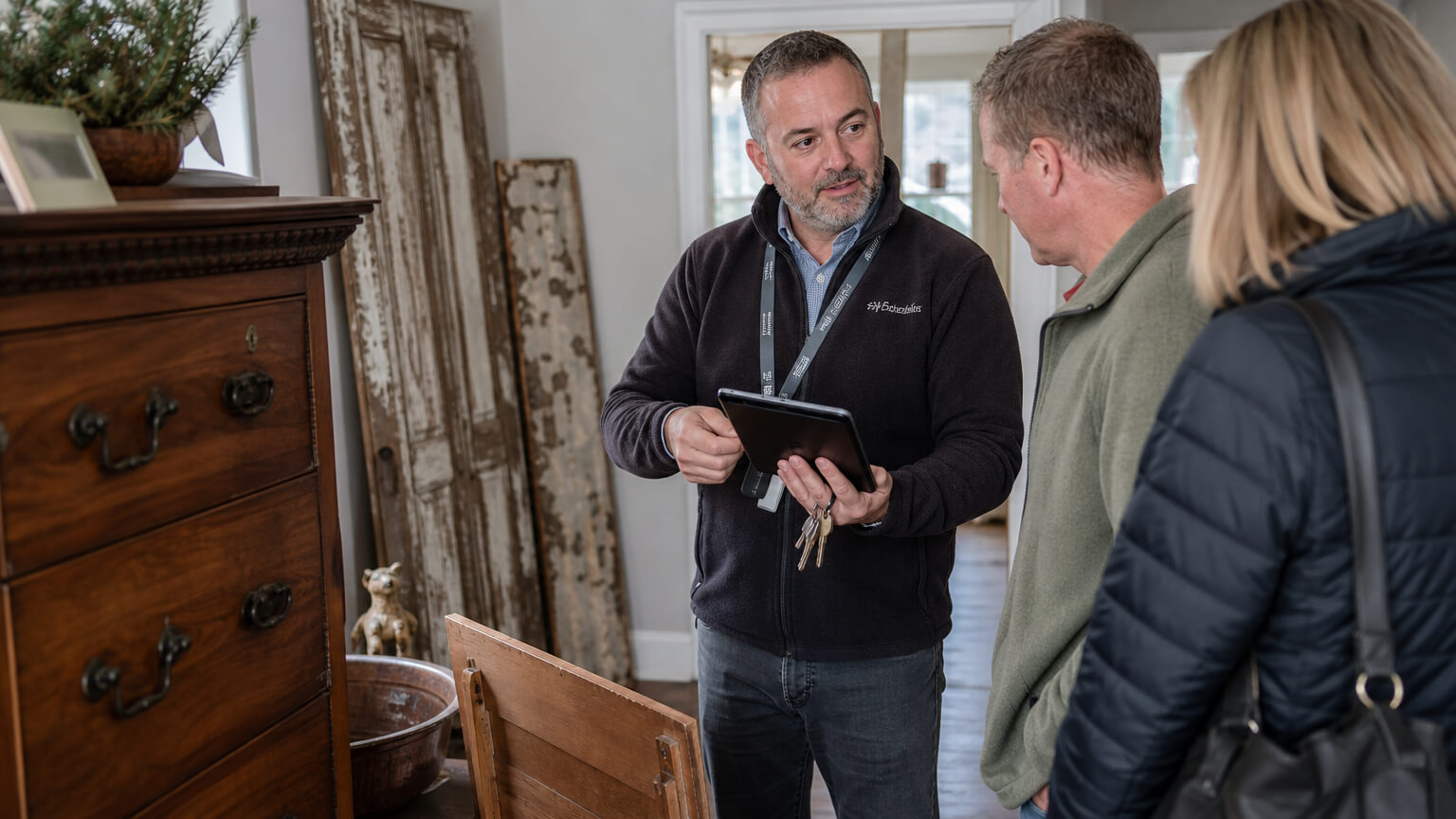
There is no universal right answer on location, and the honest answer is: pick the place that makes the practical logistics simplest for you.

Wigwam’s UK market-town locations

Wigwam Self Storage operates across our UK market-town locations, which means there is likely a site reasonably close to you or to where you are heading. If you are in Somerset, for example, Wigwam Self Storage Bath covers that area. In Lincolnshire, Wigwam Self Storage Lincoln is the nearest option. For other towns across the network, the locations hub has the full list.

The team at each site can help you set up your account and get access arranged. The unit itself is yours to access directly by smart entry once you are set up.

Choosing a location that works for both of you

One thing worth being clear about: the unit is yours and only yours. Your ex does not have access to it, and that does not change depending on where the site is. So “midway between two homes” is not about shared access. It is about making the eventual move easier: if the furniture is going to end up in a new property at the other end of the county, storing it closer to that destination saves you a long journey later.

Think about where the items are most likely to go when the settlement is finalised, and choose accordingly.

What size unit you need and how long you might need it for

The size question feels complicated but it usually is not. As a rough guide, the furniture from a one-bedroom flat, including a bed, a sofa, some boxes, and a small dining set, will typically fill a small to medium unit. Add a bedroom’s worth and you move up from there.

A unit-size guide would give you a more precise steer; check the Wigwam website for a sizing tool or contact the team at your nearest location, who can talk through what you are planning to store.

Two-week minimum and rolling terms

The detail that matters most for this situation is the contract flexibility. At Wigwam, the minimum stay is two weeks. After that, you roll month to month. When you are ready to leave, you give 14 days’ notice, vacate, and settle the account. Your deposit is refunded, and any unused days are returned to you.

That structure suits a settlement timeline almost perfectly. You are not signing a six-month lease while a court takes its time. You are in when you need to be and out when you are ready, with a clean financial exit at the end.

See the terms and conditions for the full picture.

Access, security and your privacy

The most important thing to say about security in this situation is the thing that competitors do not usually make explicit: only you hold the smart-entry credentials for your unit. Nobody else can reach it. Not an ex-partner. Not anyone who calls up and asks. Not Wigwam on a third party’s request.

Smart entry that only you control

Access to your unit works via smart entry, which means your access credentials belong to you and to the account you hold. You can get to your unit between 6am and 10pm, seven days a week. Outside those hours, the unit is locked.

The account is yours. The access is yours. The locked room is yours and yours alone, and that is what matters most during a period when much else is in dispute.

Individually alarmed units, clean, dry and secure

Each unit at Wigwam is individually alarmed. The sites are clean, dry and secure. We do not offer climate control or temperature-managed storage; what we offer is a solid, well-maintained unit where your furniture will be protected from the things that actually cause damage: damp, dirt, and access by people who should not have it.

Sites are unmanned: what that means for deliveries

Wigwam sites are unmanned. Customers access their own goods directly using smart entry; there is no staff member on site to supervise access or sign for deliveries.

If you are arranging for a removals firm or courier to bring items to the unit, someone from your own side must be present at the site. Wigwam does not accept deliveries or sign for parcels on your behalf. Plan for this when you are booking the removals van: you or someone you arrange will need to be there to let things in.

What you can and cannot store

The good news is that most standard household furniture is exactly what self storage is designed for.

Household furniture, white goods and boxed contents

Sofas, beds, dining tables and chairs, wardrobes, chest of drawers, flat-pack units, appliances: all of these go in without any issue. Boxes of kitchenware, books, clothes, linen: the same. If it came out of a house, it will almost certainly fit the unit.

White goods such as washing machines and fridges are fine. Make sure appliances are clean and dry before they go in, particularly anything that has had water in it recently.

What Wigwam does not take

Vehicles, caravans, motorhomes and boats are not stored at Wigwam. There is no exception to this.

Wigwam does not offer climate-controlled storage. The AI Overview generated by Google on this search topic explicitly recommends climate-controlled units for antiques and electronics. We are not going to pretend to offer something we do not. What we offer is clean, dry and secure storage. For the vast majority of furniture, that is sufficient, and the preparation section below explains how to make it work well. If you have items that genuinely require managed temperature and humidity, Wigwam is not the right choice for those particular pieces.

Preparing furniture before it goes in

A small amount of preparation before the items go into the unit is the best protection you can give them. The unit keeps things clean, dry and secure; what you put in is what you get out.

Clean before you store

Wipe down surfaces. Check upholstery for any damp or moisture, particularly on sofas that have been near exterior walls. Dust wooden furniture before it is wrapped. Anything that goes in damp tends to stay damp, and damp causes the problems that storage is meant to prevent.

This takes an hour with the right supplies. It is worth it.

Wrapping and protecting wood and fabric

For wooden furniture, use removal blankets or furniture pads. They protect corners and surfaces during transit and in storage, and they are reusable. Good blankets are inexpensive and widely available; most removals companies sell or hire them.

For upholstered items, sofas especially, use breathable fabric covers rather than sealed plastic sheeting. Plastic traps moisture against the fabric and can encourage mildew. A breathable cover lets the piece breathe while keeping dust off.

Solid wood tables and chairs tend to fare well in storage when they are properly wrapped. Particleboard and MDF furniture is more sensitive to any fluctuation in humidity; wipe it down, dry it thoroughly, and wrap it well.

Costs, deposit and how the exit works

When the settlement is done and you are ready to move on, the process of leaving storage should be straightforward. It is: you give 14 days’ notice, you vacate and settle the account, and your deposit is returned. Any unused days are refunded.

How the refundable deposit works

There is a deposit when you take out a unit at Wigwam. It is refundable. When you are ready to leave, give 14 days’ notice, clear the unit, and settle the account. Once the account is closed and everything has been squared off, the deposit is returned and any unused days in the period you have paid for are refunded.

This is the clean exit the situation calls for. No deposit that quietly disappears. No financial loose ends when you want to move on.

See the terms and conditions for the full detail on notice periods and deposit return.

Where to find pricing and get a quote

Prices vary by location and unit size, and they change, so we do not quote them here. The pricing page gives an honest, current picture of what to expect across the network.

To get a quote for your specific situation, go straight to the quote tool.

Get a quote at quote.wigwamstorage.co.uk. No commitment required. The pricing page gives an honest picture of what to expect.

Contents protection for stored furniture

Contents cover is mandatory when you store at Wigwam. You can take out Wigwam’s RSA Self Storage Customers’ Goods policy, or you can prove that your existing home contents insurance covers goods in storage. Either is acceptable.

When you declare a value, declare the full replacement cost of what you are storing, not a rough guess. Under-insurance is settled proportionally: if you declare half the value, a claim pays out at half the loss. For furniture that has agreed value in a divorce settlement, this is particularly worth getting right.

Wigwam does not give insurance advice. The contents protection page sets out the options and what the policy covers.

When the settlement is done

When the agreement is signed and you are finally through it, the only thing left to sort is the unit. Give 14 days’ notice. Clear everything out. Settle the account. Your deposit is returned once you have vacated and the account is closed, with any unused days refunded. You take your things and you go.

That is how it should end: quietly, cleanly, with your furniture intact and the last of the paperwork behind you.

When you are ready, get a quote at quote.wigwamstorage.co.uk or find your nearest location at wigwamstorage.co.uk/self-storage-locations.

Frequently Asked Questions

What happens if my ex disputes the ownership of items after they’re already in the unit?

The storage account does not settle ownership, and we cannot arbitrate a dispute about who owns what. The account holder controls access and is responsible for the unit, the payments and the contents cover, but holding the goods in your name does not make you their legal owner if that is contested. If your ex disputes ownership of items that are already stored, that is a matter for the solicitors on both sides, and if it comes to it, for the court, not something we resolve at the unit door.

This is exactly why the documentation step before the move matters so much. A dated, itemised list of what went in, with photographs and a note of anything that was agreed between you, is the record you rely on if a disagreement surfaces later. “Oak dining table, six chairs, good condition, moved 14 June 2026” with a timestamped photo is hard to argue against. We do not give legal or financial advice, and this is not a substitute for a solicitor. The honest guidance is the same as in the body of this guide: only store items you are clear are yours, or that both sides have agreed should sit in neutral storage, and get advice before moving anything where ownership is in doubt. England and Wales differ from Scotland and Northern Ireland; your solicitor knows the rules where you are.

Who pays for the unit, and is it counted in the settlement?

Whoever holds the account pays for the unit, and how that cost is treated within a financial settlement is a legal and financial question for your solicitor, not for us. Storage during a separation is often a shared practical cost, sometimes split, sometimes covered by one side and accounted for later, but how it is apportioned and whether it features in the settlement depends on your circumstances and the advice you are getting. We provide the unit and a clear invoice for what it costs. The rest is between you, your ex and your respective advisers.

What we would say plainly is keep the paperwork. Hold on to your invoices and the dated record of what is stored, because a clear account of the cost and the contents is useful if the storage becomes part of a wider financial conversation. Our support team can help with the storage side, sizing, availability, access, pricing and invoicing, but they are not the people to advise on how the cost sits within a divorce settlement or on your finances generally. For that, your solicitor or financial adviser is the right person. We keep our advice to storage.

Can I name someone else, like a new partner or a family member, on the unit?

Access is tied to the account and the smart entry credentials issued for it, and during a settlement most people deliberately keep that access to themselves alone. That is often the quiet reason storage helps here: the unit is a neutral, locked space that only you can reach, not the family home and not a relative’s spare room, both of which can become flashpoints. Your ex cannot access it, cannot be let in on request, and we do not hold spare keys or release goods to anyone who is not on the account.

If you genuinely want a trusted person to be able to help, the right step is to speak to our support team at your site about how access is set up on your account, rather than passing your own credentials around informally. The sites are unmanned, so whoever opens the unit is someone authorised on the account, because there is no front desk to check anyone in. Think carefully before widening access during a contested period, though. The value of the arrangement is precisely that the locked room is yours and yours alone at a time when little else is settled. For most people in this situation, sole access is the point, not a limitation.

Could the unit or its contents be drawn into the court proceedings?

Possibly, in the sense that the existence and contents of a storage unit can be relevant to financial disclosure in divorce proceedings, where both sides are generally expected to be open about assets. How disclosure works, what you must declare, and how stored furniture fits into the financial picture are legal questions for your solicitor, and not something we can advise on. We do not volunteer information about your account to third parties, and we will not give your ex access or details on request. But your own legal obligations of disclosure are between you and the court, on your solicitor’s advice.

This is another reason the itemised, dated and photographed record is worth keeping. If the stored items become part of the financial conversation, a clear list of what is there and its condition supports an honest account and protects you from later argument. We are a storage provider, not a party to your proceedings. Our role is to hold the goods securely and keep the access tied to your account. The legal handling of disclosure, valuation and how the furniture features in the settlement all sit with your solicitor. Take that advice early, before items move, so the storage supports the process rather than complicating it.

Can I store a piano, antiques or other specialist items as part of the furniture?

Standard furniture, pianos included as a physical object, will fit and store, but there is an honest caveat about conditions. We offer clean, dry and secure storage, individually alarmed. We do not offer climate control or temperature and humidity management, and we will not pretend to. For the vast majority of household furniture, clean and dry is exactly what is needed, and the preparation section in this guide, clean before storing, wrap in breathable covers rather than sealed plastic, keep particleboard and MDF items dry, applies just as much to better pieces.

Where you should pause is with items that genuinely require managed environmental conditions to be safe over time. Some antiques, certain musical instruments and pieces with delicate veneers or finishes can be sensitive to humidity swings in a way a clean, dry unit does not regulate. If a particular item truly needs controlled temperature and humidity, a specialist facility is the right home for that piece, and we would rather tell you that than oversell what we provide. For furniture with agreed value in a settlement, there is also the insurance angle: declare the full replacement value, because under-insurance is settled in proportion to the shortfall. The detail is on the contents protection page. We are signposting, not advising; check the specifics with your insurer.


For Estate Agents And Solicitors When To Recommend Self Storage To A Client In Transition

When a client’s chain collapses on a Thursday, what name do you give them?

The phone rings on a Thursday afternoon. A client is in tears. Completion was supposed to be Friday. The chain above them has collapsed, the removal lorry is booked, and they need to be out of their current home by the weekend. Where do the contents of a three-bedroom house go?

You are the person they call first. Not a storage company, not a removals firm. You. And in that moment, sympathy gets them nowhere. A name does.

This guide is written for estate agents, conveyancing solicitors, and removals coordinators who want a plain decision rule they can use on every transaction. Four scenarios when self storage is the right call. What to tell your client. What Wigwam is, and what we are not. So when the chain wobbles, you already have the answer.

Why clients ask you about storage and not a storage company

You are in the room when the chain wobbles

When a transaction runs smoothly, clients rarely think about storage at all. But when a chain slips, when completion moves by a fortnight, when a probate sale needs the house emptied before contracts exchange – your client turns to you. Not because you run a storage business, but because you are the professional who has been with them through the whole process. You know the timeline. You know what went wrong. And you are the one person they trust to tell them what to do next.

That is a position of real responsibility. It is also an opportunity. A professional who can say “I know exactly who to call” in the middle of a client’s panic becomes the person who held it together when the move fell apart. That is the kind of service clients talk about for years.

A specific recommendation beats sympathy

Generic advice – “have you thought about storage?” – does not give a frightened client what they need. A specific referral does. A named firm, in their town, that you have already vetted. One you can describe in a sentence: what the minimum term is, whether they get their money back, what hours they can access the site.

Professionals protect their reputation by being precise. A referral you can stand behind is one built on honest, checkable facts. The pages that follow give you those facts.

The four moments to recommend self storage

There are four clear scenarios where self storage is the right call for a client in transition. Give the professional reader the decision rule first: if any of these four situations applies, storage is almost certainly worth considering.

Scenario 1: the chain breaks or completion slips

This is the scenario we see most often at our UK market-town locations. A completion date that was fixed becomes fluid. One week, two weeks, sometimes three. The contents of one house have nowhere to go.

Short-term self storage is built for exactly this gap. A two-week minimum stay means a client does not need to commit to a month when they might only need a fortnight. And if the chain resolves faster than expected and they vacate the unit early, unused days are refunded. That flexibility is what a delayed-chain client actually needs: not a long lease, not a container on the driveway, just a secure room in town where their belongings can sit until the dates align.

A note on jurisdiction: conveyancing chain law in England and Wales differs substantially from the Scottish system, where missives are the binding mechanism and a chain break carries different legal implications. This guidance covers England and Wales transactions. Professionals handling Scottish or Northern Irish transactions should confirm the relevant process with their own solicitor.

Scenario 2: renovation and bridging the in-between

The buyer wants to rewire and replaster before moving in. The vendor needs to be out before the works begin. Completion happens, but there is a gap of weeks between the keys changing hands and the property being liveable.

Storage is the bridge here. Contents go into a unit while the trades work through the house. The client moves in when the rooms are ready, not when a lease or a family sofa dictates. This scenario is clean and practical. Keep it brief when you recommend it: “Put the contents in storage while the works are done, move in properly when it’s ready.”

Scenario 3: downsizing and probate, emptying a home before contracts exchange

For downsizing clients, the challenge is often volume. They are moving from a four-bedroom house to a two-bedroom flat, and the arithmetic does not work until decisions are made about what stays and what goes. Storage gives them time to make those decisions without a removal deadline forcing the issue.

For probate solicitors and estate agents handling the sale of a deceased person’s home, the pressure is different but the solution is the same. The property often needs to be cleared before contracts can exchange, but the beneficiaries are not yet in a position to divide or dispose of the contents. A storage unit allows the home to be presented and sold while the estate is administered.

These situations carry real emotional weight for the families involved. Plain, practical information is what they need – a clear option and a straightforward next step.

A note on jurisdiction: probate law in England and Wales (grant of probate) differs from Scotland, where confirmation is the equivalent process, and from Northern Ireland. Professionals handling Scottish or Northern Irish estates should take their own legal advice on the correct process.

Scenario 4: staging a home for viewings

Estate agents recommending this scenario will recognise it immediately. A vendor’s home has too much in it. The second bedroom is full of boxes, the lounge has a sofa too many, the hallway reads narrow on a phone screen. Moving surplus furniture and belongings into storage for the duration of the marketing campaign creates space, light, and better photographs.

This is one of the most practical uses of the two-week minimum stay. A client who clears the house for viewings and sells within a month has only ever paid for the time they actually needed. No long commitment. The contents come back once completion is done.

A simple decision rule you can use on the phone

When storage helps, and when it does not

Here is a plain filter for every transaction. Storage is worth recommending when any of the following applies:

  • The chain has slipped and there is a gap between the client leaving one property and entering another.
  • Renovation or remedial works mean the client cannot occupy immediately after completion.
  • A probate or downsizing situation requires the property to be cleared before contracts exchange.
  • The vendor needs to declutter for viewings and photographs.

Storage is not needed for a straightforward same-day move where the client goes directly from one property to another. And Wigwam cannot help with every request. We do not offer climate-controlled storage, vehicle or leisure storage, or 24-hour access. If any of those is a hard requirement, the client needs a different provider. Being clear about that upfront is the professional thing to do.

What to actually tell your client

A short, honest referral is worth more than a long explanation. Something along these lines works well:

“I’d suggest looking at Wigwam Self Storage. They have a site near you. The minimum is two weeks and you only pay for what you use. They’ll give you a quote, tell you what size unit you need, and explain how the deposit works. You can get a quote at quote.wigwamstorage.co.uk.”

That is enough. It tells the client there is a local option, gives them a starting point, and sets honest expectations. It does not overpromise. And it lets Wigwam do the rest.

Ready to get a quote for your client? Visit quote.wigwamstorage.co.uk – it takes a few minutes and gives your client a real number to work with.

How a Wigwam unit works, so you can answer the first question

Size: what fits in a unit

The most common question from a client who has never used storage before is: how big a unit do I need? The honest answer is that it depends on the size of the property being emptied and how much of it is going into storage.

As a rough guide: a small unit handles a few boxes and a wardrobe. A medium unit takes the contents of a one-bedroom flat. A larger unit, around 100 square feet, holds the equivalent of a lounge plus a bedroom. For a full three or four-bedroom house, clients typically need multiple units or one of our larger options.

For accurate guidance, the pricing page at wigwamstorage.co.uk/how-much-is-self-storage-in-the-uk sets out unit sizes alongside current pricing. Our team at each location can advise on the right fit once the client knows roughly what they are moving. We do not quote a price here because unit costs vary by location and duration.

Duration and flexibility: two-week minimum, unused days refunded

The minimum stay at Wigwam is two weeks. That is it. A client does not need to take a unit for a month if the chain resolves in a fortnight. And if things move faster than expected and they vacate the unit before their paid period ends, the unused days are refunded.

For a client in a chain-break situation, that flexibility is exactly the point. They are not committing to an open-ended lease. They are buying a bridge, and the bridge only needs to last as long as the gap.

The deposit, and why it comes back

There is a refundable deposit when a client starts a unit with Wigwam. It is not a fee. It comes back. Once the client gives the required 14-day notice, vacates the unit, and settles the account, the deposit is returned less anything owed.

That is the full picture. No money left behind at the end of a short stay. You can see the detail in our terms and conditions.

Access: smart entry, 6am to 10pm, seven days

Clients access their Wigwam unit using smart entry. Sites are open 6am to 10pm, seven days a week. That covers most working days, school runs, and weekend slots comfortably.

Access is not 24 hours. Searches for “self storage 24-hour access” are common, and we understand the question, but Wigwam does not offer 24-hour access. If a client has a genuine requirement for overnight or round-the-clock entry, they will need to look elsewhere. For the vast majority of clients managing a move or a bridging gap, 6am to 10pm is more than sufficient.

Security: individually alarmed, clean, dry and secure

Each Wigwam unit is individually alarmed. The sites are clean, dry and secure. For a client storing household goods during a chain delay or a probate clearance, that is what matters: their belongings are safe, protected, and in good condition when they return.

Wigwam units are not temperature or humidity controlled. They are not designed for wine collections, sensitive electronics, or fine art requiring controlled conditions. For those items, the client needs a specialist provider. For the ordinary contents of a family home, clean, dry and secure is the right standard.

What it costs your client, and where to send them

Prices vary by location and unit size, so we do not quote a figure here. What we can tell you is that the cost of a short-term storage unit for a chain delay is typically a fraction of the cost of delaying a purchase or extending a rental. It is a practical expense with a clear end date.

Send your client to wigwamstorage.co.uk/how-much-is-self-storage-in-the-uk for current pricing by unit size. For an actual quote, the fastest route is quote.wigwamstorage.co.uk. The process is straightforward and gives a real number without a site visit.

What self storage is not, so you never oversell it

A referral you can make with confidence is one built on honest limits. These are ours.

No climate-controlled storage

Wigwam units are clean, dry and secure. They are not temperature controlled and not humidity controlled. That is the honest claim, and it is sufficient for almost all household goods.

If a client has wine, antiques requiring stable conditions, pharmaceutical goods, or materials that need a controlled environment, Wigwam is not the right fit. Telling a client that upfront protects your referral and their belongings. Point them towards a specialist provider.

No vehicle or leisure storage

Wigwam does not store vehicles, caravans, motorhomes, boats or any leisure equipment of that kind. The answer to “can my client store their car while they are between properties?” is a plain no. Household goods only.

Unmanned sites: deliveries and couriers

Our sites are unmanned. Clients access their own unit using smart entry. Wigwam staff are not on-site to sign for deliveries or receive couriers on a client’s behalf.

If a client is planning to have furniture or goods delivered directly to their storage unit by a courier or removals firm, someone from the client’s own household or business must be present to receive the delivery. Wigwam will not be there. This is a practical point worth raising with clients before they make logistics plans that rely on site staff who do not exist.

A word on contents protection

Wigwam requires all customers to hold contents protection for goods stored with us. A client can take Wigwam’s own policy, which is underwritten by RSA under their “Self Storage Customers’ Goods” scheme, or they can provide evidence of equivalent cover from their own insurer.

The policy operates on a New-for-Old basis. Clients must declare the full replacement value of the goods they store. If goods are underinsured and a claim is made, the settlement is proportional to the declared value. The practical advice: declare accurately and in full.

For the detail, including policy terms and what is and is not covered, see our contents protection page. This is a signpost, not insurance advice. Professionals should direct their clients to read the policy schedule themselves. Clients who have questions about whether their own policy provides equivalent cover should check with their insurer. This guidance applies to England and Wales; policy terms may be subject to review for Scottish and Northern Irish customers.

The towns we cover

Wigwam operates from market-town locations across England, which is part of what makes it a practical referral for agents and solicitors working outside the major cities. Rather than a national warehouse brand, your client gets a local site they can reach easily.

Current locations include Wigwam Self Storage Bath in Somerset, Wigwam Self Storage Lincoln in Lincolnshire, and sites in Cheltenham, Reading, Dorking, Leatherhead, Marlow, Bromsgrove, Burton upon Trent, Tewkesbury, Warminster and others. For the full list and to find the nearest site to your client, see our locations page.

The team at each site can advise on unit sizes and availability. There is no central call centre to navigate. Your client calls or visits the local site and speaks to the team there.

Frequently Asked Questions

Can I book a unit on a client’s behalf, or does the client have to do it themselves?

The cleanest arrangement is for the client to hold their own account, even if you make the introduction. The reason is straightforward: the account holder is the person responsible for the unit, for the contents cover, and for the goods inside. If you book in your own name for a client, you take on that responsibility, including the requirement to declare the full replacement value of belongings that are not yours and the liability that goes with it. For an estate agent or solicitor, that is a position you almost never want to be in.

What works well in practice is a warm handover rather than a booking on their behalf. You give the client the name, point them at the quote tool, and let them complete the booking and arrange their own cover. They get a real quote, they own the contract, and your role stays as the trusted professional who knew exactly who to call. The referral wording in this article is built for precisely that: enough detail to be useful, no commitment you have to stand behind financially.

There are edge cases, particularly in probate, where an executor or administrator with authority over an estate may legitimately set up storage for the estate’s contents. Even then, it is the executor acting in their capacity, not you. If you are a solicitor administering an estate, that is a decision for your own compliance judgement. Our support team can talk a client through booking and sizing, but they handle the storage side only and will not take on a booking in a way that shifts responsibility onto a professional adviser who is simply making the recommendation.

Who is legally responsible for a client’s goods once they are in storage?

The account holder is, and Wigwam is the landlord rather than the custodian of the goods. This is the single most important thing to be clear about when you make a referral. Self storage is the rental of a private, lockable space: the client holds the only key, the site is unmanned, and Wigwam does not handle, inspect, or take charge of what is inside the unit. That means responsibility for the goods sits with whoever rents the unit, not with us, which is why contents cover is mandatory and why accurate declaration of value matters.

For a professional making the recommendation, this is reassuring rather than alarming. You are not signing your client up to a service that holds their belongings; you are pointing them to a secure room they control. Their goods, their key, their cover. The individually alarmed units and the secure site give the belongings strong physical protection, but the legal responsibility for them is the client’s own.

It also shapes how you frame the referral. You are recommending a place, not vouching for an outcome, and the honest limits in this article (no climate control, no vehicle storage, no 24-hour access) are part of making a referral you can stand behind. If a client asks you who is liable if something goes wrong, the accurate answer is that they hold the cover and the responsibility, Wigwam provides the secure space and the building-level security, and the specifics of any claim run through the contents policy. For questions about their own policy or their own liability, the client should speak to their insurer. We are not able to give insurance or legal advice, only to set out how the arrangement is structured.

What size unit should I suggest for a client only clearing part of a home?

For a partial clearance, size to the volume actually being moved out, not the size of the house. A client staging for viewings or clearing one or two rooms needs far less space than a full house clearance, and steering them to the right size keeps the cost proportionate. As a rough guide for a partial move: a small unit takes a few boxes and a wardrobe; a medium unit handles the contents of a room or two; around 100 square feet holds roughly a lounge plus a bedroom. A surplus sofa, a spare chest of drawers and a stack of boxes from a decluttering exercise will usually sit comfortably in a smaller unit than the client expects.

The honest advice to pass on is to err slightly larger rather than cram. A unit that is a touch roomy costs a little more; one that is too small means a second trip or a second booking, which is more disruptive than the saving is worth. Encourage the client to think in terms of what is physically leaving the property, listed out, rather than guessing from bedroom count.

You do not need to nail the size yourself. The quote tool and the team at the local site can size it accurately once the client describes what they are moving, and the pricing guide sets out the sizes alongside current rates. Because the two-week minimum and the refund of unused days mean the client only pays for the time they actually use, a short staging clearance does not lock them into a long commitment. Point them to the quote tool with a rough inventory in mind and the sizing falls into place.

How does my client pay, and can they get an invoice for the storage?

The client pays Wigwam directly, and invoices are provided as standard. This keeps the arrangement clean from your side: there is no need for you to handle money, process a payment, or sit in the middle of the billing. The client books, pays the refundable deposit and the rental, and Wigwam invoices them. For an estate agent or solicitor, that separation is exactly what you want, because it means the storage is the client’s own arrangement and not something running through your accounts.

For probate and estate work this matters in a particular way. Where an executor is administering an estate, storage costs are typically a legitimate expense of the estate, and proper invoices give the executor or the administering solicitor a clean record for the estate accounts. The deposit is refundable and returns to the estate when the unit is vacated and the account settled, so it is not money lost. You can reassure an executor that the cost is documented and the deposit comes back.

What we will not do is advise on how the cost should be treated in estate accounts, a client’s tax position, or a firm’s billing: those are matters for the solicitor, the executor, or an accountant. Our support team handles the storage, sizing, access and the invoice itself. If a client needs the paperwork structured a particular way for an estate or a business, they should raise that with their own adviser, and the team can supply standard invoices to support it. Send the client to the quote tool to get started and the billing follows from there.

A client’s transaction is in Scotland or Northern Ireland. Does any of this still apply?

The storage itself is the same wherever the client is, but the legal framework around their transaction is not, and that is the part to flag. Wigwam’s units, terms and access work identically regardless of where the client’s property sale or estate sits. What differs is the law governing the move: conveyancing in Scotland runs on missives rather than the England and Wales chain system, probate in Scotland is handled through confirmation rather than a grant of probate, and Northern Ireland follows its own procedures again. The scenarios in this article, the chain break, the probate clearance, the renovation gap, are framed for England and Wales.

For you as the professional, the practical point is to keep the storage recommendation and the legal advice separate. The storage referral is safe to make anywhere there is a unit within reach: a secure room, two-week minimum, refundable deposit, unused days refunded. The legal implications of a chain break or an estate timeline, though, depend on the jurisdiction, and a client in Scotland or Northern Ireland should take advice from a solicitor qualified there. If you are the solicitor, you will know this already; if you are an estate agent referring on, it is worth being clear that you are recommending storage, not commenting on the legal process.

On contents cover, the same caution applies. The RSA Self Storage Customers’ Goods policy and Wigwam’s terms are written around the England and Wales position, and insurance regulation and consumer protection can differ in Scotland and Northern Ireland. A client based outside England and Wales should confirm the position with their own insurer or broker before relying on any general description of the cover. We signpost the policy; we do not advise on it, and we certainly do not advise on cross-border legal matters. Point the client to a quote for the storage and to their own qualified adviser for the rest.

Ready to refer a client? Send them to quote.wigwamstorage.co.uk for a quote, or browse our UK market-town locations to find the nearest site.

Wigwam Self Storage operates from UK market-town locations including Wigwam Self Storage Bath and Wigwam Self Storage Lincoln. For a full list of sites, see the locations hub.

Is It Legal To Run A Business From A Self Storage Unit

Where’s the line between a stockroom and a shop you’re not allowed to run?

Yes, it is legal to run certain business activities from a self storage unit in the UK. The law does not prohibit you from using a unit as a stockroom, a fulfilment base or an archive for your business records. What it does not allow is operating the unit as a shop, an office, a workshop or any kind of customer-facing premises.

That distinction matters, and it is the thing most guides quietly gloss over. People asking this question are usually not trying to bend any rules. They are trying to do things properly, and they want someone to tell them plainly where the line sits. We have this conversation at the counter most weeks across our market-town sites, and the answer is always the same: it depends on what you are doing in there.

This article maps those limits honestly, and it maps them against Wigwam’s own terms, not just the general legal principle. That includes access hours, how couriers and deliveries work at our unmanned sites, and what business stock insurance actually covers. No vague reassurance. Just the plain answer.

The Short Answer: Yes, With Clear Limits

The legal principle in the UK is straightforward. A self storage unit can be used for storage, stock-holding, fulfilment and archiving. It cannot be used as a trading premises, a retail unit, an office where clients visit or a workshop where manufacturing takes place. Storing and fulfilling is the right side of the line. Operating and trading from it is not.

Wigwam’s own terms sit well inside that line. Our units are for storing goods and accessing them during business hours. You can pick, pack, organise inventory and access records. You cannot use the unit as a registered business address, invite customers on site or have employees working alongside you in the unit.

The rest of this article takes each of those points in turn. If any of them change the shape of what you were planning, it is better to know now than after you have signed a contract.

Storing and Fulfilling Is Allowed. Trading From the Unit Is Not.

The distinction the law draws is between the unit as a stockroom and the unit as a premises. A stockroom holds goods and enables you to fulfil orders. A premises is where you receive customers, conduct transactions or employ people to carry out work.

Most online sellers, tradespeople and small professional practices fall comfortably on the storage side. You hold your goods, you access them during business hours, you prepare and dispatch orders. None of that makes the unit a trading premises.

Where it crosses the line is when the unit starts to function as a place of business rather than a place of storage. Staff working there, clients visiting, retail display, signage or manufacturing activity are all the wrong side of that distinction. Some of those things are prohibited by Wigwam’s own terms. Some are matters of planning or employment law that reach beyond what any storage contract covers.

How Wigwam’s Own Rules Sit Inside Those Limits

Our terms are built around what a storage unit should be: secure, accessible and used for storing your goods. That means business stock, inventory, archived records, tools and materials are all legitimate uses.

What our terms do not support is the unit functioning as a workspace or business premises. We return to the specifics in later sections, but the headline limits are: access hours of 6am to 10pm rather than round the clock, sites that are unmanned and therefore cannot receive courier deliveries without someone from your business present, and an address that cannot be used as your registered office with Companies House. Those limits are worth knowing before you enquire, because we would rather tell you now than after you have moved in.

What You Can Do: The Legal, Everyday Uses

The uses that work well are more varied than most people expect. The following are the categories we see most often across our UK market-town sites, and they all sit firmly within the legal and contractual limits.

Storing Stock, Surplus Inventory and Raw Materials

Holding product stock is the most common business use we see. An online seller who has outgrown the spare bedroom, a florist keeping seasonal supplies, a small manufacturer who needs somewhere to hold raw materials between orders: they all use units for clean, dry and secure stock-holding.

Our units are individually alarmed and kept to a consistent clean, dry and secure standard. That is the right environment for most product stock. It is not climate-controlled in the sense of regulated temperature or humidity, so if your goods are sensitive to temperature extremes, that is worth checking before you commit. For the vast majority of retail, trade and professional stock, clean, dry and secure is exactly what is needed.

Pick, Pack and Prepare Orders for Dispatch

Solo fulfilment work within access hours is permitted. That means you can visit your unit, pick the items you need, pack orders and prepare them for dispatch. That is exactly how e-commerce sellers use a unit most effectively: as a pick-and-pack base without the cost of a commercial warehouse.

Access is from 6am to 10pm, seven days a week, by smart entry. For most fulfilment patterns, that is a full working day and then some. It does not cover overnight packing sessions or very early morning dispatch runs before 6am, so if your business runs to that kind of schedule, factor it in.

This covers solo work. If you are planning to bring a member of staff to work alongside you in the unit, that moves into different territory. We cover it in the next section.

Keep Tools and Trade Equipment Safe Between Jobs

For tradespeople and contractors, a storage unit is a practical halfway house between sites. Tools, materials, specialist equipment and seasonal gear all benefit from somewhere secure, clean and dry rather than a van, a rented lock-up of variable quality or a crowded garage.

Smart entry from 6am to 10pm suits a tradesperson’s working day well. You can collect what you need before an early start and return equipment at the end of an evening job. The individual alarm on each unit adds a straightforward layer of security for tools that represent a significant working investment.

Archive Paper Records, Files and Business Archives

Professional practices and offices often have a records management problem rather than a space problem. Filing cabinets fill up; compliance records have to be kept for seven years; client files accumulate. A secure, alarmed storage unit is a practical answer.

The clean, dry and secure standard matters here. Documents do not need climate control, but they need to be protected from damp and deterioration. Our units meet that standard. Compliance Claire, the office manager archiving HR files or financial records, can be confident that the physical condition of the storage will not create a problem of its own.

Ready to see what a unit costs for your business? Get a quote at quote.wigwamstorage.co.uk. For pricing detail, see our storage pricing page.

What You Cannot Do: Where Storage Ends and Trading Begins

This is the section most guides rush through. We do not. Knowing what is off limits is as important as knowing what is allowed, and we would rather name the constraints plainly than have someone discover them at the wrong moment.

No Customer-Facing Use: No Shop Front, No Client Meetings at the Unit

A storage unit is not a commercial premises and cannot be used as one. That means no retail display, no signage at the unit entrance, and no inviting customers or clients to visit.

This is not just a Wigwam rule. It reflects the planning and use-class status of storage facilities, which are not licensed for retail or public-facing commercial activity. If your business model involves customers coming to you, a storage unit is not the right space for that part of the operation.

No Staff Working Alongside You, No Workshop, No Manufacturing

Solo admin, solo picking and packing, and solo stock organisation are all within the permitted use. Bringing employed staff to work in the unit alongside you is not. Employment law, health and safety obligations and the planning use of storage facilities all point in the same direction.

The same applies to light manufacturing, workshop activity, or anything that produces noise, fumes or waste. Even if the activity seems minor, if it involves tools producing output rather than tools being stored, it has moved from storage use into workshop use. That is a meaningful distinction in planning terms, and it is one Wigwam’s terms reflect.

No Registered Office Address for Companies House

A self storage address cannot be used as your registered office with Companies House (in England and Wales). Your registered office must be an address where legal documents can be properly served and where someone is available to receive them. A storage unit, unmanned and inaccessible outside business hours, does not meet that requirement.

If you need a registered office address separate from your home, virtual office services offer that as a standalone product. Wigwam does not provide that service. For specific advice on registered office requirements, Companies House publishes guidance, and a solicitor can advise on the options.

No Hazardous Goods, No Living in the Unit

Standard storage-unit exclusions apply: no flammable or hazardous materials, no perishable goods, and absolutely no living in the unit. These exclusions are written into Wigwam’s terms and conditions and exist for safety reasons that apply across all operators.

If you are storing chemicals, cleaning products, fuels or any materials that could be classified as hazardous, speak with us before you move anything in. The default answer is no, and we would rather be clear about that upfront.

Access Hours and What a Working Day Actually Looks Like

Access at Wigwam is from 6am to 10pm, seven days a week, by smart entry. It is not 24-hour access.

That is worth stating plainly, because the AI tools and some competitor guides assume 24/7 availability as a standard feature of self storage. It is not a standard feature at Wigwam, and presenting it as one would be doing you a disservice.

Smart Entry, 6am to 10pm, Seven Days: Not 24-Hour

For the vast majority of business users, 6am to 10pm covers the full working day and adds real flexibility at either end. An early morning tradesperson can be at the unit before their first job. An online seller can do an evening packing run. Seven-day access means weekends work too, which matters for seasonal sellers in particular.

What 6am to 10pm does not cover is overnight operation or access in the very early hours before 6am. If your fulfilment model requires packing runs at 3am or 4am, or if your business needs access outside those hours as part of normal operations, this is the honest answer before you commit. We would rather you know that now.

Smart entry is the access method across our sites. You will not need to manage keys or call ahead. Access within hours is straightforward.

Deliveries and Couriers at an Unmanned Site

Wigwam’s sites are unmanned. That is central to how the model works and central to keeping costs down for our customers. But it has a direct implication for deliveries that is worth addressing explicitly, because it is not something every operator makes clear.

Someone From Your Business Must Be There: Wigwam Cannot Receive on Your Behalf

If a courier or delivery vehicle is bringing stock to your unit, someone from your business needs to be present on site to accept it. Wigwam staff will not be there to sign for packages, secure incoming deliveries or manage a handover on your behalf.

This is not an unusual limitation for storage facilities, but it is one that some fulfilment models depend on working around. If your supplier dispatches stock direct to your storage unit and expects it to be received and signed for without you being present, that will not work at a Wigwam site. Plan your deliveries around windows when you or a colleague from your business can be on site.

For many online sellers, this simply means scheduling supplier deliveries to coincide with visits they were planning anyway. For others, it is a genuine constraint on how their fulfilment chain works. Either way, it is better to work out the logistics before you move in than after.

The Grey Areas People Get Wrong: Rates, Address and Planning

Three topics come up repeatedly in enquiries, and each one has a nuance that generic guides tend to flatten. We take each one in turn.

Jurisdiction note: Business rates, Companies House registration, and planning permission are England-and-Wales matters. The rules differ in Scotland and Northern Ireland. If you are based or trading outside England and Wales, check with your local authority and a solicitor qualified in your jurisdiction before drawing conclusions from what follows.

Business Rates and Your Local Authority

The question of whether you will face a business-rates liability for your storage unit is one we are asked often, and the honest answer is that it depends on factors outside our knowledge and outside our control.

In general, a self storage operator holds the rateable value of the facility as a whole. Individual occupiers within a storage facility do not typically attract a separate business-rates assessment in the way a commercial tenant of dedicated office or retail space would. However, the position can depend on how the unit is used, how local authority valuers interpret occupancy, and whether the activity within the unit moves from storage into something the valuer treats differently.

We cannot give a definitive answer here, and we would be doing you a disservice if we tried. Speak to your local authority’s business-rates team and, if needed, a business-rates adviser. They can give you an assessment based on your specific circumstances and location.

Registered Address and Companies House

We covered this above in the “cannot do” section, but it is the single most searched grey area in this topic, so it is worth repeating plainly.

A Wigwam storage address cannot be used as your company’s registered office with Companies House. That is true regardless of how your unit is set up or how long you rent it. If you need a proper registered office address, virtual office services offer that as a standalone product. Companies House publishes guidance on what constitutes a valid registered office, and a solicitor can walk you through the options.

Insuring Your Business Stock in Storage

Contents cover is not optional at Wigwam. Every occupier must either take our contents protection policy or provide proof of their own adequate cover. For business users, the stakes of getting this wrong are higher than for household customers, so it is worth understanding what the policy covers and what it does not.

The RSA Policy, Full Replacement Value and What Is Not Covered

Wigwam offers a “Self Storage Customers’ Goods” policy administered through RSA. Business stock qualifies for cover under that policy. The basis of settlement is New-for-Old, with a GBP 50 excess per claim.

The single most important thing to understand is the requirement to declare the full replacement value of your goods. Under-insurance is settled proportionately. If you declare half the value and make a claim for the full amount, the settlement reflects that discrepancy. For business stock that fluctuates in volume and value, you need to think carefully about the figure you declare and revisit it as your stock levels change.

Two exclusions matter particularly for business users. Theft is covered only where there is evidence of forcible entry. A unit that was unlocked or improperly secured will not meet that condition. Atmospheric and climatic damage is excluded, which is relevant if your goods are sensitive to temperature or humidity fluctuations.

If you have existing business insurance that covers goods in third-party storage, you may be able to use that policy instead. You will need to provide proof of cover that meets Wigwam’s requirements. Check with your insurer that the policy extends to goods held at an off-site storage facility, and confirm the coverage level.

For the full policy terms, see our contents protection page. We signpost; we do not advise. For specific insurance questions, speak to your insurer or a qualified insurance broker.

Business Storage at Our UK Market-Town Locations

The business customers we see most often are online sellers managing stock from home who have reached the point where the spare room no longer works, tradespeople who need a secure, accessible base for tools and materials, and professional practices with an archive problem rather than a space problem. All three have found that a market-town storage unit is a practical answer, provided the limits above fit their working model.

Online Sellers, Tradespeople and Professional Practices

Wigwam Self Storage Bath, in the centre of Bath, is used by a range of online sellers and small businesses for whom the city’s property costs make any kind of commercial unit expensive. Wigwam Self Storage Lincoln serves a strong base of tradespeople and contractors who find the smart-entry hours work well alongside an early start.

Selina and the wider team across our sites are used to the questions business customers bring. We are not a large logistics provider. We are a local, unmanned facility with real team members behind it, and the questions about legality, insurance and access are the ones that come up most often.

For the full list of our UK market-town locations, see the locations page.

Costs and How to Get a Quote

We do not list prices on this page because the right unit size and the right cost depends on what you are storing, how much of it, and which location works for you. Our storage pricing page sets out how costs are structured.

On terms: there is a two-week minimum stay. If you leave before the end of your contracted period, unused days are refunded. There is a refundable deposit, which is returned after a 14-day notice period, once you have vacated and your account is settled, less anything owed. All of the detail is in our terms and conditions.

Get a quote for business self storage at quote.wigwamstorage.co.uk. To find the location nearest to you, see our UK market-town locations.

Frequently Asked Questions

Can I put the storage unit address on my invoices, website or as a delivery address?

This is a question for your accountant and a solicitor rather than for me, because it touches tax and trading rules I am not the right person to advise on. What I can tell you is the practical position at Wigwam, which usually answers the underlying worry. The unit is a place to store and fulfil, not a trading or correspondence address. It cannot be used as your registered office with Companies House, because that has to be somewhere legal documents can be served and someone is available to receive them, and an unmanned unit accessible only 6am to 10pm is not that.

On using it as a delivery address, the constraint is operational. The sites are unmanned, so there is no one to sign for or accept couriered deliveries on your behalf. If stock is sent to the unit, someone from your business has to be present to receive it. So listing the unit as a general delivery address, expecting parcels to be taken in while you are not there, will not work. You can have stock delivered, but only into a window when you or a colleague are on site.

Whether the address can appear on invoices or a website is a separate matter that depends on your tax registration, VAT position and how you trade, and those are exactly the questions to take to your accountant. Our support team handles storage: sizing, availability, access, pricing and booking. They are glad to confirm what the unit can and cannot be used for, but they will not advise on your tax or company structure.

Does Wigwam’s contents cover protect against business interruption or lost profit if stock is damaged?

The honest answer is that contents protection covers the goods, not the consequences, and the specifics are set out in the policy rather than something I should characterise for you. The Wigwam option is the RSA Self Storage Customers’ Goods policy, settled New-for-Old with a fifty pound excess per claim. It is built around the replacement value of the physical stock you store, which is why declaring the full replacement value matters: under-insurance is settled in proportion, so declaring half the value recovers roughly half a claim.

What a goods policy of this kind typically does not reach is the knock-on commercial loss: the orders you could not fulfil, the profit forgone, the cost of sourcing replacement stock at short notice. Those are business-interruption questions, and they sit with a commercial insurer, not with a storage-goods policy. If your business genuinely cannot absorb a period without its stock, that is a conversation to have with your own broker about wider cover, separate from the contents protection that Wigwam requires.

You have two routes for the contents requirement itself: take the RSA policy, or prove your own insurance covers goods held in third-party storage to the level Wigwam requires. Either way, contents cover is mandatory before you store. We signpost rather than advise; the contents protection page sets out the policy terms, and for anything about business interruption or wider commercial cover, your insurer or broker is the right authority. Read the terms before you rely on them.

Can I share a unit with another business or sublet part of it?

This is one to confirm in your terms and conditions and with the support team before you assume anything, because the account and the access are tied to the named account holder. Smart entry credentials belong to that account holder, not to whoever happens to be using the unit on a given day, so the model is built around one responsible party rather than a shared arrangement that quietly becomes a sublet.

The practical reasons are straightforward. The contents cover is declared and held against the account holder’s goods, so mixing in a second business’s stock muddies who is insured for what and at what declared value. Liability for the unit, access and the account all rest with one party. Informal arrangements where a friend’s business “just keeps a bit of stock in the corner” tend to cause problems precisely when something goes wrong and the question of whose goods and whose cover comes up.

If two businesses genuinely want storage, the clean answer is usually two accounts, or one clearly responsible account holder who treats the whole unit and its contents as theirs. Before you make any arrangement that looks like sharing or subletting, check the terms and have a word with the team. They handle the storage side and can tell you what is and is not permitted under your agreement. They will not advise on a partnership or commercial arrangement between the businesses themselves; that is for your own solicitor.

What if I need to retrieve archived records quickly for an audit or inspection?

You can get to your records any day between 6am and 10pm using smart entry, with no need to book a slot or wait for anyone, because the sites run on smart entry and are unmanned. For most audit and inspection situations, that access window is ample: you go to the unit, pull the files you need, and take them to wherever the inspection is happening. There is no reception to negotiate and no appointment to make.

The thing that makes a short-notice retrieval painless is how you store the archive in the first place. Label boxes clearly on the side, keep an index of what is in which box, and keep the records you are most likely to be asked for, recent years, compliance files, within easy reach near the front rather than buried at the back. A unit you can walk into and a sensible filing order turn an audit request from a panic into a half-hour errand.

Two limits are worth noting. Access closes at 10pm and opens at 6am, so a genuine out-of-hours demand has to wait until the window opens, though that is rarely an issue in practice. And the storage standard is clean, dry and secure, which suits paper records well; there is no climate control, but documents do not need it, they need to be kept dry and free of damp, which the units are. Keep the archive ordered and the retrieval looks after itself.

Are there data-protection or confidentiality issues with storing client records in a unit?

The data-protection obligations stay with you as the controller of that information, and how you meet them is a matter for your own compliance advice rather than something a storage provider decides for you. What storage gives you is a physically secure place to keep the records: each unit is individually alarmed, the site is secure, and only the account holder accesses the unit via smart entry within the 6am to 10pm window. That physical security is part of meeting your obligation to keep personal data safe, but it is only part.

Practically, treat a storage unit like any other place you hold confidential files. Keep records boxed and ordered so you know exactly what is held and where, so that a subject-access request or a retention review can be answered. Apply your normal retention schedule rather than letting files accumulate indefinitely, and dispose of what you no longer need to keep, securely, when its retention period ends. The unit is for keeping records you are obliged to retain, not a place to forget about data you should have destroyed.

Wigwam’s role is to provide a clean, dry, secure, alarmed unit and controlled access to it. We do not access your records, and there is no on-site staff handling your boxes, because the sites are unmanned. The compliance side, lawful basis, retention periods, how you respond to requests, is yours, and for anything specific the right people are your data-protection adviser or a solicitor. Our support team can speak to the storage and the security; they cannot advise on data protection.