Same Week Self Storage Sorting Your Move In 48 Hours

Chain collapsed on Tuesday and you need space by Friday?

Nobody plans for a chain to collapse on a Tuesday. You get the call from your solicitor, your exchange date has shifted, and suddenly the keys you were expecting on Friday are happening this week, but the new place is not ready for another three weeks. You are left standing in a half-packed house trying to work out where everything is going to go.

It is a horrible feeling. But it is also a solvable problem, and it is more common than most people realise. You need somewhere safe for your belongings, this week, not next month. The next few minutes will answer exactly what that looks like.

This page is the honest walkthrough. No countdown timers. No small print buried at the bottom. Just the real sequence of what same-week storage at a Wigwam site actually involves, so you arrive knowing what to bring and what to expect.

If you are on your phone and need the short version:

  • Get your quote today: quote.wigwamstorage.co.uk
  • Bring two forms of ID and two proofs of your address.
  • Access from 6am to 10pm, 7 days a week, by smart entry.

The rest of this page explains how each step works.

When your completion date moves, you need a plan for your belongings

A unit you can move into this week gives you the breathing room to let the chain sort itself out. Your solicitor can extend the timeline. Your removals firm can adjust. You cannot do any of that calmly if you do not know where your furniture is going.

The gap between moving out and moving in

There is almost always a gap. Sometimes it is planned, a bridging week between selling one place and getting into the next. More often it arrives unannounced, when a chain above yours collapses or a completion is brought forward before the new property is ready. Either way, the gap is the same thing: your belongings need somewhere to be, and your home is no longer available to hold them.

Self storage is the standard solution for this, and it works well precisely because you stay in control. Your goods go in, they stay yours, and you retrieve them when the next place is ready. It is not a removal firm holding your things in a depot somewhere. It is a unit with your own key and your own access code, and nothing moves without you.

Why a unit you control beats waiting on a chain

A collapsed chain is already out of your hands. What you can control is where your belongings go while you wait. Two weeks is the minimum rental period at Wigwam, which suits most house-move gaps well. If the situation resolves faster than you expected and you leave before the two weeks are up, unused days are refunded. You are not locked into a long commitment just because you needed somewhere fast.

That flexibility matters enormously when you are dealing with a timeline that keeps shifting. You can commit to storage this week without committing to three months of it.

How quickly can you actually move in?

At Wigwam, same-week move-in is realistic once the paperwork is signed. The process is short, the requirements are known in advance, and there is no drawn-out onboarding. Here is what that looks like in practice.

The real sequence: quote, confirm, sign, load

Four steps stand between you and a unit. Get your quote online, confirm which unit size works for your move, complete the rental agreement with your identification documents, and you are in via smart entry from that point onward. There is no waiting for a site manager to arrive, no appointment to attend at a head office, and no conditions you will discover only after you have signed.

Getting your quote tonight means you can be organised before the week starts. Most people in a rush skip the quote and regret it because they end up with a unit that is too small. Take the ten minutes to go through the quote tool and you will know exactly what you are booking before you confirm it.

The agreement is what makes access possible, and completing it requires the one piece of work you need to do in advance: bringing the right identification.

What to bring: two proofs of ID and address

Two forms of identification and two proofs of your current address. That is the whole paperwork requirement. A passport or driving licence works for ID. A recent utility bill, bank statement, or official letter works for address proof. Both should be current, both should be in your name, and between them they cover what the rental agreement requires.

This is the only hurdle, and it is a simple one. Once your documents have been verified and the agreement is signed, your access to the unit is active. You are not waiting on a call or an email to confirm you can start. The smart entry system works from that point.

If you are coordinating with a removals firm and need to start loading early in the morning, knowing your access is live before they arrive matters. Sort the paperwork the day before and the loading day can run without interruption.

Finding the right Wigwam site for your move

Wigwam has self storage across our UK market-town locations. Finding one near your move is the starting point, and the locations hub at wigwamstorage.co.uk/self-storage-locations is the place to look.

Our market-town network

We operate across market towns and smaller cities rather than industrial estate edges of large urban centres. That means the sites are close to where people actually live, shop, and move. Two verified examples to illustrate the network: Wigwam Self Storage Bath, Somerset serves the Bath area and surrounding villages, and Wigwam Self Storage Lincoln, Lincolnshire covers central Lincolnshire. For every other town, the locations hub will show you what is closest to you.

The market-town model is deliberate. If you are in the middle of a house move, the last thing you want is a long drive to an out-of-town facility every time you need access to your things. Being close to the town centre means you can call in before work, after a school run, or on the way to the solicitor.

Access hours and how smart entry works

Our sites are open from 6am to 10pm, seven days a week, by smart entry. You will often see “24-hour access” listed as a feature by larger national operators, and we want to be straightforward about the fact that we do not offer that. Six in the morning to ten at night covers the vast majority of what a house mover actually needs, and we would rather tell you the truth than imply something we do not provide.

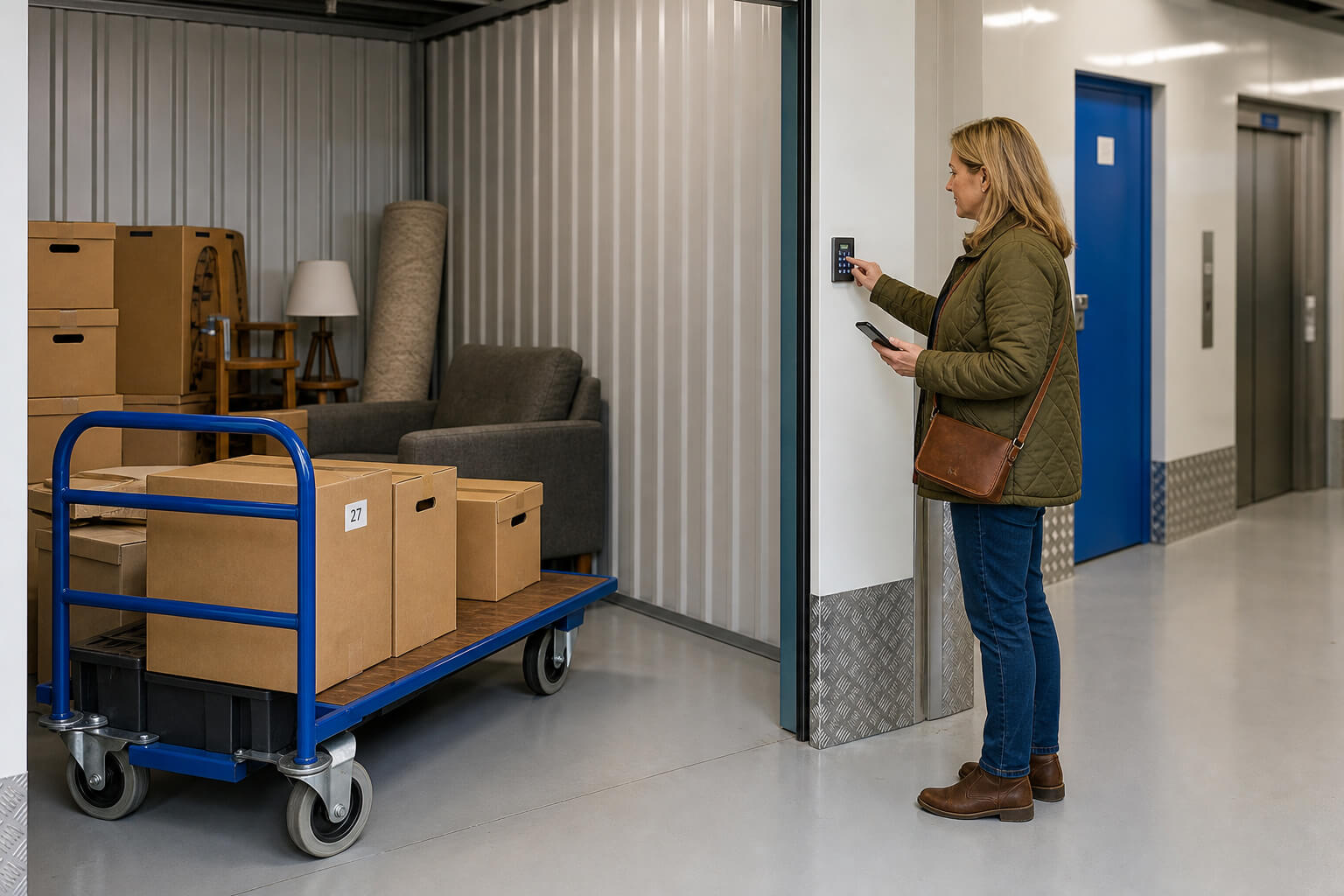
Smart entry means keypad access to the site and your own padlock on your unit. There are no staff on site. You are not waiting for someone to unlock a gate or let you into a building. You arrive, enter your code, and your unit is yours. It is a straightforward, reliable system, and it means you are genuinely in control of who accesses your belongings and when.

Picking a unit size quickly for a house move

The fastest way to choose a unit is to think in rooms, not square metres. Square metres are an abstract measure that most people cannot visualise in the context of a sofa, a wardrobe, and twelve boxes of books. Rooms are something you can count while standing in your house.

Sizing for part of a house or a whole household

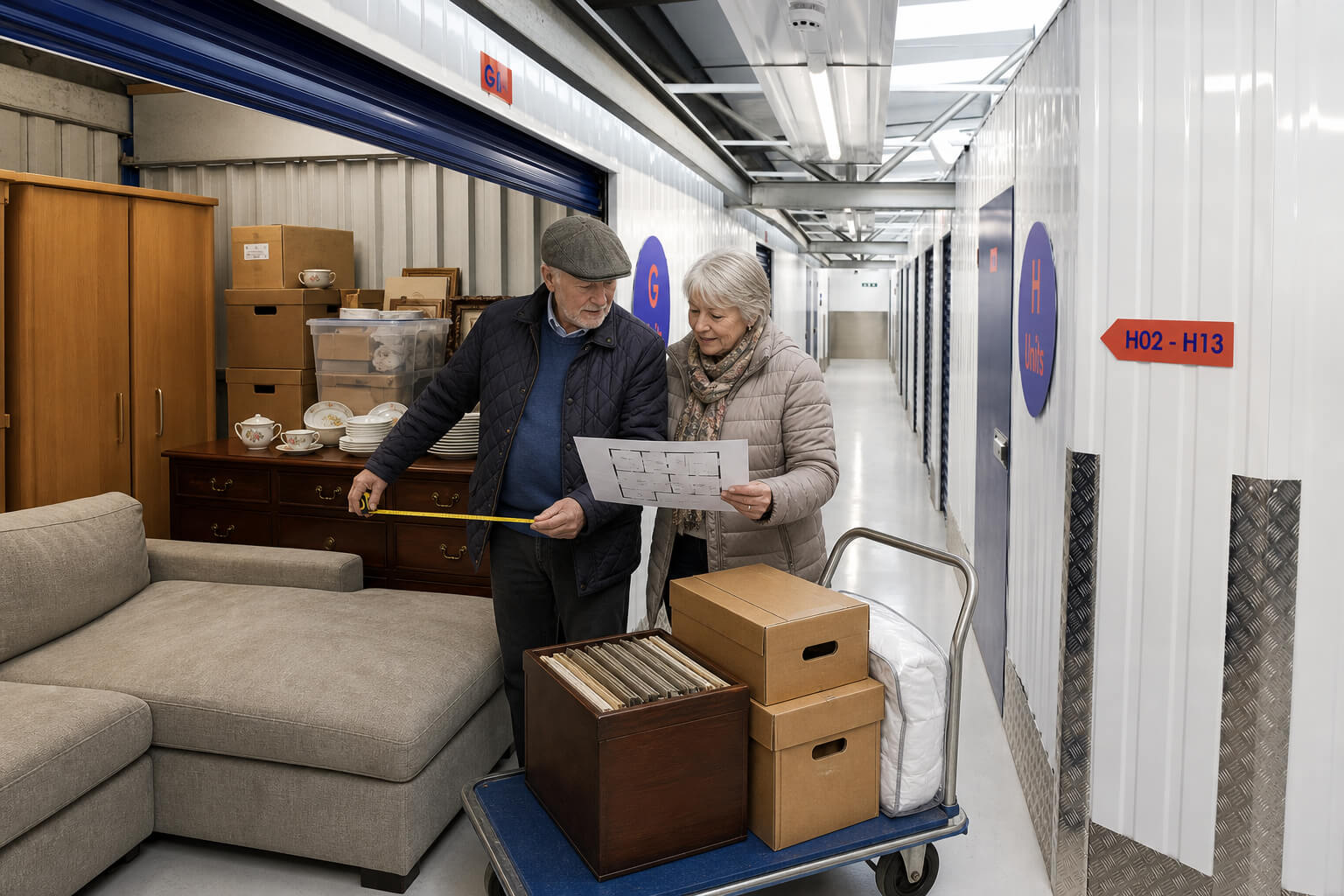
One or two rooms of furniture and boxes, a small bedroom unit is usually enough. Three or four rooms, you are looking at something mid-range. A full house clear-out with large furniture, white goods, and everything that comes with a family move needs a larger unit. The quote tool on our site will guide you through the sizing based on what you describe, and that is the quickest way to get a confirmed size rather than guessing.

What does not work at Wigwam sites is vehicle or leisure storage. These are household moves. Furniture, boxes, appliances, clothing, flat-pack storage, and the contents of a family home are what the units are designed for.

If you are in any doubt about size, go one step up rather than one step down. Squeezing belongings into a unit that is too small is stressful on loading day, and a slightly larger unit usually costs less than the time lost repacking.

For a general sense of what sizing looks like across different unit types, our sizing guide covers the detail. You can find it referenced in the quote tool or by searching the Wigwam site.

Clean, dry and secure: what the unit gives your belongings

Every unit is individually alarmed, and every site is clean, dry and secure. Those three words are the accurate description of what Wigwam offers. We do not market climate-controlled or temperature-managed storage, because these units are not temperature or humidity regulated beyond what a well-maintained, dry, ventilated building provides. If you have belongings that require specific humidity control, that is a different product and a different conversation with a specialist operator.

For household furniture, clothing, kitchenware, books, boxed goods, and the general contents of a family home, a clean, dry and individually alarmed unit is what most moves need. The individual alarm means that if anyone other than you attempts to access your unit, the site is alerted.

Minimum stays, deposits, and how you leave

The conditions are straightforward. Here they are in plain language so there are no surprises at the end.

The two-week minimum and refund of unused days

The minimum rental period at Wigwam is two weeks. This applies regardless of how short your actual storage need turns out to be. A house move that resolves in ten days still starts with a two-week minimum.

Where Wigwam differs from some operators is that if you leave before your paid period ends, unused days are refunded. This matters for a time-pressured mover because you cannot always know when the chain will resolve. You might need three weeks. You might need eight. You might get your keys sooner than anyone expected. The two-week minimum protects the site from one-night bookings, but the refund policy protects you from being billed for time you did not use.

The refundable deposit and 14-day notice period

There is a deposit. It is refundable. We say this plainly because some older information about Wigwam implied otherwise, and we want the terms to be clear before you commit.

When you take a unit, you pay a deposit alongside your first payment. When you are ready to leave, you give 14 days notice. Once the 14 days have passed, you have vacated the unit, and your account is settled with nothing outstanding, the deposit is returned to you. The full sequence matters: notice first, then vacate, then settlement, then refund. None of those steps is complicated, but they happen in that order.

The full terms are available at wigwamstorage.co.uk/terms-conditions and we encourage you to read them before you sign.

A note on jurisdiction: Wigwam’s contract terms operate under English law. If you are storing in Scotland or Northern Ireland, some aspects of contract and tenancy law differ from England and Wales. If you have any questions about how this applies to your situation, speak with your solicitor before committing.

How to give notice and what happens next

Giving notice is a practical step, not a difficult one. Contact Wigwam with your intended vacate date, confirm the 14-day notice period is covered, ensure your account is clear, and vacate the unit by the agreed date. Once that is done, the deposit return is processed.

The exit sequence is designed to be clean. If you know your completion date is coming up in a few weeks, you can give notice in advance and plan the vacating date around it. You do not have to wait until the last minute. The 14 days starts from when notice is given, not from when you actually clear the unit.

Ready to sort it? Get your quote at quote.wigwamstorage.co.uk and confirm your unit today.

Getting your belongings in (and what Wigwam does not do)

Wigwam sites are unmanned, which means you are in full control of your unit and everything in it. This is worth understanding before your loading day, so there are no surprises on arrival.

You bring and access your own belongings

There are no staff on site. When you arrive, you enter your smart entry code, go to your unit, and load or unload your belongings. You and anyone you bring with you are the only people who access your unit during opening hours. Nobody else handles your things.

This is the right model for a house move because it gives you complete autonomy over how your goods are organised and when you arrive. You are not booking a slot or waiting for someone to let you in. Your access code works between 6am and 10pm, seven days, and you use it as often as you need.

Removals and couriers: what you need to know

If you are using a removals firm to bring your belongings directly to the storage site, someone from your side must be present when they arrive. Wigwam cannot sign for deliveries, receive goods on your behalf, or let removals companies into the site without you there. The site is unmanned; there is no reception and no staff to meet a van.

This applies equally to courier deliveries. If anything is being sent directly to the storage address rather than your new home, you need to be there to receive it. A courier arriving at an unmanned site with no one present cannot leave a package securely, and Wigwam’s team is not available to accept it.

The practical solution is simple: coordinate your removals firm’s arrival time so you are already on site when they pull in. Most removals companies are familiar with self storage sites and used to this arrangement. Just confirm it with them in advance so there is no miscommunication on the day.

Protecting your belongings while they are in storage

Contents cover is a requirement, not an optional extra, and there are two straightforward ways to meet it.

Wigwam’s contents-protection policy

Wigwam offers an RSA “Self Storage Customers’ Goods” policy on an opt-in basis. This is a specialist policy designed for self storage, which matters because standard home insurance often treats goods in storage differently to goods in your home. The full details of what the policy covers, how to arrange it, and what it costs are on the contents protection page of the Wigwam site.

One principle that applies regardless of which policy you use: declare the full replacement value of what you are storing. Under-insurance in self storage works proportionally, which means if you declare half the value of your goods and make a claim for the full amount, you will typically only recover half of what you claimed. The number you declare should reflect what it would actually cost to replace everything in the unit, not a rough guess.

Using your own policy: what to check

If you have existing home contents insurance, it may extend to goods in self storage. Many policies include this, some do not, and the terms and sub-limits vary considerably. Before relying on your own policy, contact your insurer directly and confirm that goods in a self storage unit are covered, at what limit, and whether a house move affects the policy status.

This last point matters more than most people expect. During a house move, you are between two addresses and sometimes between two policies. Your existing home contents cover may lapse or change status at the point of exchange or completion. Check this with your insurer before your move-out date, not after.

Jurisdiction note: insurance settlement terms, under-insurance rules, and consumer contract rights differ between England and Wales, Scotland, and Northern Ireland. If you are unsure how any of this applies in your jurisdiction, speak with your insurer or a solicitor before making decisions about cover levels.

What it costs and how to lock in your unit today

Storage costs depend on your unit size and how long you need it. The quickest way to know your number is to get a quote.

Where to find current pricing

We do not publish fixed prices on this page because unit availability and costs vary by location and size, and a price that is accurate today may not be accurate by the time you read this. The Wigwam pricing page gives you the current picture across the network, and the quote tool builds a figure based on your specific unit, location, and dates.

What affects the cost is straightforward: size of unit, location, and how long you need it. A smaller unit in a quieter market town will cost less than a large unit in a higher-demand location. Duration affects the overall spend but not the weekly rate. Starting with a quote is always faster than trying to work backwards from a price list.

Get your unit secured today

The steps are simple and the decision is worth making today rather than tomorrow. By the time a house move is in motion, waiting another 24 hours to sort storage can mean your preferred unit is no longer available.

Get your quote at quote.wigwamstorage.co.uk. Confirm which unit size works for your move. Gather your two forms of ID and two proofs of address. Sign the agreement and you are in from 6am the same week.

That is the whole sequence. No desk to wait at, no member of staff to chase, no hidden requirements that surface on the day. You arrive knowing what to expect because we have told you everything in advance.

You sorted it.

Get your quote today at quote.wigwamstorage.co.uk

Find your nearest Wigwam site at wigwamstorage.co.uk/self-storage-locations. Bring two proofs of ID and address. Access from 6am to 10pm, 7 days, by smart entry.

Frequently Asked Questions

Can I move in over a weekend or a bank holiday?

Yes. Once the agreement is signed and your access is live, you get in by smart entry from 6am to 10pm, seven days a week, and that includes weekends and bank holidays. There is no office that has to be open and no member of staff who has to be on site to let you in, because the sites are unmanned. That is precisely why a same-week move works: you are not waiting on staffed opening hours that might not line up with the day your chain forces on you.

The thing to sort in advance is the paperwork, because completing the rental agreement and verifying your identification is the step that switches your access on. Aim to get the quote done and the agreement completed before the weekend you need to load, so your smart entry is already working when the removals van pulls up on Saturday morning. If your move-in day lands on a bank holiday Monday, the same applies: get yourself set up the working day before. After that, the 6am to 10pm window covers an early start and a late finish across any day of the week. It is worth saying plainly that this is not 24-hour access. If you anticipate needing to load in the middle of the night, that is not something we offer, and it is better to know that before you plan the day.

What if I cannot get two proofs of address together in time?

Talk to the team before you assume it is a problem, because there is usually a workable answer, but do not leave it to the morning of the move. The standard requirement is two forms of identification and two proofs of your current address, both current and both in your name. The complication during a house move is obvious: you may be mid-move between two addresses, recently changed your name, or simply not have two recent bills to hand because everything is now paperless or boxed up. This is common and the team has seen it before.

The practical fix is to start gathering what you can early. A passport or driving licence covers identification. For address, recent utility bills, bank statements, council tax letters or official government correspondence all tend to be acceptable, and many can be downloaded as a recent statement or letter if you no longer keep paper. If your situation is genuinely awkward, for example you have just sold and have no current address that matches your documents, raise it when you get your quote rather than turning up and hoping. Identity and address checks are a fixed part of completing the agreement and they cannot simply be waived, but knowing the gap in advance gives everyone time to find an acceptable alternative document. The one thing that derails a same-week move is arriving to sign with nothing that proves where you live. Sort the documents the day before and the loading day runs clean.

Do I need to view the unit before I commit, or can I book it sight unseen?

You can book without a viewing, and in a same-week situation most people do, because the whole point is speed. The quote tool sizes the unit from what you describe, the agreement is completed remotely, and your smart entry is live from the point the paperwork clears. You do not need to attend an appointment at a head office or wait for someone to show you round, which is what makes a 48-hour turnaround realistic in the first place.

That said, booking sight unseen works best when you have sized it honestly. The body of this page covers sizing by rooms rather than square metres, and the single most useful habit is to go one size up if you are between two, because squeezing a too-small unit on loading day is the most common regret. If you would feel more comfortable seeing the space first, the sites are accessible by smart entry once you are set up, and you can always get the quote, confirm a size, and then satisfy yourself on arrival before the bulk of the load goes in. If on the day the unit looks tighter than you expected, raise it straight away rather than cramming, because adjusting the size is far easier at the start than after everything is stacked. The sites are unmanned, so there is no one on site to give a guided tour, but the quote tool and the size guide together get most movers to the right unit without a prior visit.

Can I store belongings on behalf of a relative who cannot deal with it themselves?

Yes, but the account and the identity checks sit with whoever is actually holding the unit, so think about whose name it goes in. A same-week move sometimes happens for someone who cannot manage it themselves: an elderly parent going into care at short notice, a relative in hospital, or a family member abroad. In those situations the practical answer is usually that you take the unit in your own name, complete the agreement with your own two forms of ID and two proofs of address, and store their belongings within it. You become the account holder and the authorised person for access.

The reason it works this way is that the agreement and the access credentials have to attach to a real, identifiable person who is responsible for the unit. If you are acting under a power of attorney or as an executor, mention that when you set up the account so the team understands the arrangement, and keep your own paperwork in order in case it is ever relevant. Contents cover is still mandatory, so you will either take the RSA contents policy through Wigwam or show that an existing policy covers the goods in storage, and you should declare the full replacement value of what is going in. We signpost the cover and the process; we do not give legal advice on attorney or probate matters, so for anything about your authority to act, your solicitor is the right person to confirm it. On the storage side, taking the unit yourself and storing a relative’s goods within it is straightforward.

What happens if my completion gets pushed back again and I need the unit for longer than I thought?

Nothing changes and you simply stay. Above the two-week minimum there is no fixed end date forced on you, so if the chain slips a second time and the gap stretches from three weeks to three months, the unit rolls on for as long as you need it. You are never locked into committing to an end date you cannot predict, which is the whole reason self storage suits a moving timeline that keeps shifting under you.

When completion finally lands and you are ready to leave, you give 14 days notice, vacate the unit, and once the account is settled the deposit is returned along with any unused days beyond the notice period. So a longer stay does not cost you a penalty, and a shorter one does not cost you for time you did not use. The two-week minimum is the floor and the 14-day notice is the exit; they do not stack into a four-week commitment, they are simply the start and the end of a flexible middle that can be as long as your move requires. If you can see the delay coming, you do not have to wait until the last minute to give notice: you can give it as soon as you know your real completion date, and time the vacating around it. The practical message for a stressful, slipping move is that the storage is the one part of the timeline working in your favour rather than against you.

Self Storage During A Renovation The Complete Uk Guide

Builders in three weeks — where does everything but the kitchen go?

Every tradesperson will tell you the same thing. The jobs that go smoothly are the ones where the rooms are empty before anyone picks up a tool. Not roughly empty. Properly empty.

That is easier said than done when the house is full of furniture, books, crockery, a sideboard that belonged to someone’s grandmother, and forty years of accumulated life. The builders arrive in three weeks and suddenly the question is not where the kitchen is going. It is where everything else is going.

This guide is for that moment. It is a practical plan, room by room and stage by stage, for getting the house clear before the trades start and keeping it orderly while the work runs. No drama. Just a sensible way through.

Why an empty room is the job half done

Trades work faster, make fewer mistakes and charge less when there is nothing to work around. That is not a sales point; it is the practical reality of how renovation work goes. A cleared room is the condition under which a good job gets done on time and on budget.

What the trades actually need from you before they start

Most tradespeople will not say this directly, but they are hoping you have cleared the room before they arrive. Plasterers need to move freely across a whole wall. Electricians need access to the floor, the ceiling and every corner. Plumbers cannot work under a kitchen unit that is still full of crockery.

The furniture and belongings you leave in a room are not just an inconvenience. They are a risk. Something gets knocked. Something gets dusty in a way that cannot be undone. A sheet of plasterboard goes through a mirror. These things happen, and they happen because the room was not empty.

The single most effective thing you can do before your renovation starts is to clear each work zone completely, not partially.

The real cost of storing things on-site in other rooms

The instinct is to pile everything into a spare room or a garage. It works for a weekend. It does not work for a six-week kitchen renovation or a three-month extension.

Rooms pressed into storage duty become unusable. If the renovation runs long, which most do, the overflow problem compounds. The spare bedroom becomes inaccessible. The garden furniture takes up the dining room. Trades who need a staging area find nowhere to put materials. The project slows down because the house is not set up to support it.

There is also the damage risk. Furniture stacked in a hurry against other furniture, in a room with no climate management, over a wet British autumn, is furniture that comes back scratched, damp-marked and sometimes worse.

Why a skip or a yard container is the wrong tool for furniture

Skips are for rubble and waste, not for a Victorian sideboard or a set of upholstered dining chairs. A yard container in the driveway is exposed to whatever the weather brings and is not secure in any meaningful sense.

The other problem is that a skip or a container in the driveway gets in the way. Delivery lorries cannot get close. The plasterer cannot manoeuvre the van. The whole site becomes compressed and harder to work.

A self storage unit is a different tool for a different job. It is dry, alarmed, clean and accessible on your schedule, not just during delivery hours. The furniture is off-site, out of the way, and safe while the work happens.

A room-by-room pack-out plan before the builders arrive

The mistake is trying to move everything at once. A phased pack-out, timed to the build sequence, keeps the house liveable for longer and reduces chaos on the day the trades arrive. Clear the rooms the builders need first and work outward from there.

Which rooms to clear first (and which can wait)

Start with whatever the trades are hitting first. If it is a kitchen renovation, the kitchen has to be empty before day one. If it is a loft conversion, the loft needs to be clear, but the bedrooms below can often wait until the structural work has started.

Think of it in waves. Wave one: the primary work zone, completely cleared, at least a few days before the trades arrive. Wave two: the rooms that will be used as through-routes, staging areas or material storage for the trades. These need to be clear enough to be useful. Wave three: rooms not in the build sequence at all, which can remain lived-in until much later.

A whole-house strip-out is a different situation. If you are vacating the property entirely during the work, the pack-out can happen in a single organised move. But for phased projects, the phased approach is almost always better.

What to pack, store and what to leave accessible

Not everything goes. The working rule is simple: if you will not need it for the duration of the build, it goes into storage. If you will need it regularly, it stays accessible, either in a room not in the build sequence, or in a clearly labelled box you can get to easily.

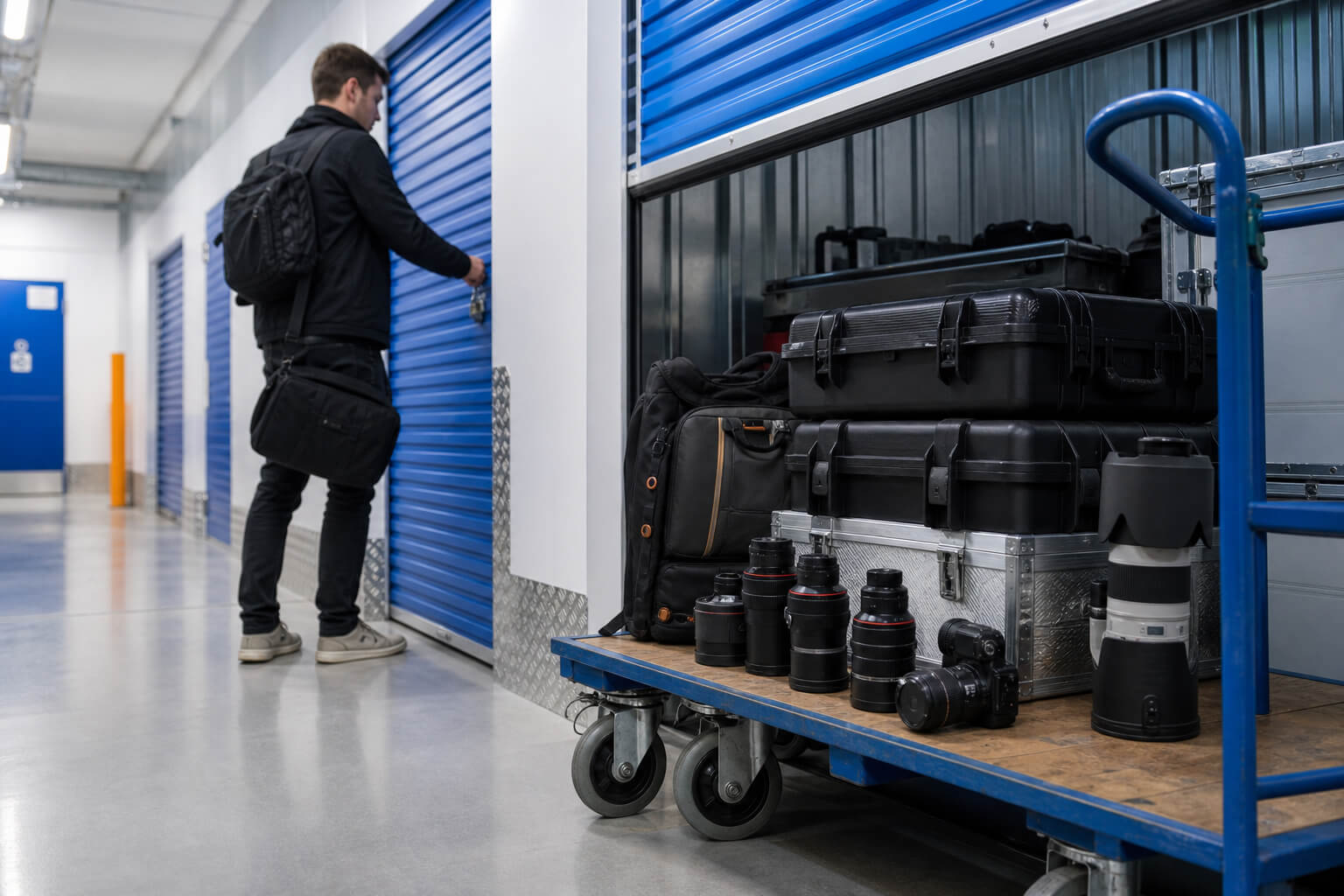
For the storage unit: furniture, artwork, books, crockery, soft furnishings, electrical goods not in daily use, and anything fragile or irreplaceable. These are the things that suffer most from construction dust, vibration and an occupied building site.

Keep accessible: the things you use every day, your tools if you are doing any of the work yourself, documents and valuables, and anything you might need to get to at short notice during the build.

Label the boxes that go into storage by room, not by content. When the renovation finishes, you will be restoring rooms in sequence, and boxes labelled “kitchen” or “spare bedroom” are infinitely easier to manage than boxes labelled “miscellaneous.”

Working with the trades on sequencing (a simple checklist)

Before the first trade arrives, a short conversation about sequencing saves a lot of confusion. Ask your contractor:

  • Which rooms do you need cleared and by when?
  • Which rooms will be used for materials staging?
  • Are there any dates when access will be particularly constrained?
  • When will each room be ready to receive furniture back?

That last question is the one people forget. The end of a renovation is as chaotic as the start. Rooms are ready one at a time, over days or weeks. Knowing the sequence lets you plan the return in waves, which is almost always better than trying to move everything back at once.

What size unit do you actually need?

Unit size follows the scope of the project. A kitchen renovation is not the same storage problem as a whole-house strip-out. The honest answer is that most people underestimate how much space their furniture takes up when it is stacked properly and packed efficiently.

Single-room and kitchen renovations

A single-room renovation typically needs a small unit, often in the 25 to 50 square foot range, though this depends heavily on what is in the room. A bedroom full of flat-pack furniture packs down differently to a room with heavy Victorian pieces.

For a kitchen renovation, the consideration is not just the kitchen itself. Kitchen contents, the appliances, the crockery, the table and chairs, can fill a unit surprisingly quickly. Account for the dining area if it connects to the kitchen and will be out of use during the work.

A sizing guide is worth consulting before you book. Wigwam’s unit sizing guide (see the website) gives a practical room-by-room reference, and the pricing page at how much is self storage in the UK sets out the size options without committing you to anything.

Cross-reference with the Wigwam kitchen renovation storage guide for a more detailed breakdown of that specific project type.

Multi-room and extension projects

A two or three room renovation, or a project that involves an extension and the rooms adjacent to it, usually needs a medium unit. The complicating factor is timing. You may need to clear rooms in waves, which means the unit contents change as the project progresses.

The best approach is to size for the peak. Think about the moment in the project when the most rooms are simultaneously in use, and size the unit for that moment. Then work backwards to a smaller unit once rooms start coming back online, if the terms allow it.

The whole-house renovation guide (referenced separately on the Wigwam site) covers the logistics of a larger-scope project in more detail.

Whole-house strip-outs and longer projects

A full strip-out is a different scale of problem. If the entire house is being vacated, every piece of furniture and every belonging needs a home for the duration. For a four or five bedroom property, that is often a large unit, 100 square feet or more, and possibly multiple units if the contents are bulky or if you need segregated access to different categories of goods.

Longer projects raise a different question: not just how much space, but how long. A whole-house renovation that runs for four or five months is a long stay, and the right provider is one whose terms work for an uncertain timeline. That is the next section.

Terms that flex with the build

No renovation finishes on time. It is not pessimism; it is the nature of the work. Tradespeople encounter things inside walls that were not on the plan. Materials are delayed. A second coat needs more time than the estimate allowed. The storage arrangement should not punish you for any of that.

How the 14-day notice and refund policy works

At Wigwam, the notice period is 14 days. When you are ready to leave, you give 14 days’ notice, clear the unit, settle the account, and any unused days beyond the notice period are refunded. A deposit is taken at the start and returned once the unit is vacated and the account is settled.

This is important because it means the arrangement works in your favour when the build finishes early. You do not pay for a fixed term that extends beyond when you need it.

If the build runs long, the arrangement continues on the same rolling basis. You are not scrambling to renegotiate or worried about a contract that does not cover the extra weeks.

Full terms are at wigwamstorage.co.uk/terms-conditions.

What happens when the build overruns (how to extend)

The simple answer is: nothing dramatic has to happen. Because there is no fixed end date locked into the contract, a build that runs three weeks longer than planned just means three more weeks of storage at the same rolling rate.

The one thing worth doing is communicating early if you know the timeline is shifting significantly. If you anticipated a six-week stay and it is looking like four months, it is worth speaking to the team so everyone is planning from the same picture.

The two-week minimum stay applies at the start, so there is a floor on very short stays, but for renovation projects of any real scope, that is rarely a constraint.

Moving in stages as rooms are finished

A phased renovation often calls for a phased return. When the first rooms are finished and ready, it makes sense to move furniture back room by room rather than waiting for the entire project to complete before moving anything.

This is entirely possible with a rolling arrangement. As rooms come back online, you retrieve the relevant furniture and the unit gradually empties. When the last room is done, whatever remains comes back, and you give your 14-day notice.

It is a cleaner process than either extreme, trying to store nothing (and dealing with on-site chaos) or storing everything in one go and moving it all back in one go at the end.

Ready to get a quote? See unit sizes and indicative prices at how much is self storage in the UK, then get your quote at quote.wigwamstorage.co.uk. No commitment required.

Protecting furniture and period pieces: the honest answer

Most period furniture does not need climate-controlled storage. That is the plain truth, and because Wigwam does not offer climate control, there is no incentive to say anything other than what the evidence shows.

What clean, dry and secure actually means for your furniture

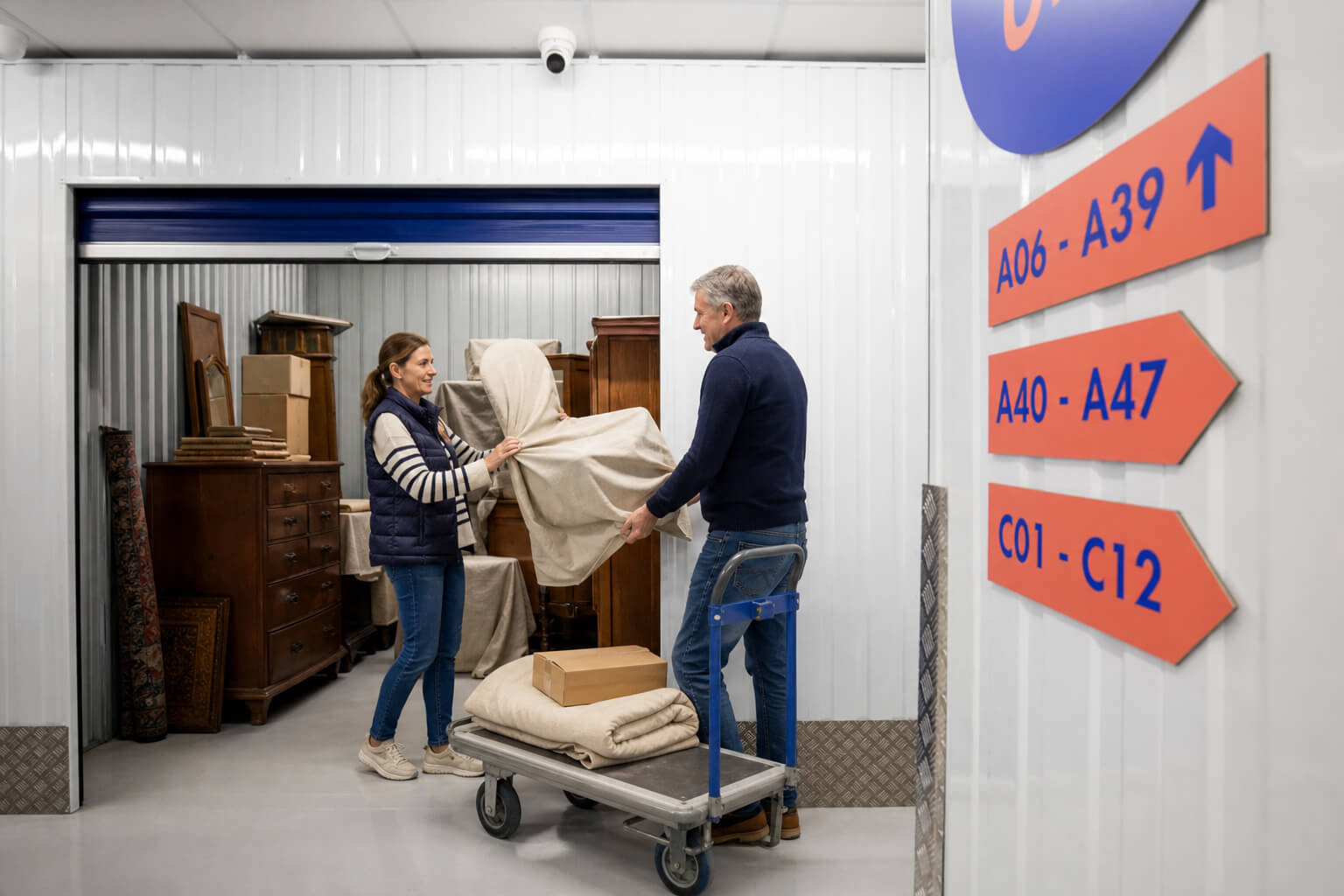
A clean, dry, individually alarmed unit is the right environment for the vast majority of domestic furniture, including antiques. Solid oak, pine, mahogany, upholstered chairs and sofas, painted pieces, ceramics, glass, books and the contents of a typical period home are all well served by a unit that keeps the damp out, the dust out and the uninvited out.

The standard that matters is stable and dry, not temperature-controlled. Most UK domestic antiques have spent their lives in houses without climate management and are none the worse for it. What damages furniture is not ambient temperature; it is moisture, dramatic humidity swings, and physical damage. A clean, dry unit addresses the first two directly and, because access is controlled, the third as well.

This is also the honest position. If a clean, dry, alarmed unit does the job, it does the job. There is no reason to suggest otherwise.

The specific cases that genuinely need a specialist facility

There is a short list of things that do genuinely need specialist conditions, and it is worth knowing what is on it.

Museum-grade oils and watercolours, particularly those with old or unstable paint layers, can be sensitive to significant humidity shifts. Musical instruments with soundboards, violins, cellos, acoustic guitars, pianos, can develop cracks if humidity drops or rises sharply over an extended period. Marquetry and fine inlay work, particularly on pieces where the veneers are already lifting or fragile, can be vulnerable to the kind of humidity fluctuation you might see in a unit over a very wet or very dry season.

This is a specific list. It is not “antiques generally.” A Victorian mahogany sideboard is not on it. A Georgian pine dresser is not on it. A set of upholstered dining chairs is not on it.

If you are genuinely uncertain whether a particular piece needs specialist handling, the right call is to speak to a conservator, not a storage provider. Wigwam will tell you plainly what our units provide and leave the specialist question to the specialists. The article “Self Storage for Antique Furniture During a Renovation” and the companion piece “Do You Really Need Climate-Controlled Storage” on the Wigwam site go into this in more detail if the question is live for you.

How to prepare period pieces before they go into the unit

A little preparation before the furniture goes in saves a lot of worry while the build runs.

Clean pieces before they go in. Dust and surface damp do more damage in storage than in a used room, because there is no airflow to carry them away. Wipe down wooden surfaces, vacuum upholstery, and make sure nothing goes in damp.

Wrap fragile surfaces but do not wrap furniture in non-breathable plastic. Bubble wrap over polished surfaces for extended periods can trap moisture and mark the finish. Furniture blankets or cotton dust sheets are better for anything that needs padding. Cardboard corners protect legs in transit.

Disassemble where you sensibly can. Beds and flat-pack pieces pack down smaller and are less likely to sustain damage in transit if they are broken down first. Keep the fixings in a clearly labelled bag taped to the relevant piece.

Stand furniture properly. Do not stack chairs upside-down on a table unless the table is sturdy enough to take the weight. Lean nothing against mirrors. Give fragile items their own space rather than packing things tightly around them.

Contents protection: what is covered and what to declare

Contents protection is mandatory at Wigwam. You can take the Wigwam policy or provide proof of your own. Either way, declaring the right value is the part that matters most.

How the contents-protection requirement works

Wigwam’s contents protection is provided through RSA’s Self Storage Customers’ Goods policy. You opt in to the Wigwam policy when you book, or you provide evidence of your own contents cover. You cannot leave the unit uninsured.

Full details of the policy, including what is covered and how to declare your value, are at wigwamstorage.co.uk/contents-protection. Read the policy document before you put anything in the unit. The policy sets out which items and events are covered, what the excess is, and what the claims process looks like.

Jurisdiction note: insurance policy terms and claims handling differ across UK jurisdictions. If you are storing goods in Scotland or Northern Ireland, verify the terms of your policy with your insurer or broker, as the applicable rules may differ from those in England and Wales.

What to declare and why under-insurance matters

Declare the full replacement value of everything going into the unit. Not the price you paid for it. Not a rough estimate. The amount it would cost to replace each item at today’s prices if it were lost or destroyed.

This matters because under-insurance is settled proportionally. If you declare half the true value of your goods and make a claim for the full loss, the settlement is reduced in proportion to the gap between what you declared and what the goods were actually worth. It is a common and painful mistake.

Period and antique pieces are the ones most likely to be undervalued. If you are storing items of significant value, it is worth having them assessed before you put them in storage, rather than estimating.

What is not covered (and how to handle the exceptions)

The policy covers the main risks, but there are exclusions that matter for renovation contexts specifically.

Theft is covered if there is evidence of forced entry. Opportunistic loss, or a situation where access was gained without force, is not covered in the same way.

Climatic damage is excluded. This means damage caused by changes in temperature or humidity. For the great majority of domestic furniture and belongings, a clean, dry unit does not produce the conditions that trigger this exclusion. But it is worth understanding that the exclusion exists.

Items that are fragile by nature, and items not properly packed, may also face restrictions. The policy document sets out the detail.

If anything in your storage inventory is particularly high-value or unusual, speak to your insurer or broker before the goods go in, rather than after something goes wrong.

Access during the project (and how deliveries work)

Access is 6am to 10pm, seven days a week, via smart entry. If you are an early starter or working to trade hours, the unit is there when you need it. No booking in advance, no queuing at a staffed desk.

Smart entry and when you can get in

Smart entry means you access the site and your unit through a keypad or fob system, without needing a member of staff present. Six in the morning is a practical time for a lot of renovation work. You can pick up a piece of equipment, retrieve a piece of furniture to take back to a finished room, or drop off a delivery before the trades arrive, all without waiting for someone to unlock anything.

Access closes at 10pm. The sites are not 24-hour. For the vast majority of renovation projects, the 6am to 10pm window covers everything you will need.

How deliveries and material drop-offs work on an unmanned site

Wigwam sites are unmanned. This is worth understanding before you plan any deliveries or material drop-offs.

If a supplier or courier is delivering something to your unit, someone from your side needs to be there to receive it. Wigwam does not sign for deliveries, does not receive goods on your behalf, and cannot accept materials or packages if no one from the customer’s business or household is present.

For renovation projects where materials are being delivered, the site access hours work in your favour for co-ordinating deliveries at a time when you or someone else can be present. What does not work is arranging a courier drop that assumes the site will receive it for you.

Tips for moving things in and out during an active renovation

Moving things in and out of storage while a renovation is live is a different kind of logistics from a single move-in and move-out. A few things make it easier.

Keep a rough inventory of what is in the unit and where. It does not need to be elaborate. A list on your phone of what is in which area of the unit, updated as things go in and come out, saves significant time when you are looking for a specific item mid-project.

Use the access hours to your advantage. Early morning runs, before the trades are on-site, let you retrieve or drop things without disrupting the working day. Late evening is useful for dropping off items that come out of a finished room before the next phase starts.

If you are retrieving furniture to restore a finished room, do it in full. Half-restoring a room and leaving the rest in storage extends the period of limbo. Aim to complete one room at a time, on the same rhythm as the build.

Finding a Wigwam unit near your renovation

If your renovation is in a UK market town, there is a good chance a Wigwam location is nearby. Wigwam operates across our UK market-town locations, with units suited to household goods and the kind of project described in this guide.

Locations across UK market towns

The full list of locations is at wigwamstorage.co.uk/self-storage-locations.

If you are in the south-west, Wigwam Self Storage Bath is well placed for renovations in and around the city, where period properties are plentiful and the need for careful, clean storage is high. For projects further north or in the east Midlands, Wigwam Self Storage Lincoln is the nearest verified location.

For any other town, use the locations hub to find the closest site. Do not assume a location exists in a town without checking; the hub is the reliable reference.

First mention tip for location naming: name locations in full on first mention, as above, and casually thereafter. “The Bath site” or “Lincoln” are fine once the full name has been used.

What to check before you book

Before you commit to a unit, a few things are worth confirming.

What size do you actually need? The sizing guide on the website gives a practical reference, and the team can advise. It is better to size slightly large than to discover mid-project that things do not fit.

How long do you expect to need it? Be honest with yourself about this. A kitchen renovation that the builder says will take four weeks often takes six. Build the buffer in at the planning stage rather than chasing the extension later.

What is in the unit that matters most? If you are storing anything of significant value, check the contents-protection requirements before you book. The deposit, the notice period and the refund terms are all in the terms and conditions.

Pricing, without commitment, is at how much is self storage in the UK. No prices are quoted on this page; the pricing page is the right reference.

How to get a quote

When you are ready, getting a quote takes a few minutes and commits you to nothing. You will need a rough sense of unit size and the likely start date.

Get your quote at quote.wigwamstorage.co.uk.

The renovation is the hard part. The storage is the easy part. We have watched hundreds of projects come and go from our market-town locations, and the ones that go well are the ones where the house was properly cleared before the trades started. When you are ready, get a quote at quote.wigwamstorage.co.uk and we will take it from there.

Frequently Asked Questions

Can I store a fridge or freezer during the renovation?

Yes, but prepare it first, because a white good put into storage wet is a white good that comes out smelling. Empty it completely, switch it off, and defrost it fully. Then wash the interior, wipe it dry, and leave the door propped slightly open while it airs for a day before it goes in. The reason is simple. A sealed fridge or freezer with any residual moisture inside becomes a closed, dark box where damp has nowhere to go, and mould and odour build quickly over a six-week renovation. Once it is genuinely dry, it stores well. Our units are clean, dry and secure, so the appliance is in a sound environment, but the inside of a sealed appliance is its own little world and only you can prepare that. Keep the door wedged open by a few centimetres for the duration if you can, using a folded towel or a purpose-made wedge, so air keeps moving through it. Disconnect and coil the cable, and tape the shelves or remove them and pack them separately so they do not rattle loose in transit. The same logic applies to washing machines and dishwashers: drain them down, run the hoses dry, and leave the door ajar. Treat the appliance like any other item for contents protection and declare its replacement value with the rest of your goods.

Can I keep my DIY tools and materials in the unit and work from there during the build?

You can store tools and materials in your unit, and the access hours make it practical to collect what you need, but the unit is for storage, not for working in. Think of it as your off-site store cupboard rather than a workshop. Access runs 6am to 10pm, seven days a week, by smart entry, so an early start before the trades arrive is easy. You can drop tools off the night before and collect them at six the next morning without waiting for anyone. A few sensible rules apply to what you store. Paints, solvents, gas canisters, fuel and other flammable or hazardous materials are not suitable for a storage unit, so those stay with you on site. Heavy power tools and timber are fine, but pack them so nothing can topple onto softer goods if you have furniture in the same unit. If you are running a tool-heavy DIY project, it can be worth keeping the tools near the door and the household goods deeper in, so your daily ins and outs do not mean unstacking the whole unit. One thing to plan for: if a supplier is delivering materials to the site, someone from your side has to be there to receive them, because our sites are unmanned and we cannot accept or sign for deliveries on your behalf.

How far in advance should I book the unit before the build starts?

Book as soon as the start date is firm, which in practice means a week or two before the trades arrive, not the morning of. The reason is partly availability and partly logistics. Unit availability varies by location and by size, and the unit you want may not be free on the exact day you decide you need it, so reserving early protects your choice. Just as importantly, a good pack-out is not a one-day job. Clearing the primary work zone properly, packing by room and labelling as you go, usually takes several evenings or a weekend, and it is far less stressful spread across a few days than crammed into the night before. Our two-week minimum stay applies from the day you move in, so there is no penalty in starting the stay a little ahead of the build to give yourself a calm pack-out window. If anything, starting early is the sensible choice, because it means the work zone is genuinely clear when the trades turn up rather than half-cleared with the last few boxes still going out as they unload their tools. Get the quote in early at quote.wigwamstorage.co.uk, confirm the size with the team, and you can set your move-in date to suit your pack-out plan rather than the builder’s clock.

Is the site secure enough to leave my belongings while my house is a building site?

Yes, and for many people that is the real reassurance, because a house mid-renovation is the least secure it will ever be. During a build, doors are off, windows are out, scaffolding offers a way up, and strangers are coming and going. Belongings left in the property through all that are exposed in a way they never normally are. Moving them to a unit takes them out of that environment entirely. Our units are individually alarmed, clean, dry and secure, and access to the site is controlled by smart entry, so only people with their own access can get in, between 6am and 10pm. That is a far more controlled setting than an open building site. Contents protection is mandatory either way, so your goods are also covered against loss or damage in the unit, whether you take our RSA Self Storage Customers’ Goods policy or provide proof of your own cover. The combination of a controlled, alarmed site and mandatory contents cover is what makes storage the safer home for anything valuable, fragile or sentimental during the works. Practical things, the items you genuinely use day to day, can stay with you. The good furniture, the artwork and the irreplaceable pieces are better off out of the dust and away from the comings and goings of an active site.

Can two households or family members share one unit during overlapping renovations?

It is possible, but treat it with care, because a shared unit means shared responsibility and that can get awkward when something goes wrong. The unit is rented in one account holder’s name, and that person holds the agreement, the access and the deposit. If you are splitting a unit with a relative or a neighbour whose project overlaps yours, everyone needs to be clear from the outset on who that account holder is, how access is shared, and who is liable for the deposit and any account matters. The bigger consideration is contents protection. Cover is declared and held by the account holder, based on the full replacement value of the goods in the unit. If two households pool their belongings, the declared value needs to reflect everything in there, and a claim would be settled through the account holder, not split neatly between two families. That is rarely worth the tangle for goods of any real value. For most people the cleaner answer is a unit each, sized to each household’s needs, which keeps access, liability and cover simple and avoids any disagreement later. If you do want to share to save space, talk it through with the team first so the sizing and the cover are set up correctly, and put your own agreement in writing between yourselves about who is responsible for what.

Self Storage When Youre Renting Before You Buy

Renting somewhere smaller while you wait for the right house to buy?

Renting before you buy is a deliberate choice. You sold, or you held back from selling, to stay out of a chain. To move fast when the right place appears. To avoid being that buyer who has to wait three months before they can proceed. That is not a fallback position. That is a strategy.

The practical problem it creates is real, though. The rental was always going to be smaller. You knew that. What you might not have fully reckoned with is how long you would be living there, surrounded by things that will not fit, before the purchase completes. And that gap is where the honest question about storage lives.

So here is the question worth asking before anything else: how long does storage actually need to work, and what happens if it goes on longer than you planned?

Why so many people rent first, then buy

Renting first is a sound property strategy and the numbers show why.

Staying chain-free so you can move fast

As a cash-in-hand buyer with no property to sell, you can proceed the moment an offer is accepted. No chain below you means sellers take you seriously. In a market where vendors are often more concerned about certainty than the highest number, being chain-free is a genuine competitive advantage. It also removes the anxiety of your own sale collapsing and dragging someone else’s purchase down with it.

Two or three months in a temporary rental is a small price for that kind of flexibility. Most people who do it say it was the right call. The challenge is not the strategy. The challenge is what to do with a three-bedroom household when your temporary rental only has room for what you actually need to live.

The catch: a smaller rental and a houseful of things

The rental was never supposed to hold everything. That was the point. You moved to a one-bedroom flat or a two-bed terrace to keep costs down while you saved or waited. The sensible furniture, the books, the dining table you chose carefully, the bed from the room you are planning to make up for the kids once you are settled. None of it belongs in a space you are only passing through.

Cramming it all in makes the rental unliveable. Putting it in the garage of someone who owes you a favour puts a strain on relationships. Selling it and replacing it later costs more than storing it for three months would have. Storage, used well, is the obvious bridge. The key phrase is used well.

Is storage the right call while you rent?

For most people renting before they buy, yes. With one honest condition: you need a real end date in view, or at least a rule for when you will review it.

What is worth storing and what is not

The plain rule is this. Store the things you would buy again but cannot use in the rental. A good sofa. A dining table. Spare bedroom furniture. Seasonal items. Kitchenware you cannot fit in a smaller kitchen. The things you are looking forward to unpacking in the new place.

Do not store the things you should sell or donate. A wardrobe you have been meaning to replace for two years is not a candidate for three months of paid storage. If you are honest with yourself, most people have a natural split when they pack: the things that belong in the new house, and the things that do not belong anywhere any more. Store the first category. Deal with the second before you start.

One thing to note: Wigwam stores household and business goods. We do not offer vehicle storage, caravan storage, or boat storage. If you need somewhere for a car or leisure vehicle, you will need a different facility.

Storage vs renting a bigger place vs leaning on the garage

A bigger rental spreads the cost of extra space across a full tenancy contract. If you are on a six-month or twelve-month let, you are paying for that room every month, whether or not you need it after the first two. It also ties you to a longer rental at a time when your purchase could complete at any point.

A family garage is free, but has limits. Access depends on someone else’s schedule. Security is whatever was there when the house was built. And if the relationship changes for any reason, so does your access to your things.

Self storage wins on flexibility and on security, not necessarily on price alone. Whether the maths work depends on the size of unit you need, how long you actually store for, and what a bigger rental would cost in your town. That comparison is worth doing before you commit to anything. Our pricing guide at wigwamstorage.co.uk/how-much-is-self-storage-in-the-uk gives you the numbers to make that call.

When renting-before-buying storage makes the most sense

It works best when the timeline is real and the end date is visible, or at least reviewable. The further that horizon, the more carefully you need to run the numbers.

Bridging a property chain delay

This is the scenario most people are actually in. You made an offer. It was accepted. Exchange is due in six weeks. Completion should follow four weeks after that. You have given notice on the rental, or you are about to.

Then the chain above you delays. Or the survey throws something up. Or the solicitors are slow. Or the sale of a property two links up from yours falls through and the whole thing needs to be rebuilt.

Chain delays are common, and the research suggests most purchases in England take longer than buyers expect, particularly when there are multiple parties in the chain. The honest answer is that no one can give you a certain date. What they can give you is flexibility while you wait.

That is where the storage terms matter. At Wigwam, there is a two-week minimum stay, and if you leave before the period you paid for, unused days are refunded. There is a refundable deposit, which comes back to you after a 14-day notice period once you have vacated and your account is settled. You are not locked into six months because a chain took longer than expected. The day you get the keys, you give notice and you leave.

Downsizing temporarily into a smaller let

Some people are not waiting on a chain. They chose a smaller rental because it made financial sense: lower rent, money going towards a deposit, less to maintain. They will move into a new property eventually, and they want to arrive with everything intact.

The identity tension in this situation is real. Living in a space that does not feel like yours, surrounded by what you could fit rather than what you chose, is a particular kind of discomfort. You did not lose these things. You placed them somewhere safe while the final place comes together.

That distinction matters. A clean, dry, individually alarmed unit is not a graveyard for things you will never unpack. It is the holding space between one home and the next. The things that will make the new house feel like yours on day one are sitting there waiting, in the condition you left them.

How long should you really store for?

Storage is a sound bridge for three to six months. Beyond that, the maths begin to change and the honest answer is worth naming.

Why open-ended storage becomes an expensive delay

We hear this from renters who have been in storage longer than they planned: a unit that felt manageable at three months feels like a drain at nine. The monthly cost has not changed. What has changed is that the purchase has slipped, twice or three times, and the original plan to be in by spring has quietly become a plan to be in by autumn, then maybe by Christmas.

Open-ended storage is not a disaster. It is sometimes unavoidable. But the risk is that it stops being a deliberate choice and becomes a passive one. You stop thinking about it every month because the direct debit is set up. The things in the unit are out of sight. And the cost accumulates in the background while the purchase drags.

The r/AskUK thread on this is worth knowing about. Real UK buyers, not a call centre, making exactly this point: storage is brilliant short-term, but only if you treat it as a bridge with an exit, not a permanent solution with a monthly fee.

A simple rule: set a horizon and review it

Before you start, write down the maximum you will accept. Something like: I expect to complete by March. I will review in February. If the purchase looks solid, I begin my notice period. If it has slipped materially, I reassess whether the financial case for staying in storage still holds.

The day a purchase looks real is the day to act. Give notice. Do not wait for the keys to arrive before you start the clock. Build the notice period into your timeline so there is no overlap you did not plan for.

That is the discipline that keeps storage from becoming the expensive delay. It is a bridge. Plan for the other side.

Wigwam’s two-week minimum and refund of unused days

The terms at Wigwam are designed for exactly this kind of transition. Two-week minimum stay, so you are not paying for months you do not use. If you leave before a period you paid for, unused days are refunded. The deposit is refundable: it comes back after a 14-day notice period, once you have vacated and the account is clear, less anything owed.

You can read the full terms at wigwamstorage.co.uk/terms-conditions/. We publish them so you know what you are agreeing to before you start, not after.

Ready to see what a short bridge would cost? Get a quote at quote.wigwamstorage.co.uk and see the price for your unit size and your town before you commit to anything.

What size unit do you need?

Most renters storing while they buy need less space than they expect. The question to ask is not “how much have I got?” but “how much of this do I actually need in the new place?”

Boxes and smaller items

If you are storing the overflow from a smaller rental, the typical contents are seasonal items, kitchen equipment you cannot fit in a smaller kitchen, spare bedding, books, tools, and boxes of things you do not need day-to-day. This is a smaller unit: the kind of space you can walk into, find what you need, and walk out. Accessible on a weekday evening when you remember you need your slow cooker back.

For this kind of partial-household storage, you are likely looking at something compact. Our quote tool will show you the sizes available at your nearest location and the cost attached to each.

A full household of furniture

If you moved from a larger home and are waiting for a new one, you may be storing a bedroom suite, a sofa, a dining set, garden furniture, and everything that went with a house rather than a flat. For this, you need a larger unit and a clear stacking plan when you load it.

The reassurance here is that a clean, dry, individually alarmed unit keeps furniture in good condition across a typical three-to-six-month bridge. Your sofa will not suffer. Your mattress will not grow damp. The things you want to arrive in good condition in the new house will.

If you are uncertain about the size, our quote tool walks through the options. Route all sizing questions there rather than guessing: it is easier to right-size a unit from an interactive tool than from a description in an article.

Keeping the cost honest

The price depends on size and how long you store. We do not publish prices in this article, because the number that matters is the one for your unit and your town, not a national average that may not apply to either.

What drives the price: size and time, not town

A smaller unit for two to three months looks very different from a larger unit for six months or more. That is the main variable. The difference between a sensible bridge and a costly delay is often less about the monthly rate and more about how long you stay.

There are cheaper alternatives to self storage: a bigger rental, a family garage, selling what you cannot use. Each has trade-offs in flexibility and security that are worth thinking through before you decide. Storage is not automatically the cheapest option. It is often the most flexible one, and in a transition with no fixed end date, flexibility has a real value.

The pricing guide and how to get a quote

Rather than quote a figure here that may be out of date by the time you read it, we have a full UK pricing guide at wigwamstorage.co.uk/how-much-is-self-storage-in-the-uk. It covers how storage is typically priced, what drives variation, and how to think about the cost relative to your timeline.

For an actual number for your unit size and your nearest Wigwam location, go to quote.wigwamstorage.co.uk. That is the right starting point before you commit to anything.

Access, security and the things we are straight about

Access is 6am to 10pm, seven days a week. There is no 24-hour entry. There is no climate control. Here is what that means in practice.

Access hours, the honest answer

The AI-generated results for this topic consistently ask: “Looking for a location with 24/7 access?” The honest answer is that Wigwam does not offer round-the-clock entry. Access is by smart entry between 6am and 10pm, seven days a week.

In practice, that covers every weekday evening after work. Every weekend morning and afternoon. The weeks of viewings when you need to retrieve things to show off the new space. The day of the move itself. Most people doing a short bridge find this range more than adequate for what they need.

If your situation genuinely requires access at 3am, we are not the right fit, and we would rather tell you that now than have you realise it after you have booked.

Clean, dry and secure (and what we do not claim)

The other AI follow-up question is: “Needing climate control for sensitive items?” Again, the direct answer: Wigwam does not offer temperature or humidity control. What we offer is clean, dry and secure. Units are individually alarmed. The facilities are maintained to keep your goods in the condition you stored them.

For standard household goods, furniture, boxes, soft furnishings, kitchen equipment, books and bedding, a clean, dry, individually alarmed unit is what you need. You do not need climate control for a sofa or a wardrobe. If you are storing something that genuinely requires controlled temperature or humidity, such as wine, certain antiques, or fine art, you need a facility that offers that and we are not it.

We would rather be straight about this than let you store something that needs specialist conditions in a unit that does not provide them.

Sites are unmanned: what that means for you

Wigwam sites are not staffed on-site during access hours. You access your own unit using smart entry. That is how the system is designed: your unit, your access, your lock, your alarm.

What that means in practice is that if you are expecting a delivery to your unit, someone from your own side must be present to receive it. Wigwam does not sign for goods or receive deliveries on your behalf. If a courier arrives, they need someone there from the customer’s side to hand off to. Plan accordingly.

This is not a disadvantage for most renting-before-buying customers. You are managing your own move, on your own terms. Unmanned access means no one else has cause to enter your unit. That is part of what keeps it secure.

Insuring your things while they are stored

Your things need cover while they are in storage. Here is how that works at Wigwam.

Contents protection is required

Contents cover is mandatory when you store at Wigwam. You have two options: take Wigwam’s own contents-protection policy, or provide evidence that your existing cover extends to goods in a self-storage facility. You cannot store without one or the other.

When you declare your goods, declare the full replacement value. Underinsurance is settled in proportion: if you declare half the value, you receive half of any valid claim. It is worth taking five minutes to go through what you are storing and arrive at a realistic total.

Full details of the contents-protection policy, including what is and is not covered, are at wigwamstorage.co.uk/contents-protection/. Read the page before you store so there are no surprises if you ever need to make a claim.

A jurisdiction note: the information in this section reflects the position in England and Wales. If you are storing in Scotland or Northern Ireland, policy terms and regulatory context may differ. Check with your insurer and, for any legal questions about stored goods or ownership, consult a solicitor.

What the cover does and does not include

Without giving insurance advice, there are a few things worth knowing before you read the full policy.

The policy operates on a New-for-Old basis, meaning a valid claim replaces like for like at today’s cost rather than the depreciated value of what you lost. There is a GBP 50 excess on claims. Theft claims require evidence of forcible entry. Atmospheric and climatic damage is excluded.

These are the terms as we understand them at the time of writing. For the current, complete terms, go to the contents-protection page. If you have specific questions about whether your goods are covered, speak to the insurer directly, not to us: we store goods, we do not provide financial advice.

Find your local Wigwam

Wigwam operates across our UK market-town locations, which puts us within a short drive of where most of our renting-before-buying customers are living during their transition.

Two locations that often come up for people relocating into the South West or the East Midlands: Wigwam Self Storage Bath and Wigwam Self Storage Lincoln. For a full list of locations, visit wigwamstorage.co.uk/self-storage-locations/ and find the nearest one to where you are renting.

Storage is most useful when it is close to where you are, not on the far side of an industrial estate. Market-town locations mean we are in the places people actually move to, near the high streets and the residential streets where people rent while they look.

Ready to see what a short bridge would cost? Get a quote at quote.wigwamstorage.co.uk.

Frequently Asked Questions

When exactly should I give notice on the unit, relative to getting the keys?

Give notice the day your purchase looks genuinely certain, not the day the keys land in your hand. Because Wigwam asks for 14 days notice to leave, waiting until completion day to start the clock means paying for an extra fortnight you did not need to. The trick is to build the notice period into your timeline, so the notice runs alongside the final fortnight of the purchase rather than after it.

In practice that means watching for the right signal. For most buyers, exchange of contracts is the moment things become firm: both sides are committed and a completion date is fixed. That is usually a safe point to give your 14 days notice, timed so it expires around when you expect to be in. If your situation is less clear cut, a confirmed completion date from your solicitor is the conservative trigger. The wording differs by nation, exchange in England and Wales, conclusion of missives in Scotland, so confirm your equivalent point of commitment with your solicitor rather than guessing.

If you misjudge it and finish sooner than the notice runs, you are not penalised: unused days are refunded once you have vacated and settled the account, and the refundable deposit comes back too. So the cost of being slightly cautious is small. The cost of leaving notice until the last minute is a clear extra fortnight. Decide your trigger point at the start, write it down, and act on it the day it is met rather than letting the unit drift on out of inertia.

Can my belongings go straight from the unit into the new house on completion day?

Yes, and it is one of the cleaner ways to use the unit. You collect from storage and deliver to the new property in a single run, the reverse of how the things went in. Because access is by smart entry between 6am and 10pm, seven days a week, you can match the collection to whatever time completion and the keys allow, including an early start or a weekend, without waiting for any office to open.

A little planning at the loading stage makes completion day smooth. If you packed the unit with the move-out in mind, heavy items low, a clear path down the middle, boxes labelled by room, then loading the van out is quick and you can stack it in roughly the order you will want to unpack. If you are doing it across a couple of trips rather than one big push, the smart-entry hours give you the flexibility to spread it over an evening or two either side of the key handover.

Two practical notes. The sites are unmanned, so if a removal firm is collecting from the unit while you are not there, someone from your side needs to be present to oversee it, because we do not handle or sign for goods. And you give your 14 days notice before this final collection, timed so the unit is empty and the account settled around completion. Get those two right and the unit empties straight into the new house with no awkward middle step.

Can I store a family member’s things in my unit alongside mine while we both transition?

The unit is yours and you control who has access, so in practice you can store household goods belonging to family alongside your own. Plenty of people in a renting-before-buying stretch end up holding a relative’s things too, a parent downsizing at the same time, an adult child between places. As long as it all fits within the unit and stays within what we accept, household and business goods, no vehicles, no hazardous or perishable items, that is fine.

There are two things worth thinking through before you combine. First, access: only you and anyone you formally nominate for smart entry can get into the unit. If your family member will need to reach their own things independently, register them for access before you start, otherwise they will need you present every time. Second, and more important, insurance. Contents cover is mandatory and is set against the declared full replacement value of everything in the unit. If you are storing someone else’s belongings too, the declared value needs to reflect the total, including theirs, or a claim would be settled proportionally on a shortfall.

That insurance point is also a fairness point. Work out who is responsible for the cover and who would claim on what before the goods go in, so there is no awkwardness later. We can tell you what our RSA policy covers, the detail is on the contents protection page, but we do not advise on how to split cover between people; that is a conversation for you, your family member, and where needed an insurer.

How do I avoid second-guessing what I put into storage once it is in there?

Decide the rule before you pack, not box by box on the day. The single most useful question is not “could I keep this?” but “will I genuinely want this in the new house?” Things that pass that test go into store. Things that do not should be sold or donated before they ever reach the unit, because storage is a bridge to the next home, not a holding pen for decisions you are avoiding. A wardrobe you have meant to replace for two years is not a candidate for paid storage.

The second-guessing usually comes from storing in a rush and then paying, month after month, for things you are no longer sure about. You head it off by being honest at the packing stage. Most people, if they slow down, find a natural split: the furniture and belongings that belong in the new place, and the bits that do not really belong anywhere any more. Store the first category properly and deal with the second now. You will rent a smaller unit, pay less, and feel lighter about the whole transition.

It also helps to set a horizon at the start and review it, rather than letting the direct debit run in the background out of sight. Write down when you expect to be in and a date to reassess. The flexible terms back this up: there is no long lock-in, you give 14 days notice when the purchase is certain, unused days are refunded if you leave early, and the deposit is returned once the unit is clear. Knowing you can step away cleanly the moment the plan changes is what stops storage drifting from a deliberate choice into a passive cost.

Is paying for storage worth it when I am already covering rent and saving for the deposit?

It can be, but only if you treat it as a short, timed bridge rather than an open-ended cost, because you are right that three outgoings at once, rent, deposit savings, and storage, is a real squeeze. The honest test is to compare like for like. The usual alternative to storage is a bigger rental with room for everything, and across a six or twelve month tenancy that extra space is paid for every single month, whether or not you need it after the first few weeks. A right-sized unit for the months you actually need it often costs less than the room you would otherwise be renting to hold the same things.

The other alternatives have their own costs. Leaning on a family garage is free in cash but limited in access and security, and it can strain the relationship if it runs long. Selling what you cannot fit and rebuying later usually costs more than storing it for a few months would have, and you lose the things you chose carefully. Storage tends to win on flexibility and security rather than on being the outright cheapest, so the case for it is strongest when you value being able to leave the moment your purchase completes.

What keeps it affordable is discipline on size and time. Store only what you will genuinely want in the new house, right-size the unit rather than over-ordering, and set a review date so it does not drift past the point where the maths still works. Two to three months is comfortable for most; beyond six the cost case needs a harder look. Run the numbers for your own town and timeline before committing: the pricing guide at wigwamstorage.co.uk/how-much-is-self-storage-in-the-uk gives you the figures, and a quote at quote.wigwamstorage.co.uk gives you the real number for your unit and your town.

Self Storage Vs Keeping The Spare Room

Why pay to store things that are already under your own roof?

There is a moment most people recognise. You are standing in the doorway of the spare room, boxes stacked to the wardrobe, and you are wondering whether you really need to pay someone to store the things that are already under your own roof. The question feels slightly absurd. You have the space. It is right there.

It is a fair question. And it deserves a fair answer, not a sales pitch from someone who profits either way.

This page gives you both sides of the sum. It puts the real cost of the spare room alongside the real cost of a paid unit, including the terms, the deposit, the access hours, and the things we cannot offer. Then it tells you plainly when the spare room wins. We would rather you made the right call than an expensive one.

The question behind the question

The real question is not which option is cheaper. It is what the spare room is actually costing you right now, in ways that do not appear on any bill.

Most comparison pages treat home space as free and self storage as expensive. Neither is quite right. A Wigwam unit has a known, disclosed cost. The spare room has costs too, they are just quieter and they compound.

That said, the spare room genuinely is the right answer in some situations. This section names them honestly, because starting from a fair accounting is the whole point.

When the spare room genuinely is the right answer

If the items you are storing are in active use, if you are pulling them out and putting them back within weeks, the spare room earns its keep. You are not storing things: you are staging them. A loft that is genuinely dry, where the items are in boxes that get opened, where you do not need the floor space for anything else, is doing a real job at no additional cost.

The same applies if your likely timeline is short. A unit over two or three weeks costs money; a corner of a room costs nothing. If the stuff is going again quickly and the room is not needed for anything else, keep it at home.

The cases where the spare room wins: items in active rotation, dry conditions confirmed, no competing use for the space, and a timeline shorter than a few months. Three out of four of those and the maths often still favour home storage.

When the spare room stops being free

The picture changes when the room has a job to do and the boxes are preventing it. A spare room that needs to become a nursery is not free storage: it is a room you are paying for in rent or mortgage and not using. That is a real cost, just not one that appears on a statement.

Damp, clutter, and slow insurance gaps are the other costs that hide. The sections below go through each one. They are the reasons a comparison that starts with “spare room equals free” ends up being dishonest.

The real cost of the spare room

Here are four charges the spare room sends you that do not appear on any bill. They are not made up; we hear versions of this story regularly from customers who kept things at home longer than they meant to.

Lost living space

A room you cannot use is a room you are paying for twice. Once in rent or mortgage, and once in the lost function. The cot will not fit because of the stack of boxes. The guest cannot stay. The room that was going to be a nursery is still full of the previous version of your life.

This is not an abstract cost. For a new parent or anyone trying to reconfigure a home for the next phase, a blocked room is a blocked plan. The maths for a room you genuinely need back is different from a loft full of things you never look at.

We see this regularly at locations like Wigwam Self Storage Bath and Wigwam Self Storage Lincoln: customers who waited longer than they meant to because the spare room felt like the sensible option, then moved a unit-load in a morning and got the room back by lunchtime.

Damp, dust and the loft problem

The UK loft is not a neutral storage environment. Condensation collects along the rafters in winter. Temperature swings between seasons are wider than most people expect. Roof felt lets in UV. Rodents find their way in through gaps that are not obviously gaps. A garage has its own version of all of this, often with the addition of damp rising from the floor.

Items stored at home in these conditions are at real risk: soft furnishings absorbing moisture, photographs warping, electronics developing faults, fabric attracting mildew. Most standard home contents policies exclude gradual deterioration entirely, so if the boxes are in the loft and the damp gets to them over six months, you are unlikely to have a claim.

A Wigwam unit is clean, dry and secure. That is a verifiable promise, not a marketing line. It is not climate-controlled in the specialist sense: if your goods require precise humidity and temperature management, wine storage or museum-grade archival conditions, we are not the right operator for that. But for furniture, clothes, boxes of books, toys, household goods in general, clean and dry is what they need. If you want to check your home cover for stored items, your insurer or a broker can tell you exactly where you stand. We signpost our own contents protection page rather than give advice.

Clutter creep and the box you trip over at 2am

The first box is fine. The second box is fine. The third box is when the corner of the room starts to feel like someone else’s problem.

Clutter at home is not neutral. Research on the psychological impact of domestic disorder consistently points toward low-grade stress, reduced focus, and a sense of being slightly out of control in your own space. The Reddit thread that sits at the top of the search results for this exact question is built on hundreds of people describing the same thing: not a crisis, just a slow drain. A new baby in the house amplifies this. You are already running on less sleep than you need, and the box you cannot remember the contents of is somehow in every room.

The question is not just what the boxes cost to move. It is what staying around them is costing.

What a Wigwam unit actually costs

Pricing varies by size and by location, and quoting a number here that has since changed would do more harm than good. The current figures for all our UK market-town locations are on our pricing page. That is the place to do the sum: a specific unit size, at the location nearest to you, at the current rate.

How pricing works and where to find it

Units are priced by size and site. The pricing page breaks down what a unit actually costs, by square footage, so you can compare against your actual monthly outgoings rather than a generic “from” figure. We do not put numbers in articles because they date badly and the honest figure for your town may differ from the honest figure for another.

Matching the unit to what you are storing

Right-sizing is where a lot of people save money. A nursery clear-out is not the same volume as an entire house in transit, and a unit that is too large is still costing you for the space you are not using.

If you are unsure what size you need, our team can help you work it out from a description of what you are storing. We also have a sizing guide, which is worth reading before you get a quote. Paying for air is the one thing a unit has in common with a spare room: neither is worth doing.

The difference between a unit and a garage

An individual Wigwam unit is alarmed. Not the corridor, not the site in general: your unit, specifically. It is clean and dry. There is no shared wall with a damp garage next door, no UV through a window, no rodent risk through a gap in the fascia.

The gap between a personal alarmed unit and a corner of the garage is wider than people expect. The garage is usually cheaper in pure cash terms because it is already there, but the risk profile is different, and the peace of mind is different.

The honest terms

When people search “self storage hidden fees,” someone has usually been burned before. Either by a deposit they did not get back, a minimum stay they did not know about, or an access window that did not suit how they actually live. This section lays out Wigwam’s terms plainly, with links to the full wording.

The deposit is refundable

Wigwam takes a deposit. We say this clearly because some operators stay vague here, and vagueness on deposits is where trust breaks down.

The deposit is refundable. It is returned after you give 14 days notice, vacate the unit, and settle the account. If there is nothing outstanding on the account and the unit is empty and clear, the deposit comes back. The full terms are at wigwamstorage.co.uk/terms-conditions/.

This is straightforward. You are not locked in beyond the notice period. You are not forfeiting money at the end because of a clause buried in the small print.

Two-week minimum stay and refund of unused days

There is a two-week minimum stay. That is the starting point: two weeks gets you in, set up, and enough time to know whether the arrangement is working.

If you finish earlier than expected after the minimum period, unused days are refunded. You are not paying for time you have not used. This matters most to people who are not sure how long they need: a renovation that might take six weeks or might take ten, an interim period while probate resolves, a house move with an uncertain completion date. The unit is flexible in a way the spare room cannot be. You cannot hand back half a spare room.

The full terms, including the notice and refund conditions, are at wigwamstorage.co.uk/terms-conditions/.

Access and security

Smart entry, 6am to 10pm, seven days a week. That is the access window. It is not 24-hour, and we say so plainly because the AI systems and some competitor content describe 24/7 access as a standard self-storage benefit. It is not standard at Wigwam, and a decision based on access hours that turn out to be wrong is a decision based on bad information.

6am to 10pm covers early starts before work, evenings, and weekends. For most household storage needs, that is the relevant window. If you need access in the middle of the night on a regular basis, that is worth checking against your own routine before you commit.

Our sites are unstaffed. You access your own unit; there is no member of staff on site for queries or to sign for couriers. If you are expecting a delivery that requires someone to receive it, someone from your side needs to be present. Wigwam does not receive or sign for goods.

Each unit is individually alarmed. Clean, dry and secure. No climate control, as noted, and no vehicle storage. Wigwam is for household goods and business goods. Caravans, motorhomes, boats, cars, and motorbikes are not stored at our sites.

Ready to do the honest sum? Get a price for your nearest Wigwam location at quote.wigwamstorage.co.uk. One form, a few minutes, a real number for the specific unit you need.

Spare room vs unit, side by side

This is the ledger in one place.

The at-a-glance comparison

Spare room / loft / garageWigwam unit
Living space impactBlocks a room or area from its intended useFrees the room; zero impact on home layout
SecurityStandard home security; no individual alarm on your goodsIndividually alarmed unit; smart entry
Damp and damage riskVariable; lofts and garages can be damp, temperature unstable, pest-accessibleClean, dry and secure; no climate control but a controlled environment
Cost visibilityAppears free; real costs are lost space, insurance gaps, risk of damagePublished pricing; refundable deposit; unused days refunded
Terms and flexibilityYou cannot leave early or adjust; the space is always there and always fullTwo-week minimum; 14-day notice; unused days refunded
Peace of mindLow to moderate; anxiety around damp, clutter and inaccessibilityHigher; alarm, access window, documented cover
InsuranceHome contents may exclude stored goods or gradual deterioration; check your policyMandatory contents cover; take Wigwam’s policy or prove your own; declare full replacement value

The spare room wins on cost where items are in active rotation, the space is not needed for anything else, and conditions are genuinely dry. On every other dimension, a unit is the clearer option.

The cases where the maths clearly favours a unit

The nursery that needs to be cleared. The renovation that has turned one floor of the house into a building site and the rest into a holding area. Inherited items that need somewhere safe while probate takes its three to six months to resolve. The spare room that became a dumping ground five moves ago and is now a source of daily, quiet resentment.

These are not edge cases. They are the situations we hear about most often. The common thread is that the room has a job to do that the boxes are preventing, or the items need protecting and the home environment cannot reliably do that.

There is also an identity dimension that is worth naming. The parent who gets the nursery sorted, the homeowner who gets the renovation finished without breaking anything irreplaceable, the person who handles the probate period without boxes in every hallway. A unit earning its cost is not just a practical transaction. It is the decision that made the rest of the project possible.

What does not belong in either

Some things should not go into a unit or a spare room, regardless of which option you choose.

Items Wigwam does not store

Wigwam stores household goods. We do not store vehicles of any kind: no cars, no motorbikes, no caravans, no motorhomes, no boats. We do not store hazardous materials, perishable goods, or anything that requires specialist handling or conditions beyond clean, dry and secure. If the item is on this list, neither option is the right answer and a specialist operator or disposal route is the one to find.

Items that need specialist conditions

Wine stored for any length of time needs temperature and humidity control. Museum-grade artwork and archival documents need the same. Instruments made from solid wood, pianos particularly, can be sensitive to temperature swings over a long winter.

Wigwam does not offer climate control. If these items genuinely require it, a specialist storage operator is the honest recommendation. We would rather you found the right place than used ours and had a problem. Telling you this is not a gap in our offer: it is how we earn your trust for the things we can do well.

Protecting what you store

Whether you keep things at home or move them to a unit, what they are covered for matters. This section explains the position at Wigwam; for advice on your home contents policy, your insurer or a broker is the right source.

Contents protection at Wigwam

Contents protection is mandatory for all Wigwam customers. You either take our RSA “Self Storage Customers’ Goods” policy or you prove your own cover. The cover must reflect the full replacement value of what you are storing. Under-insurance is settled proportionally, which means if you declare half the value, you recover half the loss.

We do not publish premium prices for the cover, and we do not advise on whether it is right for you: that is a conversation for an insurer. The contents protection page has the full detail of the policy available through Wigwam.

Why home contents policies often do not cover stored goods

This is the insurance gap that most people discover after the fact rather than before it.

Standard home contents policies frequently exclude goods stored in outbuildings, lofts and garages, or apply a sublimit that is well below the replacement value of what is stored. Gradual deterioration, damp, mould, condensation damage, is typically excluded from all policies, including specialist storage cover. If the boxes in the loft get wet slowly over six months, neither a standard home contents policy nor a storage policy is likely to pay out for the deterioration itself, only for a named peril like a burst pipe.

This does not mean home storage is uninsurable. It means the exact cover depends on the exact wording of your policy. Check with your insurer. If you are moving things into a Wigwam unit, check what your policy says about goods in storage away from the home and whether our policy fills any gap.

The verdict

Here is the plain answer.

Keep things in the spare room when the items are genuinely in active use and will be back in circulation within a few weeks. When the loft is dry and you have confirmed it. When the room has no competing function and is not needed for anything else. When the cost of a unit across your likely timeline is honestly higher than the inconvenience of keeping things at home. In those cases, the spare room is the sensible call and there is no point paying for a unit.

Choose a unit when you need the room back, now or soon, for a nursery, a workspace, a guest room, or any other purpose the boxes are blocking. When the items are not going anywhere for more than a month or two. When damp is a genuine risk in the loft or garage. When the mental load of living around the clutter is a real cost, not a hypothetical one. When you want terms you can read and verify, including a deposit you get back once the unit is clear and the account is settled, unused days refunded, and a two-week minimum that does not lock you into a long commitment.

The sum is simple when you put both sides on the table. Most people find it easier than they expected. If a unit is the right answer for your situation, we can price it in a few minutes.

Get the price for your nearest Wigwam location at quote.wigwamstorage.co.uk. Find your location at our UK market-town locations.

Frequently Asked Questions

Is keeping things in a relative’s spare room or garage a good middle option?

It can be, but it tends to cost more than people think, just not in money. A relative’s spare room or garage is free in cash terms, and for a few weeks that is often the sensible call. The trouble starts when the favour outlasts its welcome. Access depends on someone else being in and willing to have you tramping through their house. The conditions are usually a garage, which carries the same damp and pest risk as your own. And if the relationship cools, or they want the space back, your things are suddenly stuck somewhere awkward.

The quieter cost is the strain on the relationship itself. A box or two is nothing. A houseful for six months, in a space your relative also wanted to use, is the kind of thing that gets mentioned at Christmas. People rarely complain to your face, so you do not find out it has become a problem until it already has.

The honest test is the same one we use for your own spare room. Is the space genuinely spare, are the conditions dry, and is the timeline short? If all three hold, lean on the favour and save the money. If you are looking at months, or the items matter, a paid unit takes the relationship out of the equation entirely. Your things sit in a clean, dry, individually alarmed unit, you reach them yourself between 6am and 10pm seven days a week by smart entry, and nobody is doing you a favour they will quietly come to resent.

If I only need storage for the two-week minimum, do I get the deposit straight back?

Yes, provided the unit is empty and the account is settled. The deposit and the length of your stay are separate things. The two-week minimum is the shortest period you can book, and the deposit is a refundable sum held against the account, not a charge for time. So if you take a unit, use it for the two weeks, give your 14 days notice, clear it out, and settle anything owed, the deposit comes back. There is no clause that keeps it because you only stayed a fortnight.

Worth being clear on one thing, because it trips people up. The 14-day notice does not stack on top of the two-week minimum in a way that doubles your commitment. The minimum is the floor on how long you pay for the space. The notice is how much warning we ask before you leave. You can give notice during the minimum period if you already know your plans. The two are designed to fit a short job, not to lock you in.

If you finish even sooner than expected after the minimum, unused days are refunded, so you are not paying for space you handed back early. For a quick spare-room clear-out, a fortnight to sort a nursery or shift things while a room is decorated, the maths is straightforward: a short, known cost, deposit returned, nothing forfeited. The full wording is on the terms and conditions page.

Do I have to move everything out at once, or can I free up the room gradually?

You can do it however suits you. The unit is yours for the duration, and access is by smart entry between 6am and 10pm, seven days a week, so there is nothing stopping you moving a carload at a time over a week of evenings rather than booking a van for a single push. Some people prefer that. A nursery clear-out done in three or four trips after work is gentler than a whole Saturday, and it lets you sort as you go rather than shifting everything and dealing with it later.
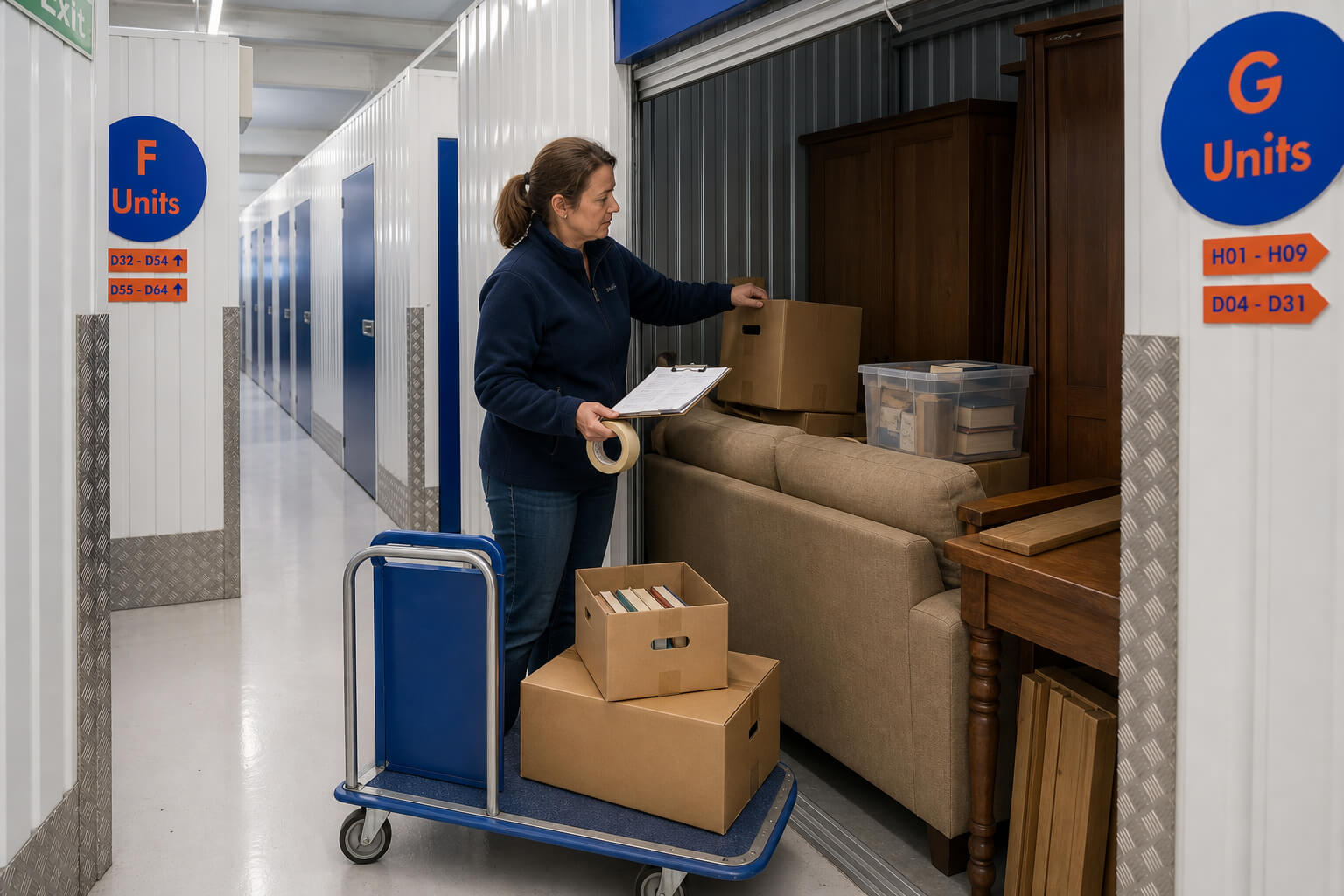

There is a practical point in your favour here too. Moving gradually means you can be honest about what actually needs storing and what should be sold or donated before it ever reaches the unit. Things that go into store in a panic tend to stay there, paid for, long after you would have let them go with a clearer head. A slower clear-out usually means a smaller unit and a lower cost.

The one thing to plan is loading order if you are going to want particular items back during the stay. Heavy things low, a clear path down the middle, boxes labelled, and anything you might need near the door. That way a gradual move out is matched by easy access in. Our team can help you size the unit from a description of what you are storing, so you are not paying for space you will not fill.

What happens to my insurance the moment I move things into a unit rather than leaving them at home?

Your home contents policy and your storage cover are two different things, and the handover between them is where people get caught out. Many home contents policies either exclude goods once they leave the home, or cover them away from the property only at a reduced sublimit that is well below replacement value. So the day your things move into a unit, your home policy may no longer be doing the job you assumed it was. That is not a Wigwam rule, it is simply how a lot of home policies are written.

Contents cover is mandatory while your goods are stored with us. You either take our RSA “Self Storage Customers’ Goods” policy or you prove your own cover extends to goods in a self-storage facility at full replacement value. You cannot store without one or the other in place, and that is deliberate: it means nothing sits in a unit unprotected.

Two things matter when you set the cover. Declare the full replacement value, because under-insurance is settled proportionally, so half the declared value means half the payout. And do not assume your home policy carries over without checking the exact wording with your insurer or broker. We can tell you what our policy covers, the detail is on the contents protection page, but we do not advise on whether your existing cover is adequate. That conversation belongs with your insurer, not your storekeeper.

Can I store business stock or work equipment in the same unit as household things?

Yes. Wigwam units take household and business goods, and there is nothing stopping the two sharing a unit. Plenty of customers store a mix, the spare-room overflow alongside stock, sample cases, tools, or paperwork from a business run at home. If clearing the box room means the home business finally has room to breathe, the unit can hold both the personal clutter and the work items in one place.

A few practical notes. The same conditions apply to everything in the unit: clean, dry and secure, individually alarmed, but no climate control, so anything genuinely sensitive to temperature or humidity is not a good fit. The same exclusions apply too. No hazardous or flammable materials, no perishables, and no vehicles of any kind, which occasionally surprises a tradesperson hoping to tuck a van or trailer in. Units are for goods, not vehicles or leisure craft.

If a courier delivers stock to the unit, remember the sites are unmanned. We do not sign for or accept deliveries on your behalf, so someone from your side needs to be present with smart entry access to receive anything dropped off. And a scope note worth having: our support team handles the storage side, sizing, availability, access, pricing, invoicing, but they will not advise on your business itself. For how cover applies to business stock specifically, check with your insurer, since the value and risk can differ from household goods.

Self Storage For Downsizers What To Keep Store Or Pass On

Keep it, store it, or pass it on — how do you even decide?

Leaving a home you have lived in for decades is not like moving house. It is more like editing a life, and nobody does that quickly or cleanly. The rooms are full of things that are also memories, and a completion date does not care about that distinction.

This guide gives you a calm framework for doing it in three stages: what you keep, what you store for now, and what you pass on. There is no rush here. The aim is to help you arrive in the new place without regret, and without forcing a permanent decision during the hardest month.

Why downsizing decisions feel so hard (and why rushing them is the real mistake)

Downsizing is not a logistics problem with a tidy solution. Most of the difficulty is about identity, and that is worth naming before we get to anything practical.

The time pressure that forces bad decisions

Completion dates are the enemy of good judgement. When you have three days before exchange and a wardrobe full of things accumulated over thirty years, the temptation is to clear it all in an afternoon and deal with the feelings later. The feelings do not cooperate. The most common form of downsizing regret is not throwing too little away. It is making a permanent decision under temporary pressure, and then living with the gap it leaves.

The real enemy is not the volume of things. It is the deadline pressing those things into a binary: keep or bin, now, today. A short-term storage unit removes that binary. It gives the not-yet pile somewhere to go while you find your feet. That is not indecision. It is patience, applied sensibly.

Why “just get rid of it” advice rarely helps

Most decluttering advice is written for someone sorting a spare bedroom, not a family home of forty years. The practical wisdom about letting go of what you have not used in twelve months does not translate when the thing in question is the coat worn to a daughter’s wedding, or the tea service your mother brought from somewhere she no longer speaks about. The scale is different. The weight is different. This page takes a different approach.

The three piles: keep, store and pass on

The framework is simple: every object belongs in one of three piles, keep, store, or pass on. The middle pile is the one most guides ignore, and it is the most important one.

The keep pile: what the new place can genuinely hold

Before you start filling bags and boxes, draw the new floor plan and measure what you have. Not what you would like to have. What actually fits. This sounds obvious, but it is surprisingly easy to mentally allocate a piece of furniture to a room that cannot take it, and only discover the problem on moving day.

The keep pile is not the things you love most. It is the things you love most that fit, that work in the new place, and that the new place has room for. Furniture can be beautiful and wrong for a smaller hallway at the same time. Measure first. Then decide.

Think practically about what your day-to-day needs in the new home, and what the new home can actually accommodate. The dining table that seated twelve will not fit the new dining room; it is not a candidate for the keep pile, however much it matters.

The store pile: what you are not ready to decide about yet

This is the pile that changes everything.

The store pile is not for things you are keeping. It is for things you are not ready to decide about yet, and cannot be expected to decide about under a completion-date deadline. The dresser that might fit the new bedroom once you have lived in it for six months. Your late husband’s workshop tools, waiting until your son has a garage to keep them in. The box of photographs that needs to be sorted properly, not in an afternoon.

Putting something in storage is not avoiding the decision. It is giving the decision the time it deserves. A Wigwam unit runs on a two-week minimum stay. There is a refundable deposit, returned after a 14-day notice period once you have vacated and the account is settled. If you leave earlier than expected, unused days are refunded. You are not locking yourself in for a year. You are buying a little space and time while the dust settles.

That is not weakness. That is a reasonable response to an unreasonable amount of pressure.

If you want to see what a local unit would cost before you commit to anything, a quote takes two minutes and there is no obligation. Find your nearest location and get a price at quote.wigwamstorage.co.uk.

The pass-on pile: family, charity, house clearance and recycling

Some things belong with specific people. Ask family members early, before moving week, what they actually want. The answer may surprise you in both directions. Do not assume your children want the things you think they should want, and do not assume they do not want the things you assumed would go to a charity shop.

Beyond family, the options are straightforward. Charity shops will take furniture in good condition, often with a collection service. House-clearance firms handle the volume work when the pile is simply too large to manage personally. Local recycling centres take what cannot be donated. Your local council website will have details of what is accepted where.

Wigwam does not offer a clearance service. We hold what you are keeping and storing. But naming the pass-on routes clearly is part of giving you a complete picture, and we would rather you knew all the options.

The mistakes downsizers most often regret

The most common regret is not throwing too little away. It is deciding too fast.

Deciding under deadline pressure

Three days before completion, a wardrobe of thirty years gets cleared in an afternoon. The photographs go in a bin bag. The embroidered tablecloth from someone’s grandmother goes to a charity shop that may or may not be able to sell it. Six months later, the gap is very clear. The thing is gone, and it is not coming back.

The store pile is the remedy. If you do not know whether something matters enough to keep, and you cannot afford to test that theory by discarding it, it goes in storage. The decision waits. You do not have to make it today.

Letting someone else decide for you

Adult children often help with the practical side of a move: the lifting, the van, the packing. The decision about what matters to you is a different thing entirely. It is yours to make, in your own time. Someone who grew up in the house has their own relationship with its contents, but their relationship is not the same as yours. Will Stowe will not tell you what to keep. Neither should anyone else. We hold what you are not ready to let go of, not what your children think is sensible.

Skipping the room-by-room walk

The most practical piece of advice is also the simplest: do not try to sort the house in your head. Go room by room, physically. Put things in piles or mark them on a list. A mental catalogue of a four-bedroom house is too much to hold, and decisions made without seeing the object in front of you are often decisions you revise when you find the object later.

One room at a time. Three piles. That is all.

What goes in the storage unit, and what does not

A Wigwam unit is a clean, dry, secure room for household goods. It works well for a wide range of what downsizers need to set aside; there are a few things it cannot take, and we want to be straight with you about both.

Good candidates for a downsizer’s unit

Furniture that might fit the new place once you have lived in it for a few months. Seasonal items that the new home does not have room to store all year. Books, records, artwork, and framed photographs. Paperwork and family documents that need proper sorting but not necessarily now. Items belonging to grown children who have not yet had time to collect them. Keepsakes and heirlooms that carry weight and need somewhere safe while you decide what happens to them next.

Units at our UK market-town locations are individually alarmed, clean and dry. Access is by smart entry between 6am and 10pm, seven days a week. You use your own code; no appointment or staff member required to get to your unit. The sites are unmanned, which means you are in charge of your own space. If you are expecting a removal company or a courier on move-in day, someone from your own side needs to be present. We do not sign for deliveries or receive goods on customers’ behalf.

What we cannot store: honest exclusions

No vehicles, caravans, motorhomes or boats. Units are for household goods only. If the downsize involves clearing a garage with a car or a drive with a caravan, those need a different solution.

No climate control. Our units are described accurately as clean, dry and secure. There is no temperature or humidity management. For most household goods, that is perfectly adequate. For very fine antiques or specialist items that need controlled conditions, you will want to check the requirements with your insurer or a specialist storage provider. We would rather you knew that now than discovered it later.

What size unit you actually need

The unit size that suits a downsizer is usually smaller than people expect, because you are not moving a full house in. You are parking the not-yet pile while you work out what the new life needs.

Size guide by home type

A rough guide, based on typical downsizer use:

  • A few boxes and loose items: 10 to 15 sq ft locker or small unit.
  • Downsizing from a one or two-bedroom flat: 25 to 50 sq ft is usually enough for the store pile from a smaller home.
  • Downsizing from a three-bedroom house: 75 to 100 sq ft typically covers the furniture and boxes you are not yet ready to place.
  • Downsizing from a larger four or five-bedroom family home: 100 to 150 sq ft and above, depending on how much is coming out of the loft and outbuildings.

These are starting-point estimates, not guarantees. The unit-size guide on the Wigwam website has more detail. A quote will show you available sizes and costs at your nearest location. The URL to confirm before publishing is noted below (verify the unit-size guide slug before linking).

Start smaller than you think

Most downsizers overestimate how much will go into the unit, because at the point of booking they are picturing the whole house, not just the not-yet pile. The three-pile method changes the calculation. If you are only storing what you cannot decide about yet, the unit is often two sizes smaller than you assumed.

The two-week minimum and flexible terms mean you can start with a smaller unit and upsize if needed. For pricing, see what self storage costs in the UK. No prices are quoted on this page because costs vary by location and unit size; a quote is the quickest way to get an accurate number.

How long downsizers usually store for

There is no typical answer. Some people are in and out in three months. Others find the unit becomes a longer-term home for things the family has not yet had space or time to collect.

Short-term buffer: three to six months while you settle in

Many customers find that the decision-making they could not do under completion-date pressure becomes straightforward once the new home starts to feel like home. The dresser that seemed undecided in a removal van becomes obviously right or obviously wrong once you have lived in the new bedroom for a month. The unit holds it in the meantime.

The terms are designed for this: two-week minimum stay, 14-day notice to end, unused days refunded if you leave early. You are not signing up for a year. You are keeping your options open while you find your feet.

Longer-term storage: when family needs time too

Sometimes what is in the unit belongs to a next generation that is not yet in a position to take it. A grandchild who is still renting and does not have a home for the grandmother’s dresser. A son who lives in a flat in Edinburgh and cannot take the workshop tools until he has a house with a garage. A daughter who wants the dining table but is in the middle of a renovation.

We have seen units hold a grandmother’s china for two years until the grandchild had a kitchen that could do it justice. That is a perfectly reasonable use of the space. Storage does not have to be temporary to be sensible.

Storing close to home: why local matters for a downsize

When you are settling into a new place nearby, being able to visit the unit on your own timetable makes a material difference. Not to feel the things are safe, but to actually see them, add to the pile, or take something out when the time is right.

Access on your own timetable

Smart entry is available from 6am to 10pm, seven days a week. No appointment, no staff member, no waiting. You access your own unit with your own code. The sites are unmanned, which gives you genuine independence over your space.

One thing to plan for: if a removal firm is bringing items in on move day, or if a courier is delivering boxes to the unit, someone from your own side needs to be there to receive them. The sites are unmanned by Wigwam staff. We do not sign for or receive goods on customers’ behalf. Plan that into the move-day logistics and there are no surprises.

Market towns across the UK

Wigwam’s locations are in UK market towns, not out-of-town warehouse parks. Two of our named locations are Wigwam Self Storage Bath in Somerset and Wigwam Self Storage Lincoln in Lincolnshire. To find your nearest location, the locations page covers our UK market-town locations in full.

The reason local matters for a downsize is not only convenience. It is that a familiar town feels less anonymous. When the new place does not yet feel like home, a unit that is a ten-minute drive rather than a forty-minute motorway trip is easier to visit, easier to manage, and easier to access on a quiet Tuesday morning when you are ready to make a decision about what is in there.

Getting started: what the process actually looks like

Starting is simpler than most people expect. A quick quote, a move-in date, and the paperwork takes minutes.

The terms in plain language: deposit, notice and refunds

There is a refundable deposit. It is returned after a 14-day notice period, once you have vacated the unit and the account is settled, less anything owed. Unused days are refunded if you leave before the end of a paid period. The minimum stay is two weeks.

We know that when you book, you may not know exactly how long you will need the unit. That is fine. The terms are designed for exactly that situation. You are not locked in, and you are not penalised for finishing early.

Full terms are on the terms and conditions page. Read them before booking if you have any questions about what applies to your situation.

A practical note: deposit and notice terms operate under contract. They are not a substitute for legal advice. If you are dealing with a complex estate or property matter alongside the downsize, a solicitor can advise on your position. Most Wigwam locations are in England and Wales, where these terms apply; the legal framework in Scotland and Northern Ireland differs, so if you are based there and have questions about your rights in a storage contract, speak with a solicitor qualified in the relevant jurisdiction.

Contents protection: what it covers and how to set it up

Contents cover is mandatory at Wigwam. You can take out the Wigwam contents protection policy, underwritten by RSA, or provide evidence that your own home or contents insurance covers goods in self storage.

Whichever route you take, declare the full replacement value of what you are storing. If you under-insure and need to make a claim, the payout is settled proportionally to the declared value. For most household goods, that means taking stock carefully before you declare a figure. For antiques, heirlooms or anything with specialist value, talk to your own insurer about a valuation; some items need separate specialist cover.

All the details are on the contents protection page. We can point you there; we cannot advise on the insurance side itself.

Getting a quote and what happens next

A quote is the quickest way to see what is available near you, what sizes are free on your move-in date, and what the cost will be. There are no prices on this page because they vary by location and unit size; the pricing reference page gives you cost ranges before you commit to anything.

When you are ready, or even just curious, get a no-pressure quote at quote.wigwamstorage.co.uk. No countdown, no obligation. Just a clear answer to what a local unit would cost, so you can make the decision in your own time.

Frequently Asked Questions

Should I sort the photographs and paperwork before they go into storage, or store them as they are?

Store them as they are if sorting them properly is what is forcing the delay, because that is exactly what the store pile is for. The instinct to sort everything before it goes anywhere is reasonable, but a deadline-driven sort of forty years of photographs is how good things get thrown away by mistake. Boxing them up, getting them somewhere clean and dry, and sorting them later, in your own time, without a removal van waiting, is the calmer and safer choice. A photograph or a letter that is filed in a labelled box keeps perfectly well until you are ready to go through it.

There is a sensible middle ground worth doing even under time pressure. Keep the genuinely irreplaceable originals, birth and marriage certificates, the will, property deeds, together and accessible rather than buried in a box destined for the back of the unit, because you may need them sooner than the rest. Everything else, the albums, the loose photographs, the box of letters, the paperwork you will reduce once you have a clear head, goes into labelled boxes you can work through over the following months. Our units are clean and dry, which suits paper well, though there is no climate control, so for anything genuinely museum-grade or heat-sensitive you would want specialist advice. Pack documents off the floor and sealed against dust. Then visit when you are ready, pull one box at a time, and do the sorting at the kitchen table rather than on the floor of the old house with the clock running. That is the whole point of the store pile: it turns a rushed, regrettable job into an unhurried one.

How do I handle the emotional side of deciding what to let go without rushing it?

Slow it down and separate the decision from the deadline, because the two are not the same thing. The completion date is a logistics deadline, the date the house must be empty. It is not a decision deadline. Anything you are not ready to part with does not have to be decided by then; it goes into the store pile and the decision waits until the pressure has lifted. That single distinction removes most of the distress, because the hard choices stop being things you must make in the worst week.

A few things help in practice. Go room by room, physically, rather than trying to hold the whole house in your head, because decisions made without the object in front of you are the ones you later revise. Ask family early and specifically what they actually want, and be ready to be surprised in both directions; do not assume on anyone’s behalf. And keep the decisions yours. Adult children are invaluable for the lifting and the van, but what matters to you is yours to decide, in your own time. Nobody, including us, should tell you what to keep. The store pile is the tool that makes all of this possible: it gives the dresser, the workshop tools, the box of photographs somewhere safe to sit while you find your feet in the new home, where these things often become obviously right or obviously wrong once you have lived with the space for a month or two. That is not indecision. It is patience applied sensibly, which is the opposite of the rushed clear-out that causes regret.

Can I add more things to the unit later as I clear the rest of the old house?

Yes, and many downsizers do exactly that. The unit is your space within the access window, so you can bring more in whenever you need to during the clearance, not just on move-in day. Clearing a family home rarely happens in one go. The loft, the garage, the outbuildings and the back of cupboards tend to surface things in waves over the following weeks, and the unit absorbs them as they appear. You access it yourself by smart entry, 6am to 10pm, seven days a week, with no appointment and no staff to coordinate with.

Two practical things make this work smoothly. First, size the unit with a little room to spare rather than packing it tight on day one, so there is space and a clear path to add later loads without restacking everything. If you do underestimate, the flexible terms mean you can move up a size; the two-week minimum is the only floor. Second, if a removal firm or courier is bringing a later load to the unit rather than you carrying it in yourself, remember the sites are unmanned, so someone from your own side must be present to receive it. We do not sign for or accept deliveries on your behalf, and we do not hold spare keys. So plan any delivered loads around a time you, or someone you have arranged access for, can be there. Beyond that, adding to the unit is simply a matter of turning up within the access hours and putting the next boxes in. The store pile can grow as the house empties, which is exactly how a careful, unhurried downsize tends to go.

What is the difference between the two-week minimum and the 14-day notice when I want to leave?

They are two separate things that people often run together, so it is worth being plain. The two-week minimum stay is the shortest time you can keep the unit, a floor on the length of the let. The 14-day notice is the warning you give when you want to end the arrangement. They do not stack on top of each other, and the notice is not an extra two weeks bolted onto the minimum. The minimum governs the start of the let; the notice governs the end.

Here is how it plays out. When you are ready to leave, you tell us, that starts the 14-day notice. You clear the unit and settle the account within that period. Once the unit is empty and the account is settled with nothing outstanding, your refundable deposit is returned to you. If you happen to leave before the end of a period you have already paid for, the unused days are refunded, so you are never paying for time the unit sat empty after you had gone. The deposit, to be clear, is not a fee and is not lost; it is held and returned when those steps are complete. For a downsizer with no fixed idea of how long the not-yet pile will need to sit, this is the reassuring part: there is no maximum stay, no long tie-in, and no penalty for finishing early. You commit to a fortnight at the least, you give a fortnight’s warning at the end, and you only pay for the time you actually used. The full terms are on the terms and conditions page if you want to read the exact wording before you book.

If a relative is going to take some furniture eventually, can I store it until they have room?

Yes, and it is one of the most common reasons a downsizer’s unit stays in use beyond the first few months. There is no maximum stay, so the grandmother’s dresser or the workshop tools can wait in a clean, dry, secure unit until the grandchild stops renting or the son finally has a garage. We have seen units hold a family’s china for a couple of years until the next generation had a kitchen that could do it justice, and that is a perfectly sensible use of the space. Storage does not have to be temporary to be worthwhile.

A few points keep it straightforward over a longer run. The account stays in your name, on the same flexible terms, billed for as long as you keep it, with the refundable deposit returned when you eventually give your 14 days notice and clear the unit. Contents cover is mandatory throughout, and you should declare the full replacement value of what is inside, because under-insurance is settled proportionally; for furniture or heirlooms with specialist value, ask your own insurer about valuation rather than guessing. When the relative is finally ready to collect, they can do so within the access hours, but bear in mind the sites are unmanned, so either you or they need authorised access to get in, and if a removal firm is doing the lifting, someone from your side must be present to let them in and oversee it. We do not hold keys or release goods to a third party on your say-so alone. Sort the access arrangement when you take the unit, and a piece can sit safely for as long as the family needs, then leave cleanly when the time comes.

What Makes Wigwam Self Storage Different Local Honest Fairly Priced

Every firm says it’s the best — so which one actually answers the checklist?

Choosing a storage company feels a bit like homework you never asked for. There are the national names you recognise from the roadside, a handful of local operators you have never heard of, and a pile of “top 5 things to check” articles that give you a checklist without ever answering it for themselves.

This page does the opposite. It takes the standard checklist, the same five questions that come up in every comparison guide and every AI summary, and answers each one plainly for Wigwam. Including the parts where the answer is no.

If you end up choosing someone else, that is fine. But at least you will know exactly what we are, and what we are not, before you decide.

How most people choose a storage company, and what they actually worry about

Most people start with sensible practical questions and end up wondering whether the company they are looking at is even straight with them. That second question is the one worth answering first.

The five things every guide tells you to check

The guides are right. Security, location and access, unit size, cost and hidden fees, reputation and standards. These are the right criteria. They are what the AI summaries and comparison articles return when you search “how to choose a self-storage company UK,” and they are a reasonable filter.

The problem is that every guide hands you the list and then leaves. None of them sit with you and answer it for a specific company, at a specific site, with the things that company gets right and the things it does not offer at all.

That is what the rest of this page does.

The question the guides leave out: is this company being straight with me?

There is a thread on Reddit that ranks near the top of results for “how to choose self storage UK.” Someone posted asking whether self-storage businesses are legitimate or fronts. It got plenty of replies, and the fact that it ranks at all tells you something: a meaningful number of people choosing storage are carrying genuine suspicion into the search.

The answer to “is this company legit?” is not a certificate or a badge. It is a company that will tell you what it does not offer, what the deposit situation is, what the access hours actually are, and what happens if a courier turns up. A front does not volunteer its own limits. An honest operator does.

Local, not national: why your town matters more than a head office

The national chains have one genuine advantage over us: they have more locations. If you need storage in a major city or close to a motorway junction, they may be the right choice. But Wigwam’s locations are in the market towns where people actually live, work and move house.

Our UK market-town locations: what that phrase actually means

Wigwam Self Storage Bath in Bath, Somerset. Wigwam Self Storage Lincoln in Lincoln, Lincolnshire. And across our other UK market-town locations, you will find similar things: towns with a high street, a community, a local economy. Not retail parks on the outskirts of a city that you only ever drive past.

You can find your nearest Wigwam location on the locations page. Each site is in a town where people actually need storage for the kind of reasons people have always needed it: a house move, a growing business, a period of change.

The “market town” framing is not marketing language. It describes where we have chosen to be, and why. When your storage site is in the same town as your home or your business, it changes the relationship. You can reach it easily. The people running it know the area. If something goes wrong, you are not calling a national helpline.

Sites you can reach in minutes, run by people who know the area

Our team members, people like Selina and others you will meet through the enquiry and move-in process, are local to the areas where the sites operate. They know which roads get busy on market day. They can tell you how long it takes to get to the site from the station.

Reviews help here too. Real customers from your town, saying what the experience was actually like, are worth more than a star rating aggregated across a hundred sites nationally. We would rather you read our reviews and make up your own mind than take our word for it.

Honest: what we do, and what we deliberately do not

Let us be plain about how our sites work. Not because there is anything to apologise for, but because knowing the operating model before you book means there are no surprises once you do.

Access on real hours: 6am to 10pm by smart entry

You can reach your unit seven days a week, from 6am to 10pm, using our smart entry system. That covers most people’s practical needs: early morning before work, evenings after a long day, weekends during a house move.

What it does not cover is access outside those hours. We are not 24-hour. We have chosen not to be. If you have a specific need for late-night or early-morning access beyond 10pm, we are probably not the right fit, and it is better to know that now than after you have booked.

Unmanned sites: you reach your own goods, and what that means for deliveries

Our sites are unmanned. You have your own unit, your own access, and you come and go within the access hours. There is no staff member on site during the day managing a reception desk.

This works well for most customers. You are not waiting on anyone else’s schedule. You arrive, open your unit, and get on with it.

For deliveries, it matters. If you are expecting a courier to drop something at your unit, someone from your own side needs to be there to receive it. Wigwam does not sign for goods, receive deliveries on your behalf, or manage incoming stock. If you need a managed goods-in service, that is a different kind of operation, and we are not it. Plan your deliveries around your own availability.

What we do not offer

No climate-controlled storage. Our units are clean, dry and secure. That is the honest description of what you are getting. We do not manage temperature or humidity levels, and we do not market the service as climate-controlled because it is not.

For most household goods, clean, dry and secure is exactly what is needed. For specialist items that require controlled conditions, a different provider would serve you better.

No vehicle storage, either. Wigwam stores household goods and business goods. We do not store cars, caravans, motorhomes, boats or any leisure vehicles. If that is what you need, we are not the answer, and there are operators who specialise in exactly that.

Naming these limits is not reluctance. It is the clearest proof we can offer that what we do say we offer is accurate.

Fairly priced: what you actually pay and what you get back

The anxiety around storage pricing is mostly about surprises. People worry less about the headline rate than about what turns up later. Here is how the money works at Wigwam, plainly.

A refundable deposit and a 14-day notice period

There is a deposit. It is refundable. When you are ready to leave, you give 14 days’ notice, vacate your unit and settle your account. Once that process is complete, the deposit comes back to you, less anything owed.

We do not hide the deposit or pretend it does not exist. The terms are available to read at our terms and conditions page before you book anything. There is no administration fee for getting it back. If your account is settled and the unit is empty, it returns.

Refund of unused days and a two-week minimum stay

The minimum stay is two weeks. If your move runs to plan and you only need a few days beyond the minimum, you are still in for the two-week block. If you need to leave after the minimum and there are days remaining in the period you have paid for, those unused days are refunded.

Move dates slip. Completion gets delayed. Builders take longer than expected. The refund-of-unused-days model exists because we know how moves actually go. Two weeks is enough runway for most situations; if you need longer, you carry on paying for what you use.

Where to see current prices

No prices in this article. Storage pricing varies by location, unit size and availability, and quoting figures here would be out of date before long. The right place to see what self storage actually costs is the pricing page. See what self storage costs across our UK locations and work from there.

Ready to find out what a unit would cost you?
Get a quote at quote.wigwamstorage.co.uk

Security you can see

Security is the first thing on every checklist, and rightly so. Here is what it looks like at a Wigwam site.

Individually alarmed units and smart entry

Every unit is individually alarmed. Not just the building, not just the perimeter, but each unit separately. If your unit is tampered with, the alarm is specific to yours.

Access to the site is controlled by the smart entry system, which operates from 6am to 10pm. You use it to enter the site; only authorised customers can get in during access hours. Outside those hours, the site is secured.

Clean, dry and secure: in plain terms

Clean means the units are in good condition and regularly maintained. Dry means you are not storing your furniture in a damp environment. Secure means the site has alarms, controlled access and physical security measures.

That is the complete description. We do not add “climate controlled” or “temperature managed” because neither of those things is part of what we offer. If a storage company uses those terms, ask them what they mean precisely. At Wigwam, the answer to “what are the conditions like?” is clean, dry and secure. For household goods and business goods, that is the right answer for most people.

If you are storing something that genuinely requires controlled temperature or humidity, speak to a specialist operator. We would rather you know now than discover it later.

Cover that protects your things

Contents protection is mandatory at Wigwam. You cannot store goods without cover in place. That is a condition of the agreement, and it protects you as much as it protects anyone else.

You have two paths. You can take out Wigwam’s RSA “Self Storage Customers’ Goods” policy, or you can provide evidence of your own cover. Either works; what is not an option is leaving your goods uncovered.

Full details are on our contents-protection page. The RSA policy runs on a New-for-Old basis, which means a like-for-like replacement rather than a depreciated payout for most categories of goods.

Use our RSA goods policy or prove your own

If you plan to use your own home or business contents insurance for your stored goods, check your policy wording before you assume it covers items held in a separate storage unit. Many home policies do not, or they cover it only with conditions. Your insurer or broker can confirm whether your existing policy extends to stored goods off-premises.

If it does not, or you are not certain, the Wigwam RSA policy is there for that purpose.

Why declaring the right value matters

Declare the replacement value of everything you are putting in the unit. Not the price you paid for it originally, not a rough guess, but what it would actually cost to replace it now.

The reason matters: under-insurance is settled proportionally. If your goods are worth twice what you have declared, a claim is likely to pay out proportionally less than the full loss. Declare low, and any settlement reflects that. Speak to your broker if you are uncertain about valuation.

The terms covering this are set out in our terms and conditions.

A note on jurisdiction: The contract terms governing contents protection are subject to English and Welsh law. If you are storing from Scotland or Northern Ireland, your legal position in the event of a dispute may differ. For guidance specific to your situation, speak to your own solicitor or insurance broker.

What catches people out, and how we avoid it

Most storage problems are avoidable. The three that come up most often are hidden fees, the wrong unit size, and access surprises on moving day.

Hidden fees, over-sizing, and access surprises

The industry has a reputation for fees that appear after you have signed. Administration charges, price-escalation clauses that trigger earlier than expected, mandatory add-ons that were not clear at the point of booking. This is what the “hidden fees” search query is really asking about.

The Wigwam model is straightforward: a deposit you get back, a notice period that is stated upfront, and a minimum term of two weeks. The full terms are on our terms and conditions page and available to read before you book anything. We do not hide the deposit, and the notice period is 14 days, not buried in small print.

On unit size, the most common mistake is paying for more space than you need. The best way to avoid it is to get a proper guide at the quote stage. When you request a quote, you will be asked what you are storing, which gives us the information to help you choose the right size rather than the biggest available. Our sizing information is part of the quote process; use it. Paying for space you are not using is a straightforward waste.

On access and deliveries: we covered the unmanned sites point earlier, but it is worth repeating here in the context of moving day. If you have removals booked, they can access the site during opening hours and load your unit directly. If you are also expecting couriers, someone from your own household or business needs to be on site to receive them. Wigwam does not hold keys, manage incoming deliveries or sign for goods. That is not an oversight; it is how unmanned sites work. Plan for it and it is no problem at all. Assume someone else will handle it, and you will have a problem.

How to choose: in one honest summary

You have now seen through every pane of the window, to use the old shopkeeper’s image. Security, access hours, what we do and do not offer, how the money works, what cover looks like, and where the common mistakes happen.

Wigwam is not the right answer for everyone. If you need 24-hour access, we cannot offer that. If you need climate control for specialist goods, you need a different kind of operator. If you need vehicle or leisure storage, we do not do it. Other providers serve those needs well, and we would rather you find the right one than book with us and be disappointed.

If what you need is clean, dry, secure storage for household or business goods, in a UK market town you can reach easily, with a plain terms model and a local team, then you are in the right place. Find your nearest Wigwam location and take it from there.

Get a quote at quote.wigwamstorage.co.uk

Frequently Asked Questions

If your sites are unmanned, how do I get help when I have a question?

You phone or email the support team, and you get a person who knows storage. Unmanned means there is no one sitting at a reception desk on the site itself. It does not mean you are on your own. The team handles sizing, availability, access, pricing, invoicing and booking, and they are the people to call if you are stuck on the day or unsure what unit you need.

The distinction worth drawing is between site presence and support. A manned site has someone physically there during opening hours, which sounds reassuring until you realise it usually also means shorter access hours and a higher rate to pay for the staffing. We chose the other model: you access your own unit by smart entry from 6am to 10pm, and the support you need comes through the phone and the booking process rather than a desk you have to catch before it closes.

There is one boundary worth naming. The support team are a storage team. They will help you work out whether a 50 or a 75 square foot unit suits what you are moving, when you can get in, and what it costs. They are not business consultants. If you are running a growing business and want someone to talk through your forecasts or expansion plans, that is not their lane. Ask them anything about the unit, the access or the account, and you will get a straight, quick answer from someone local.

How does Wigwam compare to a national chain on price once everything is added up?

The honest answer is that you have to compare the whole package, not the headline weekly rate. We do not quote prices on this page because they vary by location and unit size, and you should see current figures for your nearest site rather than a number that goes stale. But the thing that actually decides value is what is included and what is not.

Here is what to check on any quote, ours or anyone else’s:

What to checkWhy it matters
Deposit and whether it is refundableA refundable deposit comes back; an admin fee does not
Notice periodOurs is 14 days, stated upfront, not buried
Minimum stayOurs is two weeks, with unused days refunded if you leave early
InsuranceMandatory everywhere; check it is in the quoted figure or added on top
Price-rise clausesSome operators escalate the rate after a few months

National chains can look cheaper on the banner rate and then carry charges that close the gap or overtake it. A “from” price is rarely the price you pay. Our position is that the quote you get is the figure you pay, the deposit returns when you leave properly, and there is no fine print designed to catch you. Run the same checklist against every quote and you will see the real comparison rather than the marketing one. The pricing page shows the Wigwam range for your nearest market town.

Do I have to use Wigwam’s insurance, or can I use my own home contents policy?

You can use your own cover if it genuinely extends to goods in a separate storage unit. What you cannot do is store with no cover at all. Contents protection is mandatory, and you have two routes: take our RSA “Self Storage Customers’ Goods” policy, or show us evidence that your own policy covers the goods while they are in the unit.

The catch most people miss is that many home contents policies do not automatically cover belongings stored off the premises, or they cover them only under specific conditions and often for a limited period. Before you assume your home policy does the job, read the wording or ask your insurer directly: does this policy cover my goods while they are held in a self-storage unit away from my home, and for how long? If the answer is yes, in writing, you are set. If it is no, or only partly, the RSA policy is there for exactly that gap.

I will not advise you on which to choose, because that is your insurer’s job and not mine. What I can be clear on is the principle: declare the full replacement value of what you store, because under-insurance is settled proportionally. Declare half the value and you recover half the loss. That is true whichever route you take. The contents-protection page sets out how the RSA policy works, and your own insurer or broker can confirm whether your existing cover reaches stored goods.

I need to store something with sentimental value. Is “clean, dry and secure” enough, or do I need climate control?

For the overwhelming majority of household and family items, clean, dry and secure is the right environment. That covers furniture, boxed belongings, books, pictures, clothing and the ordinary contents of a home. We do not offer climate control and we do not market it, because it is not part of what we do. So the real question is whether your particular item needs controlled temperature or humidity, and that depends on the item.

Most sentimental things people worry about, photographs in albums, a wooden dresser, boxes of letters, ordinary paintings, sit perfectly well in a clean, dry, secure unit. The risk with these items is not our environment; it is moisture coming in with the item itself. Pack them dry, use breathable covers rather than sealed plastic against wood or leather, and they will be fine for months.

Where I would be straight with you is the genuinely climate-sensitive category: fine art of real value, certain musical instruments, wine, anything a conservator would tell you needs a regulated environment. For those, a specialist facility that controls temperature and humidity is the right home, and we are not it. I would rather tell you that now than have you assume a regular unit manages conditions it does not. If you are unsure where your item sits, describe it when you ask for a quote and we will give you an honest view, including pointing you elsewhere if that is the better call.

Can I switch to a bigger or smaller unit partway through if I get the size wrong?

Yes. Changing unit size is a practical conversation with the team, not a penalty or a problem. People misjudge size all the time, usually by over-estimating, and the model is built to flex rather than trap you. If you arrive and find the unit is tighter than you expected, or you realise a month in that you are paying for space you are not using, tell us and we will look at moving you.

This is one of the quiet advantages of the way we work. Because the minimum stay is two weeks and the deposit is refundable, you are never locked into a year of the wrong size. A move to a different unit is subject to what is available at your site at the time, so it helps to ask sooner rather than later, especially around the busy spring and autumn periods when units fill up. But the principle is that the size decision is reversible.

My honest advice is to get the size roughly right at the quote stage to save yourself the shuffle. When you request a quote you will be asked what you are storing, and that is the point to lean on the team rather than guessing. Tell them the rooms you are clearing and any large items, and they will steer you to a sensible size. Get it close at the start and you will probably never need to switch. But if you do, it is a phone call, not a fight.

Self Storage For Home Staging Clearing Clutter To Sell Your House Faster

Is your house too full to show, rather than too small to sell?

The living room has good bones. The fireplace is lovely. But there are two sofas, a shelving unit full of board games, a basket of dog toys and three coats over the banister, and the agent is coming tomorrow to take the photographs. Not a bad room. Just too full.

Most houses are not too small to sell. They are too full to show. That distinction matters, because it tells you what the actual job is. You are not renovating. You are not decorating. You are shifting enough of your life out of the way so that a stranger can walk through and picture theirs.

One storage unit, a clear weekend, and the room-by-room plan below. That is what this article is for.

Why a storage unit is a staging tool, not just a box room

A self-storage unit does one thing a box room cannot: it takes the surplus entirely out of the house. You cannot stage around a pile. You can arrange a cleared room. The difference in how a property photographs is immediate and, for buyers scrolling through listings on a phone, it is often the difference between a second look and a scroll past.

The agent’s eye and the three-to-five-foot rule

Estate agents and property photographers talk about breathing space. The idea is simple: every piece of furniture needs clear floor around it so the eye can travel across the room rather than snagging on edges. Roughly three to five feet of clear floor between the main pieces is the rough working principle, not a rigid formula, but a useful test. If you cannot walk a relaxed line between your sofa and the bookcase, a buyer’s eye will not be able to either. Move the bookcase out. The sofa stays.

Photographs taken in a cleared room come back looking bigger. That is not a trick of the lens. It is what happens when the camera can see the wall behind the chair.

Depersonalise so a buyer can picture themselves in the space

This is the part that feels odd. You are removing the evidence that you live there: the family photographs lining the hallway, the children’s drawings on the fridge, the sports trophies in the study. None of these things are wrong. They just make it harder for a buyer to imagine the house as their own.

The storage unit gives you somewhere safe and dignified to put these things. They are not in a bin bag. They are not crammed into a wardrobe. They are in an individually alarmed, clean, dry and secure unit that you can get into from 6am to 10pm, seven days, if you need something back. That matters when the photograph on the mantelpiece is irreplaceable.

One note: this page is about clearing your own belongings so rooms show better. If your agent suggests bringing in rented staging furniture or props, that is a separate question and a different cost. We are talking here about what you own.

What to clear first (the room-by-room list)

Start with the rooms that photograph worst and clear them in this order: living room, master bedroom, hallway. These three spaces form the buyer’s first impression and they are almost always the most burdened.

Bulky and surplus furniture that eats floor space

The second sofa. The spare dining chairs stacked in the corner. The exercise bike that has been in the bedroom since January. The large bookcase blocking the bay window. These are the pieces that shrink a room in a photograph and crowd it on viewing day.

Large furniture needs more unit space than boxes of belongings, and that affects cost. Signpost your own calculation early: what size unit do you need for furniture versus boxes and bags? The Wigwam pricing page gives you a starting reference, and the team at your nearest location can help you size the job.

Personal photos, collections and everyday clutter

We know this step feels uncomfortable. Removing the family photographs can feel like you are pretending you do not live there. You do live there. But the buyer needs to live there in their imagination first, and a wall of unfamiliar faces makes that harder than a neutral wall does.

Pack these items carefully and box them properly. The unit is alarmed, clean, dry and secure. You can get in from 6am if you want something back before a school run. The photographs are not gone. They are waiting somewhere safe, and you control when you go.

Fragile or treasured items you want out of harm’s way during viewings

Viewings are busy and slightly chaotic. People open wardrobes, peer into cupboards, let children into rooms. Fine china, artwork, musical instruments and anything genuinely fragile is safer out of the house during the sales period.

Wigwam units are individually alarmed and kept clean, dry and secure. We do not offer climate control, and we will not tell you otherwise. For items that are sensitive to temperature or humidity, good packing is the honest answer: double-wrap, use appropriate boxes, and protect surfaces with furniture blankets or wrapping. More on packing technique in the section below.

How much space you actually need

Most sellers staging a four-bedroom family home need a medium-sized unit, roughly the floor space of a small single garage. The honest answer is: it depends on what you are moving out.

Boxes and decor only, versus large furniture

There are two common scenarios.

The first is a seller who is clearing soft furnishings, boxes of belongings, personal items and small pieces. A smaller unit handles this comfortably. Think of it as a bootload or two: the kind of thing you could shift in a couple of estate car runs.

The second is a seller moving large pieces out: a second sofa, a large dining table with extra leaves, a wardrobe or a chest of drawers. A larger unit is needed, and the cost reflects that.

What you do not need is a precise square-footage calculation before you call. The pricing page gives you a sense of scale and cost, and the team at your nearest location can talk you through it based on a short description of what you want to store. Bring a rough list of the large pieces and they can steer you to the right size from the start.

A sizing guide (“what unit do I need”) is something we cover separately if you want to read it alongside this one.

When to move things out (the listing timeline)

The agent’s photographs are the hard deadline. Everything else follows from that. Miss the photo shoot with a cluttered room and you are fighting that first impression for the rest of the listing.

Before the agent’s photographs, then before the first viewings

Think in three phases.

Phase one: the heavy clear. Do this one to two weeks before the photographer arrives. The big furniture, the boxes, the personal items. This is the bulk of the work. A unit close to home means you can do this in several car runs over a week, rather than one pressured day.

Phase two: the final tidy. The day before the photographer and before the first viewing, walk every room and check the sight lines. Is every surface clear? Is the hallway free of shoes and coats? This phase is about polish, not clearing, because the bulk is already in the unit.

Phase three: the ongoing access window. The sales period lasts weeks, sometimes months. You will want things back. Smart entry from 6am to 10pm means you can retrieve something before work, or drop a new load in after an evening viewing, on your own schedule without asking anyone’s permission.

If you are also thinking about the move itself, what happens at completion and after exchange, that is a separate planning question and worth reading through separately when the time comes. This page is focused on the listing and staging phase while you are still living in the property.

Living in a show-ready home (and survey day)

The hardest part of staging is not the clear-out. It is the six weeks of keeping it that way while you still live there. This is where most staging plans quietly fall apart.

Keeping a small daily-use caddy

The practical solution is a caddy, or a dedicated bag or box, of the things you use every single day. Phone charger, keys, the children’s school bags, the dog lead, the morning coffee things. Everything else goes into the unit or into a designated out-of-sight place in the property. When a viewing is called, the caddy comes with you. The house stays show-ready with almost no effort.

This sounds minor. It is not. A show-ready home that takes twenty minutes of frantic tidying before every viewing will exhaust you within a fortnight. A show-ready home that takes five minutes because the daily clutter has a home does not.

The unit is central to this. Your 6am to 10pm smart-entry window means you can make small adjustments throughout the sales period, moving things in and out as the sale progresses.

Keeping access clear for viewings, valuations and surveys

A surveyor needs to see the loft hatch, the meter cupboard, the boiler, the garage, the utility area. These need to be accessible and clearly reachable. Do not store boxes in front of the loft hatch or stack furniture against the meter cupboard. Keep these points clear throughout the sales period.

The storage unit handles your belongings; your property is your own business. For any specific questions about what a surveyor needs to access or what you are obliged to disclose, your estate agent or solicitor is the right person to ask. If you are selling in Scotland or Northern Ireland, conveyancing processes differ from England and Wales, and your solicitor will guide you on the specifics.

Ready to move the first load out? Get a quote at quote.wigwamstorage.co.uk and find your nearest market-town Wigwam location. Two-week minimum, unused days refunded, smart entry 6am to 10pm.

Packing so nothing arrives damaged

The most common regret we hear from sellers is packing too fast the night before and finding a broken lamp three weeks later. Slow packing once beats fast packing twice. Block a proper afternoon, get the right materials, and pack in order of what you are least likely to need back first.

What to double-wrap and how to stack it

Mirror boxes and picture boxes are worth buying, not borrowing. A flat-pack mirror box keeps glass supported on all four edges rather than leaning against a wall in a unit. For hanging clothes, wardrobe boxes let you transfer items from rail to box without folding them, which matters for anything you will want to wear during the sales period.

Large furniture pieces should be covered with furniture blankets before moving. Surfaces scratch in transit more easily than you expect. Legs and corners are the most vulnerable points; wrap them first.

When you stack the unit, heavy items at the bottom and lighter boxes on top. Leave a clear path to the things you are most likely to want back during the sales period. If the box with the children’s school certificates is buried behind the second sofa, getting it out requires moving the sofa. Plan that before you load.

What the unit gives you (and what it does not)

The unit is individually alarmed, clean, dry and secure. That is an honest description, and it is the right description for a family’s furniture, boxes and personal items during a sale.

We do not offer climate control. For most household furniture and belongings packed well, that is not a gap. For items that are genuinely sensitive to temperature or humidity, such as antique veneers, certain artworks, or instruments, the right answer is proper packing, not a false promise from a storage operator who is telling you what you want to hear.

Contents protection is mandatory at Wigwam. You can take our policy or prove your own cover. Either way, you need to declare the full replacement value of what you are storing. Under-insurance is settled proportionally, which means if you declare half the value and something happens, you recover half of what you are owed. Read the full details at wigwamstorage.co.uk/contents-protection/ before you book, and speak to your insurer if you have questions about your own policy. Note that insurance terms and obligations may differ if you are based in Scotland or Northern Ireland; your insurer is the right person to ask.

What it costs and whether it is worth it

The honest answer to “is it worth it?” is almost always yes, if the house sells even a few days faster than it otherwise would have. Time on market costs money in mortgage payments, holding costs and the energy of keeping a home permanently show-ready. A unit that shortens that window pays for itself quickly in most cases.

What drives the cost and where to look it up

Two things drive the cost: the size of the unit and how long you keep it. Duration is harder to predict in a sale, which is exactly why a two-week minimum with unused days refunded on early departure makes sense for a seller. You are not locked into a three-month contract while you wait for completion.

There is also a refundable deposit. When you give 14 days’ notice, vacate the unit, and settle the account, the deposit is returned to you. The terms are set out in full at wigwamstorage.co.uk/terms-conditions/. Read them before you book. We do not quote prices on this page because unit size, location and current availability all affect the number; the pricing page gives you a reliable starting point.

Cheaper alternatives, honestly considered

Friends’ garages and parents’ lofts are free, and for a small amount of stuff they work fine. The practical limit is volume. A staged family home typically needs to clear a van-load of furniture and several dozen boxes. A friend’s garage rarely has that space, rarely has good conditions for furniture storage, and involves owing someone a favour for several weeks.

A garden storage unit or shed handles garden furniture and tools but not indoor furniture at any useful scale.

The honest comparison is this: a Wigwam unit near your home is clean, dry, individually alarmed and accessible on your own schedule from 6am to 10pm. A friend’s garage is none of those things. If the volume is small and the friend is willing, use the garage. If you are clearing a family home for sale, the unit is the practical answer.

Find your nearest Wigwam

Wigwam has storage in UK market towns, chosen specifically so that a repeat journey to the unit during the staging weeks is a short drive, not a mission. You should not be spending forty minutes each way to move a carload.

Find the location nearest to you at wigwamstorage.co.uk/self-storage-locations/. If you are in Somerset, Wigwam Self Storage Bath is on that page. If you are in Lincolnshire, Wigwam Self Storage Lincoln is there too. For other towns, the locations hub has the full list.

One practical note: our sites are unmanned. You access your own unit with your own smart entry. There is no manager to let you in or out. This is by design: it keeps costs down and means access is entirely on your own schedule. If you are using a removals firm or courier to deliver items to the site, someone from your side needs to be present to receive them. Wigwam does not sign for deliveries or receive goods on your behalf.

Ready to clear the decks?

You have the list, the timeline and the packing guidance. The next step is a quote.

Visit quote.wigwamstorage.co.uk to get a quote for your nearest location. Two-week minimum stay. Unused days refunded if you leave early. Smart entry 6am to 10pm, seven days. Individually alarmed unit, clean, dry and secure. Refundable deposit returned after your 14-day notice, once you have vacated and your account is settled.

The house will not stage itself. But one clear weekend, a unit close to home, and the room-by-room plan above gets you most of the way there.

Frequently Asked Questions

What happens to the unit if my sale falls through and I have to relist?

You keep it, and nothing changes. A fall-through is one of the most common reasons a staging unit ends up running longer than first planned, so the arrangement is built to absorb it without penalty. There is no fixed end date you committed to and no fresh contract to sign when the sale collapses. You simply carry on month to month, with the same two-week minimum already long behind you.

That matters because a fall-through usually means a fast relist. The house needs to go back on the market show-ready, and the last thing you want is to have moved everything back in only to clear it out again. If your belongings are still in the unit, you are ready for new photographs and viewings in a day, not a fortnight. Many sellers in a chain choose to hold the unit right through to completion for exactly this reason: the cost of keeping it a few extra weeks is small set against the cost of staging the whole house twice.

When the sale finally does complete, you give 14 days’ notice, clear the unit, and the refundable deposit comes back once the account is settled, less anything owed. Unused days from your paid period are refunded if you leave partway through. So holding the unit as insurance against a wobble in the chain does not commit you to paying for time you do not end up using.

Should I move things into storage before the valuation, or only before the photographs?

Before the photographs is the firm deadline; before the valuation is optional but often worth it. The two appointments serve different purposes. A valuation is the agent forming a view of the house and the asking price. The photographs are what buyers actually see, so a cluttered photo shoot is the one that costs you viewings.

If you have the time and energy, doing the heavy clear before the valuation has a quiet benefit: an agent walking through rooms that already breathe tends to price with more confidence, because they can see the space rather than guessing at it through your furniture. But this is a softer gain, and not every seller can clear a house twice over. If you can only manage one big push, time it for the week before the photographer arrives.

A practical middle path is to clear the obvious bulk, the second sofa, the surplus chairs, the boxes in the hallway, ahead of the valuation, then do the final detailed tidy before the photos. Your smart-entry access from 6am to 10pm, seven days, means you can move loads in stages across a week rather than in one exhausting day. The point is not to do everything at once. It is to have the right rooms cleared by the moment that matters most, which is the camera.

Can the removals firm drop my staged furniture at the unit if I am at work?

No. Someone from your own side has to be at the unit to receive anything, because Wigwam sites are unmanned. There is no member of staff on site to let a removals crew in, sign for the load, or accept goods on your behalf. We do not hold spare keys or open units for third parties.

In practice this is straightforward to plan around. You access the unit with your own smart entry, so you, a partner, a family member or a friend simply meets the removals firm there during the access window of 6am to 10pm. Many sellers find an early slot works best: the crew loads at the house first thing, you drive over, let them in, and they unload while you direct where things go. It rarely adds more than the time it takes to point at a corner.

If you cannot be there yourself, arrange for the person who can to hold your access and be present for the drop. What you cannot do is book a delivery to an empty site and expect the unit to be opened or the goods received. Make this clear to your removals firm when you book them, so they schedule the drop for a time someone from your side will be there. It saves a wasted journey and an awkward phone call on the day.

Do I need a bigger unit if I am storing a sofa and a mattress rather than boxes?

Usually yes, because large soft furniture packs far less efficiently than boxes, and it is the awkward shape rather than the weight that drives the space you need. A stack of well-packed boxes uses the full height and footprint of a unit neatly. A three-seater sofa, a mattress on its side and a wardrobe leave dead air around them that you cannot easily fill.

A rough way to think about it:

  • Boxes, soft furnishings and small decor only: a smaller unit, the kind of load you could shift in a couple of estate-car runs.
  • Add a sofa, a mattress, a wardrobe or a large dining table: step up to a medium unit, roughly the floor space of a small single garage.
  • A full house of surplus furniture: larger again, and worth describing to the team before you book.

If you are hovering between two sizes, take the larger one. A unit you can walk into and reach the back of is far easier to live with over a sale that lasts weeks than one packed solid to the door. Bring a rough list of the big pieces when you get a quote, and the team at your nearest location can steer you to the right size from the start. The pricing page gives you a sense of scale before you call.

Is it safe to keep paperwork like deeds or my mortgage file in the unit during the sale?

Important documents are physically secure in a unit that is individually alarmed, clean, dry and secure, but the better question is whether storage is the right place for them during an active sale. The honest answer is usually no, for a practical reason rather than a security one: you will need those papers at short notice, and a buried box behind the second sofa is the wrong place for something your solicitor might ask for at a day’s notice.

If you do store paperwork, pack it properly. Use a sealed, rigid box rather than a flimsy one, keep it well away from the floor, and put it at the very front of the unit where you can reach it without moving furniture. Label it clearly. A dry unit protects paper well, but documents are vulnerable to handling and to being mislaid more than to the unit itself.

For the conveyancing file specifically, most sellers are better keeping the live paperwork at home or with their solicitor, and using the unit only for archive material they will not touch during the sale. On anything to do with what you must disclose, retain or hand over as part of the transaction, your solicitor or estate agent is the right person to ask. This page is about storing your belongings while the house shows well; it does not give legal advice on the sale itself.

Do You Really Need Climate Controlled Storage An Honest Uk Answer

Is the climate-controlled upsell even written for a British winter?

You have probably seen the question come up in your research. Half the results tell you climate-controlled storage is essential. The other half want to rent you one. Most of what you have read was written for somewhere with Texas summers and Minnesota winters, and quietly assumes your main enemy is a 40-degree temperature swing. It is not.

Here is a plain answer from a company that does not sell climate-controlled storage and therefore has absolutely no reason to push it on you: for most UK households, a clean, dry and secure unit is enough. You do not need to pay extra. What you need is the right unit, packed sensibly, in a place that actually stays dry. Let us explain why, and what the exceptions look like.

The Short Honest Answer: For Most UK Households, No

For most people storing furniture, white goods, everyday clothes and household belongings in a UK market town, a standard clean, dry and secure unit is all they need. You do not need climate control. What you need is a unit that stays genuinely dry, seals properly, and keeps pests out. That is what we offer. Here is why we can say that without any conflict of interest, and what it means in practice for your things.

Why We Are Telling You This When We Do Not Sell It

Wigwam does not offer climate-controlled storage. We do not have units with thermostats or humidity regulators. Which means we have nothing to gain by telling you that you need it, and nothing to gain by telling you that you do not.

That is the point. A company that sells only one type of storage and tells you it is usually the right choice is not giving you advice. It is giving you a pitch. We are giving you the honest answer, because that is the only thing we have on offer here: the plain truth about what UK households actually need, from people who run storage sites in real UK market towns and see what happens to people’s belongings when they are stored properly.

What Climate-Controlled Storage Actually Is

Climate-controlled storage keeps a unit within a fixed temperature and humidity band, typically somewhere between 15 and 21 degrees Celsius and 30 to 50 percent relative humidity. It was developed for climates that regularly swing from extreme cold to intense heat, where a metal container can freeze pipes one month and bake electronics the next.

Temperature and Humidity Control: and Why the US Sets the Tone Online

The product makes sense for its original context. If you are storing belongings in Phoenix, Arizona in August, or in Minneapolis, Minnesota in January, a thermostat matters. The problems those climates create for stored goods are real and the product addresses them.

The difficulty is that when you search for information about climate-controlled storage in the UK, the results are dominated by American operators, American forums, and American frames of reference. The AI overview defaults to Fahrenheit. The top organic results cite Extra Space Storage, Guardian Storage, and Reddit threads from Houston. Climate control is discussed as though every storage unit sits between a desert and a snowfield. None of that applies to Wigwam Self Storage Lincoln, Lincolnshire or Wigwam Self Storage Bath, Somerset. You are searching an American question on a British problem. That is worth knowing before you spend more than you need to.

The UK Climate Is Not Extreme: It Is Damp

The UK climate is genuinely mild. Our winters rarely drop below freezing for sustained periods. Our summers rarely reach temperatures that would stress stored goods in a sealed unit. What the UK does reliably is damp. Persistent, low-grade, year-round moisture in the air. Condensation in cold corners. Soft mould on neglected surfaces.

That is a different problem. And the solution to damp is not a thermostat. It is a unit that stays clean, properly sealed, and genuinely dry when you move in. A climate-control system does not fix a poorly maintained unit. A well-maintained dry unit handles UK damp without one. The market towns where we operate, from Lincoln, Lincolnshire to Bath, Somerset, have damp British winters, not Arizona summers. The product sold for Arizona summers does not need to come with you to Cheltenham, Gloucestershire.

The Three Questions That Actually Decide It

Three questions settle this for almost every UK customer. What are you storing? How long for? And where are you? Work through them in order and the answer becomes clear.

What Are You Storing?

Standard household furniture, white goods, clothes, books and kitchenware are all fine in a clean, dry standard unit. We see people store sofas, dining tables, washing machines, fridges, boxes of clothes and crates of kitchenware in our market-town sites every day. Packed properly, they come out in exactly the condition they went in.

The small number of items that genuinely deserve extra thought are listed further down this page in the “when to take extra care” section. They include fine art, solid-wood antiques, certain musical instruments, vinyl records, and original irreplaceable documents in very long-term storage. If your list is mostly furniture and boxes, you can stop worrying about climate control.

How Long For: A Few Months or a Few Years?

Duration matters, but perhaps not in the way you expect. For a short stay, from a few weeks to around six months, damp has very little time to act in a properly sealed unit. This covers almost every house move, renovation project, and temporary relocation. Standard storage is the right call and the only sensible one at this timescale.

For longer stays, over a year, the answer is still usually standard storage. What changes is how much care goes into the packing. Airtight boxes matter more. Off-floor racking matters more. A moisture absorber in the unit makes sense. Good packing is a more effective and far cheaper response to time than a climate-control premium.

Where: Does a UK Market Town Change the Answer?

It does. A UK market town in a damp British winter is not the same environment as a US climate that inspired the product. The borrowed American question, the one that dominates your search results, was never about your belongings in your local market town. It was about a different climate, different temperature extremes, and different seasonal swings.

When you strip away the American framing, the UK answer becomes obvious. Damp is the real risk. Sealed, dry storage handles damp. The thermostat is solving a problem you do not have.

When Standard Storage Is Plainly Fine: Most of the Time

If you are moving house and need somewhere dry and secure for your furniture and boxes for a few months, the answer is straightforward: a standard unit is fine. Most of what British households own was built to sit in a wardrobe, a garage or a shed for years at a time. A clean, dry, sealed unit is at least as good as any of those, and better than most garages.

House Moves and Short Stays

The typical house-move scenario plays out like this. The chain is moving slowly. The new place is not ready. You need somewhere to put everything between completion dates. A standard unit handles this without any drama. Furniture, appliances, boxes of household kit, seasonal items, the contents of a loft or garage cleared for renovation. All of it can sit comfortably in a dry, secure unit for weeks or months.

Renovation Robert, period-property owner and protective of his furniture, will want to know about antiques and wooden pieces specifically. The answer is in the “extra care” section below. For everything else in a renovation clearout, standard storage is the right home.

Everyday Furniture, White Goods and Household Kit

Sofas, beds and dining tables do well in storage when they are covered. Dust sheets or plastic wrap keep surfaces clean. Mattresses should stand upright rather than flat. Fridges and washing machines should be clean and dry before they go in, doors left slightly open if possible to prevent any mustiness.

None of this is complicated and none of it requires a thermostat. It is the same care you would take in a garage or a utility room. White goods are built for British conditions and a clean, dry storage unit in a UK market town is not a hostile environment for them.

Clothes and Textiles: Packed Properly

Clothes and textiles respond almost entirely to how they are packed, not to what kind of storage unit holds them. Vacuum bags are the simplest option for bulky items like duvets, coats and cushions. Airtight plastic boxes work well for folded clothes and soft furnishings. A few moth sachets placed inside give extra peace of mind for wool and natural fibres.

Sentimental Sienna, storing children’s keepsakes and treasured items, will find that airtight boxes are her best friend here. This is a packing question, not a storage-grade question. Pack carefully, and climate control becomes irrelevant.

When to Take a Little Extra Care

There is a short, honest list of items that genuinely benefit from more controlled conditions. If your storage plan includes any of these, read this section before you decide.

The Short Honest List

Fine art. Oils and watercolours on canvas or paper are sensitive to humidity fluctuations over long periods. For museum-quality pieces or anything irreplaceable, specialist art storage is the right answer. We are honest about that.

Antiques with veneer or inlay. Solid wood handles British conditions well when packed properly. Veneered or inlaid pieces, particularly those with thin decorative surfaces on Victorian or Georgian furniture, are more sensitive to sustained damp. Wrapping wooden surfaces in breathable protective material and elevating pieces off the floor covers most of the risk.

Musical instruments. Bowed string instruments, solid-wood acoustic guitars, and woodwind instruments with cork or skin components are genuinely sensitive to humidity changes over time. If the instrument has real value or sentimental importance, take specialist advice.

Vinyl records. In good airtight sleeves inside a sealed box, vinyl does well. Stored loose and stacked in conditions that allow moisture, it warps. The solution is storage rather than a thermostat: proper sleeves, upright orientation, sealed container.

Irreplaceable original documents. Copies of documents are fine in a standard unit in airtight containers. Originals that cannot be replaced, old deeds, family documents, photographic negatives, deserve archival-quality boxes and are worth handling with more care.

Some high-specification electronics in very long-term storage. Most consumer electronics are fine in a dry unit. High-end audio equipment or precision instruments in storage of over twelve months are worth wrapping well and protecting from any moisture. A silica gel pack in the box handles the practical risk.

Our clean, dry and secure units are the right choice for 95 percent of what UK households store. For the 5 percent on this list, we would rather tell you that now than after the event. We do not offer specialist art storage or climate-regulated facilities, and if those are what your collection needs, we will say so plainly.

One more honest note on insurance. Atmospheric and climatic damage is excluded under the RSA Self Storage Customers’ Goods policy that customers can take out through us. This is another reason to pack carefully rather than assume that cover will handle what a thermostat would have. See contents protection details for the full policy terms.

Insurance is regulated in the UK by the Financial Conduct Authority. Policy terms are subject to UK law. For questions about claims or exclusions in Scotland or Northern Ireland, where legal remedies can differ from England and Wales, speak to the insurer or an independent adviser directly.

What to Do Instead of Paying for Climate Control

For most of the items on that list, the honest answer is that good packing makes a bigger difference than a thermostat. Silica gel packs absorb ambient moisture. Archival-quality airtight boxes protect documents and vinyl. Breathable furniture wrap handles wooden surfaces. Off-floor racking keeps anything from contact with concrete. Bubble wrap for fragile surfaces, proper instrument cases for instruments.

Most of the items on that list respond better to ten minutes of careful packing than to a 20 to 50 percent monthly premium. Packing costs a few pounds. Climate control does not.

For truly irreplaceable pieces, including museum-quality art and fine instruments, specialist storage is the right answer and we will not pretend otherwise. Our job is to be honest about what we offer and what we do not.

What “Clean, Dry and Secure” Really Protects Against

In UK conditions, the things most likely to damage stored belongings are damp, dust, pests, and theft. A clean, dry, secure unit addresses all four. A thermostat addresses none of them.

Damp, Dust and Pests: The Real UK Risks

Condensation in a cold, poorly maintained unit is a genuine risk. Dust ingress in a poorly sealed unit coats surfaces over time. Rodents and insects in units that are not properly sealed will find their way to cardboard and fabric. These are the actual UK risks. They are real, and they are what our units are designed to prevent.

A Wigwam unit is clean and dry when you move in. It is sealed properly. Your unit has its own individual alarm: if the door is forced, an alert triggers. You are not sharing an alarm system with twelve other customers. Yours is specific to your unit.

The climate-control conversation assumes you are in Dallas. You are in a UK market town. The product being sold on that American SERP was built for conditions that do not apply here. A well-maintained, properly sealed, individually alarmed dry unit is the right answer for the UK climate. That is what we run, across our UK market-town locations.

Not sure which unit size or type suits your items? Get a straight answer without the sales pressure. Get a quote at quote.wigwamstorage.co.uk

The Cost Question: Is Climate Control Worth the Extra?

Climate-controlled units typically cost more than standard storage. Industry-wide, the uplift is significant, and if you are storing items that do not need it, you are paying a premium for a problem you do not have in the UK climate.

The Cost Gap Weighed Against Sensible Packing

The right comparison for most UK households is not “standard unit versus climate-controlled unit.” It is “standard unit plus good packing materials versus a monthly climate-control premium.” Airtight boxes, a few rolls of furniture wrap, some silica gel packs and a dust sheet will cost you a fraction of a single month’s difference in tariff. They also handle the actual UK risk, which is damp, far more directly than a thermostat does.

If your items are furniture, white goods, clothes, books and everyday household kit, the sensible packing route is cheaper and more effective. If your items include the specific categories in the “extra care” section above, the cost question looks different. But even then, good packing is usually the first answer.

See Real UK Storage Prices

We do not quote storage prices on this page. Prices depend on unit size, location, and how long you need it. You can see real UK self-storage prices and work out what a unit would cost at our pricing page.

How We Keep Things Safe at Wigwam: Without Climate Control

Here is what you actually get when you store with Wigwam. Clean, dry units that have been prepared before you arrive. An individual alarm on your unit. Smart entry so you can reach your belongings from 6am to 10pm, seven days a week.

The Unit, the Alarm, the Access

Your unit is clean and dry when you move in. We do not hand over a damp or dusty space and expect you to sort it out. The unit is sealed, and your alarm is specific to your unit, not shared across a block. If someone forces access to your unit, an alert triggers. Your belongings are not relying on a passive deterrent.

Smart entry means you can access your unit from 6am to 10pm, seven days, without needing to arrange anything with us in advance. Your things are available when you need them, and locked behind your own alarm when you do not.

Our sites are unmanned. You access your own goods. If you are expecting a delivery while your items are in storage, someone from your side needs to be present at the site to handle it. Our sites are not staffed to sign for parcels or receive goods on your behalf.

Terms That Reinforce the Honest Stance

The deposit is refundable. It is returned after you give 14 days’ notice, once you have vacated and the account is settled. If you leave before your agreed period is up, unused days are refunded. The minimum stay is two weeks.

These terms are part of the same honest story as everything else on this page. We do not lock you in, and we do not hold your deposit without reason. You can see our full terms if you want to read the detail before you commit.

Contents Protection: What the RSA Policy Covers and What It Does Not

Contents cover is mandatory when you store with Wigwam. You can take out our RSA Self Storage Customers’ Goods policy or prove that your own cover extends to your stored belongings. Either is fine. What is not fine is storing your belongings without cover.

If you take the RSA policy, settlement is on a New-for-Old basis. There is a £50 excess. Declare the full replacement value of what you are storing. If you declare less and make a claim, under-insurance is settled in proportion, not in full.

One thing the RSA policy does not cover is atmospheric or climatic damage. If damp gets to your belongings because they were packed without care, the policy will not make that right. This is one more reason to pack properly rather than rely on a product, whether a thermostat or an insurance policy, to fix what good packing would have prevented.

For the full policy terms and what is included, see contents protection details.

Insurance products are subject to UK regulatory requirements. Policy terms apply. For questions about coverage in Scotland or Northern Ireland, where legal remedies differ from England and Wales, speak directly to the insurer or an independent financial adviser.

Ready to Store? Find a Unit Near You

The honest answer, for most UK households, is that a clean, dry and secure unit is enough. Pack carefully, choose a site that is properly maintained and individually alarmed, and your belongings will be fine.

If you have items on the short list above and you want to talk it through before you decide, we are straightforward to reach. We will not push you toward something you do not need.

See our UK market-town locations to find a site near you, or get a straight quote without any obligation at quote.wigwamstorage.co.uk.

Frequently Asked Questions

Can I run a dehumidifier or plug in a moisture device inside my unit?

No, units are not set up for you to run mains-powered appliances, and you do not need to. There is no power supply inside a storage unit for you to plug a dehumidifier into, and running electrical equipment unattended in a closed unit would not be appropriate in any case. The good news is that for the UK damp problem, a plug-in dehumidifier is not the right tool anyway. The thing that actually keeps your belongings safe is a unit that is genuinely dry and well sealed to begin with, combined with sensible packing.

The practical alternatives are simple, passive and effective. Disposable moisture absorbers, the tub-style ones sold in any supermarket and hardware shop, sit quietly in the unit and pull ambient moisture out of the air without any power. Silica gel sachets tucked into boxes do the same job at item level, which is ideal for electronics, documents and anything in a sealed container. Off-floor racking or a couple of pallets keep boxes away from contact with the concrete. None of these needs electricity, none needs supervision, and together they handle ordinary UK conditions comfortably. If you are storing for a long period, replace or dry out the absorbers periodically when you visit. The honest position is that a dry, sealed unit plus a few pounds of passive moisture control does more for your belongings than any powered gadget would, which is exactly why we do not build power points into units or pretend you need a climate system.

If I bring items in from a cold van on a damp day, will condensation form on them in the unit?

It can, briefly, which is why how you pack and move things matters more than the unit’s temperature. Condensation forms when a cold surface meets warmer, moister air, the same reason a cold drink sweats on a summer afternoon. If you bring a cold metal filing cabinet or a glass-topped table straight in from a freezing van and the unit air is slightly warmer, a thin film of moisture can settle on those surfaces for a short while as they equalise. This is normal physics, not a fault with the unit, and it is easily managed.

The way to avoid any problem is in the preparation rather than the storage. Make sure everything going in is dry to start with: a fridge or washing machine should be fully dried out with the door left ajar, garden furniture should be wiped down, and anything that has been outdoors should be allowed to reach room temperature before it is sealed into a box. Wrap metal and glass surfaces in breathable material rather than airtight plastic, because trapping a film of moisture against a cold surface is worse than letting it breathe and dry. Leave a small gap around stacked items so air can move. A couple of moisture absorbers in the unit will deal with any transient dampness as things settle to a stable temperature. Within a day or two everything reaches equilibrium with the unit and stays there. A thermostat would not change any of this; careful, dry packing does.

Whose responsibility is it if mould or damp damage occurs, and would insurance cover it?

Responsibility for packing your goods sensibly sits with you, and the contents-protection policy specifically does not cover atmospheric or climatic damage, so this is worth understanding before you store anything sensitive. We provide a unit that is clean and dry when you move in, properly sealed and individually alarmed. What we cannot control is what you put in, how you pack it, and whether it was already damp when it arrived. A wet rug sealed into a plastic box will grow mould regardless of how good the unit is, and that is a packing issue, not a building issue.

On the insurance side, the position is clear and honest. The RSA “Self Storage Customers’ Goods” policy that customers can take through us excludes atmospheric and climatic damage. So if damp reaches your belongings, that is not a claim the policy will pay. This is not a quirk; it is standard across storage contents cover, and it is precisely why we keep telling people to pack well rather than rely on either a thermostat or an insurance certificate to rescue careless packing. The practical takeaways are: store only dry items, use breathable wrap on furniture and silica gel in sealed containers, keep boxes off the floor, and add a moisture absorber for long stays. Contents cover remains mandatory, and you must either take the RSA policy or prove your own equivalent cover, declaring the full replacement value either way. For anything irreplaceable, read the policy wording on the contents protection page and speak to your insurer. We signpost the cover; we do not give insurance advice.

Are there any times of year when standard storage is more of a risk?

The genuine UK risk is moisture rather than temperature, and that is fairly steady through the year rather than spiking in one season. The British climate does not give you the brutal summer heat or hard, sustained winter freeze that climate control was invented to handle. What it gives you is persistent dampness in the air, more noticeable in the cooler, wetter months from late autumn through winter, when condensation is most likely to form on cold surfaces in any building. Summer brings warmer air that can hold more moisture, but the swings are mild by international standards and a sealed, dry unit handles them without difficulty.

The practical implication is not to avoid storing at any particular time of year, but to pack with the damp months in mind whatever the season, because a long stay will pass through them anyway. If you are moving things in during a cold, wet spell, take extra care that nothing goes in wet and give cold items time to reach the unit temperature before sealing them up. If you are storing across a winter, a moisture absorber and off-floor racking earn their keep. None of this requires a controlled environment. The same approach that protects against UK damp in January protects equally in July: dry goods, breathable wrapping, sealed boxes for vulnerable items, and a unit that stays genuinely dry. The season changes the air a little; it does not change the right answer, which remains a clean, dry, secure unit packed with a bit of thought.

Can I check the condition of my belongings myself, and how often should I?

Yes, you have full access to your own unit and can check on your belongings whenever it suits you within access hours. Smart entry runs from 6am to 10pm, seven days a week, and because the sites are unmanned you do not need to book a slot or wait for anyone to let you in. For a long stay, a periodic visit is a sensible habit and a good substitute for the reassurance some people imagine a climate-controlled unit would give them. There is nothing to stop you popping in to look things over, air a box, or top up a moisture absorber.

A reasonable rhythm for a long-term store is a quick check every couple of months. On each visit, glance over the unit for any sign of moisture on surfaces, lift a lid or two on sealed boxes containing anything vulnerable, and replace or dry out any moisture absorbers that have done their work. If you want hard data rather than a feel for it, a cheap humidity gauge, the small battery hygrometers sold for a few pounds, can sit in the unit and tell you the relative humidity when you visit. That gives you the same visibility a controlled unit’s readout would, at a fraction of the cost. If you ever find something you are not happy with, you can act straight away: rewrap an item, add absorbers, or move a vulnerable piece to better packing. The point of having your own access is exactly this kind of control. You are not handing your belongings to a sealed facility and hoping; you can see them, check them, and look after them yourself whenever you choose.

The Marlow Commuters Guide To Self Storage Where When How Much

Catching the 7:12 from Marlow — is any storage even open when you are?

Wigwam Marlow serves Marlow, Bourne End, Cookham, and surrounding commuter villages. Last reviewed: June 2026.

Most storage facilities in this part of the Thames Valley open at nine and close at five. That works if your day does too. But if you are catching the 7:12 from Marlow station or getting back from Paddington at half past nine, that window is no use to you at all.

This is a common problem for Marlow residents. The move is in progress, or the renovation is running over, or the spare room has quietly become a storage problem and you need to do something about it. The question is not whether to use storage. It is where, when, and what it actually costs.

This guide answers all three. No filler.

Quick answers for Marlow customers

  • Where: Wigwam Marlow, on the main route between Marlow and Bourne End (address and directions on our locations hub)
  • Hours: Smart entry 6am to 10pm, seven days
  • Minimum stay: Two weeks; unused days refunded if you leave early
  • Get a quote: quote.wigwamstorage.co.uk

Where Wigwam Marlow Is, And Why It Sits On Your Route

The site is on the corridor between Marlow and Bourne End, which means it is on the road most customers in this cluster already travel. You are not making a separate trip. You are stopping on the way.

Address and directions from Marlow town centre and the A404

The full address and postcode for sat-nav are available on our UK market-town locations hub. The Marlow location page carries the confirmed address, map link, and specific directions.

The main approach routes are from Marlow Bridge via the A4155, from the A404 interchange coming up from High Wycombe, and from the Bourne End direction along the riverside road. All three bring you past the site rather than out of your way.

Parking and drive-up access

You drive up to your unit. There is no lift to wait for, no long corridor to navigate. Pull up, load, lock, leave. For a time-pressed customer this matters more than it sounds: you can shift a car-load in the time between getting home and sitting down to dinner, without it feeling like an expedition.

Parking is on-site.

Journey times from surrounding villages

Approximate drive times from the surrounding area:

  • Marlow town centre: 5 to 8 minutes
  • Bourne End: 8 to 12 minutes via the A4155
  • Cookham: 10 to 15 minutes
  • Marlow Bottom: 8 to 12 minutes
  • Henley-on-Thames: 18 to 25 minutes via the A4130

None of these requires a motorway. All are straightforward commuter-area roads. The site is genuinely local, not a facility you think of as “over in Maidenhead.”

When Marlow Professionals Actually Need Storage

The situations below are the ones that bring most Marlow customers through the door. You will probably recognise your own.

House moves and the commuter chain timing gap

Marlow’s property market sits at a price bracket where chains run long and dates slip. Completion on your sale happens one week; keys on the purchase land ten days later; the solicitors are still exchanging documents while the removal company is outside your door. This gap is the most common reason Marlow customers come to us.

A two-week minimum with a refund on unused days is built for exactly this. You are not committing to a month because the chain says two weeks. If you clear out faster than expected, you get the unused days back. A sizing guide for a house move is worth reading before you book if you are unsure what you need.

Renovation storage for Victorian and Edwardian stock

Marlow’s period housing is one of its best features and one of its more demanding practical realities. Strip out a kitchen in a 1905 terrace and you have nowhere to put the furniture while the work runs. Push into the loft and the builder is tripping over it. Send it to storage and the room is clear, the crew can work, and the timeline stops slipping.

Wigwam units are clean, dry and secure. That is the relevant promise for renovation storage: no dust infiltration from the building site, no damp from an unreliable outbuilding. What you put in comes out in the same condition it went in. There is no climate control at our sites, which is not what most renovation customers need. What they need is a dry, secure unit they can access when the tradespeople have finished for the day. That is what we offer. A storage during renovation article goes into more detail on planning the room-by-room sequence.

Downsizing after the children leave

The post-children reconfiguration of a Marlow family home takes longer than it looks at the start. The beds, the archive boxes, the furniture that does not fit the new layout, the inherited pieces that nobody is ready to make a decision about yet. Storage gives you the space to make those decisions without pressure. This is the L2 situation: you know what the house should look like eventually; you are not in a hurry to get there, but you need the physical space cleared now. Downsizing storage articles can help you think through what to keep close and what to hold further out.

Overflow as the home office expands

The post-2020 shift is visible in the Marlow enquiry pattern. A second bedroom that became a home office now has the children’s old wardrobes in it, a pile of sports equipment, and the garden furniture that does not fit in the shed. The answer is a small unit for a few months while the house reorganises itself. The two-week minimum suits this pattern well: commit to a short term, extend month by month if you need to.

What Wigwam Marlow Costs

Pricing at Wigwam is by unit size: smaller units cost less, larger units cost more, and the exact figure for your specific size and start date comes from the quote tool rather than a price table on this page. Here is why that matters.

How Wigwam prices its units

We do not publish a price table here because storage pricing moves with availability and we want you to see the current figure, not an outdated one. The current unit prices page shows what is available and at what rate. A quote for your specific size and duration takes five minutes at quote.wigwamstorage.co.uk.

What affects your monthly cost

Size is the main lever. Most customers undersize on the first enquiry, particularly during a house move, and end up needing more space than they thought. Two smaller units are almost never cheaper than one larger unit, and they are always more inconvenient. When you are estimating, go one size up from your instinct. The pricing section below will help.

How the minimum term and refund policy work

Two weeks is the minimum stay. If you leave before your expected end date, unused days are refunded. The deposit is refundable: it is returned after you give 14 days’ notice, vacate the unit, and settle the account. Nothing owed, deposit returned. The deposit and the unused-days refund are two separate things: you can receive both if the situation calls for it.

Full contractual detail is at the terms and conditions page. Read them before you book rather than after.

Choosing Your Unit Size

The right size is usually one category larger than you think. Here is a quick decision framework.

Locker and small units (up to 10 sqft)

Good for overflow that does not justify clearing a full room. Seasonal sporting equipment (skis, golf clubs, camping gear), a few archive boxes, a handful of suitcases, a small chest of drawers. Not suited to furniture moves or renovation clearance. The overflow customer with a home-office problem often starts here and stays.

Medium units (25 to 50 sqft)

Twenty-five square feet holds the contents of a single furnished room: a bed, a wardrobe, a chest of drawers, and a few boxes. Fifty square feet takes two rooms or the full contents of a one-bedroom flat. Most renovation customers clearing one or two rooms land in this range. Most house-move customers bridging a two-week chain gap start here and move up.

Larger units (75 to 100 sqft and above)

One hundred square feet is the working estimate for the main contents of a three to four-bedroom house, excluding bulky items like large sofas and super-king beds. Above one hundred square feet for full household contents including the big pieces. If you are unsure, go up a size: the cost difference is smaller than the cost of a second trip, and the difference between a unit that fits and one that does not is a problem you want to solve before moving day, not during it.

The quote tool at quote.wigwamstorage.co.uk will give you a size recommendation alongside the price.

Access Hours Built Around The Commuter Day

Smart entry runs from 6am to 10pm, seven days a week. That is the access window, and it is designed for the Marlow commuter pattern rather than around our staffing schedule.

Smart entry 6am to 10pm, seven days

Your own access code. No staff coordination required. Six in the morning before the 7:12 to Paddington. Ten at night after the Elizabeth Line back from Paddington. Saturday morning for the actual move. Bank holidays included. You do not phone ahead, you do not wait, and you do not rearrange your day around anyone else’s opening hours.

This is the practical difference between Wigwam and most of the other options in this area. The independent facilities typically close at five or six. The large urban facilities are open longer but they are a longer drive, particularly from Marlow proper.

The access window is 6am to 10pm. It is not 24 hours. That distinction is worth being clear on at booking.

What unmanned access means in practice

Sites are unmanned. Smart entry gives you access to your own goods. Wigwam staff do not handle your belongings. That means for deliveries, someone from your side must be present: a colleague, a partner, a removal company representative. Wigwam does not sign for or accept deliveries on your behalf. If you are co-ordinating a furniture delivery directly to the unit, make sure there is someone there from your side to receive it.

Each unit is individually alarmed. Clean and dry. That is the security model: your unit, your alarm, your code. Not a shared floor where any access-code holder walks past your door.

Planning the access pattern for a move or renovation

For a renovation: stage furniture out of the room being worked on in the evening once the tradespeople have left. Return it when the work is signed off. You can access as many times as you like during the tenure, with no restriction on visit frequency.

For a house move: the typical pattern is several loads over a few days during the gap between completions. The access window means you are not limited to the hours when a removal company is available. You can shift a carload at seven in the morning or drop something off on the way back from Paddington at nine.

If the hours and location fit, a quote takes five minutes. Get yours at quote.wigwamstorage.co.uk.

Browse our UK market-town locations if you are looking at options beyond Marlow.

Wigwam Marlow Versus The Alternatives

The comparison question is worth answering directly, because you are probably already comparing.

Compared to large urban storage facilities

The nearest large urban facilities are in Maidenhead and High Wycombe. They are larger, better known, and heavily marketed. They also require a longer drive from Marlow and Bourne End, typically involve lift-access units rather than drive-up loading, and are designed for high volume rather than local service. For a commuter who wants to shift a car-load before the 7am train, they are the wrong shape for the job.

The honest trade-off: large urban facilities may offer climate control and a wider range of ancillary services. Wigwam Marlow does not offer climate control. The promise is clean, dry and secure, which is what the majority of household storage needs. Wigwam also does not store vehicles, caravans, boats, or leisure items. If that is part of what you need, Wigwam is not the right option.

Compared to traditional independent storage

Older independent facilities in the Marlow and Wycombe area typically operate staffed hours, often nine to five or nine to six. No smart entry, no individual alarms. The buildings are often older. Some are fine for low-access needs where you load once and collect once. If you need the 6am or the 9pm window, they will not work for you.

The difference is not about size or price. It is about whether the facility is designed for the commuter access pattern. Most traditional independents are not.

The local team

There is a named team at Wigwam Marlow. Contact details and the store lead are on the locations hub and on the Marlow location page. What the team handles: enquiries before you book, access issues during your stay, account questions. What they do not handle: they do not receive deliveries on your behalf, and they do not discuss your storage arrangements with third parties. If something goes sideways, there is a person to contact who knows the site. That is the difference between a local named team and a call-centre number.

What Marlow Customers Are Typically Storing

These patterns come from the Marlow enquiry flow. They are not case studies with named individuals. They are the situations we see most often.

The between-houses customer

The most common pattern: the sale has completed, the purchase is delayed. Two weeks in storage, sometimes extended to four or six. The two-week minimum with a refund on unused days fits this precisely. No pressure to rush the purchase because the storage is costing money you cannot recover. If you leave early, you get the days back.

The renovation customer

Room by room, usually four to twelve weeks. The furniture leaves one room at a time and comes back when the work is done. The individually alarmed, clean and dry conditions matter here because a renovation site is a dusty environment. The unit is not. Furniture and contents come back in the same state they went in.

The long-term overflow customer

Some Marlow customers stay for six to eighteen months. The post-downsize reconfiguration takes longer than expected; the inherited furniture does not have a home yet; the home office has not quite settled. The rolling monthly arrangement with 14-day notice and a refund on unused days means there is no pressure to rush the emptying process. You stop when you are ready.

One practical note for longer stays: contents protection is required for all customers. You can take Wigwam’s policy or provide proof of your own cover. Declare the full replacement value of what you are storing: if you declare less than the full value and need to make a claim, it is settled in proportion to what you declared. Full details are at the contents protection page. Wigwam does not advise on which policy to choose. That is a question for your insurer or broker.

If your storage relates to a legal process such as probate, a divorce settlement, or business records retention, seek independent legal advice. Rules differ across England and Wales, Scotland, and Northern Ireland. Wigwam cannot advise on your legal obligations and this article does not constitute legal guidance.

Get A Marlow Quote

The quote process removes the last uncertainty. Here is what it looks like before you start.

What the quote process looks like

Online, five minutes. Enter the unit size you need (use the sizing guide above if you are unsure), your start date, and how long you expect to need it. The tool returns a confirmed price and availability. No obligation to book from the quote. If you have questions before you quote, the Marlow team contact details are on the locations hub.

Quote tool: quote.wigwamstorage.co.uk

What to have ready before you quote

You need three things: a rough estimate of the unit size (the sizing section above gives you the framework); an approximate start date; and a decision on contents protection, which is whether you will take Wigwam’s policy or provide proof of your own. That is all. No site visit is required in advance. The smart entry process and unmanned access details are explained at booking.

Contents protection: what you need to know before booking

Every Wigwam customer must have contents protection in place before storing. The options are Wigwam’s own policy, which is the RSA Self Storage Customers’ Goods policy, or proof of your own equivalent cover. Declare the full replacement value of what you are storing. Under-insurance is settled proportionally: if you declare half the value and lose everything, you recover half. The contents protection page explains the options. Your insurer or broker is the right person to advise on which covers your specific situation.

Jurisdiction note: Insurance rules, claim processes, and ombudsman access differ between England and Wales, Scotland, and Northern Ireland. If you are uncertain about your position, seek independent advice for your jurisdiction. This article applies to England and Wales; rules may differ in Scotland and Northern Ireland.

Get your Marlow quote at quote.wigwamstorage.co.uk.

Read the full terms at wigwamstorage.co.uk/terms-conditions.

Browse all Wigwam UK market-town locations at wigwamstorage.co.uk/self-storage-locations.

We are on the main route between Marlow and Bourne End. The quote takes five minutes. The rest sorts itself out.

Frequently Asked Questions

My completion and purchase dates are still moving. Can I book Wigwam Marlow before I know the exact dates?

Yes, and for a Thames Valley chain that is usually the sensible play, because the alternative is scrambling on the day completion finally lands. You can book a unit and start it from your expected completion date, knowing the arrangement flexes both ways if the dates move. The two-week minimum is the only fixed floor, and a chain gap comfortably clears that. If completion slips later than you booked, you simply start using the unit when you actually need it and continue month to month; there is no penalty for the date drifting. If the chain moves faster and you clear out early, unused days are refunded once you give the fourteen-day notice, vacate, and settle the account. The practical advice for a Marlow move is to book slightly ahead of your best-guess completion date rather than behind it, so the unit is ready the moment the removal van is at the door rather than you waiting on a booking while furniture sits in the drive. Size to the larger end of your estimate too, because most house-move customers undersize on the first enquiry. The quote at quote.wigwamstorage.co.uk takes five minutes and gives you a confirmed price and availability, and there is no obligation to book from it, so you can lock in a plan early and adjust the start date as the solicitors firm things up. Booking early removes one variable from a process that already has too many.

Can I coordinate the removal company or a furniture delivery directly to the unit if I am stuck at work or on the train?

Only if someone from your side is physically at the unit to receive it, because the site is unmanned and Wigwam does not sign for or accept deliveries on anyone’s behalf. This catches out commuters in particular, because the instinct is to have the removal firm or a furniture delivery meet the goods at the unit while you are at Paddington. That will not work on its own. Smart entry gives access to your own goods, but there is no member of staff to let a third party in, supervise them, or take goods into safe keeping. So the workable approach is to nominate someone, a partner, a colleague, a family member, or a representative from the removal company who has been given access, to be there with smart entry at the agreed time. Plan it around the access window of 6am to 10pm, seven days, which is wide enough that an early-morning or evening slot around your commute is usually feasible. For a removal company doing the actual move, the simplest arrangement is that you or your nominated person meets them at the unit and lets them in, rather than expecting them to be admitted independently. If you genuinely cannot get anyone to the unit at the delivery time, redirect the delivery to an address where someone can take it, then move it to the unit yourself later. The rule is firm because the security model depends on it: your unit, your alarm, your access, nobody admitted without your side present.

What is the difference between the deposit refund and the unused-days refund, and could I get both on a Marlow move?

They are two separate refunds, and on a typical Marlow chain move you may well receive both. The deposit is a sum held for the duration of your stay; it is returned after you give the fourteen-day notice, vacate the unit, and settle the account with nothing owed. The unused-days refund is different: if you leave before the end of a billing period you have already paid for, the days you did not use are refunded. So picture the common scenario where your purchase completes sooner than the chain feared. You give notice, clear the unit ahead of the period you had paid through, and settle up. At that point the unused days from the paid period come back to you, and separately the deposit is returned. One relates to time you paid for but did not use; the other is your security sum coming home. Neither cancels the other out, which is why we say plainly that you can receive both if the situation calls for it. This matters for a move where dates are genuinely unpredictable, because it means there is no financial penalty for the chain moving faster than expected, you are never paying for an empty unit, and your deposit is not at risk on a clean exit. The full contractual detail sits on the terms and conditions page, and it is worth reading before you book rather than after, so the numbers hold no surprises at the end.

My period property is being renovated. Will a clean, dry unit actually keep Victorian or Edwardian furniture safe over several months?

For ordinary period furniture, yes, and a dry secure unit is markedly kinder to it than the building site it is leaving. The relevant promise for renovation storage is exactly clean, dry and secure: no dust infiltration from the works, no damp from an unreliable outbuilding, and the pieces come out in the condition they went in. There is no climate control, meaning no managed temperature or humidity, but that is not what most period furniture needs over a renovation; it needs to be away from plaster dust, damp, and tradespeople tripping over it. A few sensible steps protect older pieces over a multi-month hold. Make sure wood is clean and dry before it goes in, and wrap it in breathable cotton dust sheets rather than plastic, which can trap moisture against the surface. Lift pieces off the bare floor on a pallet or timber to remove any ground-level damp contact. Where joints allow, take larger items down to reduce stress over a longer hold. The honest exceptions are genuinely humidity-sensitive antiques, marquetry, veneers, or anything a restorer has flagged as delicate, which benefit from a higher archival standard of wrapping or specialist advice before storage. For the everyday contents of a period Marlow home, though, a dry, secure, individually alarmed unit you can access in the evening once the trades have gone is exactly the right environment, and the access window means you can stage furniture out of a room and back in as the work moves through the house.

I work unusual hours. Is there any way to get into the unit outside 6am to 10pm, and what if I am locked out late?

No, access genuinely ends at 10pm and resumes at 6am, and it is better to plan around that than to be caught out by it. The access window is 6am to 10pm, seven days a week, by smart entry on your own code, and it is not 24-hour, whatever some competitors imply about self storage generally. For the Marlow commuter pattern it is deliberately wide: six in the morning before an early train, ten at night after the line back from Paddington, the full weekend for the actual move, bank holidays included. But it is a real cap, not a soft one. If your work regularly takes you out past ten or before six and you genuinely need the unit in those hours, it is honest to say a unit may not suit that particular need, and you should weigh that before booking rather than discover it on a late night. There is no member of staff to call for an out-of-hours let-in, because the site is unmanned; the smart entry system is the access, and it runs to the stated window. The practical workaround for most people is simply to fold unit visits into the wide window that does exist, which covers almost every commuter routine, you very rarely need the unit between ten at night and six in the morning if you plan the load or collection into the evening or early morning instead. If reliable round-the-clock access is essential to how you work, that is a real requirement worth being clear about, and a unit with stated hours is not the product for it.

The unit is shared between Marlow and Bourne End. Does it matter which town I am “in” for billing, terms or contact?

No, the terms, the deposit, the notice, the refund of unused days and the access hours are identical regardless of which surrounding town you live in, because they are the same at every Wigwam site, not set per village. Wigwam Marlow sits on the corridor between Marlow and Bourne End and serves the wider cluster, Marlow, Bourne End, Cookham, Marlow Bottom and the surrounding commuter villages, so where you happen to live within that area changes your drive time, not your contract. Cookham is roughly ten to fifteen minutes away, Bourne End eight to twelve via the A4155, Marlow town centre five to eight; none of those distances alter the rate, which is driven by unit size and current availability rather than your home address. For contact, there is a named team at Wigwam Marlow whose details sit on the locations hub and the Marlow location page, and they handle enquiries, access questions and account matters for the whole catchment. What they handle is storage: sizing, availability, access, pricing, invoicing and booking. What they do not do is receive deliveries on your behalf, discuss your arrangements with third parties, or advise on anything beyond the storage itself. So whether you think of yourself as a Marlow, Bourne End or Cookham customer, you are dealing with the same site, the same team and the same plainly stated terms; the only practical difference is how far you drive to the door, and the site is positioned to be on the route most of the cluster already travels rather than out of anyone’s way.