If guests are coming for Christmas and the spare room is full, start clearing it in November, not the weekend before they arrive. Sort what is staying, what is going for good and what just needs to be somewhere else for a few weeks. The last group can go into a small storage unit: our minimum stay is two weeks, and it all comes back once the visit is over.
There is a particular kind of dread that arrives in early November, when you realise the spare room is still “fine, we’ll deal with it later”. The exercise bike nobody rides. Last year’s decorations, mixed in with boxes that have nothing to do with Christmas. A wardrobe of spare bedding the door won’t quite shut on. And in a few weeks someone is sleeping in there.
Jump to what you need:
- How far ahead to start
- What needs to move, and what needs to go
- One room, or the whole house
- How a short stay works
- After Christmas: the decorations
How far ahead to start
Weeks, not days. A clear-out that starts the weekend before your guests arrive tends to end the same way every year: things shoved into the loft or piled against the garage wall, and someone tripping over a box on Christmas Eve.
There is no official countdown, so treat this as sensible planning rather than a rule:
- Early to mid November: walk the room and sort everything into three piles: staying, going for good, and going somewhere else for now.
- Mid to late November: take the “going for good” pile to the charity shop or the tip, and book any storage you need.
- Late November to early December: move the “somewhere else for now” pile out, before the food shopping, wrapping and school plays take over.
- The week before: make the bed, clear a hanging space, and shut the door on a room that is ready.
The real problem isn’t clutter, it’s space
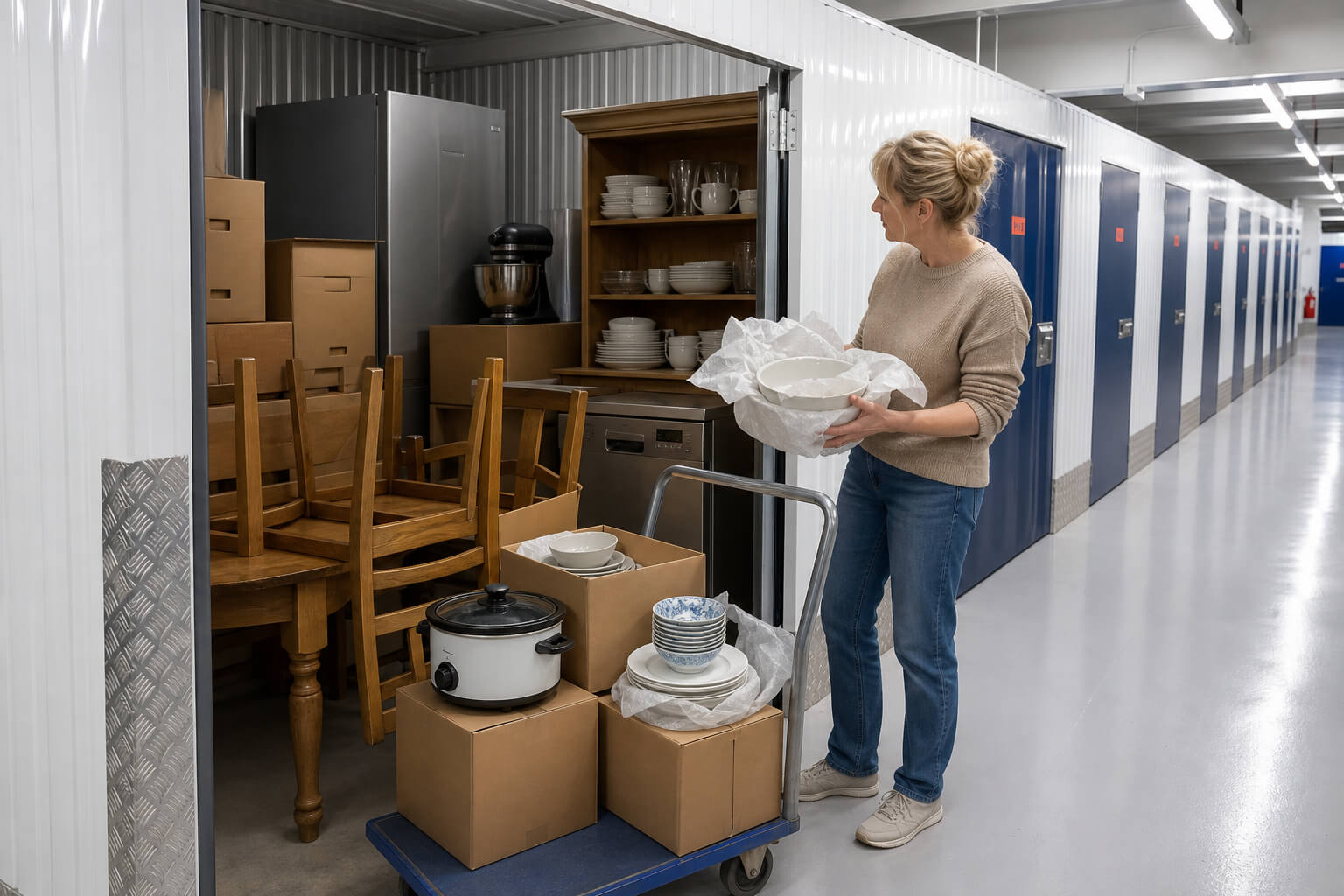
If the spare room has slowly become the place things go to wait, that isn’t a tidiness failure. The Self Storage Association UK’s Annual Industry Report 2026 says 76% of self storage use is by domestic customers, “citing lack of space at home as the main reason to store”. That figure covers every reason people store, not just Christmas, but it makes the point: running out of room is the normal reason people reach for storage.
A Christmas host’s version just has a deadline. You don’t need a permanent answer. You need the room clear for a few weeks so it can do its real job: somewhere a guest can put a case down, hang a coat and sleep with the door shut. Our short-term storage page explains how a few weeks’ stay works.
What needs to move, and what needs to go

Not everything in the spare room needs storing. Some of it needs to leave.
Store it, and have it back in January:
- the exercise bike, treadmill or rowing machine;
- boxes of off-season clothes;
- spare bedding and towels you won’t need out;
- overflow furniture, like a desk or a couple of chairs, parked there because there was nowhere else.
Let it go before you store anything:
- clothes nobody has worn in years;
- broken or half-working equipment;
- the bag that has been “going to the charity shop” since spring.
Storing everything just moves the decluttering to January. The rule of thumb: if you wouldn’t carry it back upstairs in the new year, don’t carry it out now.
One room, or the whole house

The one-room clear-out
A typical spare room holds an exercise bike, four to six boxes of clothes or decorations, a wardrobe’s worth of bedding and a chair or desk. That is roughly the contents of a box room, and a small unit handles it. It’s an illustration, not a promise for every home, so use our room-by-room size guide to picture yours, or ring us and describe it.
The usual alternative is the loft, if there’s room, or the garage, which leaves the car on the drive all December. Neither clears anything; it just moves the clutter to another corner of the house. Our FAQ on whether a loft or a storage unit is better compares the two.
The whole-house shuffle
If several households are coming at once, the spare room isn’t the only room that has to work harder. Fitting everyone round one table often means an extra sofa, a home-office desk or a child’s overflow toys going somewhere else for a few weeks, so the ground floor works as one shared space. Without that, the choice is usually not hosting everyone together, or an obstacle course for the whole visit.
If a sofa is part of it, our FAQ on protecting a sofa in storage covers covers and cushions, and you’ll want a second pair of hands from your side for anything heavy.
| What’s involved | Without storage | With a short stay in storage | |
|---|---|---|---|
| One-room clear-out | Exercise kit, off-season boxes, spare bedding, a chair or desk | Crammed into the loft or garage; the room is still not clear | The room is genuinely clear, and everything comes back after |
| Whole-house shuffle | All of the above, plus a sofa, a desk, overflow toys | Can’t host everyone at once, or a cramped house all visit | The ground floor works as one bigger shared space |
Get a price for the space you need
How a short stay works

“Storage” can sound like a bigger commitment than it is. Here is what you’re signing up to:
- Two weeks minimum. Our minimum stay is two weeks, so a Christmas-sized stay is exactly what it’s built for.
- Four weeks paid at the start. You pay for your first four weeks when you book, and we’re not currently taking deposits.
- Notice is normally 14 days. When the visit is over, give notice by email with the date you’d like to leave. Once you’ve moved out and we’ve checked the unit, we refund any days you’ve paid for but won’t use.
- Access with smart entry. You let yourself in from 6am to 10pm, seven days a week, and hours can vary slightly by site; our access hours FAQ has the detail.
- Contents cover. Everything you store needs cover, either ours or your own policy if it extends to storage. Our insurance FAQ explains both.
Choosing where to store it

Pick the site closest to the house you’re hosting from, so dropping things off and collecting them isn’t a chore in itself. Our locations page lists our sites, so you can pick the town nearest you and get a price for the size you need. Our pricing guide explains how storage costs are worked out before you ask for a quote.
After Christmas: the decorations

The same unit can solve January’s problem too. Once the guests have gone, the tree and the decorations need somewhere to live for eleven months, and the loft is where they get crushed, damp or lost behind everything else. Our FAQ on storing a Christmas tree and decorations covers how to pack baubles, lights and an artificial tree so they come out in one piece next December. If you’d rather keep a small unit all year for seasonal things, our seasonal storage page explains how that works.
What “done” looks like
A bed that is properly made, a floor you can see, and a wardrobe with room to hang a coat. Not a room that’s technically empty but still doesn’t feel ready. Get there, and Christmas Eve feels calm rather than like a last-minute scramble.
Get a price online or call us on 0800 2545585, and we’ll help you get the room ready before anyone arrives.
Questions hosts ask
How much storage do I need to clear one spare room?
For an exercise bike, a few boxes, spare bedding and a chair or desk, a small unit. It depends on what’s in your room, so describe it when you ask for a quote and we’ll help you choose.
How far ahead should I book?
Book in November if you can, so the room is clear before the busy last fortnight. The minimum stay is two weeks, so booking a little early costs little.
Can I get my things back before New Year?
Yes. You can visit your unit during access hours and take things out whenever you like. To end the storage, give notice, which is normally 14 days, and we refund any days you’ve paid for but won’t use once you’ve moved out.
What can’t I store?
Some things can’t go in a unit, including anything flammable, perishable food and gas bottles. Our prohibited goods FAQ has the full list. Our units aren’t heated, so delicate items should be packed with that in mind.
Related questions
- How do I store a Christmas tree and decorations?
- Is there a minimum term?
- Is a loft or a storage unit better for storing things?
- Do I have to pay a deposit for storage?
Sources