Move it upright if you possibly can. Empty it, unplug it and let it defrost fully the day before, then dry it with the doors open. If it has to travel on its side, lay it the way your manual says, never on its back. When it arrives, stand it upright and leave it before switching on: Which? says at least 24 hours. If it’s going into storage rather than straight into a kitchen, the one rule that matters is to keep it dry with the door open, because a fridge shut up damp is what comes back smelling.
The rest of this guide takes you through it in order: the day before, the lift, the van, the wait, and what to do if the fridge freezer is going into storage for a while.
The day before: empty, defrost, dry
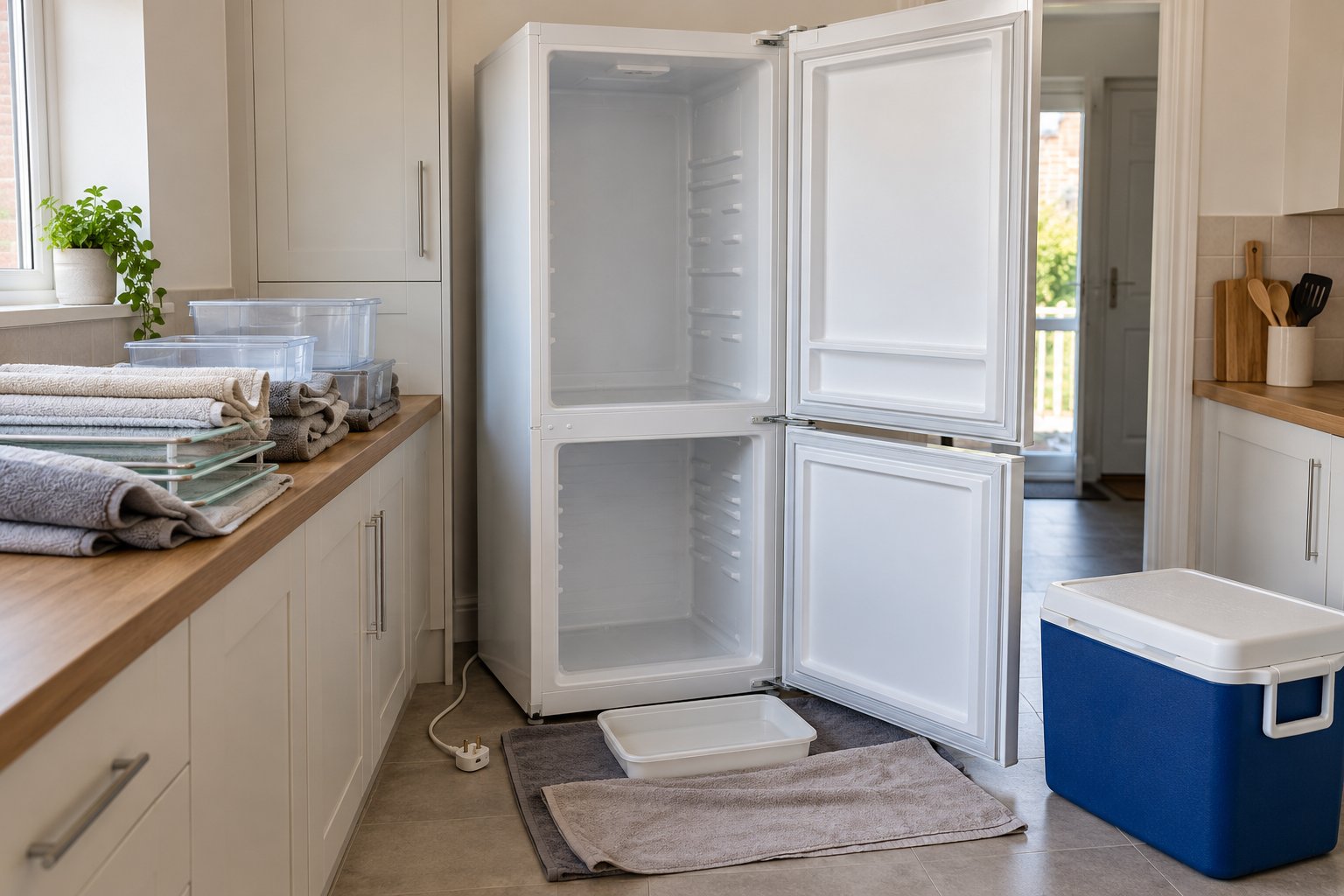
Most moving damage, and almost every bad smell, starts here.
- Run the food down. Plan the last big shop around the move. Anything left on the day goes in a cool box, gets eaten or goes to a neighbour.
- Switch off and unplug. If it’s plumbed in for water or ice, turn the water off at the valve first, then drain the line and empty the ice maker as your manual describes.
- Defrost fully. Which? advises leaving it to defrost for at least 24 hours. Prop the doors open, lay towels on the floor and empty the drip tray if it has one.
- Clean it. Which? suggests a good wipe with a disinfectant cleaner. Do the shelves, the drawers and the folds in the door seals, where crumbs and moisture hide.
- Dry it with the doors open. This is the step that stops mould. Which? says drying it with the doors open “will prevent mould growing while it sits at room temperature.”
- Take out the loose parts. Glass shelves and drawers travel separately, wrapped in towels or a blanket, so they can’t crack. Tape the plug to the back.
Lifting it out
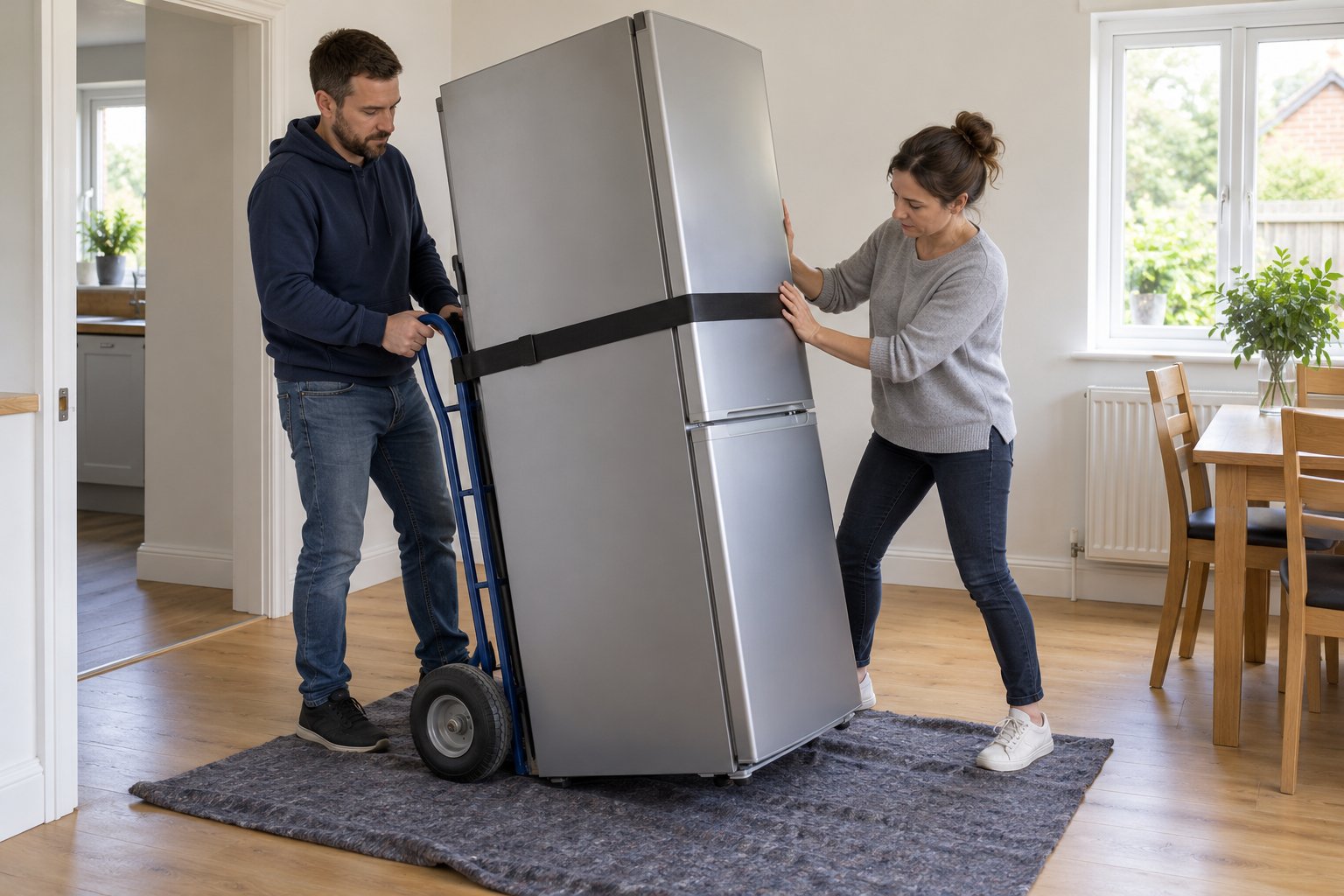
A fridge freezer is tall, top-heavy and awkward rather than impossibly heavy, so it needs two people and a plan for the route.
- Measure first. Check the fridge’s height, width and depth against every doorway, turn and stair landing on the way out, and on the way in at the other end. Taking the doors off the fridge is in some manuals; follow yours, not a video.
- Use a sack truck or appliance trolley. Tip it back only as far as you need to get it onto the trolley, strap it on, and wheel it. Carrying a fridge freezer by its door handles is how handles snap and hinges bend.
- Protect the floor. Old fridges leave dents in vinyl and scratches on wood. A piece of hardboard or a blanket under the wheels saves the floor.
- Watch the back. The grille or coil on the back is easily bent. Keep hands and straps off it.
In the van: upright, or on its side if you must
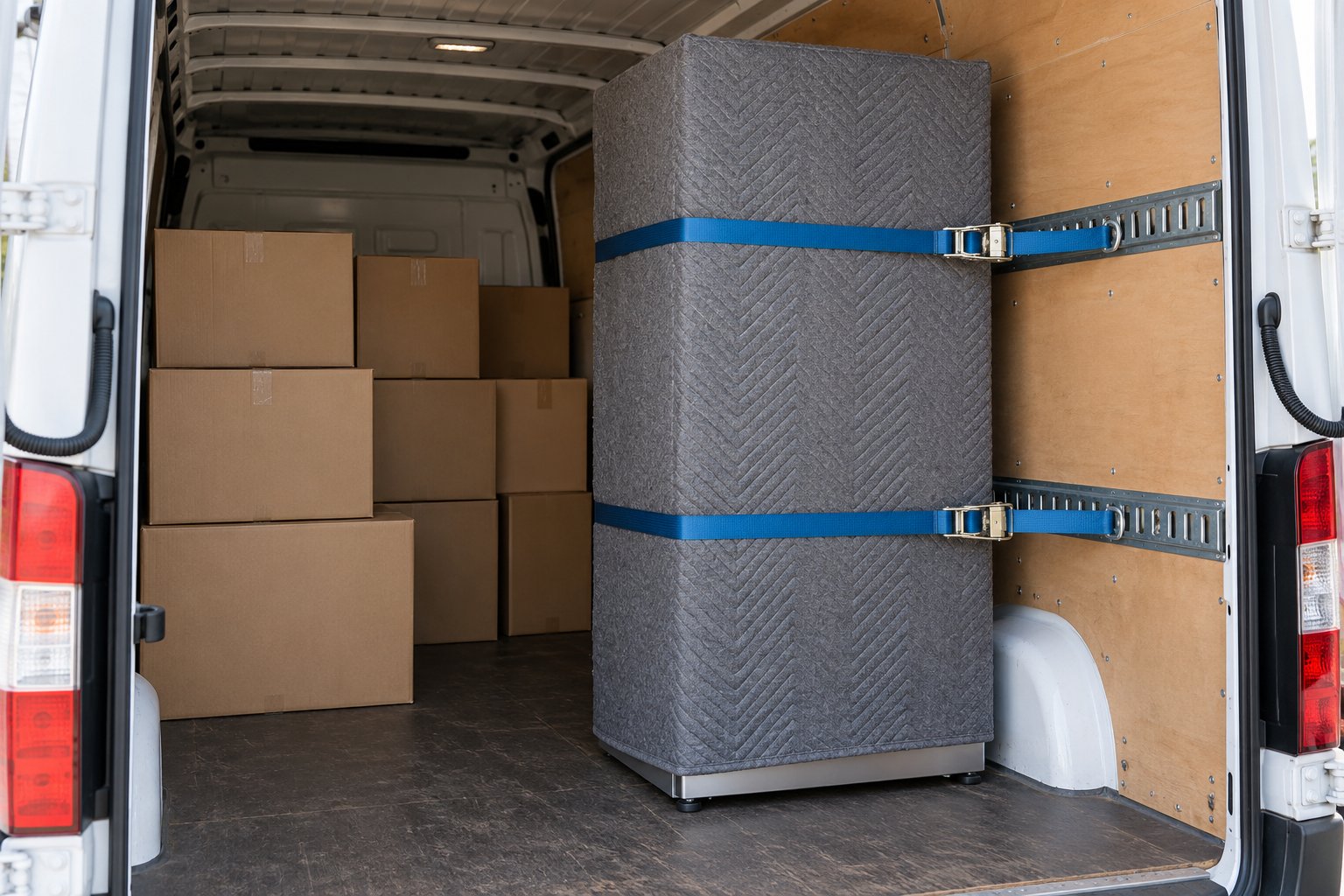
Upright is always best. A fridge freezer is cooled by a compressor, which relies on oil and refrigerant staying where they belong, and tipping it lets them move.
If it really won’t fit standing up:
- Check the manual for which side. Which? says it’s usually hinged side up. Bosch says to lay it so the pipes that carry the refrigerant are on the top side, so the oil stays in the compressor.
- Never lay it on its back. Bosch is blunt about this: it “will likely damage the parts even if they are not visible.”
- Pad and strap it. A furniture blanket on every face that touches the van, and straps so it can’t slide or tip on a bend.
Load it last if it’s going straight into the new kitchen, or first if it’s going to the back of a storage unit (our personal storage page covers storing household belongings). Either way, strap it to the side of the van, not in the middle where everything leans on it.
How long to wait before switching it on
This is the question people search for most, and makers give different answers:
| Guidance | When to switch on |
|---|---|
| Which? | Leave it upright for at least 24 hours |
| Bosch | At least 3 hours upright; 24 hours if it was on its side for more than a day |
The reason for the wait is the same either way. Which?’s cold appliances expert says it allows “the compressor oil and refrigerant to get back to where they need to be”, and that switching on too soon “can cause blockages and affect its performance”. If your manual gives a time, use it. If you can’t find the manual, a full day covers both.
Once it’s on, let it get cold before the food goes back in.
If it’s going into storage first
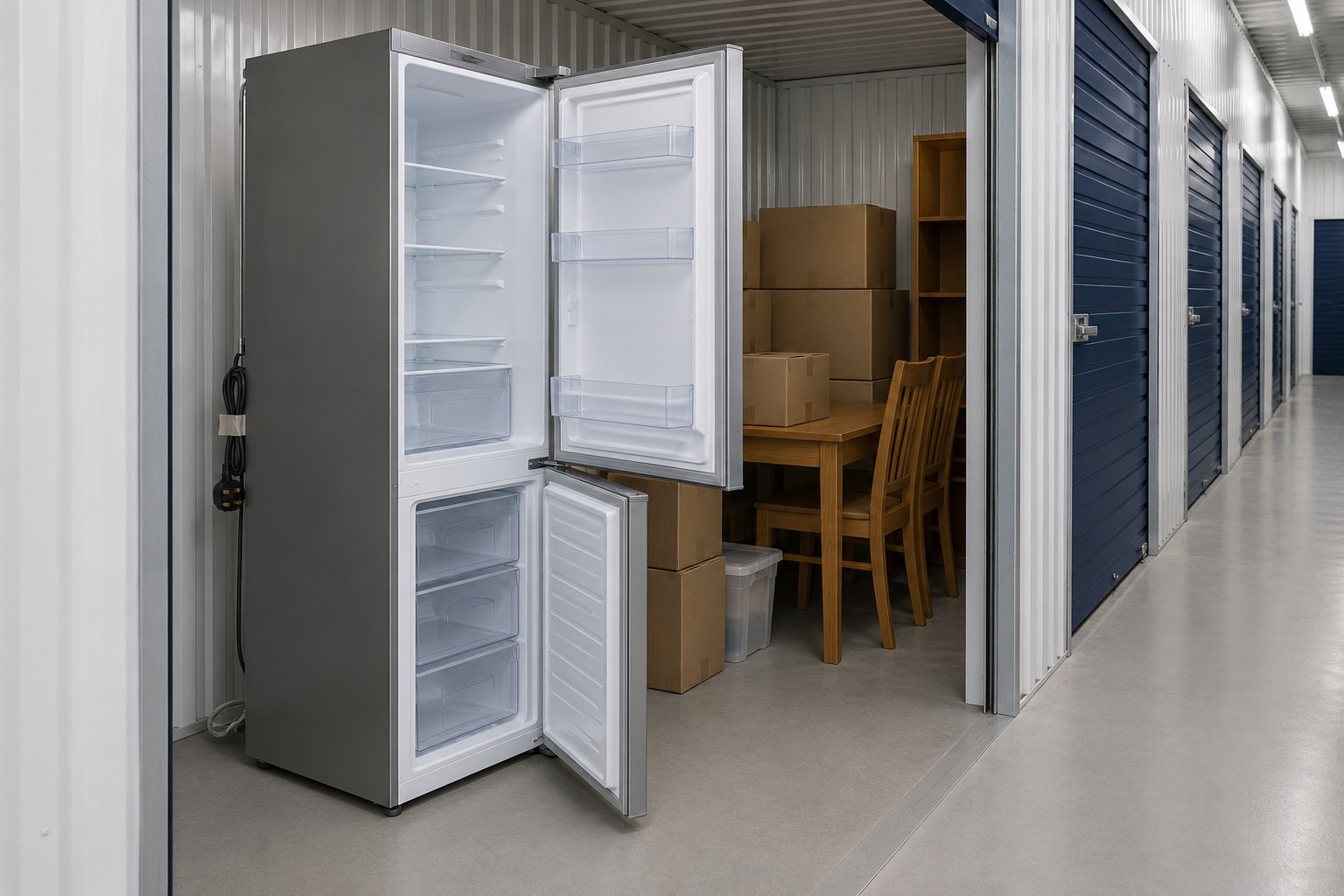
Plenty of moves have a gap in the middle: completion slips, the new kitchen isn’t fitted yet, or you’re between rentals. A fridge freezer stores perfectly well in a storage unit as long as it goes in properly prepared.
- Prepare it exactly as above. Empty, defrosted, cleaned and, above all, dry.
- Stand it upright in the unit, near the front if you’ll want it back first, with nothing heavy stacked on top.
- Leave the door open. This is the part people forget. A fridge shut up for weeks traps whatever moisture is left inside, and that is where the musty smell comes from. Open it as far as it will stay on its own, and only prop it if your manual allows; our fridge and freezer FAQ explains what two makers say about this.
- It stays unplugged. Our units don’t have power sockets, and a stored fridge freezer doesn’t need to run.
- Bring it home the same way. Upright, strapped, then the settling time before you switch on.
Everything you store needs contents cover, so count the fridge freezer when you add up what your belongings are worth. Our insurance FAQ explains how cover works. For the space itself, our room-by-room size guide shows how a fridge freezer fits alongside the rest of a kitchen.
If it smells after a move or storage
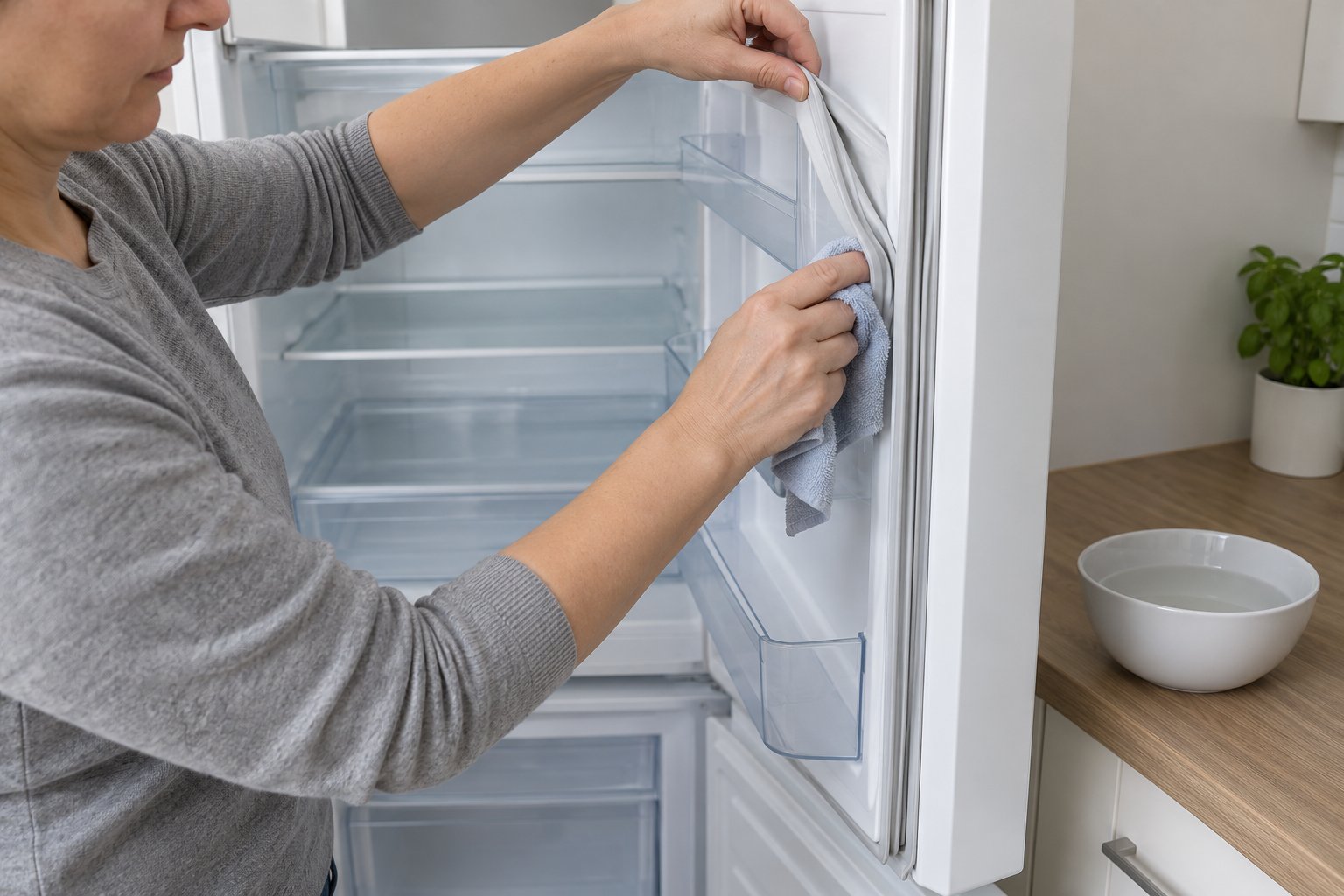
A smell usually means moisture was left inside, or the door was shut. Wipe it out again with warm water and a mild cleaner, dry it thoroughly, and leave the doors open for a day before switching on. If the smell is in the seals, clean the folds with a cloth and dry them properly; that is where it tends to hang on.
Moving it, or replacing it?
If the fridge freezer is old, it is worth asking before the move whether it’s worth the lift at all. If you are buying a new one, the shop you buy from has to give you a way to get rid of the old one. GOV.UK’s guidance for retailers says they “must provide a way for your customers to dispose of their old household electrical and electronic equipment when you sell them a new version of the same item.” Where the shop takes it back in store, that has to be free, though a retailer can charge to cover the cost of collecting from your home. Ask what they offer when you order, and the old one may never need to make the journey.
Checklist
- Food run down and the last of it in a cool box
- Water turned off and drained, if it’s plumbed in
- Defrosted for at least 24 hours, drip tray emptied
- Cleaned and dried with the doors open
- Shelves and drawers wrapped separately, plug taped to the back
- Route measured, trolley and straps ready
- Upright in the van, or on the side your manual names, never the back
- Settling time before switching on: your manual’s figure, or a full day
- If storing: dry, upright, unplugged, door open
If your fridge freezer needs somewhere to wait between homes, get a price online or call us on 0800 2545585 and we’ll help you pick the right size.
Related questions
- Can I store a fridge or freezer in a storage unit?
- Can you transport a fridge freezer on its side?
- Can I store a washing machine or tumble dryer?
- Are trolleys or sack trucks available on site?
- What should I do on the night before moving day?
Sources