Swedish death cleaning, or döstädning, is a slow, kindly kind of decluttering: going through your things while you’re well, keeping what you love and use, and passing on or letting go of the rest, so your home is easier to live in and your family isn’t left to sort it all later. The name sounds bleak. The idea isn’t.
Where it comes from
The word joins the Swedish for death, dö, and cleaning, städning. It became known far beyond Sweden through Margareta Magnusson’s book The Gentle Art of Swedish Death Cleaning, a 2017 bestseller that, according to The Local, was sold in 32 countries and inspired a 2023 American reality TV series in which Swedes helped Americans go through their belongings.
Magnusson, an artist from Gothenburg, was 84 when the book came out. She died in March 2026, aged 92. Her daughter Jane told Swedish television that her mother “was always death cleaning”.
Her own definition, quoted by Scripps News, is plain: “It is a word that is used when you or someone else does a good, thorough cleaning and gets rid of things to make life easier and less crowded.”
Why “death”, and why it isn’t morbid
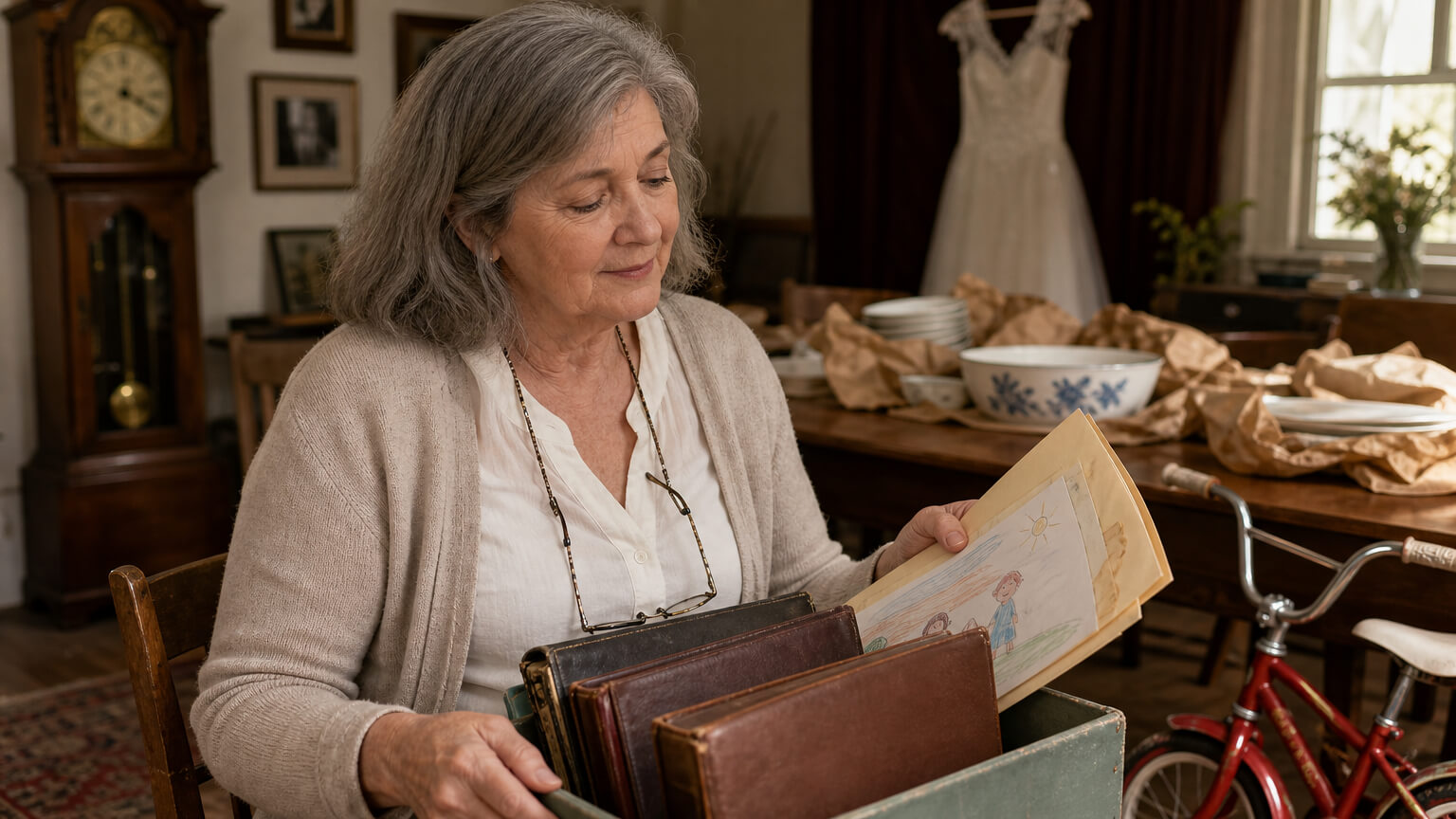
Most decluttering methods are about a tidier home. Death cleaning has a second purpose: sparing the people who would otherwise have to clear your home after you’ve gone. Magnusson put it bluntly to AFP in 2021: “I think you should take care of your stuff so that no one else has to do all the work for you.”
If you’ve cleared a parent’s house, you’ll know why that matters. Every drawer is a decision someone else has to make without you: is this precious, or junk? Did she want anyone to have it? Death cleaning answers those questions while you’re still here to answer them.
It can even be a cheerful job. “My death cleaning has brought back wonderful memories,” Magnusson told The Local in 2017. “I wish for other people to have the same experience.”
When to start
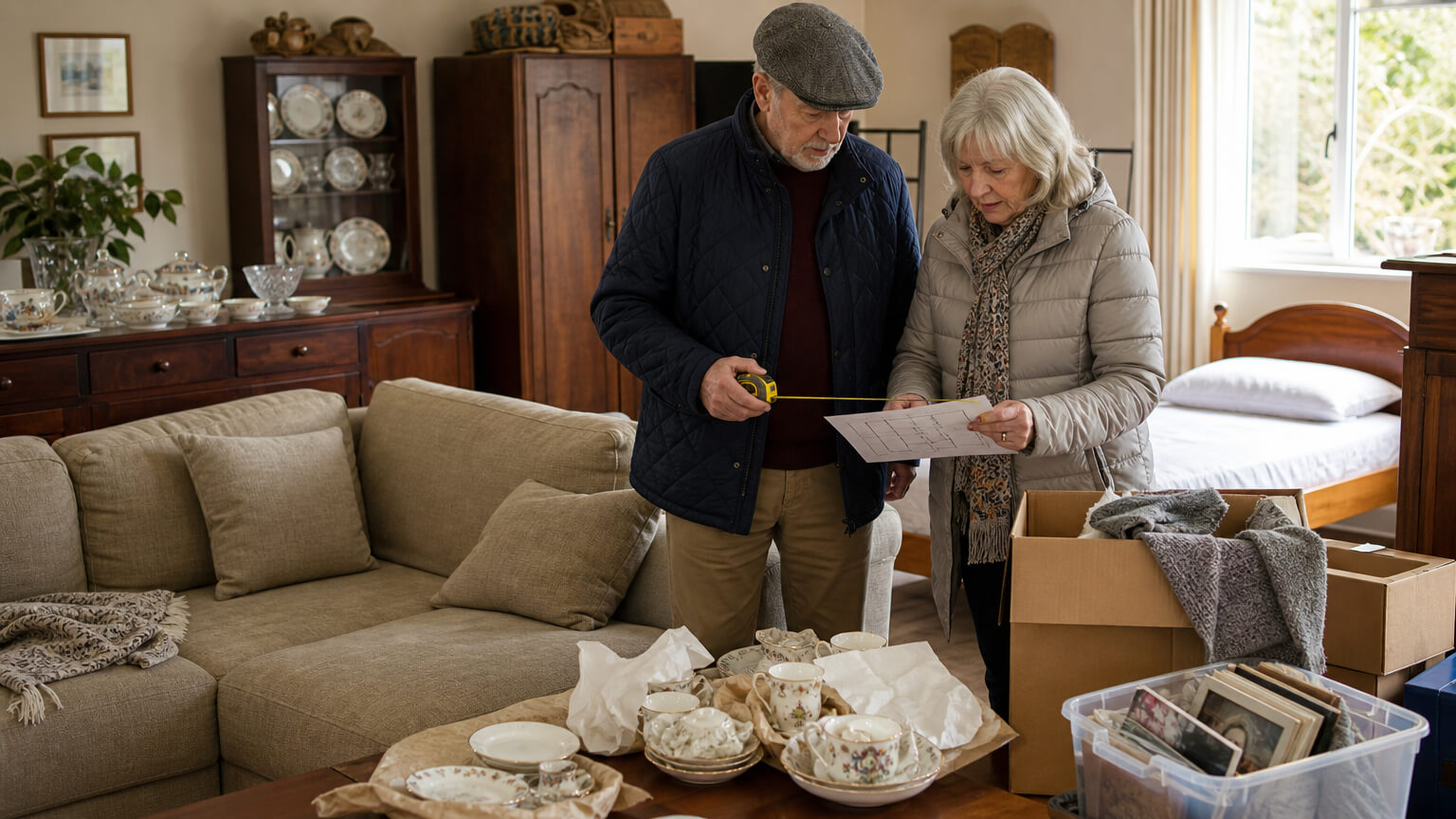
There’s no right age. Magnusson wrote for people of her own generation, but the method isn’t only for them: “Sometimes you just realize that you can hardly close your drawers or barely shut your closet door,” she writes. “When that happens, it is definitely time to do something, even if you are only in your thirties.”
A big birthday, retirement or a move to a smaller home can all be a good moment to begin. So can the day a cupboard won’t shut.
How to do it
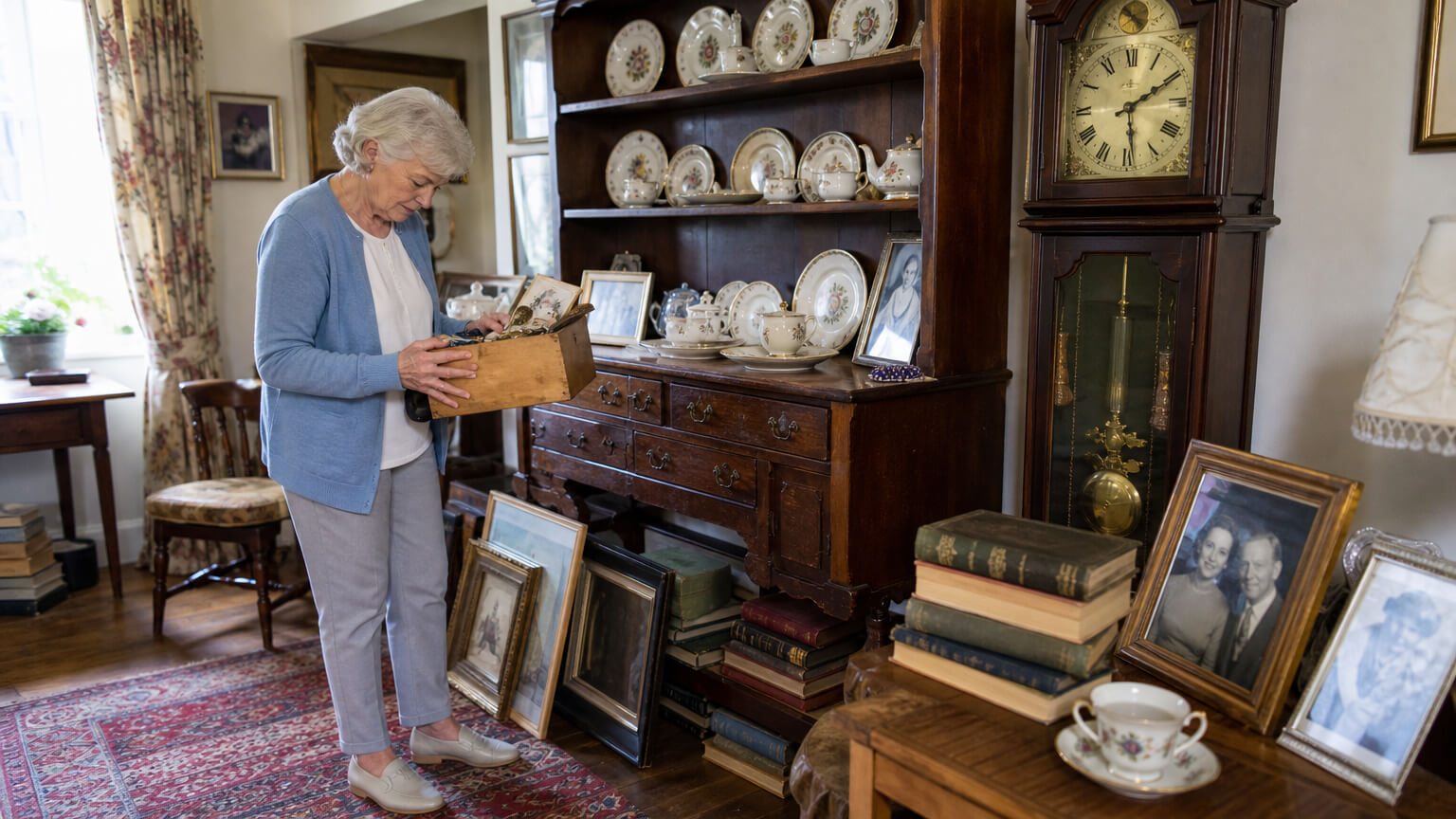
There’s no strict system, and that is part of the appeal. These are the threads that run through Magnusson’s approach:
- Go slowly. This is a project for months, not a weekend. A drawer or a shelf at a sitting is enough.
- Start big. Begin with large items and whole categories, such as furniture and clothes, where decisions are easier.
- Leave photographs and letters until last. Magnusson warns that sentimental things slow you down: start with them and you’ll spend the afternoon on memory lane instead of sorting.
- Use her test. “If you don’t love it, lose it. If you don’t use it, lose it,” she told The Local.
- Give things away while you can tell their story. Magnusson describes her mother-in-law, who in her last years pressed china plates, a tablecloth or napkins into visitors’ hands as they left, so that over time she had “slowly and unobtrusively given a lot away in a quiet, kind way.”
- Keep going. As her daughter’s remark suggests, it’s a habit rather than a single clear-out.
Talking to family about it
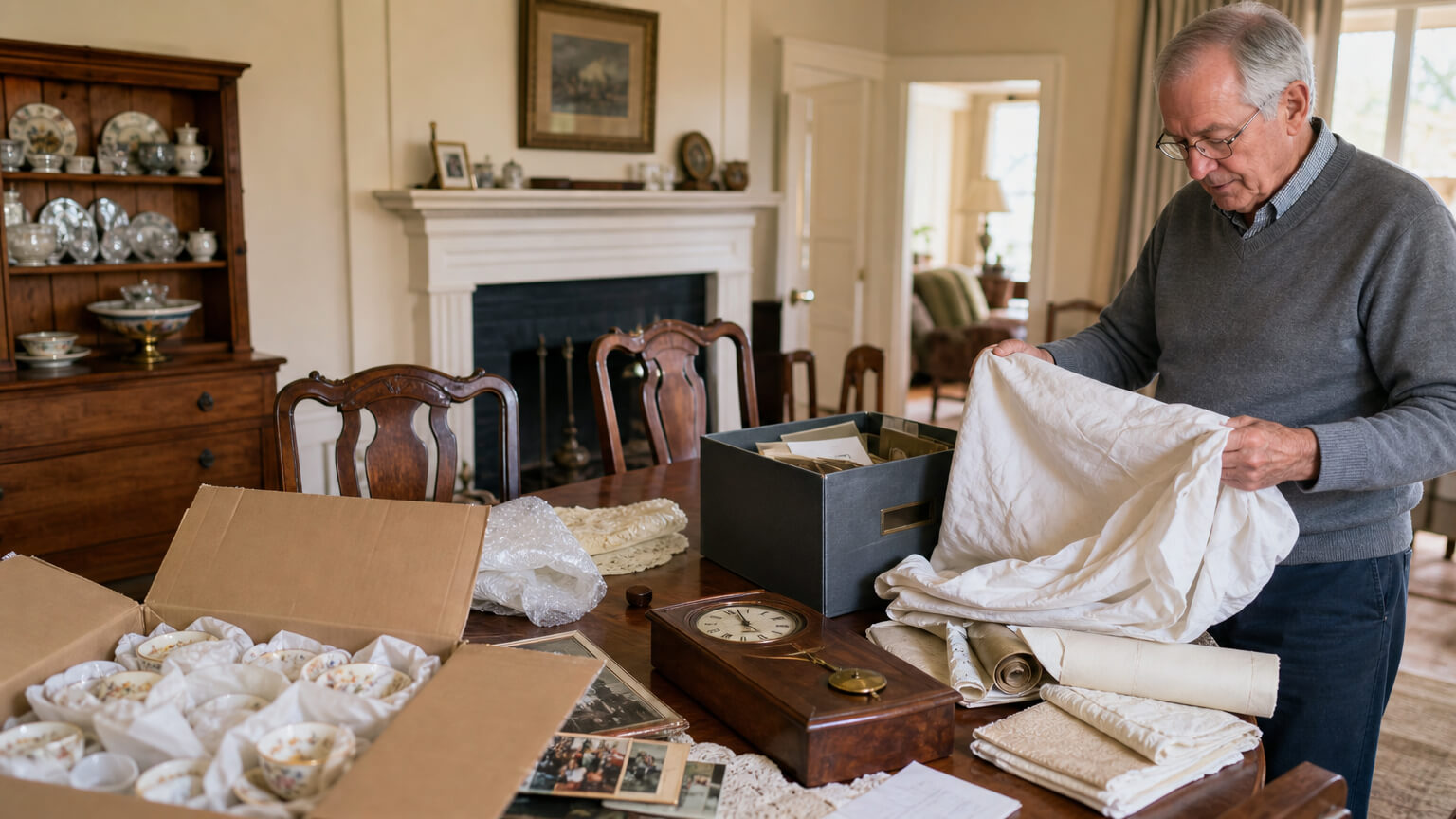
Death cleaning is easier when the family is part of it, and harder when nobody wants to raise the subject. Magnusson’s advice to adult children is to be kind but honest: “If you are too scared to be a little ‘impolite’ with your parents and you do not dare to raise the topic or ask them questions to help them think about how they want to handle their things, don’t be surprised if you get stuck with it all later on!”
A few openings that tend to go better than “we need to talk about your stuff”:
- “Is there anything here you’d like someone in particular to have?”
- “Shall we do one cupboard together this weekend?”
- “Tell me about this,” over a box of photographs.
And if you’re the one doing the clearing, asking your children what they actually want avoids the familiar disappointment of carefully keeping something nobody has room for.
Where storage fits

The hardest pile in any death clean is the one marked “not yet”. Furniture a grandchild might want when they set up home. A dining table that’s too big for the bungalow but too good to let go. Things you aren’t ready to decide about, and shouldn’t be hurried into. Our decluttering storage page explains how a unit can hold that pile.
A storage unit gives that pile somewhere safe to wait while the rest of the house gets lighter, so you can carry on at your own pace instead of making every decision at once:
- No fixed end date. Our minimum stay is two weeks, and after that your storage carries on until you give notice, which is normally 14 days. We refund any days you’ve paid for but don’t use once the unit is empty.
- Your own alarmed unit. Each unit has its own alarm and lock.
- Visit when you like, normally 6am to 10pm, seven days a week, to keep sorting, or to collect something for a family member.
- Share access with a son or daughter through smart entry, so they can help without you needing to be there. Our guide to sharing access explains how.
Storage isn’t the goal, though. Used well, it’s a waiting room for decisions, not a permanent home for things you’d rather not think about. Our FAQ on whether to store furniture, sell it or give it away can help with the decisions themselves.
Some things belong at home rather than in a unit: originals such as a will or deeds, and anything you couldn’t replace, are safest in a fireproof box or with your solicitor. Our prohibited goods FAQ has the full list of what can’t be stored.
If you’re clearing a parent’s home instead
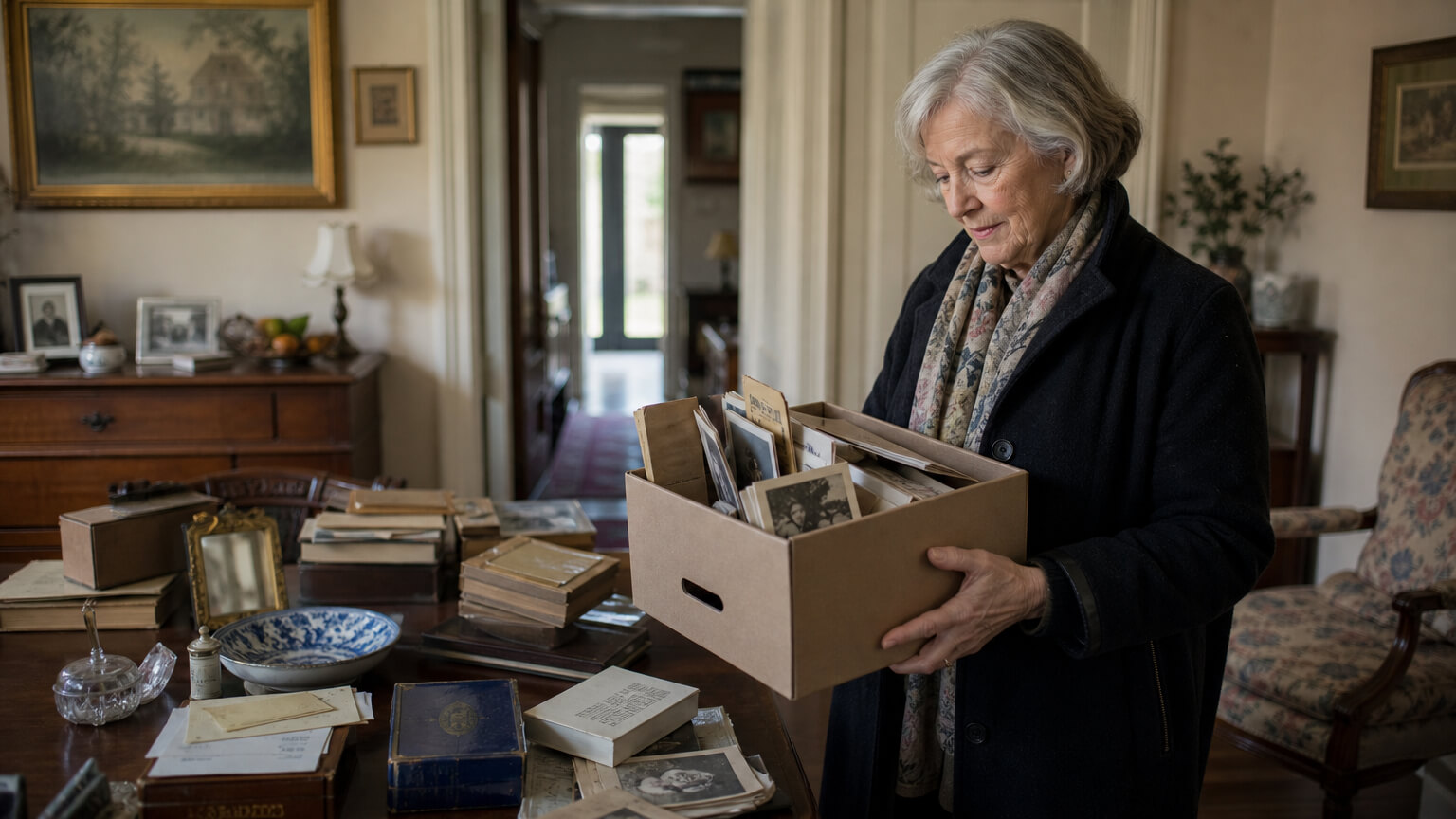
Sometimes death cleaning didn’t happen, and the job falls to the family. Our guide for executors clearing an inherited house sets out the steps in order, and our answer on what to keep when clearing a parent’s home lists the things families most often wish they’d kept.
If you’d like help working out how much space your “not yet” pile needs, call us on 0800 2545585, or get a price online.
Related questions
- Should I store furniture, sell it or give it away?
- What should I keep in storage when clearing a parent’s home?
- How do I know what unit size I need?
Sources