
Home /
Clearing a house after someone dies is unlike any other job. The rooms are full. The decisions feel impossible. And the property cannot wait indefinitely for the family to be ready. If you are the executor, or the house-clearance firm that has been called in to help, you already know the pressure from both sides: the solicitor asking about completion dates, and a family that is nowhere near finished grieving.
There is no timetable for that kind of work. But the house still needs to be cleared, and somewhere for the contents to go is usually the first practical question anyone asks.
That is the space we sit in. A clean, dry and secure unit close to the home being cleared, with terms that do not rush anyone. No hard sell, no daily calls, no cliff-edge contract. Just a room that waits until the family is ready.
If you are short on time, here is where to start:
- Find a unit near the property being cleared: Our locations across UK market towns
- Understand what storage costs: Pricing reference
- Get a no-pressure quote now: quote.wigwamstorage.co.uk

When a house clearance meets a bereavement
Every house clearance has its own shape, but a probate clearance is something different. The practical side and the emotional side pull in opposite directions, and neither one waits for the other.
A clearance can be done in a day. A grief takes longer.
A house-clearance team can empty four bedrooms in a working day. What they cannot give a family is the weeks, or sometimes months, to sit with what those rooms contained. The executor opens a wardrobe and finds suits that still smell faintly of the person. Three siblings each want the same clock. Nobody can agree on the photographs yet.
The storage unit is not just a logistics solution in this situation. It is a breathing room. It holds the contents of a life while the family finds its footing. That is a different kind of service from moving stuff off a driveway, and we think it deserves a different kind of patience from a storage provider.
What storage actually does in a probate clearance
The practical role is straightforward. Once a property needs to be vacated or made ready for sale, the contents have to go somewhere before the family can sort, distribute or dispose of them properly. A unit bridges that gap. It takes everything off site cleanly, removes the pressure from the property, and gives the family a fixed, accessible place to return to when they are ready to start making decisions. Nothing irreplaceable has to be thrown away in haste. Nothing has to be sorted at the pace of a removal van.
For house-clearance firms: a partner you can recommend with confidence
When you point a grieving family to a storage provider, your reputation goes with that recommendation. The question you are asking, rightly, is whether this will come back on you. The honest answer is that it depends entirely on how the provider behaves after the referral.
What your client gets when you point them to Wigwam
What a referral to Wigwam looks like in practice is this: a client arrives at a calm, straightforward booking process, gets a unit near the property you have been clearing, and does not receive any upsell pressure or hard-sell follow-up. The terms are plain. The minimum stay is two weeks, unused days are refunded if they leave early, and the deposit is refundable after a 14-day notice period once the unit is vacated and the account is settled. Contents protection is in place from day one. The unit is individually alarmed. Nobody is going to call the family with an offer, and nobody is going to make them feel they have to vacate before they are ready.
If the relationship between the clearance firm and the bereaved family is built on trust, the storage partner needs to honour that. We take that seriously.
Local units near the homes you clear
The other practical test is proximity. A bereaved family sorting a parent’s estate does not want to drive forty minutes to access the unit. We have locations across our UK market towns, including Wigwam Self Storage Bath in Somerset and Wigwam Self Storage Lincoln in Lincolnshire, alongside sites in Warminster, Cheltenham, Dorking, Bromsgrove, Tewkesbury, Leatherhead, Marlow and others. These are market towns, not out-of-town industrial parks. The family can drop in, sort for an hour, and get back.
For a full list of where we are, the locations hub is the best starting point. If you are unsure whether there is a unit near a current clearance, a quote takes a few minutes and tells you which sites are closest.
Timing and authority: the part worth getting right
One of the most common questions executors ask is when they can actually start moving estate goods. It is a sensible question to ask before acting, and the honest answer is that the position depends on the individual estate.
Note: The following section covers the position in England and Wales. Succession and estate administration rules differ in Scotland and Northern Ireland. Readers outside England and Wales should confirm the applicable rules with their solicitor. Wigwam provides storage; we do not advise on probate procedure.
Why most executors wait for the Grant of Probate before moving estate goods
Most executors wait until they have formal authority before moving items that belong to the estate. The Grant of Probate is the document that confirms that authority. Moving goods before it is in place can create complications, and the family’s solicitor is the right person to confirm what applies to this particular estate. We mention it here not to lecture, but because we have seen families caught out by acting too quickly on well-meaning advice from someone who was not a solicitor.
When the family is ready, and when the solicitor gives them the go-ahead, the unit is there. It does not go anywhere.
Flexible terms for an unpredictable timetable
Probate does not run to a fixed timetable. Neither should storage. Our terms are built for this: a two-week minimum stay, unused days refunded if you leave before that minimum is up, and a refundable deposit that is returned after a 14-day notice period once you have vacated and the account is settled. There are no penalties for leaving early once the minimum is met. There are no long-term contracts.
The full terms are on our terms and conditions page. We recommend reading them before booking.
How much space a house clearance needs
Most people underestimate this, which is understandable when you are standing in a property you have been clearing emotionally as well as physically. The question is not how much furniture there is; it is how much of it will be going into the unit, and for how long.
Room-by-room sizing and a rough guide for a three-bedroom house
A useful starting estimate for a standard three-bedroom house is roughly 150 to 200 square feet of storage space. A commonly used rule of thumb is to take the floor space of the rooms being cleared, halve it, and add around 20% for access walkways. That gives a workable rough figure before you start stacking. A large three-bed with a loft and a garage will push toward the higher end. A flat or a smaller terraced house may sit below it.
These are estimates, not guarantees. The pricing reference page gives a sense of how unit sizes map to cost, and a quote at quote.wigwamstorage.co.uk lets you work through the actual size you need for a specific location.
From a few boxes to a full house
Not every probate clearance fills a large unit. Some families need space for a few items with particular sentimental or financial value while the rest of the estate is distributed. Others are clearing a full house and need to hold everything until the will has been administered. We can accommodate both. You can start with a smaller unit and upsize if more space is needed. The quote tool walks you through the options without any obligation.
What it costs and how the terms work
The cost of storage for a probate clearance is one of the first practical questions, and it is one of the few situations where we think being plain about the terms matters as much as the price itself.
Two-week minimum, refund of unused days, and the deposit
Here are the three things worth knowing before you book. First, there is a two-week minimum stay. Second, if you need to vacate before the end of a period you have paid for, unused days are refunded. Third, there is a refundable deposit, which is returned after you give 14 days’ notice, vacate the unit, and settle the account in full.
That last point is the one families tell us they value most. Probate timescales are unpredictable. Sometimes the estate settles faster than expected. Sometimes it takes longer. The fact that nobody overpays for time they did not use removes one source of stress from a situation that already has too many. That is not an accident of our pricing structure; it is something we have chosen to hold to because it is the right way to operate with families in this position.
The full detail is in our terms and conditions.
Where to check current pricing
We do not publish prices on this page because they vary by location and unit size. The pricing reference page gives a sense of what to expect across our market towns, and a quote at quote.wigwamstorage.co.uk gives you the actual figure for a specific site and size.
Whenever you are ready, a no-pressure quote takes a few minutes. quote.wigwamstorage.co.uk
Access, security and storing with care
A good storage unit for a probate clearance needs to be somewhere the family can return to on their own terms, not just somewhere the contents are deposited and forgotten.
Smart entry 6am to 10pm, individually alarmed units
Access is by smart entry between 6am and 10pm, seven days a week. That covers early morning visits before work, evenings after the family have gathered, and the practical access a valuer or specialist needs when assessing estate contents. It is not 24-hour access, and we would rather say that plainly than have a family turn up at midnight expecting to get in.
Each unit is individually alarmed. The team at our locations, including Selina and colleagues across our market towns, are available during business hours for questions. Out of hours, the smart entry system handles access independently.
Clean, dry and secure: the honest promise
Some storage providers position their offering around climate control for antiques and documents. We do not offer climate-controlled storage, and we will not imply that we do. What we can promise is that our units are clean, dry and secure. For the furniture, household goods, and personal belongings that make up most probate clearances, that is the right standard.
If the estate contains items that require controlled temperature or humidity, such as fine art, certain antiques, or archival documents, the honest advice is to speak to a specialist conservator before choosing storage. They will tell you what conditions those items actually require. What Wigwam provides is weather-protected, alarmed and secure storage for household goods. That is the accurate description, and we stand behind it.
Working alongside your house-clearance and removals team
Most families handling a probate clearance are already working with a clearance firm, a removals team, or both. Here is how that works alongside a Wigwam unit.
Access on clearance day and how deliveries work
Our sites are unmanned. That means customers access their own units directly using the smart entry system, without a member of staff needing to be present. It also means Wigwam does not sign for couriers or receive deliveries on a customer’s behalf.
If a clearance firm or removals team is making a delivery to a unit, someone from the customer’s side needs to be present to receive it. That is not a restriction we have added to create difficulty; it is a straightforward consequence of how unmanned sites work, and it is worth knowing before clearance day so nobody is caught out. The family, or a named representative, needs to be there.
What Wigwam does and does not do
Wigwam provides the unit. The house-clearance firm does the clearing and the moving. Those are two separate services, and they are designed to complement each other, not overlap.
We do not offer a managed probate clearance service. We do not assess, catalogue or move estate goods. We do not advise on what to keep or dispose of. What we do is hold the contents securely, accessibly and on patient terms while the family and their clearance firm do the work that requires human judgement. The handoff between the clearance firm and the unit is where the two services meet, and it is a clean one.
Contents protection for estate goods
Note: This section signposts the cover requirement; it does not give insurance advice. The applicable rules and policy terms are governed by the policy document and UK regulation. Executors in Scotland and Northern Ireland should note that specific probate and estate rules differ from England and Wales, and should confirm the full position with their solicitor.
Cover is required from day one
Contents protection is mandatory for all goods stored with us. When you book, you can take Wigwam’s RSA-backed contents protection policy, or you can prove that you have your own cover in place at the same point. The goods need to be covered from the moment they go into the unit.
When you declare your goods, declare the full replacement value. If the declared value is lower than the actual value and a claim arises, the settlement is adjusted in proportion. Theft claims require evidence of forced entry to the unit. Damage caused by climatic conditions is not covered under the policy.
The full detail is on our contents protection page.
Confirming cover for estate goods
Executors sometimes ask whether the deceased’s home contents policy, or their own home policy, extends to goods held in a storage unit. The answer to that question sits with the relevant insurer and, for the estate picture, with the solicitor. Wigwam cannot advise on policy coverage outside our own protection offering. Our contents protection page is the right starting point for the Wigwam side of that question, and the solicitor and insurer are the right starting points for everything else.
When the time is right, we are here
Probate clearances move at the pace of the family, not at the pace of a storage contract. That is how it should be, and it is how we operate. Clean, dry and secure units close to where you are clearing. Flexible terms that do not punish an unpredictable timetable. No hard sell, no upsell calls, no pressure to vacate before you are ready. A room that waits.
If you are a house-clearance firm looking for a storage partner you can recommend with confidence, or an executor trying to work out the next practical step, a quote gives you a clear picture of what is available near you without committing to anything.
When the time is right, a no-pressure quote takes only a few minutes. quote.wigwamstorage.co.uk
Frequently Asked Questions
Can a house-clearance firm hold its own account across several jobs?
This is best handled as a direct conversation with the local team, because the cleanest arrangement depends on how your firm actually works. The two common patterns are these. In the first, the family is the account holder for each clearance, the contract sits in their name, and your firm simply does the clearing and delivery. In the second, your firm holds units in its own name as a working overflow and the goods move on to the family later. Both are workable, but they have different implications for who is responsible for payment and for the contents cover.
The reason it matters is the contents-cover requirement. Whoever holds the account is responsible for declaring the full replacement value of what is in the unit and for keeping cover in place. If your firm holds the unit, your firm carries that responsibility until the goods or the account pass to the family. If the family holds it from day one, the responsibility is theirs. Neither is better in the abstract; it depends on whether you are bridging a gap for your own logistics or settling the family into a unit they will keep.
What we will not do is pretend to be something we are not. There is no formal trade-partner scheme with special terms, and the team handles storage questions only: sizing, availability, access, the deposit and the notice period. They will not get into how you run or grow your clearance business. For the storage mechanics, a short call to the local team will sort out the right account structure before your first job.
What happens to items that cannot legally go into a unit?
Some things simply cannot go into storage, and a probate clearance turns them up more often than people expect. The clearest examples are anything hazardous or flammable: gas bottles, petrol and fuel cans, paint and solvents, fireworks, pool chemicals, and similar. These are excluded from any reputable self storage site, ours included, for obvious safety reasons. Perishables and anything living are out for the same practical reasons. And we do not store vehicles, caravans, motorhomes, boats or any leisure craft, so a classic car in the garage or a campervan on the drive needs a specialist provider, not a unit.
The honest planning point for a clearance firm is to separate these out before the van is loaded, because they cannot come to us and you do not want to discover that at the unit door. Fuel and chemicals usually go to a local household waste recycling centre or a licensed disposal route. A vehicle is a separate conversation with a specialist storage or disposal firm. None of this is unusual in an estate clearance; it just needs to be planned for rather than assumed.
If there is doubt about a specific item, a quick check with the local team before clearance day saves a wasted trip. They can confirm whether something is fine to store. What they cannot do is advise on the safe disposal of hazardous materials or on the legal handling of estate assets; that sits with the relevant disposal service and, for the estate side, with the family’s solicitor.
Can a probate valuer or specialist access the unit before the family sorts it?
Yes, within the same rules that govern any access to the unit. The contents have to be valued for probate, and that often means a valuer, an auctioneer, or a specialist needs to see the goods after they have come out of the house. A unit makes this easier than a half-cleared property, because everything is in one secure, dry place that can be visited on a planned date.
The mechanics follow from how the sites work. Access is by smart entry, between 6am and 10pm, seven days a week, which covers the working hours a valuer would attend. Because the sites are unmanned, there is no one on site to let a valuer in independently, so someone from the customer’s side, the executor or a nominated representative, needs to be present to open up and be there during the visit. We do not hold spare keys and we cannot admit a third party on our own authority. Build that into the appointment when you book the valuer.
One practical note for the executor. If the estate is being valued for probate, the valuation date and the basis of value are matters for the valuer and the solicitor, not for us. We provide the secure space and the access; the valuation itself, and how it feeds into the estate accounts, is professional work that sits entirely outside what a storage operator does. This is not financial or legal advice; it is simply how access works on the storage side.
How do you handle units when there are multiple beneficiaries?
Carefully, and with clear agreement set up at the start, because a storage unit has one account holder and one set of access permissions, not several competing ones. When an estate has several beneficiaries, the cleanest arrangement is usually that the executor holds the unit in their capacity as executor, controls the access, and manages the sorting and distribution from there. The beneficiaries’ interests in the goods are an estate matter; the unit is simply where those goods sit securely while that gets resolved.
If more than one person genuinely needs to reach the unit, that has to be set up deliberately with the local team rather than assumed, because access runs on smart entry and we do not let people in on a verbal say-so. We do not hold spare keys, we do not open units for relatives who turn up, and we cannot arbitrate between family members about who is entitled to what. That boundary protects everyone, including the executor.
Where disagreements about ownership or entitlement arise, those are firmly a solicitor’s territory, not ours. We will hold the goods securely and patiently for as long as the estate takes, but we are not a neutral custodian in any legal sense and we will not get drawn into family disputes about division. The practical advice we can offer is the simplest one: agree who controls the unit, write it down with the solicitor, and let the executor manage access on that basis. The unit waits while the people who should decide, decide.
Is storage for a probate clearance VAT-able, and can it be an estate expense?
We can be straight about the mechanics and clear about where our knowledge stops. Self storage in the UK is generally a standard-rated service for VAT, so a clearance firm or an executor should expect VAT to apply in the normal way, and any invoice will reflect that. The exact treatment can depend on circumstances, so the figure on a quote is the place to confirm what applies to a specific booking.
Whether the cost counts as a legitimate estate expense is a different question, and it is one for the solicitor administering the estate, not for us. In broad terms, reasonable costs of administering an estate, which can include securely storing the contents of a property while it is dealt with, are commonly treated as estate expenses, but how that is recorded and whether it is appropriate in a particular estate is a matter of estate accounting and legal judgement. We provide the storage and the invoice; the solicitor decides how it sits in the estate.
For a clearance firm, the practical point is just to make sure the family understands who is paying and from where, before the unit is booked. An executor drawing on estate funds will want the invoicing set up in a way the solicitor is comfortable with. None of this is tax, legal or financial advice; it is a signpost. For the VAT position on your own business and for the estate-expense question, the right people are your accountant and the family’s solicitor respectively.
Simon Fothergill, Managing Director, Wigwam Self Storage.
Customer Reviews
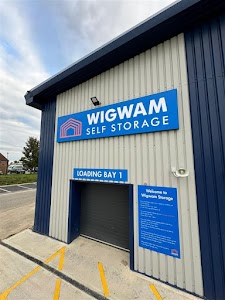

Once contract in place very easy app use to access site and unit, very clear easy to follow instructions. Very happy and would definitely recommend


Very easy access with parking right outside the door.
Plenty of trolleys, so no need for muscles ! It maybe a little more expensive than some others, BUT the cleanliness & ease of use perfect.
The staff are VERY patient, explaining how each unit works.
It is great to know the manned office hours & how to make contact if not.
Plenty of accessible hours too.
Ps.... they do like a biscuit or 2 in the office I hear !


Units were good and secure.
only critisms - lights turned off automatically too quickly and no onsite toilet.

I Highly recommended this company.

Also the girls in the office who are extremely helpful with a cracking sense of humour,
Unit was superb, extremely clean,
So easy to access, completely idiot proof
Will definitely use them again

