
Home /
You are standing in the garage with boxes stacked to the ceiling, a spreadsheet open on your phone, and Q4 stock arriving in six weeks. The spare room is full. The office is starting to look like a fire hazard. And the obvious answer, a warehouse, comes with a lease, business rates, and a commitment your business is not ready to make yet.
We know this moment well, because most growing businesses near our sites pass through it. The good news is that the choice is not really warehouse or nothing. There is a flexible middle: space you can take for as long as you need, scale up for the busy season, and drop back down when it quietens, without signing years of your life away. Here is how business storage actually works, and where it fits.

What businesses actually store with us
Most business storage falls into a few familiar buckets: stock and seasonal kit, trade tools and equipment, and business records. If your overflow looks like any of those, you are in the right place.
Stock, seasonal kit and e-commerce inventory
Product businesses are our most common visitors. Homewares, seasonal lines, trade supplies, the boxes that used to live in the spare room until the spare room ran out. If you sell online and pick and pack your own orders, a unit gives you a single, accessible base for inventory you reach on your own schedule rather than a warehouse you rent by the year.
Trade tools, equipment and business records
Tradespeople use units as a second base for tools and materials between jobs. Service businesses use them for equipment that does not need to sit in an office. And plenty of businesses use a unit for archived records and paperwork they are obliged to keep but do not need underfoot, which is a tidy, low-cost use of the space.
What we don’t store
To be straight with you: we store household and business goods only. No vehicles, caravans or boats. The search results for “business storage” often blur into car and vehicle storage, so it is worth saying plainly, so you know exactly what you are getting before you commit.
How the cost stacks up against a warehouse lease
The honest comparison is not unit versus warehouse on price per square foot. It is the total commitment. A lease ties up cash and time in ways a rolling storage agreement simply does not.
What a warehouse lease actually costs
A warehouse is rarely just rent. There are business rates, insurance, a fit-out cost, and usually a multi-year term with break clauses that cost you if you leave early. For a business that is still growing and wants to stay nimble, that is a lot of fixed cost and commitment to carry for space you may only fully need part of the year.
What a 3PL actually costs
A third-party logistics provider solves the picking and packing, but at the price of per-pick fees, minimum volumes, and a loss of direct control over your own stock. For some businesses that trade is worth it. For many smaller sellers who like to see and handle their inventory, it is a contract they have been burned by before.
How our terms change the calculation
A storage unit on rolling terms sits between those options. You give 14 days’ notice when you want to scale back, unused days are refunded if you leave early, and the deposit is refundable. You pay for the space you use, for as long as you use it. There are no prices on this page, but our guide to how much self storage costs in the UK shows how it is structured.
Ready to see what a unit would cost for your business? Get a quote at quote.wigwamstorage.co.uk.
How access works, and the honest answer on couriers
Access is where a storage unit either suits a business or does not, so here is exactly how it works, with no surprises waiting after you sign up.
Smart entry, 6am to 10pm, seven days
You reach your unit with smart entry, from 6am to 10pm, seven days a week. That suits a business that picks, packs, or fetches stock on its own schedule rather than within office hours. It is not 24-hour access, and we would rather tell you that now than have you find out later.
Deliveries and couriers: the honest model
This is the one to understand before you commit. Our sites are unmanned, which keeps your unit private and your costs down, but it means we do not sign for or receive deliveries on your behalf. If a supplier or courier is dropping stock, someone from your side needs to be there to take it in. Plenty of businesses work happily around that. The point is you know exactly how it works before you decide, rather than discovering it on a delivery day.
Adding units as you grow
You can hold more than one unit, and manage access to them yourself, so the space can grow with the business. For a company expanding line by line or season by season, that flexibility is the whole point.
Scaling up and down with your season
A lot of businesses breathe in for the busy months and out again in the new year. The terms here are built for exactly that rhythm, so your space can expand and contract with your trade.
Adding space for the peak
When the busy season is coming, you can take on a unit, or another unit, quickly. There is no drawn-out leasing process to sit through while your stock is already on its way. That speed is what lets you say yes to a big Q4 without committing to it all year.
Scaling back: 14 days’ notice, unused days refunded
When it quietens, you give 14 days’ notice, vacate, and settle the account. Unused days are refunded if you leave early. You are not carrying empty space through a slow January because a contract says you must.
The two-week minimum and the refundable deposit
There is a two-week minimum stay, and there is a deposit, which is refundable and returned after your notice period once you have vacated and the account is settled. We mention this plainly because fair terms, clearly stated, are part of the offer, not the small print.
What businesses can and cannot do from a unit
The short answer is that you can store, pick, pack and access your own goods during access hours, but a unit is a store, not a shop or a workshop. Here is the line.
Storing, picking, packing, and accessing your own goods
This is what the model is built for. You can come and go within access hours, work with your own stock, and run the storage side of your business from the unit. For an online seller, that is often all the operational base they need.
What you cannot do
A unit is unmanned and not a public-facing space, so there are no customers or members of the public visiting, no live retail, no manufacturing, and no hazardous materials. Whether you can run a particular business activity from a storage unit can also depend on your own circumstances. We have a separate guide on the legal side of running a business from a self storage unit, and for your specific situation you should check with a solicitor. The rules can differ between England and Wales, Scotland and Northern Ireland.
When a unit is not the right tool
If you need office space, power on tap, or staff working on site full time, a storage unit is not the right instrument, and we would rather tell you that than sell you something that does not fit. It is a flexible store, and it is very good at being one.
The tax question
A common question is whether business storage is a deductible expense. We can flag the question honestly, but the answer is your accountant’s, not ours.
Is business storage a deductible expense?
Many businesses do treat storage as a legitimate business cost, but how that applies depends on your structure and circumstances. We will not give you tax advice or quote rules at you. Speak to your accountant or check directly with HMRC, who can give you an answer that fits your business.
Record-keeping and how long to keep it
Businesses are generally expected to keep records for several years, which is a tidy use case for archive storage off the high street. The exact obligations depend on your entity type, so confirm them with your accountant, and bear in mind that requirements can differ between England and Wales, Scotland and Northern Ireland. We have a separate guide on document storage for business if archiving is your main need.
Security, protection and what is included
For business goods, the practical question is how they are kept and how they are covered. Here are the facts, plainly.
Individually alarmed, smart entry, clean and dry
Units are individually alarmed, reached by smart entry, and kept clean, dry and secure. We do not offer climate control, so we will not claim a particular temperature or humidity, and “clean, dry and secure” is the accurate description of what your stock sits in.
Contents protection: what is required
Cover is required for goods in store. You can take our own contents protection or prove you have your own. Declare the full replacement value of your stock, because under-insuring means any settlement is reduced in proportion. The detail is on our contents protection page, and the rest is a conversation for your insurer, not for us.
The terms you agree to
The terms are rolling, with no long lease and a clear way out. You can read them in full on our terms and conditions page, and you will not find anything there that contradicts what is on this one.

Finding a Wigwam location near your business
We put our sites in UK market towns, the kind of places national operators tend to skip, which often means a unit closer to your business than a ring-road warehouse.
Our market-town locations
You can see them all on our storage locations page. If you are near Wigwam Self Storage Bath at /locations/bath-self-storage/ or Wigwam Self Storage Lincoln at /locations/lincoln-self-storage/, start there, and use the locations page for everywhere else.
What to expect when you get a quote
Get a quote at quote.wigwamstorage.co.uk and pick the size that fits. Arrival is self-managed by smart entry, so once you are set up you are in control of your own access. If you are not sure what size you need, tell us what you are storing and we will help you work it out.
See what a unit would cost for your business, then get a quote at quote.wigwamstorage.co.uk. If a warehouse feels like too much and the spare room is no longer enough, this is the space in between.
Frequently Asked Questions
Can I use the unit’s address as my registered company or trading address?
No, and it is worth being plain about this before you set anything up. A storage unit is a place to keep goods, not a business premises, and it is not suitable as a registered office, a trading address, or a correspondence address for your company. The sites are unmanned, there is no reception to receive official post, and nobody on site signs for or holds mail on your behalf. Using a unit as your registered address would leave statutory post and deliveries with nowhere to land, which is exactly the situation you do not want for company filings or customer-facing contact.
The practical reasons line up with the legal ones. Because we do not receive deliveries or sign for anything, post and parcels addressed to a unit are not handled, and an unmanned site is not set up to be a point of contact for your business. If you need a registered office or a business address, the right tools are a registered-office or virtual-address service, or your accountant’s or solicitor’s address by arrangement, not a storage unit.
What a unit is genuinely good at is the storage side of the operation: holding stock, kit and records that you access yourself within the 6am to 10pm smart-entry window. Keep the trading identity and the official address where they belong, and use the unit for what it does well. If you are unsure whether a particular use crosses from storage into running premises, that can depend on your own circumstances and is worth checking with a solicitor, since the rules differ across England and Wales, Scotland and Northern Ireland.
How quickly can I scale up for a Black Friday or Christmas peak?
Quickly, because there is no leasing process to sit through, which is the whole advantage over a warehouse for seasonal trade. When you can see a peak coming, you take on a unit, or an additional unit, and you are storing stock within the time it takes to do a quote and complete the booking, not weeks of negotiating a contract. For a business saying yes to a big Q4 without wanting to carry the space all year, that speed is the point.
The honest constraint is availability at your specific site, and the busy retail months are exactly when sites are in most demand, so the practical move is to book ahead of the peak rather than the week stock lands. Check live availability at quote.wigwamstorage.co.uk for the town and size you want; if a single site is tight, the locations hub shows the next nearest market town. You can hold more than one unit and manage access to them yourself, so growing line by line or adding a second unit for the seasonal surge is straightforward.
Then, just as importantly, you scale back cleanly when it quietens. You give 14 days’ notice, vacate, and settle the account, with unused days refunded if you leave before the end of a paid period and the refundable deposit returned once the unit is cleared and the account settled. You are not carrying empty space through a slow January because a lease says you must. The two-week minimum is the only floor. That up-for-the-peak, down-for-the-lull rhythm is precisely what the rolling terms are built for, and it is the calculation that makes a unit beat a fixed warehouse for a business with a seasonal shape.
Can I run returns, RMAs or click-and-collect for customers from the unit?
You can process returns and RMAs yourself as part of your own stock work, but you cannot turn the unit into a public-facing collection point, and that distinction matters. Receiving returned stock back into your own inventory, checking it, and re-shelving it is exactly the kind of storage-side work a unit is built for, you access your own goods within hours and handle them as you would any inventory. What changes the picture is members of the public coming to the site.
A unit is unmanned and not a public-facing space, so there are no customers or members of the public visiting, no live retail, and no counter for click-and-collect. The site is set up for you, the account holder, and your authorised people to access your own goods, not for a stream of customers turning up to collect orders. Running collections to the public from a storage unit is not what the model supports, and it would also run into the deliveries reality below.
On deliveries, remember the honest model the body sets out: the sites are unmanned, so we do not sign for or receive couriers on your behalf. If returned stock is coming back by courier, someone from your side needs to be there to take it in; a parcel will not be received and held for you. Plenty of online businesses work happily around that by aligning inbound deliveries with a time they are already at the unit. So: returns processing as part of your own operation, yes; a public collection or returns counter, no. If customer-facing collection is core to your model, a unit is the wrong tool and a small retail or trade-counter premises is the right one.
Is my stock covered the same way as goods in transit, and what about high-value inventory?
These are two different forms of protection, and conflating them is how a business ends up underinsured, so it is worth separating them clearly. Goods-in-transit cover protects stock while it is moving, on a courier, in a van, between locations. Once that stock is sitting static in a unit, the relevant protection is the contents cover on the unit, which is a separate thing. A goods-in-transit policy will often exclude or limit static storage, so do not assume it carries over.
Contents cover is required for goods in store with us, and there is no uninsured route. You can take Wigwam’s own contents protection or prove your own equivalent cover. The single most important step is to declare the full replacement value of your stock, because under-declaring means any settlement is reduced in proportion to the shortfall: declare half the value and a claim is met at roughly half. For a business holding stock that turns over and changes value through the year, that means revisiting the declared value as your inventory grows, especially heading into a peak when you are holding far more than usual.
For genuinely high-value inventory, two honest points. First, check whether the cover and any single-item or aggregate limits suit your stock profile, and whether your own commercial policy is the better fit; the right answer depends on your numbers and is a conversation for your insurer, not for us. Second, the units are clean, dry, secure and individually alarmed, with no climate control, so do not store anything that needs a controlled temperature or humidity and expect the environment to manage it. We provide the secure space and the contents-protection option; the detail of what your stock needs is at our contents protection page and, beyond that, with your insurer. We signpost, we do not advise.
What happens when I outgrow a unit and genuinely do need a warehouse?
That is a good problem, and the rolling terms are designed so the transition costs you nothing to make. There is no long lease tying you to the unit when the business moves past it, so when stock volumes, picking demands, or the need for staff working on site full time genuinely call for a warehouse, you give 14 days’ notice, vacate, and settle the account, with the refundable deposit returned and unused days refunded if you leave before the end of a paid period. You are not paying out a contract to move on.
The honest framing, which the body of this article holds to, is that a unit is a flexible store and very good at being one, but it is not a warehouse, an office, or a manned operation. When you need a loading dock, power on tap, staff based on site, or a receiving bay where deliveries are signed for, those are warehouse functions a unit is not built to provide, and we would rather tell you that than have you try to force the unit to be something it is not. Outgrowing a unit is a sign the business has grown into a different stage, not a failure of the storage.
A common middle path is worth knowing: you do not have to jump straight to a single big warehouse. Because you can hold more than one unit and scale up and down on short notice, plenty of businesses run several units as they grow and only commit to a warehouse lease once demand is steady enough to justify the fixed cost all year. That lets you defer the big commitment until you are sure it fits, rather than locking into rates and a term before the volume is reliable. When the warehouse genuinely makes sense on the numbers, the unit lets you walk away cleanly, which is exactly how it should work.
Simon Fothergill, Managing Director, Wigwam Self Storage.
Customer Reviews
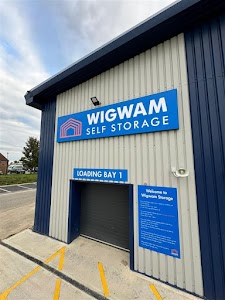

Once contract in place very easy app use to access site and unit, very clear easy to follow instructions. Very happy and would definitely recommend


Very easy access with parking right outside the door.
Plenty of trolleys, so no need for muscles ! It maybe a little more expensive than some others, BUT the cleanliness & ease of use perfect.
The staff are VERY patient, explaining how each unit works.
It is great to know the manned office hours & how to make contact if not.
Plenty of accessible hours too.
Ps.... they do like a biscuit or 2 in the office I hear !


Units were good and secure.
only critisms - lights turned off automatically too quickly and no onsite toilet.

I Highly recommended this company.

Also the girls in the office who are extremely helpful with a cracking sense of humour,
Unit was superb, extremely clean,
So easy to access, completely idiot proof
Will definitely use them again

