
Home /
By Simon Fothergill, Managing Director, Wigwam Self Storage
Quick access
- Client needs a unit now: Get a quote at quote.wigwamstorage.co.uk
- Find a location near your client: See all Wigwam locations
- What your client needs to bring: Jump to the access section
- Check contents protection: Contents protection details
Jurisdiction note: This guide covers England and Wales. Probate law, Grant of Representation requirements, and family law for divorce and separation differ in Scotland and Northern Ireland. Readers in those jurisdictions should direct their questions to their own solicitor.
When a client is administering an estate or going through a separation, the last thing they need is another decision to research from scratch. You are already managing the legal process. This guide is written for you to read quickly, trust enough to forward, and leave your client to act on without coming back to you for storage advice.
We are a self storage operator, not a legal or financial services firm. Nothing in this guide is legal, financial, or insurance advice. The guidance here covers the practical mechanics of storage: who can rent, who pays, how access works, what insurance covers, and what we cannot do. For everything beyond that, your client needs you.
If you have a client who needs a unit now, they can get a straightforward quote at quote.wigwamstorage.co.uk without a phone call. The rest of this guide gives the context behind that step.

Why solicitors point clients toward self storage
The risk your client faces is rarely the storage unit itself. The risk is what happens when a property stands empty, or when two people’s shared household cannot be divided yet.
The empty house is where things go wrong
An inherited property sitting vacant while a Grant of Representation is in progress is genuinely exposed. Insurers often restrict cover on unoccupied homes from thirty days, which creates a window during which a house full of belongings is underinsured or uncovered. Add the practical risks of damp, theft, and slow deterioration, and the pressure to sell quickly, even below value, becomes real. A good executor knows this. A good solicitor helping an executor knows it too. Self storage is not a solution to the estate; it is the thing that removes the household pressure while the estate is resolved properly.
Getting the contents of the property into a secure, dry, individually alarmed unit near the deceased’s home gives the executor time. Time to photograph and value things properly. Time to consult beneficiaries. Time to let the property go on the market in a presentable state and at the right moment.
A resource you can share without risk
This guide does not give legal, financial, or insurance advice, and it does not pretend to. Wigwam is a storage operator. We secure goods in clean, dry, alarmed units at market-town locations across the UK. We do not manage records, hold items as a neutral custodian in any legal sense, or advise on the division of assets. Those responsibilities belong to you and to your client’s other professional advisers.
What you can share with confidence is the practical layer: how the renting process works, how access works, what insurance covers, and what the honest limitations are. That is what this guide holds.
Why the solicitor-facing framing matters
Most storage guidance is written for the consumer who has already decided to book a unit. A solicitor referring a client is doing something different: vetting a provider before attaching the firm’s name to a recommendation. The two-step here is deliberate. You read, you trust it, you forward it. Your client arrives knowing what to expect. Nobody is embarrassed.
Accessing a deceased person’s existing storage unit
If the person who died already held a self storage unit, an executor cannot simply walk in and take over. That is the procedural fact, and it matters for planning.
Death certificate and Grant of Representation
To access or take over a deceased person’s existing storage contract, an executor will generally need to present a death certificate and a Grant of Representation (that is, either a Grant of Probate if there is a will, or Letters of Administration if there is not). The storage operator will need evidence of the executor’s authority before releasing access or allowing the contract to change hands. GOV.UK’s probate service pages set out the process for applying for a Grant, and that is the right starting point for an executor who does not yet have one.
This is an England-and-Wales position. The process and the legal instruments differ in Scotland (where the equivalent is Confirmation) and in Northern Ireland. Executors in those jurisdictions should take advice from their own solicitor.
Fees keep running while probate is pending
This is a practical planning point worth naming clearly. While the Grant of Representation is in progress, the existing storage contract continues. The operator keeps the unit and keeps charging the estate for it. That cost is a legitimate estate expense, but it is a cost that runs regardless of whether anyone can access the unit. An executor who is aware of this can plan accordingly, either by accepting that cost as part of the administration or by taking a different approach.
The different approach is in the next section.
What to do if you cannot yet access the existing unit
An executor who cannot yet access an existing unit is not stuck. They can rent a new unit from Wigwam on behalf of the estate from day one, under their own name and capacity as executor, and begin moving goods into it immediately. The existing unit can be dealt with once the paperwork comes through. The two can run in parallel if needed. This is the practical fork that nobody mentions clearly, and it is often exactly what an executor needs to hear.
Who can rent, and who pays
An executor can rent a self storage unit from day one, on behalf of the estate, using estate funds. The legal process does not need to be complete first.
The executor renting on behalf of the estate
The contract is signed in the executor’s name, in their capacity as executor of the estate. That is the practical reality: the executor is the contracting party. Which estate funds they draw from, and how that expenditure is recorded for estate accounting purposes, is a question for their solicitor, not for a storage operator. Wigwam’s job is to provide the unit. Your client’s job, with your guidance, is to manage the payment from the right source.
This position applies in England and Wales. Executors in Scotland or Northern Ireland should confirm the position with their own solicitor before proceeding.
Divorce or separation: who rents and who has access
When a couple separates, household goods often need to move into neutral storage while proceedings determine what belongs to whom. The practical point here is straightforward: a Wigwam unit is in the name of the person who signs the contract. That person controls the unit and the access. It is not a shared arrangement unless both parties choose to set one up independently. Some separating clients find it cleaner for each party to rent their own unit, so that each person has sole control of their own belongings. That is a practical option, not a legal recommendation. For any questions about shared assets and what can or cannot be moved into storage during proceedings, your client needs advice from you.
Two-week minimum stay, refund of unused days
One of the things that suits an estate or a separating household particularly well is that there is no long-term lock-in. The minimum stay at Wigwam is two weeks, and if your client vacates before the end of a paid period, unused days are refunded. There is a refundable deposit, which is returned once the client has vacated, given the required 14-day notice, and settled the account in full. That structure is honest and predictable, and it suits a situation where nobody can say with certainty how long the storage will be needed.
You can review the full terms at wigwamstorage.co.uk/terms-conditions.

Storage during divorce or separation
When a home that two people shared can no longer function as a shared home, the household contents become a practical and sometimes contested problem before the legal process has resolved anything. Self storage provides a neutral holding place for goods that do not belong anywhere else yet.
A neutral place to hold a shared household
A storage unit is not a legal holding arrangement and it does not carry any special status in proceedings. What it does is provide a secure, documented, physically separate place for goods to sit while the legal process runs its course. That takes a particular kind of pressure off a property: it does not need to function as a battleground for objects when neither party is living there comfortably. The unit holds. The legal process continues. The decision about who keeps what is made at the right time, not under the pressure of objects being in the wrong place.
This section is limited to England and Wales. Scottish family law differs in significant ways from the position in England and Wales; clients in Scotland should consult their own solicitor before making any practical moves.
Flexible duration while matters are settled
The minimum stay of two weeks and the refund of unused days apply here exactly as they do for an estate. A separating client does not know whether they will need storage for six weeks or six months. They do not have to commit beyond the next payment period. The deposit comes back once they vacate, give the 14-day notice and settle the account. It is a low-commitment, honest structure for a situation that has enough uncertainty in it already.
What we cannot do, and who can
Be clear with your client about this, because it matters for managing expectations. Wigwam is a secure unit your client controls. It is not a managed records service. It is not a valuables vault with specialist environmental controls. It is not a neutral custodian in any legal sense. If items need to be formally documented as part of an asset inventory during proceedings, that is a matter for you and any relevant court process. If a client needs specialist storage for fine art, legal documents, or items of significant financial or sentimental value, we will say so honestly rather than overpromise.
How access actually works at Wigwam
Before your client arrives with a van or a clearance company, they need to know what an unmanned site looks like in practice.
Smart entry, 6am to 10pm, individually alarmed units
Access at Wigwam is by smart entry, seven days a week, from 6am to 10pm. It is not 24-hour access. Each unit is individually alarmed. The units are clean, dry, and secure. There is no climate control at our sites, which is relevant to estate goods that include paintings, documents, or antiques. We cover that in the insurance section below, but the practical point to note now is that if your client has items that require controlled temperature or humidity, they should take specialist advice before choosing any standard self storage facility.
Unmanned sites: what this means for deliveries and clearances
This is a genuine planning point for an executor, and worth stating to your client before they arrange logistics. Our sites are unmanned. Wigwam does not sign for couriers and does not receive deliveries on behalf of customers. If a house-clearance company, removals firm, or courier is coming to deliver goods to the unit, someone from the client’s own side must be present to accept and direct that delivery. An executor who is not local to the site needs to arrange for a family member, a friend, or another representative to be present if they cannot attend themselves. That is worth building into any clearance plan before the van is booked.
What can and cannot be stored
Household goods, furniture, personal effects, business stock and equipment. Those are the broad categories that suit a self storage unit and that Wigwam’s sites are designed for. If an estate includes a vehicle, a caravan, a motorhome, a boat, or any leisure craft, Wigwam cannot store it. We do not offer vehicle or leisure storage at any of our locations. An executor with that kind of estate item should seek out a specialist vehicle storage provider. No hazardous goods, no prohibited items. If your client is uncertain about a specific item, they can check with the team before bringing it.
When your client is ready to take a practical step, they can get a quote directly at quote.wigwamstorage.co.uk. No commitment needed. They can also use the locations hub to find the site nearest to the property.
Contents protection and high-value items
Estate goods must be insured while in storage. This is not optional, and it is worth your client understanding the terms before they bring anything in.
The RSA policy: opt in or prove your own
Wigwam operates through an RSA “Self Storage Customers’ Goods” policy. Your client can opt into that policy, or they can provide evidence of their own adequate contents cover. Those are the two options. There is no uninsured route. The RSA policy is New-for-Old, which is appropriate for household goods, with a £50 excess. Your client needs to declare the full replacement value of everything in the unit. This matters because if they underinsure, any claim is settled in proportion to the declared value. If they declare £5,000 and the actual replacement value is £10,000, a £2,000 claim is settled at £1,000. That is a real-world outcome worth flagging clearly. Full details are at wigwamstorage.co.uk/contents-protection.
We cannot give insurance advice. For questions about what policy is right for a particular estate, your client should speak to an insurance adviser.
What is and is not covered
Theft is covered under the RSA policy, but only following forcible entry to the unit. Atmospheric or climatic damage is excluded. That exclusion is particularly relevant for an estate that includes paintings, drawings, paper documents, antiques, or any item that can be affected by changes in temperature or humidity. Our units are clean, dry, and secure, but they are not climate-controlled environments. We say this plainly because it matters and because a client who discovers it after the fact is not well served.
If your client is aware of items in the estate that are sensitive to atmospheric conditions, they should discuss specialist storage options with a conservator or a specialist insurer before making a decision. We are not the right place for everything, and we would rather say so than see a client’s belongings affected.
Paintings, documents, antiques, and sentimental items
Our units are suitable for the bulk of most household estates: furniture, boxes, white goods, everyday items. They are not a specialist fine-art store and not a climate-controlled archive. If the estate holds items of significant value, whether financial or sentimental, that are vulnerable to atmospheric change, your client should take specific advice. That might mean a specialist provider for those items and a Wigwam unit for everything else. The point is to make a deliberate choice rather than assume all storage is equivalent.
What it costs, and why we will not guess your case
The honest answer to “how much will this cost?” is that it depends on the size of unit, the location, and the duration. We do not publish per-unit prices on this page because a quote built on the wrong assumptions is not useful to anyone.
Refundable deposit, 14-day notice, and unused-day refunds
The cost structure is built for situations where duration is uncertain. There is a refundable deposit, returned once the client has vacated, given 14-day notice, and settled the account. Unused days are refunded if the client leaves before the end of a paid period. The minimum stay is two weeks. An estate that resolves faster than expected does not carry a financial penalty for doing so. A separation that runs longer than expected does not require a new long-term commitment. The terms match the situation. You can read the full terms at wigwamstorage.co.uk/terms-conditions.
Getting a real quote
For pricing context, the how much is self storage in the UK page gives a guide to what drives costs: size, location, and duration. For an actual quote based on your client’s situation, the right place is quote.wigwamstorage.co.uk. The quote tool lets your client specify what they need to store and where, and gives them a real number without a phone call.
Contents protection cost
Insurance premium pricing is available through the contents protection page at wigwamstorage.co.uk/contents-protection. If your client has questions about cover levels or what the policy includes, the Wigwam team can help. We will not give insurance advice, but we can point a client toward the right information and let them take it to an adviser if needed.
Where we are: market-town locations across the UK
Wigwam’s locations are in UK market towns, which is where a lot of family homes, probate properties, and separating households are. The chance that there is a site near your client’s property is good.
Our UK market-town locations
Wigwam Self Storage Bath and Wigwam Self Storage Lincoln are two examples where local teams are ready to help clients through exactly this kind of situation. We also serve a range of other market towns across England. The full list is at the locations hub, where your client can search by town or postcode to find the nearest site.
We use the word “local” deliberately. The team member your client speaks to is based at the site they are calling. They know the town, and they have helped other families and separating households through this kind of practical problem before.
Matching a client to a nearby site
If you are writing a client email and want to point them directly to a nearby location, the locations hub is the right link. Your client can enter their postcode or town name and find the nearest Wigwam site with contact details. If the client is dealing with a property in a town we do not yet serve, the team can say so plainly rather than let them travel.
How solicitors refer clients to Wigwam
There is no formal referral scheme and nothing complicated involved. If you want to discuss a client situation in general terms before forwarding this guide, the Wigwam team can help with that conversation. They will focus on the practical storage questions, which is what they know. They will not discuss legal strategy, business plans, or matters outside their role. If your client contacts the team directly, they will be treated with the same patience and plainness that this guide is written in.
Close
When your client is ready, they can get a straightforward quote at quote.wigwamstorage.co.uk. No commitment, no sales call. Just the information they need to take a practical step in a situation that has enough complications already.
If you would like to discuss a referral, or talk through what Wigwam can offer a specific client before you pass this guide on, contact the Wigwam team directly through the locations hub. We are glad to help you help them.
Frequently Asked Questions
Can someone acting under a power of attorney rent a unit for a living person who has lost capacity?
This is the living-person counterpart to the executor question, and the practical answer on the storage side is yes, an attorney can be the account holder, while the legal scope of their authority is firmly your territory rather than ours. Where a client is downsizing a relative into care, or clearing a home after a move to a care setting, the person holding a registered lasting power of attorney for property and financial affairs is commonly the one who signs the storage agreement, controls the access, and manages payment from the donor’s funds in line with their authority.
From our side, the mechanics are the same as any rental. The attorney is the contracting party, the unit is in their name in that capacity, access runs on smart entry, and contents cover must be in place with the declared value matching what is stored. We do not verify or interpret the scope of a power of attorney, and we would not presume to. Whether a particular act falls within the attorney’s authority, how the spending is recorded, and the duties they owe the donor are matters for you to advise on.
The honest boundary is the one this whole guide draws. We provide a secure, dry, individually alarmed unit and the access to it. We are not a neutral custodian in any legal sense, we do not advise on capacity or attorney duties, and we will not get drawn into questions about whether the attorney is acting properly. If those questions arise, they sit with you and, where relevant, with the Office of the Public Guardian or the Court of Protection. For the storage step, the attorney can get a quote at quote.wigwamstorage.co.uk and proceed exactly as any account holder would.
What if one party in a separation objects to the other moving goods into storage?
We stay out of it, and that is the only honest position a storage operator can take, because a unit confers no legal status and we cannot adjudicate ownership. A Wigwam unit is rented by, and controlled by, the single person who signs the agreement. If a separating client rents a unit and moves goods into it, that reflects their decision and their account; it does not make us a party to any dispute about who is entitled to those goods, and it does not give the goods any special standing in proceedings.
Where one party objects to the other moving items, that is squarely a matter for the parties and their solicitors, not for the unit. We will not hold goods as a neutral custodian, we will not arbitrate competing claims, and we will not grant the objecting party access to a unit held in the other person’s name, because access follows the account, not the argument. We do not hold spare keys and we do not let people in on a say-so. That boundary protects the account holder and keeps us out of a dispute we have no business being in.
The practical option many separating clients find cleaner, mentioned in the body of this guide, is for each party to hold their own unit, so each has sole control of their own belongings and there is nothing to contest about access. Whether moving particular goods into storage during proceedings is wise, or even permitted given any undertakings or orders in place, is a question only you can answer for your client. We provide the space; the entitlement, the orders, and the strategy are yours.
How long does the whole process usually take, and can the unit outlast the legal matter?
There is no fixed timetable, and the unit is deliberately built to outlast whatever the matter takes, which is the point of the rolling structure. Probate and estate administration can run from a few months to well over a year depending on the estate, and a separation can resolve quickly or drag through many months; those timescales belong to you and the relevant processes, not to us. What we can promise is that the storage will not be the thing that imposes an artificial deadline on either.
The terms are designed for exactly this uncertainty. The minimum stay is two weeks, after which the unit simply continues for as long as it is needed, with no upper limit. When the matter resolves and your client is ready to clear the unit, they give 14 days’ notice, vacate, and the refundable deposit comes back once the account is settled, with unused days refunded if they leave before the end of a paid period. An estate that settles faster than expected carries no penalty; a separation that runs long needs no new long-term commitment. The minimum and the notice are separate and do not compound.
If the storage need genuinely outlasts the legal matter, for instance a beneficiary keeps a unit on to hold inherited furniture while they decide what to do with it, that is entirely normal and the unit just rolls on in the new account holder’s name on the same terms. The two things to keep current over a long hold are the periodic payment and the contents cover, so the declared value still matches what is inside. Beyond that, the unit waits as long as the people involved need it to.
Can a solicitor’s firm store its own closed files and archives in a unit?
Yes, and law firms are among the businesses that use storage for exactly this, though the professional obligations around what you store are yours to manage, not ours. Closed matter files, deeds, wills held to store, and archive boxes that must be retained but do not need to sit in the office are a sound, low-cost use of a clean, dry, secure and individually alarmed unit. It frees expensive office space without sending confidential papers somewhere you cannot control.
The practical fit is good. Access runs on smart entry between 6am and 10pm, the sites are unmanned so only your authorised people get in, and access is logged. That said, the firm, as account holder, controls and is responsible for who has access, and we do not hold spare keys or admit anyone on a say-so, which is the right posture for confidential material. Contents cover applies to the goods as it would for any stored items, though the value of paper archives is a different calculation from household goods and worth thinking through when you declare it.
The obligations that sit with you, not with us, are the important part. Data protection duties for client files, your regulator’s requirements on the retention, security and confidentiality of files and deeds, and your own professional indemnity considerations all remain entirely the firm’s responsibility. We are not a managed records service, we do not index or retrieve files, and we are not a confidential-document destruction service; we provide the secure space and you manage the compliance. For how long to keep particular files and under what conditions, your regulatory obligations and your own retention policy govern, not anything we can advise on.
Is the storage cost VAT-able, and can it be charged as an estate or matter expense?
We can be clear on the mechanics and clear about where our knowledge stops. Self storage in the UK is generally a standard-rated supply for VAT, so a client should expect VAT to apply in the normal way, and any quote or invoice will reflect that. The precise figure for a specific unit, size and location comes from the quote at quote.wigwamstorage.co.uk rather than from a published list, because the underlying charge varies.
Whether the cost is properly an estate expense, or a recoverable disbursement on a matter, is a question for you, not for us. In broad terms, the reasonable costs of administering an estate, which can include securely storing the contents of a property while it is dealt with, are commonly treated as estate expenses, and storage costs in a separation may be accounted for between the parties as the matter and any order direct. But how that is recorded, whether it is appropriate in the particular case, and who ultimately bears it are matters of estate accounting and legal judgement that fall to you and your client’s other advisers.
Our part is simple and bounded: we provide the unit and a clear, VAT-inclusive invoice that your client or the estate can use for its records. We will not advise on the VAT treatment of your client’s affairs, on whether a cost is a recoverable disbursement, or on how to apportion storage between separating parties. For the VAT position and the estate-expense or disbursement question, the right people are the client’s accountant and you. This is a signpost, not advice, which is the same boundary that runs through this entire guide.
Customer Reviews
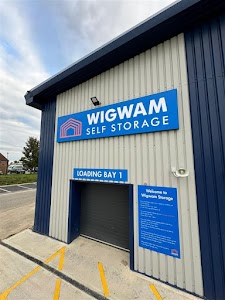

Once contract in place very easy app use to access site and unit, very clear easy to follow instructions. Very happy and would definitely recommend


Very easy access with parking right outside the door.
Plenty of trolleys, so no need for muscles ! It maybe a little more expensive than some others, BUT the cleanliness & ease of use perfect.
The staff are VERY patient, explaining how each unit works.
It is great to know the manned office hours & how to make contact if not.
Plenty of accessible hours too.
Ps.... they do like a biscuit or 2 in the office I hear !


Units were good and secure.
only critisms - lights turned off automatically too quickly and no onsite toilet.

I Highly recommended this company.

Also the girls in the office who are extremely helpful with a cracking sense of humour,
Unit was superb, extremely clean,
So easy to access, completely idiot proof
Will definitely use them again

