
Home /
Every removals firm has had that week. The diary is full, the jobs are stacked up from Monday to Friday, and then Thursday afternoon you get a call: completion has slipped. The customer’s goods are off the lorry, the new house is not ready until next Wednesday, and your own store is already packed with two other jobs doing the same thing.
You do not want to turn the work away. You have already moved this family out. But a warehouse lease for a fortnight makes no sense, and the nearest big-chain depot is an hour in the wrong direction.
There is a better way to handle it. And it starts in the same town you are already working.
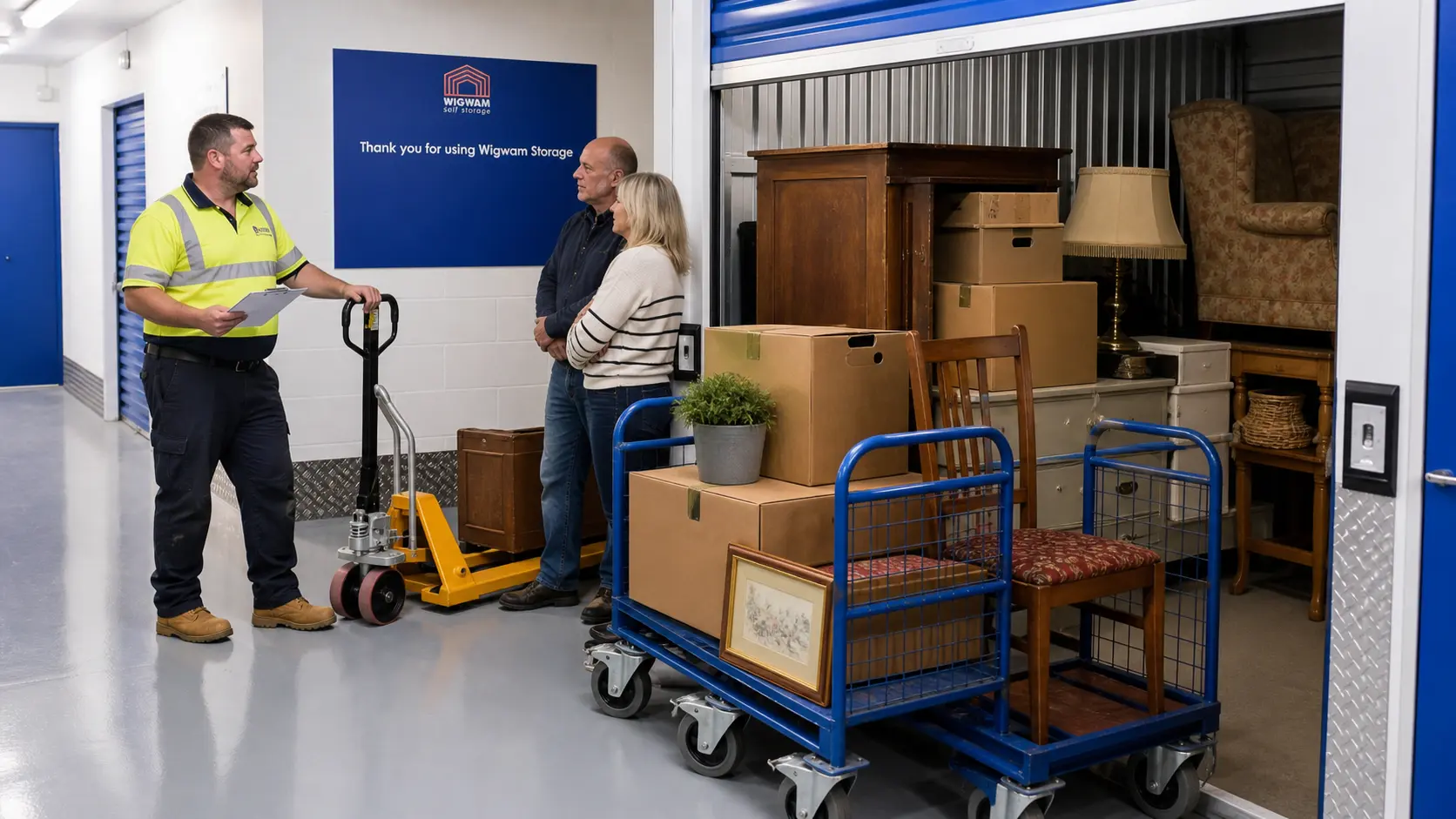
When your own store is full and the job still needs doing
You do not have to turn the job away. That is the answer. A storage unit in the town you are working, booked for two weeks, with access your own crew controls: that is what bridges a slipped completion without costing you the job or the customer.
The peak-season storage wall
The pattern is familiar. Summer gets busy. Completions back up. Three jobs land in the same week, one slips from Tuesday to the following Friday, and suddenly the gap between end-of-Monday and start-of-next-week is nobody’s friend. Market-town removals firms feel this differently from big-city operators: you are not two streets from a multi-storey depot. You are in Bath, or Lincoln, or Warminster, and the nearest national-chain storage is a long detour that your crew does not have time for on a moving day.
The wall is not the season. The wall is not having a reliable overflow partner close enough to actually use.
Why a warehouse lease is the wrong tool
A short-term warehouse contract is built for a different kind of business. A logistics firm running regular pallets can justify three months of committed space. A removals firm with a fortnight’s overflow cannot. The commitment is too long, the space is too large, and the cost does not fit a job you might only need for two or three weeks. A self storage unit on a two-week minimum is the right-sized answer to a right-sized problem.
Same-town overflow across the network
What a market-town network gives a removals firm is simple: a place to put the goods in the same town they came from. A Reading firm stores Reading goods in Reading. A Bath firm stores Bath goods in Bath. The customer’s belongings do not travel any further than they need to.
A unit in the town you are already working in
That same-town logic does more than save your crew a long detour. It keeps the job clean. The customer knows where their goods are. If they need to collect something early, they can. If the completion shifts again, extending the unit for another week is straightforward. Every extra leg out of a job costs time and fuel and credibility. Keeping the goods local takes that pressure off.
It also means your firm is not dependent on one distant facility for every overflow job across every town you work. Each job stays in its own patch.
Our UK market-town locations
We have sites across our UK market-town locations, including towns most independents already serve. Two verified pages to start with: Wigwam Self Storage Lincoln for firms working Lincolnshire, and Wigwam Self Storage Bath for firms in Somerset. For the full list of towns, the Wigwam Self Storage locations hub has every site.
If you work towns we have not listed here, start with the locations hub and check what is nearby. The network is built around the same market towns independent removals firms serve, so there is a reasonable chance we are already on your patch.
Find the sites near the towns you work. Get a quote at quote.wigwamstorage.co.uk
Flexible terms built for removals work
The anxiety about a slipped completion is really an anxiety about paying for time you did not plan for. The answer here is straightforward: a two-week minimum, with a refund of unused days if the customer collects early. You are not locked into space you no longer need.
Two-week minimum and refund of unused days
Two weeks is the minimum stay. If the customer gets their keys back sooner than expected and the goods come out on day ten, the unused days are refunded. That matters when completion dates move, which they do. You can book the unit for a fortnight, give the customer a realistic date, and not carry the cost of empty days at the end.
It is a practical arrangement built for the reality of removals work, not for a customer who knows exactly when they are leaving and when they are arriving.
Refundable deposit and 14-day notice
There is a refundable deposit at the start. When the time comes to end the storage, the 14-day notice period runs from the point of notification, and the deposit is returned once the unit is vacated and the account is settled, less anything owed. The terms are plain and consistent.
Read the full terms at wigwamstorage.co.uk/terms-conditions/ before booking if you want to go through the detail with your customer in advance. Better to do that than answer questions on the day.
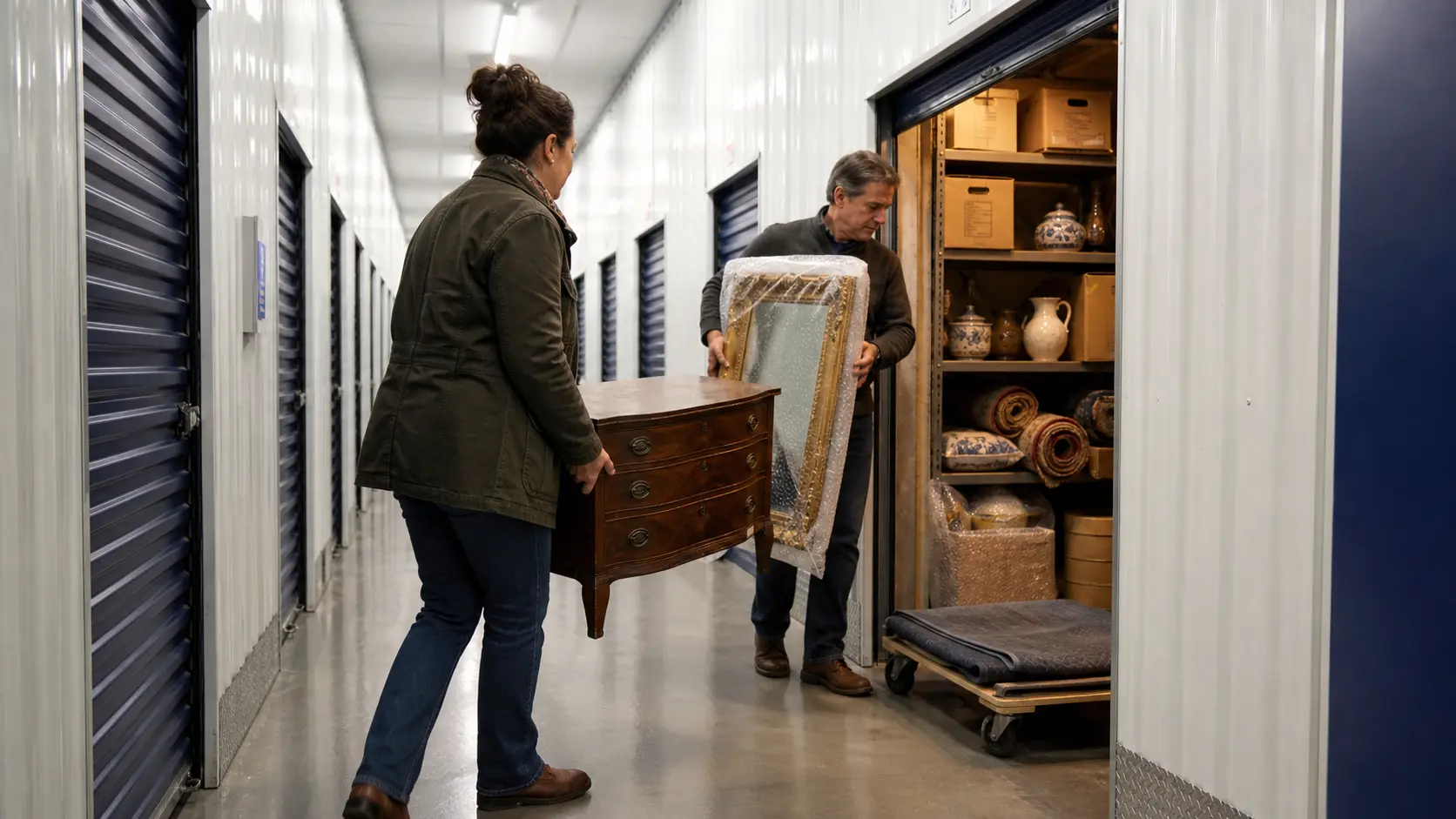
Sizing for a part-load or a full house
Whether the overflow is a van’s worth of boxes or an entire three-bedroom house, the question is the same: is there a unit that fits? The answer is yes, and it is worth working out the right size before the lorry arrives rather than on the day.
From a few boxes to a three-bedroom home
We offer a range of unit sizes. A part-load overflow, the kind that comes from a completion where one room’s worth of items did not fit in the new house yet, needs a smaller unit. A full household clearance from a four-bedroom property is a different proposition. The pricing reference page lays out the size options alongside an indication of what fits in each. Use it as a starting point when you are briefing the customer.
Planning the right size before the lorry arrives
Getting the size right on the first call saves a second trip. A rough room count is usually enough to narrow it down: two bedrooms and a kitchen’s worth of items is a recognisable volume. If you are not certain, go slightly larger on the first booking and use the quote process to check. The quote starts at quote.wigwamstorage.co.uk: name the town, give the dates, describe the volume, and we come back with the options for that site.
Access your crew controls
Your crew gets in from 6am to 10pm, seven days a week. No booking ahead, no waiting for someone to open up, no gatekeeper. They arrive, they access the unit, and they get on with the job.
Smart entry and access 6am to 10pm, seven days
Access is via smart entry, and the hours are 6am to 10pm every day of the week. That covers early starts on a moving day and late finishes when a collection runs long. The sites are not open at midnight and there is no 24-hour access to offer, but 6am to 10pm seven days covers the working hours of every removals job we are aware of.
Sites are unmanned, and what that means for your crew
Our sites are unstaffed. Your crew accesses their unit directly without needing anyone to let them in, which is straightforward for a team that is used to working independently. The thing to know in advance is this: we do not sign for couriers, and we do not receive deliveries on a customer’s behalf. If a courier or third-party delivery is expected at the site, someone from your own business needs to be present to accept it. It is worth telling the customer this at the start, before they assume someone is on-site to take a parcel.
Clean, dry and secure, with contents cover
Every unit is individually alarmed, clean, dry and secure. That is the standard, and it is a consistent one across our UK market-town locations. A customer’s full household goods are defensible in the unit.
Individually alarmed units, clean, dry and secure
We do not offer climate-controlled storage, and we do not market it. The real claim is clean, dry and secure, and that is what the units deliver. For the goods that come off a removal lorry, a clean, dry, individually alarmed unit in a secure site is what you and your customer need. No temperature or humidity management is provided or implied.
Contents protection and your duty of care as a removals firm
Contents cover is required for every customer storing with us. They can take Wigwam’s RSA Self Storage Customers’ Goods policy, or they can provide evidence of their own equivalent cover. Either way, the goods need to be covered.
When arranging cover, customers must declare the full replacement value of what they are storing. If the declared value falls short of the actual value and a claim is made, the settlement is proportional to the shortfall. Full details, including how to arrange the RSA policy or submit proof of cover, are at wigwamstorage.co.uk/contents-protection/.
A note on professional liability: the way your firm handles a customer’s goods between collection and delivery, and during a storage period, may carry its own obligations under English and Welsh law. If you are working with a customer who is based in Scotland or Northern Ireland, or if the move crosses jurisdictions, the legal position on your duty of care may differ. This is not legal advice. If that question comes up, direct your customer, or yourself, to a solicitor who can give you a proper answer.
Why partner rather than build your own store
The capital case against running your own storage depot is simple: the costs do not scale for a firm doing removals work across market towns. A lease, a security fit-out, insurance for the space itself, plus the overhead of managing access and handling enquiries: these are the costs of a storage business, not a removals business. They work for a firm whose core product is storage. For a firm whose core product is moving, they are a distraction.
The capital case against an in-house depot
Overflow storage happens in bursts. Peak season, a cluster of delayed completions, an unusually busy school-holiday window: these are the moments a removals firm needs more storage than it has. A fixed depot means paying for that capacity all year to have it available for six weeks. Variable-cost overflow storage means paying for it when you need it and not when you do not. The difference between those two models is significant over a full year.
How other independents use Wigwam in their workflow
A common pattern looks like this. A job comes in for a family moving from a three-bedroom house. Completion slips from Tuesday to the following Monday. The goods come off the lorry and go into a Wigwam unit in the same town. The crew drops the unit key code to the customer, the customer lets them know when the new house is ready, and the goods go back on the lorry the following week. Unused days come back on the bill. The job is done, the customer is looked after, and the firm has not had to tell anyone there was no room.
No brand names, no case studies: just the shape of how overflow storage fits a removals workflow when the terms are right.
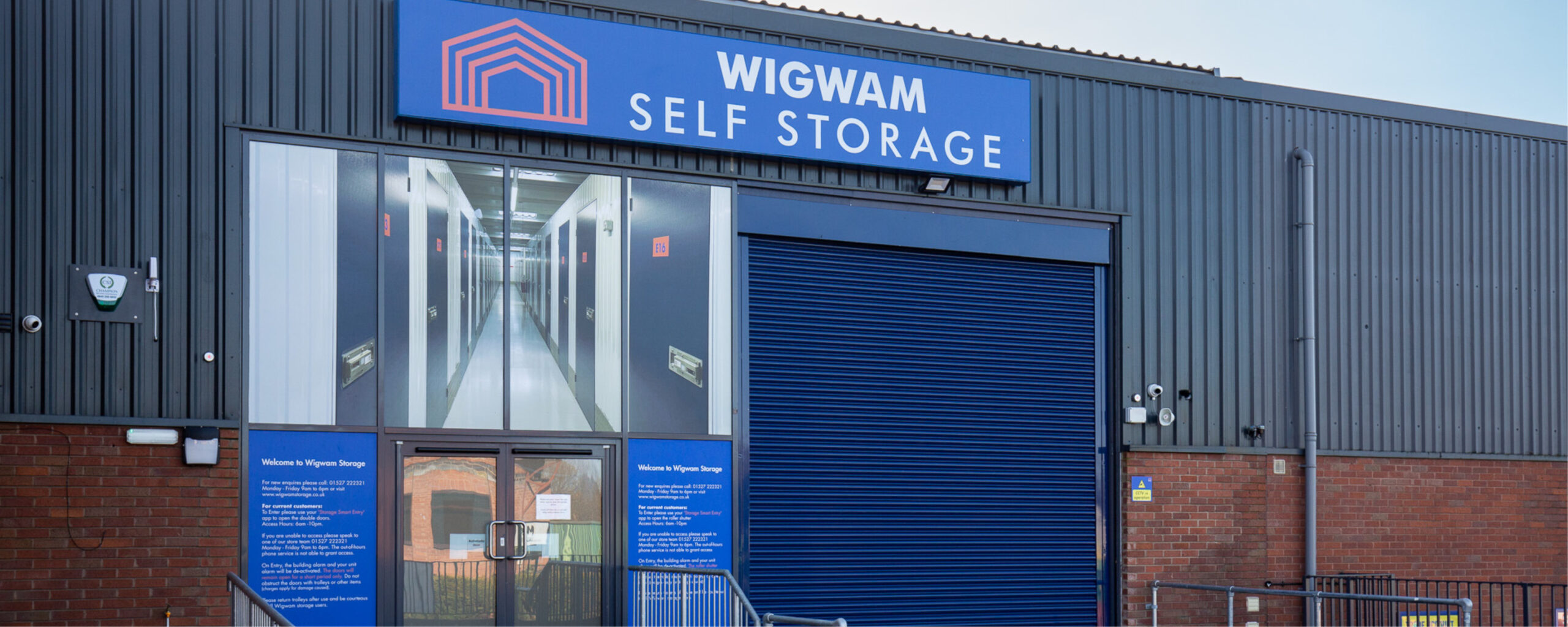
Start your overflow partnership
Getting set up is straightforward. There is no long-form contract to negotiate and no account to open in advance of your first job.
How costs work
There are no prices quoted on this page. Self storage pricing varies by town, unit size and duration, and the quote process is the right place to get an accurate figure for a specific job. The pricing reference page gives a working sense of the range before you commit to a quote. Use it to brief your customer on what to expect.
Getting a quote for your next job
When you have a job that needs overflow storage, the quote is at quote.wigwamstorage.co.uk. Name the town, give the start date and an estimated duration, describe the volume or room count, and we come back with what is available at that site. There is no ceremony to it. It is a straightforward exchange between two operators working the same patch.
Ready to book an overflow unit for your next job? Start at quote.wigwamstorage.co.uk
Frequently Asked Questions
Should the unit be booked in the removals firm’s name or the customer’s?
It depends on who is really holding the goods and for whom, and the choice has real consequences for liability and cover, so it is worth deciding deliberately. Two clean patterns work. In the first, your firm books the unit in its own name as a short overflow under your control, bridges the slipped completion, and moves the goods back out within the fortnight. In the second, the customer is the account holder from day one, the contract sits in their name, and your firm simply delivers into a unit they hold.
The deciding factor is usually duration and responsibility. If you are covering a gap of days and the goods never really leave your custody as a removals firm, holding the unit yourself keeps it simple. If the completion has slipped by weeks, or the customer may need to extend, putting the account in the customer’s name from the start avoids your firm carrying responsibility for goods and cover longer than you intend. Whoever holds the account is responsible for the payment and for declaring the full replacement value of the contents for cover purposes.
There is no formal trade-account scheme with special rates, and the local team handles storage questions only: town, size, dates, access, the deposit and notice. They will not get into how you run your removals business. What they can do is set up the right account structure quickly, so on a busy completion week you are not untangling whose name the unit is in while a lorry waits. Decide the pattern that fits your workflow, tell the team, and keep it consistent across jobs.
What happens if the customer’s completion slips again and they need longer?
You extend, and it is genuinely straightforward, which is the main reason a rolling unit beats a fixed warehouse contract for this work. There is no fixed end date to renegotiate. The unit runs on a two-week minimum and continues for as long as it is needed after that, so if the new house is delayed a second time, the goods simply stay put and the periodic charge continues. Nobody has to scramble for a new arrangement mid-job.
The practical mechanics are worth getting right for your customer’s sake. When they do leave, the 14-day notice period applies, and unused days are refunded if they vacate before the end of a paid period. So the sensible advice to a customer facing an uncertain completion is to give notice once they have a firm date for the new house, not to guess early and then have to extend again. The two-week minimum and the 14-day notice are separate things and do not stack: the minimum is the floor at the start, the notice is what you give to end the let.
For your firm, the value is that a second slip does not become your problem. You are not holding the goods in your own store while another two jobs land behind them, and you are not telling a stressed family there is nowhere for their things to go. The unit absorbs the uncertainty. Tell the customer at the outset that extending is easy and that they only pay for the time they use, and a slipped date becomes an inconvenience rather than a crisis.
Who is liable if a customer’s goods are damaged while in the unit rather than in transit?
This is the line every removals firm should understand before relying on overflow storage, and it splits cleanly between transit and storage. While goods are on your lorry and in your custody, your firm’s own goods-in-transit and liability position applies, governed by your terms with the customer. Once the goods are sitting in a unit the customer holds, the relevant protection is the contents cover on that unit, which is a separate thing from your transit liability.
That is exactly why contents cover is mandatory for anything stored with us. The customer either takes Wigwam’s RSA “Self Storage Customers’ Goods” policy or proves their own equivalent cover, and the declared value must reflect the full replacement value of what is stored, because under-declaring means any settlement is reduced in proportion. Within that policy, theft is covered following forcible entry to the unit, and climatic damage is excluded. The unit itself is clean, dry, secure and individually alarmed, which is the standard the cover sits on top of.
The honest planning point is to be clear with your customer about where one form of protection ends and the other begins, ideally in writing. The handover into a customer-held unit is where transit cover hands off to storage cover. If the goods are in a unit your firm holds in its own name, the responsibility for cover is yours until they pass to the customer. None of this is legal advice, and your duty of care as a removals firm may carry its own obligations under the law, which can differ for customers in Scotland or Northern Ireland. Where that question bites, point your customer, or yourself, to a solicitor for a proper answer.
Can I book a unit same-day or the morning a completion falls through?
Often yes, but treat it as availability-dependent rather than guaranteed, and there is a faster way to find out than hoping. The quote tool at quote.wigwamstorage.co.uk shows live availability for a given town, size and dates, so the moment a completion falls through you can check in minutes whether there is a unit free at the site you need. Some sites will have space at short notice; in the summer peak, the closest one might not, and the locations hub lets you check the next nearest town quickly.
The setup is built to be quick precisely because removals work does not give you notice. There is no account to open in advance and no long-form contract to negotiate. You name the town, give the dates and the volume or room count, and the available options come back. Because access is by smart entry and the sites are unmanned, there is no waiting for someone to open up or hand over a key; once the booking is done, your crew can get in within the 6am to 10pm window and start unloading.
The one piece of honest advice for short-notice work: have the customer’s details and a realistic volume estimate to hand when you check, so you can confirm the right size first time rather than booking too small and needing a second unit. And remember the deliveries point, since the site is unmanned, your own crew has to be present to receive and load the goods; nobody on site will take them in. For a removals team used to working independently, that is exactly how you operate anyway, so same-day overflow usually slots straight into the day.
What if I have two or three overflow jobs in the same town in the same week?
You take a unit for each, and the network is built to handle exactly that clustering, which is the whole point of an overflow partner over your own fixed store. Each job sits in its own unit, in its own name, kept separate, so there is no risk of one family’s goods getting mixed with another’s. Because each unit is individually alarmed and accessed by its own smart entry, the jobs stay cleanly partitioned even though they are at the same site.
Availability is the only real constraint, and the busy weeks are exactly when sites fill, so the practical move is to check and book as the jobs land rather than the morning they all need unloading. The quote tool shows what is free at that town in real time; if a single site is tight, the locations hub shows the next nearest town so you can spread the jobs across two sites if you have to. Keeping each job local to where the goods came from is the ideal, but a short hop to the next market town beats turning the work away.
For your firm, the advantage over building your own store is precisely this burst pattern. Three overflow jobs in one summer week, then a quiet fortnight, is the rhythm that makes a fixed depot uneconomic and variable-cost overflow sensible: you pay for the units when the cluster hits and not when it does not, with unused days refunded if a job clears early. Keep the account structure consistent across the jobs, give each customer their realistic date and the easy-extension reassurance, and a heavy week becomes a scheduling exercise rather than a wall.
Simon Fothergill, Managing Director, Wigwam Self Storage.
Customer Reviews

Once contract in place very easy app use to access site and unit, very clear easy to follow instructions. Very happy and would definitely recommend


Very easy access with parking right outside the door.
Plenty of trolleys, so no need for muscles ! It maybe a little more expensive than some others, BUT the cleanliness & ease of use perfect.
The staff are VERY patient, explaining how each unit works.
It is great to know the manned office hours & how to make contact if not.
Plenty of accessible hours too.
Ps.... they do like a biscuit or 2 in the office I hear !


Units were good and secure.
only critisms - lights turned off automatically too quickly and no onsite toilet.

I Highly recommended this company.

Also the girls in the office who are extremely helpful with a cracking sense of humour,
Unit was superb, extremely clean,
So easy to access, completely idiot proof
Will definitely use them again

