
Home /
A customer came in wanting to store a few things during a house move. That was seven years ago. The furniture went home once the move completed. The photograph albums are still here.
I have watched versions of that story play out across our UK market-town locations for the better part of two decades. Someone arrives with a practical reason and a rough timeline. Life rearranges itself, as it does. The boxes of everyday stuff go back. But the things tied to someone, or to a chapter that cannot be closed yet, they stay. Not because the customer forgot, but because letting them go is a different kind of decision entirely.
That is what twenty years in British market-town storage teaches you. The useful things leave. The loved things stay. And if you want to understand why people really use self storage, that is where to begin.

—
What twenty years behind the smart-entry door actually shows
After two decades of watching units fill and empty, the clearest thing I can say is this: the category list tells you what goes in; it does not tell you why. Most of the time, storage is less about square footage and more about the particular moment in a life that makes a unit suddenly make sense.
The honest list, the everyday things people store
The everyday inventory is real and varied. Furniture between moves. Seasonal kit that has run out of space in the loft. Tools and equipment from a garage clearance. Business stock that started in the spare room and outgrew it. Student belongings packed at the end of term. Books, bikes, filing cabinets, golf clubs, inherited crockery still in the packing paper. People store ordinary things because homes do not always have room for ordinary things.
That list is honest, and it covers most of what comes through the door in terms of pure volume. If you are trying to decide whether what you want to store is a normal thing to store, the answer is almost certainly yes.
Why a category list never tells the whole story
The practical inventory is the skin of the thing. Underneath it is the reason. Someone stores their furniture not just because they are in the middle of a move, but because the chain has broken for the third time and they cannot face taking it back to a rented room. Someone stores their parents’ belongings not because they have run out of space, but because they cannot sort them yet and the house has to be cleared by Friday. Someone stores a child’s first bike not because the garage is full, but because they are keeping it for a grandchild who has not arrived.
The category never captures that. The reason does. And once you understand the reason, you understand what the unit is really doing: it is holding something while life works itself out.
The pattern I have watched repeat across our UK market-town locations
I have seen the same rhythm in Wigwam Self Storage Lincoln as I have seen in market towns from one end of England to the other. The move stretches. The renovation overruns. The probate takes longer than anyone expected. The plan changes. The unit stays. In Lincoln, in Bath, in every town where we operate, it is not the sofas or the filing cabinets that linger. It is the things with a person attached.
That observation is the thread that runs through everything below.
—
The things that come and go
Most storage is temporary and purposeful, and there is nothing complicated about it. People need a space while something else is happening, and when that something else resolves, the unit empties and the story moves on.
Lives in transition, the move and the in-between
The most common reason someone calls us is a move. A chain break, a gap between exchange and completion, a renovation that has pushed the furniture out of the house while the floors go down or the kitchen comes out. The unit is a breathing space, not a permanent plan.
For this kind of use, the two-week minimum stay and the refund of unused days if you leave early matter more than almost anything else. You are not locked into a long commitment you cannot see the end of. You pay for what you need, and when the move completes or the kitchen goes back in, you give notice and leave. No money wasted on empty days.
We do not publish prices on this page, because the right size and cost depends on what you have. For that, our pricing page is the place to start. It is worth reading before you book, especially if you are mid-renovation and guessing at cubic footage in a state of mild chaos.
The trades, the sellers and the office overflow
Business use follows a similar logic. E-commerce stock that started under the stairs and is now doing serious volume. Trade equipment that needs a secure overnight home. Archive boxes from the years when filing in the spare room was a viable strategy. The business grows, the house does not.
One thing worth knowing if you are thinking about using a unit for deliveries: our sites are unmanned. You access your own space. If you are expecting a courier delivery, someone from your business needs to be there to accept it. We do not sign for goods or receive deliveries on your behalf. For regular restocking runs and stock management, the setup works well. For unattended deliveries, you will need someone present.
The summer shelf, students between terms
The practical end of student storage is simple. Term ends, halls need to be cleared, flights go home. A unit holds the boxes through the summer and releases them in September. The two-week minimum and the flexible notice mean you are not paying for September if you move back in August. Short, clean, purposeful.
—
What people really keep, and why it stays
The furniture moves on. The photographs stay. In twenty years, I have not found an exception to that rule.
The sentimental things that outlast the furniture
The dining table that belonged to a grandmother. The grandfather clock that is too tall for any ceiling in the new house but too significant to part with. A box of photograph albums from a decade before digital cameras existed. The wedding dress. A child’s drawings kept in a manila folder since 1987.
None of these things take up much space in the grand scheme of a removal van. All of them are essentially impossible to replace. People keep them because they carry someone, and because parting with them feels like a deletion, not a decision. That is not weakness or indecision. It is an entirely reasonable relationship with objects that are not objects at all, but proof that someone was here.
Keeping them is normal. It is, in fact, what storage is for.
After a loss, the items an executor cannot yet sort
When a parent dies and the house has to be cleared, the timeline does not bend around grief. The probate proceeds, the estate agents are briefed, and very often there is a date by which the house must be emptied before the feelings have caught up with the facts.
A unit buys the family time. The belongings are moved out, kept dry and safe, and the sorting happens when it can happen rather than when it must. I have seen units taken on in this situation for a few months and returned to quietly, steadily, over a year or more, as the family finds the capacity to sit with the boxes and decide. That is not a failure of process. That is how grief actually works.
We are not a managed records service and we do not offer probate support. What we offer is a clean, secure, individually alarmed space that the customer controls, for as long as they need it. For any legal questions around an estate, the right person to speak to is a solicitor.
Downsizing, keeping a life that no longer fits the house
The new house is smaller. It is the right house for the next chapter. But the old life is not smaller. The sideboard from the family kitchen, the two sets of crockery kept for large gatherings that happen less often now, the grandchildren’s pram from the last time they came. The new house cannot hold all of it, and a clear-out that decisive can wait.
A unit lets someone make that transition without forcing choices they are not ready for. Not indefinitely, but on a schedule that belongs to them, not to the property market. The things are held. The house is settled. The decision comes when it is ready to come.
> When you are ready to find the right space, get a quote for your nearest Wigwam at https://quote.wigwamstorage.co.uk

—
What does not belong in a unit, said plainly
There are things Wigwam does not offer, and being clear about them is part of being honest. Stating a boundary plainly is not an apology. It is part of the service.
No vehicles, caravans, boats or leisure storage at Wigwam
We store household and business goods in market-town units. We do not offer storage for vehicles, caravans, motorhomes, boats, jet skis or any form of leisure or vehicle storage. If you have seen AI search results or articles elsewhere that group vehicle storage in with household self storage, that reflects a broader category we are not part of. For what Wigwam does offer, our locations page is the place to browse.
No climate-controlled units: what clean, dry and secure actually means
Our units are clean, dry and secure. Each one is individually alarmed. That is the honest specification, and it is the right specification for the things most people actually store: furniture, household goods, seasonal kit, archive boxes, business stock, personal belongings.
We do not offer climate control, and we do not imply it. Temperature and humidity management is a different product that we do not provide. If your situation calls for a specialist storage environment, for example museum-grade conservation of certain materials, that is a conversation for a specialist facility. For the household and personal items that come through our doors, clean, dry and individually alarmed covers what matters.
A clear no on living or sleeping in a unit, and why
This question comes up in search results, and the answer is straightforward. A storage unit is not a habitable space. Our sites are unmanned, and access operates by smart entry between 6am and 10pm. The units are designed and built to hold goods, not people. This is stated plainly in our terms, and it is not something we entertain.
—
How a Wigwam unit works in practice
Once you have decided to go ahead, the practical side is designed to be uncomplicated. No surprises in the terms, no fine print that changes the cost. Here is what to expect.
Access, terms and what to expect
Smart entry runs 6am to 10pm, seven days a week. You use a code or fob to access the site and go directly to your unit. There is no one to check you in and no call to make ahead of time. You arrive, you access your goods, you leave.
The minimum stay is two weeks. If you leave early after giving 14-day notice, unused days are refunded once you have vacated and your account is settled. The deposit is refundable: it is returned after you give your 14-day notice, vacate the unit, and settle anything owed on the account. There is nothing hidden in that process.
The full terms are at wigwamstorage.co.uk/terms-conditions and worth reading before you book, particularly if you have questions about the notice period or the deposit.
Protecting what matters: contents cover in plain terms
Contents cover is required for all goods in storage at Wigwam. You can take our policy, which is an RSA Self Storage Customers’ Goods policy, or prove your own cover from your existing household or business insurer. What matters is that you declare the full replacement value of everything in your unit. If the declared value is lower than the actual replacement cost, any claim will be settled in proportion to the shortfall. New-for-Old cover applies under the Wigwam policy.
We signpost, we do not advise. For the detail of what the policy covers, see wigwamstorage.co.uk/contents-protection. For questions about whether your own policy extends to goods in third-party storage, speak to your insurer.
Finding the right size
The right size depends on what you have. A two-bedroom decant needs different square footage to a few boxes of archive files. We do not quote prices on this page, because the right unit and right cost is specific to your situation. Our pricing page covers unit sizes and costs, and is the practical starting point if you are still working out what you need. Our sizing guide, referenced on that page, helps you match what you have to what fits.
—
The towns where we keep things
Wigwam operates in UK market towns, and the people who look after each location are local. That is the model, and it is deliberate.
Named locations, local teams
Wigwam Self Storage Bath and Wigwam Self Storage Lincoln are two of our longer-established sites. In both places, the patterns I have described in this article, the mid-move decants, the inherited belongings, the downsizers keeping the sideboard, play out in the same way that they do across every market town in the network.
Each location has a local team who supports customers. The sites themselves are accessed by smart entry, which means you control your unit and can get to it when you need to without arranging a visit or waiting for staff. But behind each site there is a named local team, not a central booking desk, and not a national call centre. For all our locations, the locations hub is the place to find your nearest Wigwam and the contact details for that team.
We do not publish a hard count of locations because the network changes. The locations hub always has the current list.
What to expect on your first visit
The first time you arrive, the access process takes a few minutes to learn and is straightforward from that point on. Your unit is clean, dry and individually alarmed. You lock it when you leave. If you have a question before or after, the local team is contactable through the site page. There is no particularly complicated procedure. It is a market-town storage unit, and the whole point is that it should be easy to use.
—
After two decades, one thing is consistent
This is the part that surprised me most when I started, and surprises me least now.
The objects that carry the most weight are rarely the heaviest
The heaviest things in any removal van are the sofa, the wardrobe, the chest freezer. They are the first to be decided on when a unit is cleared. In twenty years, I have never heard anyone say they regretted keeping the photograph albums. The furniture decisions were harder. The objects with a person inside them were the ones people needed time for.
That is not a small observation. It says something true about why people use storage that no category list gets to. The practical things have a practical life cycle. The loved things have a different one. A unit is simply the space between where a thing was and where it is going next, held safely while the person works out what that means.
That is worth knowing before you book. Not because it changes the size you need, but because it explains why the unit is not just a unit.
When the time feels right
Some units turn over in weeks. A renovation completes, a move goes through, a student returns to halls. Some last years. The sorting after a loss takes as long as it takes. The downsize happens in stages. A plan that was three months becomes eighteen, because life does not keep to the original schedule.
Wigwam is still there when the time is right. The unit is ready when you are. That is what it is for.
—
Getting started
When you are ready to take the next step, it does not need to be complicated.
What to do next
Get a your tailored quote here. Browse our market-town locations to find your local Wigwam and get in touch with the team there. Check the terms and conditions before you book, particularly for the notice period and deposit details. Sort out your contents cover before you move anything in: take our policy or tell us about your own. Take a look at unit sizes and costs so you have a sense of what fits and what it costs before you call.
There is no pressure and no urgency in how this is supposed to work. Come when you are ready.
A note on what this article cannot do
This piece is an honest account of how people use self storage in UK market towns, drawn from twenty years of watching. It is not legal advice, financial advice, or insurance advice.
For anything touching estate administration, probate, document retention rules, or business compliance, the rules in England and Wales differ from those in Scotland and Northern Ireland. This article does not cover those differences, and it cannot substitute for professional advice. If you have legal questions connected to a bereavement, an estate, or a business matter, speak to your solicitor. If you have insurance questions, speak to your insurer.
What we can tell you is that the unit is clean, dry, secure, individually alarmed, and accessible on your own terms between 6am and 10pm. The rest is yours to decide.
—
Frequently Asked Questions
Is there a maximum length of time you can keep a unit?
No. There is no upper limit on how long a unit can stay with us, and there never has been. The two-week minimum stay is the only fixed boundary at the start. After that, a unit can run for a fortnight or for a decade, and we have units that have done both. As long as the account is in good standing, the space is yours for as long as you want it.
This matters more than people expect, because the most common worry I hear is the opposite of the one they should have. Customers ask whether they will be pushed to leave. They almost never ask whether they are allowed to stay. The honest answer is that the unit holding a parent’s belongings after a loss, or the sideboard from a downsize, will be there for as long as the decision takes. We do not set deadlines on grief, and we do not phone people to ask when they are leaving.
What does change over a long let is the periodic payment, which continues for as long as the unit is held, and the contents cover, which must stay in place throughout. Neither is a reason to rush. If you are holding something for years rather than months, the only practical things to keep current are the payment and the declared value of what is inside, so that the cover still matches the contents. Beyond that, the unit simply waits.
What happens to my belongings if I stop paying?
The short answer: do not let it get there, because there is a much easier route. If you fall behind, talk to the local team early. Storage operators in the UK do have a legal right to recover unpaid charges, which can ultimately include selling stored goods to cover an outstanding debt, but that is a last resort that only follows a clear process and proper notice, set out in the terms and conditions.
The far more common and far better outcome is a conversation. If money is tight, or a situation has changed, the team can talk through options before anything reaches that stage. Giving your 14-day notice and clearing the unit yourself is almost always preferable to letting arrears build, because you keep control of your own belongings and you recover your refundable deposit once the unit is vacated and the account is settled.
The full detail of what happens in a default sits in the terms at wigwamstorage.co.uk/terms-conditions/, and it is worth reading before you book, not after a problem arises. The thread running through twenty years of this work is that the families who fare best are the ones who tell us early when something has changed. We cannot help with a problem we do not know about, but we can almost always do something with one we hear about in time. This is storage administration, not legal or financial advice, and for debt or estate questions the right person is a solicitor or an adviser.
Can I move to a bigger or smaller unit partway through?
Yes, and people do it often, particularly during the long sorting periods that this article is really about. A downsize that started in a medium unit shrinks to a small one as the family works through the boxes and decides what to keep. A move that began with a few crates grows when a chain breaks and the whole house has to come into storage. The space is meant to track what you actually have, not what you guessed at on day one.
The practical mechanics are simple. You speak to the local team, they check what is free at that site, and you transfer your goods across when a suitable unit is available. There is no penalty for resizing, and it is treated as a normal part of using storage rather than a renegotiation.
A few honest notes. Resizing depends on availability at your specific location, so during the busy summer months the exact size you want may not be free on the day you ask. Smart entry means you move the goods yourself, on your own schedule between 6am and 10pm, since the sites are unmanned and there is no team on site to shift things for you. And when you size down, the periodic charge adjusts to the smaller unit. None of this compounds with the 14-day notice for leaving entirely; a resize within the same site is a different, simpler thing than giving notice and vacating.
Can I store things on behalf of someone else, like an elderly parent?
Yes, and it is one of the more common arrangements we see, especially around downsizing and bereavement. The person who signs the agreement is the account holder, controls access, and is responsible for the payments and the contents cover. That can absolutely be an adult child renting a unit to hold an elderly parent’s belongings, or to keep a sideboard and the photographs safe while a parent moves into a smaller home or into care.
The thing to get right is clarity about who controls the unit. Because access runs on smart entry and the sites are unmanned, whoever holds the access is the one who can get in. If you want more than one person to be able to reach the unit, set that up at the start with the local team rather than assuming it. We do not hold spare keys, we do not open units for people, and we cannot let a third party in on someone else’s say-so, so the access arrangement needs to be deliberate.
On the contents-cover side, the declared value should reflect what is actually in the unit regardless of who owns it, so a parent’s furniture and effects are covered for their full replacement value. If there is any question about who legally owns goods, particularly where an estate or a future inheritance is involved, that is a solicitor’s question rather than ours. We provide the space and the security. The ownership and the family decisions stay with you.
How is a storage unit different from a house-clearance or declutter service?
They solve different problems, and the difference is the whole point of this article. A house-clearance or decluttering service does the deciding and the disposing for you: they sort, they remove, they take things away. A storage unit does the opposite. It holds your belongings, unsorted, exactly as you left them, so that the deciding can happen on your timetable rather than someone else’s.
That distinction matters most in the situations this article describes. After a loss, a clearance firm can empty a house in a day, but it cannot give a family the months they need to sit with what those rooms contained. A unit buys exactly that time. The clearance firm and the storage unit are not rivals; they often work together, with the firm doing the moving and the unit doing the holding. The honest point is that storage is not a way to avoid the decision. It is a way to defer it until you are ready to make it well.
It is worth being clear about what we are and are not. Wigwam provides a clean, dry, secure, individually alarmed unit that you control. We are not a managed records service, we do not catalogue or value goods, and we do not sort or dispose of anything on your behalf. If you want someone to make the decisions for you, that is a clearance or decluttering service. If you want to keep control and keep the option open, that is what a unit is for.
Customer Reviews
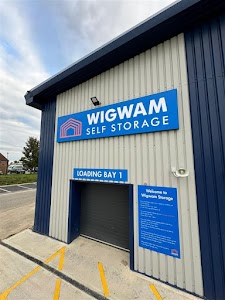

Once contract in place very easy app use to access site and unit, very clear easy to follow instructions. Very happy and would definitely recommend


Very easy access with parking right outside the door.
Plenty of trolleys, so no need for muscles ! It maybe a little more expensive than some others, BUT the cleanliness & ease of use perfect.
The staff are VERY patient, explaining how each unit works.
It is great to know the manned office hours & how to make contact if not.
Plenty of accessible hours too.
Ps.... they do like a biscuit or 2 in the office I hear !


Units were good and secure.
only critisms - lights turned off automatically too quickly and no onsite toilet.

I Highly recommended this company.

Also the girls in the office who are extremely helpful with a cracking sense of humour,
Unit was superb, extremely clean,
So easy to access, completely idiot proof
Will definitely use them again

